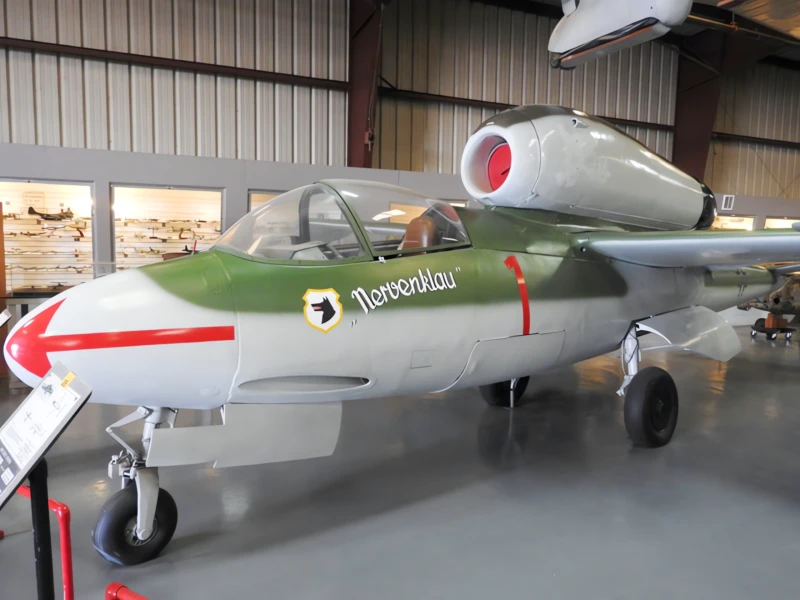
Heinkel He 162 A Salamander | |
|---|---|
| País | Alemanha nazista |
| Papel | Caça a jato |
| Primeiro voo | 6 de dezembro de 1944 |
| Construído | 320 |
O Heinkel Ele 162 Volksjäger (alemão, "People's Fighter"), o nome de um projeto da competição de design do Programa de Caças de Emergência, foi um avião alemão monomotor, movido a jato, em campo pela Luftwaffe na Segunda Guerra Mundial. Projetado e construído rapidamente, e feito principalmente de madeira como metais estavam em oferta muito curta e priorizados para outras aeronaves, o He 162 foi, no entanto, o mais rápido da primeira geração de eixos e jatos aliados. Volksjäger foi o nome oficial do Ministério do Ar do Reich para a competição do programa de design do governo vencida pelo projeto He 162. Outros nomes dados ao avião incluem Salamander, que era o codinome de seu programa de construção, e Spatz ("Sparrow"), que foi o nome dado ao avião por Heinkel.
| Heinkel He 162 Salamander | |
|---|---|
| Fotógrafos | Cees Hendriks |
| Localização | Desconhecido |
| Fotos | 81 |
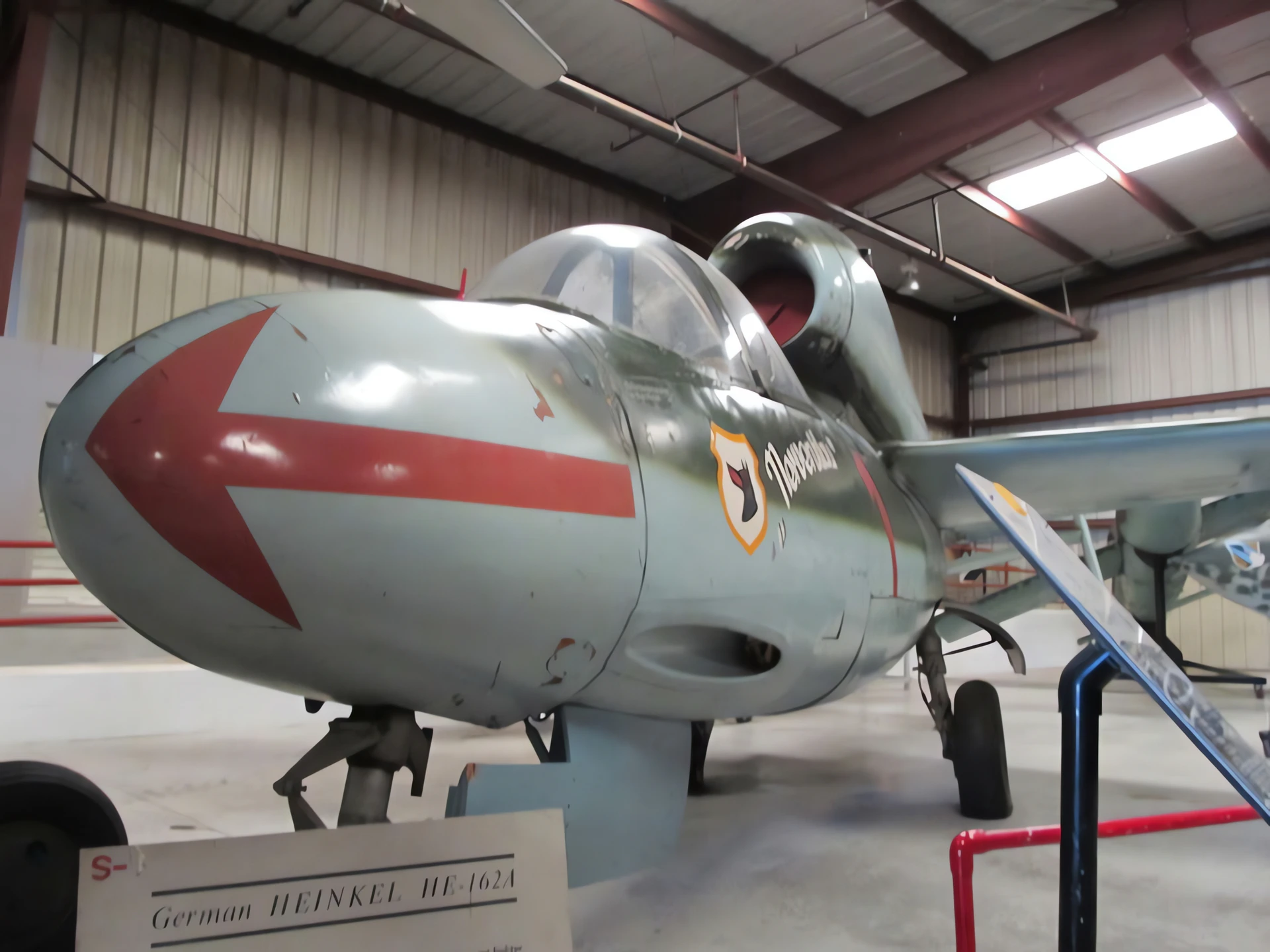
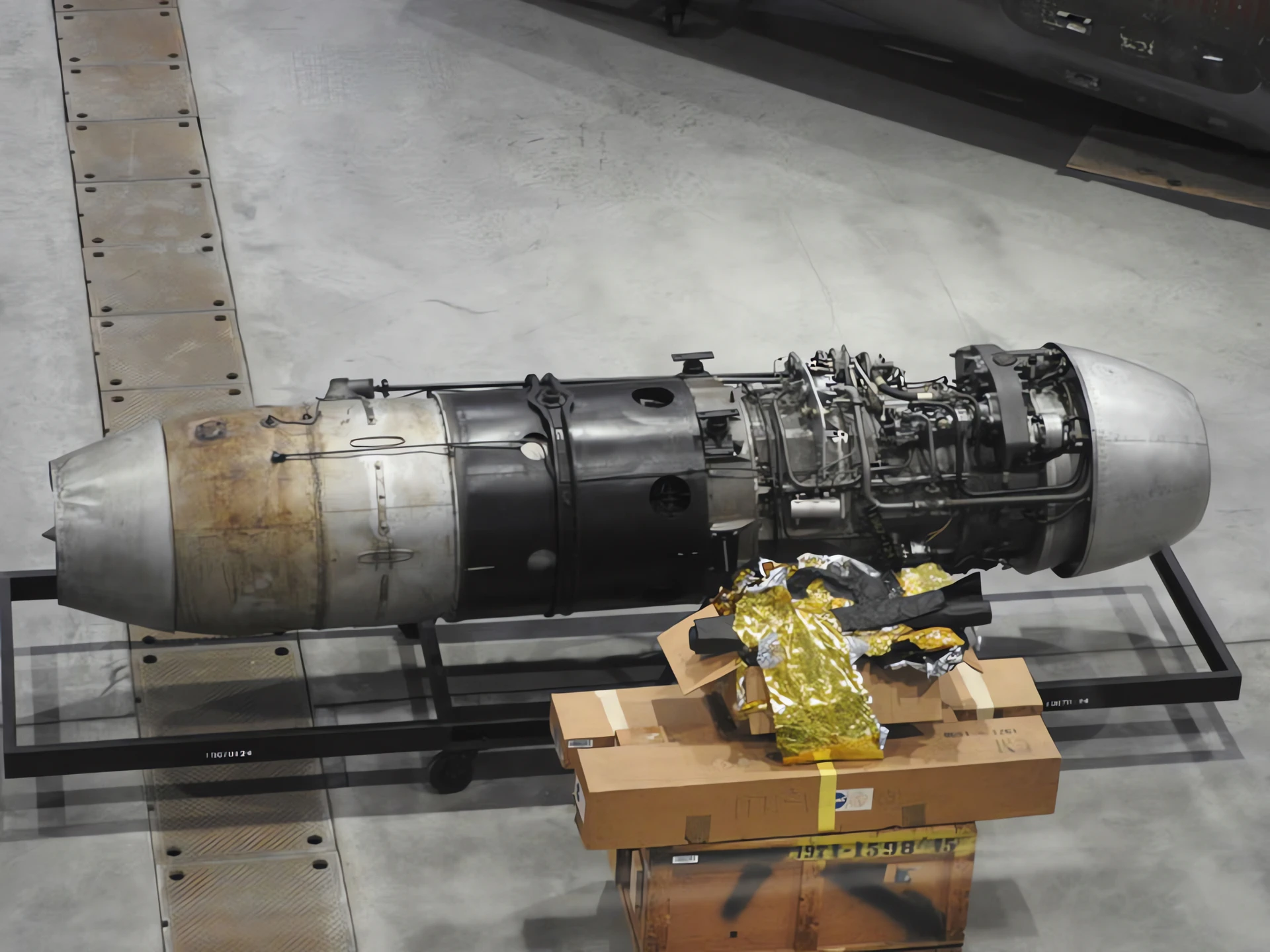
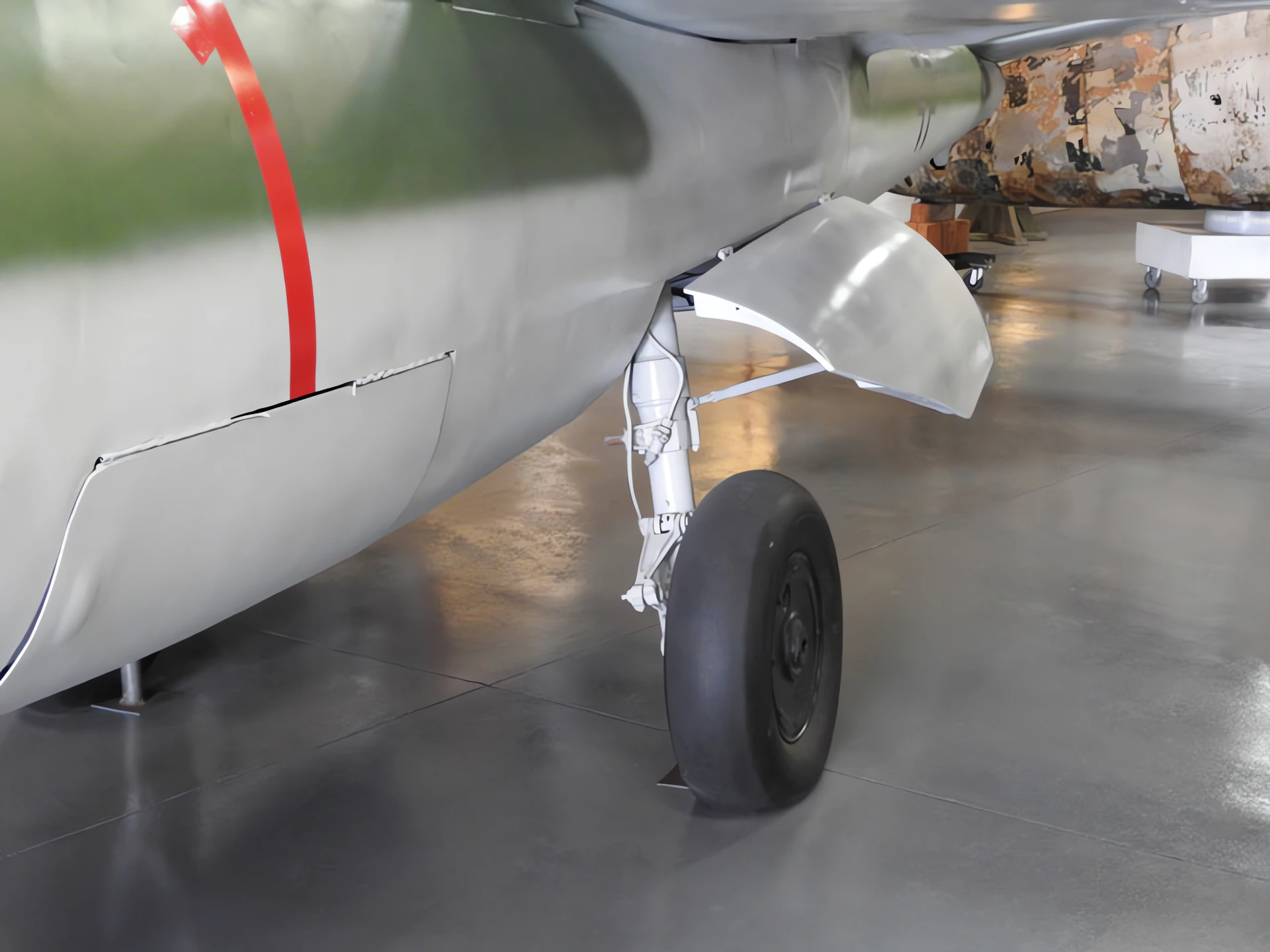
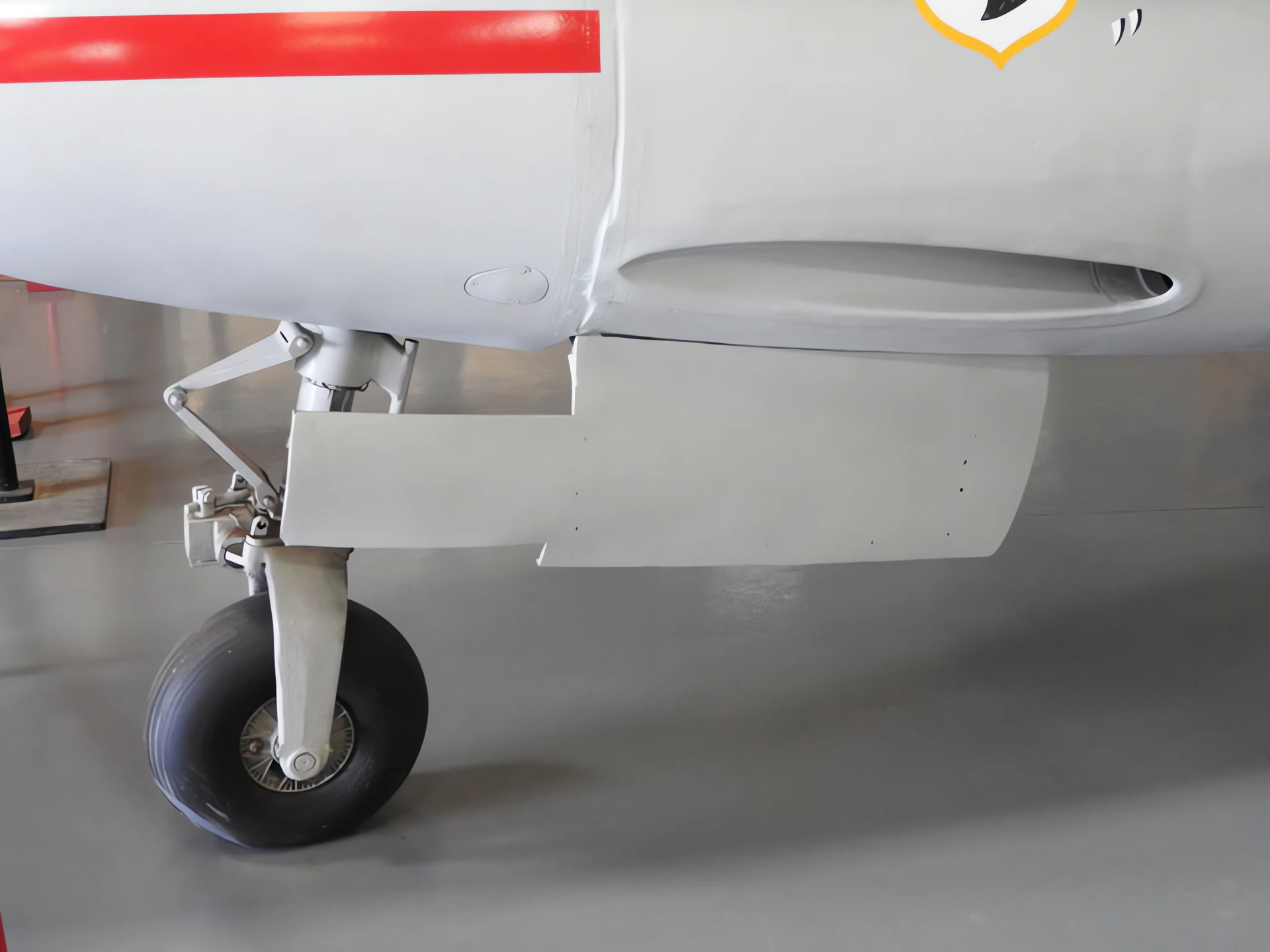
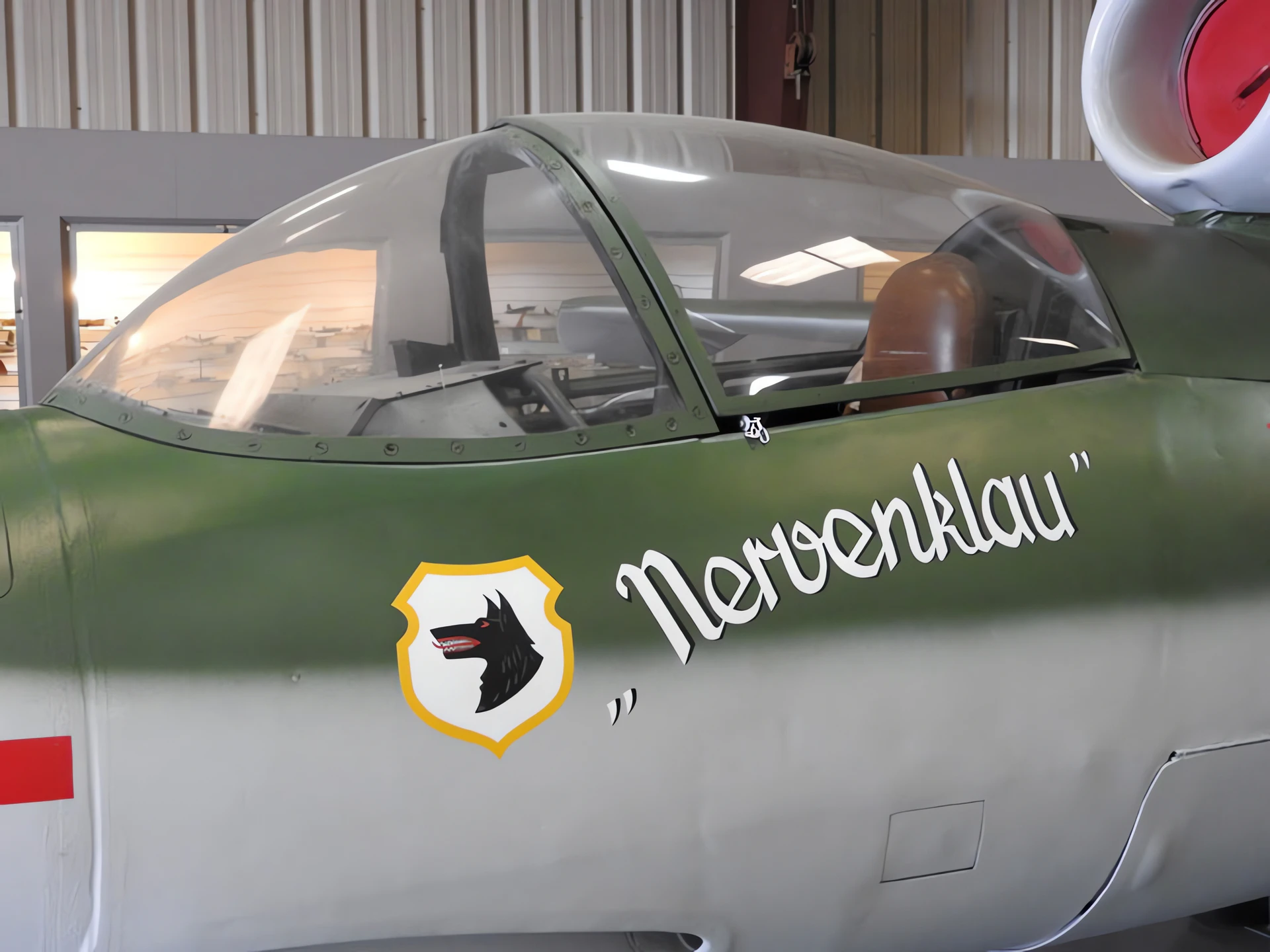
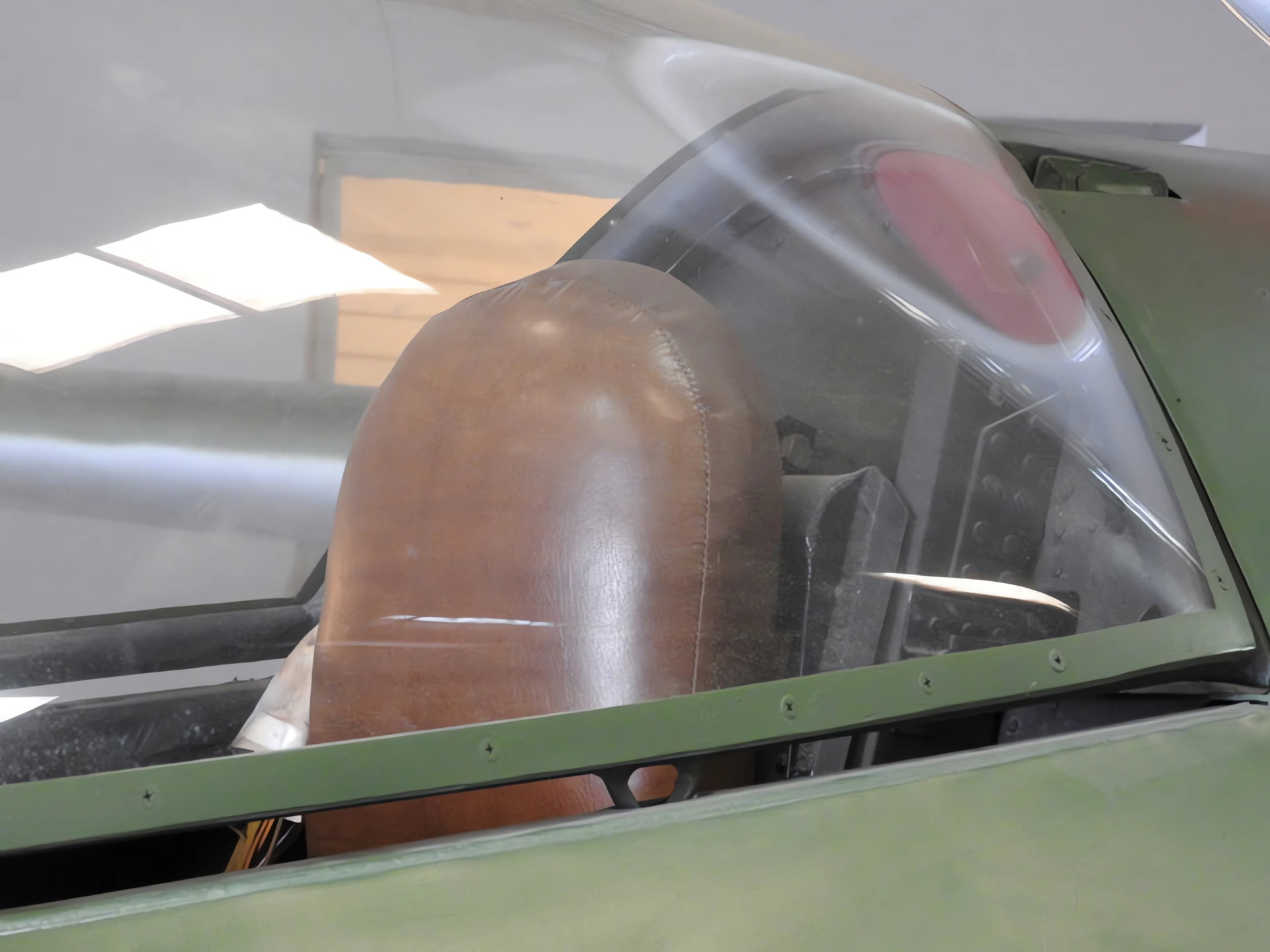
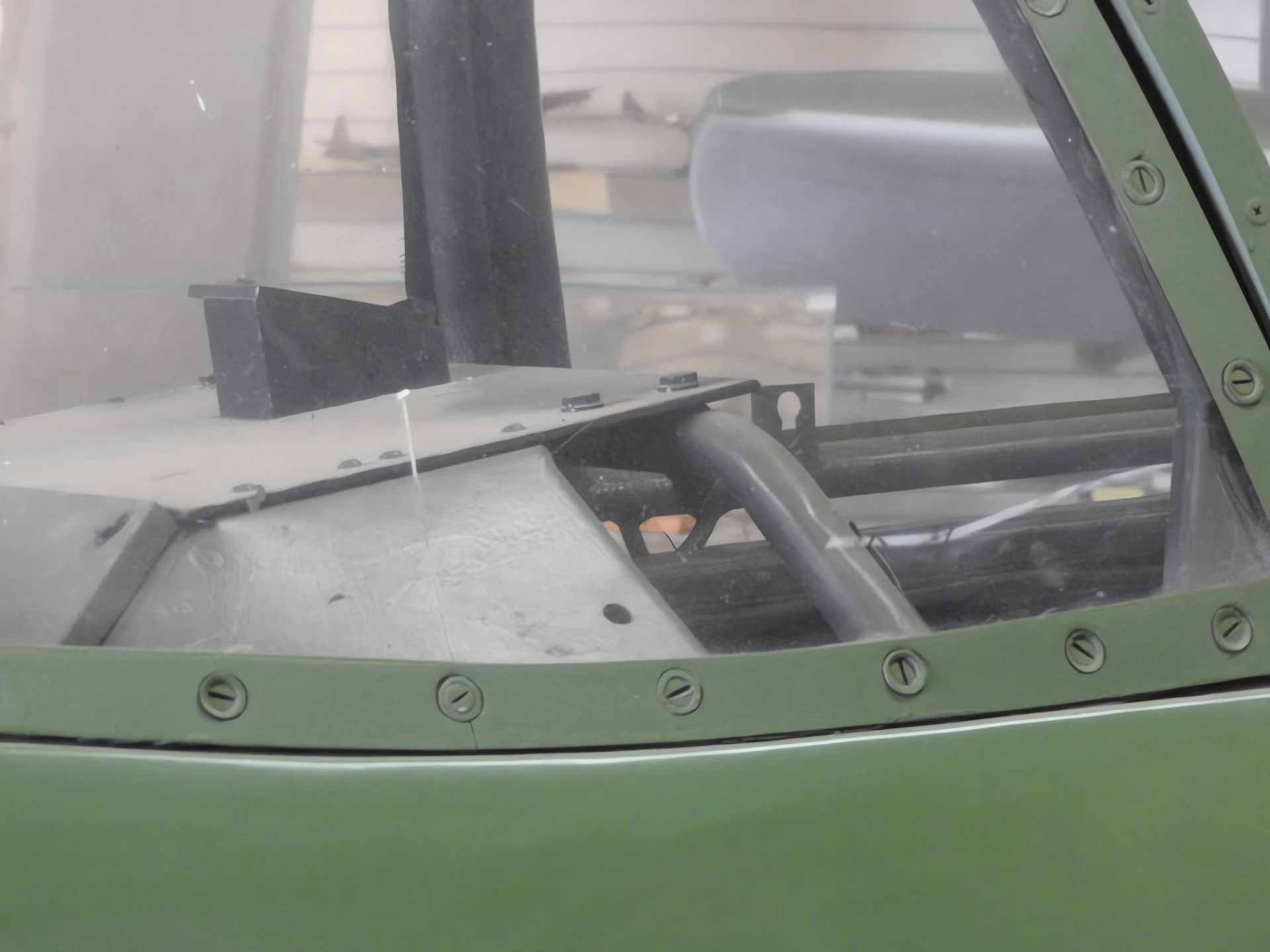
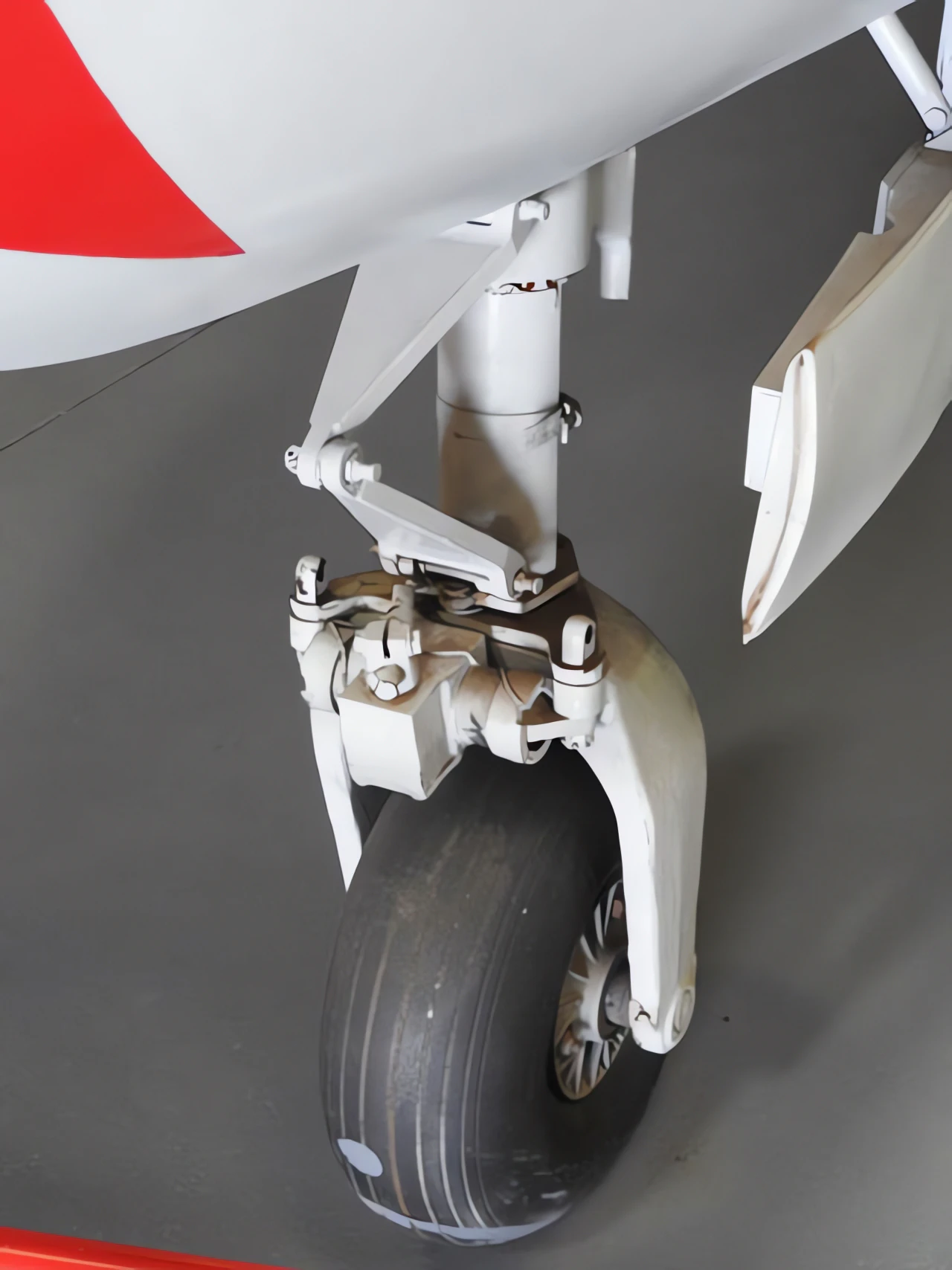
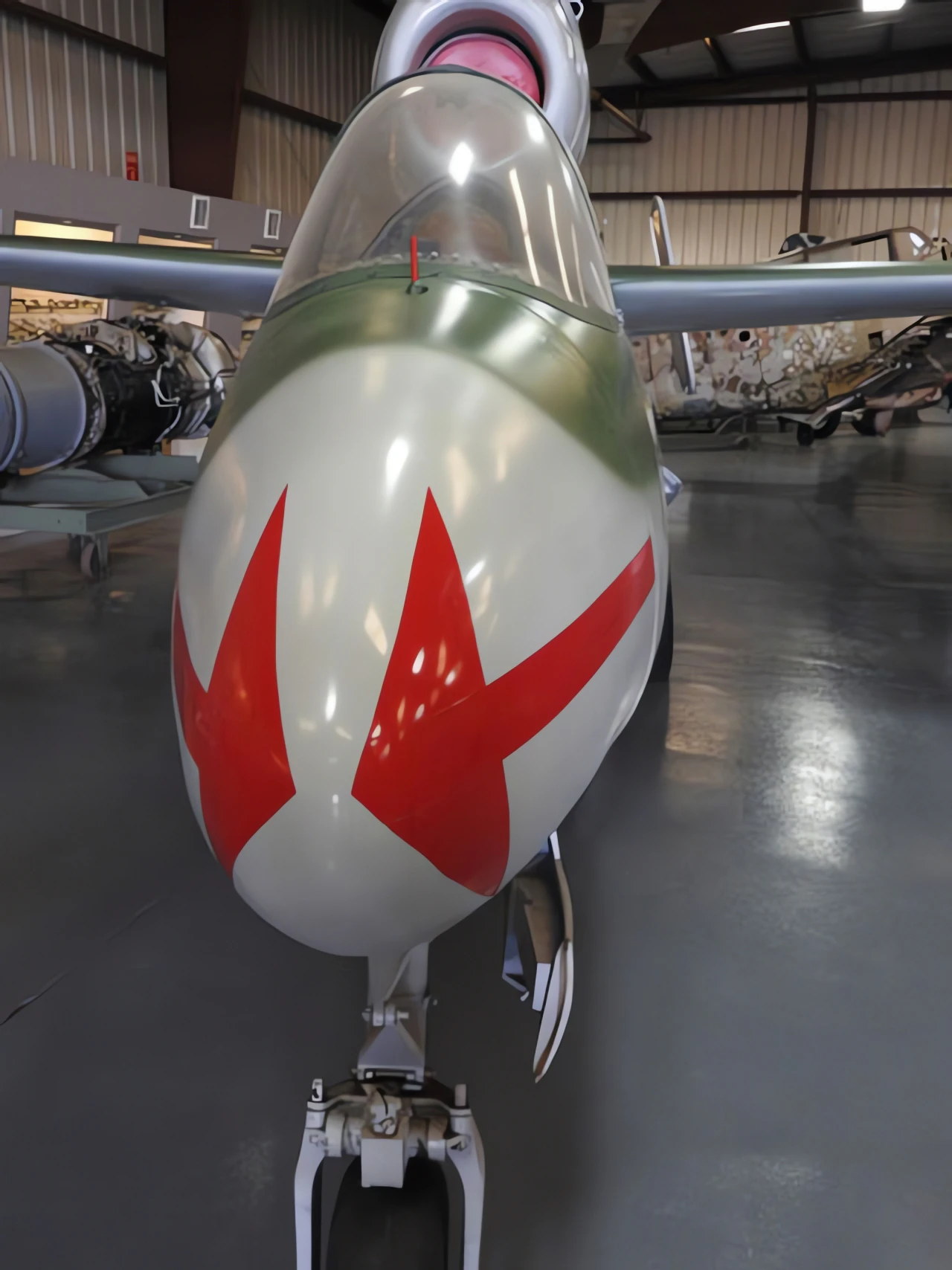

| Heinkel HE-162 Salamander Walk Around | |
|---|---|
| Fotógrafo | Bill Maloney |
| Localização | Museu Wings of Eagles |
| Fotos | 42 |
Veja também:


| Heinkel He 162A-1 Volksjager Walk Around | |
|---|---|
| Fotógrafo | Desconhecido |
| Localização | Desconhecido |
| Fotos | 31 |
| Heinkel He162A-1 Volksjager Walk Around | |
|---|---|
| Fotógrafo | Don Allen |
| Localização | Desconhecido |
| Fotos | 45 |
| Heinkel HE-162 Walk Around | |
|---|---|
| Fotógrafo | Unknow |
| Localização | Desconhecido |
| Fotos | 24 |
| Heinkel He-162A-2 Walk Around | |
|---|---|
| Fotógrafo | Vojtech Peterka |
| Localização | Desconhecido |
| Fotos | 14 |
The Emergency Fighter
O Heinkel Ele 162 was the result of the “Emergency Fighter Program” initiated in late 1944. As Allied bombers devastated German industry, the Luftwaffe needed a jet that was cheap, used non-strategic materials (like wood), and was easy to fly for Hitler Youth pilots with minimal training. Remarkably, the aircraft went from a wooden mockup to its first flight in only 90 days. While it was aerodynamically advanced and extremely fast, it was also dangerous to fly due to its sensitive handling and the poor quality of the glues used in its wooden construction.
| Attribute | Technical Specification (He 162 A-2) |
|---|---|
| Papel | Interceptor / Emergency Fighter |
| tripulação | 1 (Pilot) |
| First Flight | December 6, 1944 |
| Usina | 1 × BMW 003E-1 turbojet |
| Thrust | 1,760 lbf (7.8 kN) |
| Maximum Speed | 562 mph (905 km/h) at 20,000 ft |
| Endurance | 30 minutes (approximate) |
| Armamento | 2 × 20mm MG 151/20 cannons |
Radical Engineering in a Hurry
- Dorsal Engine Mount: To simplify the fuel system and protect the engine from debris on rough runways, the BMW 003 jet was mounted directly on top of the fuselage. This required a twin-fin “H-tail” to allow the exhaust gases to pass between the rudders.
- Wooden Construction: The wings were made entirely of wood, as was the nose and various fairings. In a famous incident during the first flight, the acidic “Tego film” glue ate through the wooden wing structure, leading to a catastrophic structural failure.
- Ejection Seat: Despite being a “budget” fighter, the He 162 was one of the first operational aircraft to feature a Heinkel-designed ejection seat, powered by an explosive cartridge, because the pilot could not safely bail out through the top-mounted engine intake.
- The “Salamander” Mystery: “Salamander” was the codename for the wing construction project, while the aircraft itself was officially the Spatz (Sparrow) or Volksjäger.
Brief Combat and Capture
- Operational Units: Only one unit, JG 1, was fully equipped with the He 162 before the war ended. They claimed a handful of victories, but the aircraft’s short fuel endurance and landing gear issues caused more losses than enemy fire.
- The British Assessment: After the war, British test pilot Eric “Winkle” Brown flew the He 162 and described it as having “the best all-round view” and being a “delightful” aerobatic platform, though he warned it was “unforgiving” if mishandled.
- Aerodynamic Innovations: The wings featured distinctive turned-down “drooped” tips (Lippisch-style), which were intended to improve stability and prevent the aircraft from rolling unexpectedly at high speeds.
- Survivors: Because so many were built (approx. 320), several exist today. Notable examples are at the RAF Museum London, the Smithsonian, and the Musée de l’Air et de l’Espace in France.
Views : 7318
Você pode ver também:
 Curtiss-Wright AT-9 – Fotos & Vídeo
 Lockheed P-2 Neptune – Fotos e Vídeo
 Heinkel He 219 – Fotos e Vídeo
 Heinkel He 100 – Fotos e Vídeo
 P-47G Thunderbolt – WalkAround
 Hawker Sea Fury FBII vol2 - Walk Around
 Heinkel He 111 - Ande por aí
 P-51D Mustang vol2 - Ande por aí
 B-17G Flying Fortress – WalkAround
 Messerschmitt Bf 109G-2 - Ande por aí