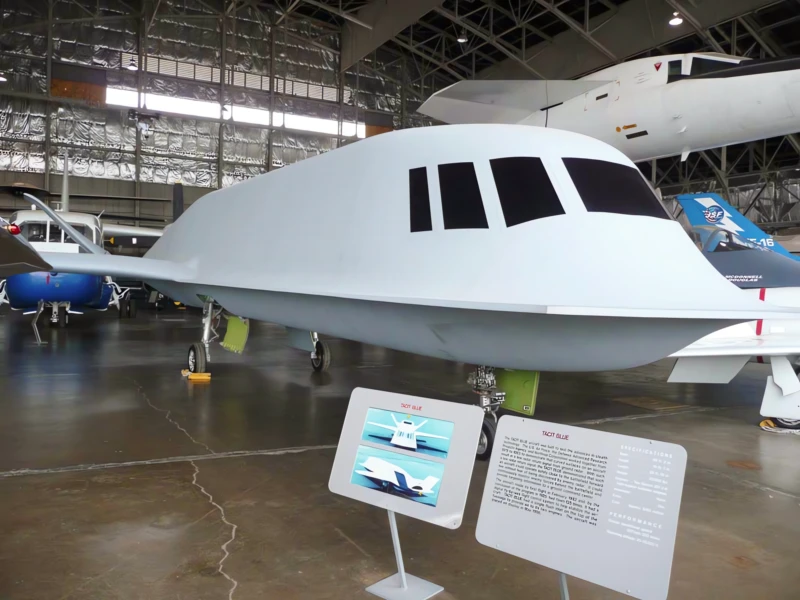
Northrop Tacit Blue | |
|---|---|
| Kraju | Stany Zjednoczone Ameryki |
| Roli | Demonstrator stealth |
| Pierwszy lot | 5 lutego 1982 |
| Zbudowany | 1 |
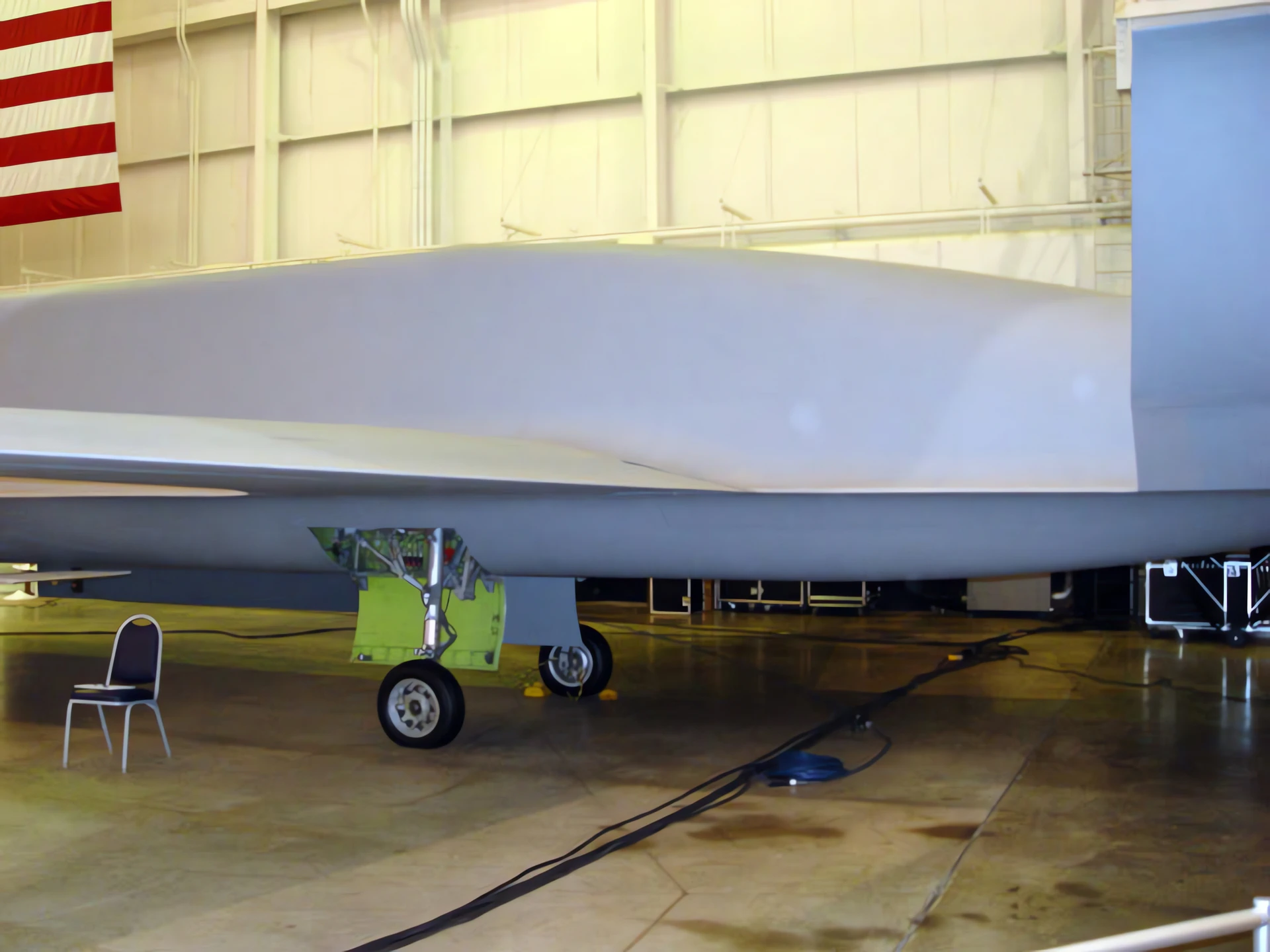
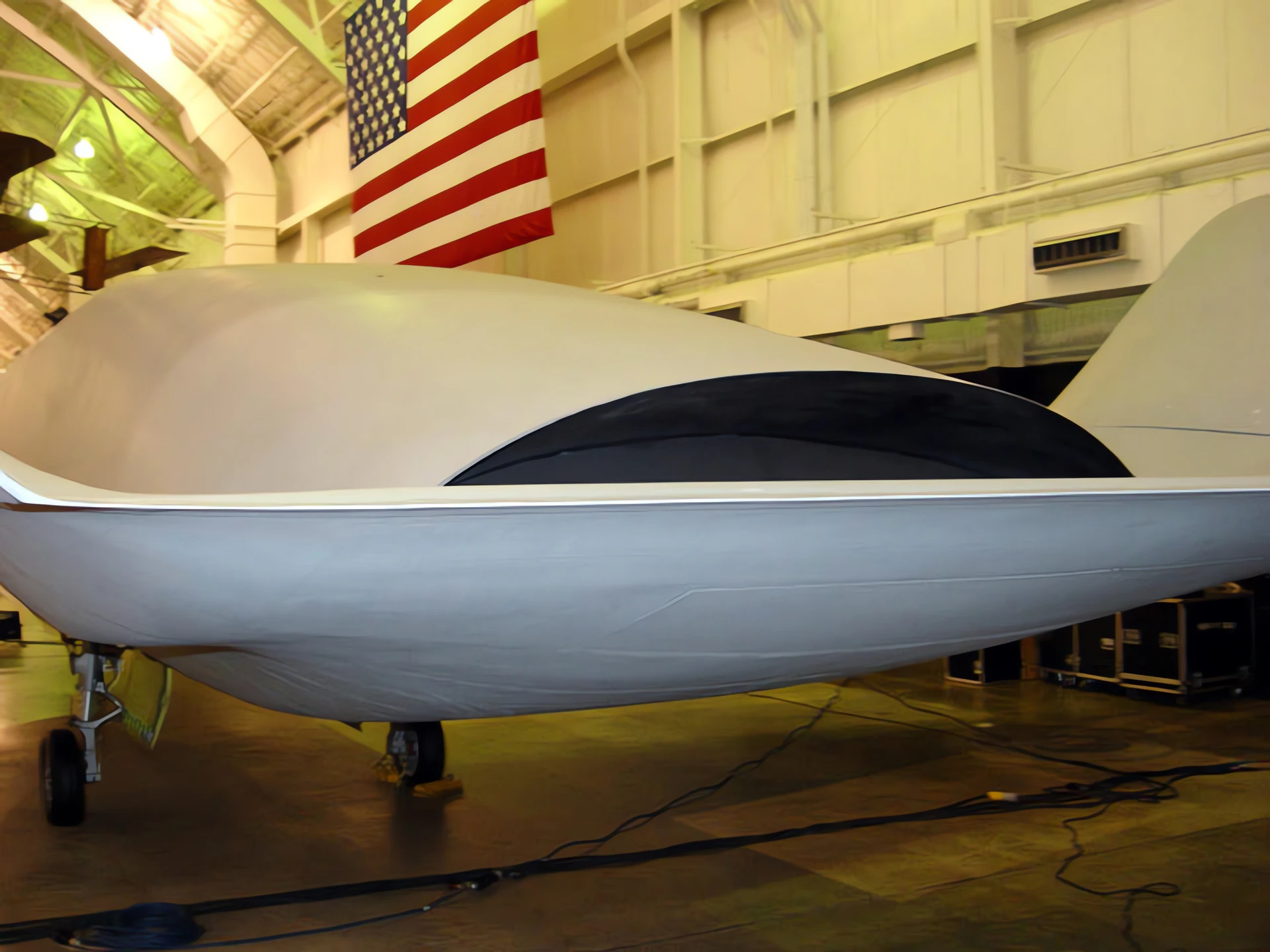
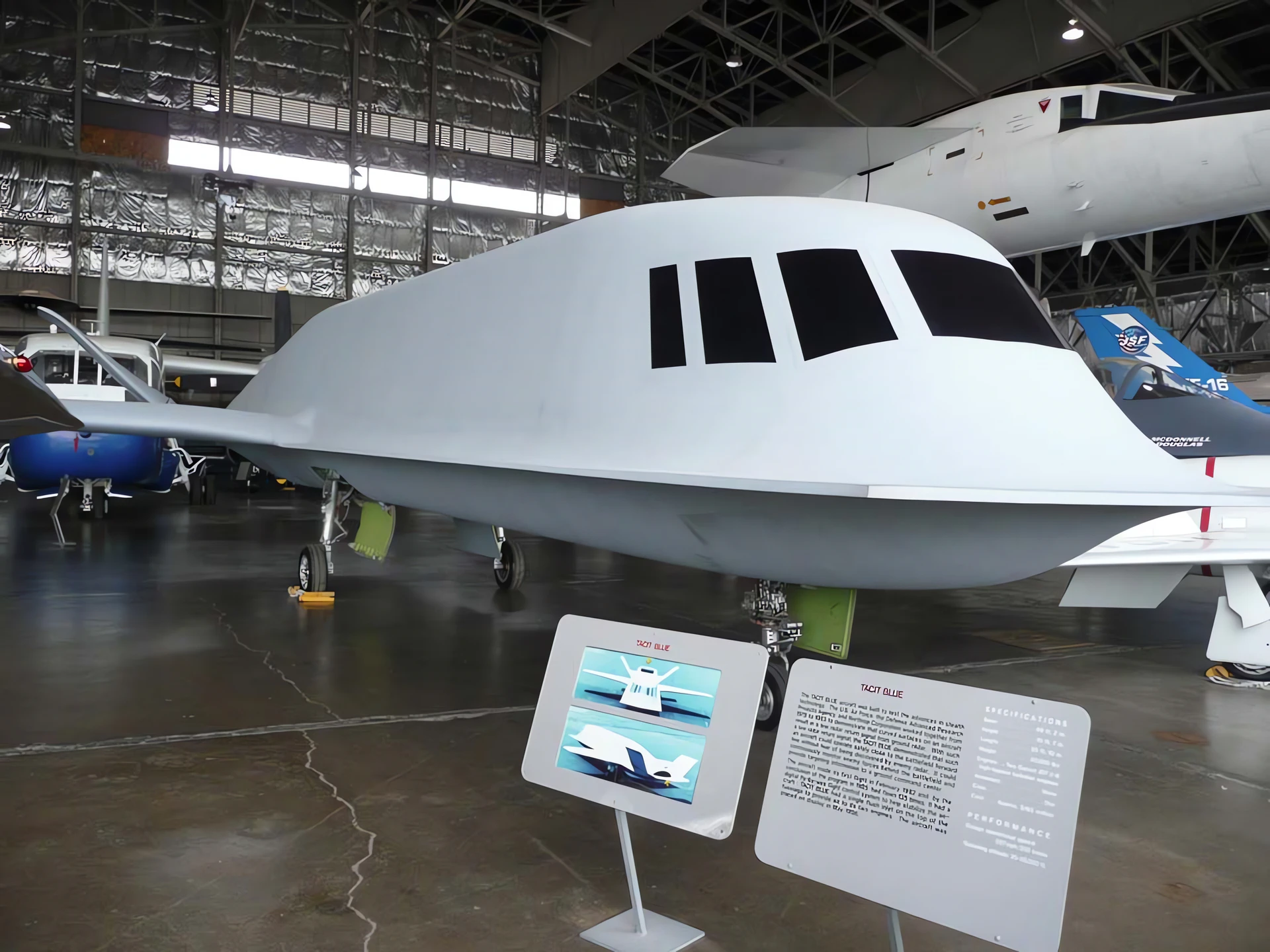
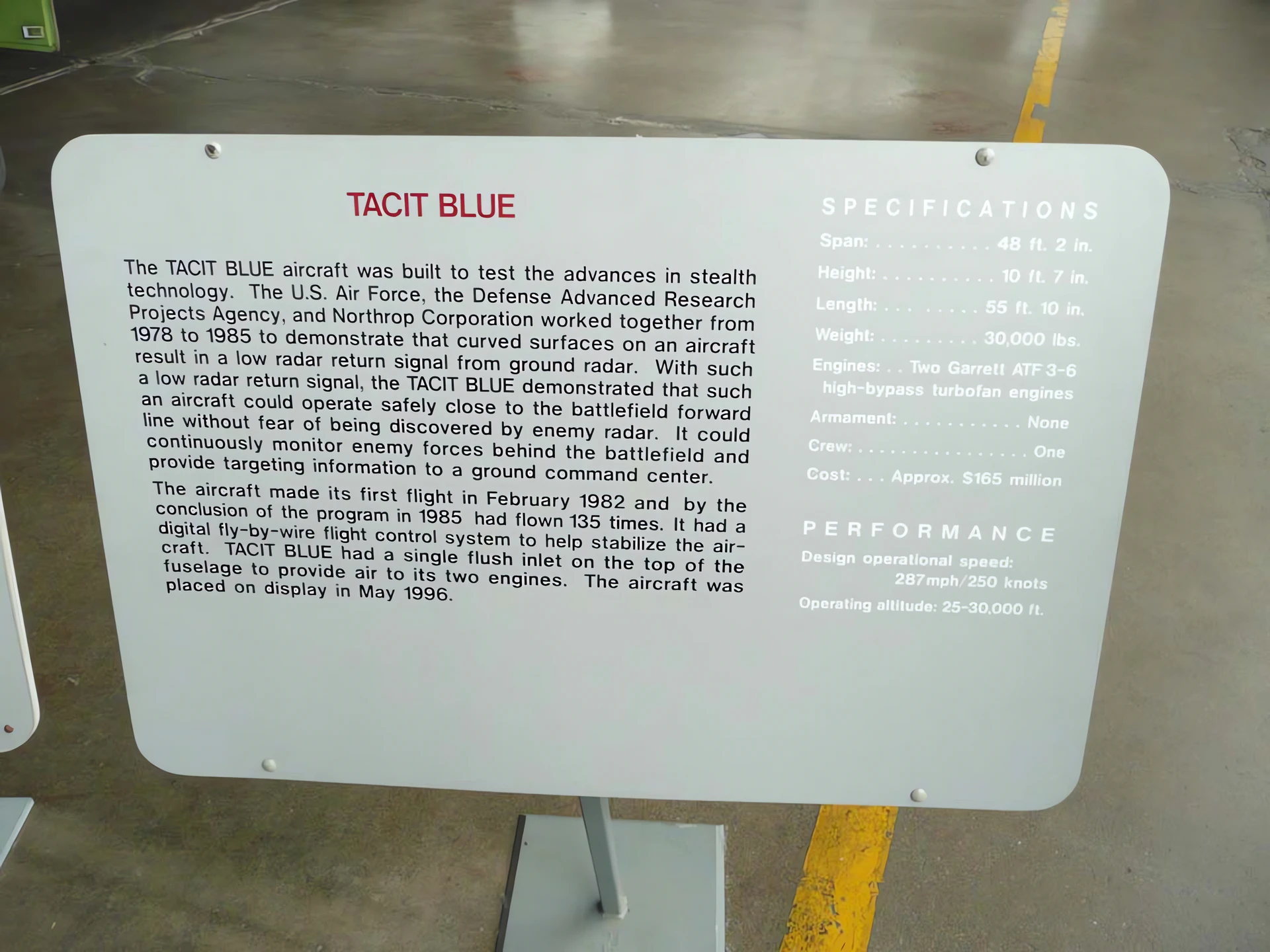
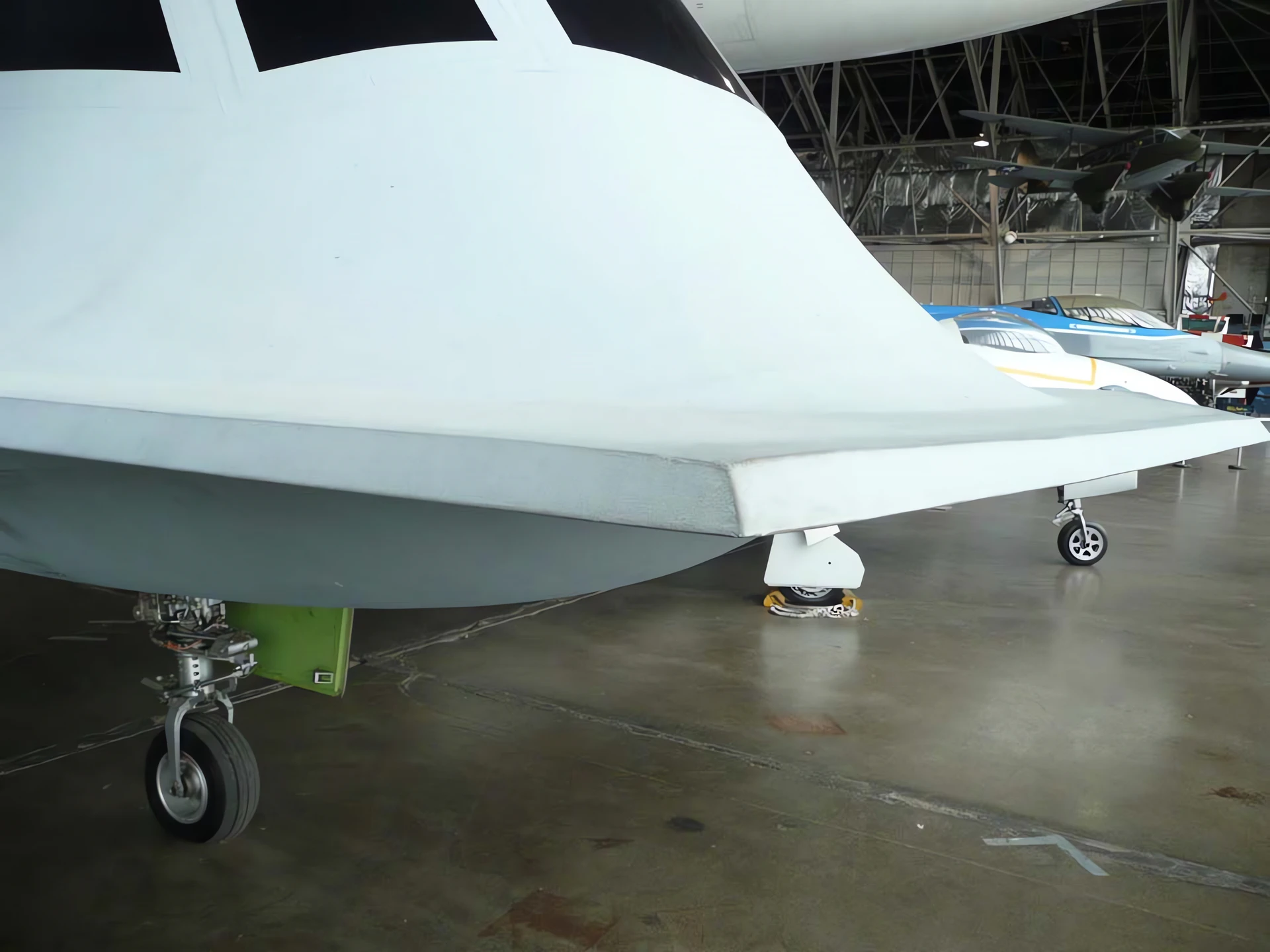
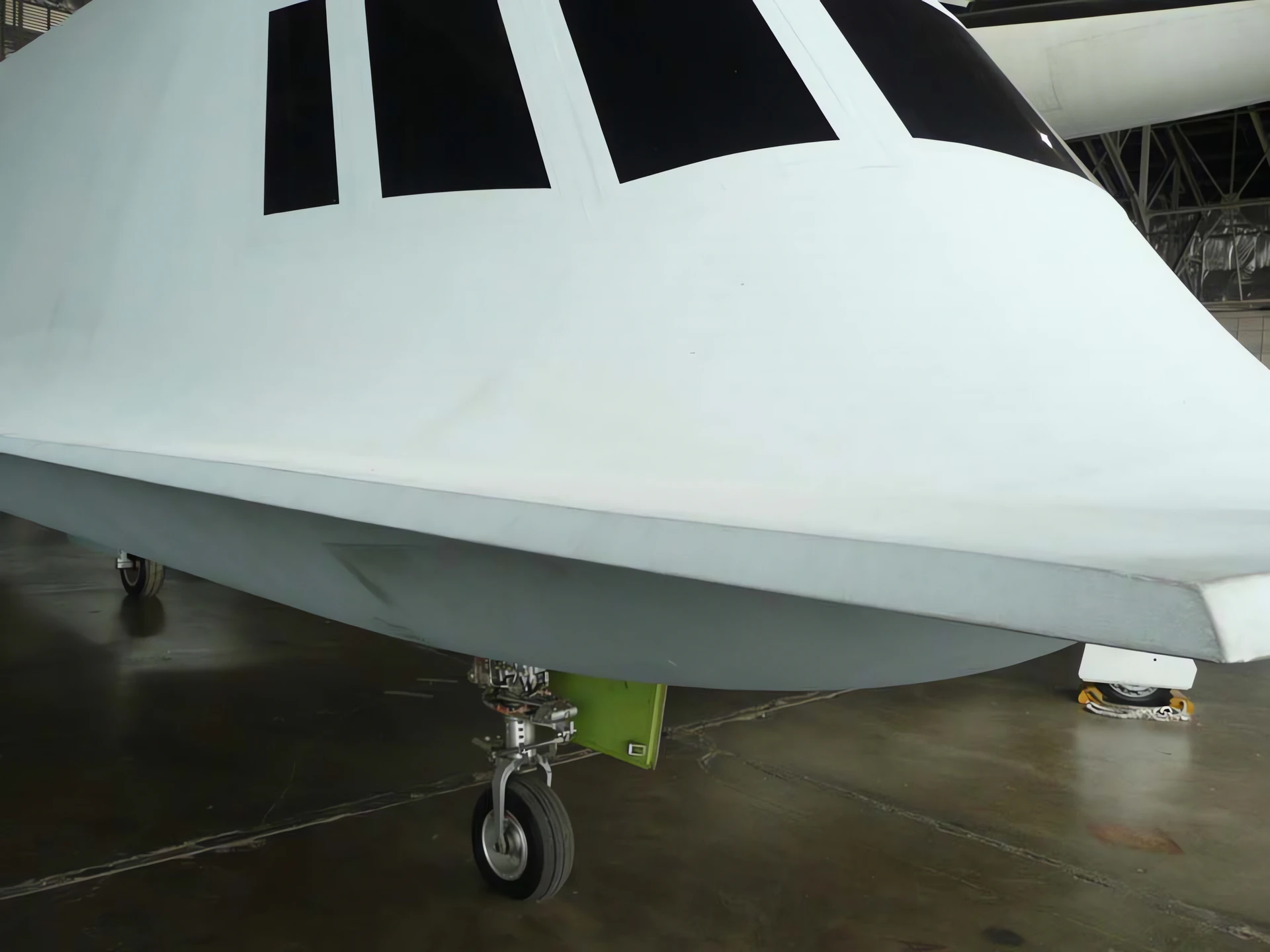
Tthe Northrop Tacit Niebieski był samolotem demonstracyjnym stworzonym w celu zademonstrowania, że nisko obserwowalny samolot obserwacyjny stealth z niskim prawdopodobieństwem przechwycenia radaru i innych czujników może działać blisko przedniej linii bitwy z wysokim stopniem przeżywalności.
Źródła: Northrop Tacit Blue na Wikipedii
| Northrop Tacit Niebieski spacer dookoła | |
|---|---|
| Fotografów | John Heck, Władimir Yakubov |
| Lokalizacja | Niewiedzy |
| Zdjęcia | 64 |

Zobacz też:


General Characteristics and Role
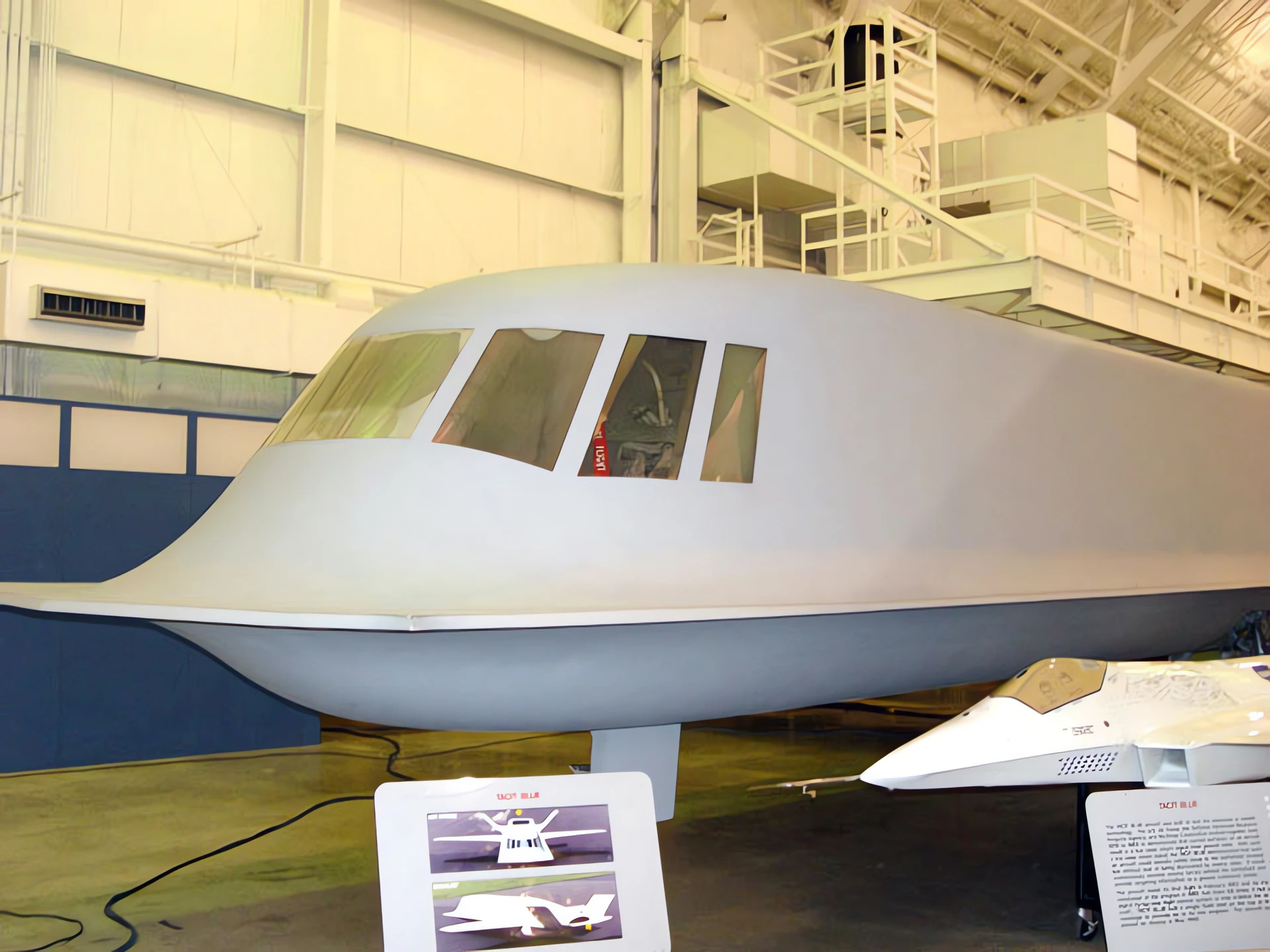
The Northrop Tacit Blue was a highly classified technology demonstrator aircraft developed by the US Air Force and DARPA during the Cold War. Nicknamed “The Whale” or “Alien School Bus” due to its unusual, bulbous shape, its main purpose was to prove that a stealthy surveillance aircraft could operate safely close to the forward line of battle. It was revolutionary for being the first stealth aircraft to successfully use curved, Gaussian surfaces to achieve a low radar cross-section, a concept later used in the B-2 Spirit bomber. It was part of the Battlefield Surveillance Aircraft, eXperimental (BSAX) program and was designed around a large Side-Looking Array Radar (SLAR) system.
| Property | Typical Value (Tacit Blue) |
|---|---|
| Typu | Stealth Technology Demonstrator / Surveillance Aircraft |
| National Origin | Stany Zjednoczone |
| Producent | Northrop Corporation |
| First Flight | 5 lutego 1982 |
| Załogi | 1 (Pilot) |
| Gross Weight | 13,608 kg (30,000 lb) |
| Długość | 17.02 m (55 ft 10 in) |
| Rozpiętość | 14.68 m (48 ft 2 in) |
Powerplant and Flight Control
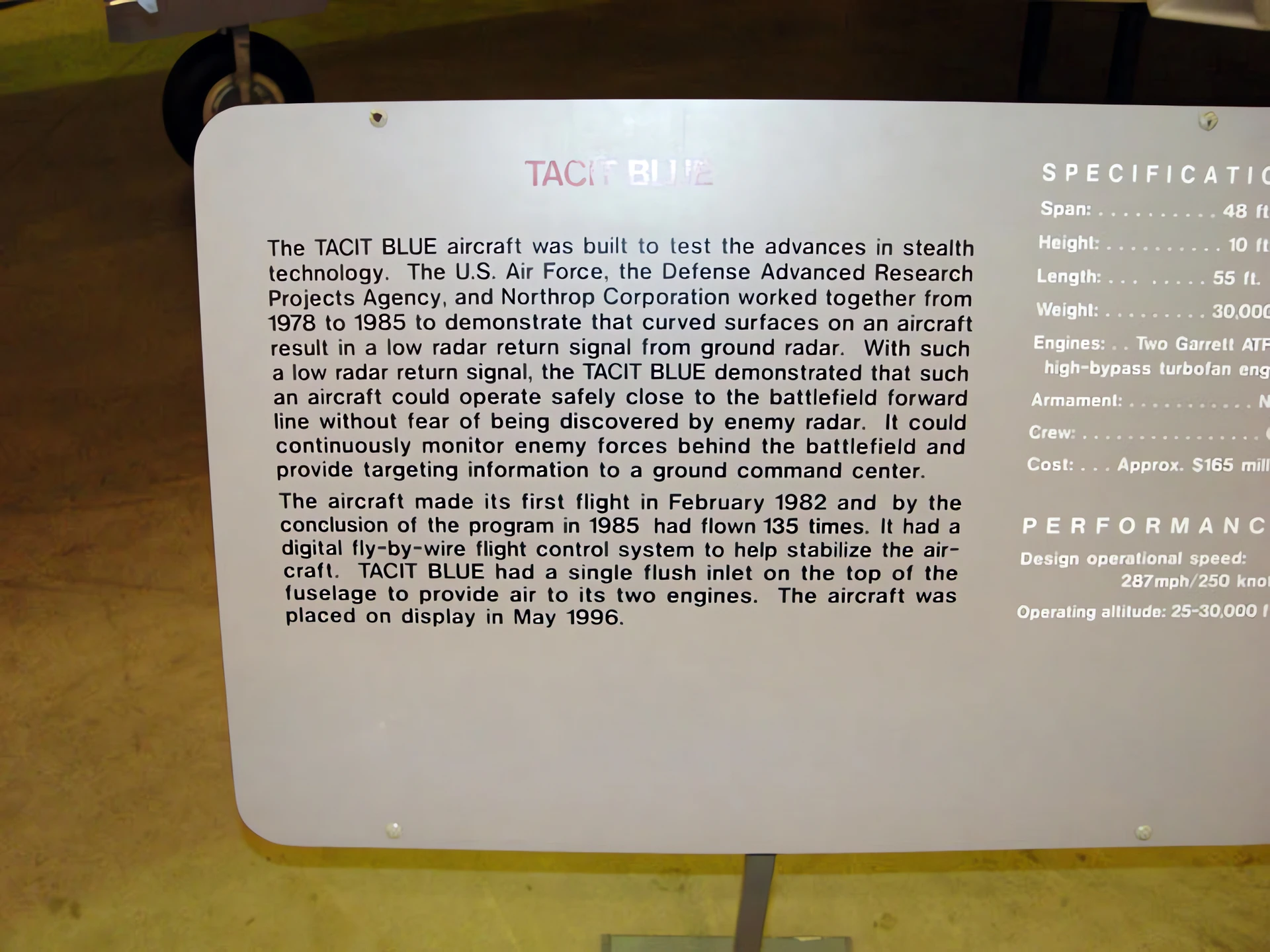
- Engines: 2 x Garrett ATF3-6 high-bypass turbofan engines (buried in the aft fuselage to reduce heat signature).
- Thrust: 24.2 kN (5,440 lbf) each.
- Design Operational Speed: 460 km/h (290 mph or 250 knots).
- Operating Altitude: 7,600–9,100 m (25,000–30,000 ft) (designed for loitering).
- Stealth Features: Curved fuselage surfaces, V-tail, and a single flush inlet on the dorsal fuselage to minimize radar return.
- Flight Stability: The aircraft was highly aerodynamically unstable, necessitating a quadruple-redundant digital fly-by-wire flight control system to keep it stable.
- Armament: None; it was purely a reconnaissance testbed.
Operational History and Legacy
- Status: Classified Black Project from 1982 to 1985; declassified and revealed to the public in 1996.
- Flight Testing: Logged 135 test flights over three years in Area 51, Nevada.
- Technology Transfer: The data gathered from the Tacit Blue was instrumental in developing two critical US Air Force aircraft:
- The Northrop B-2 Spirit stealth bomber (for its curved surface stealth technology).
- The E-8 Joint STARS surveillance aircraft (for its low-probability-of-intercept (LPI) SLAR radar technology).
- Historical Significance: Tacit Blue is considered one of the most successful technology demonstrator programs in Air Force history, fundamentally changing the approach to stealth aircraft design by demonstrating the feasibility of curved stealth shaping.
Liczba wyświetleń : 2627
Możesz również zobaczyć:
 Northrop Gamma – zdjęcia i filmy
 Northrop YC-125 Raider – zdjęcia i filmy
 Northrop JB-1 Bat – Zdjęcia & Filmy
 Northrop Alpha – Zdjęcia & wideo
 Northrop YF-23 – Zdjęcia i film
 Northrop F-89 Scorpion – zdjęcia i film
 Northrop N-9MB – Zdjęcia & wideo
 Northrop Grumman EA-6B Prowler – Zdjęcia & Film
 Northrop YA-9 – Zdjęcia & wideo
 Northrop F-5 – Zdjęcia & Wideo