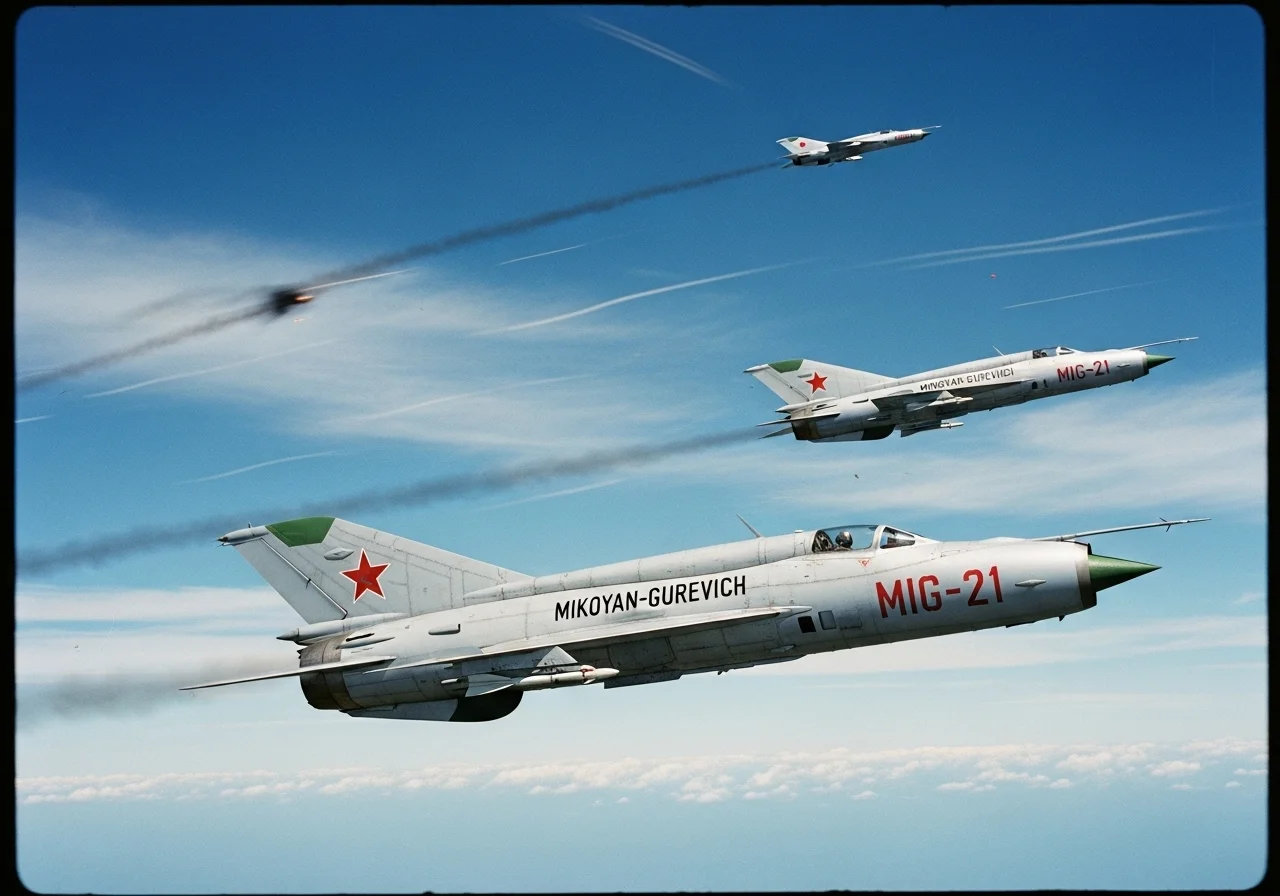
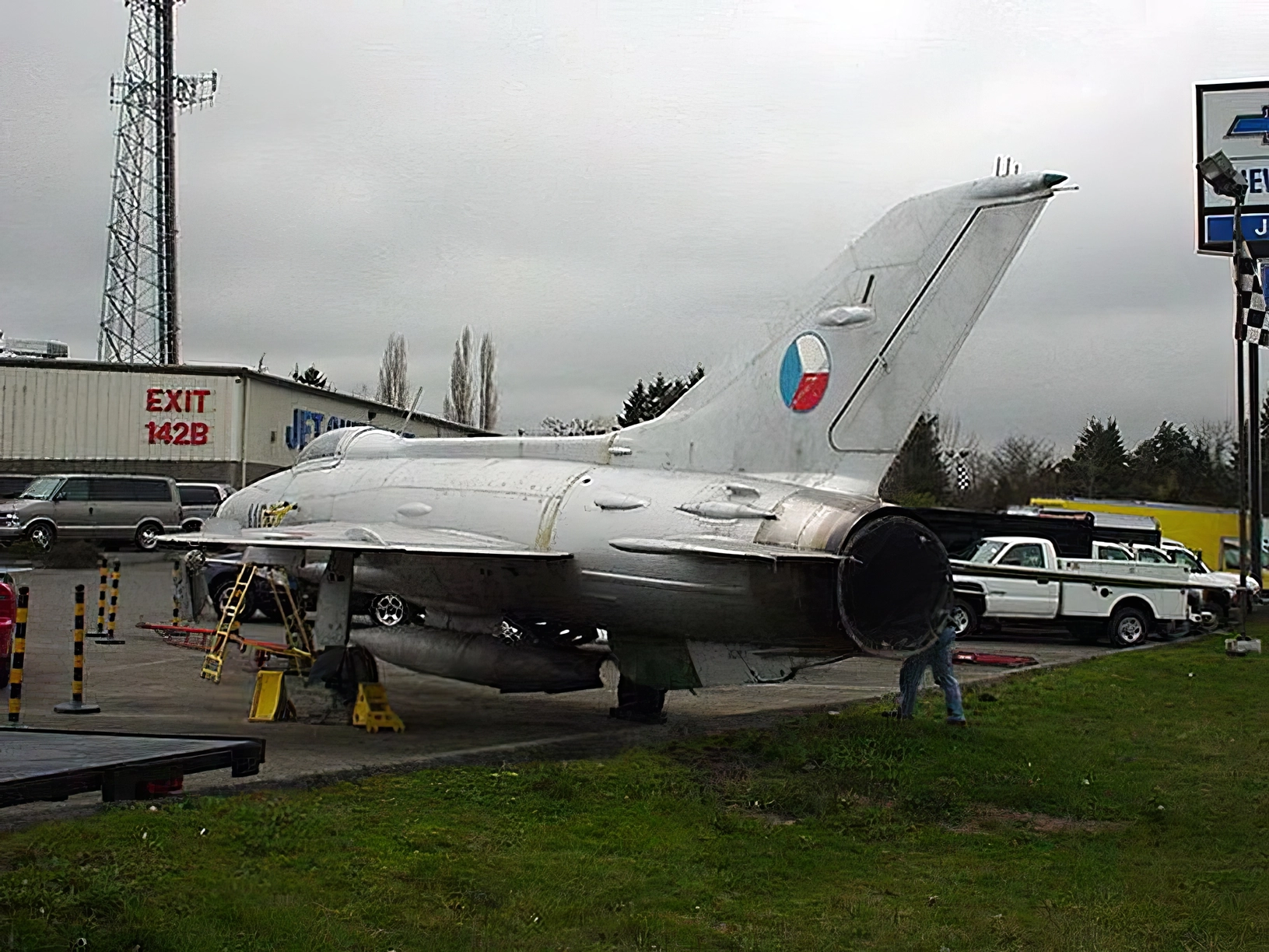
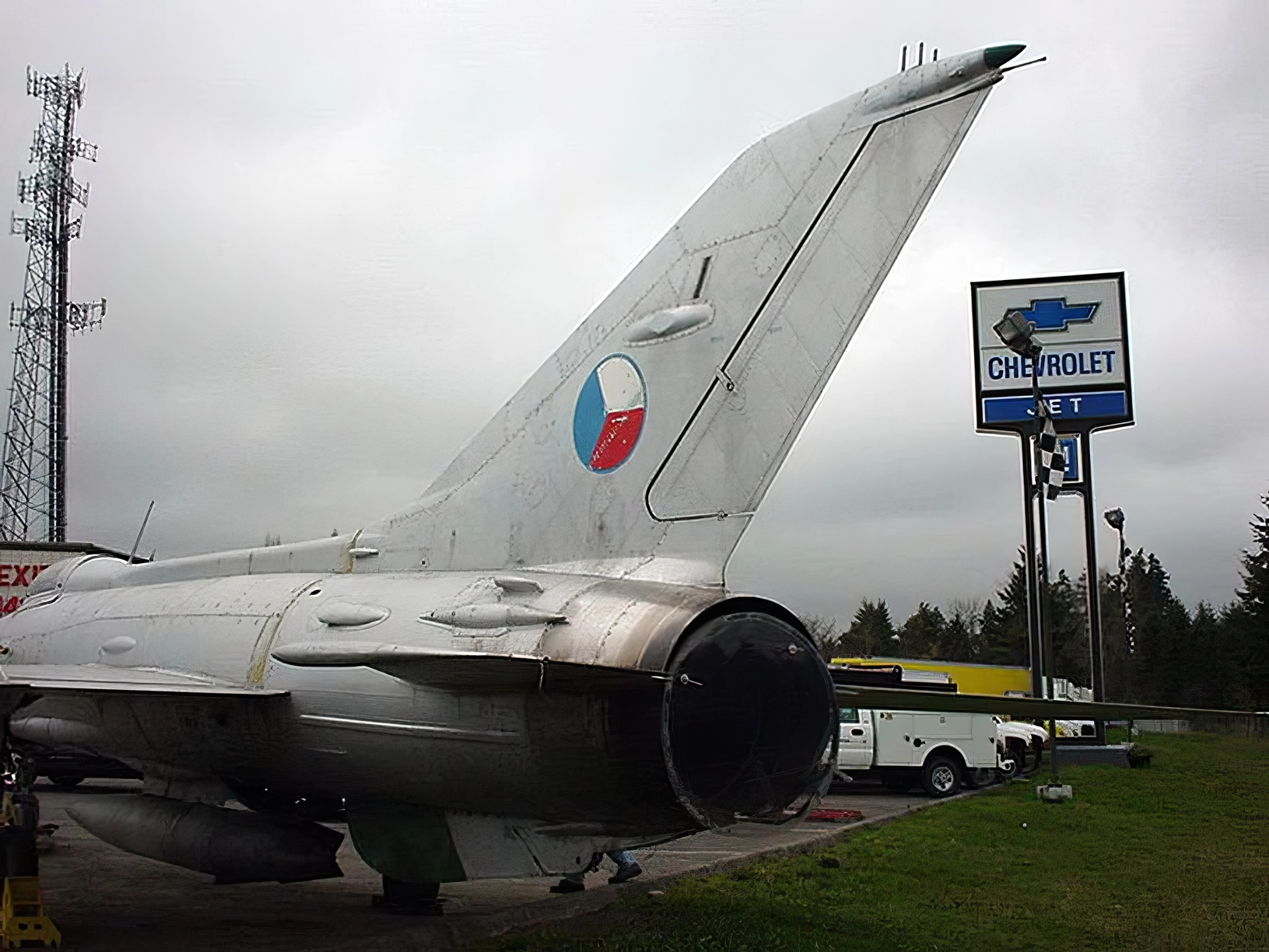
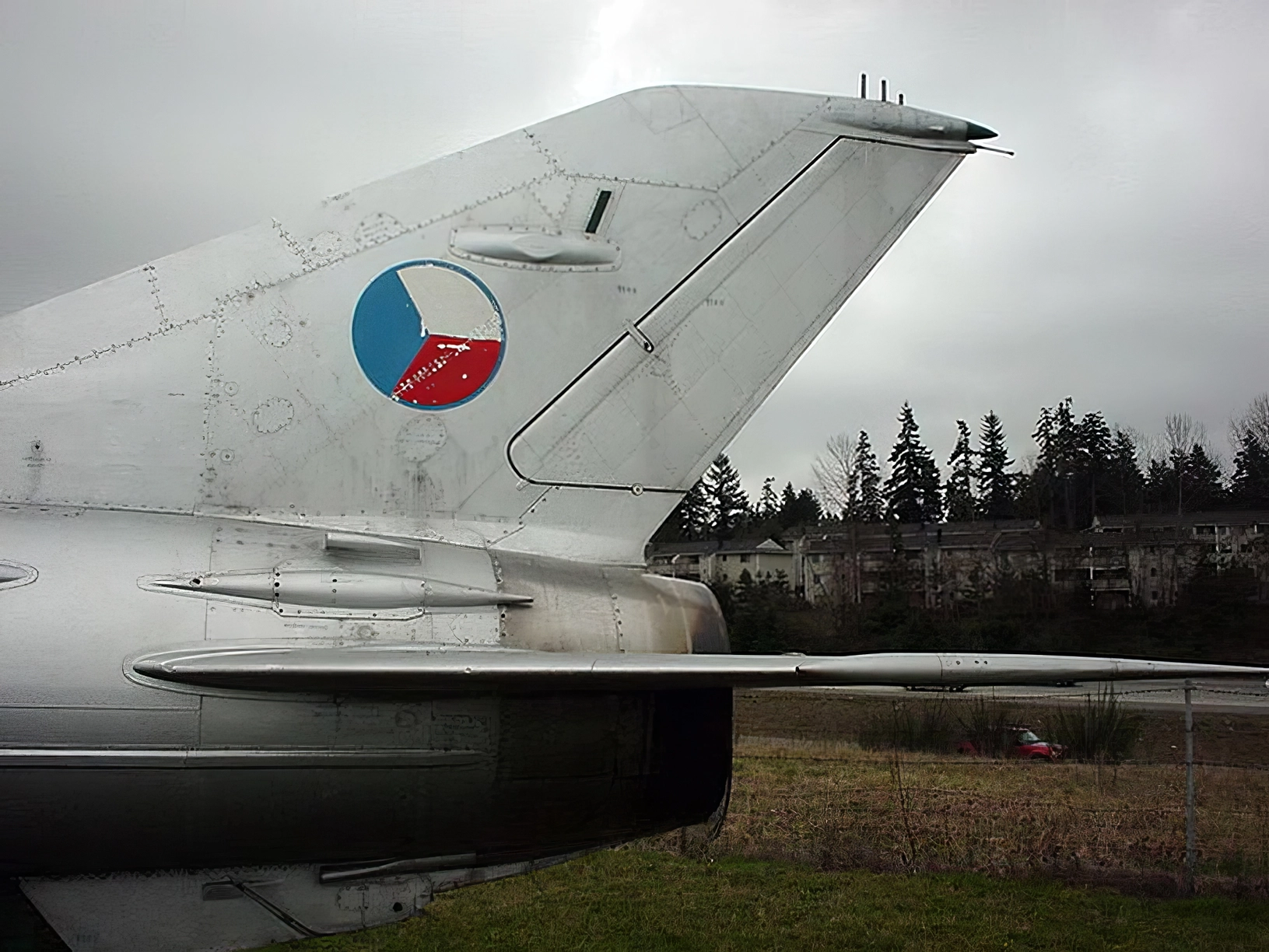
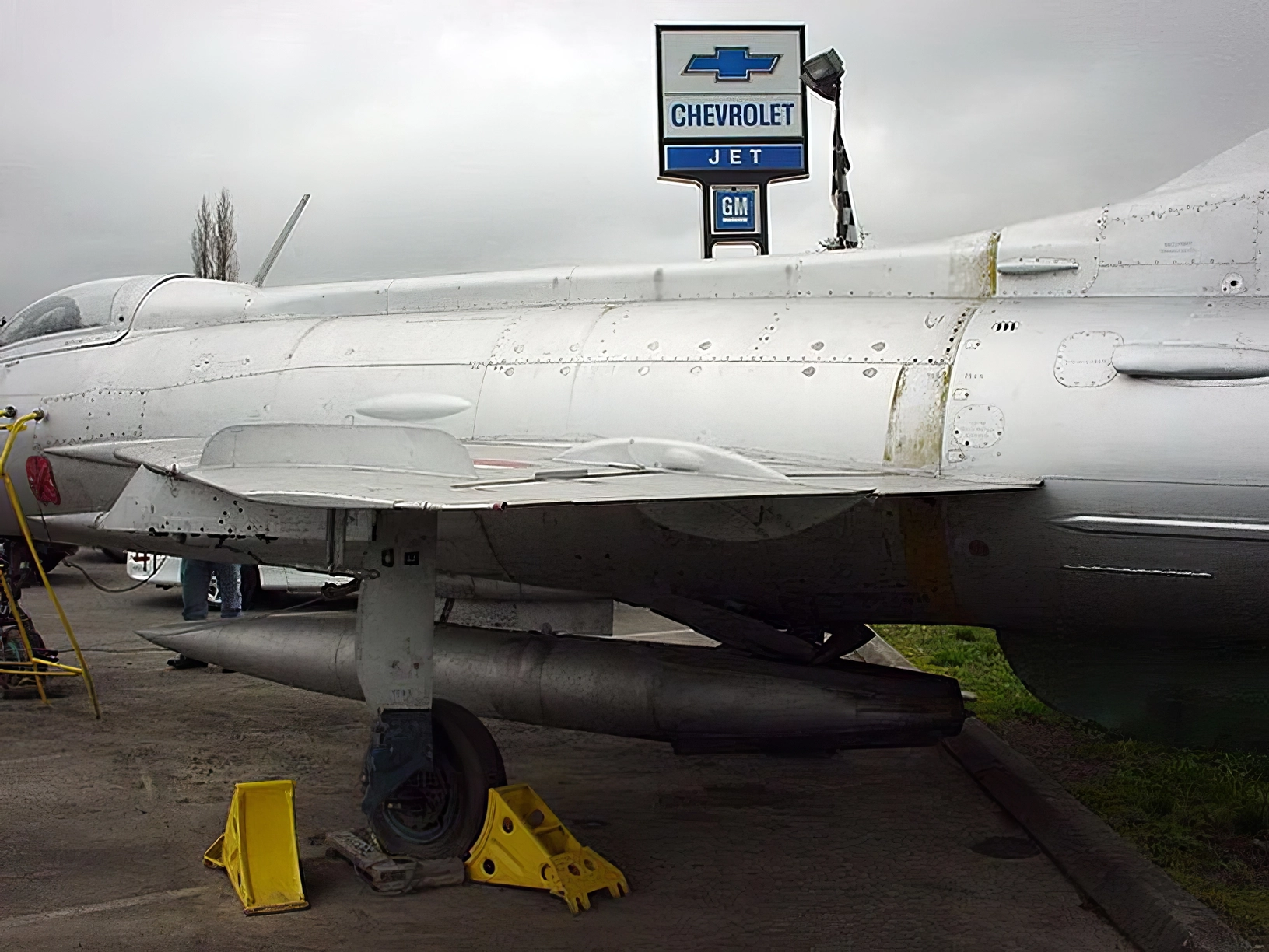
The Mikoyan-Gurevich MiG-21 is a supersonic jet fighter aircraft, designed by the Mikoyan-Gurevich Design Bureau in the Soviet Union. It was popularly nicknamed “Balalaika”, from the aircraft’s planform-view resemblance to the Russian stringed musical instrument or pencil by Polish pilots due to the shape of its fuselage.
Wait, Searching Mikoyan-Gurevich MiG-21-F photos for you…
General characteristics
Crew: 1
Length: 14.5 (with pitot) m (47 ft 6.86 in)
Wingspan: 7.154 m (23 ft 5.66 in)
Height: 4.125 m (13 ft 6.41 in)
Wing area: 23.0 m2 (247.3 ft2)
Gross weight: 8,825 kg (19,425 lb)
Powerplant: 1 × Tumanskiy R25-300, 40.21 kN (9,040 lbf) thrust dry, 69.62 kN (15,650 lbf) with afterburner each
Performance
Maximum speed: 2,228 km/h (1,468 mph)
Maximum speed: Mach 2.00
Range: (internal fuel) 1,210 km (751 miles)
Service ceiling: 17,800 m (58,400 ft)
Rate of climb: 225 m/s (44,280 ft/min)
Armament
1x internal 23 mm GSh-23 cannon, plus
2x R-27R1 or R-27T or 4x Vympel R-77
or 4x R-60M or R-73E AAM or
2x 500 kg (1,102 lbs) bombs
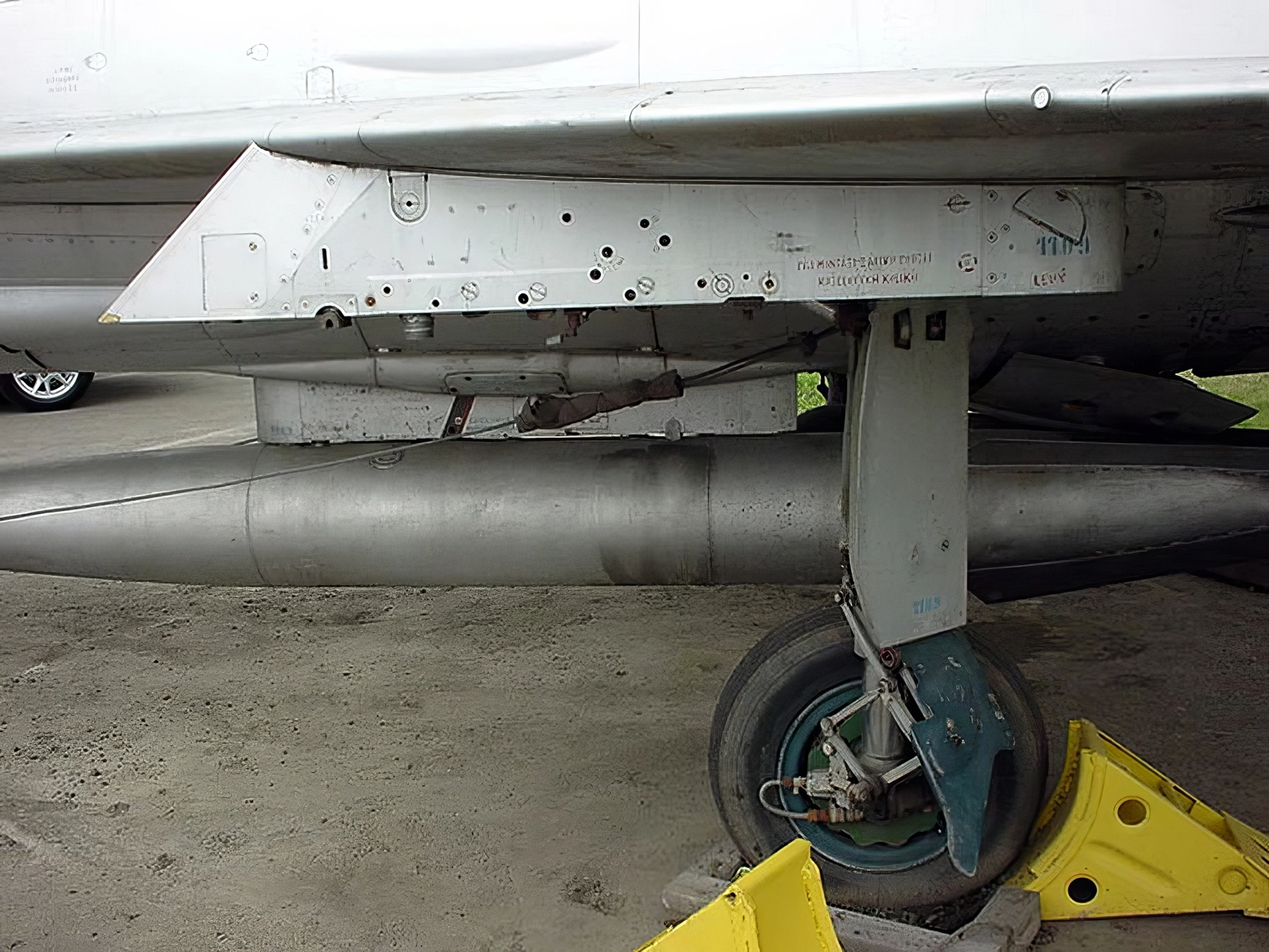
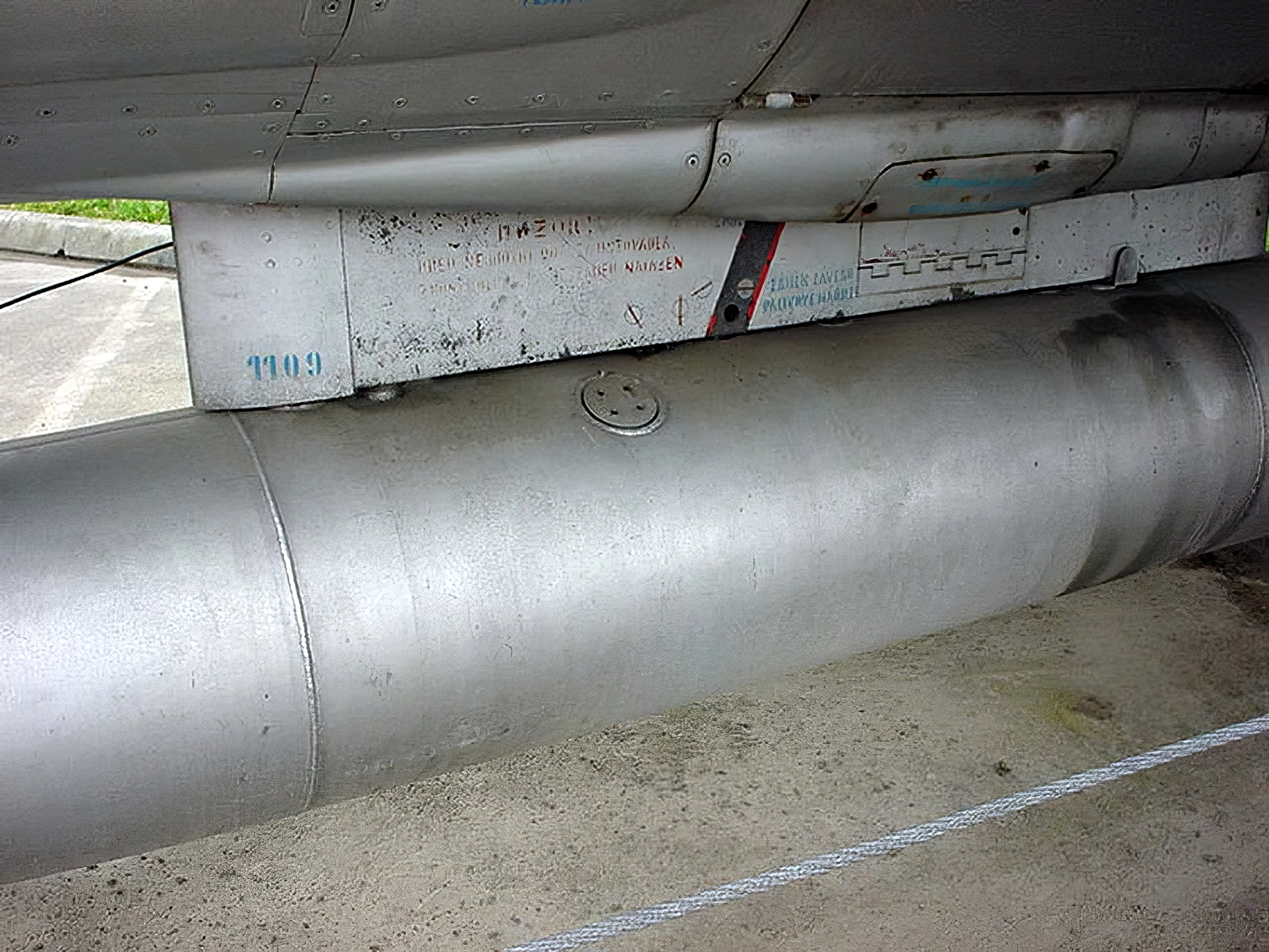
MiG-21I Analog Walk Around
Photographer
Anatoly Velichko
Localisation
Unknow
Photos
25
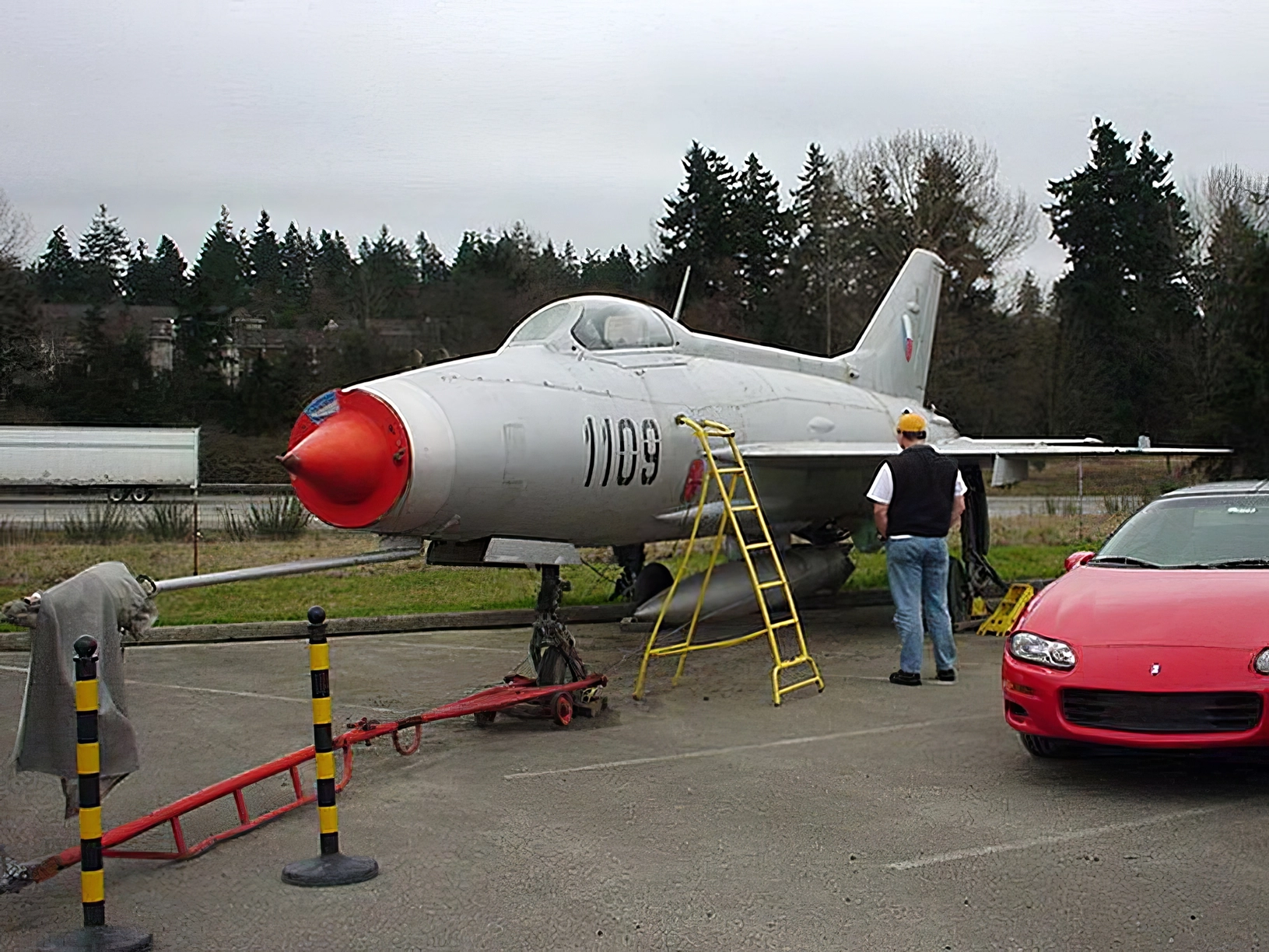
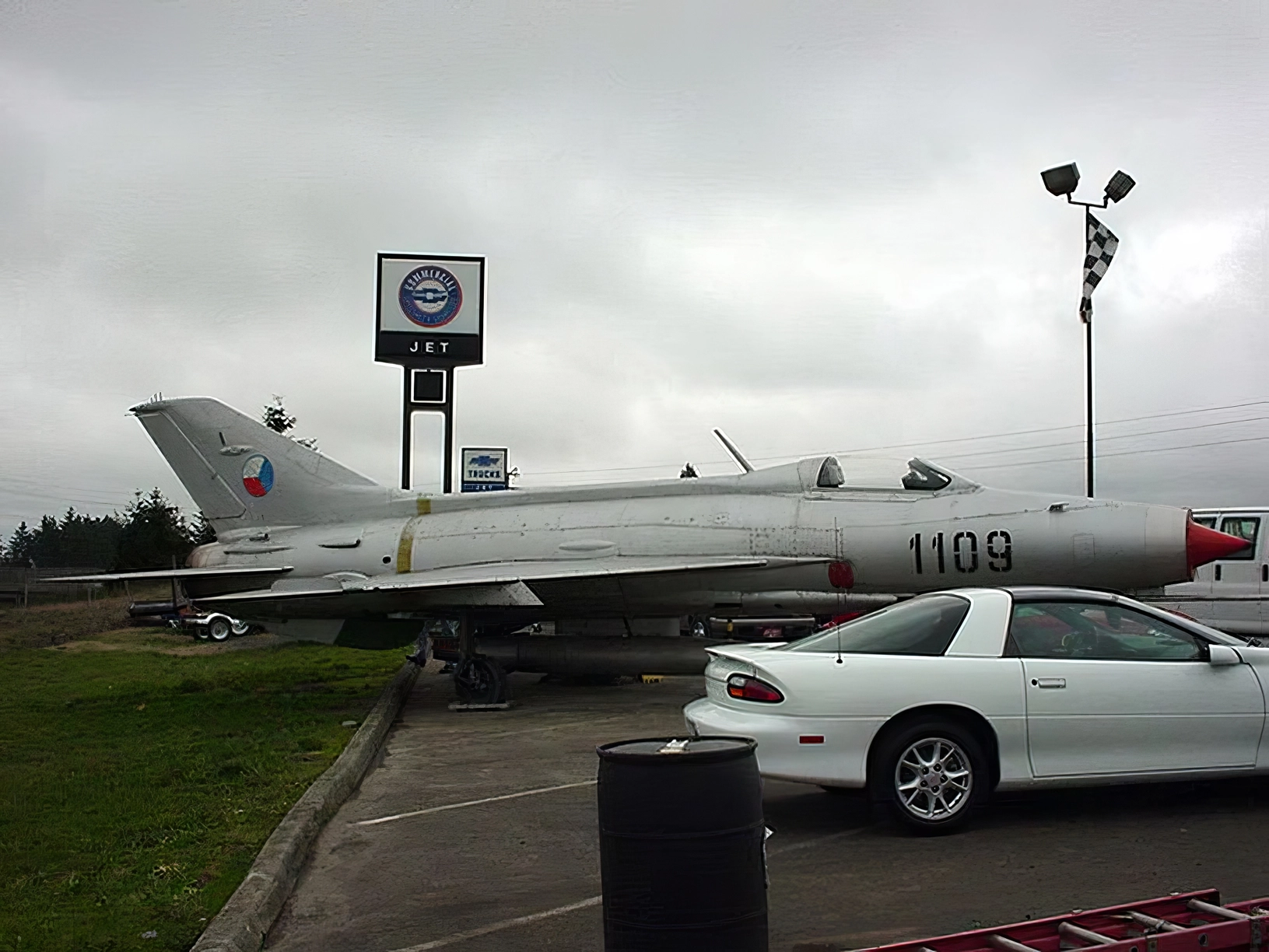
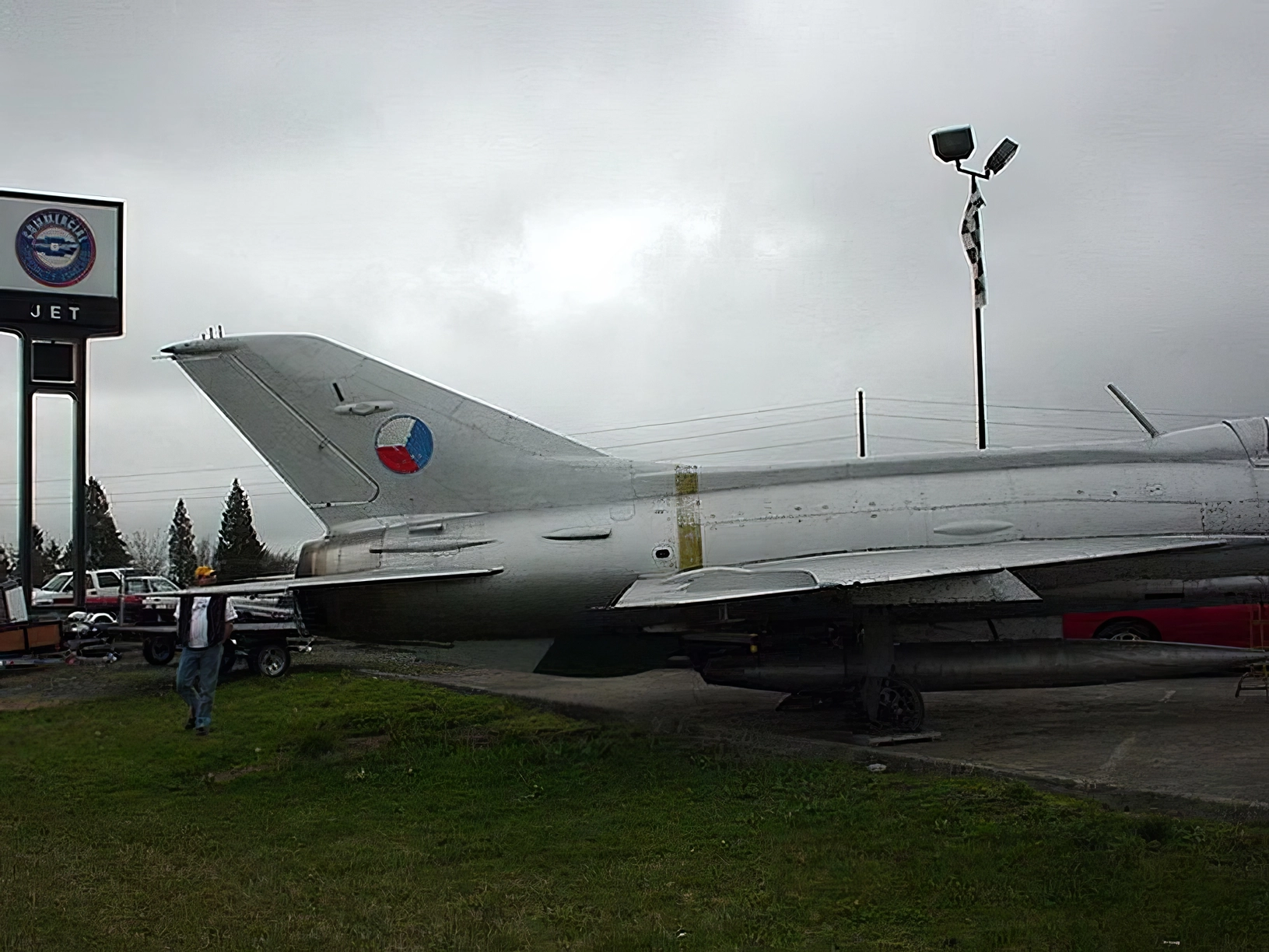
MiG-21 Walk Around
Photographer
Bill Maloney
Localisation
Wings of Eagles Discovery Center
Photos
24
MiG-21UM Mongol B Walk Around
Photographer
Michael Benolkin
Localisation
Unknow
Photos
31
See also:
Mikoyan-Gurevich MiG-21 Lancer C Walk Around
Photographer
Luc Colin
Localisation
Unknow
Photos
35
The Mach 2 Revolution
The MiG-21F was the first major production variant of the legendary MiG-21 family. Designed as a short-range, high-altitude “point defense” interceptor, it was built for speed and climb rate above all else. Its iconic delta-wing and pencil-like fuselage made it a symbol of Soviet air power during the Cold War. While early versions like the “F” (Forsirovannyy – Uprated) were limited in terms of radar and fuel, they established the “lightweight fighter” philosophy that would challenge Western air superiority for decades.
The Shock Cone (Translating Inlet): To fly at Mach 2, the MiG-21 used a circular nose intake with a moving center cone. This cone automatically adjusted its position based on speed to manage the shock waves and ensure the engine received air at subsonic speeds.
Delta-Wing Aerodynamics: The 57-degree swept delta wing provided low drag at supersonic speeds and a large surface area for lift, though it caused the aircraft to lose energy rapidly during hard, high-G turns.
The “F-13” Transition: The most famous early sub-variant, the MiG-21F-13, removed one of the two internal 30mm cannons to save weight and make room for the K-13 air-to-air missile, a Soviet reverse-engineered version of the American Sidewinder.
Simple Ejection System: Early MiG-21s featured a unique “canopy-shield” ejection system where the canopy would stay attached to the seat to protect the pilot from the supersonic windblast before falling away.
Combat Legacy: Vietnam and Beyond
The Vietnam Threat: North Vietnamese MiG-21Fs used “hit-and-run” tactics against U.S. strike packages. Their small size made them difficult to spot visually, and their high climb rate allowed them to ambush F-4 Phantoms from below or above.
The “Pilot’s Plane”: Pilots loved the MiG-21 for its responsiveness and speed, but criticized its poor rearward visibility and the “nose-heavy” handling when low on fuel.
Mass Production: Over 11,000 MiG-21s were built (including Chinese J-7 copies). It has served in the air forces of over 60 nations and remains in active service in several countries today, more than 60 years after its debut.
The “MiG-21 Bis” Evolution: Later versions eventually solved the fuel and radar issues of the “F” model, adding a massive “spine” fuel tank and sophisticated radar, though this increased weight and reduced the pure agility of the original design.


 Vought OS2U Kingfisher – Photos & Video
 Loening OL – Photos & Video
 Curtiss O-52 Owl – Photos & Video
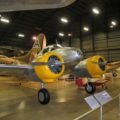 Curtiss-Wright AT-9 – Photos & Video
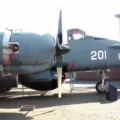 Lockheed P-2 Neptune – Photos & Video
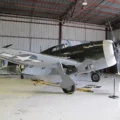 P-47G Thunderbolt – WalkAround
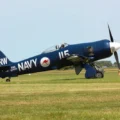 Hawker Sea Fury FBII vol2 – Walk Around
 P-51D Mustang vol2 – Walk Around
 B-17G Flying Fortress – WalkAround
 Messerschmitt Bf 109G-2 – Walk Around