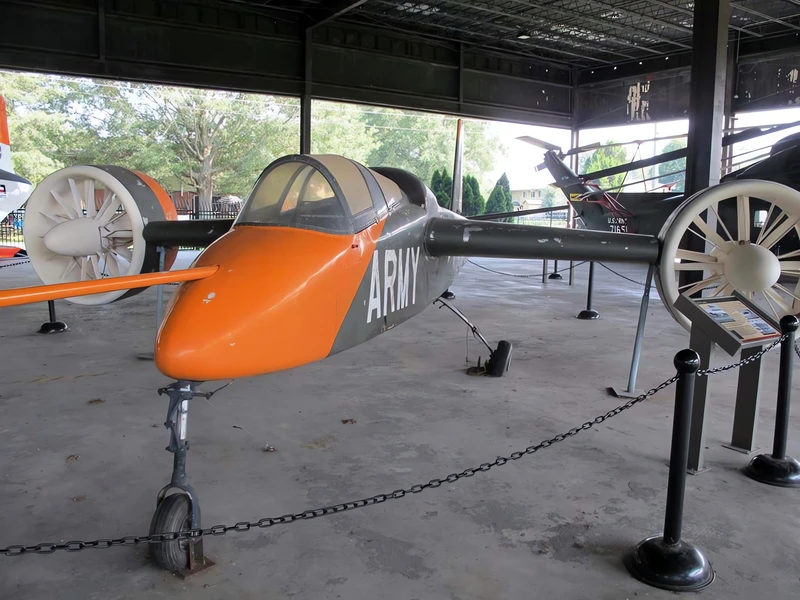
Doak VZ-4 | |
|---|---|
| Land | Usa |
| Role | VTOL onderzoek convertiplane |
| Eerste vlucht | 25 februari 1958 |
| Gebouwd | 1 |
De Doak VZ-4 (of Doak Model 16) was een Amerikaans prototype Vertical Takeoff and Landing (VTOL) vliegtuig gebouwd in de jaren 1950 voor dienst in het Amerikaanse leger. Slechts één prototype werd gebouwd, en het Leger van de V.S. trok het van actieve proeven in 1963 terug.
Bron: Doak VZ-4 op Wikipedia
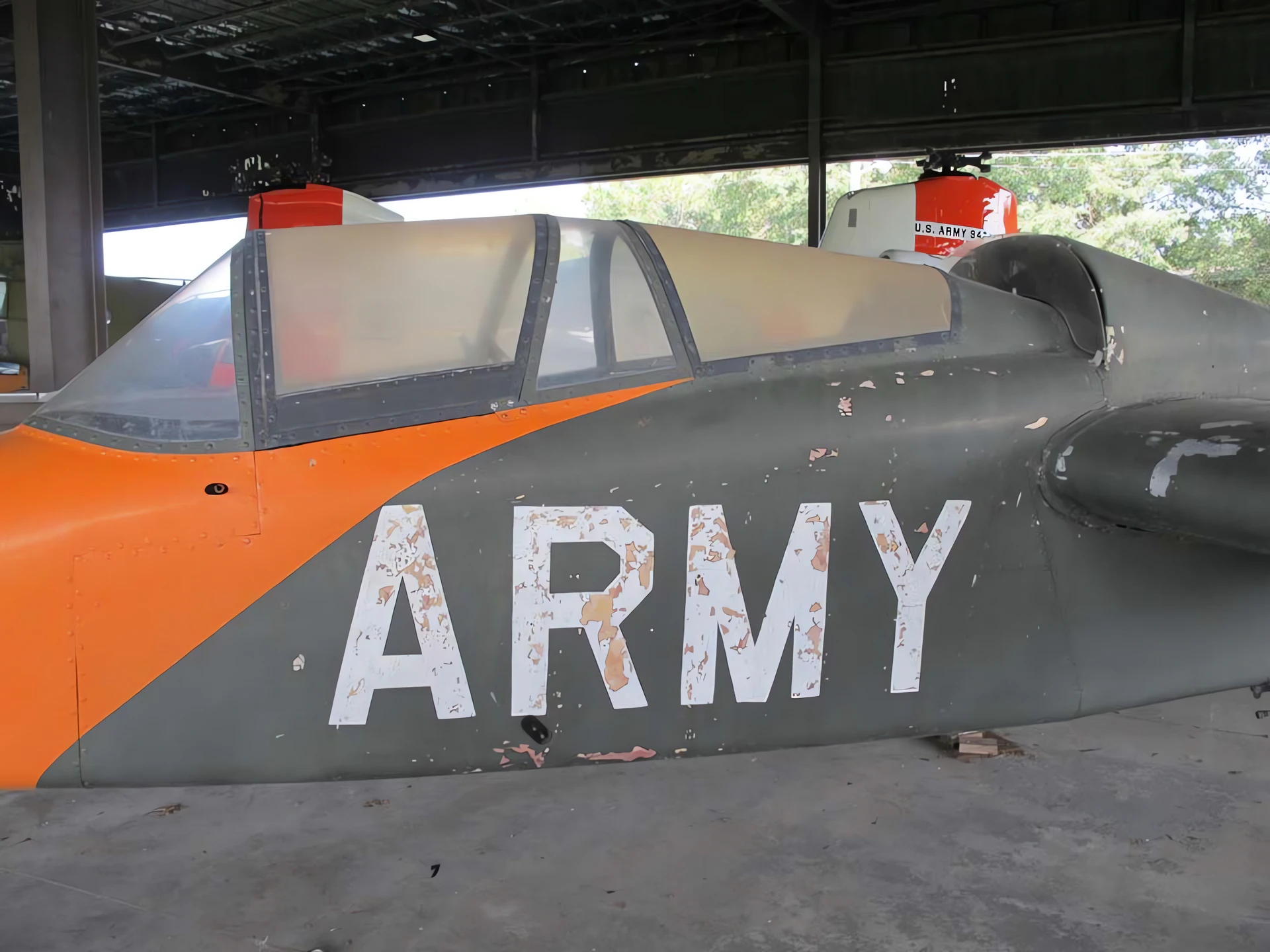
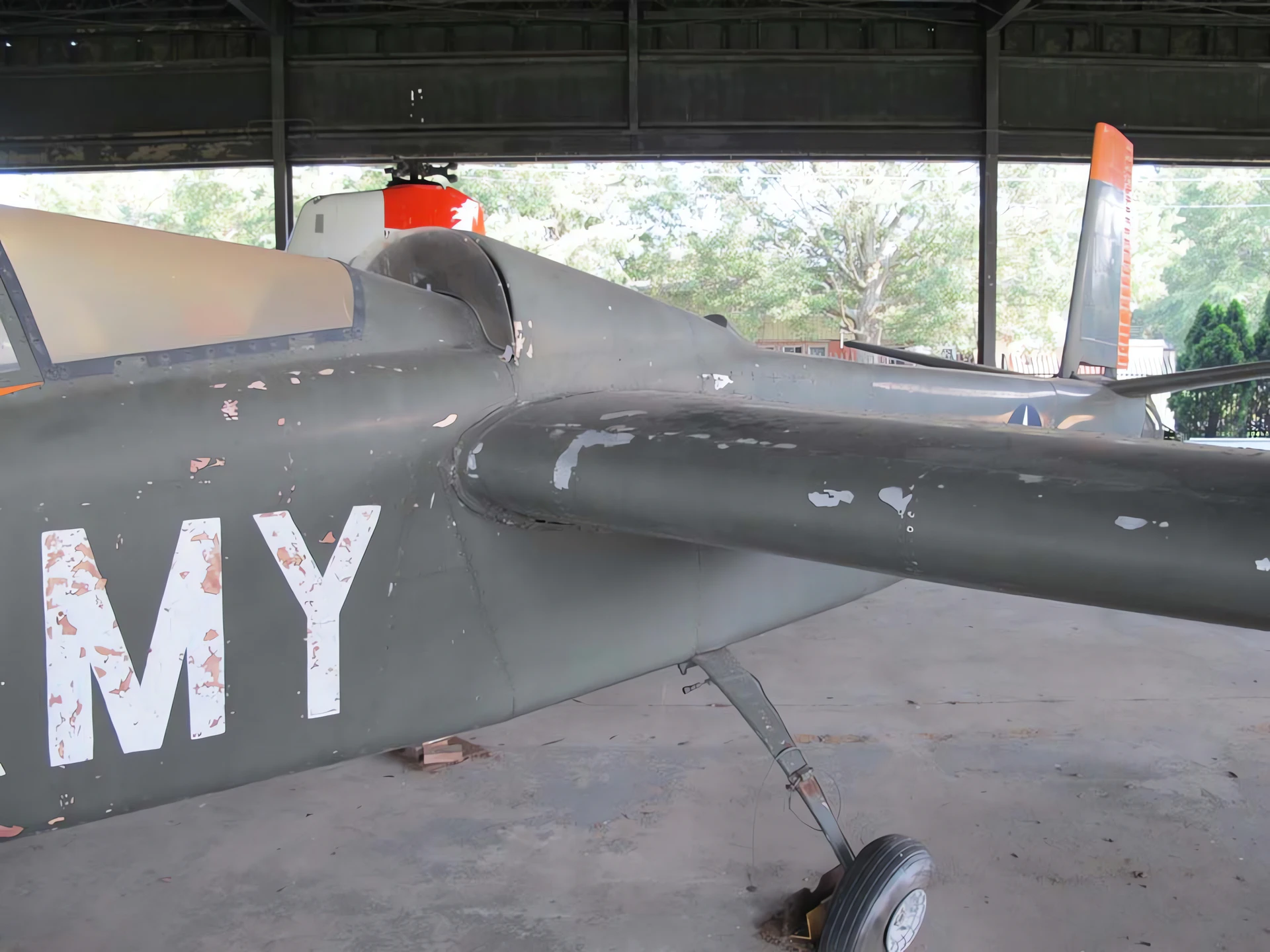
| Doak 16 VZ-4DA Walk Around | |
|---|---|
| Photographer | Vladimir Yakubov |
| Localisation | US Army Transportation Museum, Fort Eustis |
| Photos | 39 |
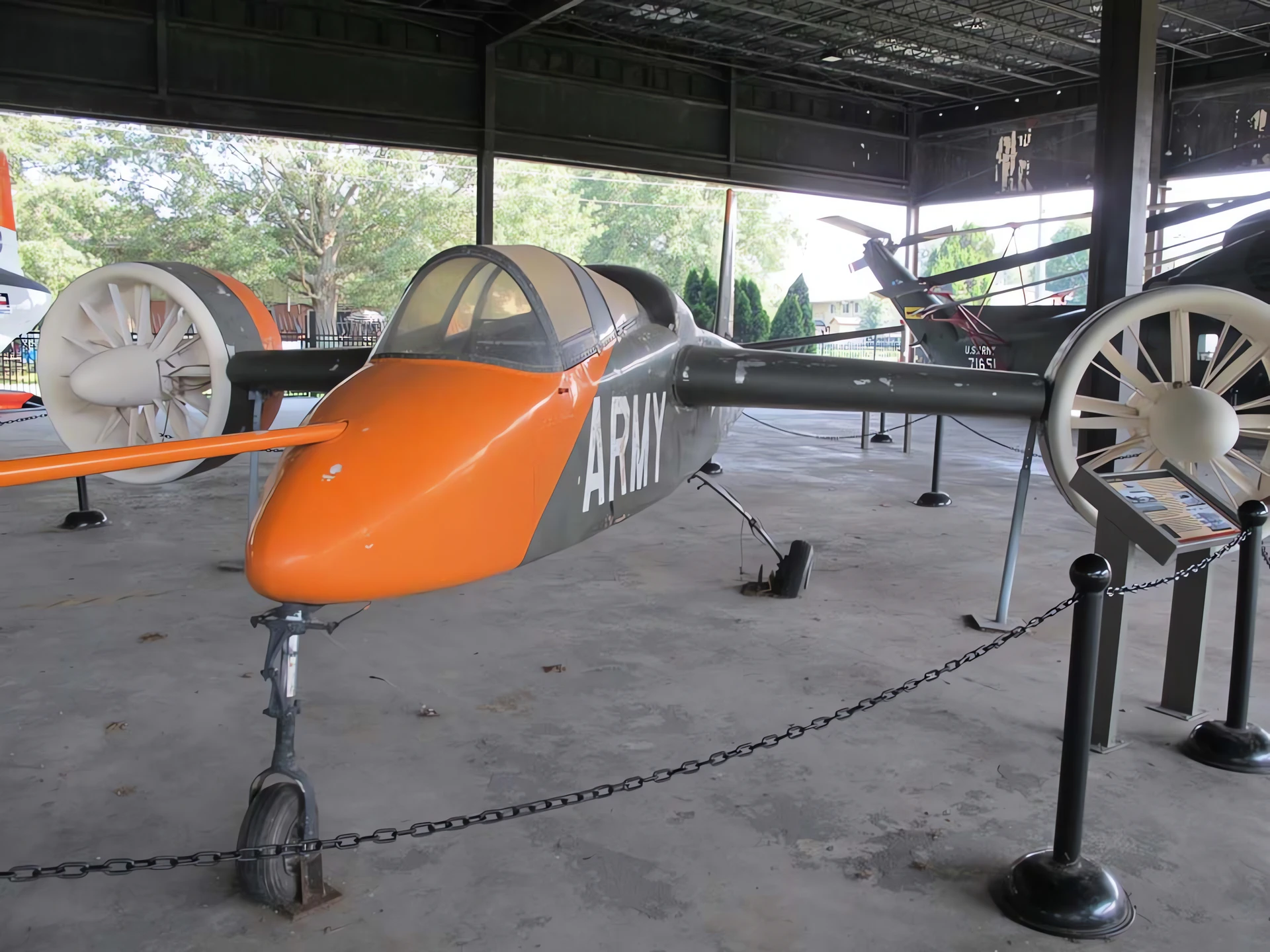
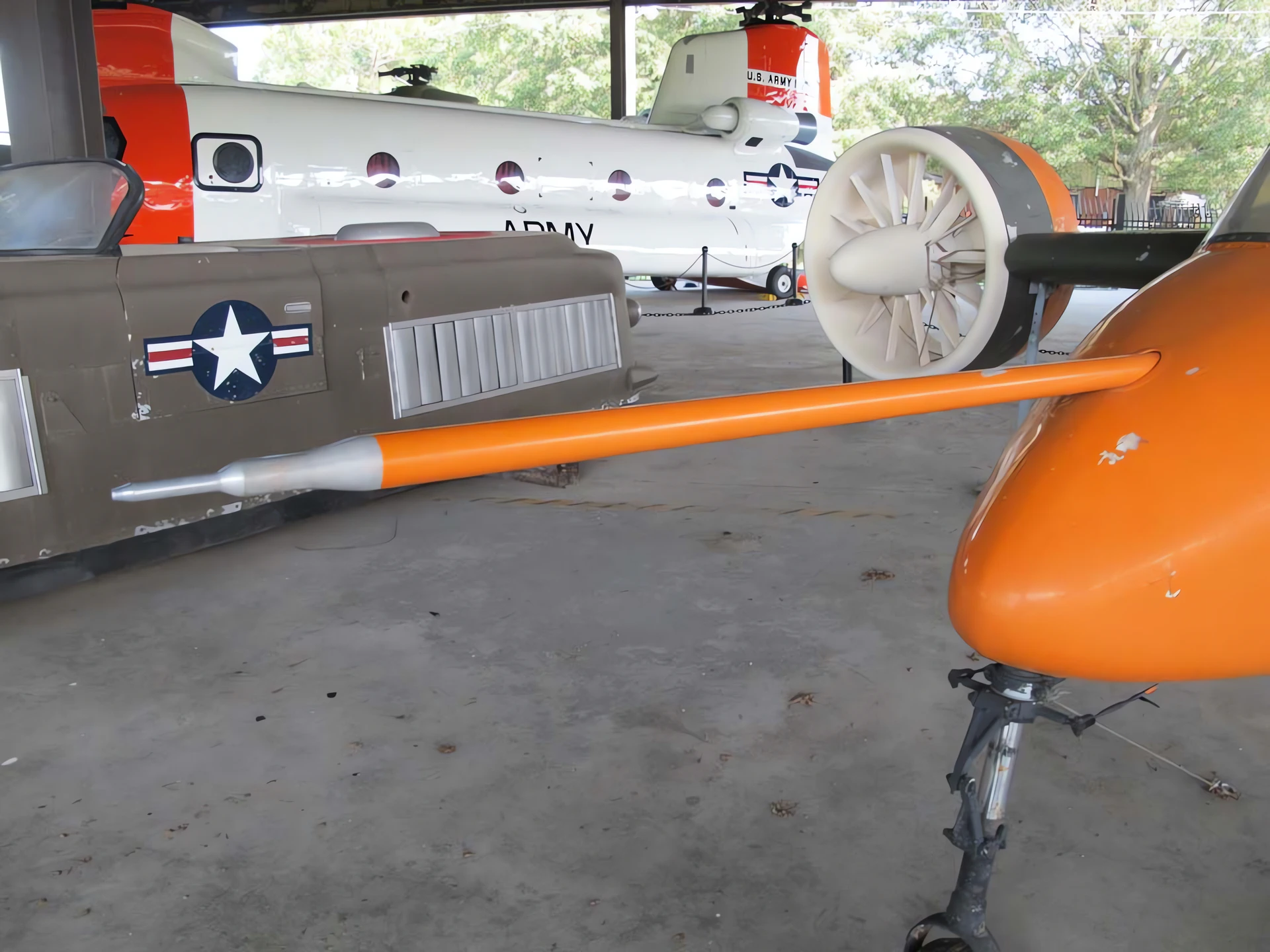
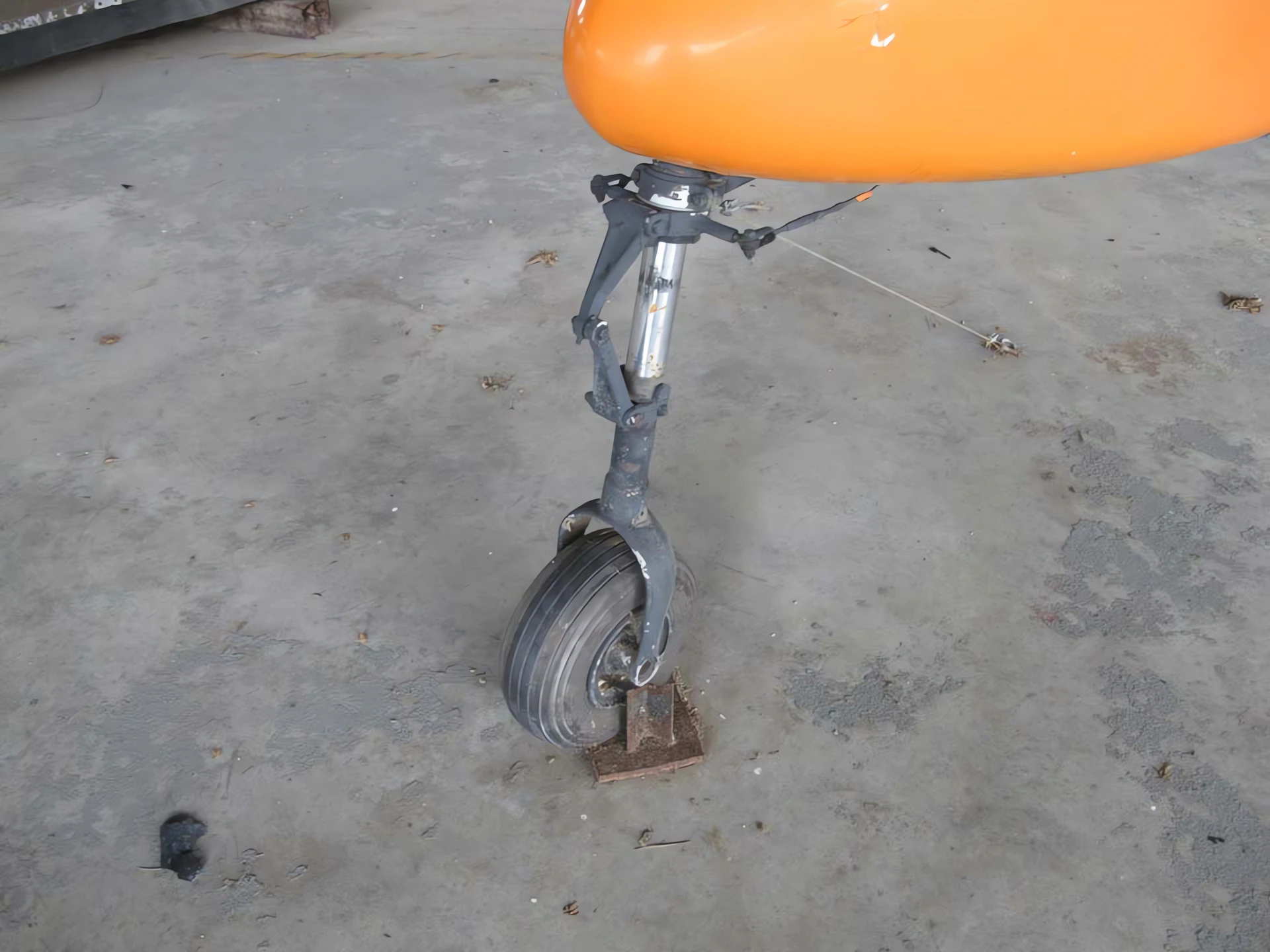
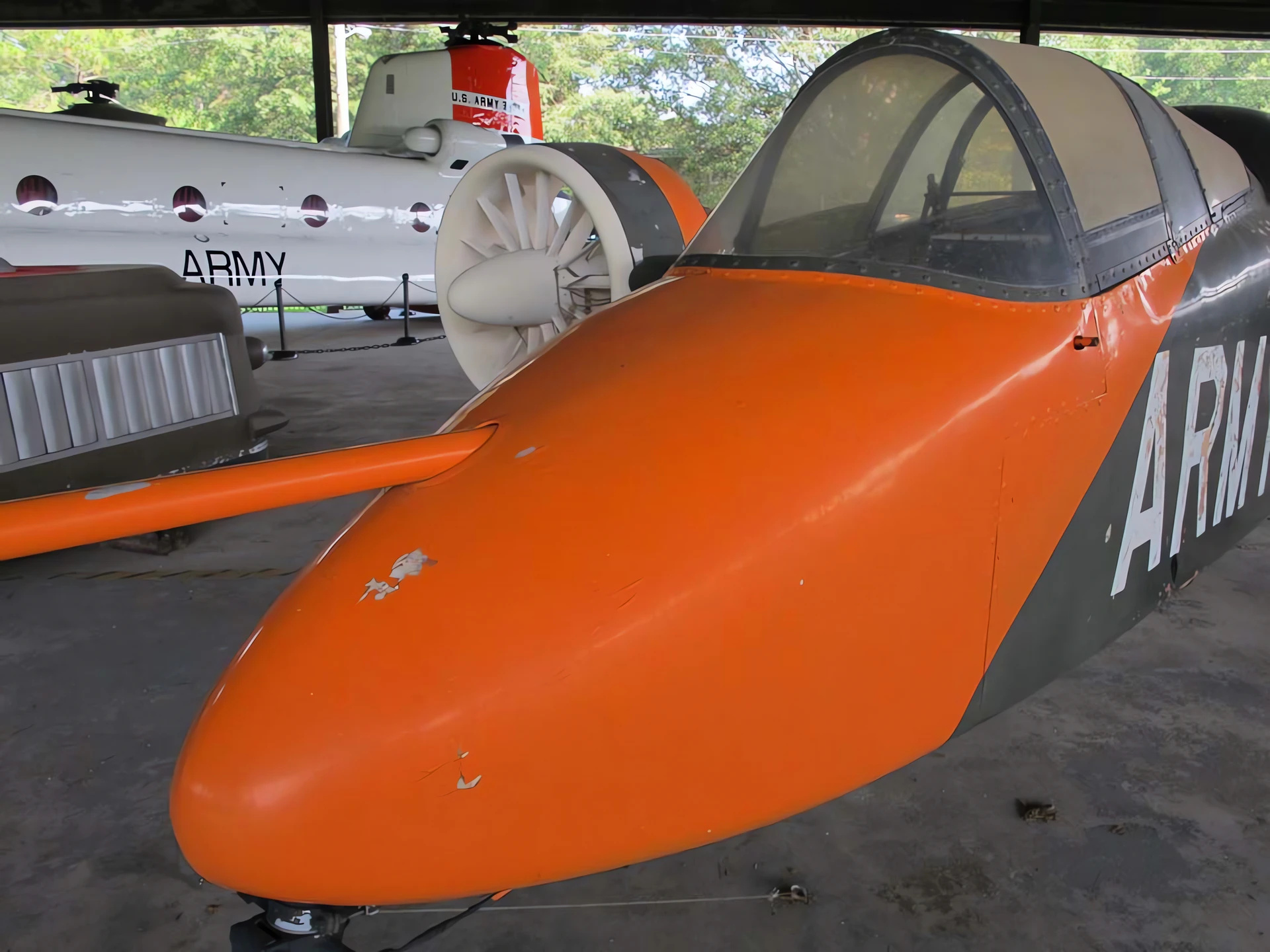
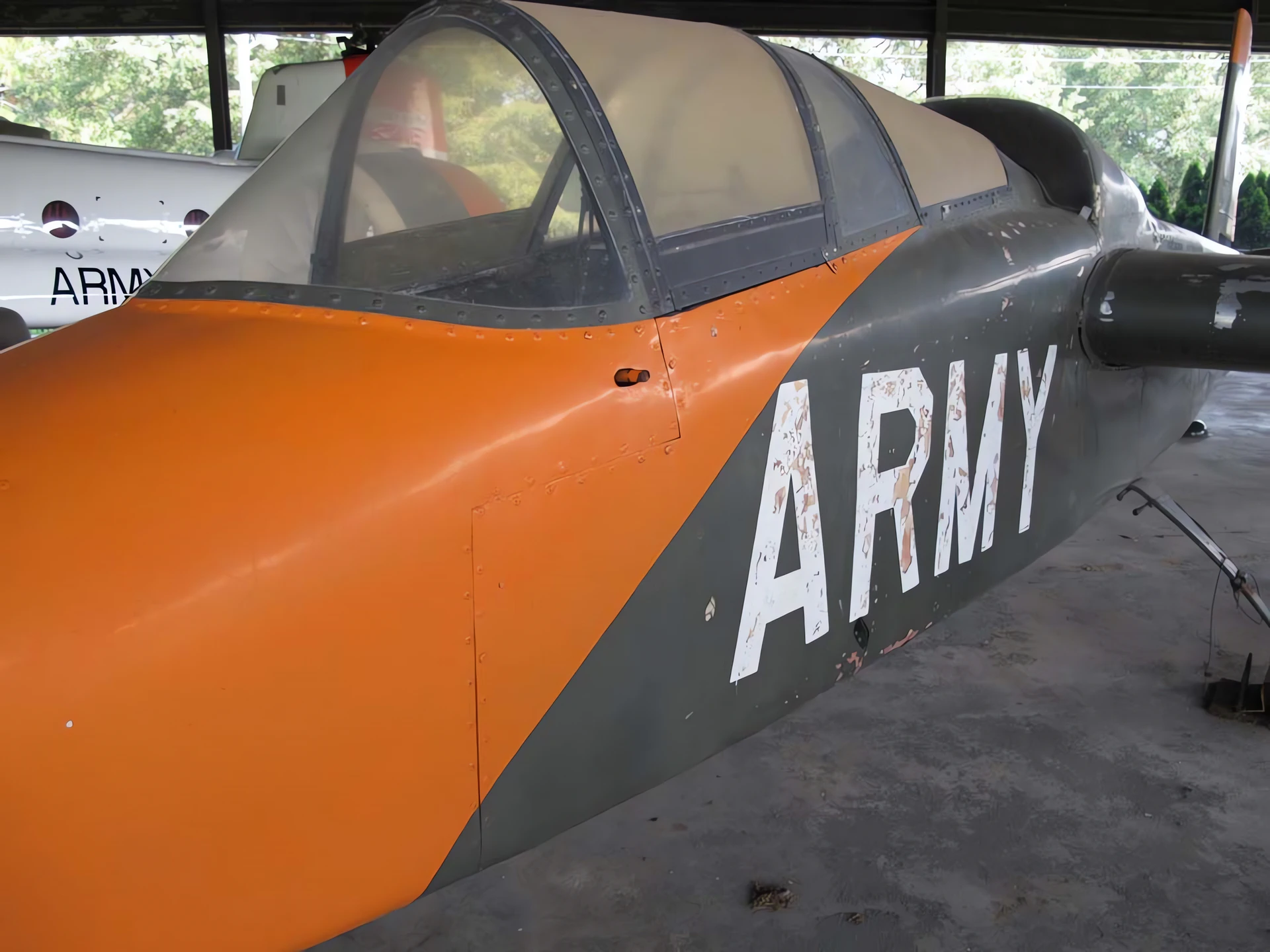
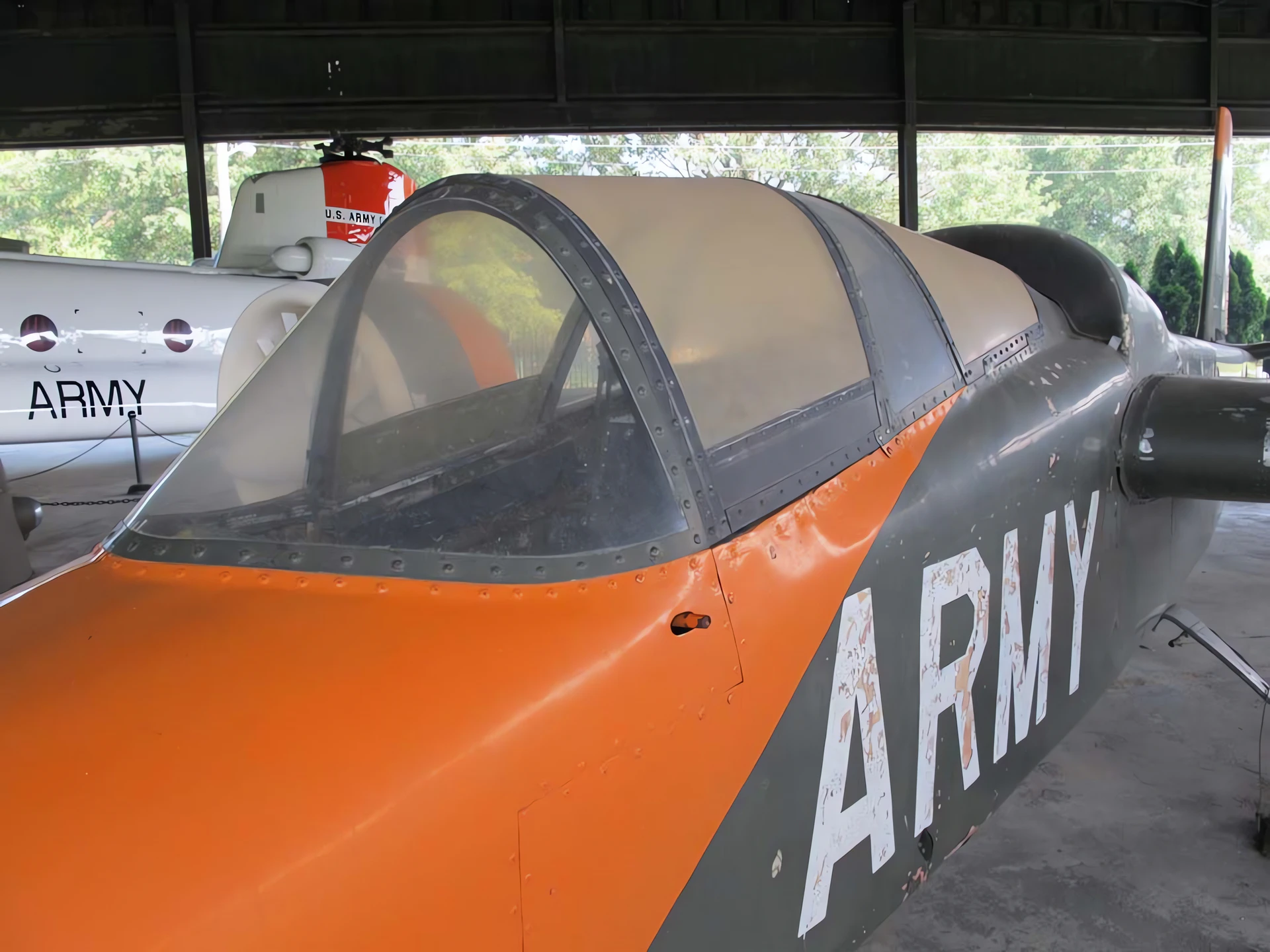
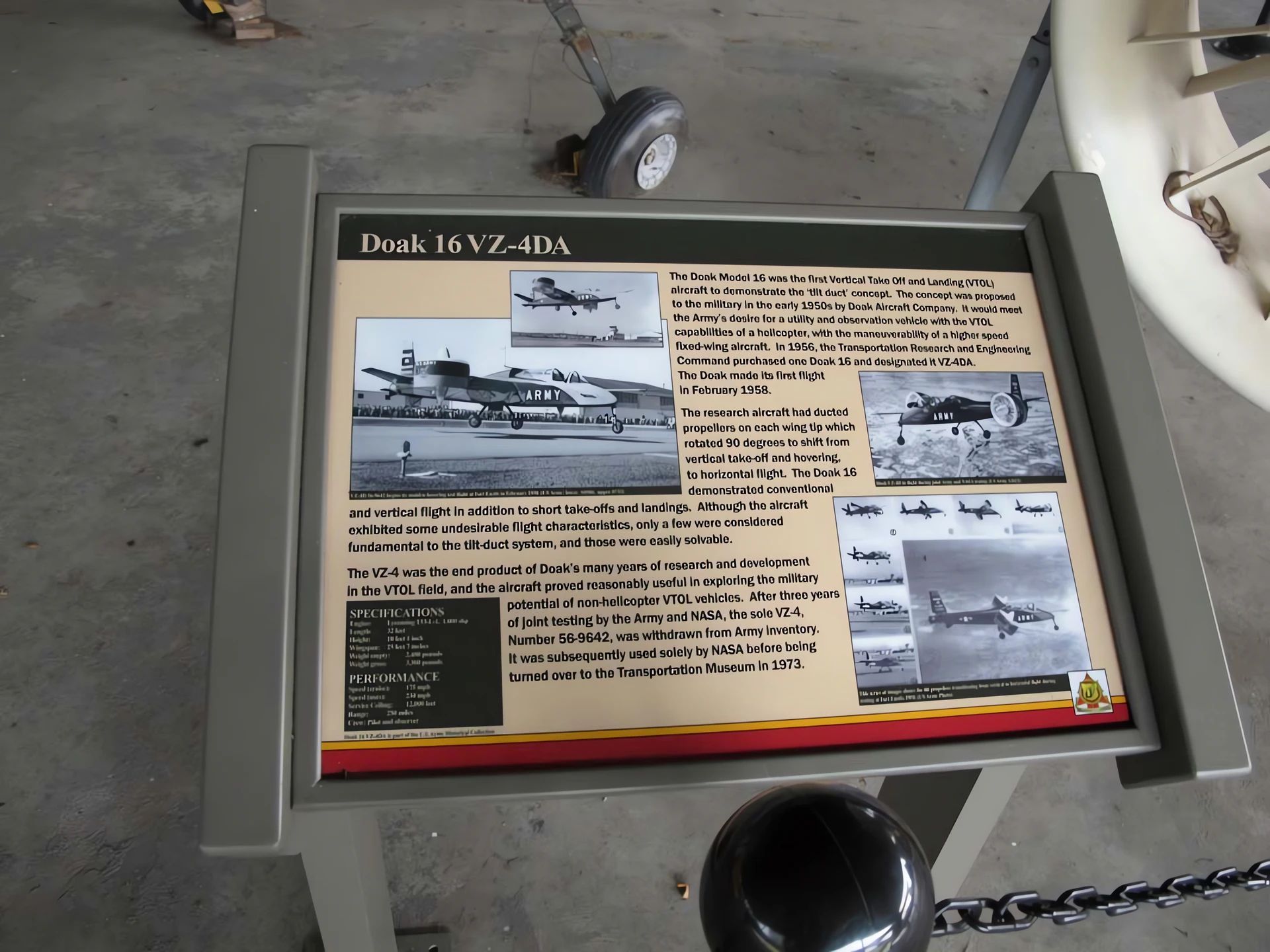

Zie ook:


General Characteristics and Role
The Doak 16, designated VZ-4DA by the U.S. Army, was an experimental Vertical Takeoff and Landing (VTOL) aircraft developed in the late 1950s. It was designed to explore the concept of a “convertiplane” that could take off and land vertically like a helicopter, but transition to forward flight like a conventional fixed-wing aircraft for faster cruise speeds. The Doak 16 used a unique propulsion system: a single engine drove two large, tilting ducted fans located at the wingtips. The entire fan assemblies could be rotated 90 degrees, a configuration known as a ducted fan tilt-wing. This technology was highly experimental, part of a push by the U.S. military to find practical VTOL solutions for observation and utility roles.
| Property | Typical Value (VZ-4DA) |
|---|---|
| Role | Experimental VTOL Research Aircraft |
| National Origin | United States (U.S. Army) |
| Fabrikant | Doak Aircraft Company |
| First Flight | February 1958 (Conventional), February 1959 (Vertical) |
| Bemanning | 2 (Pilot and Observer) |
| Lengte | 9.75 m (32 ft 0 in) |
| Spanwijdte | 4.88 m (16 ft 0 in) |
| Hoogte | 3.05 m (10 ft 0 in) |
| Gross Weight | 1,450 kg (3,200 lb) |
Powerplant and Propulsion System
- Engine: 1 x Lycoming T53-L-1 turboshaft engine (later used in the Bell UH-1 Huey).
- Power Output: 825 shp (615 kW).
- Propulsion: Two tilting ducted fans (impellers), each connected to the engine via a transmission system to ensure synchronous rotation and thrust.
- Flight Control: In vertical mode, control was provided by vanes located in the ducted fan exhaust. In forward flight, conventional rudder, elevator, and ailerons were used.
- Maximum Speed (Cruise): Approximately 370 km/h (230 mph).
- Service Ceiling: 6,096 m (20,000 ft).
Program Outcome and Legacy
- Test Program: The VZ-4DA successfully demonstrated the transition from vertical to horizontal flight and back, validating the ducted fan tilt-wing concept.
- Performance: Although the tests were successful, the VZ-4DA suffered from complex mechanical systems required to articulate the fans and transfer power, and it had a limited payload capacity.
- Conclusion: The U.S. Army concluded the program in 1960. While the ducted fan concept showed promise, the Army ultimately shifted focus to lighter turboshaft helicopters (like the Bell UH-1) and other VTOL concepts that were considered more mechanically simple and scalable.
- Preservation: The single prototype built, tail number 56-6942, is preserved and on display at the U.S. Army Transportation Museum at Joint Base Langley-Eustis, Virginia.
Views : 2244
U ook zien :
 Bell XV-15 Tiltrotor – Foto's & Video's
 Avro Canada VZ-9 Avrocar – Foto's &video's
 Ryan X-13 Vertijet – Foto's & Video's
 Dornier Do 31E3 – Foto's & Video
 Jakovlev Yak-38 – Foto's &Video
 Messerschmitt Bf 109G-2 – Rond te Lopen
 General Motors FM-2 Wildcat - WalkAround
 Junkers Ju-52 Tante Ju – Rond te Lopen
 Messerschmitt Me-109E – Rond te Lopen
 Supermarine Spitfire Mk.XVI – Rond Te Lopen