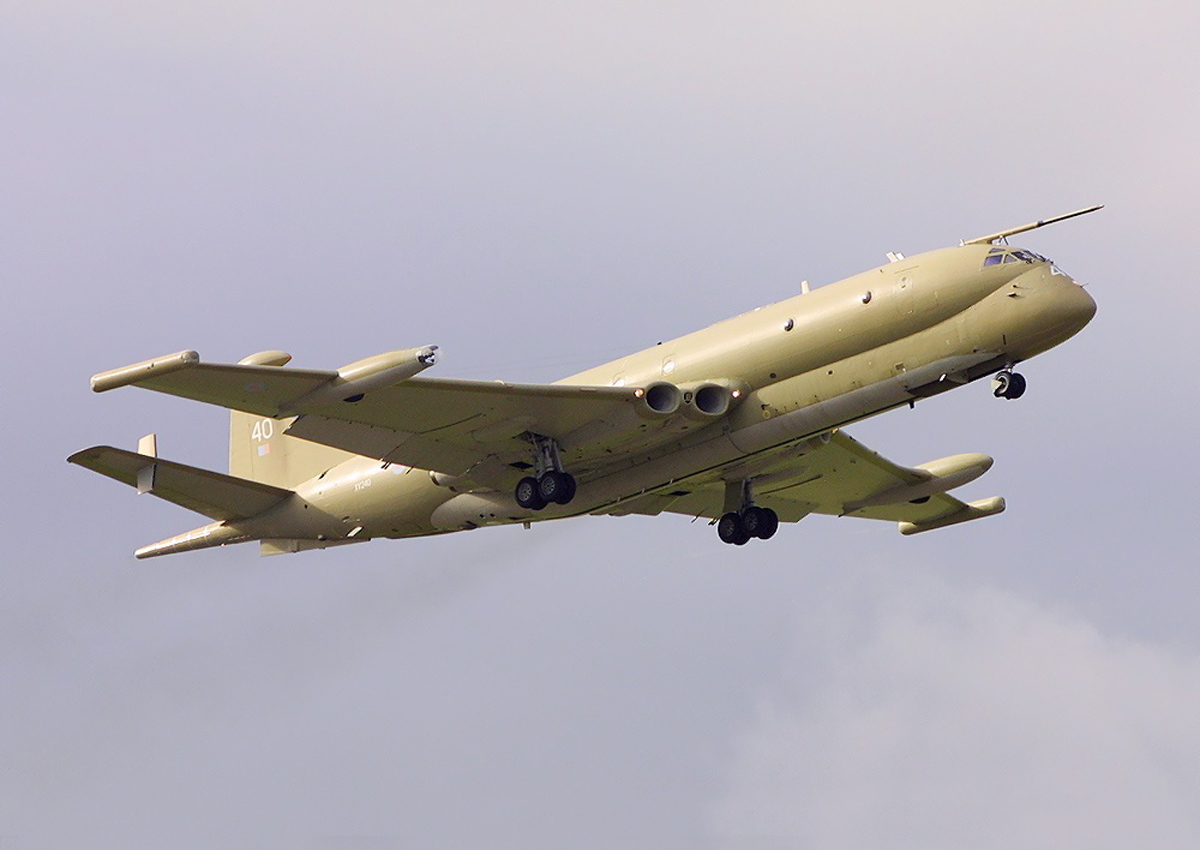
| Hawker Siddeley Nimrod | |
|---|---|
| 국가 | 영국 |
| 역할 | 해상 순찰, ELINT, AEW |
| 첫 비행 | 1967년 5월 23일 |
| 내장 | 49+2 |
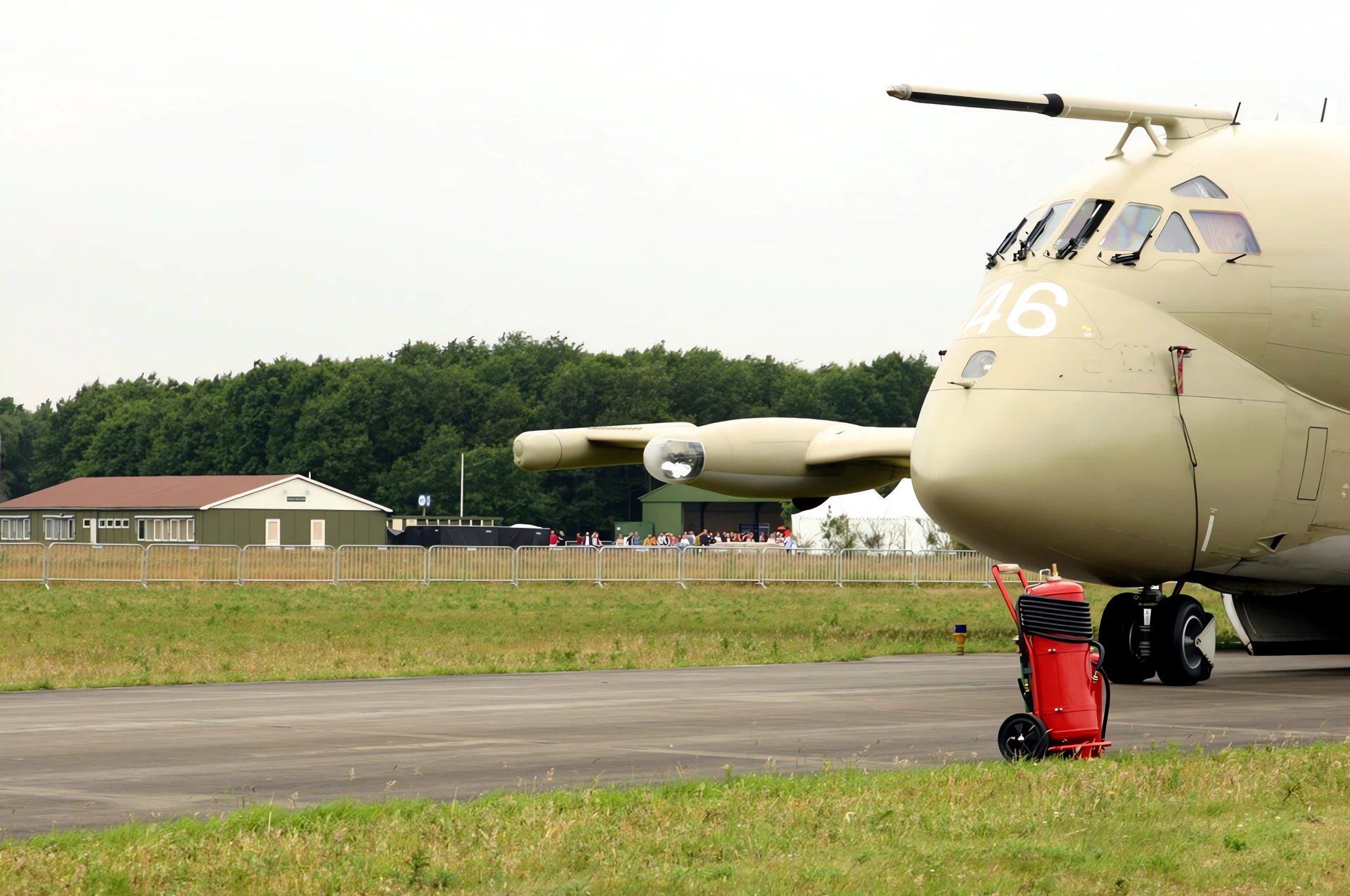
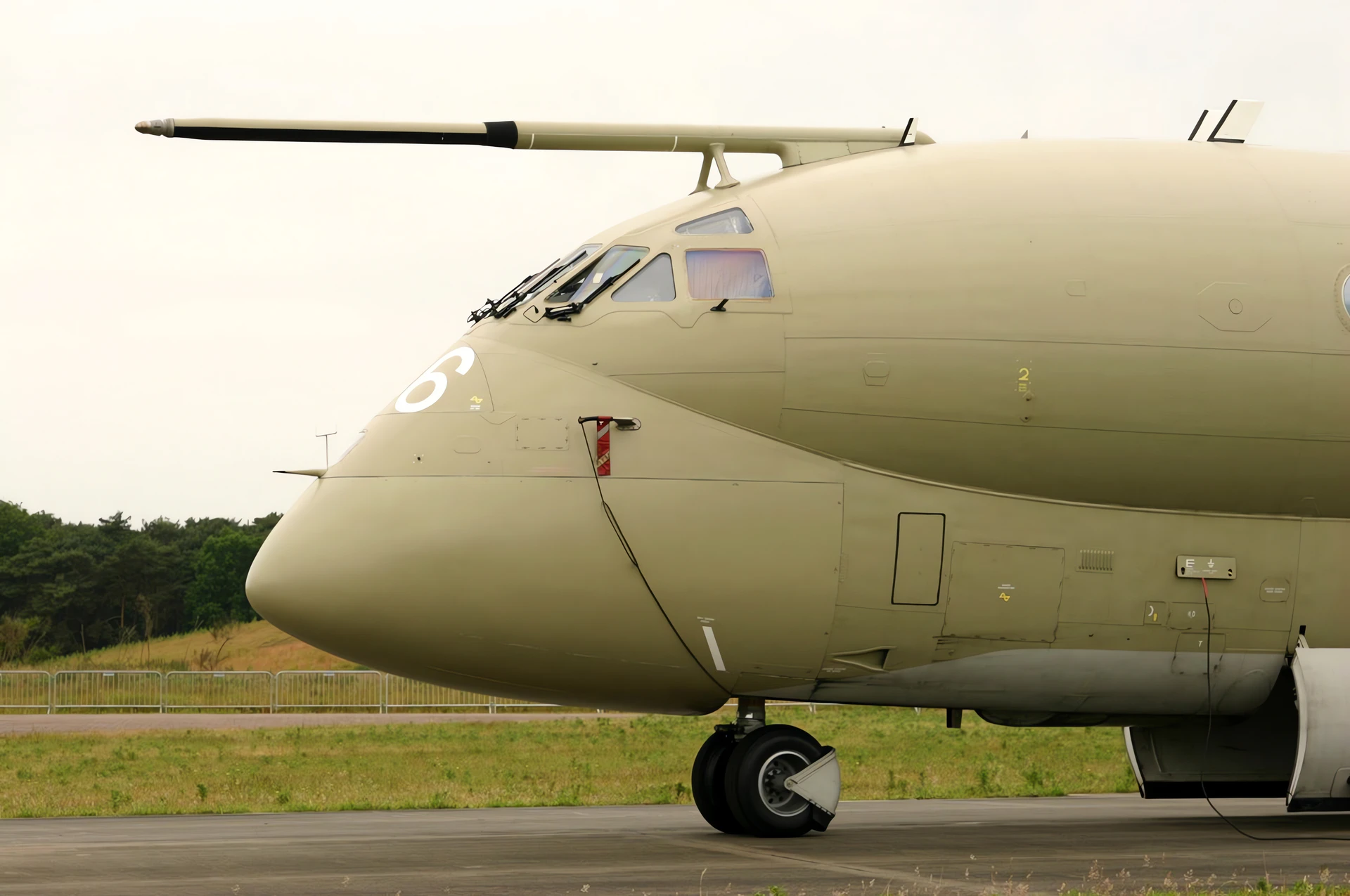
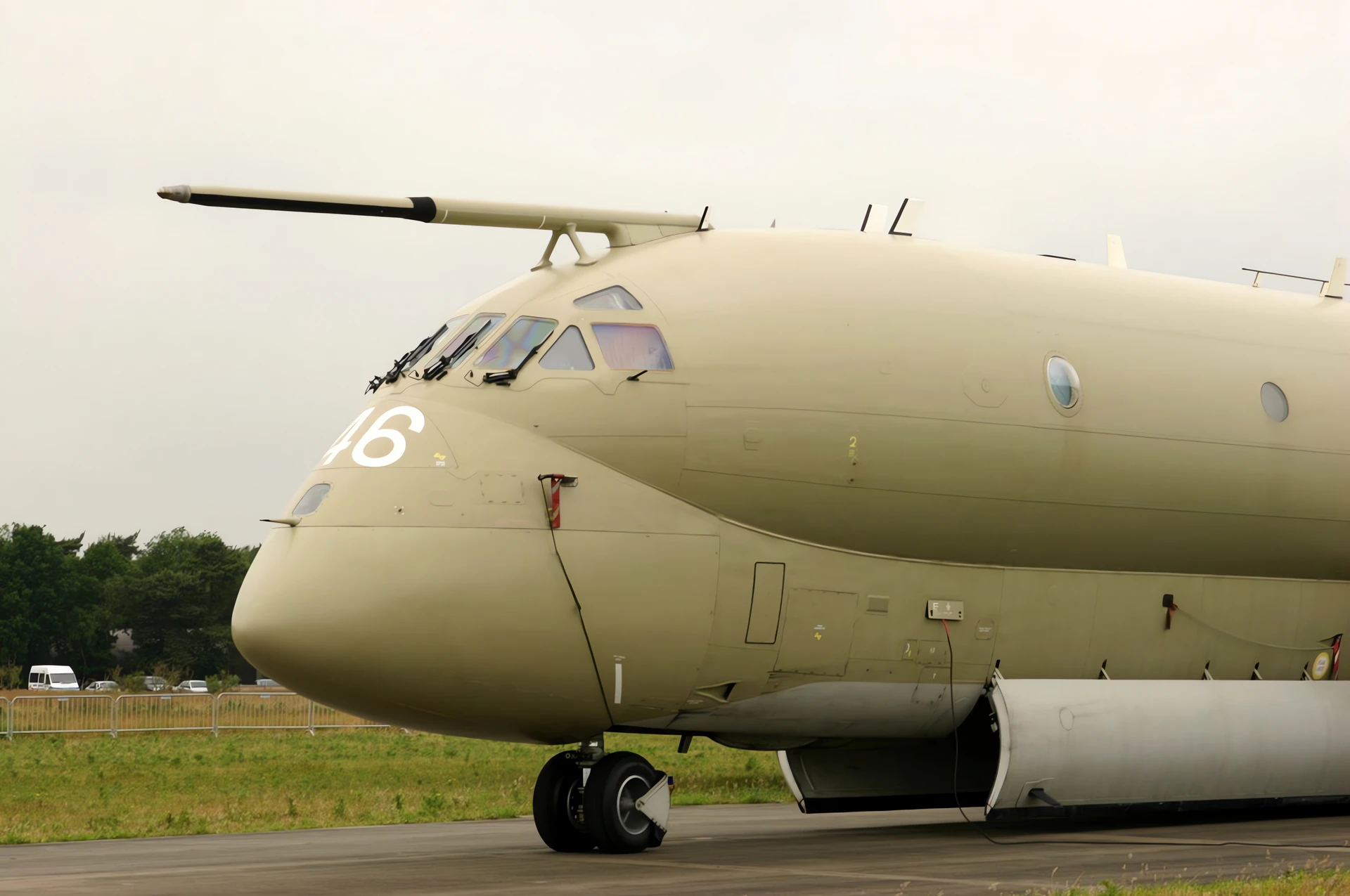
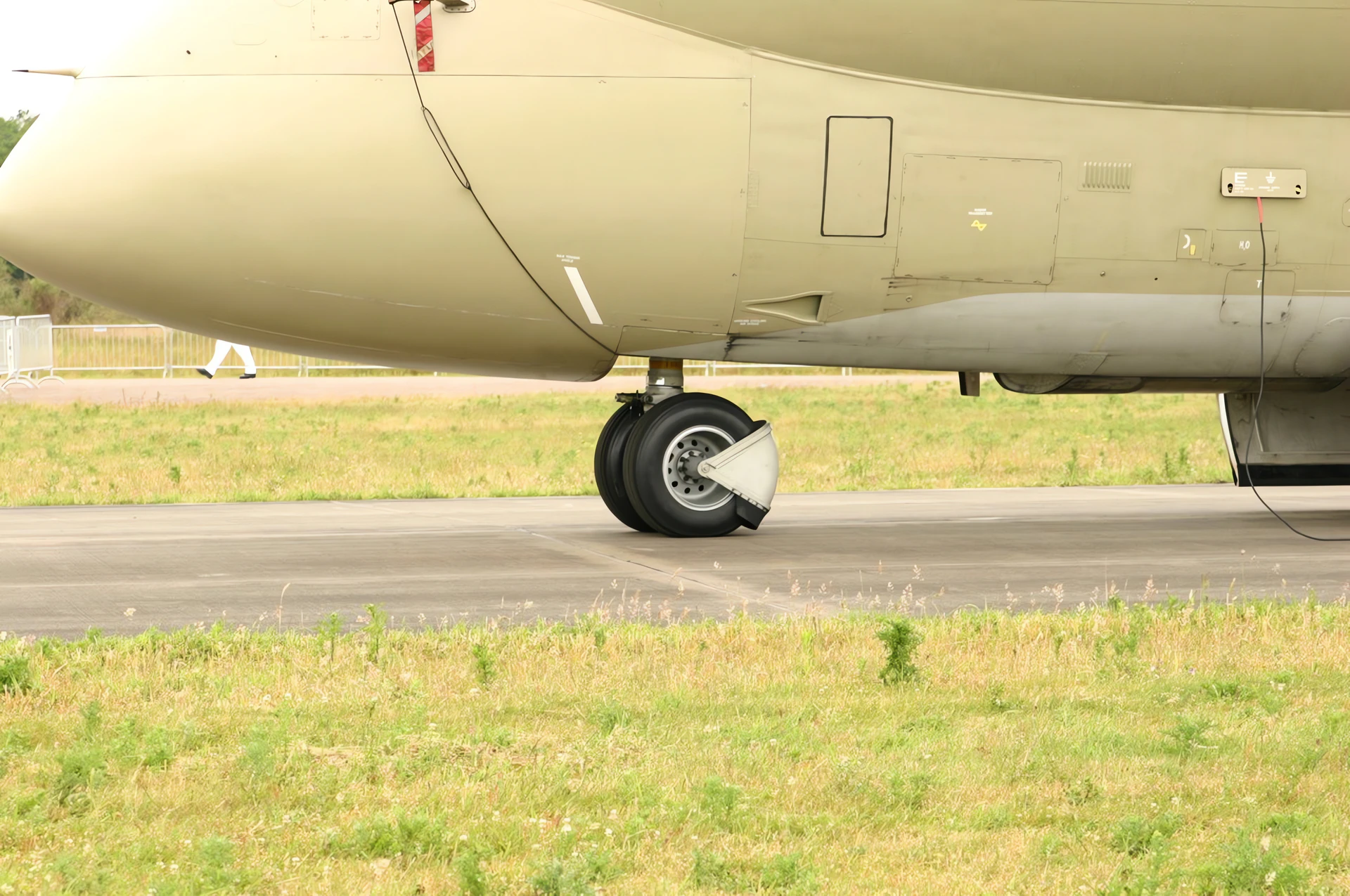
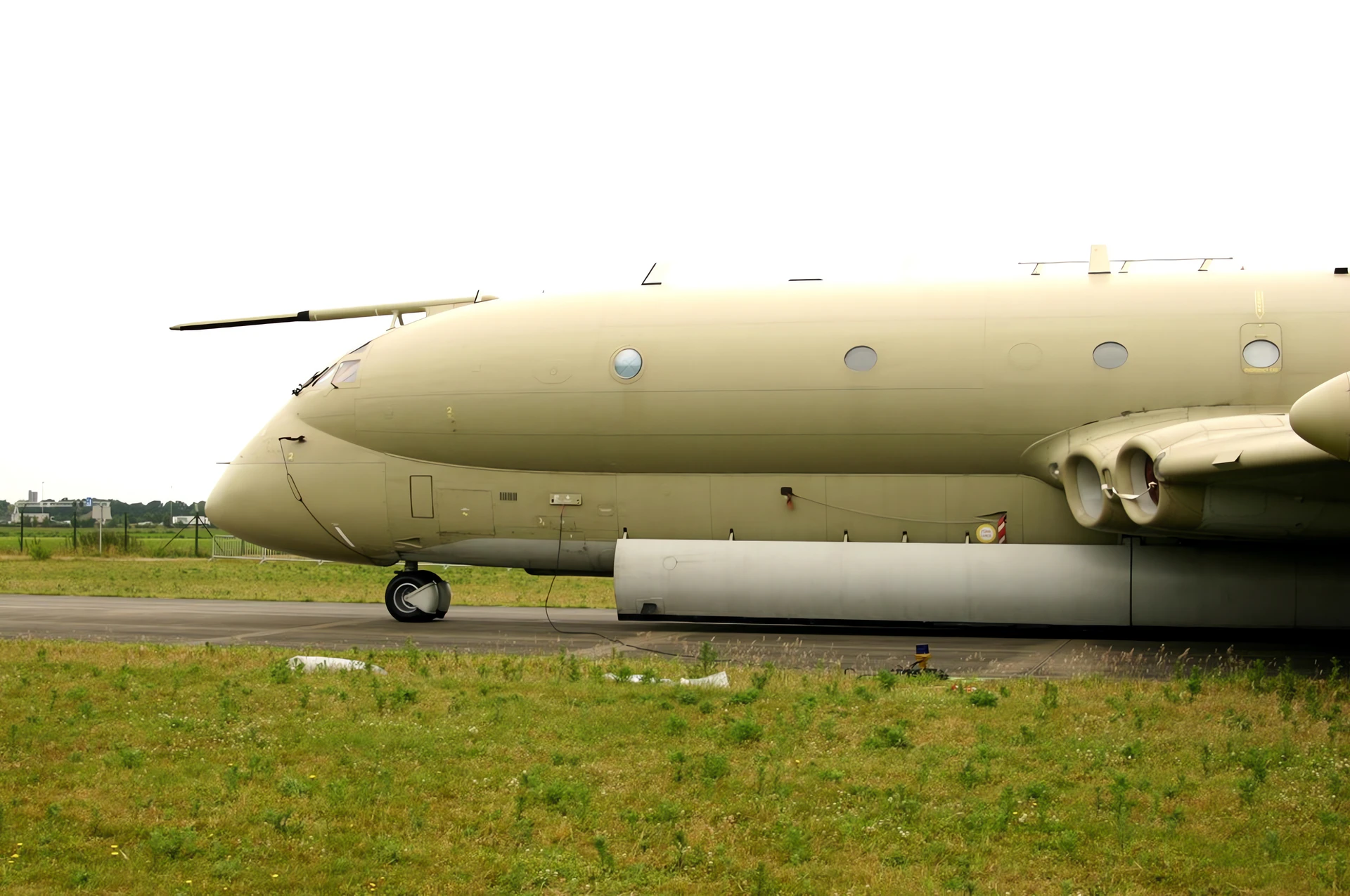
Tthe 호커 시들리 니므롯 영국에서 개발 및 운영하는 해상 초계기입니다. 그것은 세계 최초의 운영 제트 여객기 인 드 하빌랜드 코멧 (de Havilland Comet)의 광범위한 수정이었습니다. 그것은 원래 de Havilland의 후계자 회사 인 Hawker Siddeley에 의해 설계되었습니다. 추가 개발 및 유지 보수 작업은 Hawker Siddeley의 후속 회사인 British Aerospace와 BAE Systems에서 각각 수행했습니다.
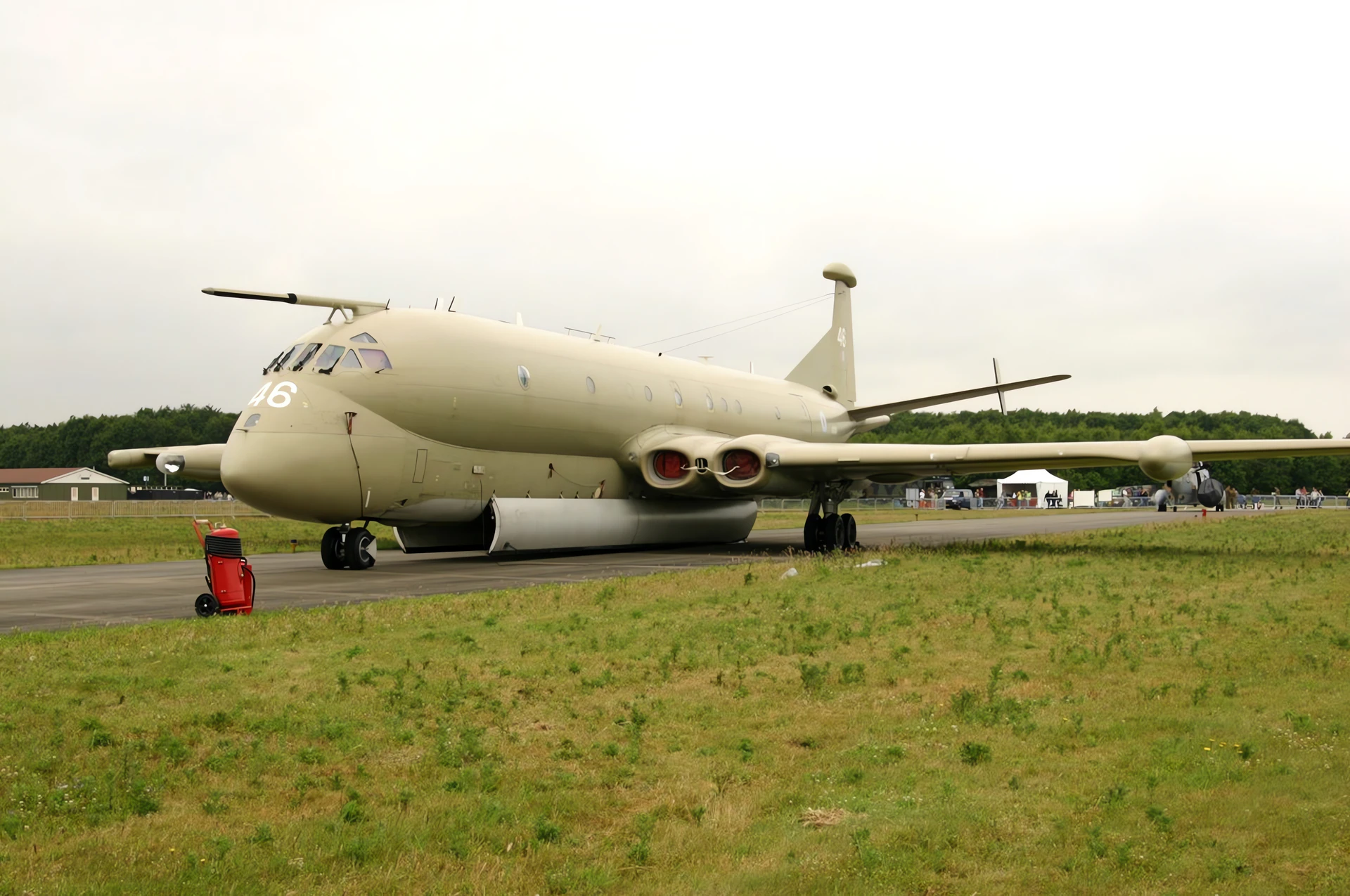
| 님로드 MR2 | |
|---|---|
| 사진 작가 | 블라디미르 야쿠보프 |
| 로컬라이제이션 | 판 버 러 |
| 사진 | 27 |

참고 항목:


The Comet’s Warrior Descendant
Tthe 님로드 MR2 was the backbone of the Royal Air Force’s maritime reconnaissance and anti-submarine warfare (ASW) capability for over 30 years. Derived from the de Havilland Comet—the world’s first jet airliner—the Nimrod swapped passengers for an array of sophisticated sensors and a cavernous internal weapons bay. During the Cold War, it patrolled the North Atlantic, tracking Soviet submarines with clinical precision, and later proved its versatility in search and rescue and electronic intelligence roles.
| Attribute | Technical Specification (Nimrod MR2) |
|---|---|
| 역할 | Maritime Patrol & Anti-Submarine Warfare (ASW) |
| 승무원 | 12-13 (2 Pilots, 1 Flight Engineer, 2 Navigators, 7-8 Sensor Ops) |
| First Flight (MR1) | May 23, 1967 |
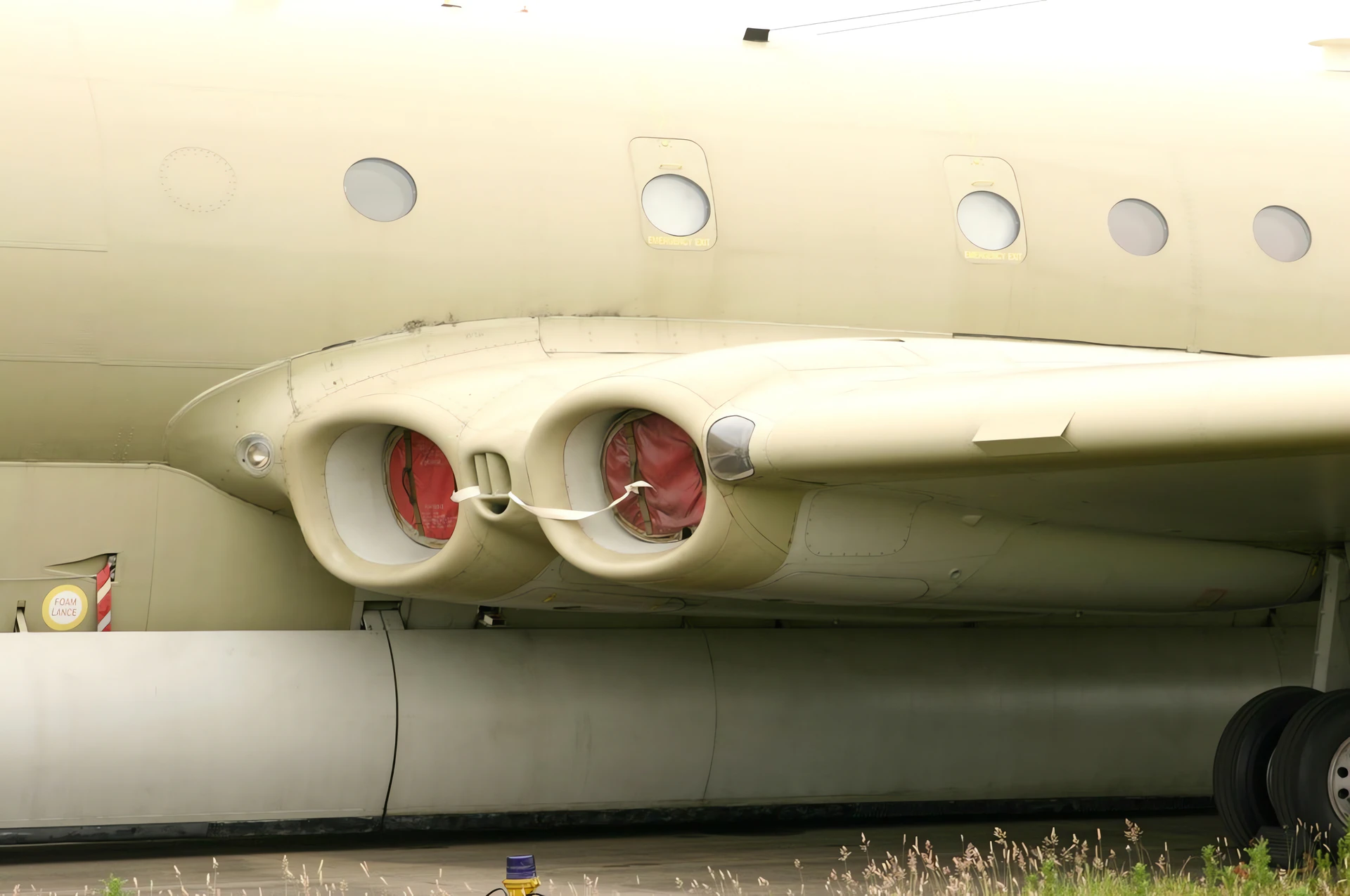
| 동력 장치 | 4 × Rolls-Royce RB.168-20 Spey turbofans |
| Thrust | 12,140 lbf (54 kN) per engine |
| 최대 속도 | 575 mph (925 km/h) |
| 작동 범위 | 5,000 to 6,000 miles (unrefueled) |
| 군비 | 2 × Sidewinder AAMs; Torpedoes (Mk 46/Stingray), Depth Charges, Harpoon missiles |
Acoustic Mastery and “The Double Bubble”
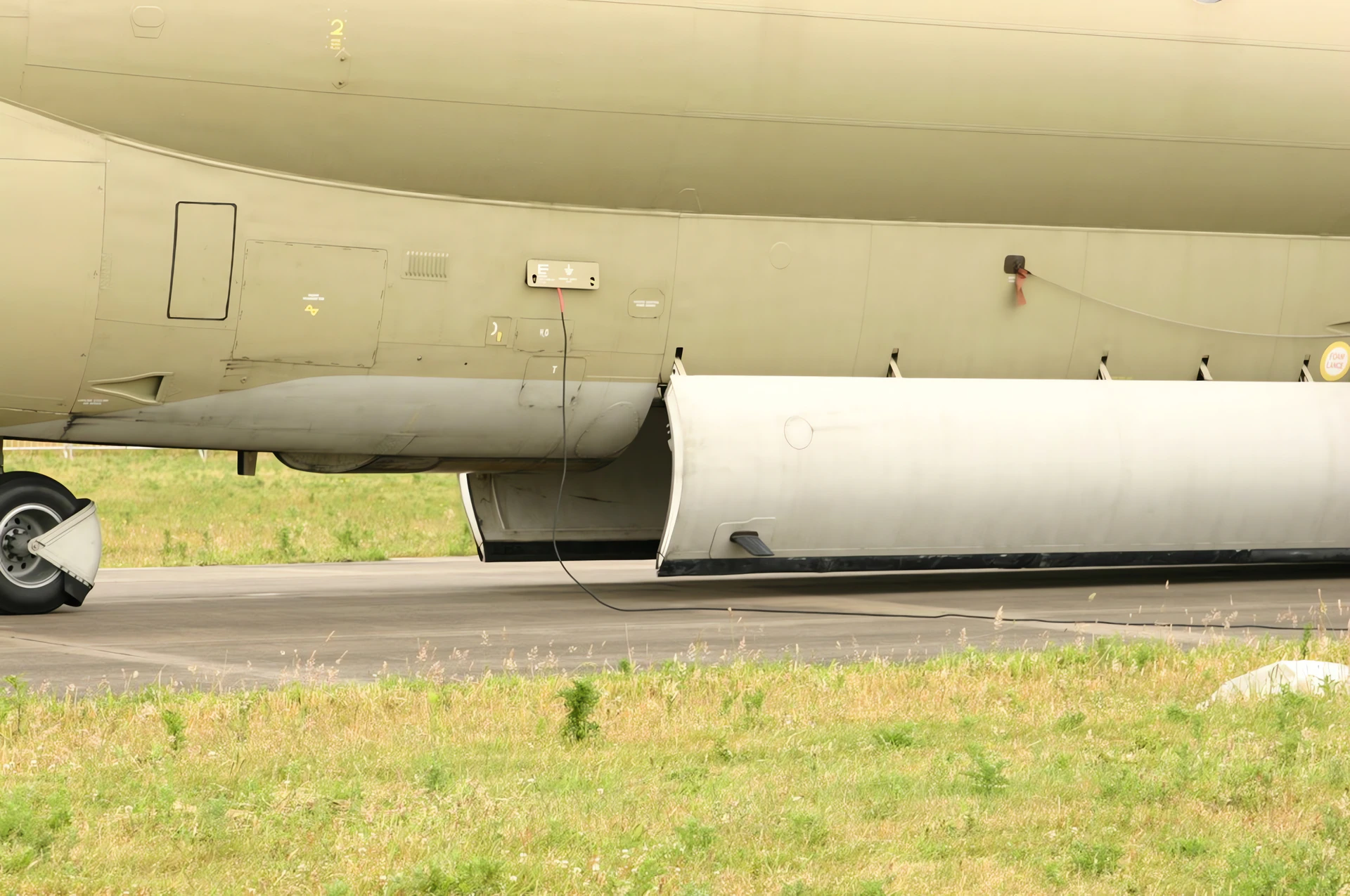
- The “Double Bubble” Fuselage: To accommodate a massive 48-foot internal weapons bay without weakening the original Comet structure, engineers added a second “hull” underneath the main fuselage. This gave the Nimrod its distinctive teardrop-shaped cross-section.
- Acoustic Processor Upgrade: The transition from MR1 to MR2 in the late 70s introduced the AQS-901 acoustic system. This allowed the Nimrod to process data from 150 sonobuoys simultaneously, making it arguably the most capable submarine hunter of its era.
- MAD Boom (The Tail Stinger): Extending from the tail is the Magnetic Anomaly Detector (MAD) boom. It detects the minute disturbances in the Earth’s magnetic field caused by a large steel submarine hull deep underwater.
- Engine Versatility: For long-endurance loitering over a search area, the Nimrod could shut down two of its four Spey engines to conserve fuel, extending its time “on station” significantly.
Falklands and the “Finest Hour”
- The Longest Missions: During the 1982 Falklands War, Nimrods were rapidly fitted with air-to-air refueling probes. They flew record-breaking 19-hour missions from Ascension Island to the South Atlantic to provide surveillance for the British Task Force.
- Search and Rescue (SAR): The Nimrod was often the first on the scene of maritime disasters (like the Piper Alpha oil rig fire), acting as an on-scene commander due to its extensive communication suite and ability to drop life rafts.
- The MRA4 Tragedy: The planned successor, the MRA4, was canceled in 2010 after massive cost overruns and delays. This left the UK without a dedicated maritime patrol aircraft until the arrival of the American P-8 Poseidon years later.
- Preservation: Several MR2s are preserved in the UK, most notably at the City of Norwich Aviation Museum 그리고 요크셔 항공 박물관, where some are still maintained in “ground-runnable” condition.
조회수 : 3305