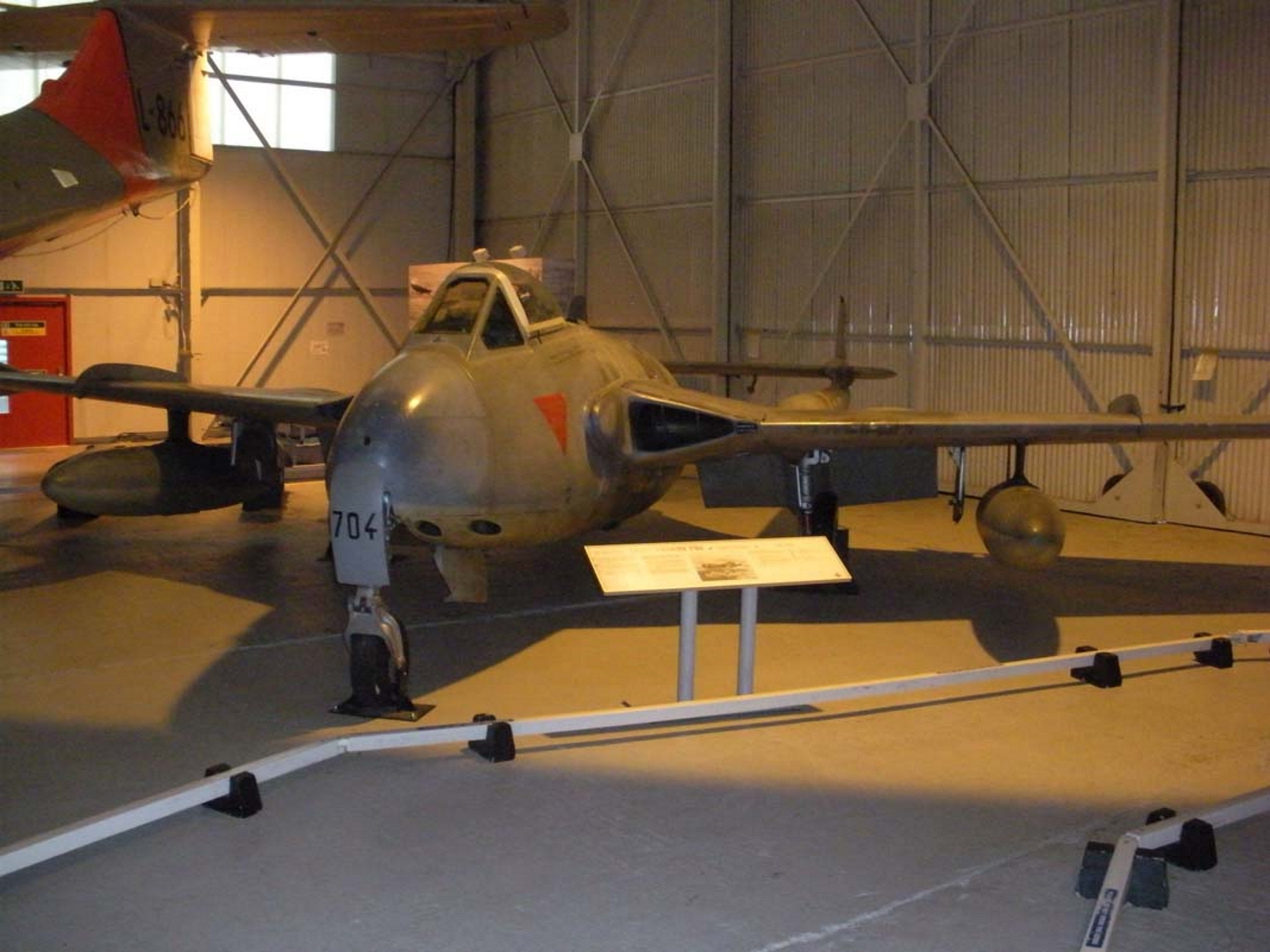
de Havilland DH112 Venom | |
| Paese | Regno unito |
| digitare | Jet monomotore |
| Fotografia | Randy Ray |
| Individuare | Royal Air Force Museum Cosford, Regno Unito |
| Descrizione | Album di 20 foto walk-around di «de Havilland DH112 Venom» |
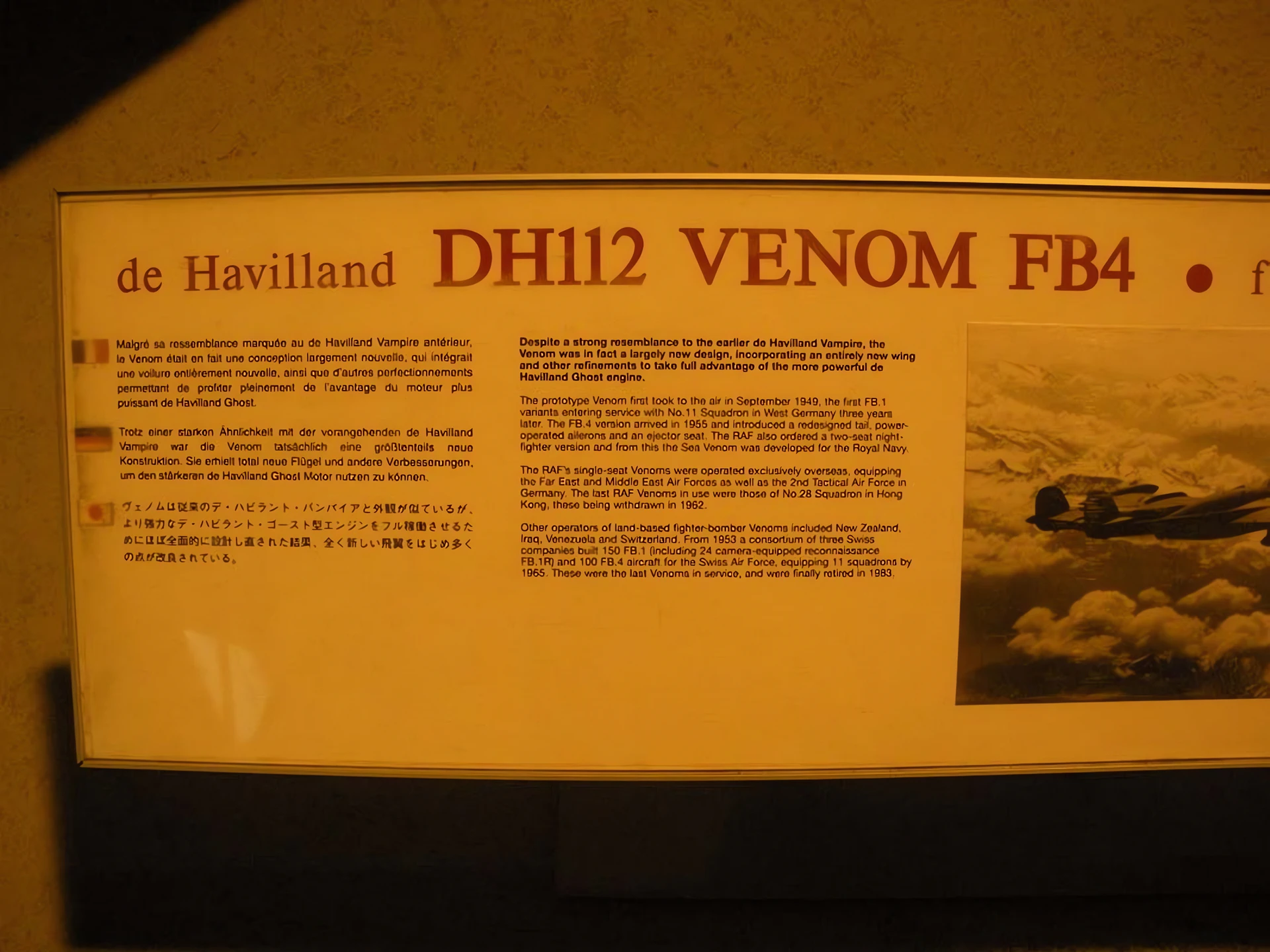
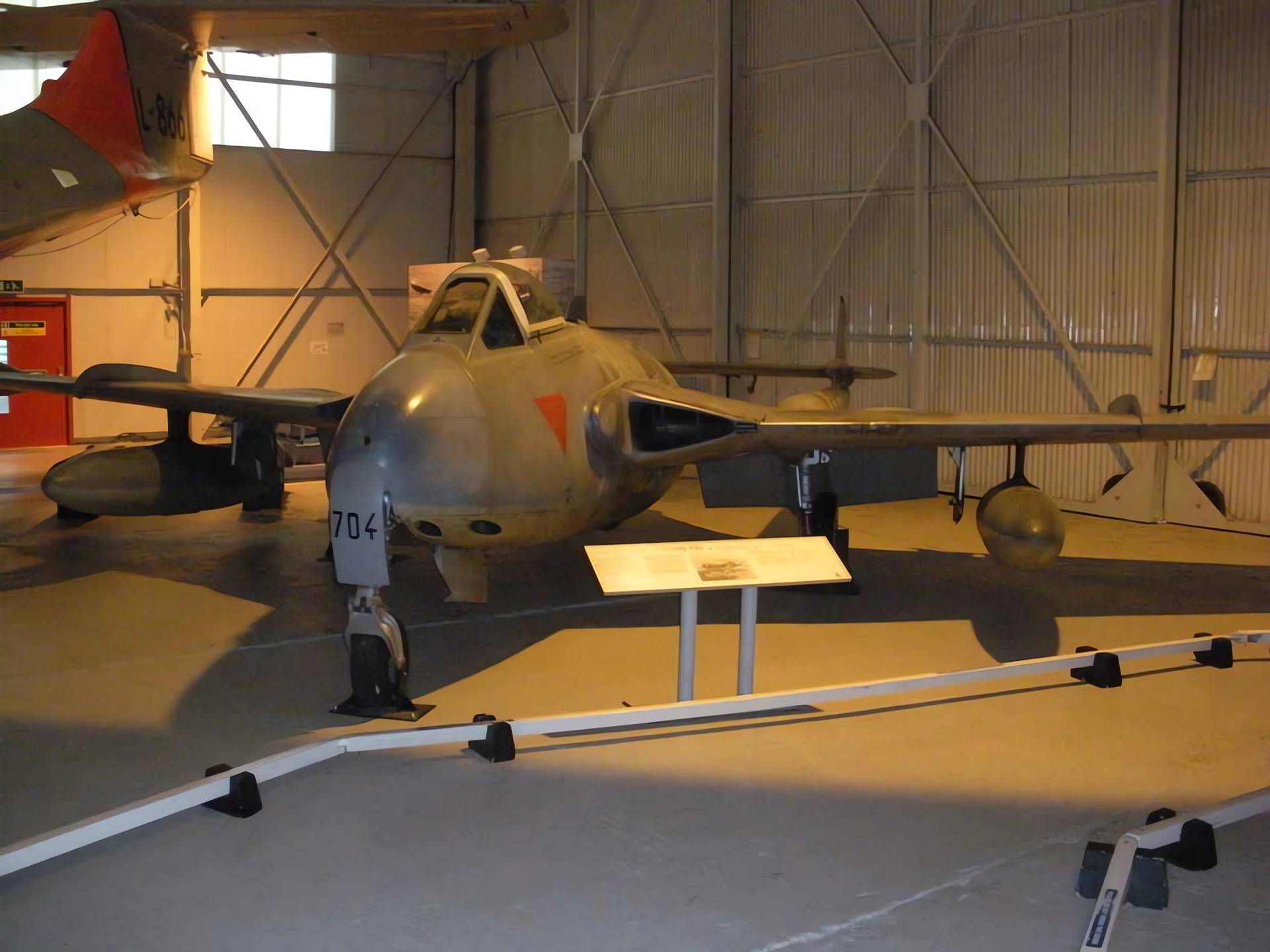
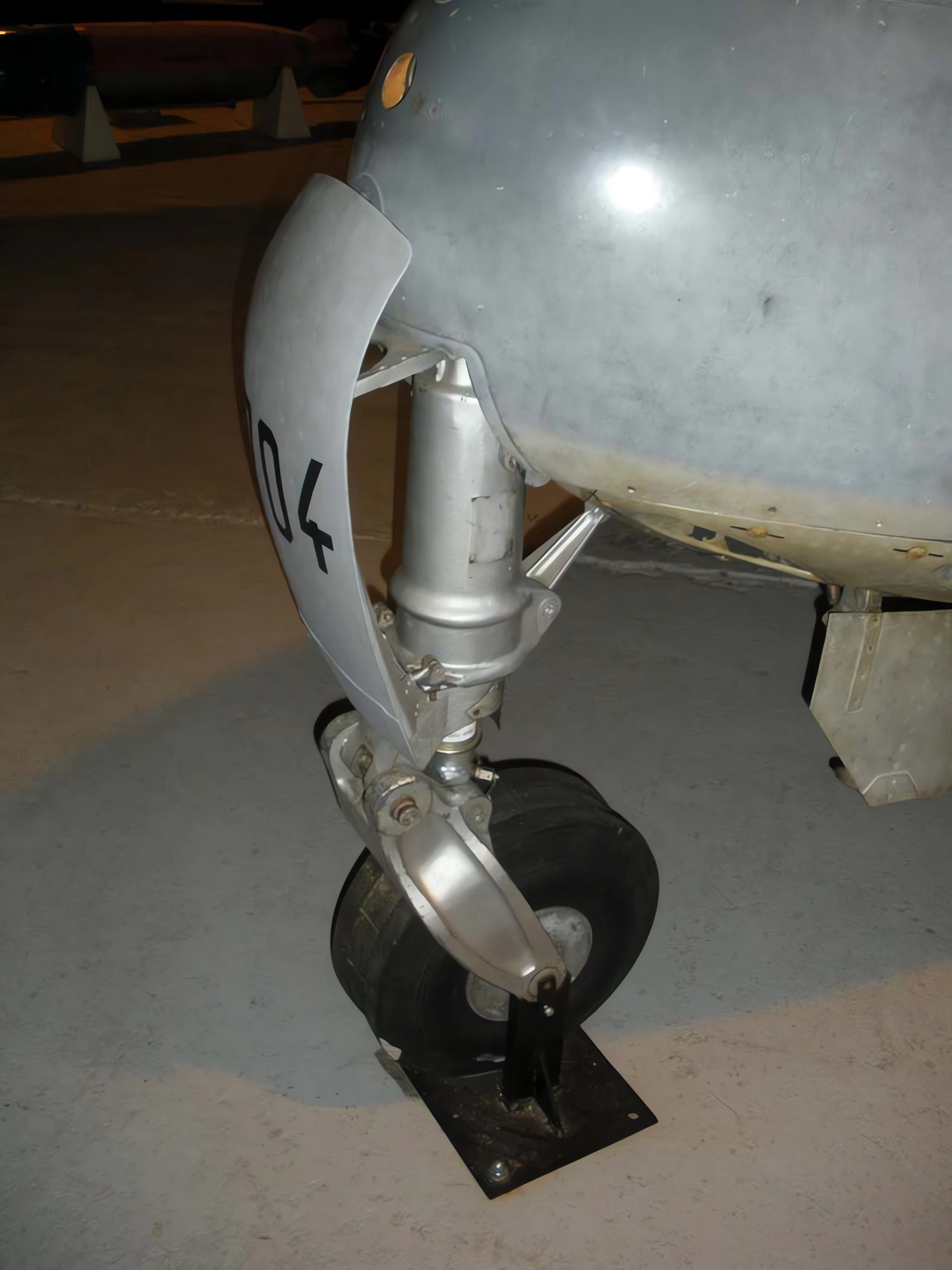
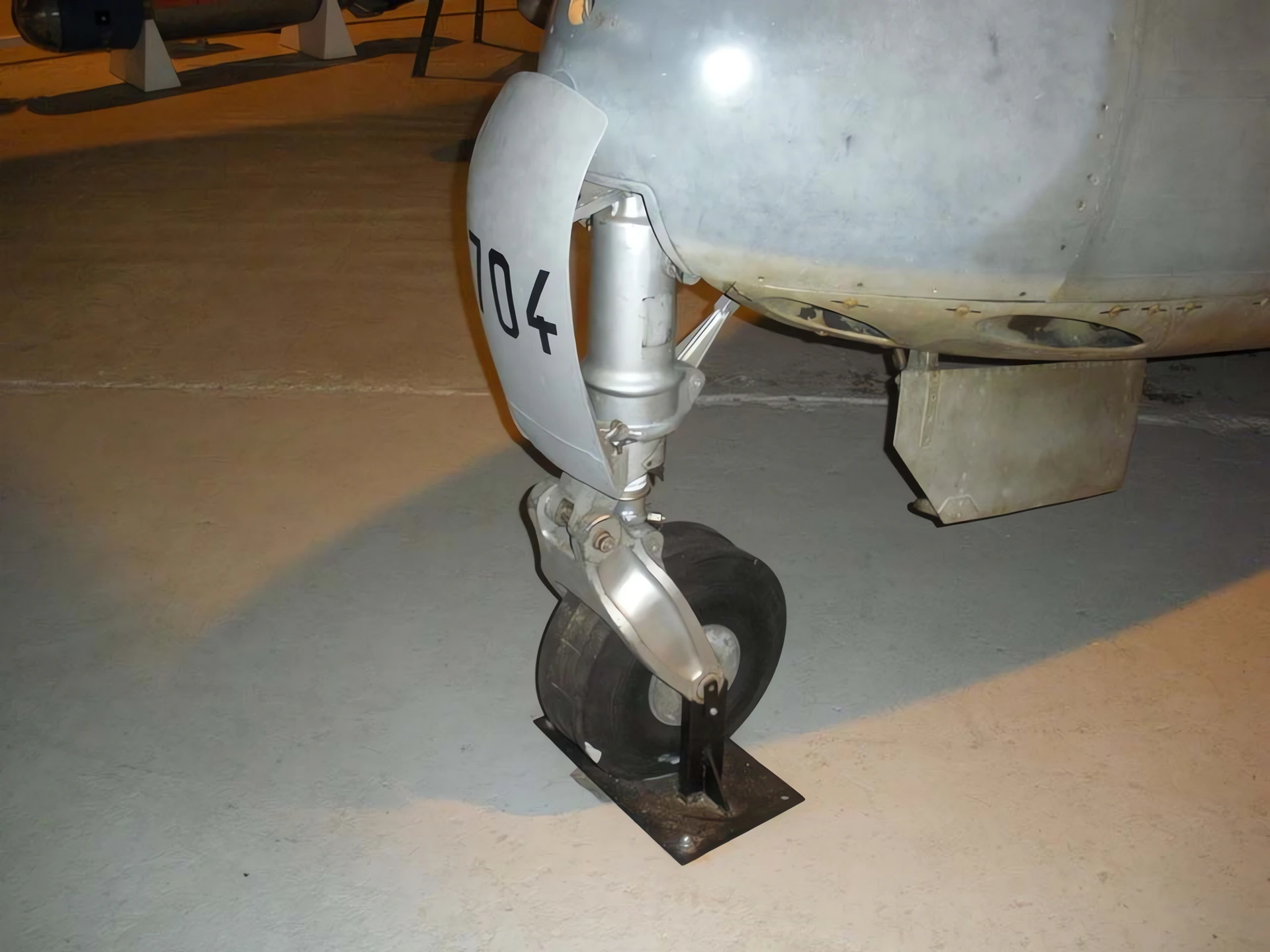
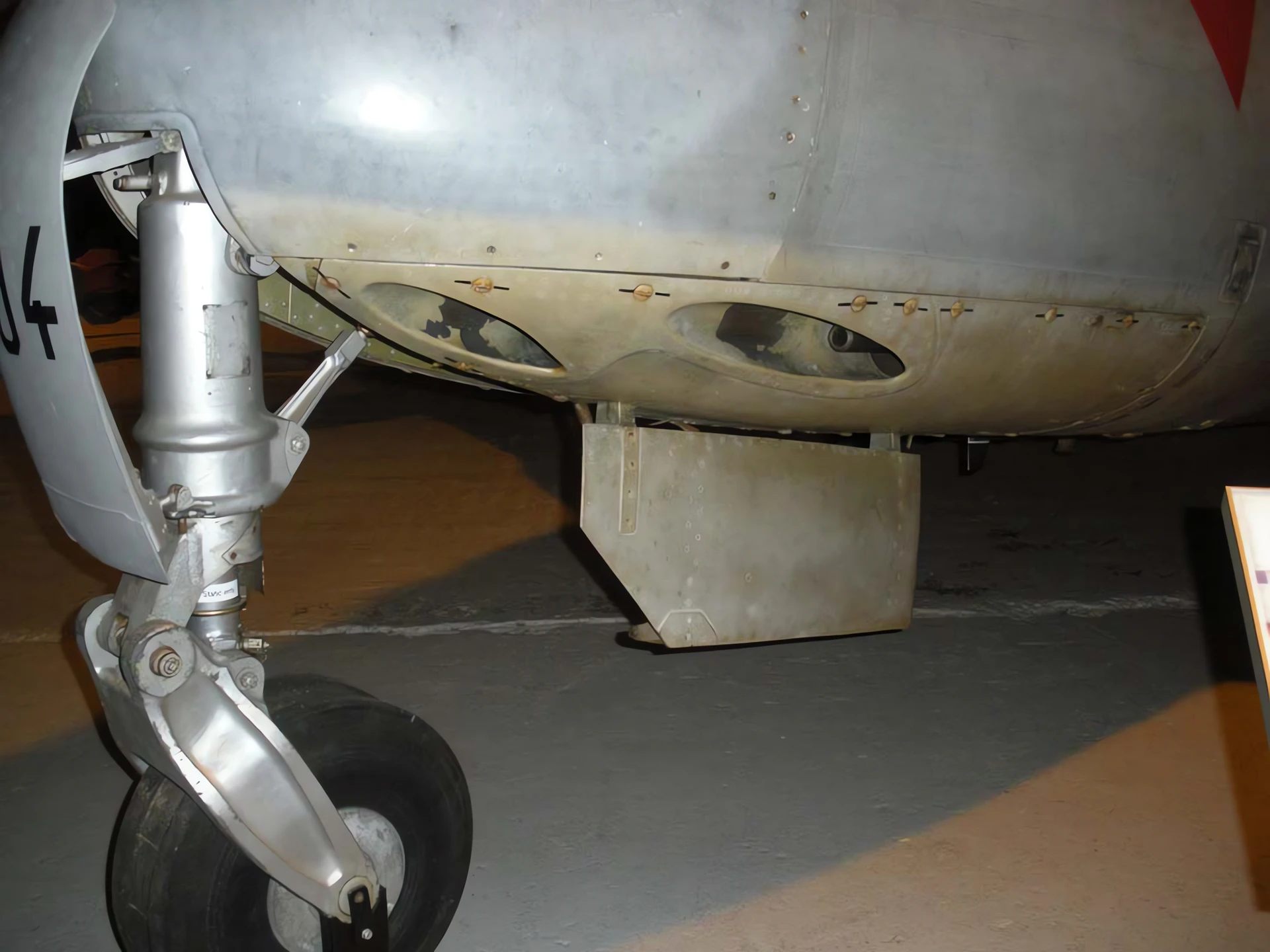
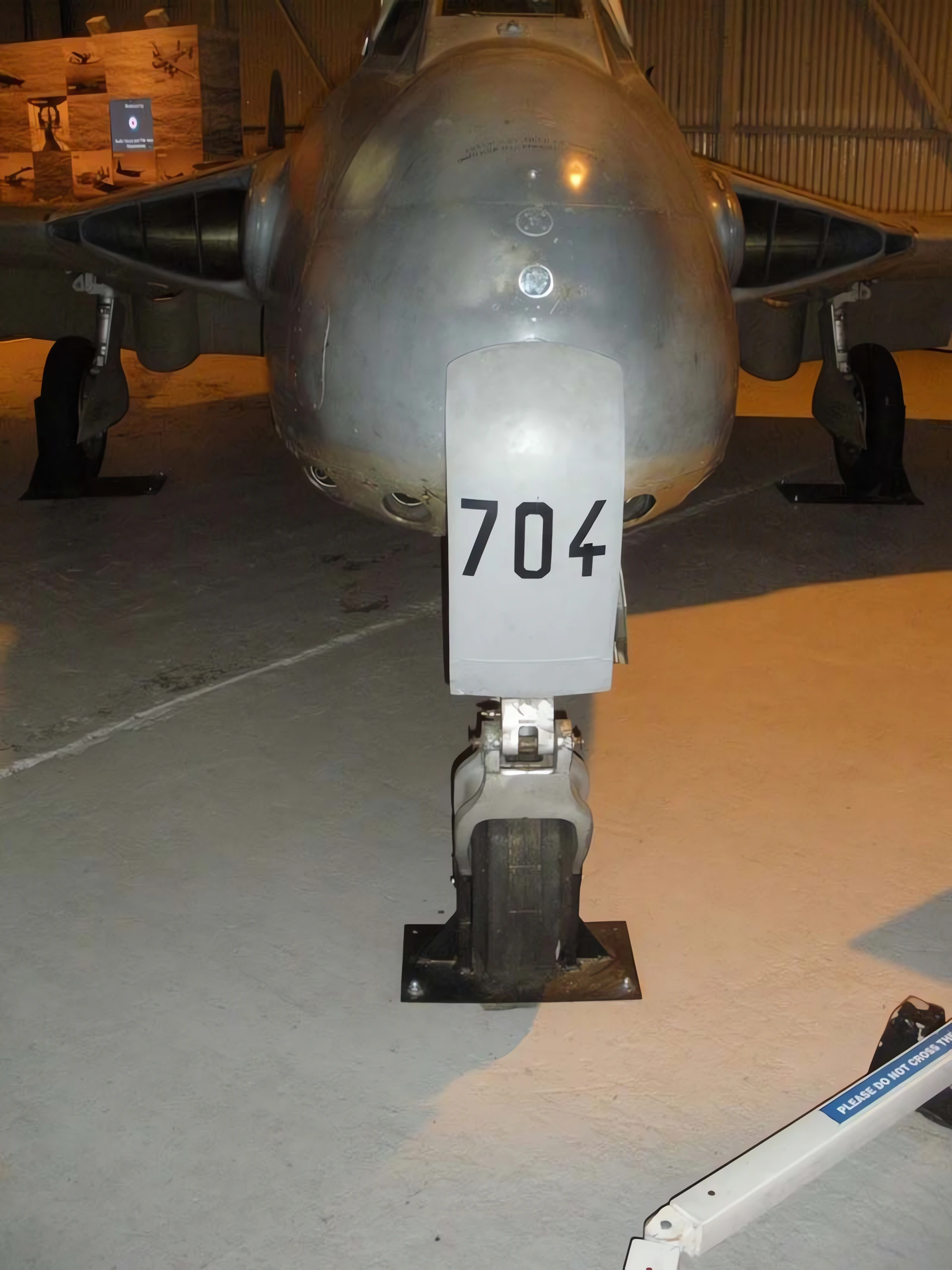
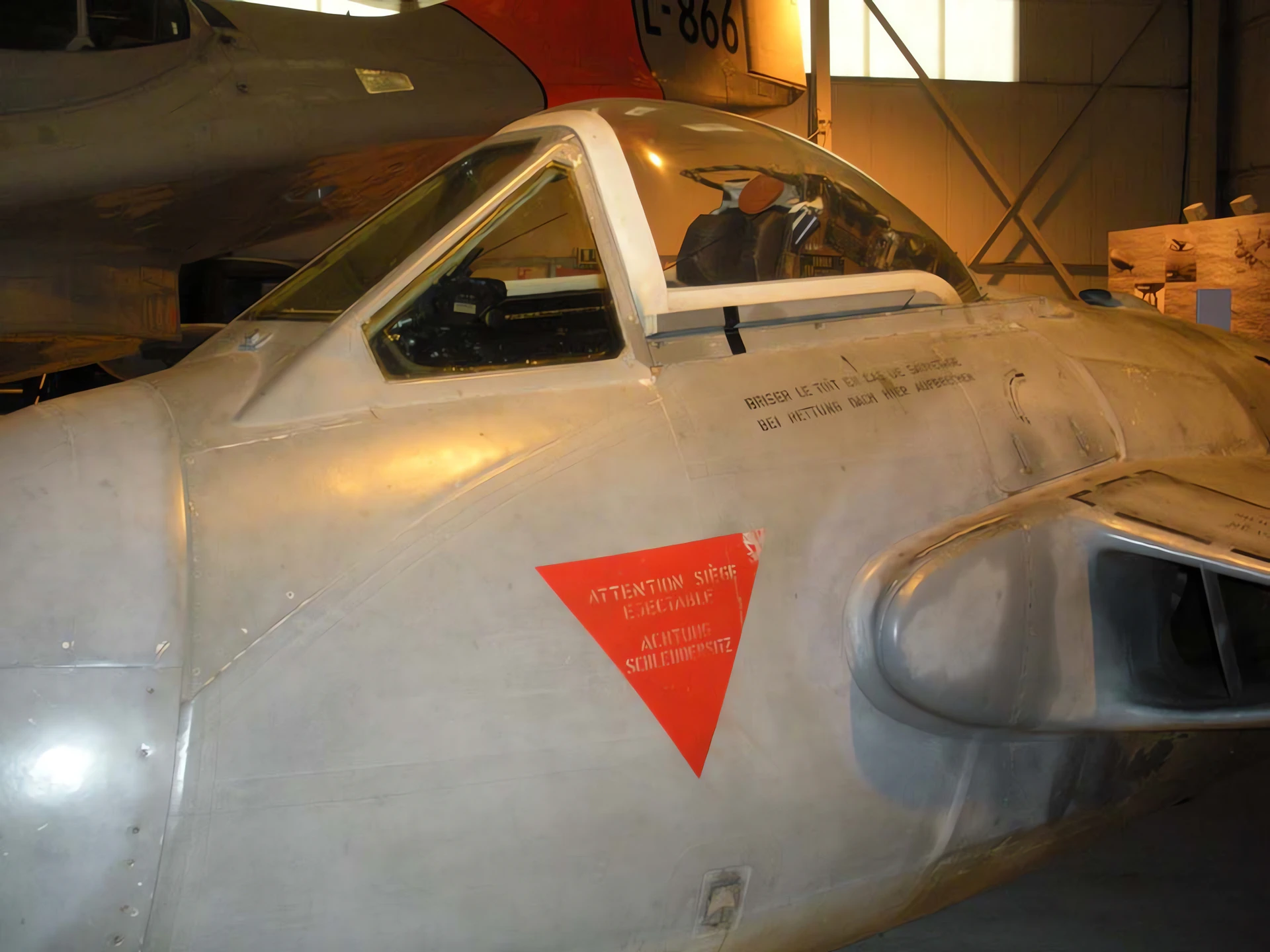
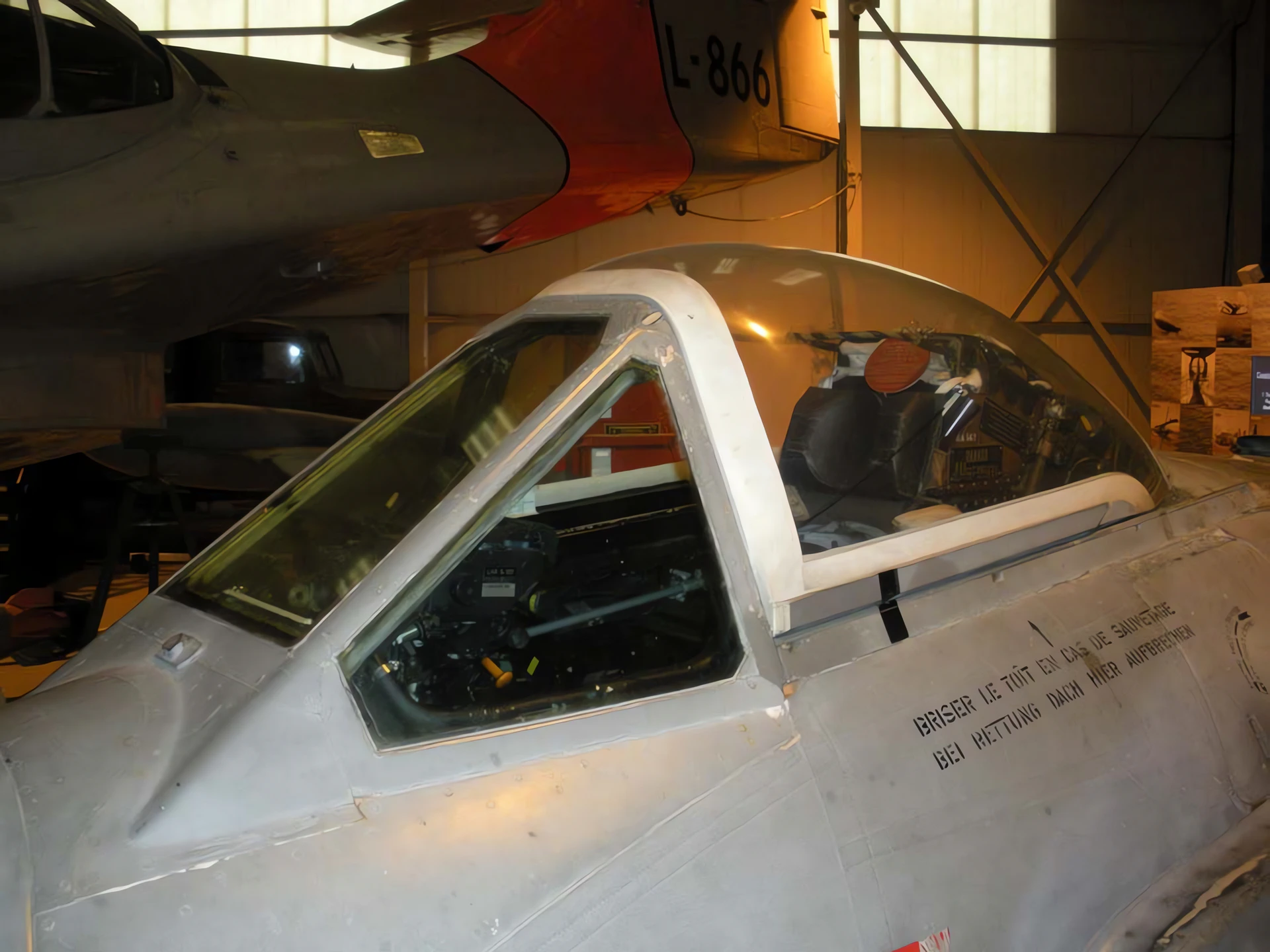
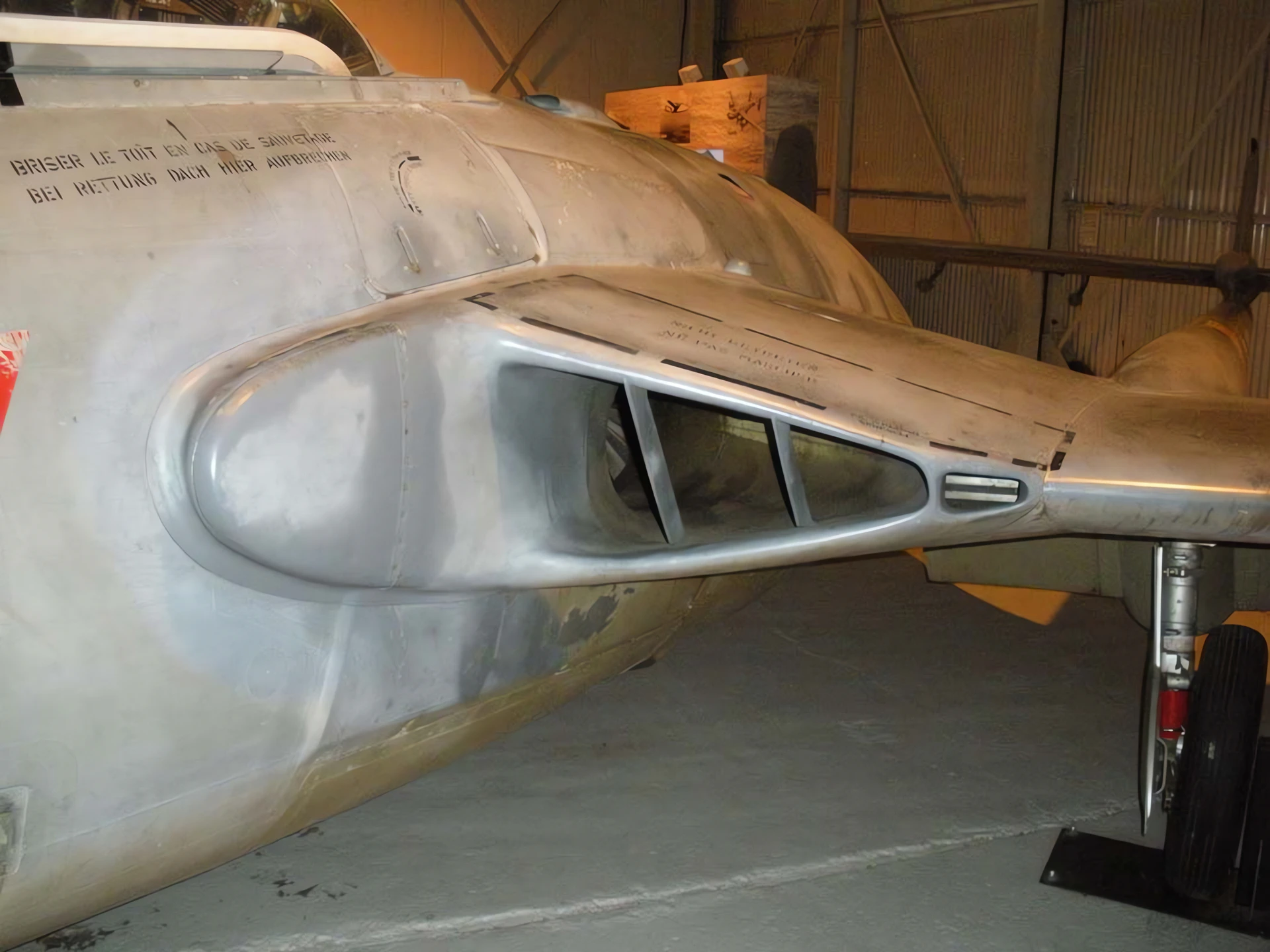
Galleria fotografica di un de Havilland DH112 Venom, The de Havilland DH 112 Venom was a British postwar single-engined jet aircraft developed from the de Havilland Vampire. It served with the Royal Air Force as a single-seat fighter-bomber and two-seat night fighter. The Venom was an interim between the first generation of British jet fighters – straight-wing aircraft powered by centrifugal flow engines such as the Gloster Meteor and the Vampire and later swept wing, axial flow-engined designs such as the Hawker Hunter and de Havilland Sea Vixen. The Venom was successfully exported, and saw service with Iraq, New Zealand, Sweden, Switzerland and Venezuela. The Sea Venom was a navalised version for carrier operation.

Vedi anche:


General Characteristics and Role
The de Havilland DH.112 Venom was a post-World War II British single-engine jet fighter and fighter-bomber. It was developed from the earlier de Havilland Vampire as an evolution of the design, featuring a thinner wing for higher speed, and powered by the more powerful de Havilland Ghost engine. The Venom retained the distinctive twin-boom tail configuration characteristic of early de Havilland jets. Its primary role was to serve as an interim fighter for the Royal Air Force (RAF) and a successful export aircraft, bridging the gap between the first generation of jets (like the Vampire) and newer swept-wing fighters. It served widely with the RAF and Fleet Air Arm (as the Sea Venom) in the 1950s and 1960s.
| Property | Typical Value (Venom FB.1/FB.4) |
|---|---|
| digitare | Single-Seat Jet Fighter-Bomber |
| National Origin | Regno Unito |
| Produttore | de Havilland Aircraft Company |
| First Flight | 2 September 1949 |
| Equipaggio | 1 (Pilot) |
| Lunghezza | 9.70 m (31 ft 10 in) |
| Apertura alare | 12.70 m (41 ft 8 in) |
| Max Takeoff Weight | 7,000 kg (15,432 lb) |
Powerplant and Armament
- Engine: 1 x de Havilland Ghost 103 turbojet engine (centrally located in the fuselage).
- Thrust: 22.0 kN (4,950 lbf).
- Maximum Speed: 1,030 km/h (640 mph) at sea level.
- Armament (Internal): 4 x 20 mm Hispano Mk.V cannons (mounted in the lower nose).
- Armament (External): Two hardpoints capable of carrying up to 907 kg (2,000 lb) of ordnance, including bombs or unguided air-to-ground rockets (usually eight or sixteen 60 lb rockets).
- Performance: The Venom was one of the first British aircraft to feature ejection seats and was known for its good high-altitude performance thanks to the Ghost engine.
Service History and Variants
- RAF Service: The Venom was quickly adopted by the RAF as an interceptor and ground attack aircraft, seeing service in the Suez Crisis (1956) and during the Malayan Emergency.
- Sea Venom: A navalized version for the Fleet Air Arm (FAW.20, 21, 22), featuring a folding wing, arrester hook, and a two-seat cockpit for all-weather interception.
- Export Success: Key export operators included Switzerland (who built the aircraft under license) and Iraq, using it as a potent ground attack platform.
- Replacement: The Venom was eventually replaced in RAF service by the supersonic Hawker Hunter.
- Legacy: The Venom successfully modernized the Vampire design, proving the efficacy of axial-flow jet engines for fighter aircraft and extending the lifespan of the twin-boom configuration into the second jet generation.
Visualizzazioni : 1109
Puoi anche vedere:
 de Havilland DH.104 Dove – Foto e Video
 de Havilland Dragon Rapide – Foto e Video
 de Havilland Canada DHC-2 – Foto e Video
 de Havilland DH.60 Moth – Foto e Video
 de Havilland Canada DHC-4 Caribou – Foto e Video
 de Havilland Dragon – Foto e Video
 de Havilland DH.88 Comet – Foto e Video
 de Havilland Vampire – Foto e Video
 de Havilland DH112 Venom – Foto e Video
 de Havilland DH.82 Tiger Moth – Foto e Video