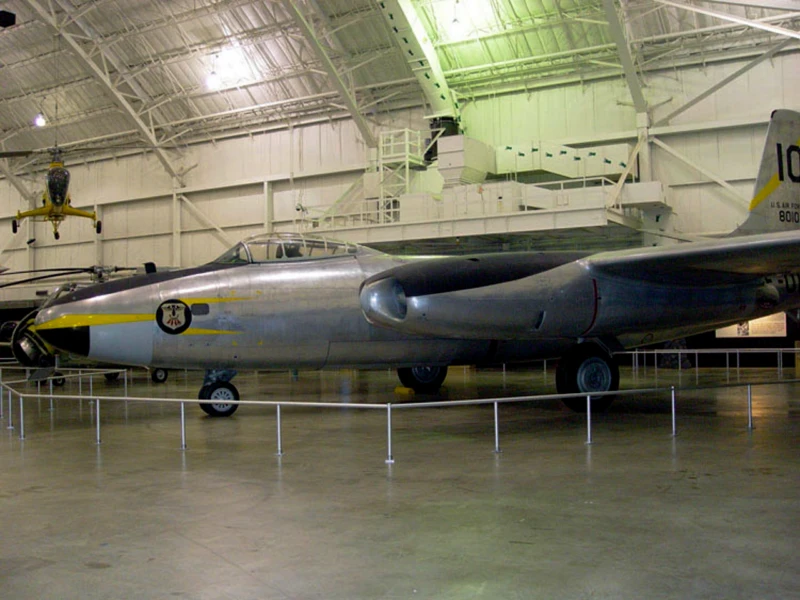
North American B-45 Tornado | |
| Pays | Usa |
| Rôle | Bombardier à réaction |
| Premier vol | Le 24 février 1947 |
| Construit | 143 |
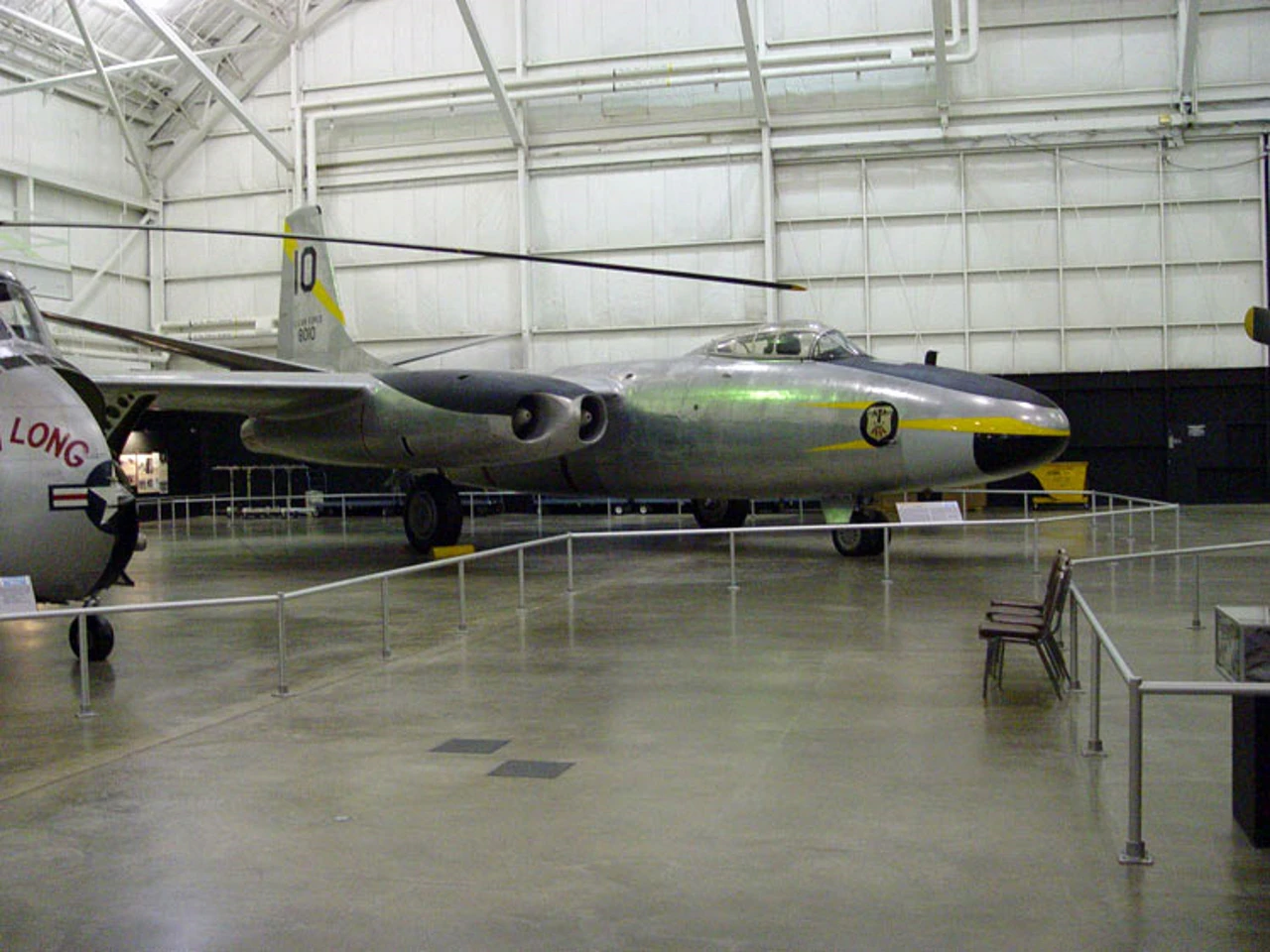
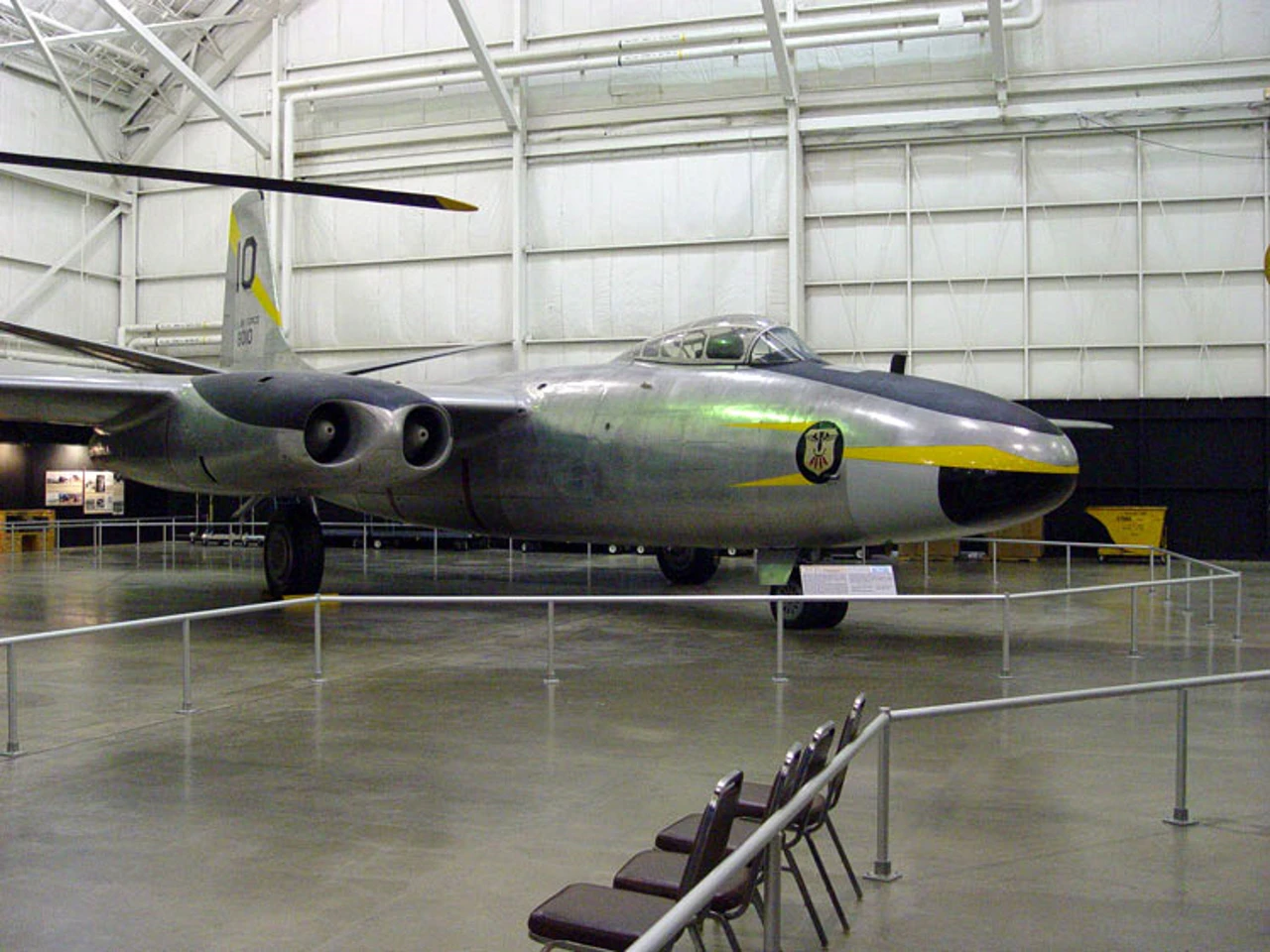
Lla Tornade nord-américaine B-45 était l’Armée de l’Air des États-Unis’s (USAF) premier bombardier à réaction opérationnel, et le premier bombardier à moteur multijet dans le monde à être ravitaillé en vol. Le B-45 était une partie importante des États-Unis’s dissuasion nucléaire pendant plusieurs années au début des années 1950, mais a rapidement été remplacé par le Boeing B-47 Stratojet. B-45 et RB-45 ont servi dans l’armée de l’air des États-Unis’s Strategic Air Command de 1950 à 1959.
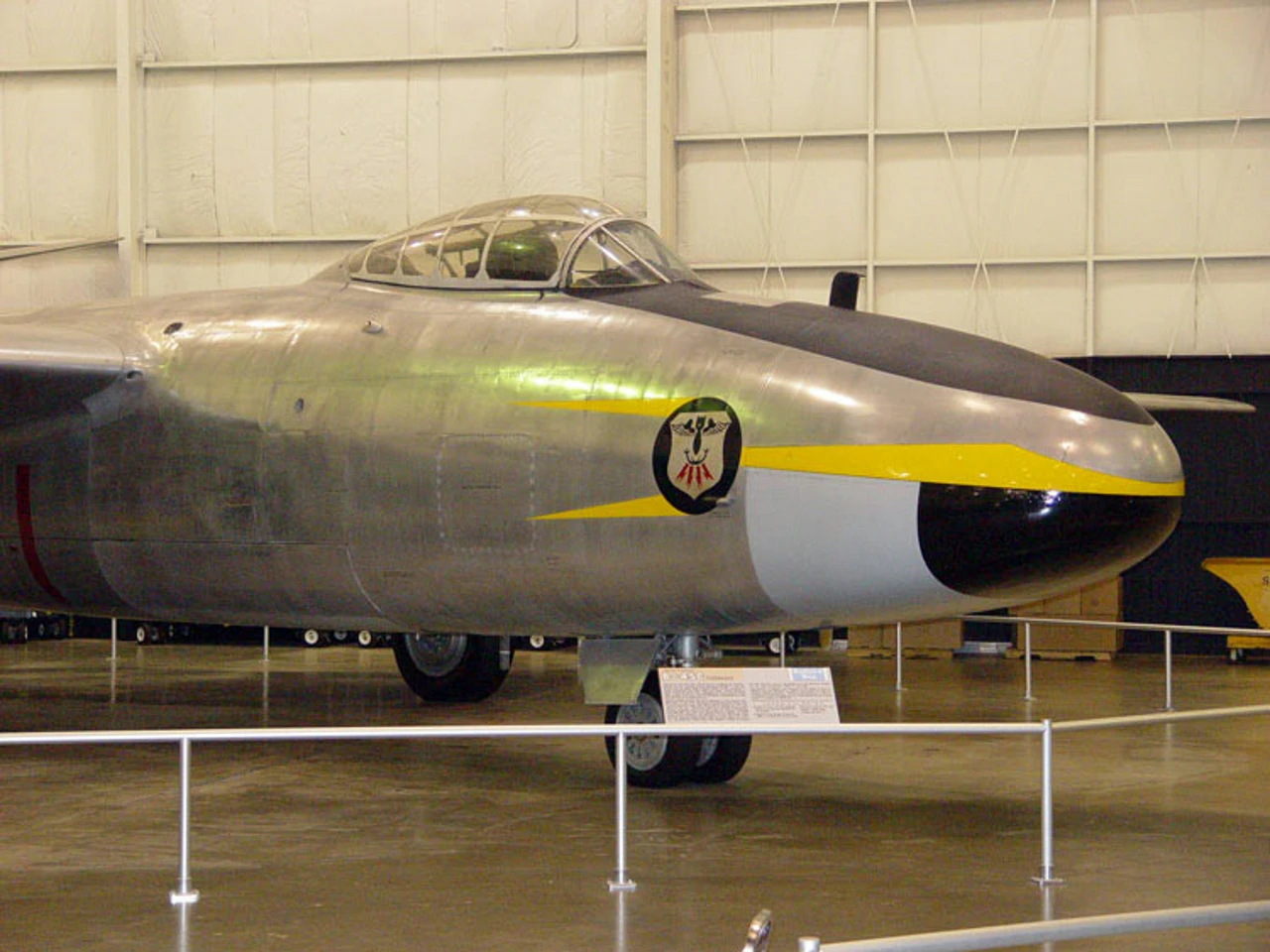
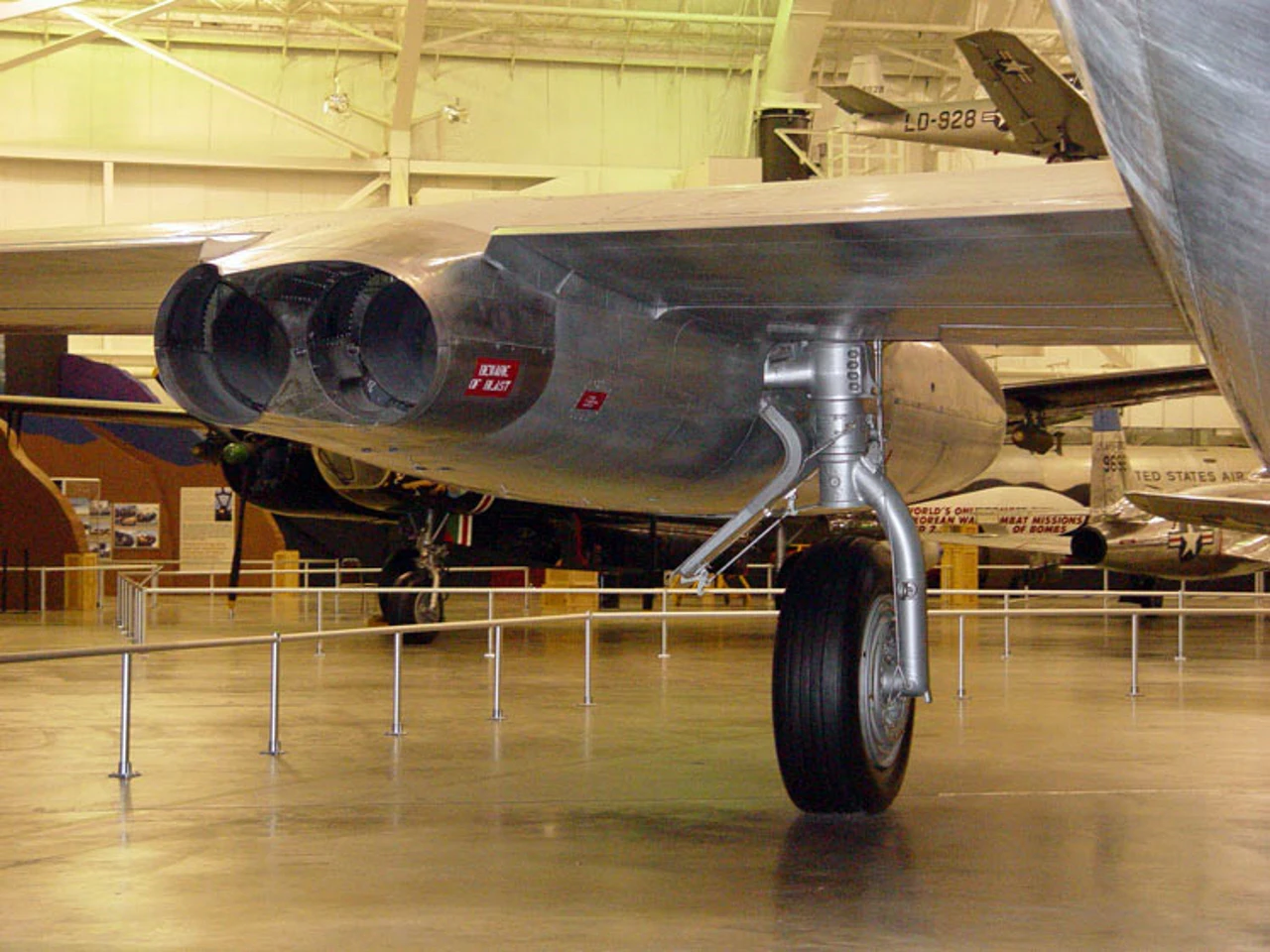
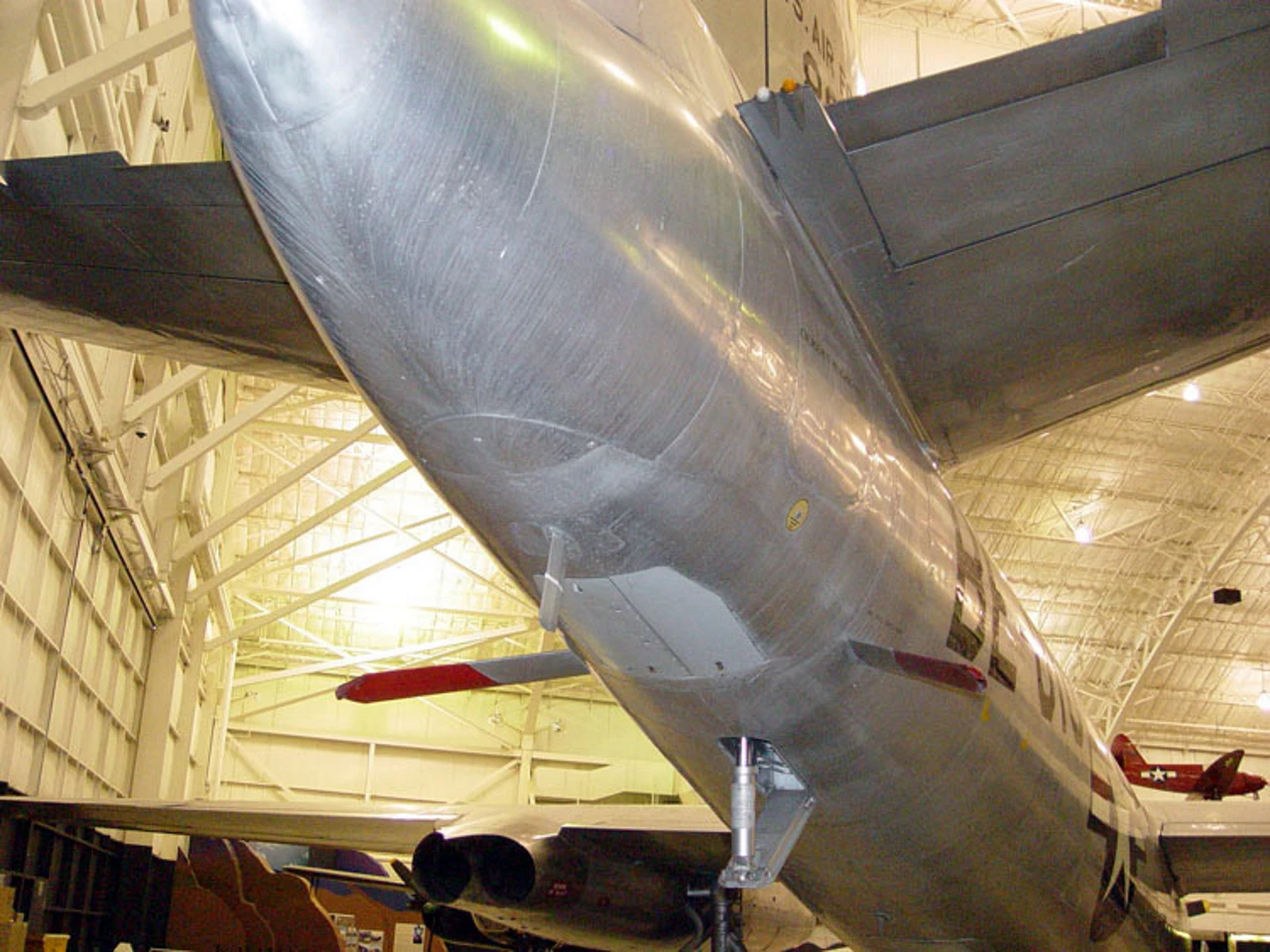
| North American B-45C Tornado | |
|---|---|
| Photographe | John Heck |
| Localisation | Musée national de l’USAF |
| Photos | 26 |

 Achetez-moi un café
| North American B-45A-1-NA Tornado Walk Around | |
|---|---|
| Photographe | Vladimir Yakubov |
| Localisation | Musée de l’air du château, Atwater |
| Photos | 121 |
Voir aussi :


| North American RB-45C Tornado Walk Around | |
|---|---|
| Photographes | Randy Ray et John Heck |
| Localisation | Musée stratégique de l’air et de l’espace |
| Photos | 109 |
| B-45C Tornado Walk Around | |
|---|---|
| Photographe | Stephen Muth |
| Localisation | Inconnu |
| Photos | 54 |
| B-45C Tornado Walk Around | |
|---|---|
| Photographe | Howard Mason |
| Localisation | Inconnu |
| Photos | 19 |
A Bridge Between Eras
Lla Tornade nord-américaine B-45 holds the distinction of being the first jet-powered bomber to enter service with the U.S. Air Force and the first to carry a nuclear weapon. Developed at the tail end of WWII, it was a transition aircraft—pairing a traditional, straight-wing bomber layout with the revolutionary new power of four turbojets. While it was quickly overshadowed by the swept-wing B-47 Stratojet, the Tornado proved vital during the early Cold War as a nuclear deterrent and a high-altitude reconnaissance platform.
| Attribute | Technical Specification (B-45A) |
|---|---|
| Rôle | Light/Medium Bomber & Reconnaissance |
| Crew | 4 (Pilot, Co-Pilot, Bombardier-Navigator, Tail Gunner) |
| First Flight | March 17, 1947 |
| Groupe motopropulseur | 4 × General Electric J47-GE-13 turbojets |
| Thrust | 5,200 lbf (23 kN) per engine |
| Vitesse maximale | 566 mph (911 km/h) |
| Service Ceiling | 46,000 ft (14,000 m) |
| Armement | 2 × .50 cal M3 machine guns (tail); Up to 22,000 lbs of bombs |
Design Engineering: Twin Nacelles and Nuclear Adapters
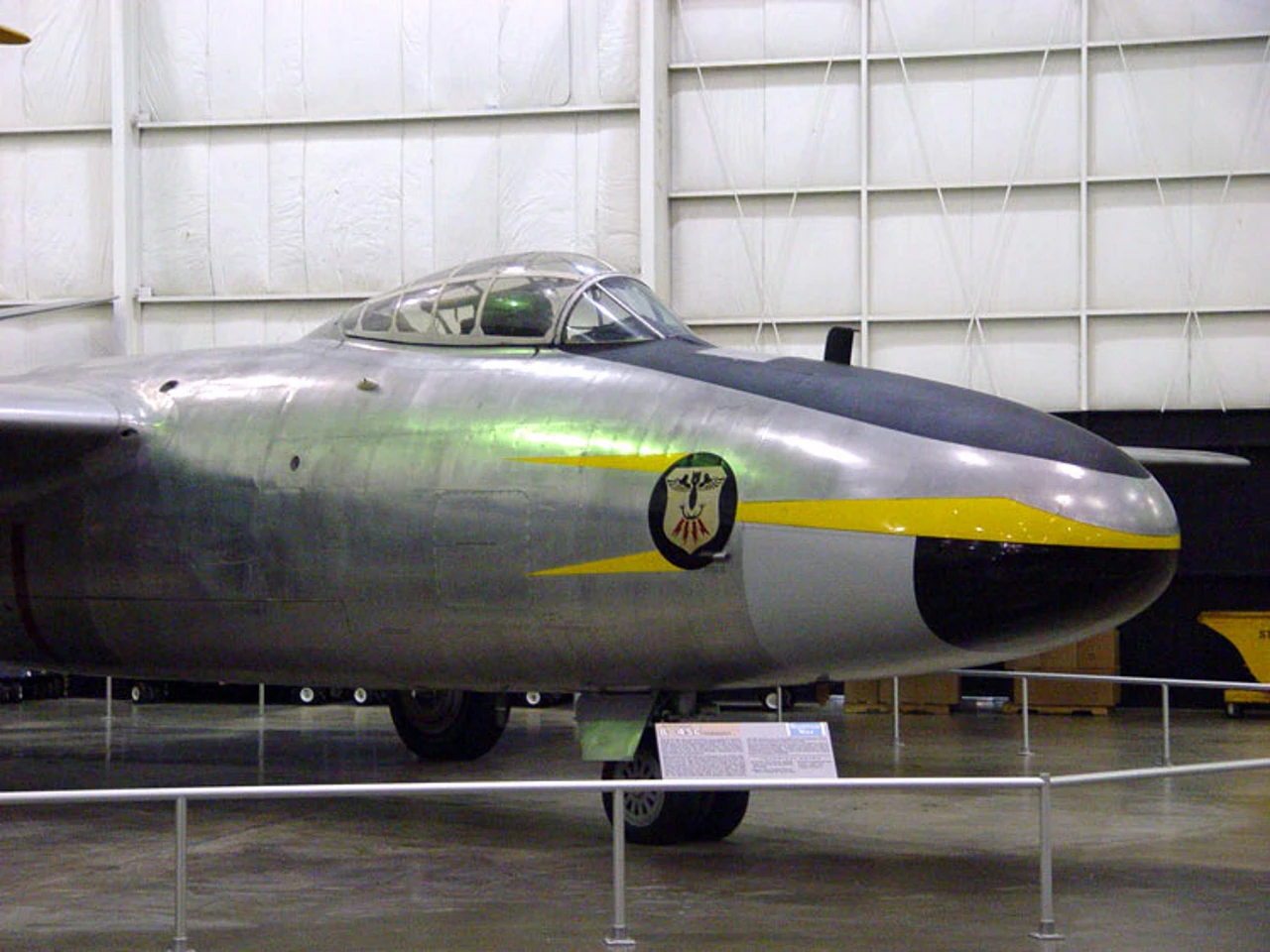
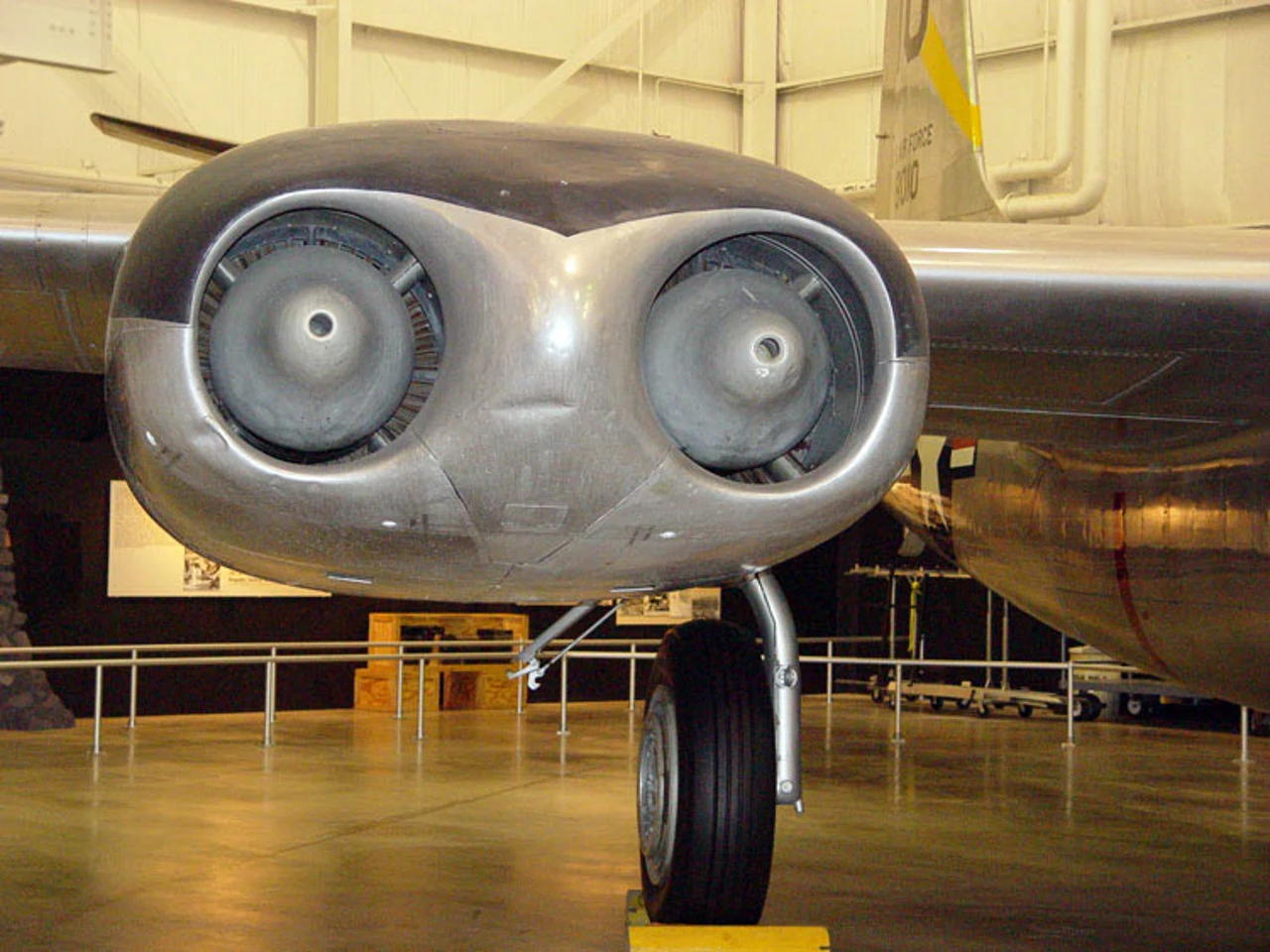
- Twin Engine Nacelles: To keep the wing « clean, » North American paired the four engines into two large pods. This design provided significant thrust but concentrated a massive amount of weight on the straight wing, which limited the aircraft’s top speed compared to later swept-wing designs.
- The Bomb Bay: The B-45 was designed with a massive internal bomb bay. Because early nuclear weapons (like the Mark 5) were so large, the B-45 had to be retrofitted with specialized « Silverplate » style modifications to carry and release them.
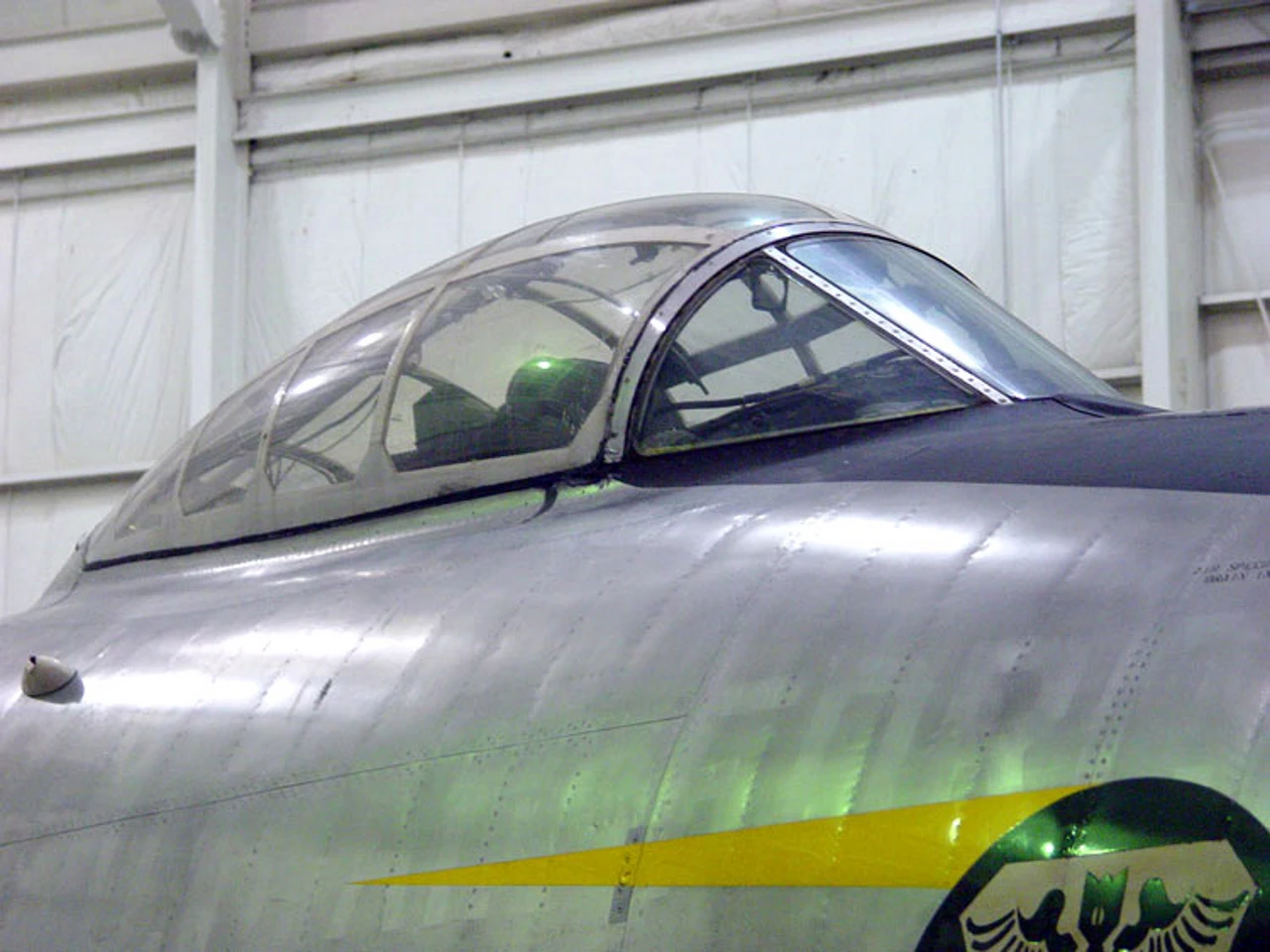
- Direct Vision Cockpit: Unlike the fighter-style bubble canopies of the later B-47, the B-45 featured a traditional « Serre » nose for the bombardier, reflecting its design heritage from WWII heavy bombers like the B-25 Mitchell.
- High-Speed Stability: The B-45 was noted for its exceptionally smooth flight characteristics at high altitudes, making it an ideal platform for the precision required in aerial photography and early electronic intelligence (ELINT).
Combat History: The Secret Spy of the RAF
- The Korean War: While not used for heavy bombing in Korea due to the success of the B-29, the RB-45C (reconnaissance version) flew dangerous missions over the peninsula, relying on its speed to evade North Korean MiGs—though it eventually required escort.
- Operation Ju-jitsu: In one of the most secretive chapters of the Cold War, the Royal Air Force (RAF) « borrowed » B-45s from the USAF. Since US pilots were forbidden from overflying the Soviet Union, British crews in US markings flew daring deep-penetration night reconnaissance missions over Soviet territory to map radar defenses.
- Nuclear Pioneer: The B-45 was the first jet capable of mid-air refueling, a capability that allowed it to reach targets deep within Eastern Europe from bases in the United Kingdom.
- Rapid Obsolescence: The Tornado’s career was short. By 1959, the much faster and longer-ranged B-47 Stratojet had completely replaced it in the bomber role, though the RB-45C reconnaissance models served slightly longer.
Vues : 3611
Vous pouvez voir aussi :
 North American XB-70 Valkyrie – Photos & Vidéos
 North American NA-64 Yale – Photos et vidéos
 North American FJ-4 Fury – Photos et vidéo
 Canadair Sabre – Photos et vidéo
 North American T-28 Trojan – Photos et vidéo
 North American T-2 Buckeye – Photos et vidéo
 North American F-100 Super Sabre – Photos & Vidéo
 North American AT-6D Texan – Photos et vidéo
 North American Rockwell OV-10 Bronco – Photos et vidéo
 QF-100D Super Sabre – Photos & Vidéo