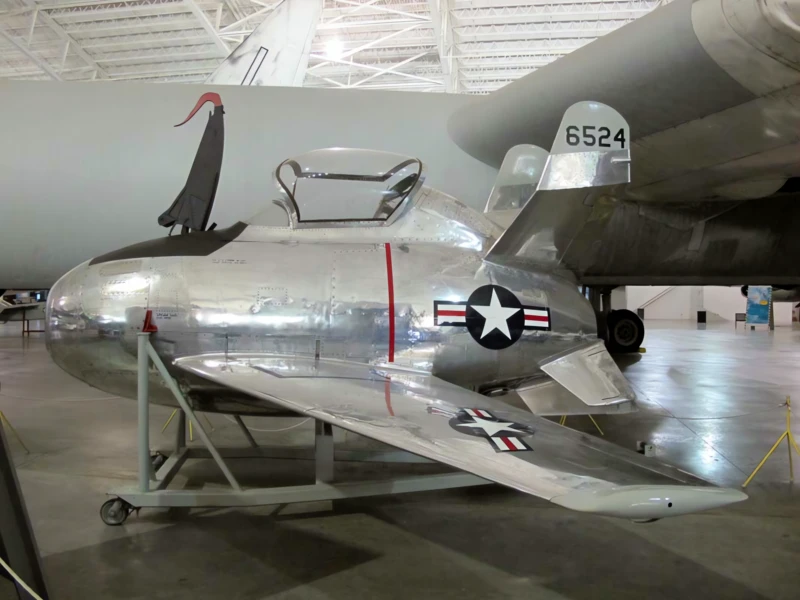
McDonnell XF-85 Goblin | |
|---|---|
| Pays | Usa |
| Rôle | Prototype d’avion intercepteur |
| Premier vol | Le 9 mai 1949 |
| Construit | 2 |
Lla Gobelin McDonnell XF-85 est un prototype d’avion de chasse américain conçu pendant la Seconde Guerre mondiale par McDonnell Aircraft. Il était destiné à se déployer à partir de la baie de bombe du bombardier géant Convair B-36 comme un chasseur parasite. Le XF-85’le rôle visé était de défendre les bombardiers contre les avions intercepteurs hostiles, un besoin démontré pendant la Seconde Guerre mondiale. McDonnell a construit deux prototypes avant que l’Armée de l’air (USAAF) ne m termine le programme.
| McDonnell XF-85 Gobelin Walk Around | |
|---|---|
| Photographes | John Heck, Vladimir Yakubov |
| Localisation | Musée stratégique de l’air et de l’espace, Ashland |
| Photos | 76 |
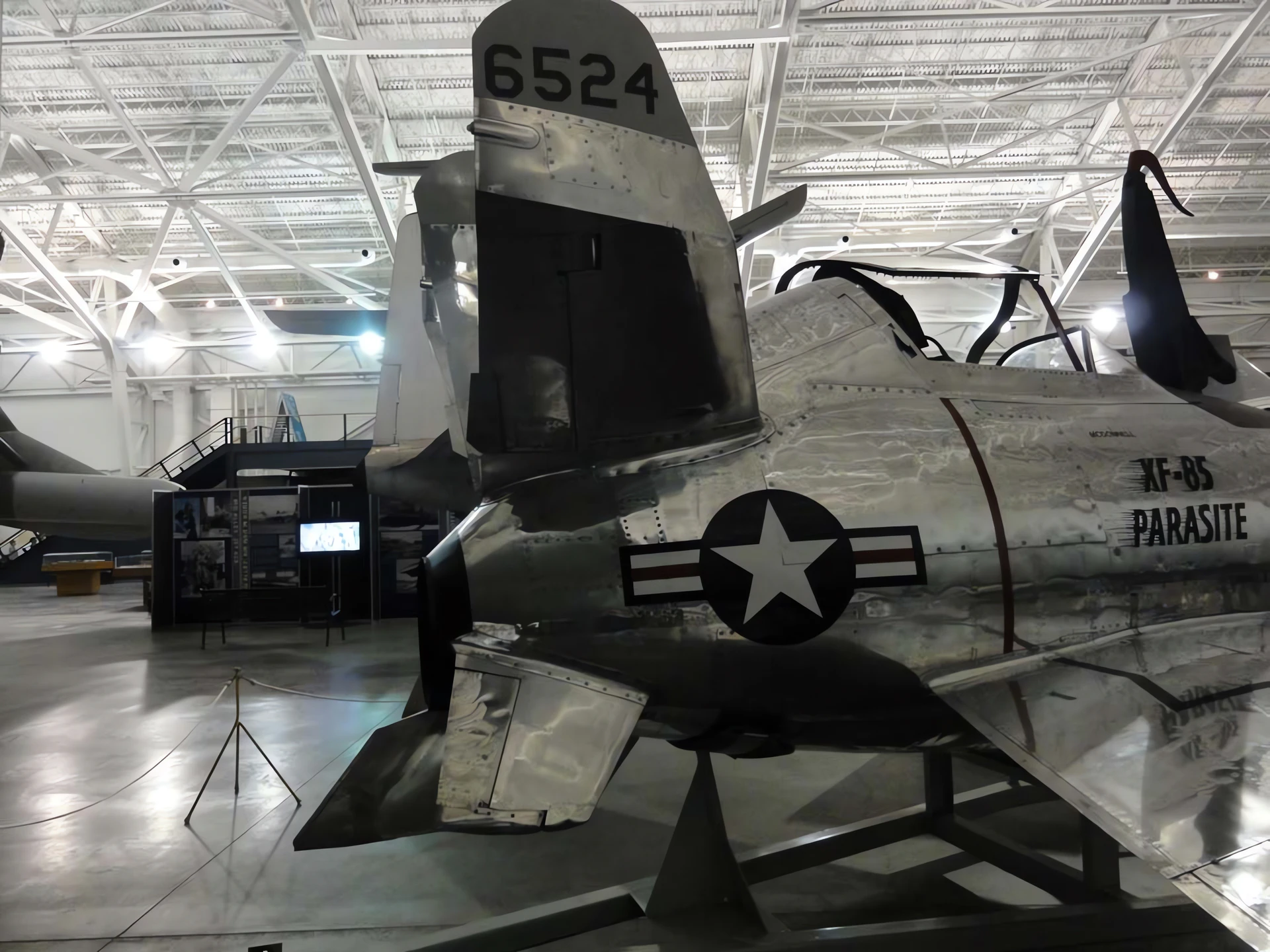
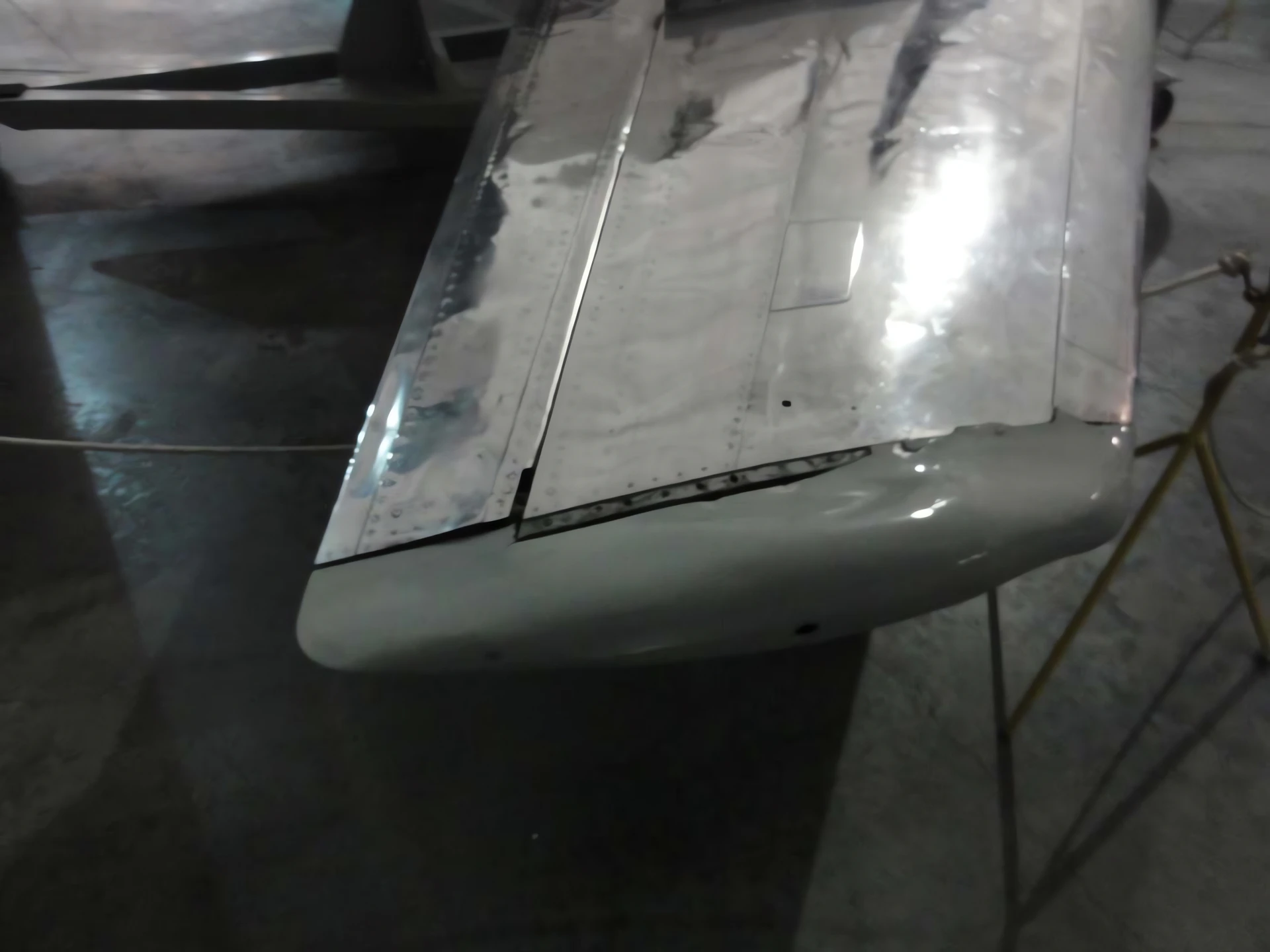
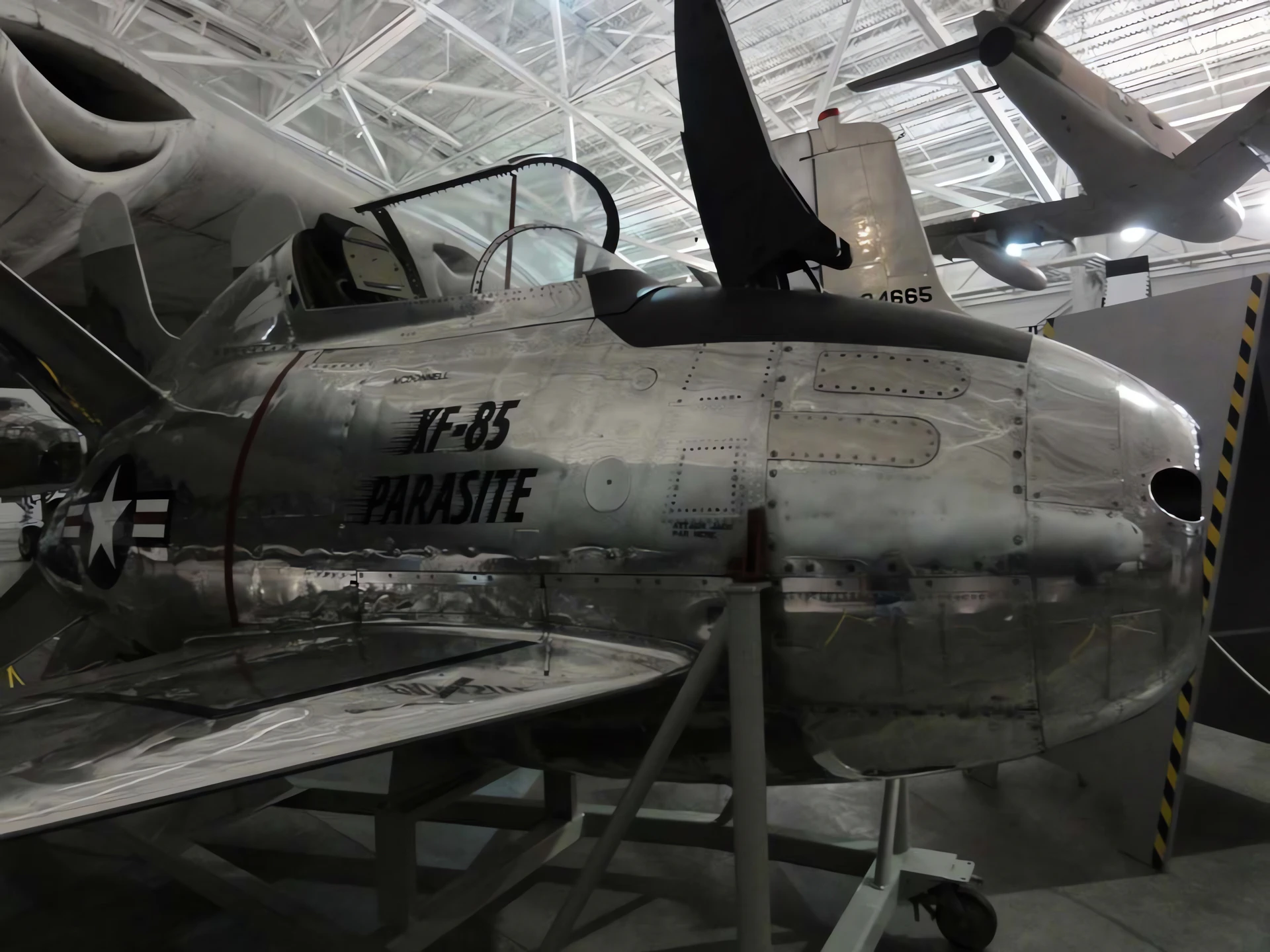

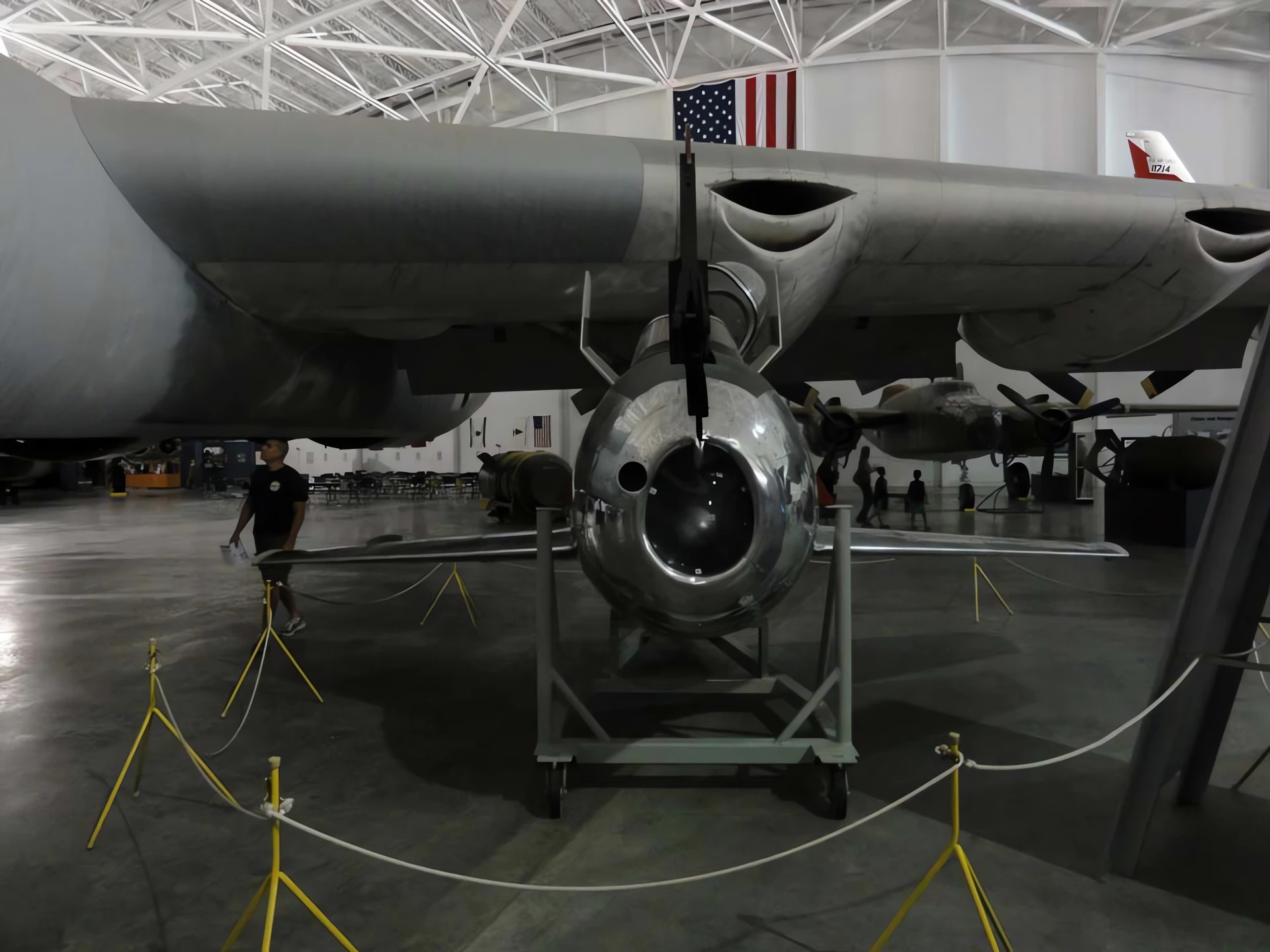
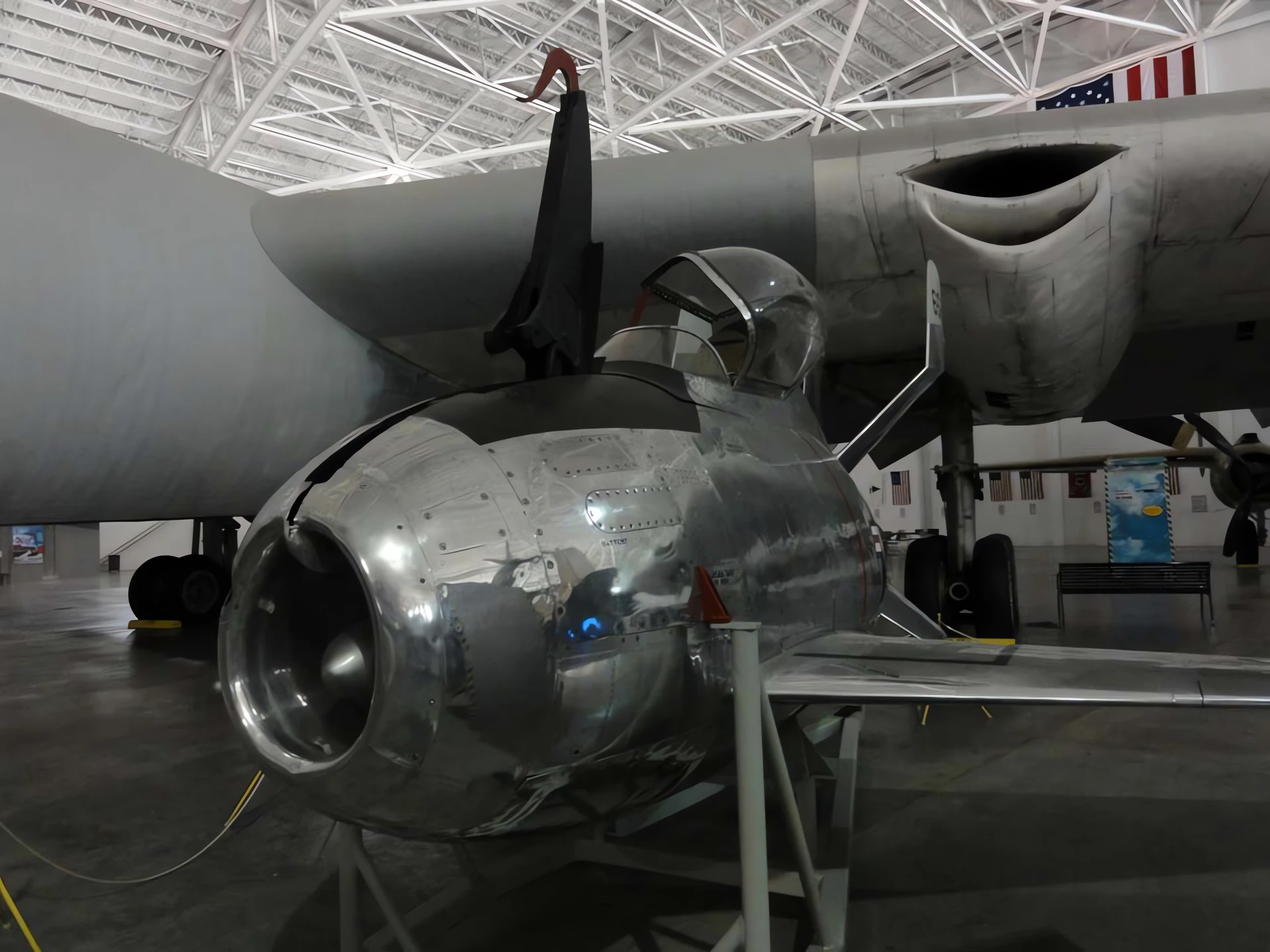
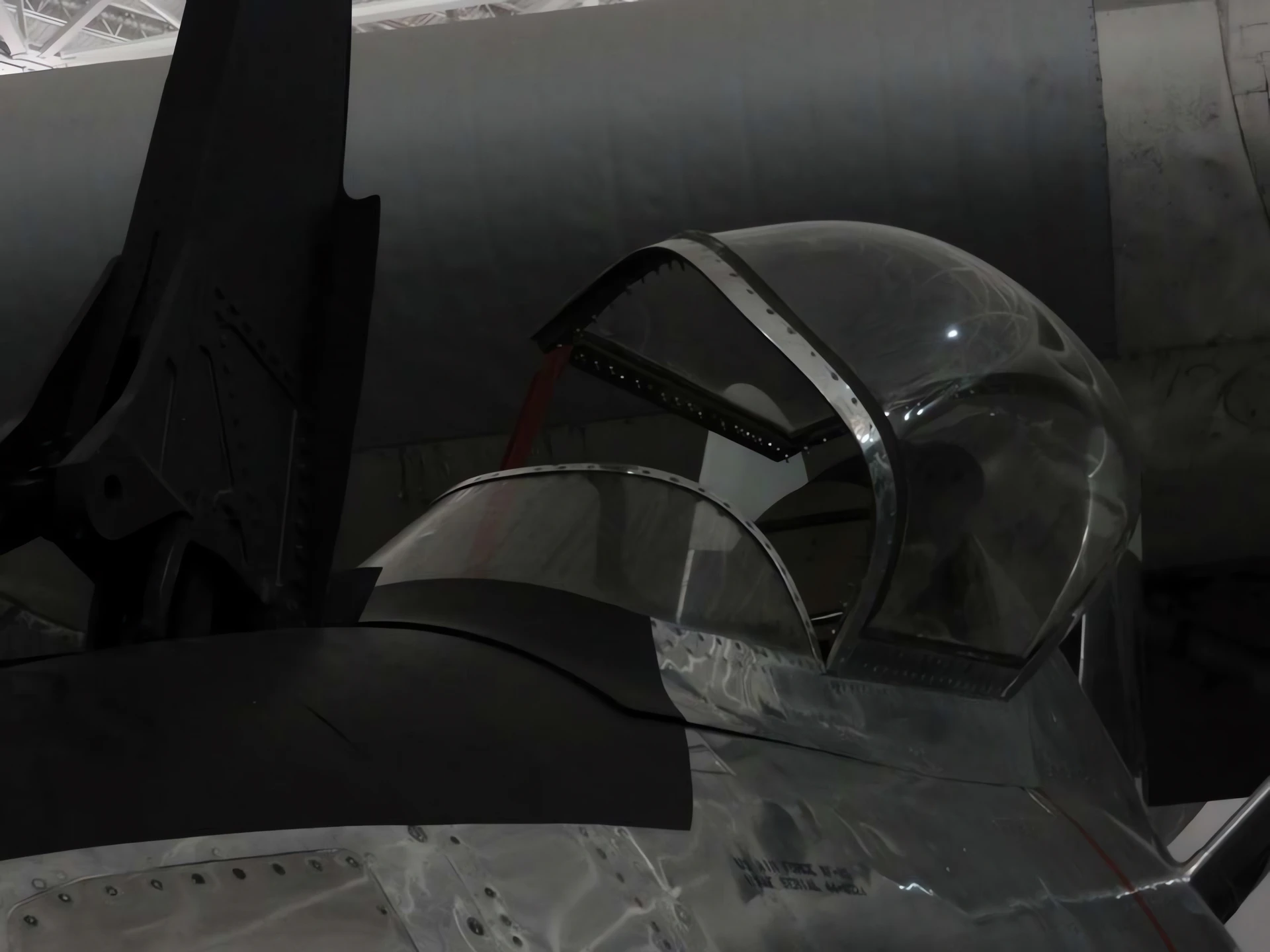
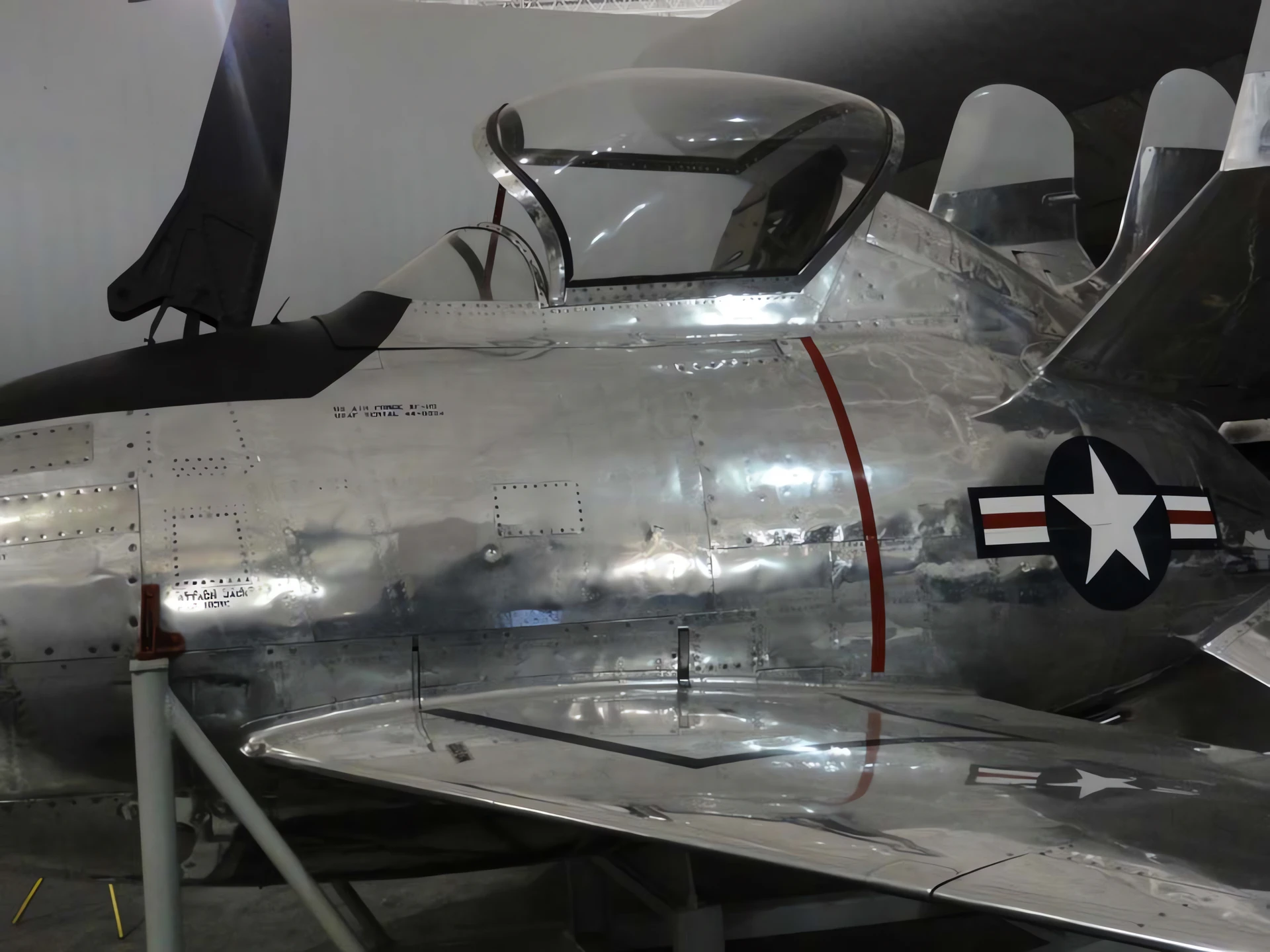
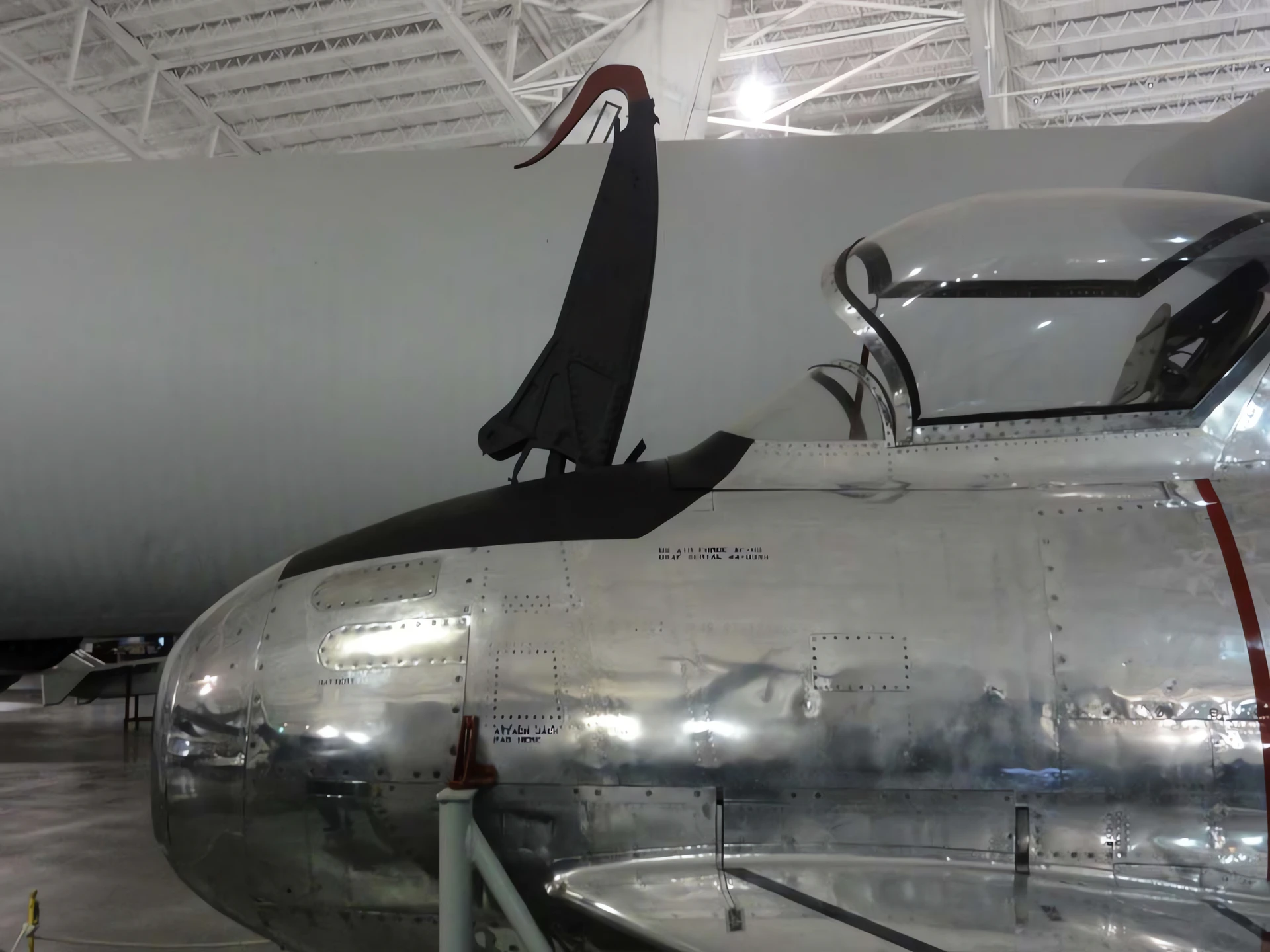

| McDonnell XF-85 Gobelin Walk Around | |
|---|---|
| Photographes | John Heck, Vladimir Yakubov |
| Localisation | Musée national de l’USAF, Dayton |
| Photos | 96 |
Voir aussi :


General Characteristics and Role
The McDonnell XF-85 Goblin was an experimental jet fighter developed for the United States Air Force (USAF) in the late 1940s. Its highly unusual role was to serve as a « parasite fighter »—a defensive fighter that would be carried and launched from a bomber, specifically the massive Convair B-36 Peacemaker, and recovered mid-air. This concept arose because early jet fighters lacked the range to escort strategic bombers on long-distance missions, leaving them vulnerable to enemy interceptors deep inside hostile territory. The XF-85 was designed to be small enough to fit within the B-36’s bomb bay and featured a unique hinged nose assembly for hooking up to a trapeze system.
| Property | Typical Value (XF-85) |
|---|---|
| Rôle | Experimental Parasite Fighter |
| National Origin | États-Unis |
| Fabricant | McDonnell Aircraft Corporation |
| First Flight (unattached) | 23 August 1948 |
| Crew | 1 (Pilot) |
| Length | 4.93 m (16 ft 2 in) |
| Envergure | 6.44 m (21 ft 1 in) |
| Gross Weight | 2 540 kg (5 600 lb) |
Powerplant and Unique Features
- Engine: 1 x Westinghouse J34-WE-22 turbojet engine.
- Thrust: 3,000 lbf (13 kN).
- Armament: Proposed four .50 caliber (12.7 mm) M2 Browning machine guns (never installed on the prototypes).
- Unique Tail: It featured a distinctive cruciform tail and swept wings that folded upwards for stowage inside the bomber.
- Recovery System: The plane used a retractable hook in its nose to latch onto a specialized trapeze lowered from the carrier aircraft (initially a modified B-29 Superfortress, later planned for the B-36).
- Performance: The intended speed was over 1,000 km/h (620 mph), designed to intercept potential enemy fighters like the MiG-15.
Program Outcome and Legacy
- Testing: The recovery phase of the test flights proved extremely difficult, due to the intense turbulence and buffeting behind the carrier aircraft. Pilots reported high difficulty in successfully mating the hook with the trapeze.
- Cancellation: The program was cancelled in 1949 after only a few test flights. The mid-air docking procedure was deemed too risky for operational use. Furthermore, the rapid development of aerial refueling technology provided a more practical solution to the bomber escort problem.
- Legacy: While unsuccessful, the XF-85 stands as one of the most unique and ambitious attempts in aviation history to solve the strategic bomber escort challenge. It remains a prime example of Cold War experimental aircraft design.
- Preservation: Both prototypes built (AF Ser. No. 46-523 and 46-524) survive. One is displayed at the National Museum of the United States Air Force in Dayton, Ohio, and the other at the Strategic Air Command & Aerospace Museum in Ashland, Nebraska.
Vues : 2497
Vous pouvez voir aussi :
 McDonnell Douglas F/A-18 Hornet – Photos & Vidéo
 McDonnell F3H Demon – Photos & Vidéo
 McDonnell F2H Banshee – Photos & Vidéo
 McDonnell Douglas KC-10 Extender – Photos et vidéo
 McDonnell FH Phantom – Photos et vidéos
 Lockheed U-2 – Photos et vidéo
 McDonnell Douglas T-45 Goshawk – Photos et vidéo
 McDonnell F-101B Voodoo – Photos & Vidéo
 B-17G Flying Fortress – WalkAround
 Messerschmitt Bf 109G-2 – Walk Around