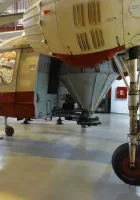
Kamov KA-26 Hoodlum

Kamov Ka-26

PaísUnión Soviética
PapelHelicóptero utilitario ligero
Período1969-1985
Construido816

el Kamov Ka-26 (NATO reporting name Hoodlum) is a Soviet light utility helicopter with co-axial rotors. The Ka-26 entered production in 1969. 816 have been built. A variant with a single turboshaft engine was the Ka-126. A twin turboshaft-powered version is the Ka-226. (All the Ka-26/126/128/226 variants are codenamed “Hoodlum”).

Fuente: Kamov Ka-26 en Wiki

Continuar leyendo

- 3110

Antonov An-2 Colt

Antonov An-2

PaísUnión Soviética
TipoAviones utilitarios Biplane
Período1947–2001
Construido180000+

el Antonov An-2 (apodo ruso: "Annushka" o "Annie"; "kukuruznik" – plumero de cultivos de maíz; USAF/DoD reportando el nombre tipo 22, nombre de informes de la OTAN Colt. es un biplano soviético de bimotor de un solo motor utilitario/avión agrícola diseñado y fabricado por la Antonov Design Bureau a partir de 1946. Su notable durabilidad, alta potencia de elevación y su capacidad para despegar y aterrizar desde pistas pobres le han dado una larga vida útil. El An-2 todavía se produce y permanece en servicio con operadores militares y civiles de todo el mundo. En ciertas condiciones de viento puede flotar o incluso volar hacia atrás.

Fuente: Antonov An-2 en Wiki

Continuar leyendo

Vistas : 3962

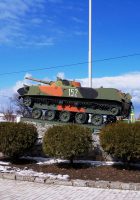
BMD-1

BMD-1

PaísUnión Soviética
TipoVehículo de combate de infantería con seguimiento anfibio aerotransportado
Período1969-presente
ConstruidoUnknow

el BMD-1 es un vehículo soviético de combate de infantería anfibio aerotransportado, que fue introducido en 1969 y visto por primera vez por Occidente en 1970. BMD significa Boyevaya Mashina Desanta (Боевая Махина Десанта, literalmente "Vehículo de combate del Aerotransportado"). Se puede dejar caer en paracaídas y aunque se asemeja al BMP-1 es de hecho mucho más pequeño. El BMD-1 fue utilizado como IFV por las divisiones aerotransportadas del Ejército Soviético. Se desarrolló una variante mejorada del BMD-1, el BMD-2. El BMD-1 también proporcionó una base para el APC de seguimiento multiusos en el aire BTR-D.

Fuente: BMD-1 en Wiki

Continuar leyendo

Views : 3383

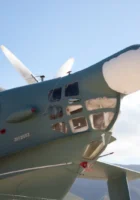
Correo Beriev Be-12

Be-12P

PaísUnión Soviética
TipoAviones de patrulla marítima
Período1960-ahora
Construido143

el Beriev Be-12 Chayka (“Seagull”, NATO reporting name: Mail) is a Soviet turboprop-powered amphibious aircraft designed for anti-submarine and maritime patrol duties. The Beriev Be-12 was a successor to the Beriev Be-6 flying boat, whose primary roles were as an anti-submarine and maritime patrol bomber aircraft. Though tracing its origins to the Be-6, the Be-12 inherited little more than the gull wing and twin oval tailfin configuration of the older aircraft. The Be-12 had turboprop engines, which gave it an improved speed and range over the Be-6. The Be-12 also had retractable landing gear, which enabled it to land on normal land runways, as well as water.

Fuente: Be-12 en Wiki

Continuar leyendo

Views : 8345

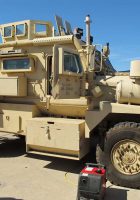
Cougar 4x4 MRAP

Puma 4×4 MRAP

PaísE.e.u.u
TipoVehículo de movilidad de infantería
Período2002-ahora
Construido4000+

el Puma es un MRAP y infantry mobility vehicle structured to be resistant to landmines and improvised munitions. It is a family of armored vehicles produced by Force Protection Inc, which manufactures ballistic and mine-protected vehicles. The vehicles are integrated by Spartan Motors. These vehicles are protected against small arms, land mines and improvised explosive devices (IEDs) using a combination of design features and materials to protect both the crew and engine compartment against a wide range of attacks. A Monocoque type, V-shaped hull extends to the engine bay and serves to direct the blast away from under the vehicle. The dual air-conditioners help keep heavily dressed troops from overheating in temperatures over 100 °F (38 °C) in Iraq.

Fuente: Cougar 4×4 MRAP en Wiki

Continuar leyendo

Views : 9926

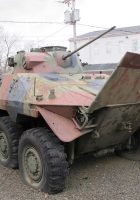
Spahpanzer Luchs

Spahpanzer Luchs

PaísAlemania Occidental
TipoVehículo de reconocimiento
Período1975-actualidad
Construido400+

el Spähpanzer Luchs (en español: Lynx) es un vehículo blindado de combate anfibio alemán 8×8 (Spähpanzer) en servicio desde 1975 con el Ejército alemán, que utilizó 408 en sus batallones blindados de reconocimiento. Fue desarrollado por Daimler-Benz entre 1968 y 1975, reemplazando al M41 y al Schützenpanzer SPz 11-2 Kurz.

Fuente: Spahpanzer Luchs en Wiki

Continuar leyendo

Vistas : 4053

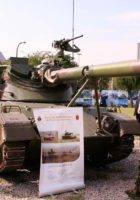
SK-105 A2S Kurassier

SK-105 Kurassier

PaísAustria
TipoTanque ligero
Período1971-ahora
ConstruidoMás de 700

el SK-105 Kürassier is an Austrian light tank armed with a rifled 105 mm gun in an oscillating turret. It is estimated that over 700 have been produced. The SK-105 is based on a heavily modified Saurer APC. The hull of the SK 105 is welded steel and is divided into three compartments: driver’s at the front, fighting in the centre and the engine at the rear. Due to its low weight the SK-105 can be transported by C-130 Hercules transport aircraft. The turret of the SK-105 is developed from the French design used on the AMX-13. Its gun can penetrate 360 mm of armour. Front armour protects the crew from 20mm armour-piercing rounds over its frontal arc, while all-round protection is against small arms bullets only. Add-on armour on the front part of the chassis and turret is available as an option which provides protection against 35 mm APDS rounds at a flank arc. Some export vehicles were fitted with add-on armour.

Fuente: SK-105 Kurassier en Wiki

Continuar leyendo

Vistas : 3638

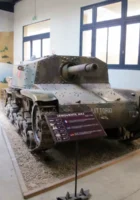
Semovente da 75-18

Semovente da 75/18

PaísItalia
TipoPistola autopropulsada
PeríodoDécada de 1942-1940
Construido262

el Semovente da 75/18 fue un cañón autopropulsado italiano de la Segunda Guerra Mundial. Fue construido montando el cañón de montaña Obice da 75/18 modello 34 de 75 mm en el chasis de un tanque M13/40, M14/41 o M15/42. Los primeros 60 se construyeron utilizando el chasis M13/40 y los 162 posteriores se construyeron sobre el chasis M14/41 desde 1941 hasta 1943, cuando se introdujeron los chasis M15/43. El Semovente da 75/18 estaba destinado a ser un vehículo provisional hasta que el tanque P40 más pesado pudiera estar disponible.

Fuente: L-29 Semovente da 75/18 en Wiki

Continuar leyendo

Views : 6306

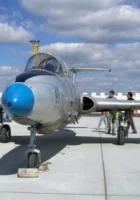
L-29R Delfín

L-29 Delfin

PaísChecoslovaquia
TipoAviones de entrenamiento militar
Período1963-1974
Construido3500

el Aero L-29 Delfín (En inglés: Delfín, nombre de informe de la OTAN: Maya) es un avión de entrenamiento de aviones militares que se convirtió en el entrenador de aviones estándar para las fuerzas aéreas de las naciones del Pacto de Varsovia en la década de 1960. Fue el primer avión a reacción de diseño y construcción local de Checoslovaquia

Fuente: L-29 Delfin en Wiki

Continuar leyendo

Vistas : 3173

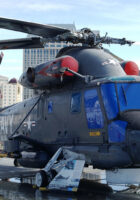
Kaman SH-2F Seasprite

Kaman SH-2F Seasprite

PaísE.e.u.u
TipoHelicóptero con base en barcos
Período1959-1969
Construido184

el Kaman SH-2 Seasprite is a ship-based helicopter originally developed in the late 1950s as a fast utility helicopter for the United States Navy. In the 1970s, anti-submarine, anti-surface threat capabilities were added to the design, including over-the-horizon targeting, resulting in modifying most existing UH-2 models to the SH-2 Seasprite. This aircraft extends and increases shipboard sensor and weapon capabilities against several types of enemy threats, including submarines of all types, surface ships and patrol craft that may be armed with anti-ship missiles. It served with the U.S. Navy from the 1960s until the last SH-2G helicopters were retired in 2001.

Fuente: Kaman SH-2F Seasprite en Wiki

Continuar leyendo

Vistas : 5825