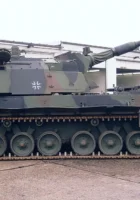
Panzerhaubitze 2000

Panzerhaubitze 2000

CountryGermany
TypeSelf-propelled howitzer
Produced1998-present
WarsWar in Afghanistan, Russian invasion of Ukraine

The Panzerhaubitze 2000 (“armoured howitzer 2000”), abbreviated PzH 2000, is a German 155 mm self-propelled howitzer developed by Krauss-Maffei Wegmann (KMW) and Rheinmetall for the German Army. The PzH 2000 is one of the most powerful conventional artillery systems deployed in the 2010s. It is particularly notable for a very high rate of fire; in burst mode it can fire three rounds in 9 seconds, ten rounds in 56 seconds, and can—depending on barrel heating—fire between 10 and 13 rounds per minute continuously.[1] The PzH 2000 has automatic support for up to 5 rounds of Multiple Rounds Simultaneous Impact (MRSI). The replenishment of shells is automated. Two operators can load 60 shells and propelling charges in less than 12 minutes. PzH 2000 has also been selected by the armies of Italy, Netherlands, Greece, Lithuania and Croatia, and more orders are probable as many NATO forces replace their M109 howitzers.

Source: Panzerhaubitze 2000 on Wikipedia

Continue reading

Views : 9739

Ba-3

BA-3

CountryURSS
TypeHeavy armored car
PhotographVladimir Yakubov
Topic

Album of 102 photos of a tank BA-3

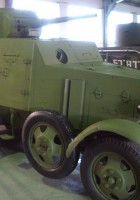
The BA-3 (Russian: Broneavtomobil 3) was a heavy armored car developed in the Soviet Union in 1933, followed by a slightly changed model BA-6 in 1936. Both were based mostly on BA-I, the most important development being the new turret, same as in the T-26 m 1933 and BT-5 tanks, and also equipped with the 45 mm main gun. Around 180 BA-3 cars were built at the Izhorskij and Vyksunskij factories, until production ended in 1935. BA-6 followed with 386 cars produced between 1936 and 1938 in Izhorskij factory. Most of BA-3 production was based on the Ford-Timken chassis, a 6×4 modification of the US Ford AA 4×2 truck, but the last batch was built on Russian version of the same chassis – GAZ-AAA, continued to be used in BA-6. The biggest limitation of the BA-3 was the mobility, limited to roads or very hard ground, the result of unnecessarily large weight. The innovation that slightly improved mobility were the auxiliary (“Overall”) tracks that could be fitted onto the rear tandem wheels, converting the car to half-track.

Source: BA-3 on Wikipedia

Continue reading

Views : 4793

Bachem Ba 349 Natter

Bachem Ba 349 Natter

CountryGermany
TypeRocket-powered interceptor
PhotographerVladimir Yakubov
Topic

Album of 65 photos walk-around of a «Bachem Ba 349 Natter»

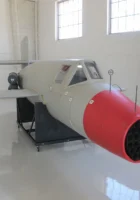
Photo gallery of a Bachem Ba 349 Natter, The Bachem Ba 349 Natter (English: Colubrid, grass-snake) was a World War II German point-defence rocket-powered interceptor, which was to be used in a very similar way to a manned surface-to-air missile. After a vertical take-off, which eliminated the need for airfields, most of the flight to the Allied bombers was to be controlled by an autopilot. The primary role of the relatively untrained pilot was to aim the aircraft at its target bomber and fire its armament of rockets. The pilot and the fuselage containing the rocket-motor would then land using separate parachutes, while the nose section was disposable. The only manned vertical take-off flight on 1 March 1945 ended in the death of the test pilot, Lothar Sieber.

Source: Bachem Ba 349 Natter on Wikipedia

Continue reading

Views : 5282

Douglas TF-10B Skyknight

Douglas TF-10B Skyknight

CountryUSA
TypeFighter aircraft
First flight23 March 1948
Built265

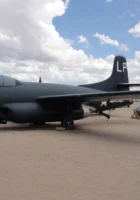
Photo gallery of a Douglas TF-10B Skyknight, The Douglas F3D Skyknight (later designated F-10 Skyknight) was a United States twin-engined, mid-wing jet fighter aircraft manufactured by the Douglas Aircraft Company in El Segundo, California. The F3D was designed as a carrier-based all-weather night fighter and saw service with the United States Navy and United States Marine Corps. The mission of the F3D was to search out and destroy enemy aircraft at night.

Source: Douglas TF-10B Skyknight on Wikipedia

Continue reading

Views : 9130

Panzer 61

Panzer 61

CountrySwitzerland
TypeMedium Tank
PhotographGunther Neumahr
TopicAlbum of 46 photos of a tank Panzer 61

The Panzer 61 was a Swiss Cold War era medium tank later reclassified as a second-generation main battle tank. The tank had a weight of 36.5 tons and was powered by a 630 hp diesel engine, which gave it a top road speed of 31 mph (50 km/h). The primary armament of the Panzer 61 was a 105 mm main gun.

Source: Panzer 61 on Wikipedia

Continue reading

Views : 1910

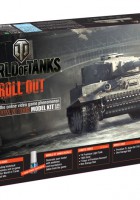
World of Tanks - PZ.KPFW.VI TIGER - ITALERI 36502

Italeri

Ref 36502
SerieWorld of Tanks
Scale1/35
Topic

PZ.KPFW.VI TIGER

THE BOX CONTAIN: 1 MODEL KIT – 1 LIQUID CEMENT – 1 TANK GUIDE – WORLD oF TANKS DECALS – 3 INVITE CODES – 1 BONUS CODE

The final official German designation for the tank was Panzerkampfwagen VI Tiger Ausf.E, often shortened to just “Tiger I”. The Tiger’s development was started in 1937 by the company, Henschel. Mass production began in 1942 with a total of 1347 vehicles being manufactured over its production run. The initial model used suspension similar to that of the Panther. The hull extended over the tracks to accommodate the wide-ringed turret which could mount the infamous 8,8cm Kw.K 36 L/56. The Tiger first saw combat in the fighting for Leningrad and soon found itself featured in the majority of German armoured engagements. Even though production was discontinued in the summer of 1944, the Tiger I continued to see action until the end of the war. It was the first German heavy tank in WWII and soon proved itself to be extremely formidable against Allied and Soviet units which mostly consisted of Sherman tanks and T-34s at the time.

Source: Italeri

Continue reading

Views : 1663

CF-100 Canuck

Avro Canada CF-100 Canuck

CountryCanada
TypeJet interceptor
First flight19 January 1950
Built692

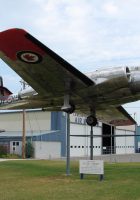
Photo gallery of a Avro Canada CF-100 Canuck, The Avro Canada CF-100 Canuck (affectionately known as the “Clunk”) was a Canadian jet interceptor/fighter serving during the Cold War both in NATO bases in Europe and as part of NORAD. The CF-100 was the only Canadian-designed fighter to enter mass production, serving primarily with the RCAF/CAF and in small numbers in Belgium. For its day, the CF-100 featured a short takeoff run and high climb rate, making it well suited to its role as an interceptor.

Source: Avro Canada CF-100 Canuck on Wikipedia

Continue reading

Views : 6621

85 mm divisional gun D-44
,

85 mm divisional gun D-44

CountrySoviet Union
TypeDivisional gun
Period1944-1953
Built10.800

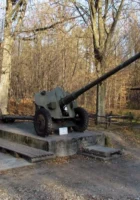
The 85-mm divisional gun D-44 (Russian: 85-мм дивизионная пушка Д-44) was a Soviet divisional 85-mm calibre field artillery gun used in the last action of World War II. It was designed as the replacement for the 76 mm divisional gun M1942 (ZiS-3). The gun is no longer in front-line service with the Russian Ground Forces, although some 200 of the Chinese Type 56 variant are still in service with the Pakistan Army. Wartime service included use by communist forces during the Vietnam War and by Arab forces during their conflicts with Israel.

Source: 85 mm divisional gun D-44 on Wikipedia

Continue reading

Views : 3287

Panzer 35(t)

Panzer 35(t)

CountryGermany
TypeMedium Tank
Produced1936–1940
Built434

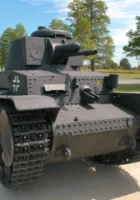
The Panzerkampfwagen 35(t), commonly shortened to Panzer 35(t) or abbreviated as Pz.Kpfw. 35(t), was a Czechoslovak-designed light tank used mainly by Nazi Germany during World War II. The letter (t) stood for tschechisch (German: “Czech”). In Czechoslovak service, it had the formal designation Lehký tank vzor 35 (Light Tank Model 35), but was commonly referred to as the LT vz. 35 or LT-35. Four hundred and thirty-four were built; of these, the Germans seized two hundred and forty-four when they occupied Bohemia-Moravia in March 1939 and the Slovaks acquired fifty-two when they declared independence from Czechoslovakia at the same time. Others were exported to Bulgaria and Romania. In German service, it saw combat during the early years of World War II, notably the Invasion of Poland, the Battle of France and the invasion of the Soviet Union before being retired or sold off in 1942. It was used for the remainder of the war by other countries and as a training tank in Bulgaria into the 1950s.

Source: Panzer 38(t) on Wikipedia

Continue reading

Views : 3954

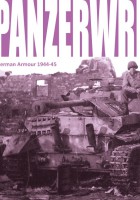
Panzerwrecks vol 5

Panzerwrecks

LanguageEnglish
SubjectGerman armour 1944-45
Pages96 pages
ISBN-13978-0-9555940-1-4

-27 page feature revisiting the wrecks and units in Panzerwrecks 1 -More photos of the uparmoured Panthers of I./Pz.Rgt.26 in Italy -Unique coverage of the Pz.Beob.Wg.III, inside and out, includes never seen before images of its massive TBF 2 periscope -10 page feature about German wrecks in the Korsun pocket -Sturmgeschütz III Ausf.G with ‘swinging’ Schürzen -m.SPW and le.SPW being driven without armour bodies – naked! -Famous US wrestler Bozo Miller posing with a Pz.Kpfw 38(t) and making it look small -Loads more

Features: Panzerwrecks 1 Revisited Tiger II Joyride Wrecks in Russian Newsreels Three Maus at Meppen ISBN: 978-0-9555940-1-4 Date: 2007. Reprinted 2012 No of Photos: 153 No of Pages: 96 Size: 280x210mm (L)

Source: Panzerwrecks

Continue reading

Views : 1465