2000 - Panzerhaubitze

2000 - Panzerhaubitze

PaeseGermania
digitareObice semovente
ProdottoDal 1998 ad oggi
GuerreGuerra in Afghanistan, invasione russa dell'Ucraina

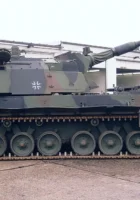
Le 2000 - Panzerhaubitze ("obice corazzato 2000"), abbreviato PzH 2000, è un obice semovente tedesco da 155 mm sviluppato da Krauss-Maffei Wegmann (KMW) e Rheinmetall per l'esercito tedesco. Il PzH 2000 è uno dei più potenti sistemi di artiglieria convenzionali schierati negli anni 2010. È particolarmente degno di nota per un tasso di fuoco molto elevato; in modalità burst può sparare tre colpi in 9 secondi, dieci colpi in 56 secondi e può, a seconda del riscaldamento della canna, sparare continuamente tra 10 e 13 colpi al minuto. [1] Il PzH 2000 ha il supporto automatico per un massimo di 5 round di multiple rounds simultaneous impact (MRSI). Il rifornimento dei proiettili è automatizzato. Due operatori possono caricare 60 proiettili e cariche di propulsione in meno di 12 minuti. PzH 2000 è stato anche selezionato dagli eserciti di Italia, Paesi Bassi, Grecia, Lituania e Croazia, e più ordini sono probabili poiché molte forze NATO sostituiscono i loro obici M109.

fonte: Panzerhaubitze 2000 su Wikipedia

Continua a leggere

Views : 9747

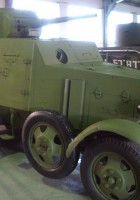
Ba-3

BA-3

PaeseURSS
digitareAuto blindata pesante
FotografiaVladimir Jakubov
Argomento

Album di 102 foto di un serbatoio BA-3

Il BA-3 (in russo Broneavtomobil 3) era un ' auto blindata sviluppata in Unione Sovietica nel 1933, seguita da un modello BA-6 leggermente cambiato nel 1936. Entrambi erano basati principalmente sul BA-I, il più importante sviluppo fu la nuova torretta, come nei carri armati T-26 m 1933 e BT-5, e anche equipaggiati con il cannone principale da 45 mm. Circa 180 vetture BA-3 furono costruite nelle fabbriche di Izhorskij e Vyksunskij, fino alla fine della produzione nel 1935. Il BA-6 seguì con 386 vetture prodotte tra il 1936 e il 1938 nello stabilimento di Izhorskij. La maggior parte della produzione del BA-3 era basata sul telaio Ford-Timken, una modifica del 6×4 del camion statunitense Ford AA 4×2, ma l'ultimo lotto fu costruito sulla versione russa dello stesso telaio - GAZ-AAA, continuò ad essere utilizzato nel BA-6. La più grande limitazione del BA-3 era la mobilità, limitata alle strade o a un terreno molto duro, il risultato di un peso inutilmente grande. L'innovazione che migliorava leggermente la mobilità erano i binari ausiliari ("Overall") che potevano essere montati sulle ruote tandem posteriori, convertendo l'auto in half-track.

fonte: BA-3 on Wikipedia

Continua a leggere

Views : 4799

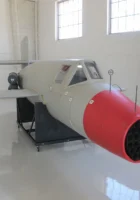
Bachem Ba 349 Natter

Bachem Ba 349 Natter

PaeseGermania
digitareIntercettore a razzo
FotografoVladimir Jakubov
Argomento

Album di 65 foto walk-around di un "Bachem Ba 349 Natter"

Galleria fotografica di un Bachem Ba 349 Natter, The Bachem Ba 349 Natter (English: Colubrid, grass-snake) was a World War II German point-defence rocket-powered interceptor, which was to be used in a very similar way to a manned surface-to-air missile. After a vertical take-off, which eliminated the need for airfields, most of the flight to the Allied bombers was to be controlled by an autopilot. The primary role of the relatively untrained pilot was to aim the aircraft at its target bomber and fire its armament of rockets. The pilot and the fuselage containing the rocket-motor would then land using separate parachutes, while the nose section was disposable. The only manned vertical take-off flight on 1 March 1945 ended in the death of the test pilot, Lothar Sieber.

fonte: Bachem Ba 349 Natter su Wikipedia

Continua a leggere

Visualizzazioni : 5290

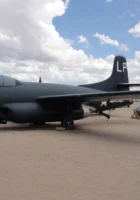
Douglas TF-10B Skyknight

Douglas TF-10B Skyknight

PaeseUsa
digitareCaccia
Primo volo23 marzo 1948
Costruito265

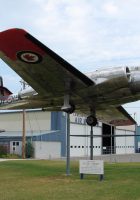
Galleria fotografica di un Douglas TF-10B Skyknight, The Douglas F3D Skyknight (later designated F-10 Skyknight) was a United States twin-engined, mid-wing jet fighter aircraft manufactured by the Douglas Aircraft Company in El Segundo, California. The F3D was designed as a carrier-based all-weather night fighter and saw service with the United States Navy and United States Marine Corps. The mission of the F3D was to search out and destroy enemy aircraft at night.

fonte: Douglas TF-10B Skyknight su Wikipedia

Continua a leggere

Views : 9175

Panzer 61

Panzer 61

PaeseSvizzera
digitareCarro medio
FotografiaGunther Neumahr
ArgomentoAlbum di 46 foto di un serbatoio Panzer 61

The Panzer 61 was a Swiss Cold War era medium tank later reclassified as a second-generation main battle tank. The tank had a weight of 36.5 tons and was powered by a 630 hp diesel engine, which gave it a top road speed of 31 mph (50 km/h). The primary armament of the Panzer 61 was a 105 mm main gun.

fonte: Panzer 61 on Wikipedia

Continua a leggere

Visualizzazioni : 1913

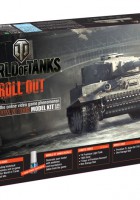
World of Tanks - PZ. KPFW.VI TIGRE - ITALERI 36502

Italeri

Ref 36502
Serie AIl mondo dei carri armati
Scala1/35
Argomento

PZ. KPFW.VI TIGRE

THE BOX CONTAIN: 1 MODEL KIT – 1 LIQUID CEMENT – 1 TANK GUIDE – WORLD oF TANKS DECALS – 3 INVITE CODES – 1 BONUS CODE

The final official German designation for the tank was Panzerkampfwagen VI Tiger Ausf.E, often shortened to just “Tiger I”. The Tiger’s development was started in 1937 by the company, Henschel. Mass production began in 1942 with a total of 1347 vehicles being manufactured over its production run. The initial model used suspension similar to that of the Panther. The hull extended over the tracks to accommodate the wide-ringed turret which could mount the infamous 8,8cm Kw.K 36 L/56. The Tiger first saw combat in the fighting for Leningrad and soon found itself featured in the majority of German armoured engagements. Even though production was discontinued in the summer of 1944, the Tiger I continued to see action until the end of the war. It was the first German heavy tank in WWII and soon proved itself to be extremely formidable against Allied and Soviet units which mostly consisted of Sherman tanks and T-34s at the time.

fonte: Italeri

Continua a leggere

Punti di vista: 1689

CF-100 Canuck

Avro Canada CF-100 Canuck

PaeseCanada
digitareIntercettore a getto
Primo volo19 gennaio 1950
Costruito692

Galleria fotografica di un Avro Canada CF-100 Canuck, The Avro Canada CF-100 Canuck (affectionately known as the “Clunk”) was a Canadian jet interceptor/fighter serving during the Cold War both in NATO bases in Europe and as part of NORAD. The CF-100 was the only Canadian-designed fighter to enter mass production, serving primarily with the RCAF/CAF and in small numbers in Belgium. For its day, the CF-100 featured a short takeoff run and high climb rate, making it well suited to its role as an interceptor.

fonte: Avro Canada CF-100 Canuck su Wikipedia

Continua a leggere

Views : 6626

Pistola divisionale D-44 da 85 mm
,

Pistola divisionale D-44 da 85 mm

PaeseUnione Sovietica
digitareCannone divisionale
Periodo1944-1953
Costruito10.800

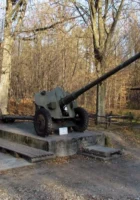
Le Cannone divisionale da 85 mm D-44 (in russo: 85-мм дивизионная пушка Д-44) era un cannone d'artiglieria campale divisionale sovietico calibro 85 mm utilizzato nell'ultima azione della seconda guerra mondiale. È stato progettato come sostituto del cannone divisionale da 76 mm M1942 (ZiS-3). Il cannone non è più in servizio di prima linea con le forze di terra russe, anche se circa 200 della variante cinese Type 56 sono ancora in servizio con l'esercito pakistano. Il servizio in tempo di guerra includeva l'uso da parte delle forze comuniste durante la guerra del Vietnam e da parte delle forze arabe durante i loro conflitti con Israele.

fonte: Cannone divisionale da 85 mm D-44 su Wikipedia

Continua a leggere

Visualizzazioni : 3291

Panzer 35(t)

Panzer 35(t)

PaeseGermania
digitareCarro medio
Prodotto1936–1940
Costruito434

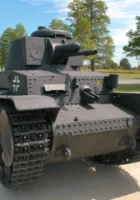
Il Panzerkampfwagen 35(t), comunemente abbreviato in Panzer 35(t) o abbreviato in Pz.Kpfw. 35(t), era un carro leggero di design cecoslovacco usato principalmente dalla Germania nazista durante la seconda guerra mondiale. La lettera (t) stava per tschechisch (tedesco: "ceco"). Nel servizio cecoslovacco, aveva la designazione formale Lehký tank vzor 35 (Light Tank Model 35), ma era comunemente indicato come LT vz. 35 o LT-35. Quattrocentotrentaquattro furono costruiti; di questi, i tedeschi sequestrarono duecentoquarantaquattro quando occuparono la Boemia-Moravia nel marzo 1939 e gli slovacchi ne acquisirono cinquantadue quando dichiararono l'indipendenza dalla Cecoslovacchia allo stesso tempo. Altri furono esportati in Bulgaria e Romania. Al servizio della Germania, vide combattimenti durante i primi anni della seconda guerra mondiale, in particolare l'invasione della Polonia, la battaglia di Francia e l'invasione dell'Unione Sovietica prima di essere ritirata o venduta nel 1942. Fu usato per il resto della guerra da altri paesi e come carro armato da addestramento in Bulgaria negli anni '50.

fonte: Panzer 38(t) su Wikipedia

Continua a leggere

Views : 3955

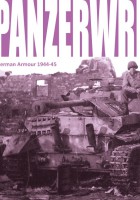
Panzerwrecks vol 5

Panzerwreck

LinguaInglese
OggettoGerman armour 1944-45
Pagine96 pagine
ISBN-13978-0-9555940-1-4

-27 page feature revisiting the wrecks and units in Panzerwrecks 1 -More photos of the uparmoured Panthers of I./Pz.Rgt.26 in Italy -Unique coverage of the Pz.Beob.Wg.III, inside and out, includes never seen before images of its massive TBF 2 periscope -10 page feature about German wrecks in the Korsun pocket -Sturmgeschütz III Ausf.G with ‘swinging’ Schürzen -m.SPW and le.SPW being driven without armour bodies – naked! -Famous US wrestler Bozo Miller posing with a Pz.Kpfw 38(t) and making it look small -Loads more

Features: Panzerwrecks 1 Revisited Tiger II Joyride Wrecks in Russian Newsreels Three Maus at Meppen ISBN: 978-0-9555940-1-4 Date: 2007. Reprinted 2012 No of Photos: 153 No of Pages: 96 Size: 280x210mm (L)

fonte: Panzerwreck

Continua a leggere

Visualizzazioni : 1467

Pubblicato in Lire.