英国飞机喷气式飞机教务长T.Mk.5A

BAC喷气式教务长

国家英国
作用军用教练机
首次飞行26 六月 1954
建立734

BAC喷气式教务长 是一架英国喷气式教练机,从1955年到1993年与皇家空军(RAF)一起使用。它最初是由Hunting Percival从早期的活塞发动机驱动的Percival Provost基本教练机中开发的,后来由英国飞机公司(BAC)生产。除了多个英国皇家空军的订单外,喷气式教务长,有时带有轻型武器,出口到世界各地的许多空军。该设计还进一步发展成为一种更全副武装的地面攻击变体,名为BAC Strikemaster。

源: BAC Jet Provost on Wikipedia

继续阅读

意见 : 1147

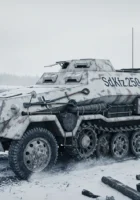
Sd.Kfz. 250 war

Sd.Kfz. 250

国家德国
类型半履带式装甲运兵车
在服务中1941–1945
建立6600+

Sd.Kfz. 250 (German: Sonderkraftfahrzeug 250; ‘special motor vehicle’) was a light armoured half-track, very similar in appearance to the larger Hanomag-designed Sd.Kfz. 251, and built by the DEMAG firm, for use by Nazi Germany in World War II. Most variants were open-topped and had a single access door in the rear. The Sd. Kfz 250 was adopted in 1939 to supplement the standard half-track. Production delays meant that the first vehicle did not appear until mid-1941.

源: Sd.Kfz. 250 在维基百科上的内容

继续阅读

意见:4259

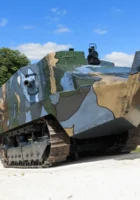
施耐德 CA1

施耐德 CA1

国家法国
类型重型坦克
在服务中1916–1918 (法国) / 1921–1936 (西班牙)
建立400

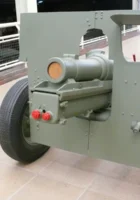
施耐德 CA 1 (originally named the Schneider CA) was the first French tank, developed during the First World War. The Schneider was inspired by the need to overcome the stalemate of trench warfare which on the Western Front prevailed during most of the Great War. It was designed specifically to open passages for the infantry through barbed wire and then to suppress German machine gun nests. After a first concept by Jacques Quellennec devised in November 1914, the type was developed from May 1915 onwards by engineer Eugène Brillié, paralleling British development of tanks the same year. Colonel Jean Baptiste Eugène Estienne in December 1915 began to urge for the formation of French armoured units, leading to an order in February 1916 for four hundred Schneider CA tanks, which were manufactured by SOMUA, a subsidiary of Schneider located in a suburb of Paris, between September 1916 and August 1918.

源: 施耐德 CA1 在 Wkipedia 上

继续阅读

观点 : 2276

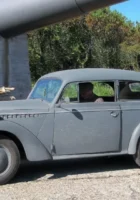
欧宝奥林匹亚

欧宝奥林匹亚

国家德国
类型汽车
生产1935–1970
建立未知

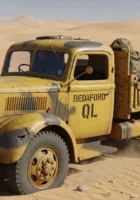
欧宝奥林匹亚 is a compact car produced by the German automaker Opel from 1935 to 1940, from 1947 to 1953 and again from 1967 to 1970. The 1935 Olympia was Germany’s first mass-produced car with an all-steel unitized body (monocoque). This revolutionary technology reduced the weight of the car by 180 kilograms (400 lb.) compared to its predecessor. Production of the unibody design required new production methods and materials. Spot welding, advanced types of steel, and a new production line layout were among the many advances introduced by the Olympia.

源: 欧宝奥林匹亚在维基百科上的内容

继续阅读

观点 : 1988

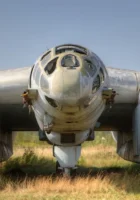
巴蒂尼·别里耶夫 VVA-14

巴蒂尼·别里耶夫 VVA-14

国家苏联
类型两栖反潜战机
首次飞行4 九月 1972
建立2

巴蒂尼·别里耶夫 VVA-14 Vertikaľno-Vzletayushchaya Amfibiya(垂直起飞两栖飞机)是苏联在1970年代初开发的一种地面翼效应飞机。它被设计为能够从水中起飞并在长距离上高速飞行,这是为了在高空进行真正的飞行,但也具有利用空气动力学地面效应在海面上方高效飞行的能力。VVA-14由意大利出生的设计师罗伯特·巴蒂尼(Robert Bartini)设计,以响应摧毁美国海军北极星导弹潜艇的要求。最后一架飞机于1987年退役。

源: 巴蒂尼·别里耶夫VVA-14在维基

继续阅读

视图 : 3892

Lun-class ekranoplan

Lun-class ekranoplan

国家苏联
作用攻击/运输地效车辆
在服务中 1987年-1990年代末
建立2

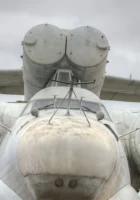
Lun-class ekranoplan (also called Project 903) is a ground effect vehicle (GEV) designed by Rostislav Alexeyev in 1975 and used by the Soviet and Russian navies from 1987 until sometime in the late 1990s. It flew using lift generated by the ground effect acting on its large wings when within about four metres (13 ft) above the surface of the water. Although they might look similar to traditional aircraft, ekranoplans like the Lun are not classified as aircraft, seaplanes, hovercraft, or hydrofoils. Rather, crafts like the Lun-class ekranoplan are classified as maritime ships by the International Maritime Organization due to their use of the ground effect, in which the craft glides just above the surface of the water.

源: Lun-class ekranoplan on Wikipedia

继续阅读

观点 : 2187

短桑德兰ML814

Short Sunderland

国家英国
作用军用飞艇轰炸机
首次飞行1937年10月16日
建立34½

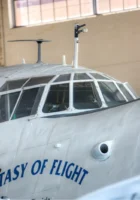
短 S.25 桑德兰 was a British flying boat patrol bomber, developed and constructed by Short Brothers for the Royal Air Force (RAF). The aircraft took its service name from the town (latterly, city) and port of Sunderland in North East England. Developed in parallel with the civilian S.23 Empire flying boat, the flagship of Imperial Airways, the Sunderland was developed specifically to conform to the requirements of British Air Ministry Specification R.2/33 for a long-range patrol/reconnaissance flying boat to serve with the Royal Air Force (RAF). As designed, it served as a successor to the earlier Short Sarafand flying boat. Sharing several similarities with the S.23, it featured a more advanced aerodynamic hull and was outfitted with various offensive and defensive armaments, including machine gun turrets, bombs, aerial mines, and depth charges. The Sunderland was powered by four Bristol Pegasus XVIII radial engines and was outfitted with various detection equipment to aid combat operations, including the Leigh searchlight, the ASV Mark II and ASV Mark III radar units, and an astrodome.

源: 维基百科上的短桑德兰
继续阅读

意见:1412