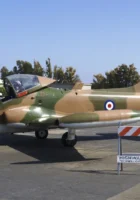
British Aircraft Jet Provost T.Mk.5A

BAC Jet Prévôt

PaysRoyaume-uni
RôleAvion d’entraînement militaire
Premier vol26 juin 1954
Construit734

Lla BAC Jet Prévôt est un avion d’entraînement à réaction britannique qui a été utilisé par la Royal Air Force (RAF) de 1955 à 1993. Il a été développé à l’origine par Hunting Percival à partir de l’ancien entraînement de base Percival Provost à moteur à pistons, et produit plus tard par la British Aircraft Corporation (BAC). En plus des multiples commandes de la RAF, le Jet Provost, parfois avec un armement léger, a été exporté vers de nombreuses forces aériennes dans le monde entier. La conception a également été développée en une variante d’attaque au sol plus lourdement armée sous le nom de BAC Strikemaster.

Source: BAC Jet Provost sur Wikipedia

Lire l’article

Vues : 1145

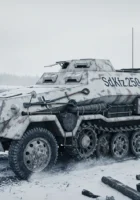
Sd.Kfz. 250 war

Sd.Kfz. 250

PaysGermany
TypeVéhicule blindé de transport de troupes semi-chenillé
En service1941–1945
Construit6600+

Lla Sd.Kfz. 250 (allemand: Sonderkraftfahrzeug 250; ‘véhicule automobile spécial’) was a light armoured half-track, very similar in appearance to the larger Hanomag-designed Sd.Kfz. 251, and built by the DEMAG firm, for use by Nazi Germany in World War II. Most variants were open-topped and had a single access door in the rear. The Sd. Kfz 250 was adopted in 1939 to supplement the standard half-track. Production delays meant that the first vehicle did not appear until mid-1941.

Source: Sd.Kfz. 250 sur Wikipedia

Lire l’article

Vues : 4232

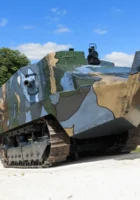
Schneider CA1

Schneider CA1

PaysFrance
TypeRéservoir lourd
En service1916-1918 (France) / 1921-1936 (Espagne)
Construit400

Lla Schneider CA 1 (originally named the Schneider CA) was the first French tank, developed during the First World War. The Schneider was inspired by the need to overcome the stalemate of trench warfare which on the Western Front prevailed during most of the Great War. It was designed specifically to open passages for the infantry through barbed wire and then to suppress German machine gun nests. After a first concept by Jacques Quellennec devised in November 1914, the type was developed from May 1915 onwards by engineer Eugène Brillié, paralleling British development of tanks the same year. Colonel Jean Baptiste Eugène Estienne in December 1915 began to urge for the formation of French armoured units, leading to an order in February 1916 for four hundred Schneider CA tanks, which were manufactured by SOMUA, a subsidiary of Schneider located in a suburb of Paris, between September 1916 and August 1918.

Source: Schneider CA1 sur Wkipedia

Lire l’article

Vues : 2248

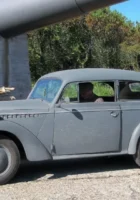
Opel Olympia

Opel Olympia

PaysGermany
TypeVoiture
Production1935–1970
ConstruitInconnu

Lla Opel Olympia is a compact car produced by the German automaker Opel from 1935 to 1940, from 1947 to 1953 and again from 1967 to 1970. The 1935 Olympia was Germany’première voiture produite en série avec une carrosserie unitisée tout en acier (monocoque). Cette technologie révolutionnaire a réduit le poids de la voiture de 180 kilogrammes (400 lb) par rapport à son prédécesseur. La production de la conception unibody a nécessité de nouvelles méthodes de production et de nouveaux matériaux. Le soudage par points, les types avancés d’acier et une nouvelle disposition de la ligne de production figuraient parmi les nombreuses avancées introduites par l’Olympia.

Source: Opel Olympia sur Wikipedia

Lire l’article

Vues : 1985

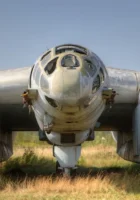
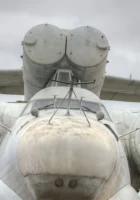
Bartini Beriev VVA-14

Bartini Beriev VVA-14

PaysUnion soviétique
TypeAvions amphibies ASW
Premier vol4 septembre 1972
Construit2

Lla Bartini Beriev VVA-14 Vertikaľno-Vzletayushchaya Amfibiya (avion amphibie à décollage vertical) était un avion à effet aile dans le sol développé en Union soviétique au début des années 1970. Conçu pour pouvoir décoller de l’eau et voler à grande vitesse sur de longues distances, il devait effectuer de véritables vols à haute altitude, mais aussi avoir la capacité de voler efficacement juste au-dessus de la surface de la mer, en utilisant un effet de sol aérodynamique. Le VVA-14 a été conçu par le designer italien Robert Bartini en réponse à une exigence perçue de détruire les sous-marins lance-missiles Polaris de la marine américaine. Le dernier avion a été retiré du service en 1987.

Source: Bartini Beriev VVA-14 sur Wiki

Lire l’article

Vues : 3890

Ekranoplan de classe Lun

Ekranoplan de classe Lun

PaysUnion soviétique
RôleVéhicule à effet de sol d’attaque/transport
En service 1987-fin des années 1990
Construit2

Lla Ekranoplan de classe Lun (also called Project 903) is a ground effect vehicle (GEV) designed by Rostislav Alexeyev in 1975 and used by the Soviet and Russian navies from 1987 until sometime in the late 1990s. It flew using lift generated by the ground effect acting on its large wings when within about four metres (13 ft) above the surface of the water. Although they might look similar to traditional aircraft, ekranoplans like the Lun are not classified as aircraft, seaplanes, hovercraft, or hydrofoils. Rather, crafts like the Lun-class ekranoplan are classified as maritime ships by the International Maritime Organization due to their use of the ground effect, in which the craft glides just above the surface of the water.

Source: Ekranoplan de classe Lun sur Wikipedia

Lire l’article

Vues : 2187

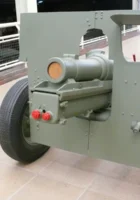
Obusier de 3,7 pouces

QF 3.7-inch howitzer

PaysRoyaume-uni
RôleCanon de montagne
En serviceDe 1917 à aujourd’hui
ConstruitInconnu

Ordnance, obusier QF de 3,7 pouces est un canon de montagne, utilisé par les armées britanniques et du Commonwealth pendant les Première et Seconde Guerres mondiales, et entre les guerres.

Source: Obusier QF de 3,7 pouces sur Wikipedia

Lire l’article

Vues : 1774

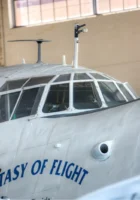
Court Sunderland ML814

Short Sunderland

PaysRoyaume-uni
RôleHydravion bombardier militaire
Premier vol16 octobre 1937
Construit749

Lla Court S.25 Sunderland was a British flying boat patrol bomber, developed and constructed by Short Brothers for the Royal Air Force (RAF). The aircraft took its service name from the town (latterly, city) and port of Sunderland in North East England. Developed in parallel with the civilian S.23 Empire flying boat, the flagship of Imperial Airways, the Sunderland was developed specifically to conform to the requirements of British Air Ministry Specification R.2/33 for a long-range patrol/reconnaissance flying boat to serve with the Royal Air Force (RAF). As designed, it served as a successor to the earlier Short Sarafand flying boat. Sharing several similarities with the S.23, it featured a more advanced aerodynamic hull and was outfitted with various offensive and defensive armaments, including machine gun turrets, bombs, aerial mines, and depth charges. The Sunderland was powered by four Bristol Pegasus XVIII radial engines and was outfitted with various detection equipment to aid combat operations, including the Leigh searchlight, the ASV Mark II and ASV Mark III radar units, and an astrodome.

Source: Short Sunderland sur Wikipedia

Lire l’article

Vues : 1410

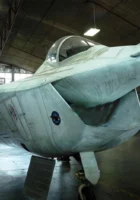
Boeing X-32 (Prototype)

Boeing X-32

PaysUsa
RôleAvion de démonstrateur de concept
Premier vol18 septembre 2000
Construit2

Lla Boeing X-32 est un avion de démonstration de concept qui a été conçu pour la compétition Joint Strike Fighter. Il a perdu contre le démonstrateur Lockheed Martin X-35, qui a été développé en Lockheed Martin F-35 Lightning II.

Source: Boeing X-32 sur Wikipedia

Lire l’article

Vues : 1624