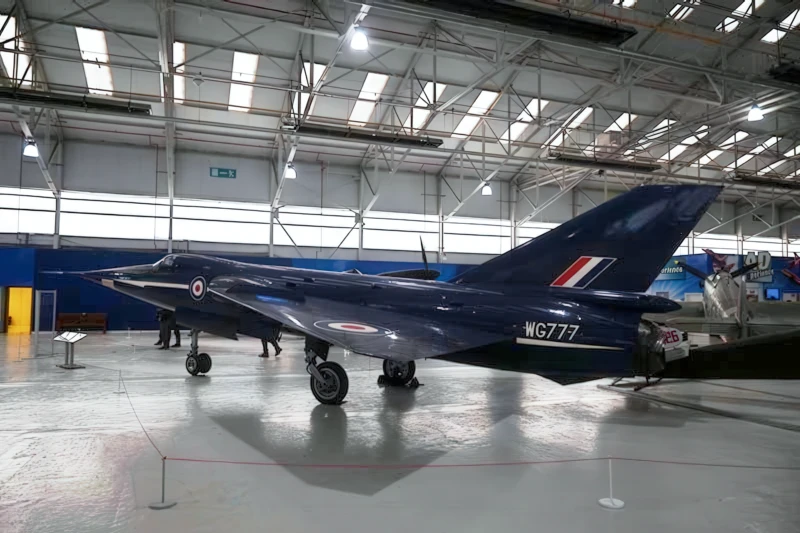
Fairey Delta 2 | |
|---|---|
| Kraju | Uk |
| Roli | Szybki samolot badawczy |
| Pierwsza mucha | 6 października 1954 |
| Zbudowany | 2 |
Tthe Delta Fairey 2 lub FD2 (wewnętrzne oznaczenie Type V w Fairey) był brytyjskim naddźwiękowym samolotem badawczym produkowanym przez Fairey Aviation Company w odpowiedzi na specyfikację Ministerstwa Zaopatrzenia dla specjalistycznego samolotu do prowadzenia badań nad lotem i kontrolą z prędkościami transsonicznymi i naddźwiękowymi. Kluczowe cechy tego typu obejmują przyjęcie skrzydła delta i opadającego nosa. 6 października 1954 roku Delta 2 wykonała swój dziewiczy lot, pilotowany przez pilota doświadczalnego Fairey Petera Twissa; wyprodukowane zostałyby łącznie dwa samoloty. Delta 2 był ostatnim samolotem wyprodukowanym przez Fairey jako niezależna produkcja.
Źródła: Fairey Delta 2 na Wikipedii
| BAC 221 Walk Around | |
|---|---|
| Fotograf | Howard Mason |
| Lokalizacja | Muzeum Fleet Air Arm |
| Zdjęcia | 61 |
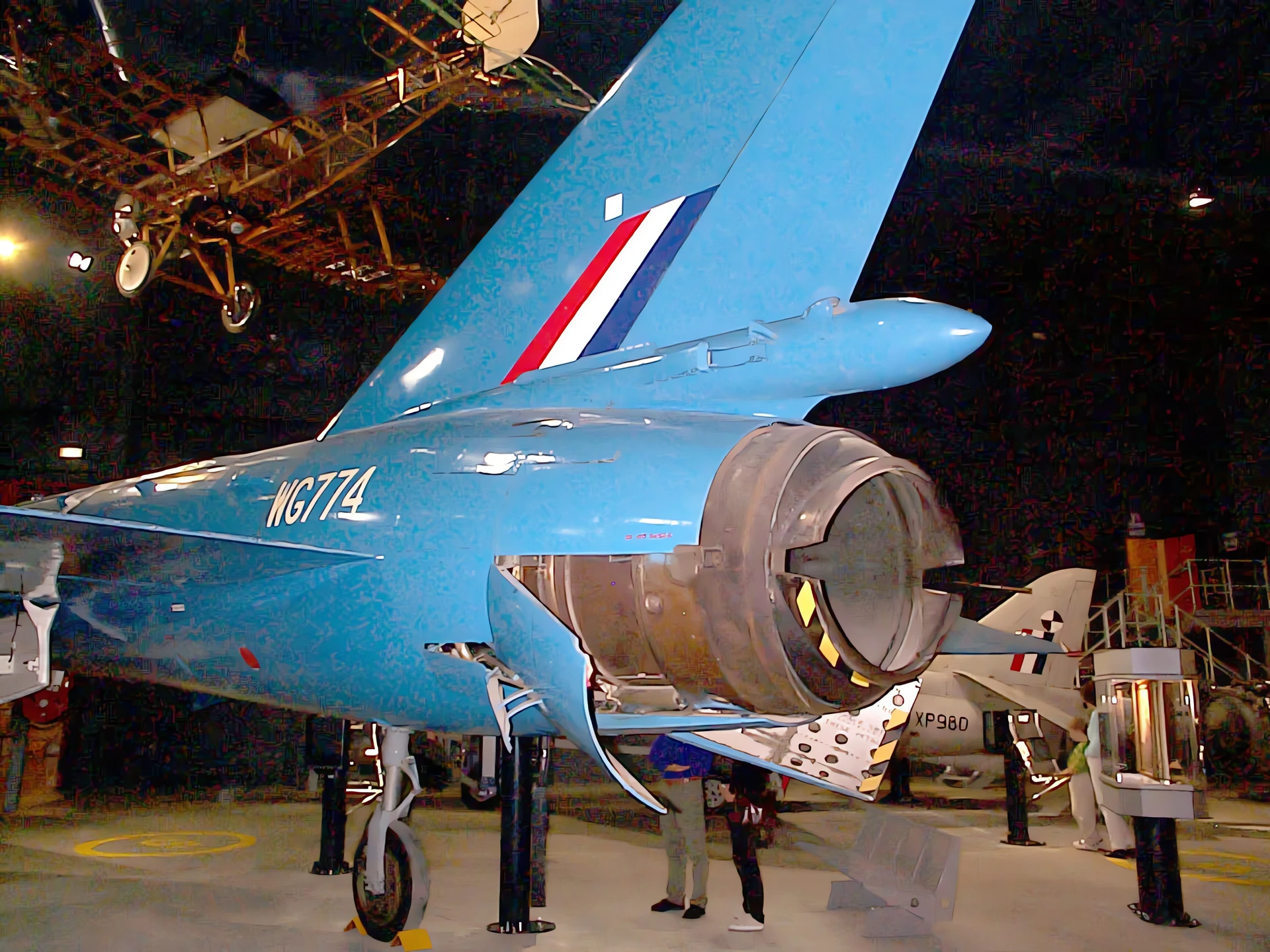
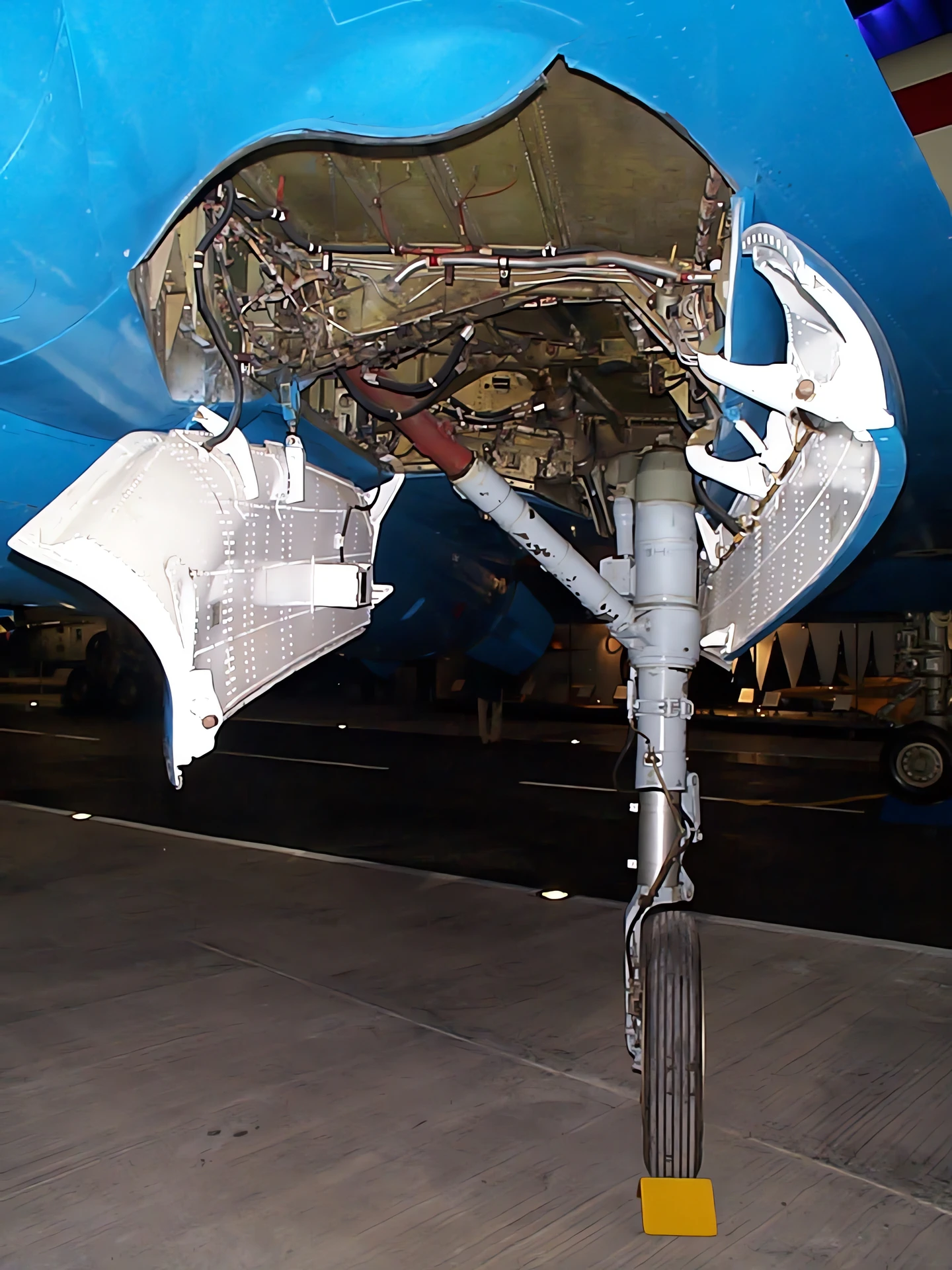
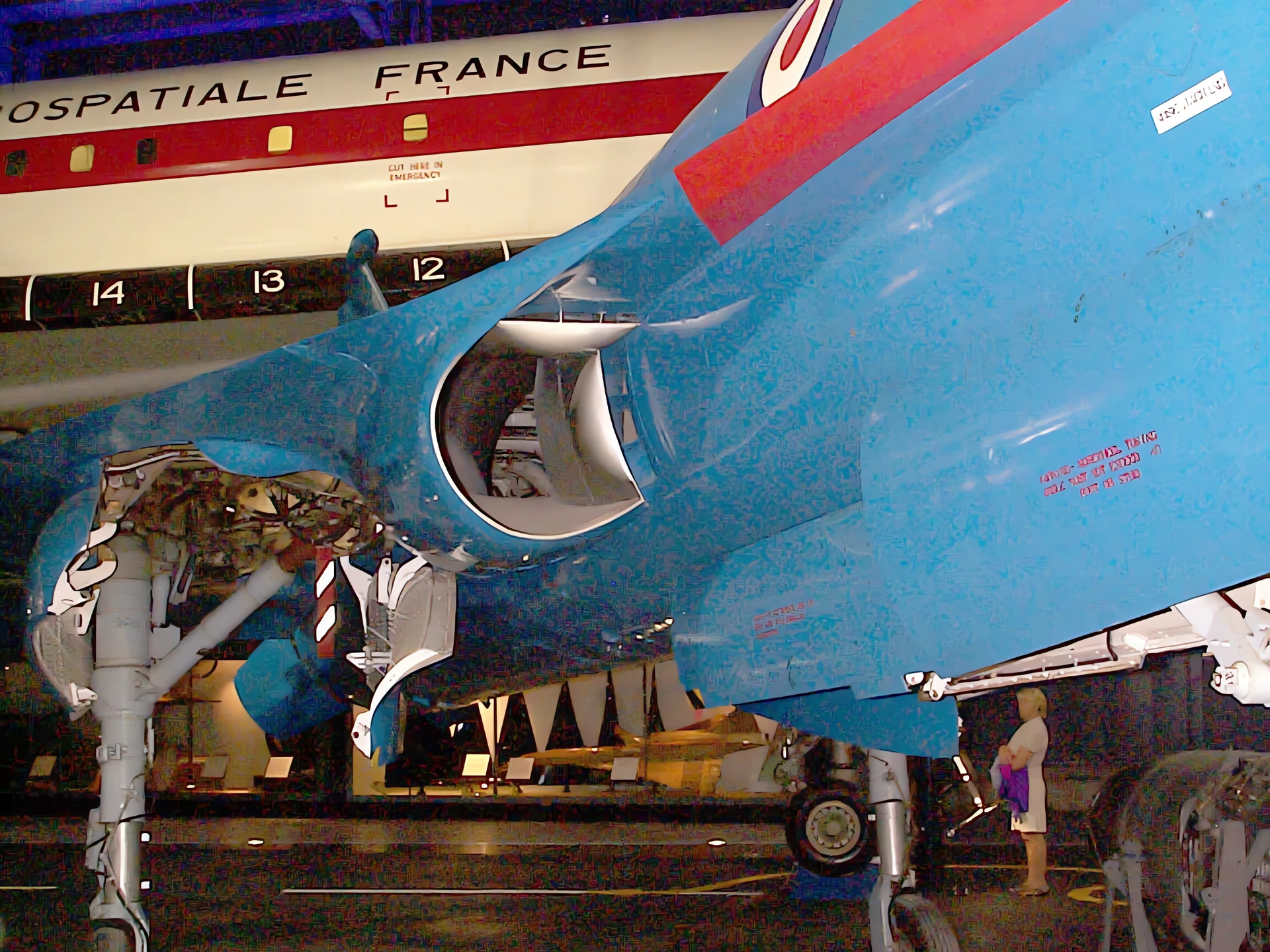
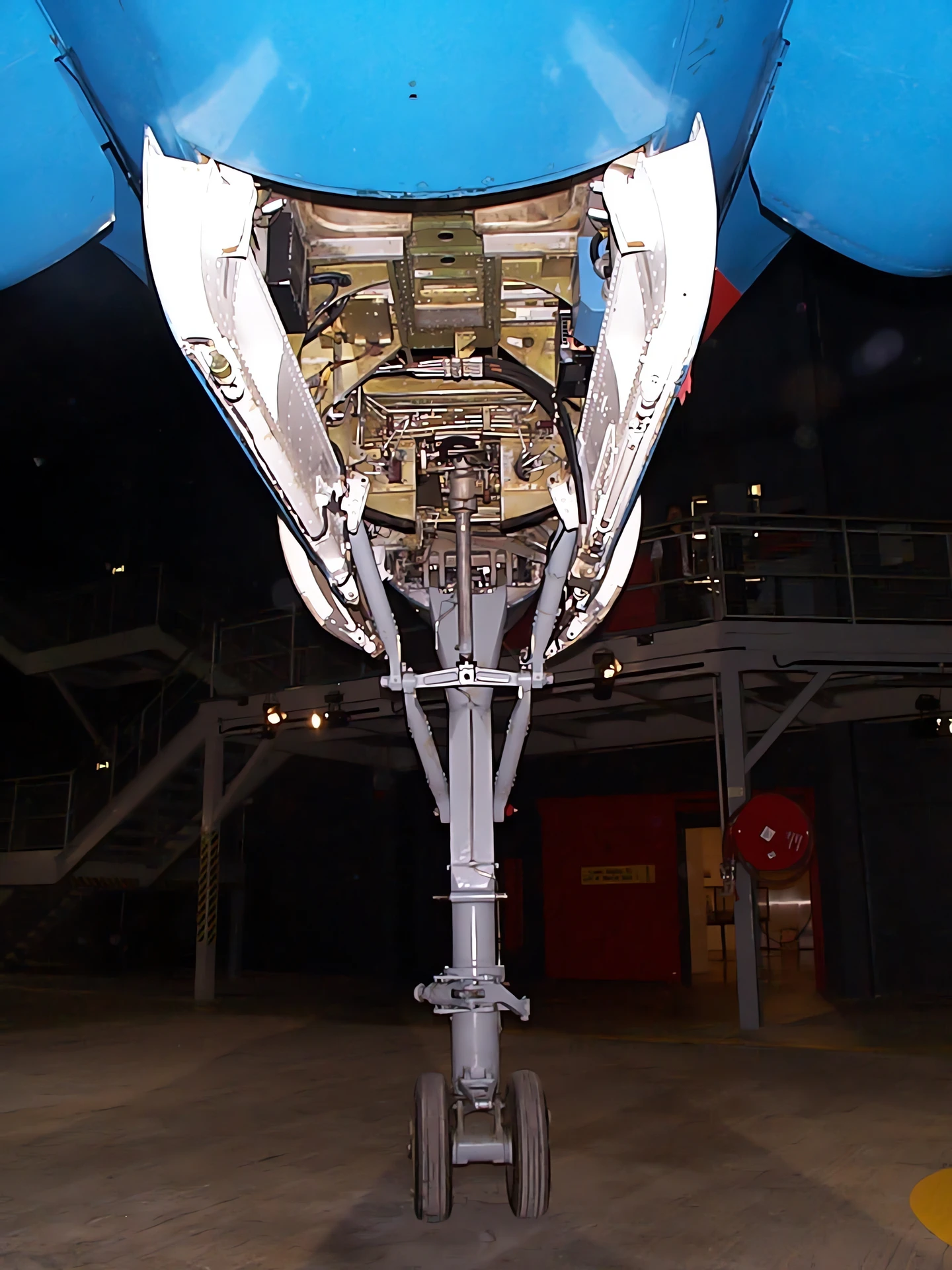
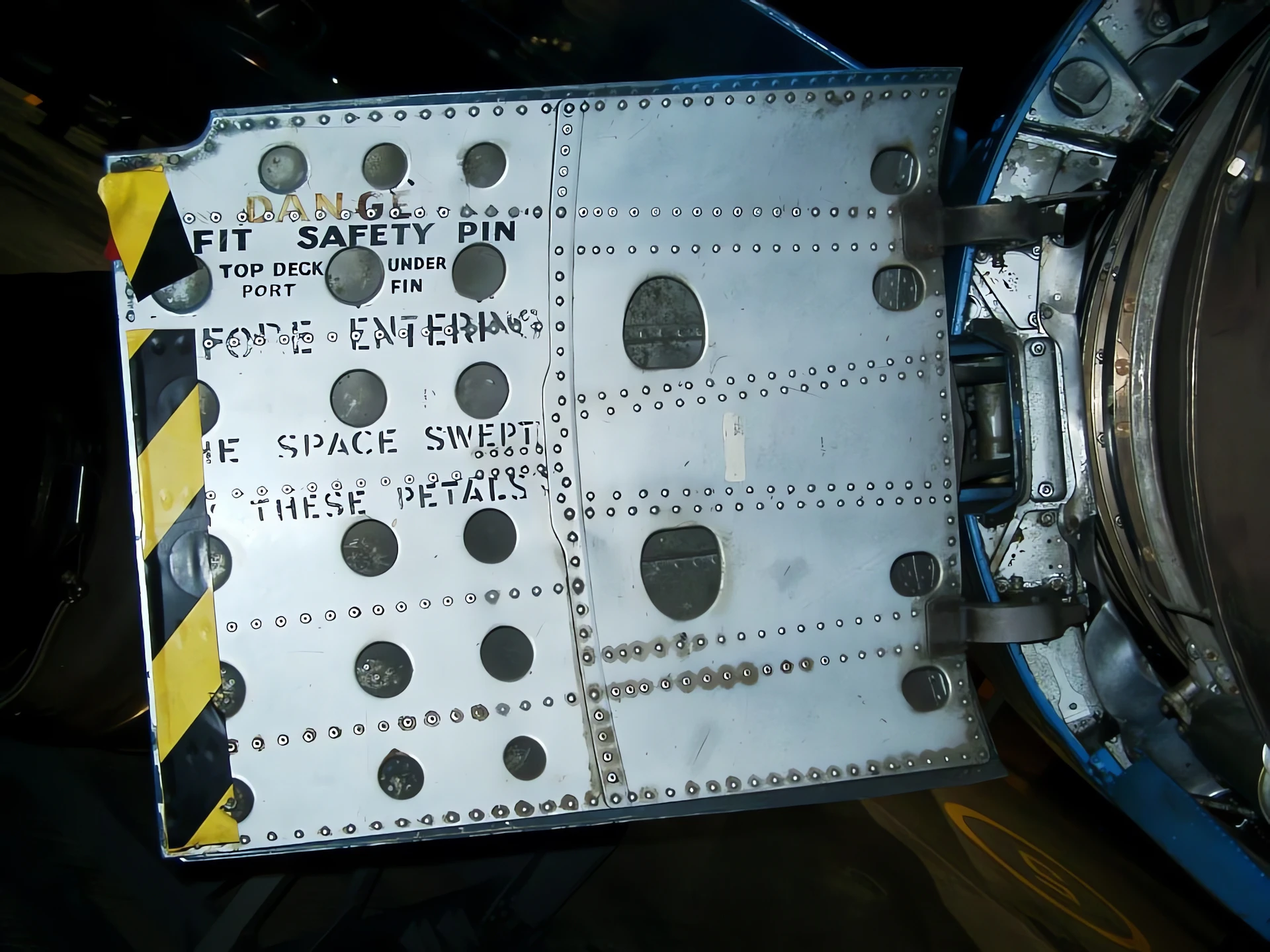
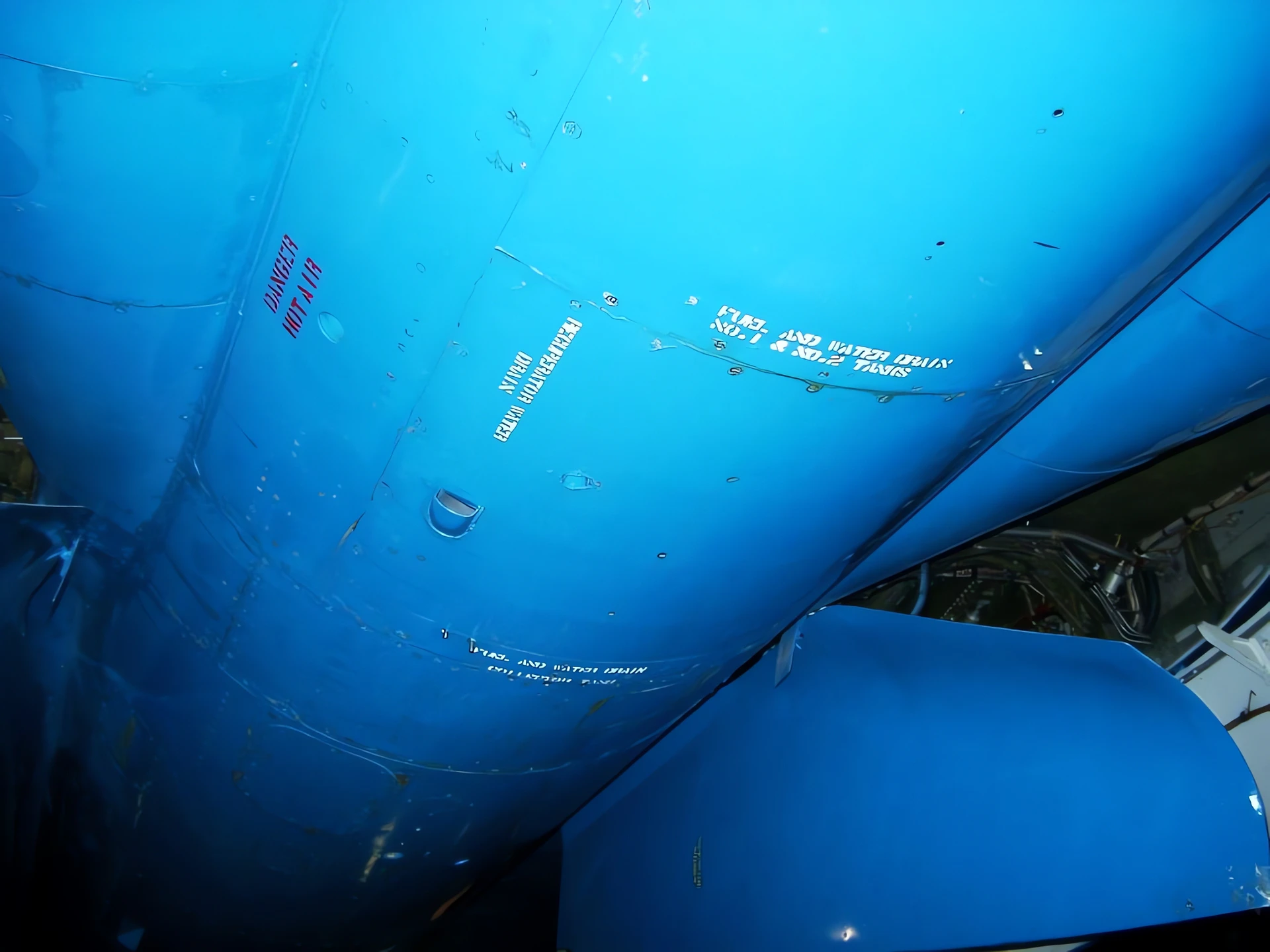


Zobacz też:


| Fairey Delta FD2 Walk Around | |
|---|---|
| Fotograf | Meindert de Vreeze |
| Lokalizacja | Niewiedzy |
| Zdjęcia | 25 |
General Characteristics and Role
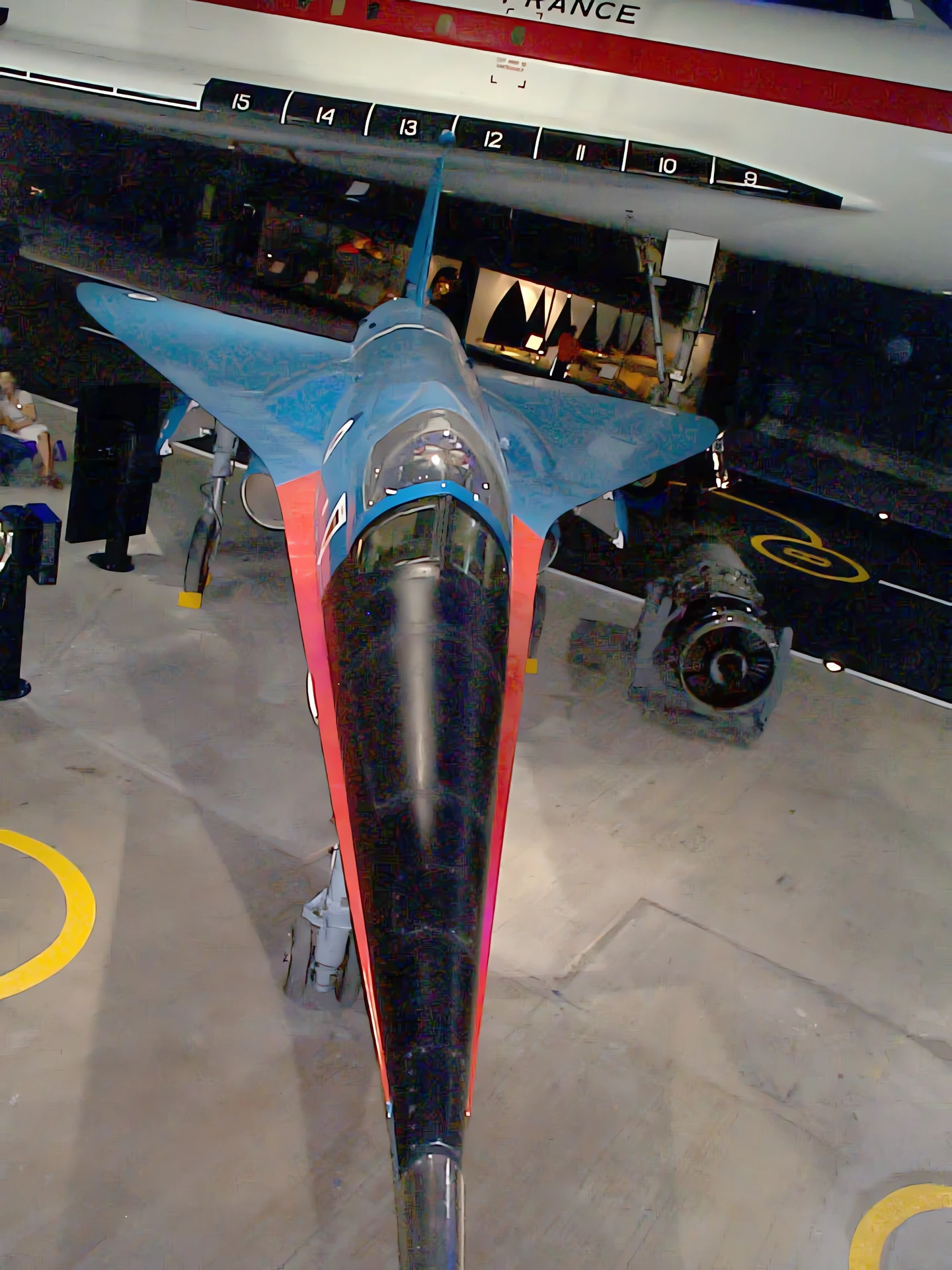
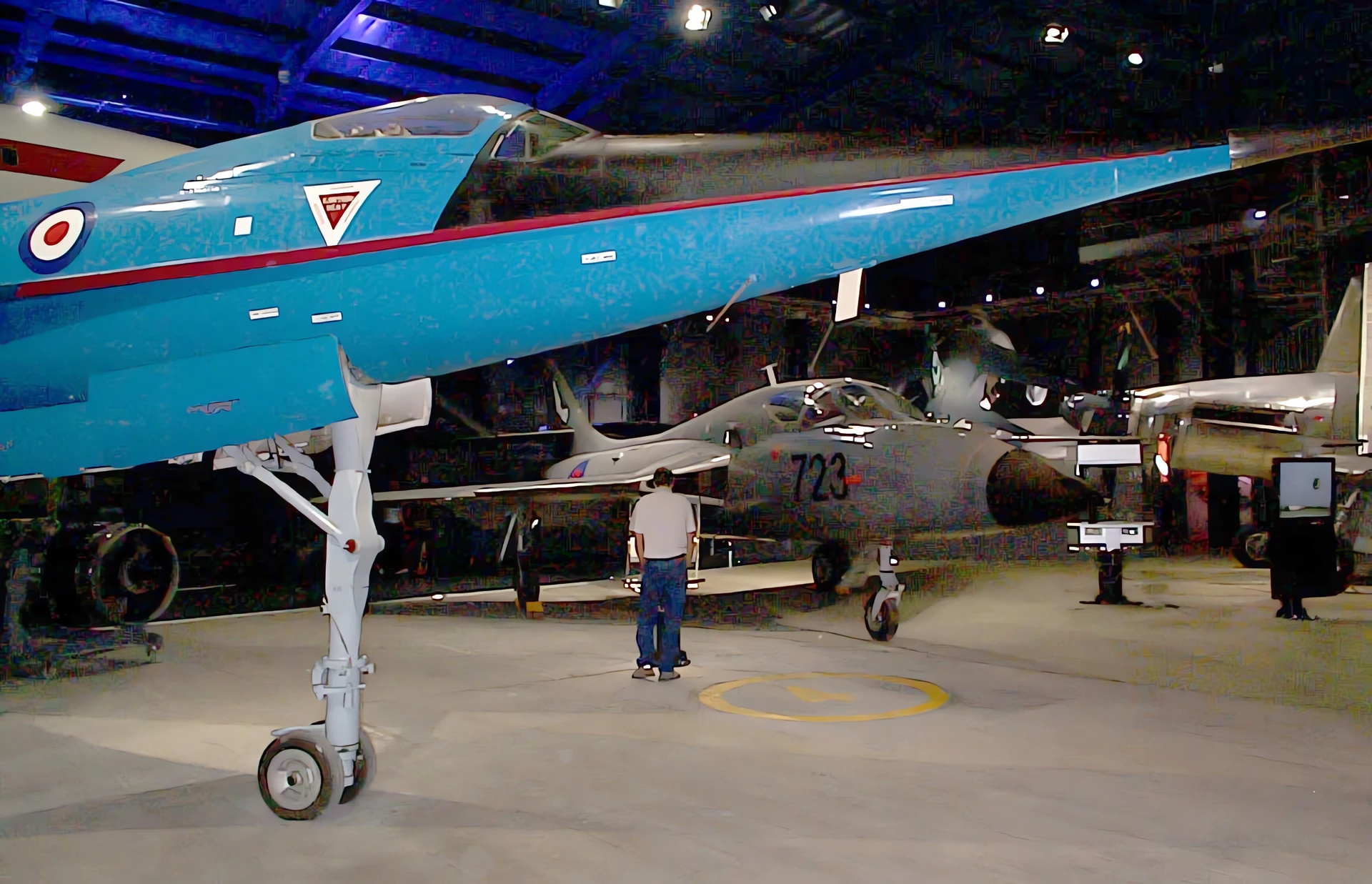
The BAC 221 was a highly specialized British research aircraft developed to support the Concorde supersonic transport program. It was not a “new” airframe from scratch, but rather a total reconstruction of the record-breaking Fairey Delta 2 (WG774). The primary objective of the BAC 221 was to investigate the aerodynamic behavior of the ogival (ogee) slender delta wing at high speeds. This specific wing shape was critical for Concorde’s success, balancing high-speed efficiency with manageable low-speed handling. The aircraft featured a significantly lengthened fuselage and a much taller landing gear to accommodate the high angles of attack required during landing.
| Property | Typical Value (BAC 221) |
|---|---|
| Typu | Experimental Supersonic Research Aircraft |
| National Origin | Wielka Brytania |
| Producent | British Aircraft Corporation (BAC) |
| First Flight (Rebuilt) | May 1, 1964 |
| Załogi | 1 (Pilot) |
| Długość | 17.56 m (57 ft 7 in) |
| Rozpiętość | 7.62 m (25 ft 0 in) |
| Prędkość maksymalna | Mach 1.65 (Approx. 1,700 km/h) |
Powerplant and Wing Design
- Engine: 1 x Rolls-Royce Avon RA.28R afterburning turbojet.
- Engine Thrust: 10,000 lbf dry / 14,000 lbf with reheat.
- Ogival Wing: The centerpiece of the modification, this “ogee” wing replaced the straight-tapered delta of the FD2 to mimic the planned planform for Concorde.
- Landing Gear: To handle the nose-high landing attitude of the slender delta, a completely new, taller undercarriage was fitted, utilizing components from the English Electric Lightning.
- Droop Nose: Retained and refined from the Fairey Delta 2, the entire cockpit and nose section could be tilted downwards to allow the pilot to see the runway during approach.
- Instrumentation: Equipped with extensive flight-test sensors and a camera mounted in a fin-tip fairing to record airflow patterns over the wing using wool tufts.
Service History and Preservation
- RAE Bedford: Following its maiden flight, the aircraft was delivered to the Royal Aircraft Establishment (RAE) at Bedford, where it conducted nearly a decade of high-speed trials.
- Flight Research: While the Handley Page HP.115 tested the low-speed characteristics of the delta wing, the BAC 221 provided the vital supersonic data needed to finalize the Concorde’s flight control systems.
- Retirement: The aircraft was retired in 1973 after the Concorde prototypes had already begun their own successful test flights.
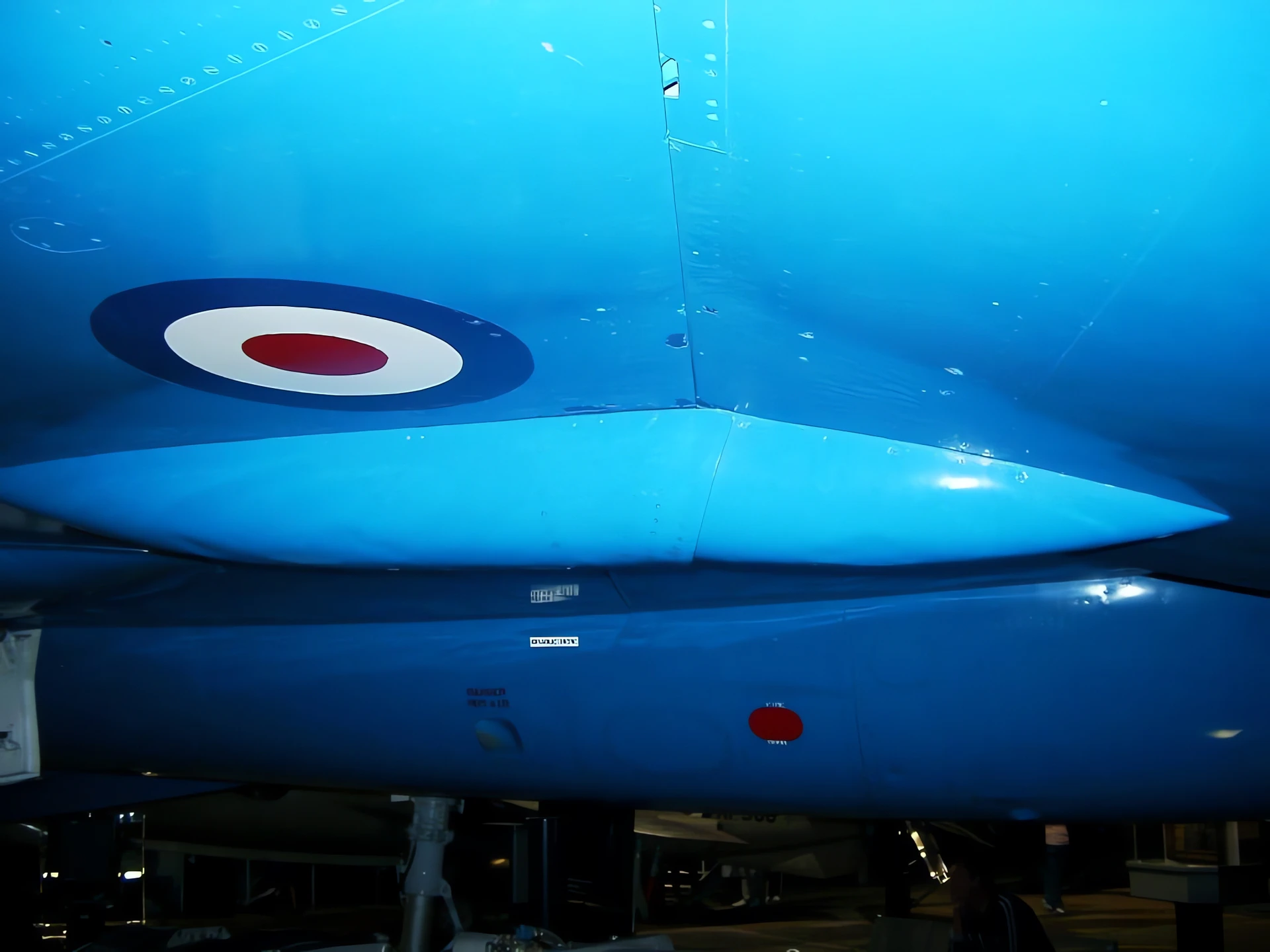
- Current Status: Today, the BAC 221 is preserved and on display at the Fleet Air Arm Museum in Yeovilton, Somerset. It is positioned directly alongside the British Concorde prototype (G-BSST), allowing visitors to see the direct evolution of the wing design.
Liczba wyświetleń : 2115
Możesz również zobaczyć:
 Messerschmitt Me 410 – Zdjęcia & wideo
 McDonnell Douglas F/A-18 Hornet – Zdjęcia & Film
 Mitsubishi A6M Zero – Spacer
 Hawker Hurricane – Spacer
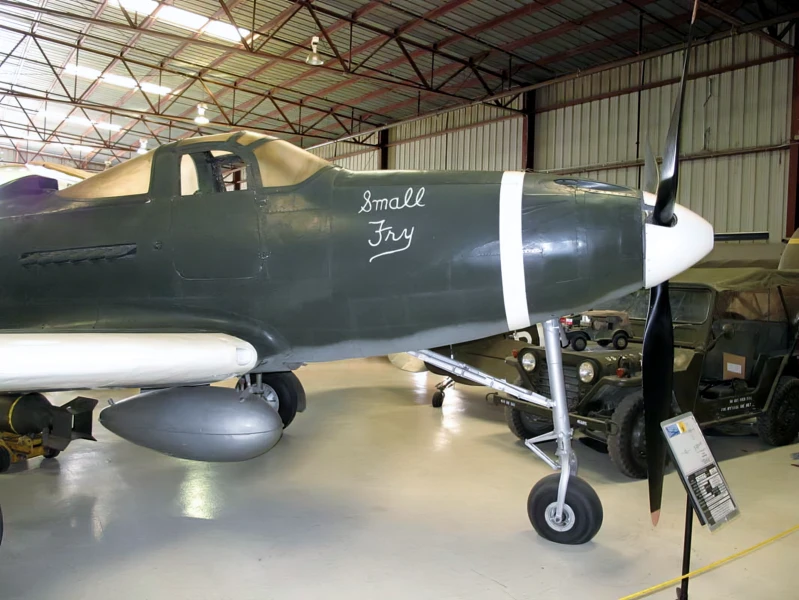 Dzwon P-39N Airacobra – WalkAround
 Skonsolidowany B-24M Liberator – WalkAround
 P-47D Thunderbolt – WalkAround
 A-20 Havoc – WalkAround
 TBM-3E Avenger – Spacer
 Fiat G-55 Centauro - Spacer