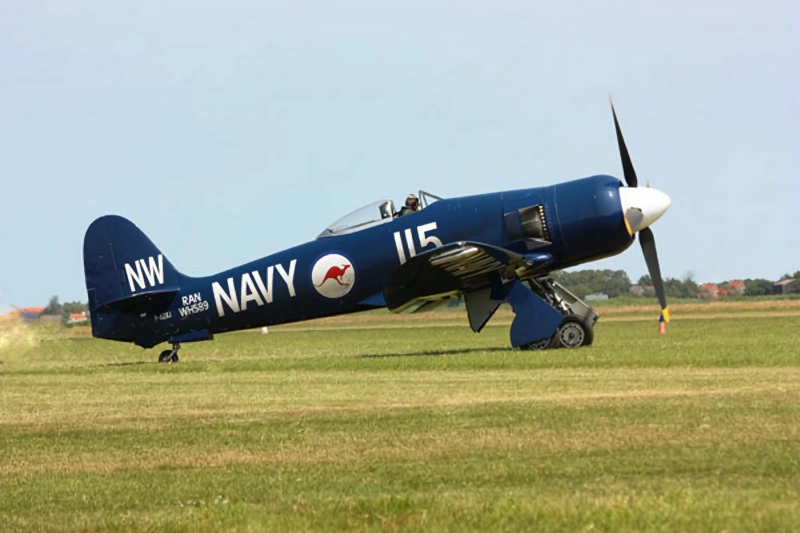
Hawker sjø raseri | |
|---|---|
| Land | Storbritannia |
| Periode | Verdenskrig |
| Type | jeger |
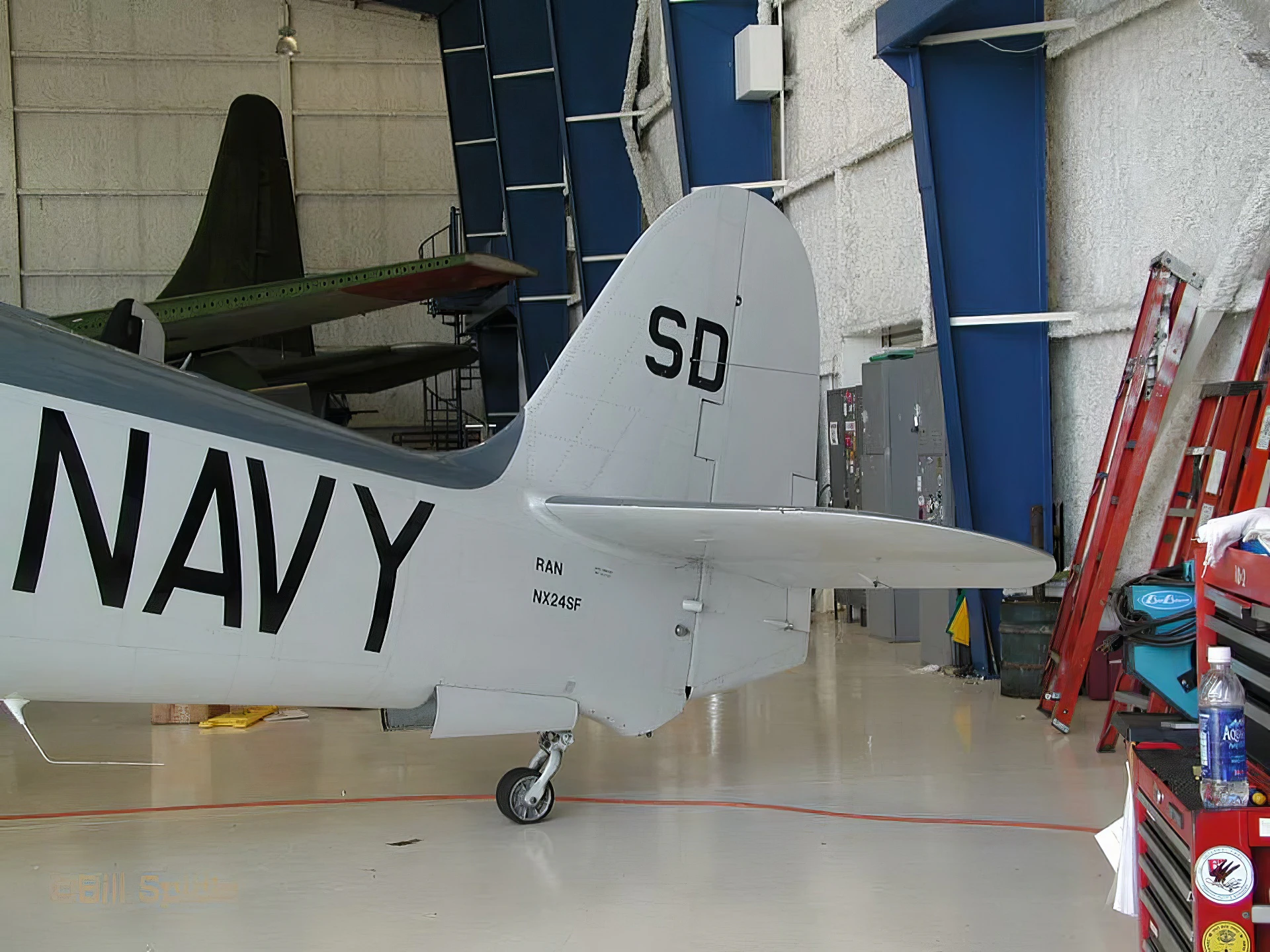
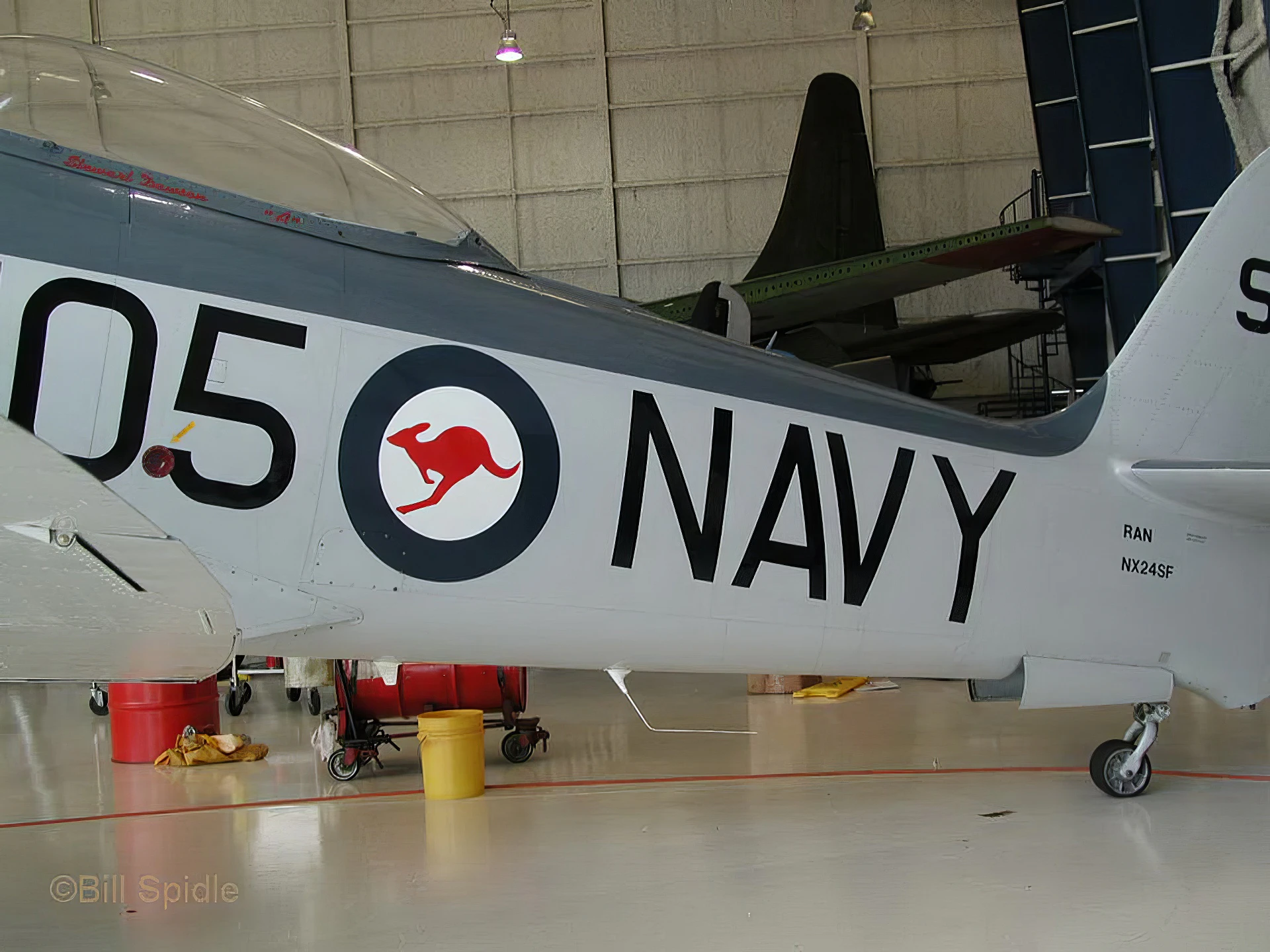
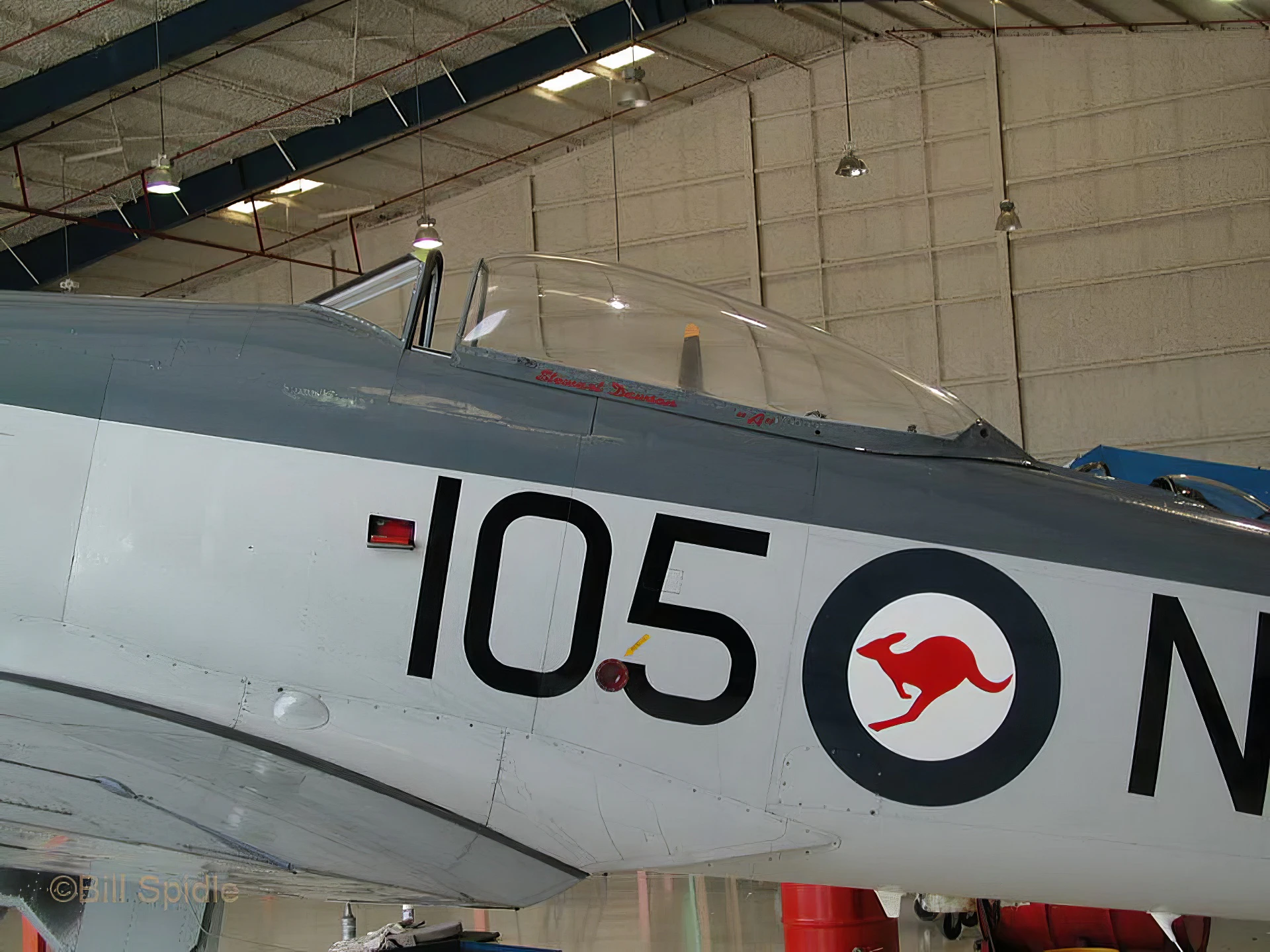
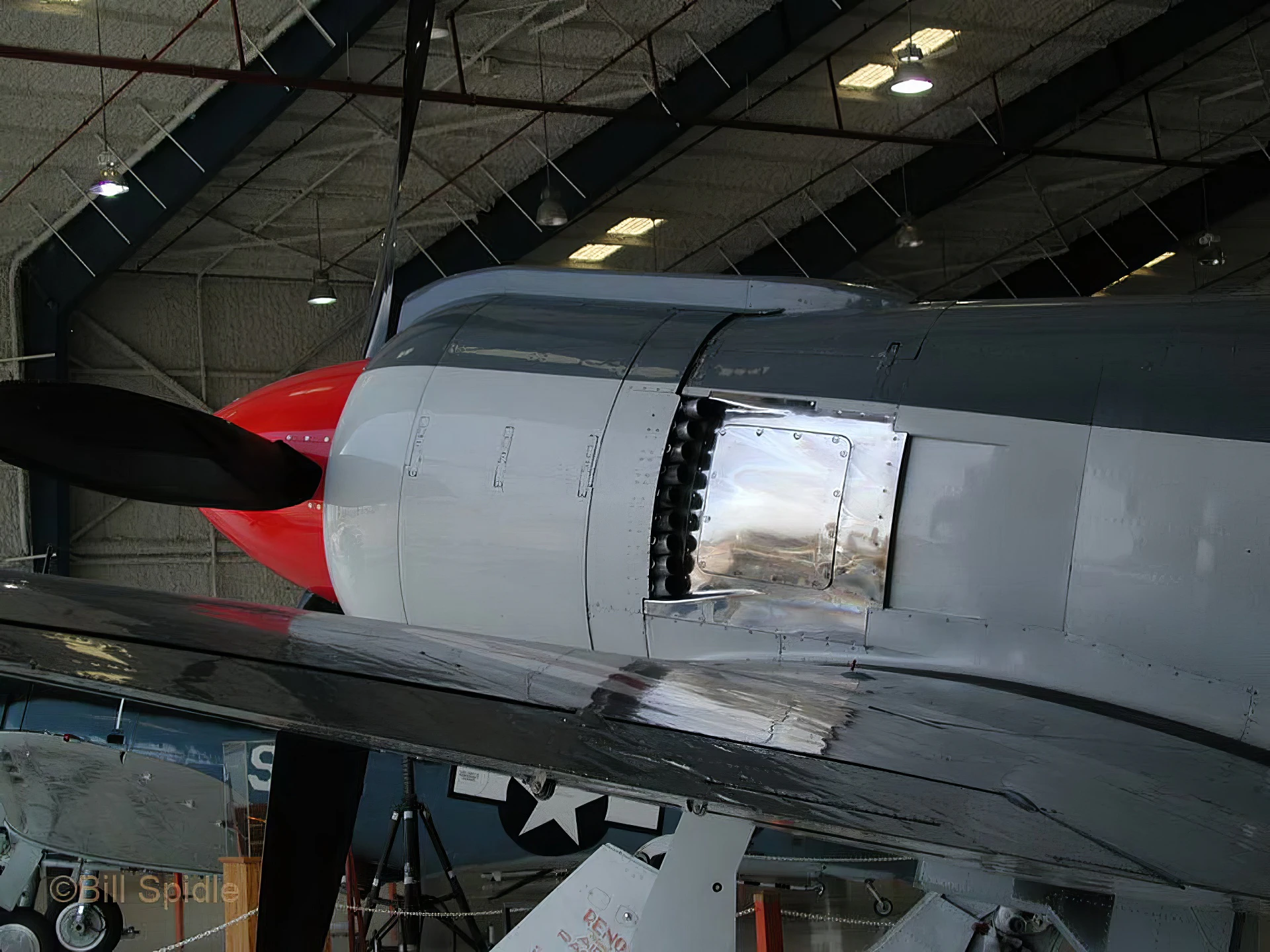
Fotogalleri på en Hawker Sea Fury FBII fighter, The Sjø raseri var et britisk jagerfly utviklet for Royal Navy av produsenten Hawker-Siddeley under andre verdenskrig. Det var Royal Navys siste propelldrevne fly, et av de raskeste enmotors stemplene som noen gang er bygget, og det siste propelldrevne jagerflyet som skjøt ned et jetfly.
Le Hawker raseri tok over etter Hawker Tempest og Hawker Typhoon. Utviklet i 1942 av ingeniør Sidney Camm som svar på en anbudsinnbydelse utstedt av RAF (Royal Air Force) for å erstatte den utdaterte Tempest II. Grunnlaget for konseptet var å designe en Tempest ved å gjøre den lettere ved bruk av dens halvelliptiske vinge plassert i midten av skroget, som selv var identisk med Tempest. Forskjellene mellom de to flyene var monocoque-modus og hevet cockpit som ga piloten bedre synlighet.
Kilde: Hawker Sea Fury på Wikipedia
| Hawker Sea Fury FBII | |
|---|---|
| Fotograf | Unknow |
| Lokalisering | Unknow |
| Bilder | 26 |
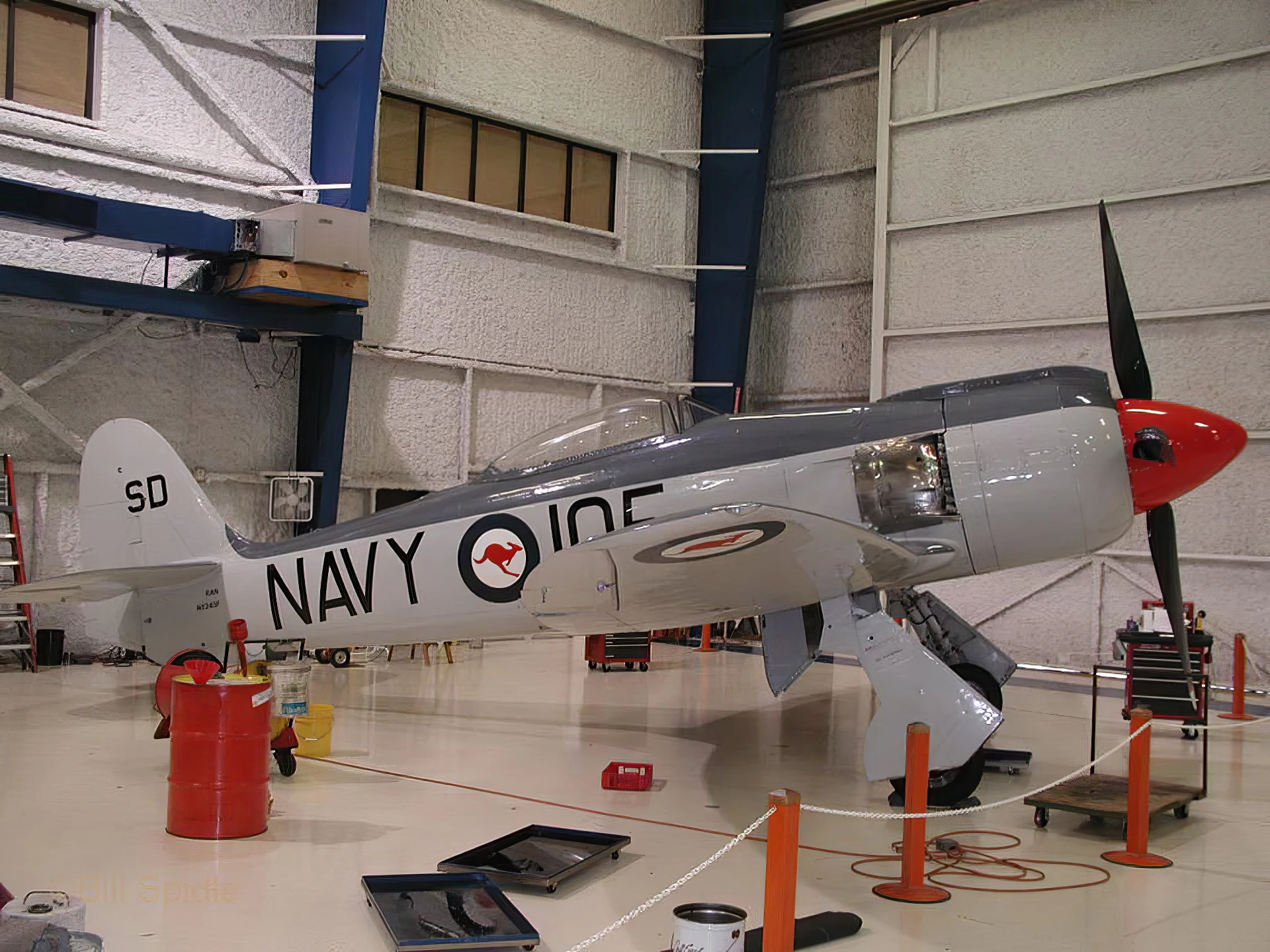
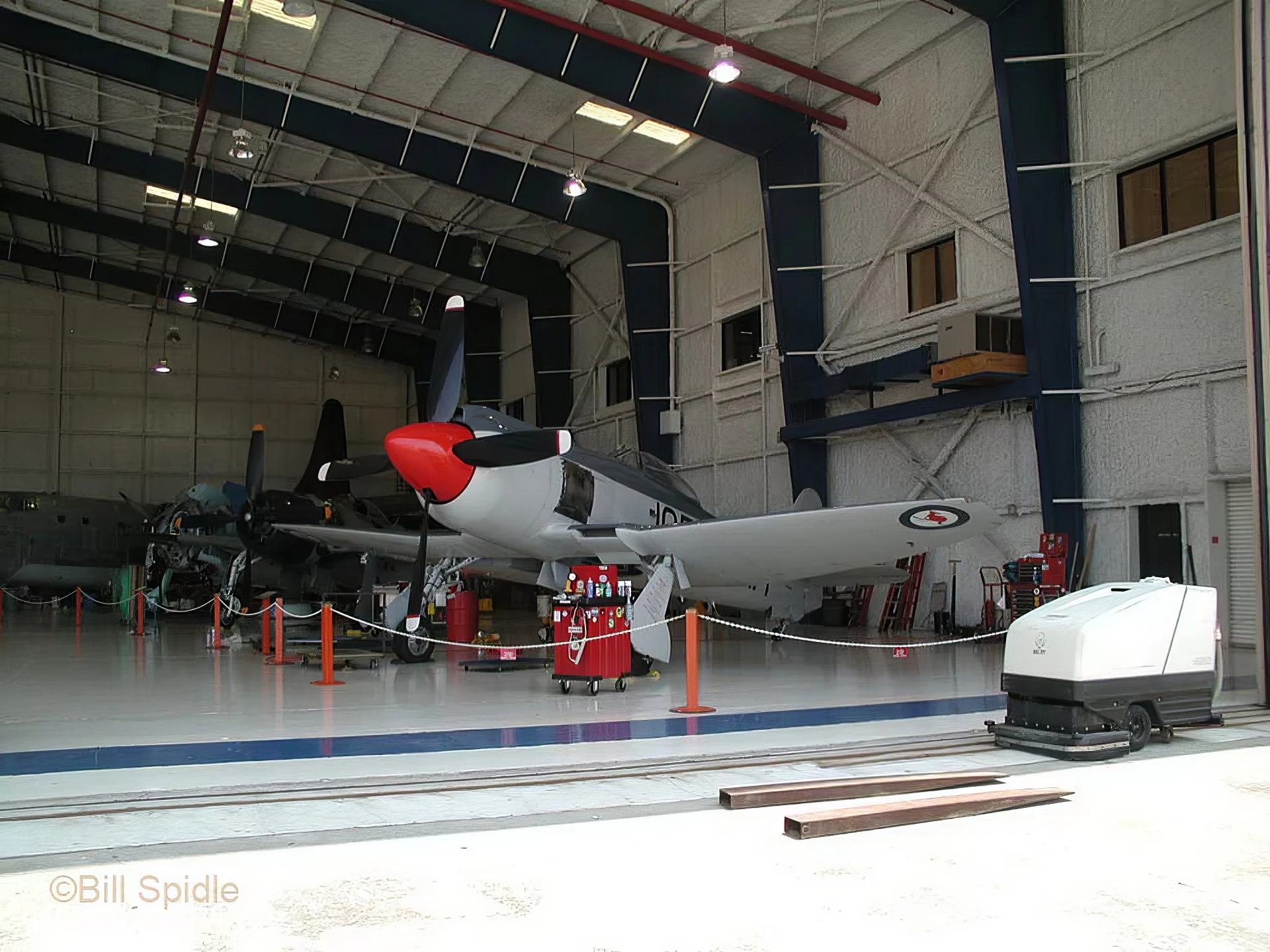
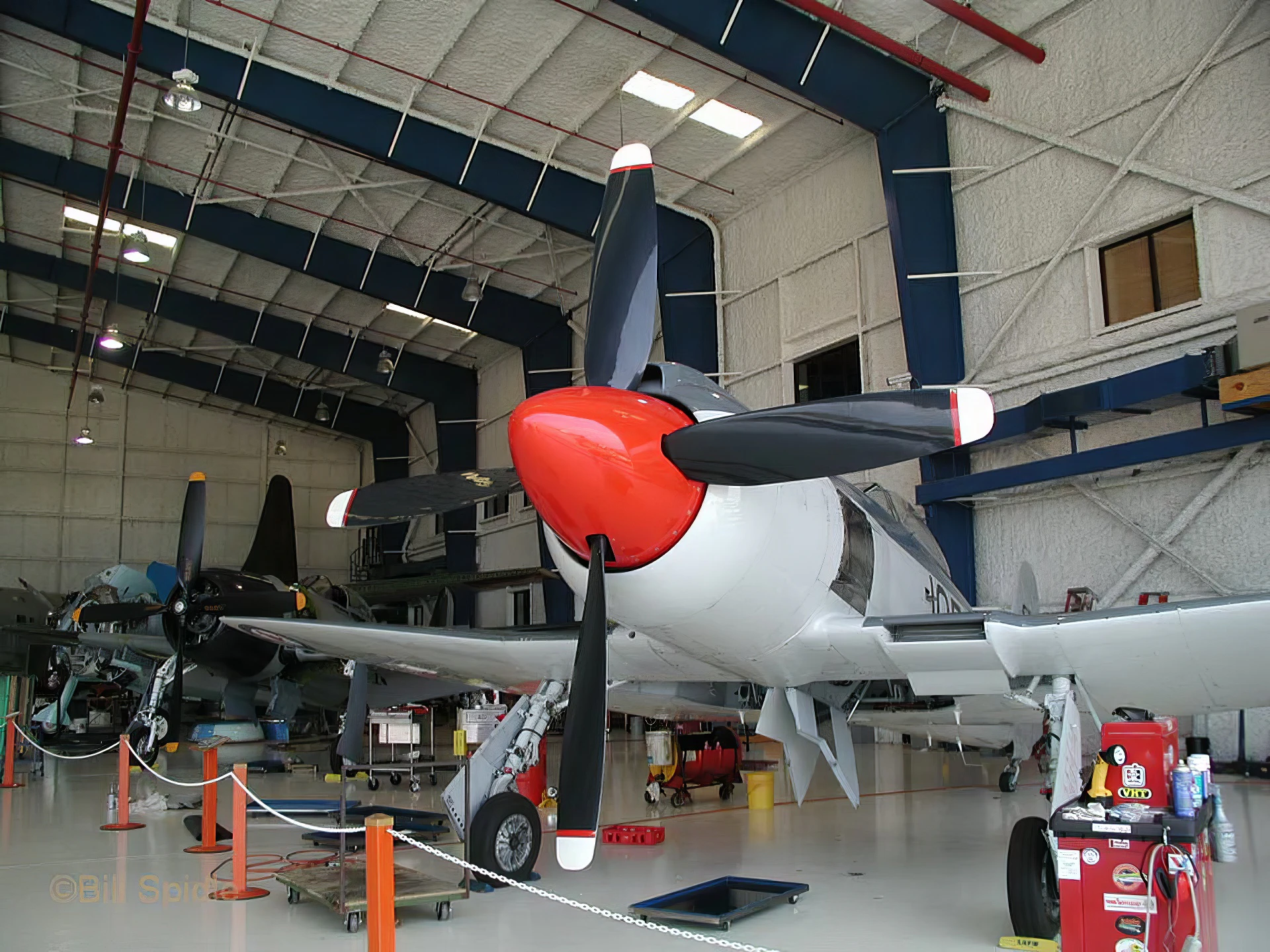
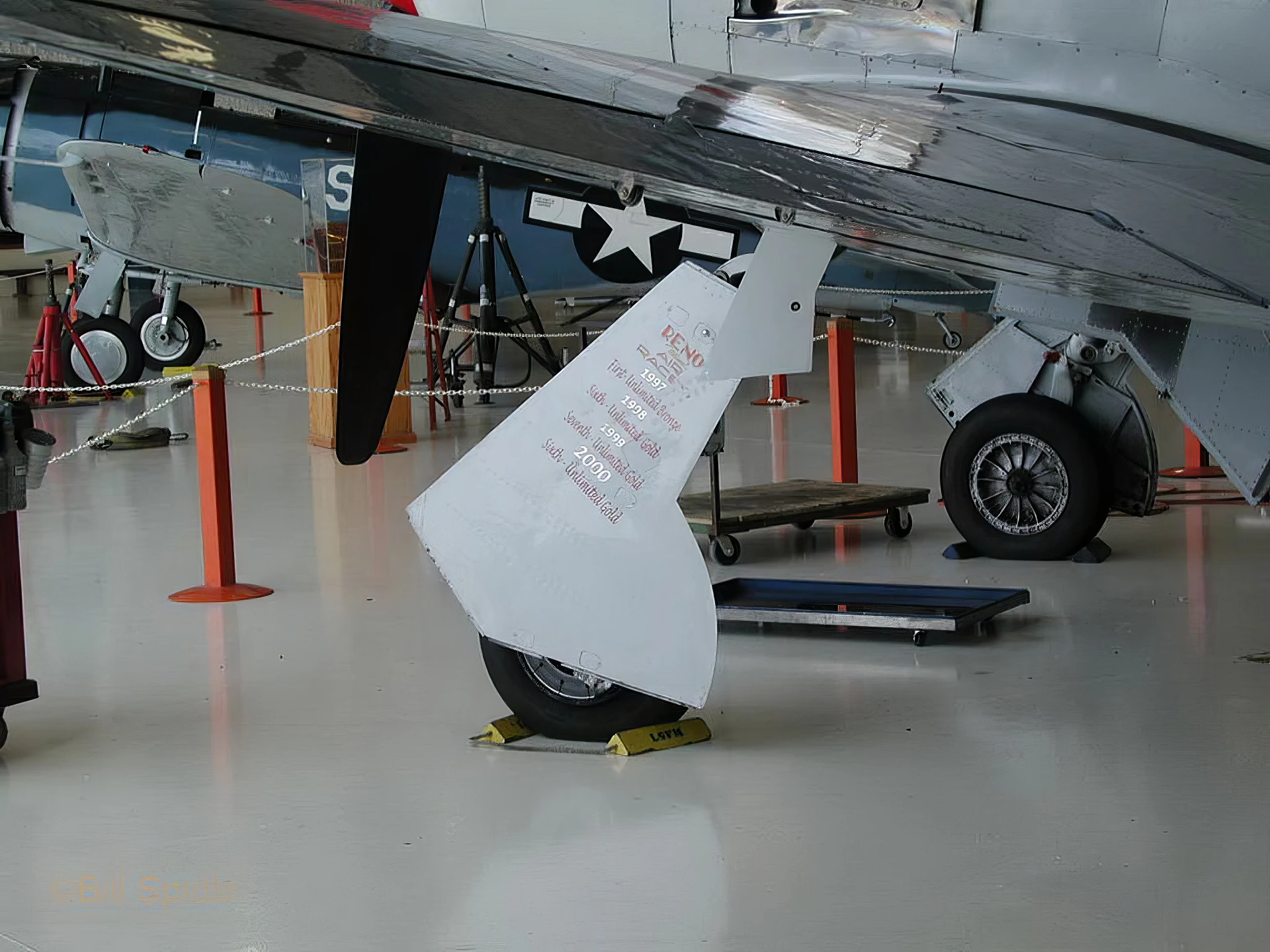
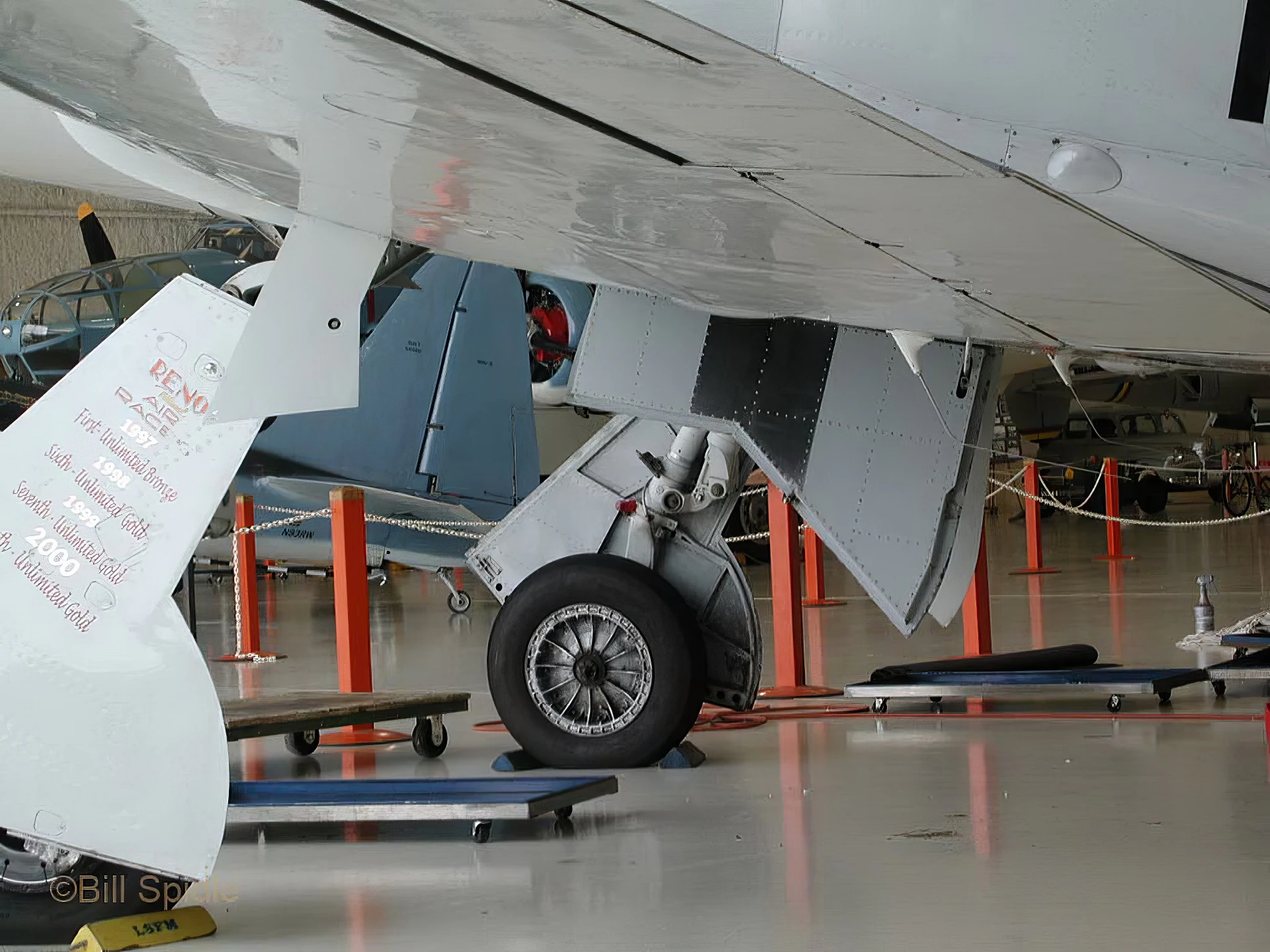

| Hawker Seafury FB.11 Walk Around | |
|---|---|
| Fotograf | Unknow |
| Lokalisering | Unknow |
| Bilder | 26 |
Les også:


| Hawker Sea Fury Mk.11 Walk Around | |
|---|---|
| Fotograf | Unknow |
| Lokalisering | Unknow |
| Bilder | 13 |
Pinnacle of Piston Power
The Hawker Sea Fury was a British carrier-borne fighter-bomber that emerged from a wartime requirement for a lighter, high-performance successor to the successful Hawker Tempest. Designed by the renowned Sydney Camm, it represented the ultimate development of the single-seat, piston-engined fighter to enter military service.
Although it arrived too late to see service in the Second World War, the Sea Fury went on to be the last propeller-driven fighter used by the Royal Navy’s Fleet Air Arm and was one of the fastest piston-engined aircraft ever produced.
Key Features and Engineering
- Motor: Powered by the massive Bristol Centaurus 18-cylinder, twin-row radial engine, delivering immense power (over 2,400 hp) to a five-bladed propeller.
- Aerodynamics: It featured a sleek, all-metal monocoque fuselage and a semi-elliptical wing profile, contributing to its superb speed and high-altitude performance.
- Navalization: Designed specifically for aircraft carrier operations, the wings were equipped with a hydraulic folding mechanism to conserve deck space, and the tail featured a sturdy arrestor hook.
- Cockpit: The pilot enjoyed excellent visibility thanks to the signature bubble canopy.
Armament and Variants (FB.11)
The most widely produced version was the Sea Fury FB.11 (Fighter-Bomber Mark 11), emphasizing its dual-role capability.
| Category | Detail |
|---|---|
| Internal Guns | Four 20 mm Hispano Mk V cannons (two in each wing) |
| Ground Attack Ordnance | Rockets (up to 12 or 16 depending on configuration) |
| Bomb Load | Bombs (up to 2,000 lbs, including 500 lb or 1,000 lb bombs) |
| Other Stores | External fuel drop tanks for extended range |
Operational Highlights
The Sea Fury’s combat life was brief but distinguished, seeing action with several international operators, notably in the Korean War:
- Korean War Service: It served extensively in a ground-attack role from Royal Navy carriers, proving to be robust and capable of absorbing significant battle damage.
- Jet Kill: In a legendary incident in 1952, a Sea Fury of the Fleet Air Arm, piloted by Lieutenant Peter Carmichael, successfully shot down a faster, jet-powered Soviet-built MiG-15—one of the few confirmed kills of a jet by a propeller-driven aircraft.
- Post-Military Life: After being retired from front-line service in the mid-1950s by nations adopting jet technology, many Sea Furies found a new life as highly modified and successful competitors in the Unlimited class of the Reno Air Races in the United States.
Visninger : 4286
Du kan også se :
 Stout Bushmaster 2000 - Bilder og videoer
 Beechcraft RC-12 rekkverk - Bilder og videoer
 Cessna 310 - Bilder og videoer
 Curtiss P-36 Hawk - Bilder og videoer
 Cessna T-37 Tweet - Bilder og videoer
 Boeing KC-97 Stratofreighter - Bilder og videoer
 Curtiss P-40 Warhawk – WalkAround
 Messerschmitt Me 163B – WalkAround
 McDonnell Douglas F-4 Phantom II – WalkAround
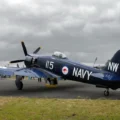 Hawker Sea Fury – Gå Rundt