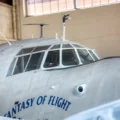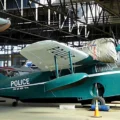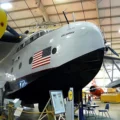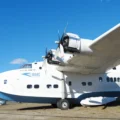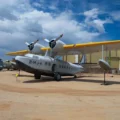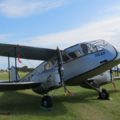
Sikorsky S-39 | |
|---|---|
| 국가 | 미국 |
| 역할 | 플라잉 보트 |
| 첫 비행 | 1930년대 |
| 내장 | 21 |
Tthe 시코르스키 S-39 1930년대 초 시코르스키 항공기가 생산한 미국의 경수륙양용 항공기였습니다. S-39는 S-38의 더 작은 단일 엔진 버전이었습니다.
| 시코르스키 S-39C 산책 | |
|---|---|
| 사진 작가 | 블라디미르 야쿠보프 |
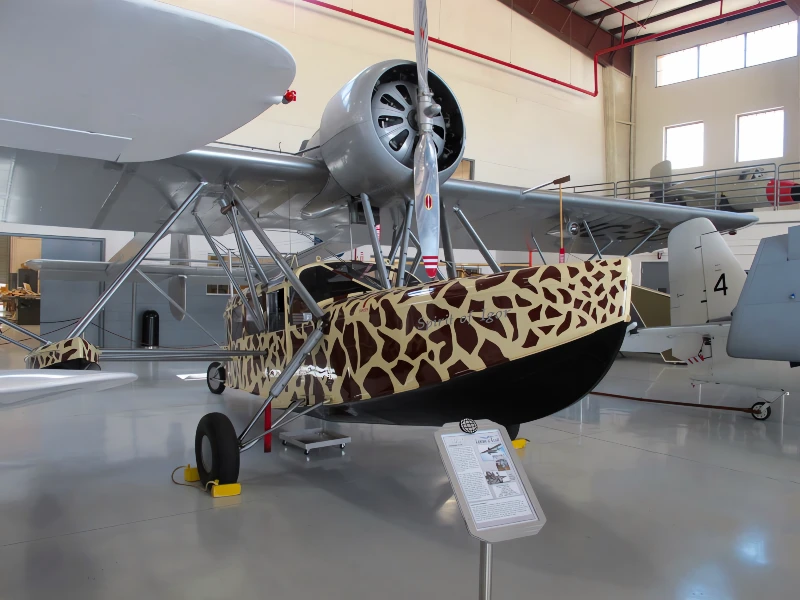
| 로컬라이제이션 | 비행의 판타지, 포크 시티 |
| 사진 | 136 |

참고 항목:


The Quintessential Single-Engine Personal Amphibian
Tthe 시코르스키 S-39 was a five-seat, single-engine light amphibious aircraft designed and built by the Sikorsky Aviation Corporation in the early 1930s. Developed directly as a scaled-down, single-engine derivative of the highly successful twin-engine S-38, the S-39 was engineered to cater to private aviators, business executives, and commercial operators seeking a versatile “air yacht.” Combining a high-mounted parasol wing, a single Pratt & Whitney Wasp Junior radial engine, a twin-boom tail layout, and retractable landing gear, the S-39 offered exceptional utility for operating from both lakes and conventional runways. It achieved legendary status during the Great Depression through high-profile scientific expeditions and its service with the Civil Air Patrol during World War II.
| Attribute | Technical Specification (Sikorsky S-39 Standard) |
|---|---|
| 역할 | 5-Seat Personal Luxury Amphibian / Utility Transport |
| 승무원 | 1 Pilot + 4 Passengers |
| 동력 장치 | 1 × Pratt & Whitney R-985 Wasp Junior 9-cylinder air-cooled radial engine (300 to 400 hp) |
| 최대 속도 | 190 km/h (119 mph / 103 knots) max speed | ~156 km/h (97 mph) cruise speed |
| Gross / Takeoff Weight | 1,814 kg (4,000 lbs) maximum gross weight | ~1,215 kg (2,678 lbs) empty weight |
| Service Ceiling / Operational Range | 5,486 m (18,000 ft) ceiling | ~640 km (400 miles) maximum range |
| Wing Structure & Dimensions | Wingspan: 15.85 m (52 ft) | High parasol wing with all-metal spars and fabric covering |
| Hull Construction | All-metal duralumin hull structure with hydrodynamic steps for quick water takeoff |
| Military Variants | US Army Air Corps (Y1C-28 / C-28 evaluation and coastal utility transports) |
| Production Total | 21 units produced by Sikorsky at Stratford, Connecticut (1929–1932) |
Design Engineering: Scaled Efficiency, Boom Tails, and Retractable Skids
- Scaled-Down S-38 Architecture: Igor Sikorsky retained the structural success of the S-38 by keeping the high parasol wing, twin tail booms, and short wooden/duralumin hull layout, while streamlining the design down to a single center-mounted engine nacelle mounted above the cockpit.
- Pratt & Whitney Wasp Junior Power: By matching the airframe with the newly introduced Pratt & Whitney R-985 Wasp Junior radial engine, the S-39 delivered outstanding power-to-weight performance, permitting smooth water takeoffs even when fully loaded with five adult passengers and luggage.
- Hand-Crank Retractable Landing Gear: Like its larger sibling, the S-39 incorporated a main landing gear assembly that retracted upward along the hull sides, allowing the pilot to transition seamlessly between tarmac runways and water landings in under thirty seconds.
- Hydrodynamic Duralumin Hull: The hull featured advanced duralumin anti-corrosion plating and hydrodynamically placed bottom steps, allowing the hull to break water suction (“unstick”) quickly during takeoff runs on calm lakes or ocean swells.
Operational History: Giraffe Camouflage, African Safaris, and WWII Patrols
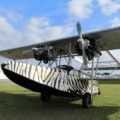
- Martin and Osa Johnson’s *Spirit of Africa*: The most famous S-39 ever built was NC52V, painted in a distinctive giraffe-pattern camouflage by world-renowned wildlife filmmakers Martin and Osa Johnson. Named *Spirit of Africa*, it was flown thousands of miles across uncharted territories in East and Central Africa to film wildlife from the air.
- US Army Air Corps Evaluation (Y1C-28): Recognizing its versatile amphibious nature, the US Army Air Corps purchased an S-39 in 1932 (designated Y1C-28) for evaluation as a light coastal utility transport and communication aircraft.
- Civil Air Patrol Coastal Anti-Submarine Patrols: During the early years of World War II, several privately owned S-39s were drafted into the US Civil Air Patrol (CAP). Stationed along the Atlantic and Gulf coasts, CAP aircrews flew S-39s on low-altitude anti-submarine patrols to spot German U-boats and rescue downed Allied pilots.
- Enduring Vintage Icon: Due to its low production numbers and striking appearance, surviving S-39s are highly prized treasures in vintage aviation. Rebuilt airframes—including faithful airworthy restorations painted in the legendary Johnson giraffe pattern—continue to captivate crowds at major airshows.
Views : 2723