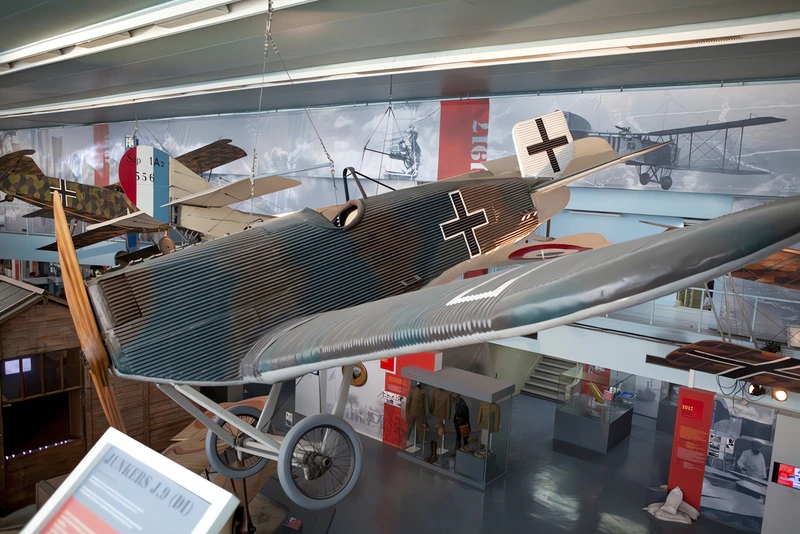
Junkers D.I | |
|---|---|
| Paese | Germania |
| Ruolo | Combattente |
| Primo volo | 17 settembre 1917 |
| Costruito | 41 |
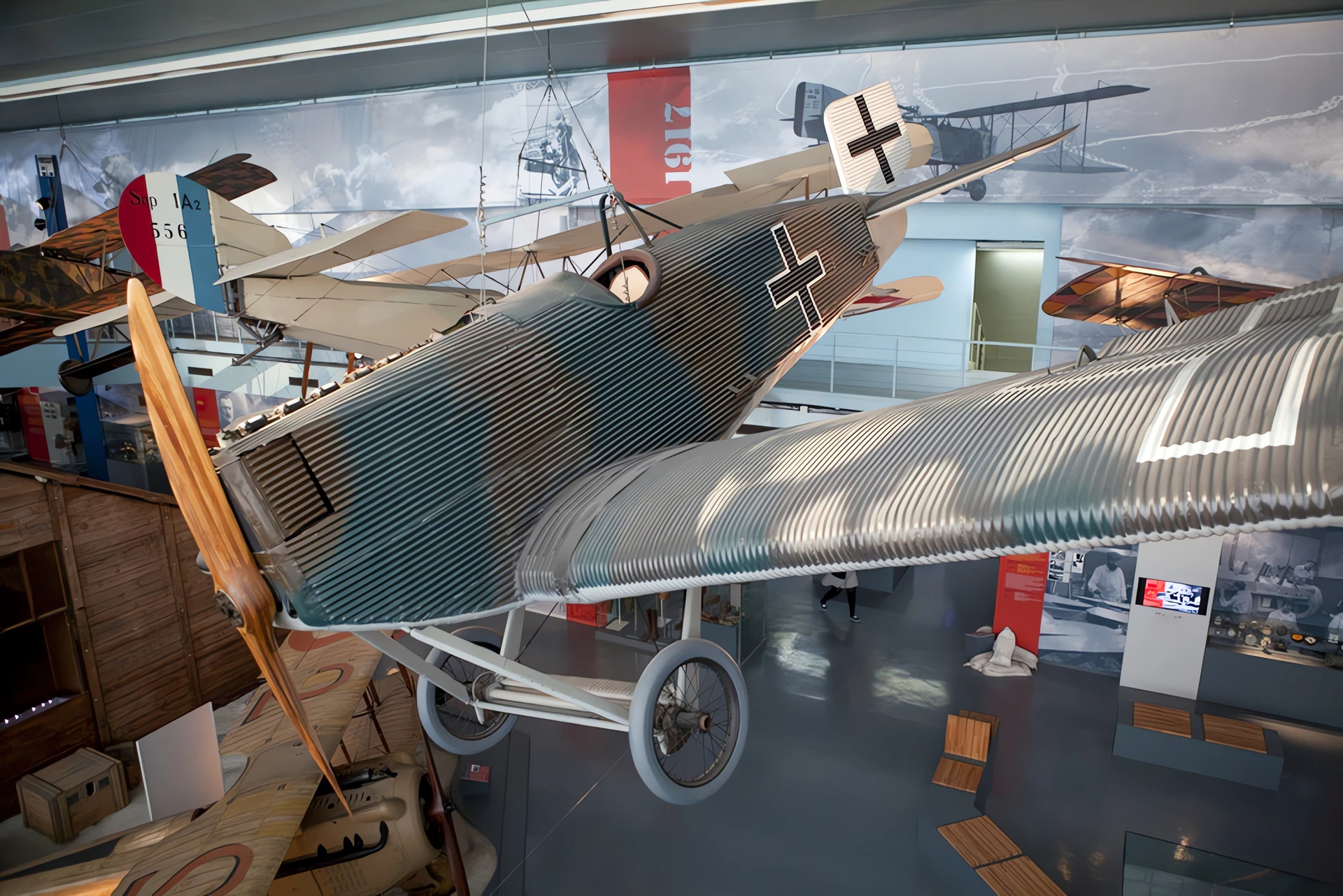
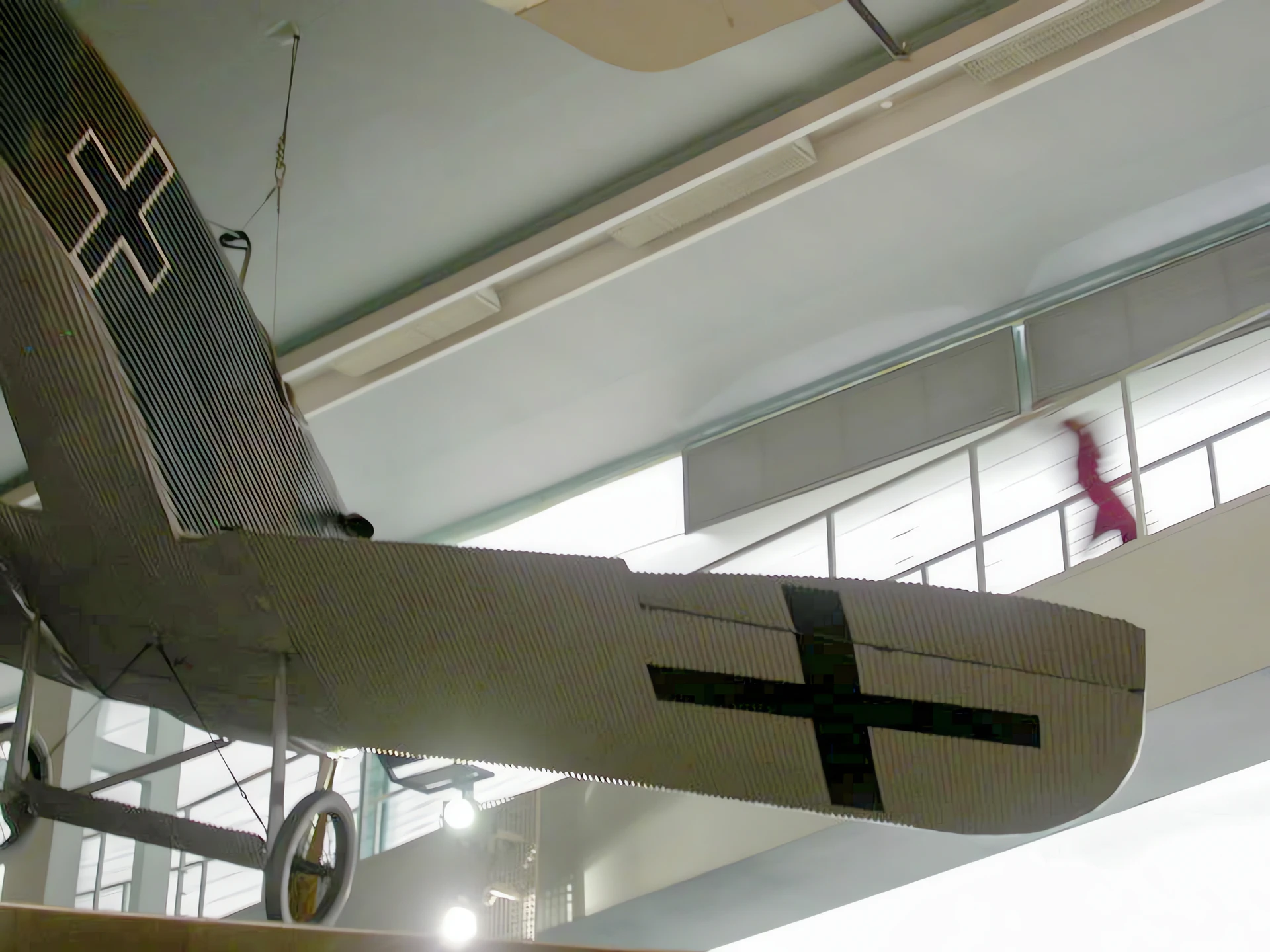
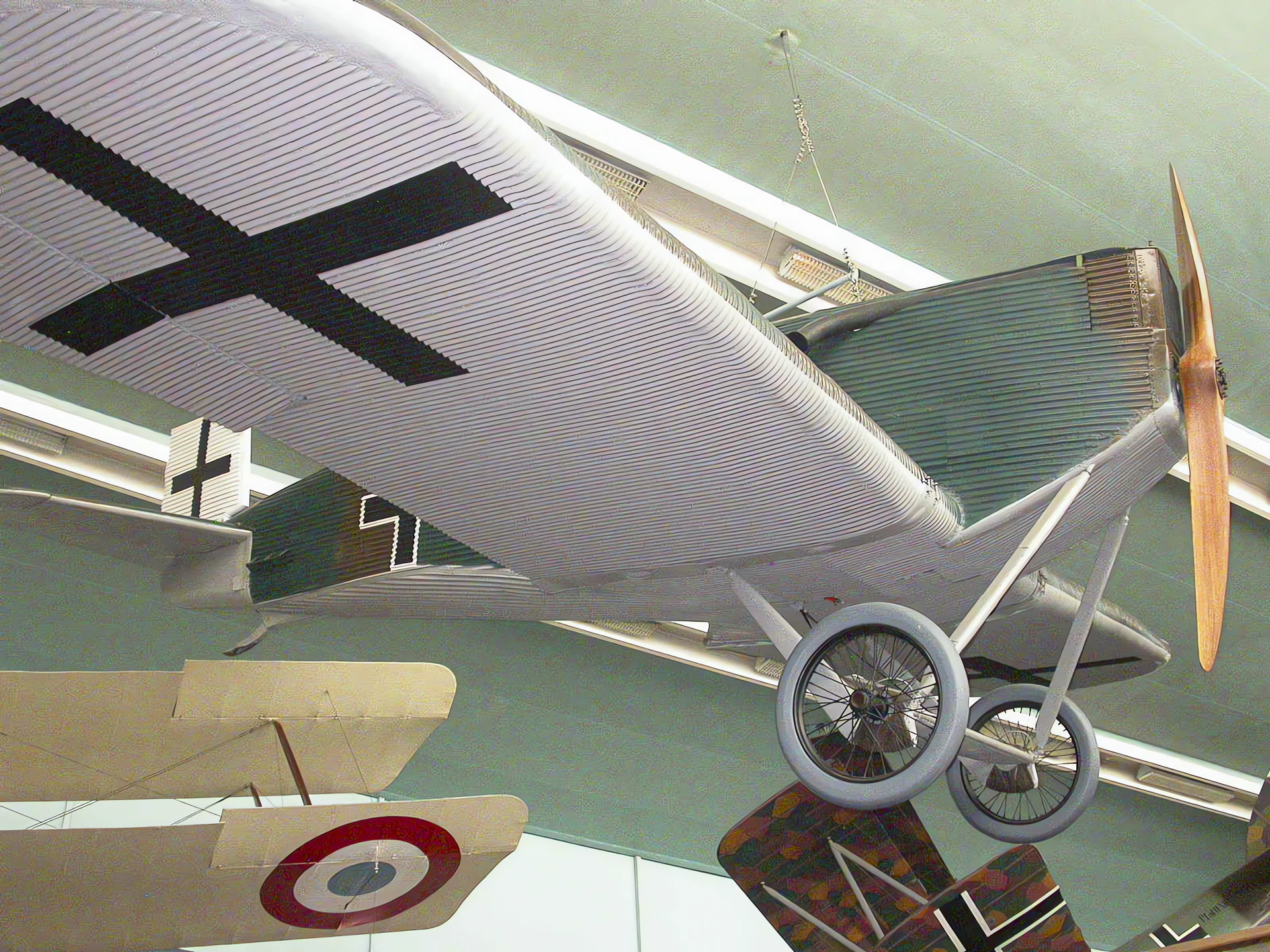
Le Junkers D.I (designazione di fabbrica J 9) era un aereo da caccia monoplano prodotto in Germania alla fine della prima guerra mondiale, significativo per diventare il primo caccia interamente in metallo ad entrare in servizio. Il prototipo, un'impresa privata di Junkers chiamata J 7, volò per la prima volta il 17 settembre 1917, passando attraverso quasi una mezza dozzina di cambiamenti di dettaglio nel suo design durante i suoi test. Quando fu dimostrato all'Idflieg all'inizio dell'anno successivo, si dimostrò abbastanza impressionante da risultare in un ordine per tre velivoli aggiuntivi per le prove. Le modifiche apportate dalla Junkers furono abbastanza significative da indurre l'azienda a rinominare l'esemplare successivo J 9, che fu fornito all'Idflieg al posto dei tre J 7 ordinati.
fonte: Junkers D.I su Wikipedia
| Junker J9 D1 Walk Around | |
|---|---|
| Fotografo | Unknow |
| Localizzazione | Inconsapevole |
| Foto | 22 |
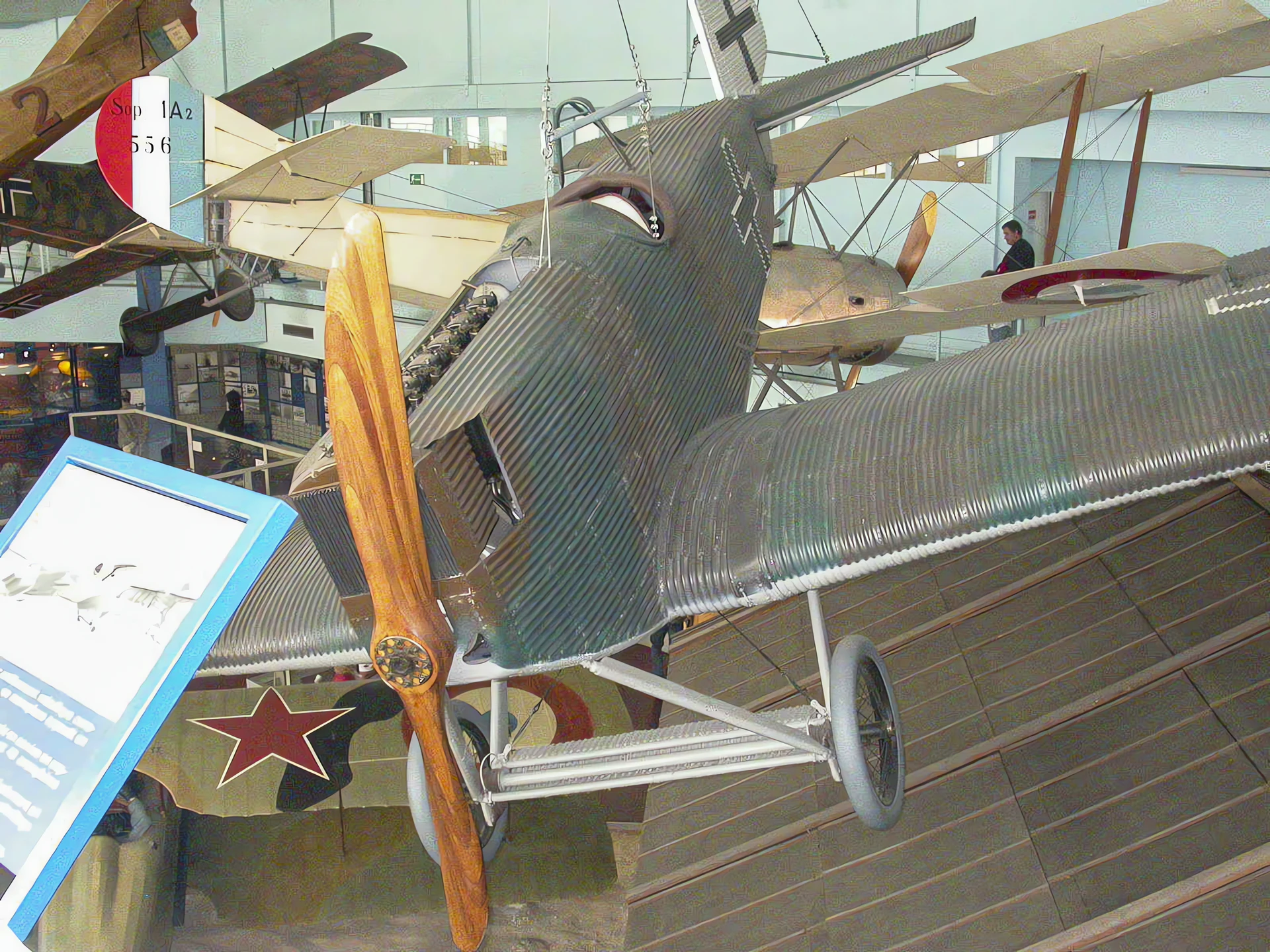
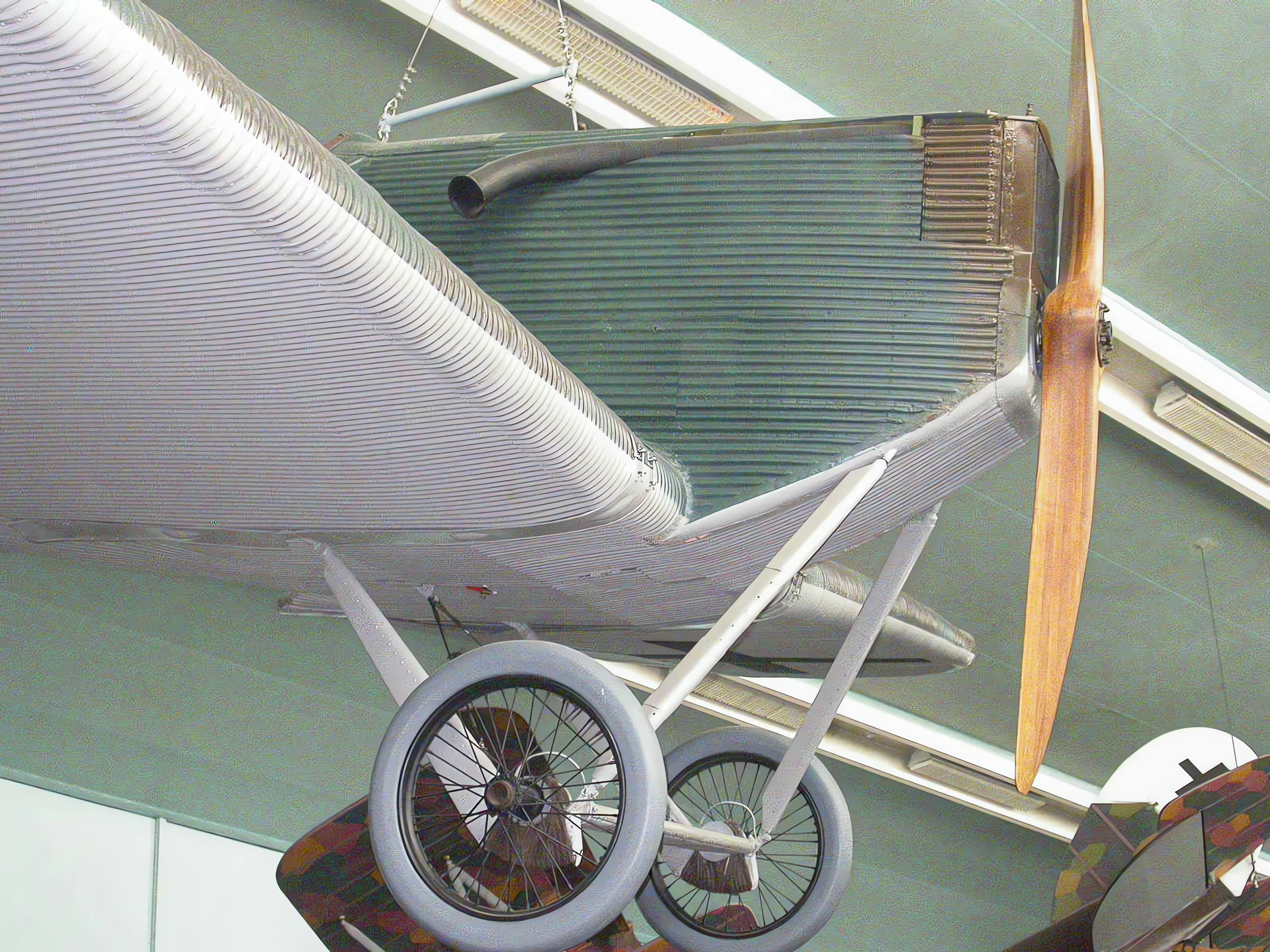
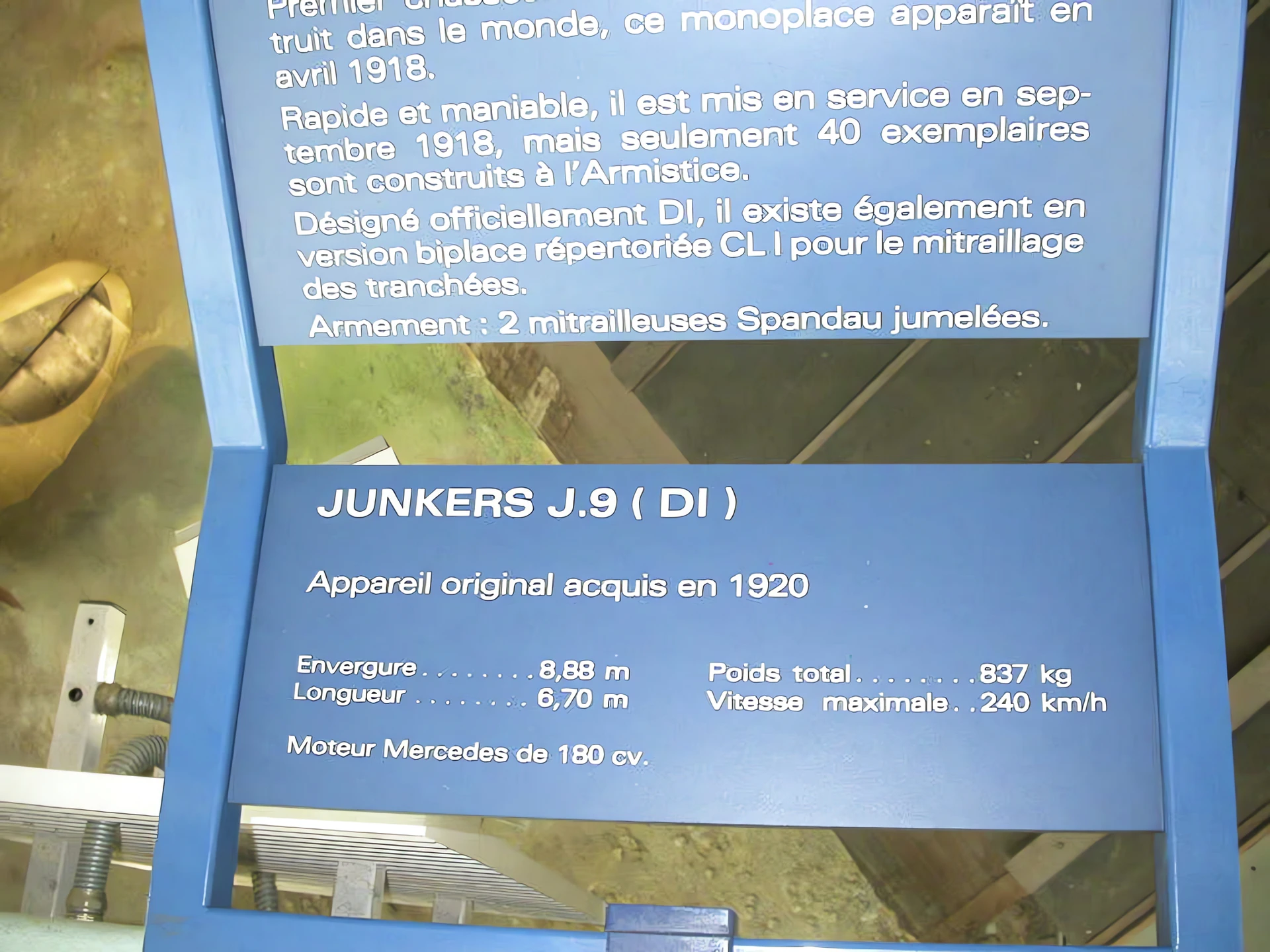


Vedi anche:


General Characteristics
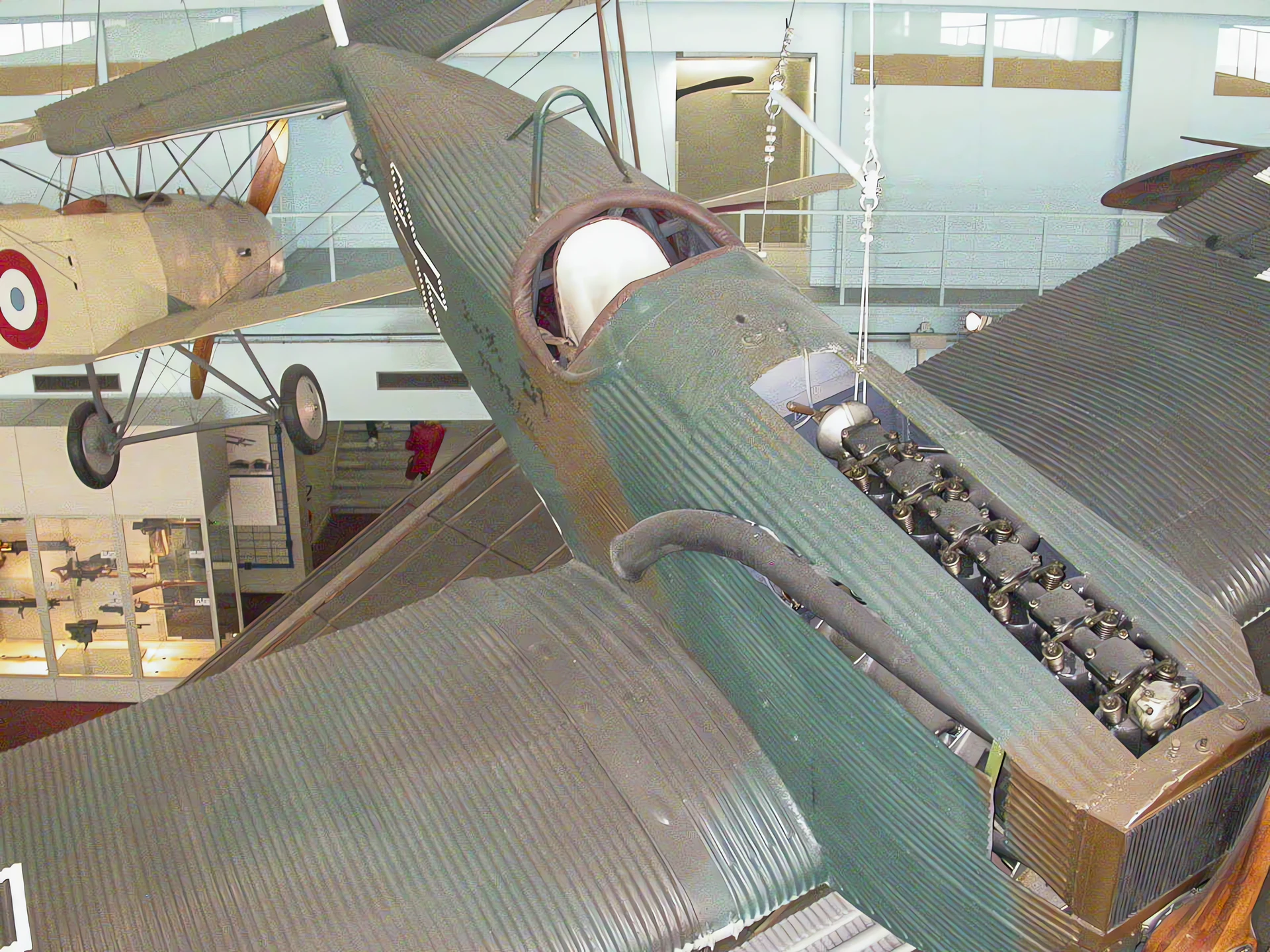
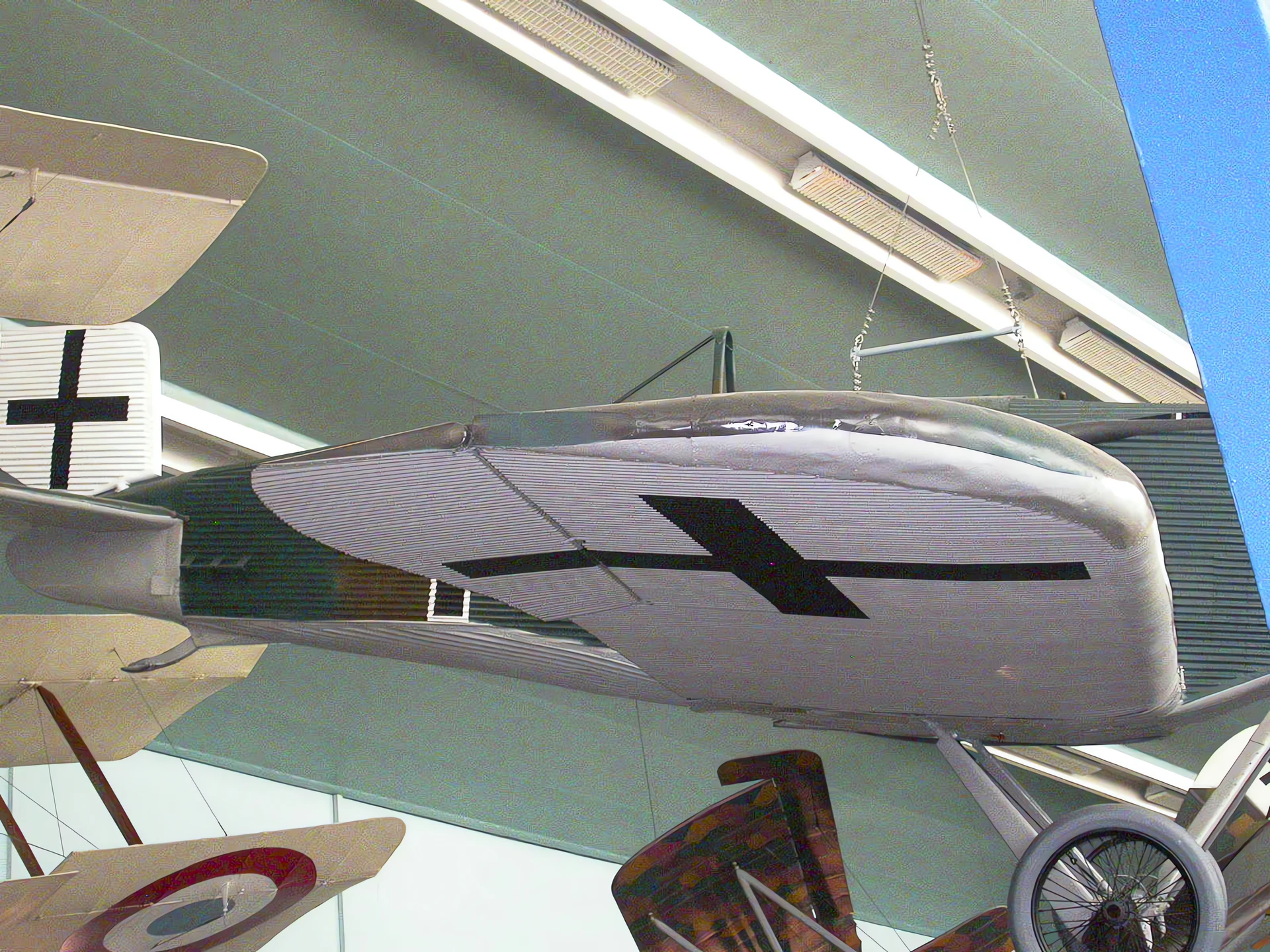
The Junkers J 9 (military designation D.I) was a German monoplane fighter aircraft produced late in World War I, notable for being the world’s first all-metal fighter to enter military service. Designed by Hugo Junkers, the aircraft featured a revolutionary cantilever wing and fuselage entirely covered in corrugated duralumin (an aluminum alloy). This construction method made the aircraft exceptionally durable and easy to maintain compared to conventional wood-and-fabric aircraft, though early models were criticized for low maneuverability. Only a small number of J 9s were delivered before the Armistice, primarily used by the Imperial German Navy for coastal defense and later by paramilitary Freikorps units after the war.
| Property | Typical Value (D.I Production) |
|---|---|
| Ruolo | Fighter Aircraft / Naval Fighter |
| National Origin | Germany (German Empire) |
| Produttore | Junkers-Fokker A.G. |
| First Flight (Prototype J 7) | September 17, 1917 |
| Introduction Date | 1918 |
| No. Built | Approx. 41 |
| Equipaggio | 1 (Pilot) |
| Lunghezza | 7.25 m (23 ft 9 in) |
| Apertura alare | 9.00 m (29 ft 6 in) |
| Max Takeoff Weight | 834 kg (1,839 lb) |
Powerplant and Performance
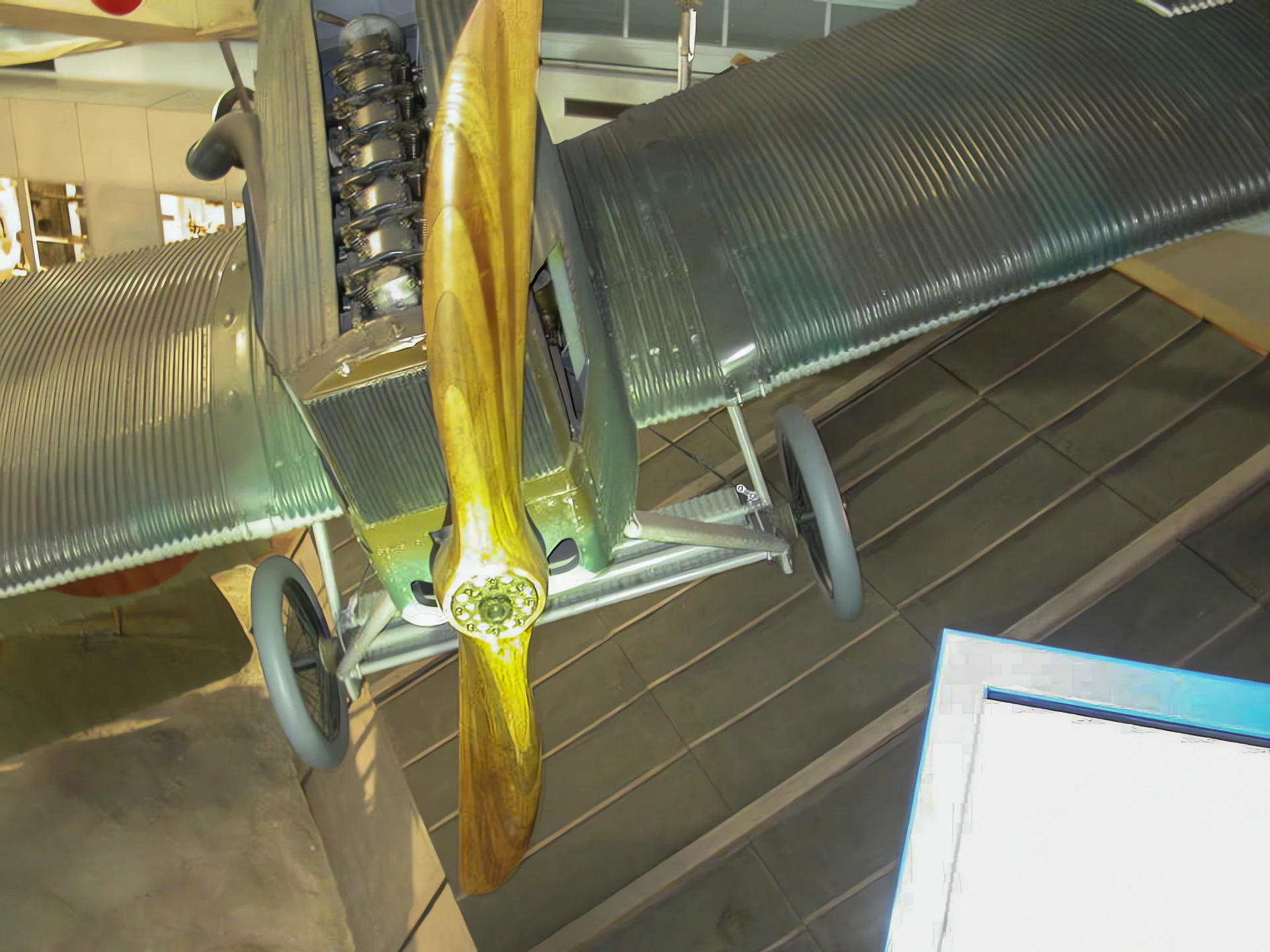
- Engine: 1 x BMW IIIa water-cooled 6-cylinder inline piston engine (Later production models and prototypes were also fitted with Mercedes D.IIIa/aü engines).
- Power Output: 138 kW (185 hp) (BMW IIIa).
- Maximum Speed: 176 km/h (109 mph) (with BMW IIIa).
- Service Ceiling: 6,000 m (19,700 ft).
- Endurance: 1.5 hours.
- Design Note: Its all-metal, low-wing monoplane design was extremely advanced for its time, predating similar designs by over a decade.
Armamento
- Armament: 2 x 7.92 mm LMG 08/15 Spandau machine guns, fixed and synchronized to fire forward through the propeller arc.
- Operational Note: Despite being an advanced design, many German pilots preferred the maneuverability and climb rate of contemporary biplanes, such as the Fokker D.VII, for traditional aerial combat. The J 9 was deemed better suited for specialist roles like naval patrol or balloon attack.
Punti di vista: 1521