Savoia-Marchetti SM.79

Savoia Marchetti SM-79

PaeseItalia
Ruolo

Bomber

Primo voloIl 28 settembre 1934
Costruito1240

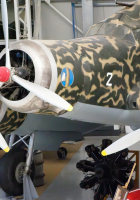
Le Savoia-Marchetti SM.79 Sparviero (italiano per sparrowhawk) era un bombardiere medio italiano a tre motori con struttura in legno e metallo. Originariamente progettato come un aereo passeggeri veloce, tra il 1937 e il 1939 questo monoplano ad ala bassa ha stabilito 26 record mondiali, qualificandosi per qualche tempo come il bombardiere medio più veloce del mondo. Vide per la prima volta l'azione durante la guerra civile spagnola e volò su tutti i fronti in cui l'Italia fu coinvolta durante la seconda guerra mondiale.

fonte: Savoia Marchetti SM-79 su Wikipedia

Continua a leggere

Visualizzazioni : 6385

Carri leggeri T-27, T-38, BT, T-26, T-40, T-50, T-60, T-70 - Mikhail Beryatinskiy

Ian Allan Publishing

Autore

Mikhail Beryatinskiy

LangAnglais
Argomento

Light Tanks

Pagine96 pagine
ISBN-13978-0711031630

Descrizione del libro : There are few battles in the sometimes bloody history of the expansion of the United States in North American during the Indian Wars that are more famous than Little Bighorn. The romantic view of Custer’s last stand against marauding hordes of Indians has achieved iconic status but the reality was somewhat different, as recent research has shown. The Battle of Little Bighorn was the culmination of a process of attrition between the Native Americans and European settlers. On 25 June 1876 this clash of cultures was settled by force of arms as the 7th Cavalry under Custer came upon a huge Indian camp by the Little Bighorn River. The resulting battle was the stuff of legends, but legends based on misconception and hearsay – no members of the 7th Cavalry survived to tell their tale and the Indians recorded their triumph in pictographs and oral memory, long undeciphered by historians…

Recensioni editoriali : This 96 page softcover volume is even more comprehensive than the title suggests, covering the tanks in the title and additionally the Russian Renault; T-18/MS-1; Vickers E; Christie Original; T-17; T-37; PPG; T-30; and T-80. For the BT section there is coverage of the BT-2, 3, 5, 7, 7M/8. In the text are lots of manufacturing, acceptance and in service numbers, and good descriptions of the development and service history. …
Continua a leggere

Visualizzazioni : 811

Pubblicato in Lire.
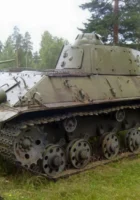
T-50

Serbatoio leggero T-50

PaeseURSS
digitare

Carro leggero

Descrizione

Album di 109 foto walk-around di un T-50

Galleria fotografica di un carro armato leggero T-50, Il T-50 luce il carro armato di fanteria fu costruito dall'Unione Sovietica all'inizio della seconda guerra mondiale.

fonte: T-50 sur Wikipedia

Continua a leggere

Visualizzazioni : 4285

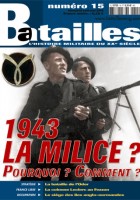
1943 La milizia, perché? Come? - Battaglie 15

Storia & Collezioni

SerieBataille
Oggetto1943 La milizia
Periodo

Seconda guerra mondiale

Ref15

Un diario firmato Storia e Collezioni la recensione "1943 La milizia, perché? Come? – Battaglie 15.

  • Rivoluzione nazionale: la milizia francese da febbraio ad agosto 1943
  • Truppe d'élite: paracadutisti ungheresi
  • Francia libera: la colonna Leclerc alla conquista del Fezzan
  • Affrontare l'Armata Rossa: la battaglia dell'Oder
  • Strategia: Obiettivo: Budapest
  • Occupazione: L'occupazione tedesca delle Isole del Canale
  • Caduta del Reich: la battaglia di Küstrin
  • Fronte orientale: la difesa tedesca sull'Oder

fonte: Storia & Collezioni

Continua a leggere

Visualizzazioni : 1047

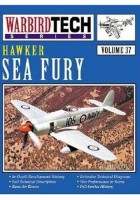
Hawker Sea Fury - Warbird Tech Vol.

Stampa specializzata

Autore

Kev Darling

LinguaAnglais
Oggetto

Furia del Mare degli Hawker

Pagine104 pagine
ISBN-13978-1580070638

Descrizione del libro : Le Furia del Mare degli Hawker è un po 'un mistero per la maggior parte degli appassionati di aeromobili. Se hanno familiarità con i progetti di Hawker e Sydney Camm, questo aereo – l'ultimo caccia a elica della Royal Navy – è noto a loro, anche se non con molti dettagli. I fanatici delle corse di Reno conoscono anche la Furia e la Furia del Mare, ma per gli appassionati di corse aeree il design Hawker è solo una cellula su cui appendere il motore a pistoni più potente e l'elica più grande possibile. Warbird Tech Volume 37.

Recensioni editoriali : Per qualsiasi fan delle gare Reno Unlimited o di qualsiasi dado dell'aviazione duro come il tinto, niente suona più bello del ronzio baritono del motore a pistoni Bristol Centaurus del Furia del Mare degli Hawker. Prodotto solo dopo la fine della WW2, il Sea Fury è uno dei migliori aerei da combattimento monomotore mai prodotti dall'industria aeronautica britannica prima del jet Hunter della stessa azienda. Il presente libro fornisce una buona quantità di informazioni storiche, ampie illustrazioni in bianco e nero e un buon mix di primi piani e disegni tecnici che dovrebbero piacere anche ai modellisti. Il lavoro di Kev Darling è ben studiato e descrive anche le Sea Furies di proprietà privata di oggi negli Stati Uniti e fuori dal paese. Un buon libro.

Continua a leggere

Visualizzazioni: 787

Pubblicato in Lire.
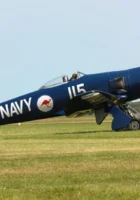
Hawker Sea Fury FB 11

Furia del Mare degli Hawker

PaeseRegno unito
PeriodoSeconda guerra mondiale
digitareCacciatore

Galleria fotografica su un caccia Hawker Sea Fury FBII, The Furia del Mare era un caccia britannico sviluppato per la Royal Navy dal produttore Hawker-Siddeley durante la seconda guerra mondiale. Fu l'ultimo aereo ad elica della Royal Navy, uno dei più veloci aerei monomotore a pistoni mai costruiti, e l'ultimo caccia ad elica ad abbattere un aereo a reazione.

Le Furia Hawker succedettero all'Hawker Tempest e all'Hawker Typhoon. Sviluppato nel 1942 dall'ingegnere Sidney Camm in risposta ad un bando di gara emesso dalla RAF (Royal Air Force) per sostituire l'obsoleto Tempest II. La base del concetto era quella di progettare un Tempest rendendolo più leggero con l'uso della sua ala semiellittica posizionata al centro della fusoliera che era a sua volta identica a quella del Tempest. Le differenze tra i due velivoli erano la modalità monoscocca e la cabina di pilotaggio rialzata che forniva al pilota una migliore visibilità.

fonte: Hawker Sea Fury su Wikipedia

Continua a leggere

Views : 4429

Produzione media tedesca Pz.Kpfw.IV Ausf.J - GRIFFON MODELLO 35034

Modello grifone

Ref35034
digitareTaglio di foto
Scala1/35
ArgomentoProduzione media tedesca Pz.Kpfw.IV Ausf.J
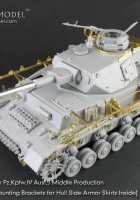
Per kit Drago 6556 A set from the brand Modello grifone "Produzione media tedesca Pz.Kpfw.IV Ausf.J". Questo set di dettagli completi 1/35 include : (1)Photoetched Fret * 7 (2)Aluminum Barrel(Metal Muzzle Brake Not Include) * 1 (3)Preformed Spring * 7 (4)Brass Hollow Pipe * 4 (5)Auxiliary Material: ABS Rod, Brass Wire Suit for Dragon Smart Kit Series (Include 6556 Kit)

The Panzerkampfwagen IV (Pz.Kpfw. IV) commonly known as the Panzer IV was a medium tank developed in Nazi Germany in the late 1930s and used extensively during the Second World War. Its ordnance inventory designation was Sd.Kfz. 161. Designed as an infantry-support tank, the Panzer IV was not originally intended to engage enemy armor—that function was performed by the lighter Panzer III. However, with the flaws of pre-war doctrine becoming apparent and in the face of Soviet T-34 tanks, the Panzer IV soon assumed the tank-fighting role of its increasingly obsolete cousin. The most widely manufactured and deployed German tank of the Second World War, the Panzer IV was used as the base for many other fighting vehicles, including the Sturmgeschütz IV assault gun, Jagdpanzer IV tank destroyer, the Wirbelwind self-propelled anti-aircraft weapon, and the Brummbär self-propelled gun.

fonte: Pz.Kpfw.IV sur Wikipedia

Continua a leggere

Visualizzazioni : 1797

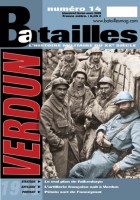
Verdun - Battaglie 14

Verdun

EditoreStoria & Collezioni
SerieBataille
Periodo

Première guerre mondiale

Ref14

Un diario firmato Storia e Collezioni la revue «Verdun – Batailles 14».

  • TACTIQUE : Le vrai plan du Général Falkenhayn à Verdun
  • PORTRAIT : Le général Pétain sort de l’anonymat
  • ARTILLERIE : L’artillerie moderne franÇaise naît À verdun
  • BETONS ET FORTIFICATIONS : Douaumont ist gefallen
  • OPERATIONS AERIENNES : Bataille aérienne sur la Meuse
  • COMMANDEMENT : Le commandement français face à l’offensive allemande
  • STRATEGIE : La voie sacrée, seul lien avec l’arrière
  • LOGISTIQUE ET ORGANISATION : Le service de santé de la 5e armée allemande

fonte: Storia & Collezioni

Continua a leggere

Punti di vista : 702

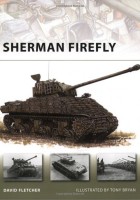
Sherman Firefly - David Fletcher

Osprey Publishing

Autore

David Fletcher

linguaAnglais
Oggetto

Lucciola sherman

Pagine48 pagine
ISBN-13978-1846032776

Descrizione del libro : Il carro armato più potentemente armato messo in campo dagli Alleati durante la seconda guerra mondiale fu il Lucciola sherman. Un normale Sherman di costruzione americana modificato dagli inglesi, il Firefly aveva la potenza di fuoco che poteva finalmente eguagliare i fantastici carri armati tedeschi che avevano dominato l'Europa. David Fletcher esamina la controversia che ha perseguitato il Firefly e la spinta psicologica che il carro armato ha fornito alle forze alleate. Esplorando i suoi successi e fallimenti sul campo di battaglia e fornendo una valutazione realistica del valore del carro armato, questa è una lettura essenziale per chiunque voglia conoscere i fatti su una variante di carro armato che ha rapidamente sviluppato la propria mitologia.

Recensioni editoriali : "Il Firefly era probabilmente il miglior carro armato WW2 degli alleati occidentali ad essere prodotto in quantità, per quanto riguardava le prestazioni anticarro ... Tutta [la sua storia di produzione] è descritta qui e così è l'uso in combattimento del Firefly, così come interessanti luci secondarie come l'uso di Fireflies per l'attacco in cemento ai bunker e la produzione di Firefly per l'esercito degli Stati Uniti. Altamente raccomandato." -John Prigent, Internet Modeler (Marzo 2008)

Continua a leggere

Punti di vista: 1234

Pubblicato in Lire.
Firefly 1c Welded Hull - DML 6568

Modello drago

Ref6568
digitareMaquette
Scala1/35
Argomento

Firefly 1c Welded Hull

Un mock-up del marchio Modello drago la maquette : Sd.Kfz.184 Ferdinand Kursk 1943 – DML 6495.

Le Lucciola sherman was a World War II British variant of the American Sherman tank, fitted with the powerful British 17 pounder anti-tank gun as its main weapon. Originally conceived as a stopgap until future British tank designs came into service, the Sherman Firefly became the most common vehicle with the 17 pounder in World War II. Though the British expected to have their own new tank models developed soon, British Major George Brighty championed the already-rejected idea of mounting the 17 pounder in the existing Sherman. With the help of Lieutenant Colonel Witheridge and despite official disapproval, he managed to get the concept accepted. This proved fortuitous, as both the Challenger and Cromwell tank designs experienced difficulties and delays.

fonte: Firefly 1c Welded Hull sur Wikipedia

Continua a leggere

Visualizzazioni : 1340