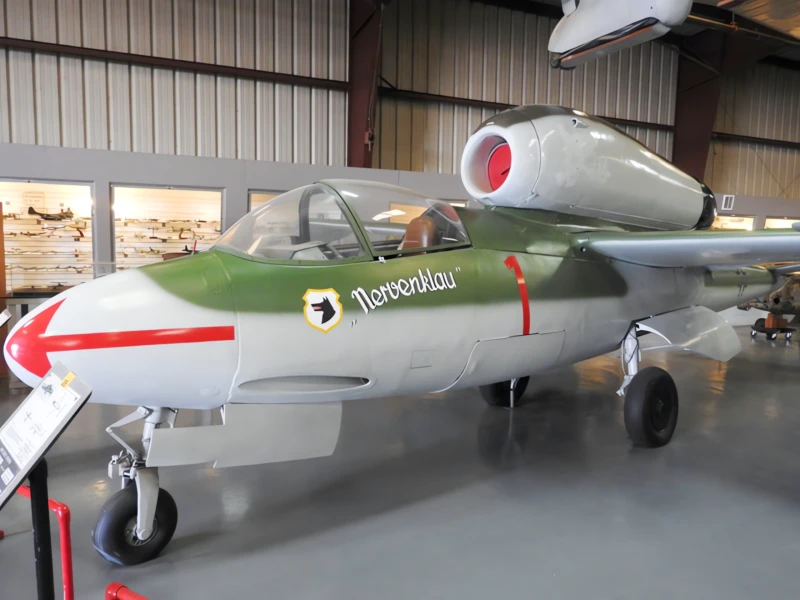
Heinkel He 162 A Salamander | |
|---|---|
| Χώρα | Ναζιστική Γερμανία |
| Ρόλο | Αεριωθούμενο μαχητικό |
| Πρώτη πτήση | 6 Δεκεμβρίου 1944 |
| Χτισμένο | 320 |
Teh Heinkel Χε 162 Το Volksjäger (γερμανικά, "Μαχητής του Λαού"), το όνομα ενός έργου του διαγωνισμού σχεδιασμού του Προγράμματος Μαχητών Έκτακτης Ανάγκης, ήταν ένα γερμανικό μονοκινητήριο, αεριωθούμενο μαχητικό αεροσκάφος που χρησιμοποιήθηκε από τη Luftwaffe στον Β 'Παγκόσμιο Πόλεμο. Σχεδιασμένο και κατασκευασμένο γρήγορα, και κατασκευασμένο κυρίως από ξύλο, καθώς τα μέταλλα ήταν σε πολύ μικρή προσφορά και είχαν προτεραιότητα για άλλα αεροσκάφη, το He 162 ήταν ωστόσο το ταχύτερο της πρώτης γενιάς αεροσκαφών του Άξονα και των Συμμάχων. Volksjäger ήταν το επίσημο όνομα του Υπουργείου Αεροπορίας του Ράιχ για τον διαγωνισμό κυβερνητικού προγράμματος σχεδιασμού που κέρδισε το σχέδιο He 162. Άλλα ονόματα που δόθηκαν στο αεροπλάνο περιλαμβάνουν το Salamander, το οποίο ήταν η κωδική ονομασία του κατασκευαστικού του προγράμματος, και το Spatz ("Sparrow"), το οποίο ήταν το όνομα που δόθηκε στο αεροπλάνο από τον Heinkel.
| Heinkel He 162 Salamander | |
|---|---|
| Φωτογράφους | Σίες Χέντρικς |
| Εντοπισμού | Αγνοώ |
| Φωτογραφίες | 81 |
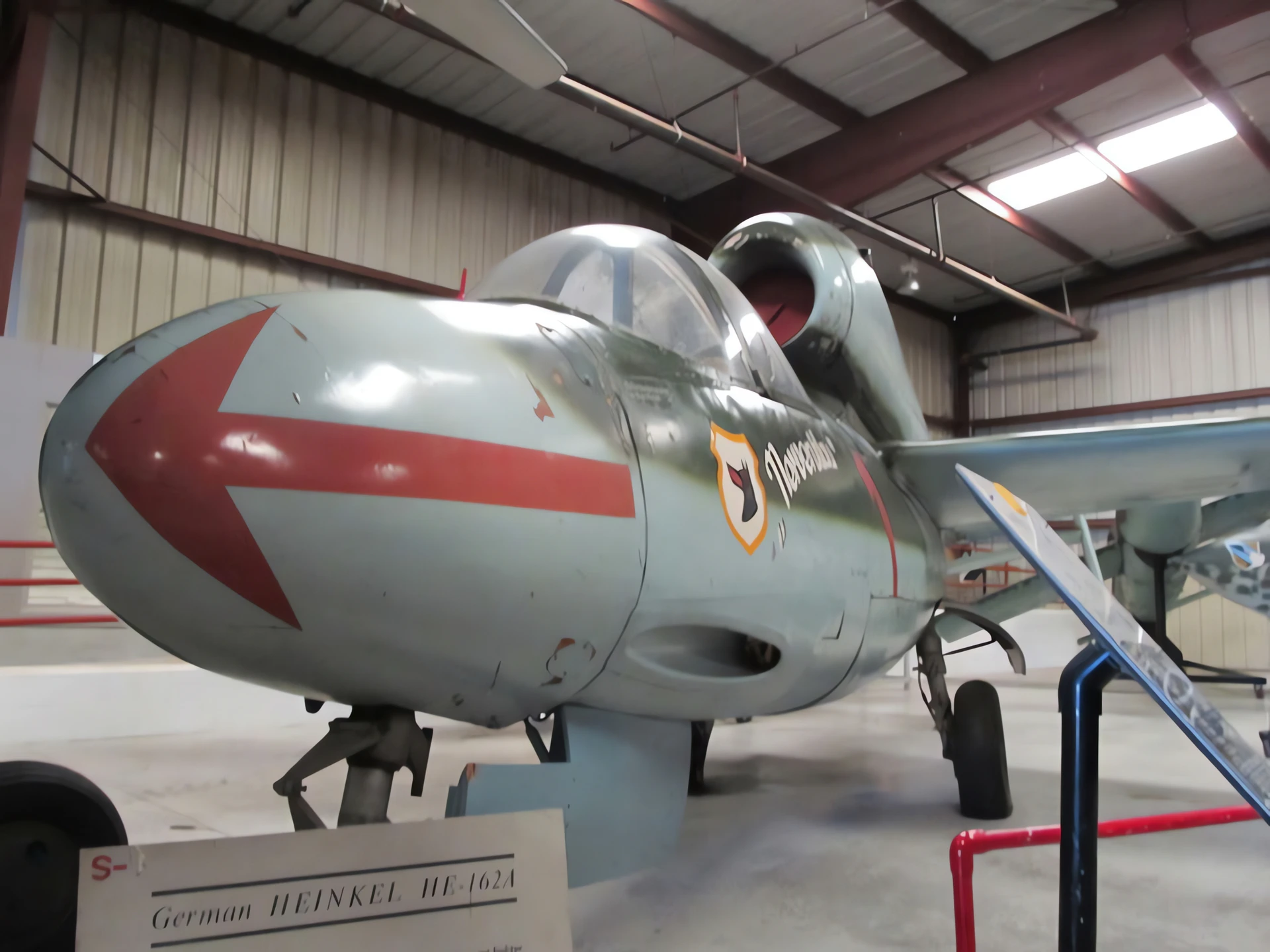
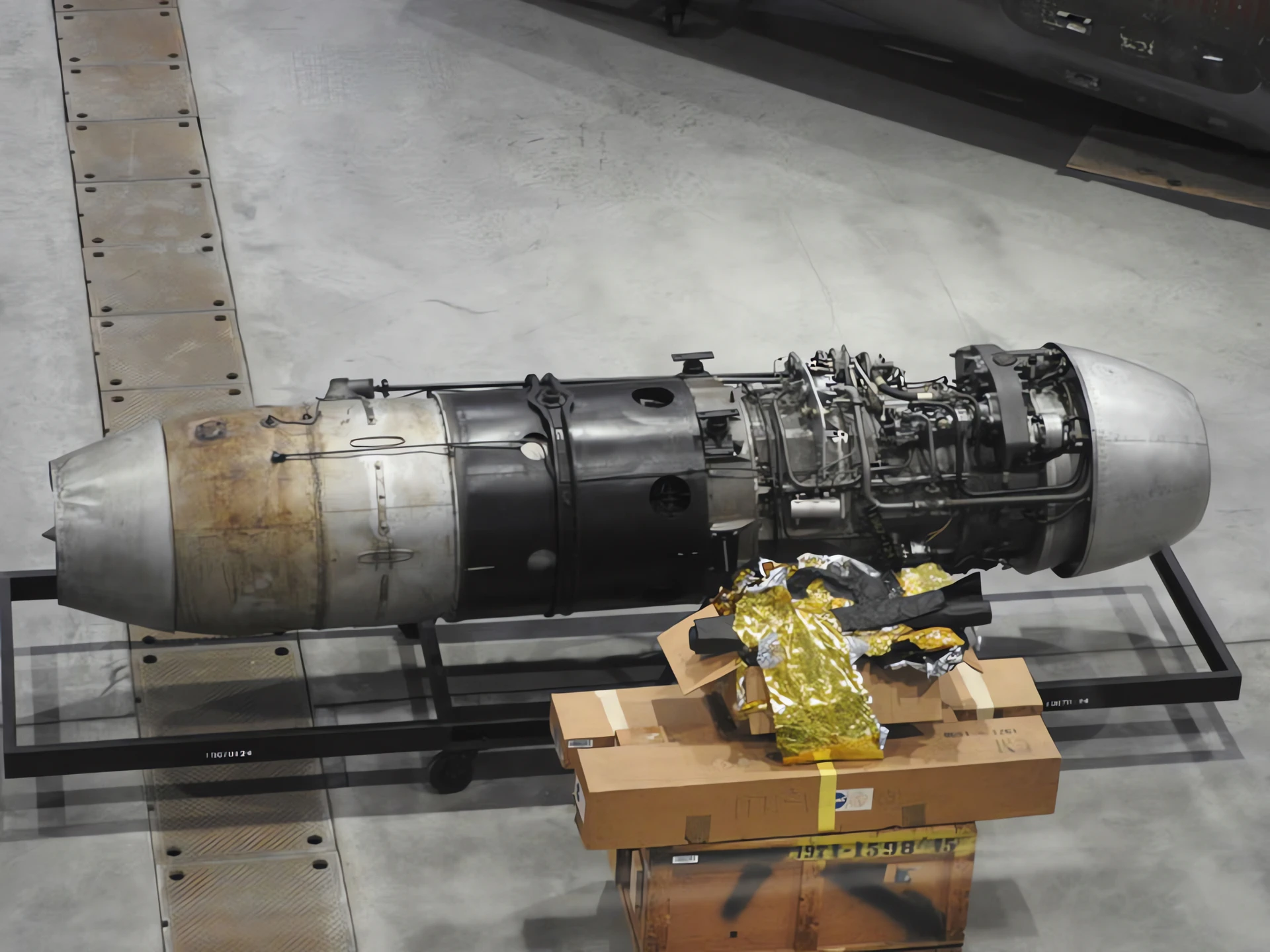
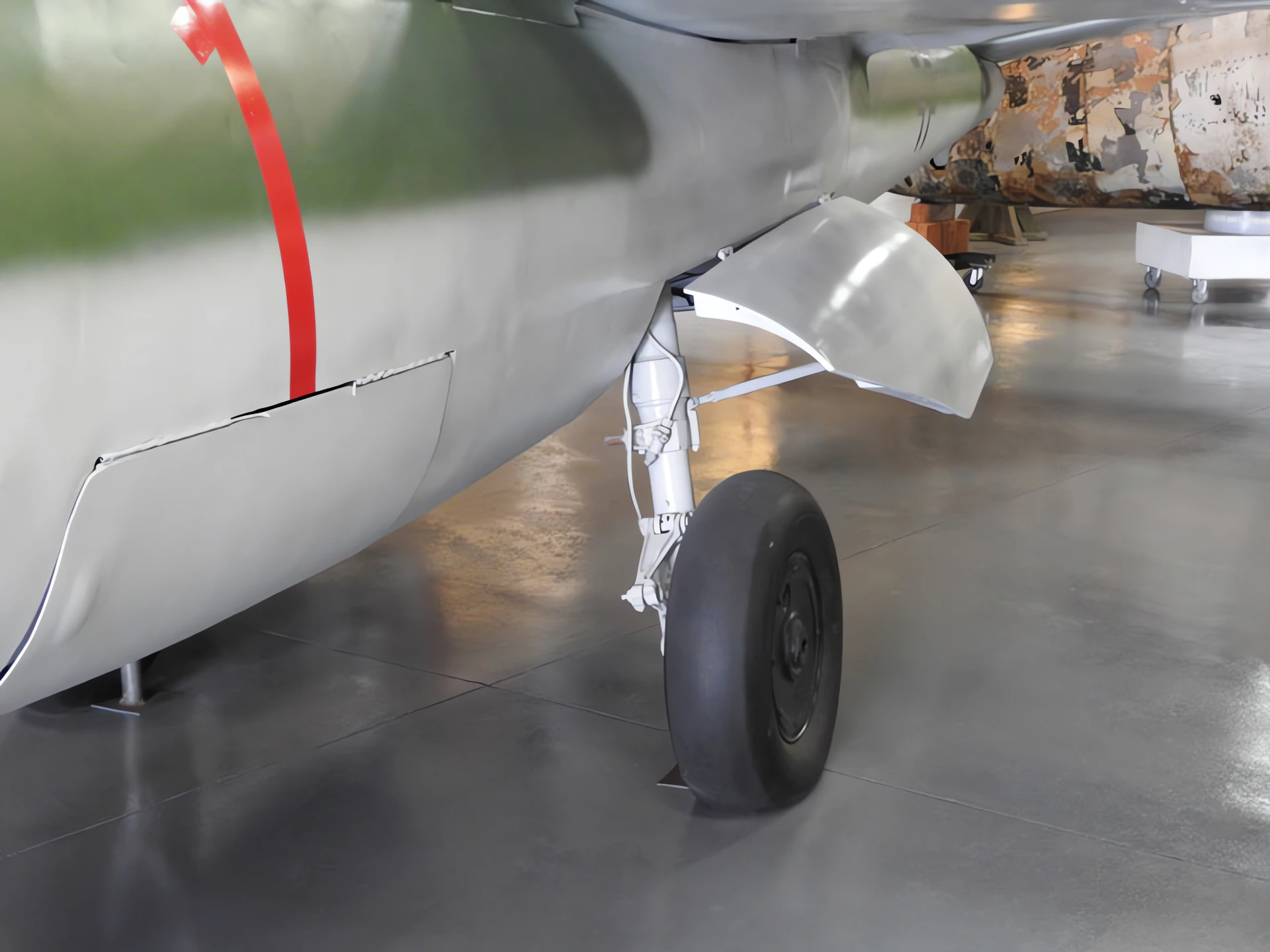
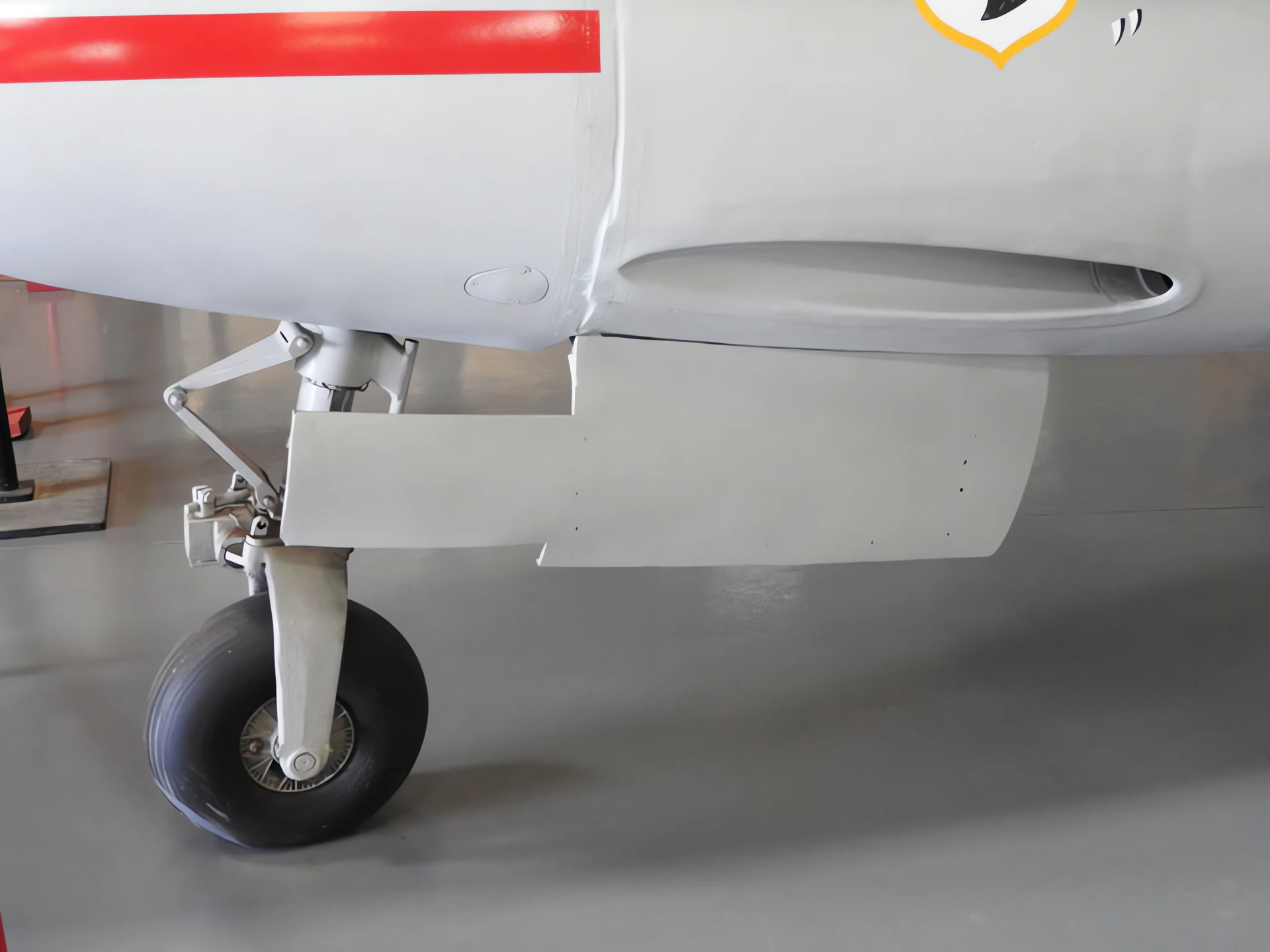
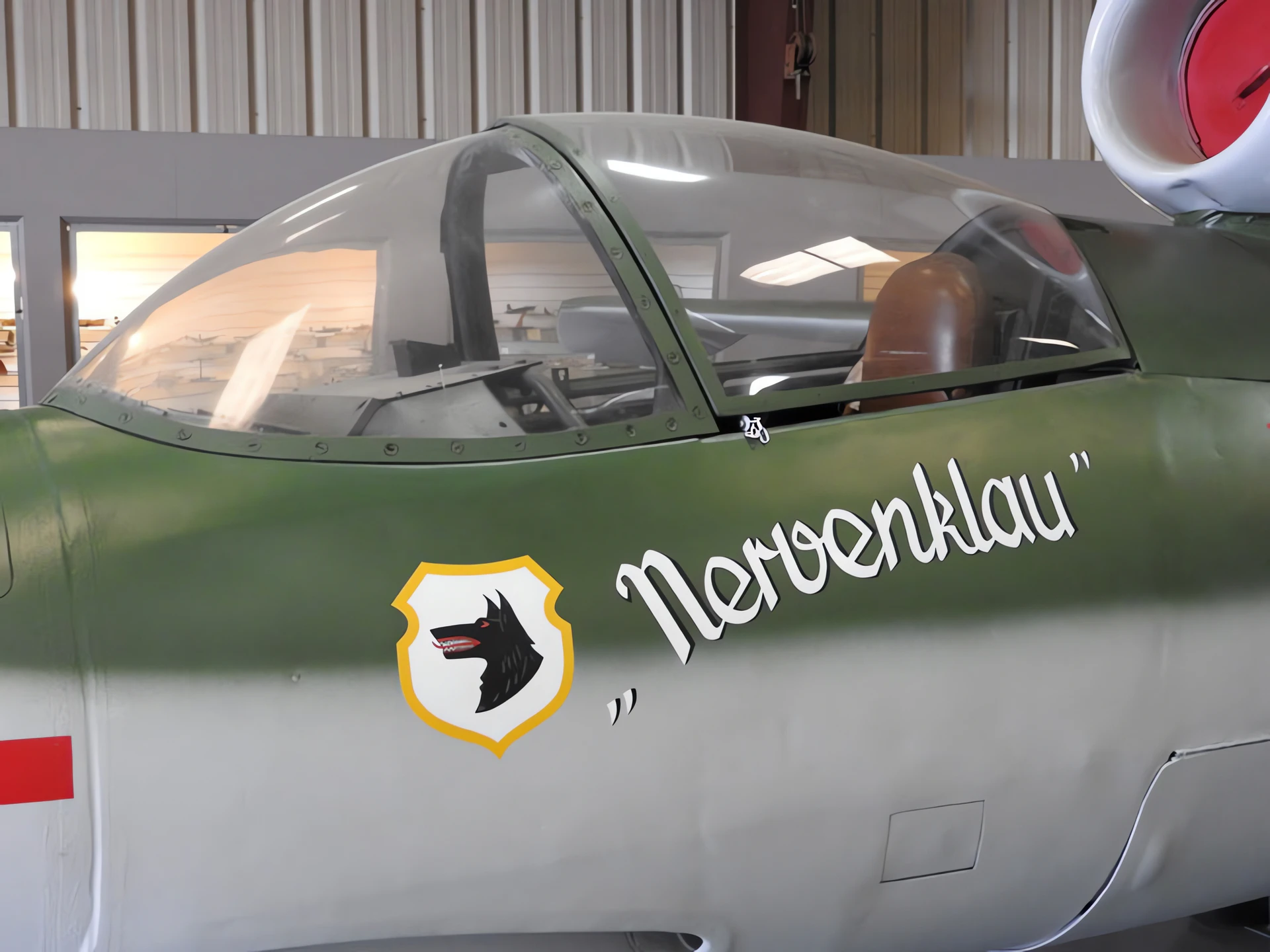
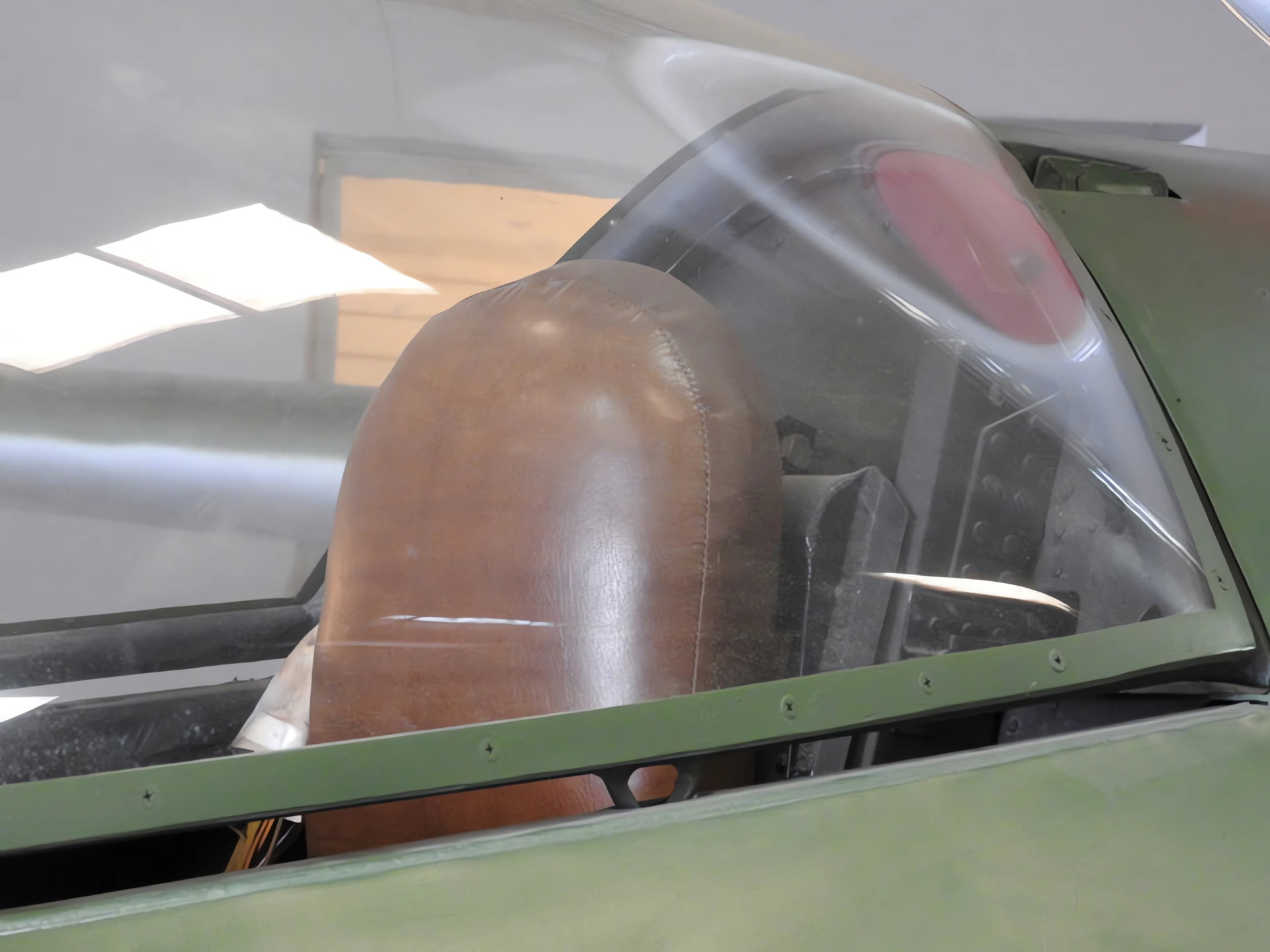
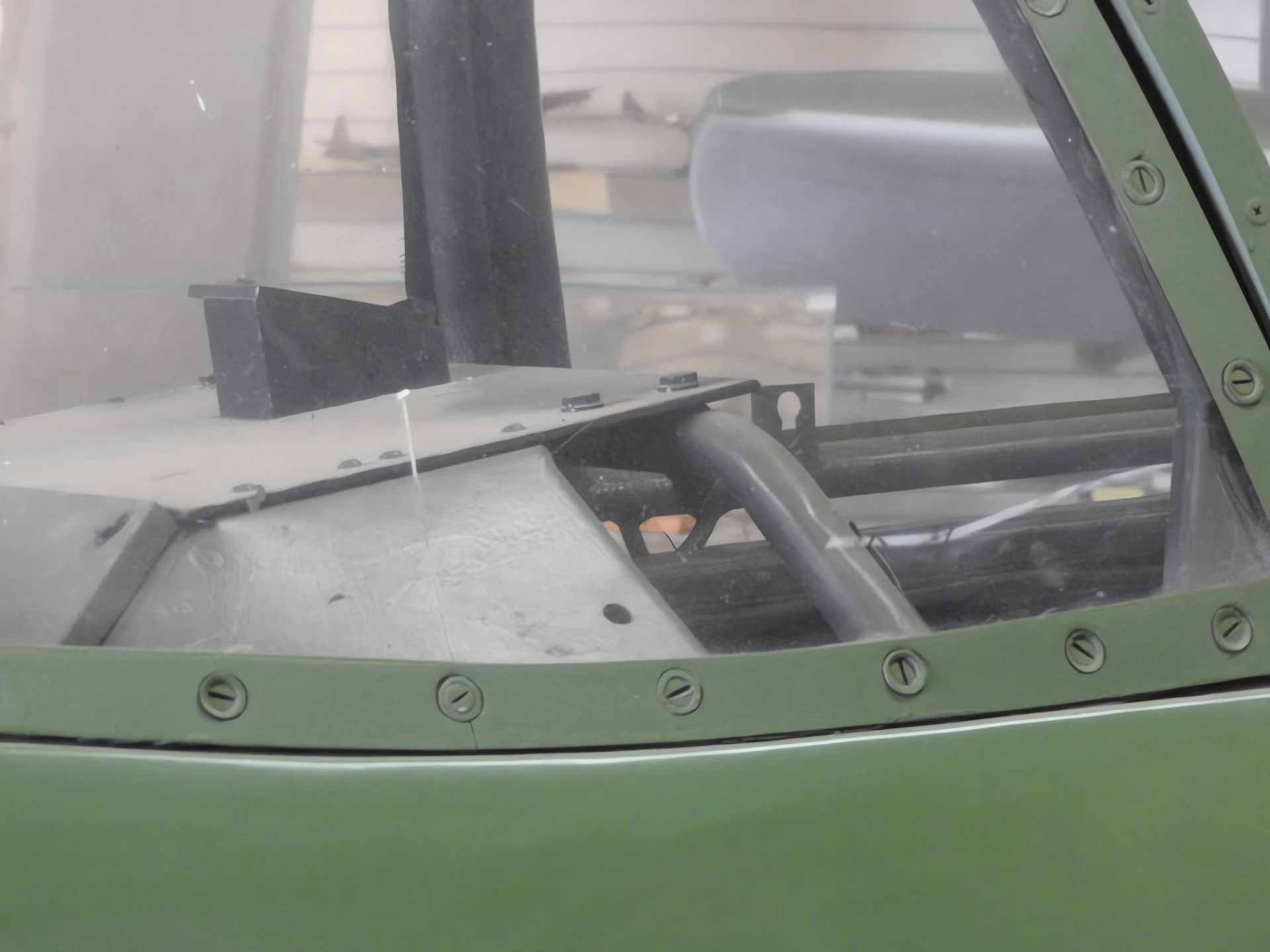
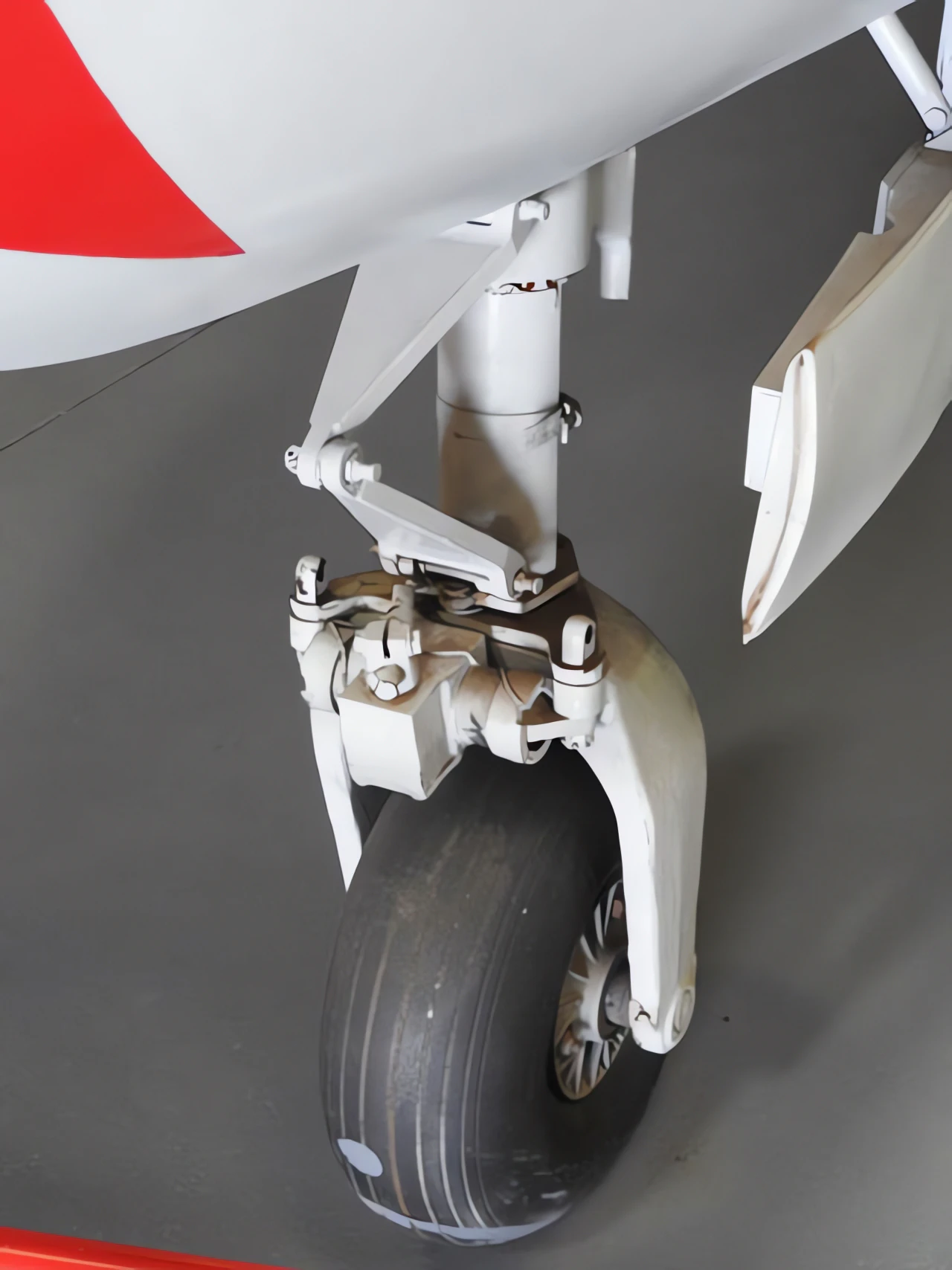
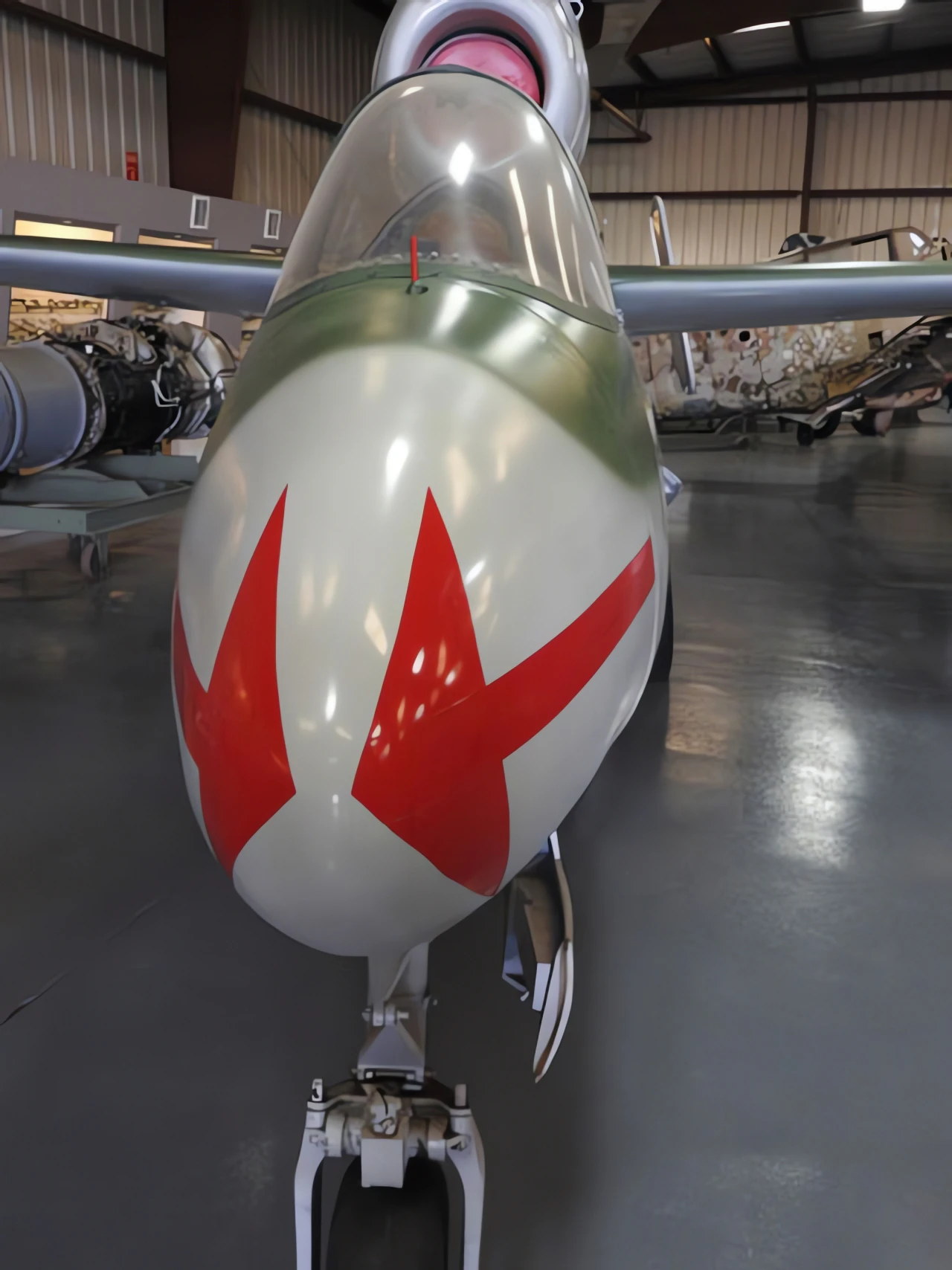

| Heinkel HE-162 Salamander Walk Around | |
|---|---|
| Φωτογράφος | Bill Maloney |
| Εντοπισμού | Φτερά μουσείου αετών |
| Φωτογραφίες | 42 |
Δείτε επίσης:


| Heinkel He 162A-1 Volksjager Walk Around | |
|---|---|
| Φωτογράφος | Αγνοώ |
| Εντοπισμού | Αγνοώ |
| Φωτογραφίες | 31 |
| Heinkel He162A-1 Volksjager Walk Around | |
|---|---|
| Φωτογράφος | Don Allen |
| Εντοπισμού | Αγνοώ |
| Φωτογραφίες | 45 |
| Heinkel HE-162 Walk Around | |
|---|---|
| Φωτογράφος | Unknow |
| Εντοπισμού | Αγνοώ |
| Φωτογραφίες | 24 |
| Heinkel He-162A-2 Walk Around | |
|---|---|
| Φωτογράφος | Vojtech Peterka |
| Εντοπισμού | Αγνοώ |
| Φωτογραφίες | 14 |
The Emergency Fighter
Teh Heinkel Χε 162 was the result of the “Emergency Fighter Program” initiated in late 1944. As Allied bombers devastated German industry, the Luftwaffe needed a jet that was cheap, used non-strategic materials (like wood), and was easy to fly for Hitler Youth pilots with minimal training. Remarkably, the aircraft went from a wooden mockup to its first flight in only 90 days. While it was aerodynamically advanced and extremely fast, it was also dangerous to fly due to its sensitive handling and the poor quality of the glues used in its wooden construction.
| Attribute | Technical Specification (He 162 A-2) |
|---|---|
| Ρόλο | Interceptor / Emergency Fighter |
| Πλήρωμα | 1 (Pilot) |
| First Flight | December 6, 1944 |
| Πλάστης ισχύος | 1 × BMW 003E-1 turbojet |
| Thrust | 1,760 lbf (7.8 kN) |
| Maximum Speed | 562 mph (905 km/h) at 20,000 ft |
| Endurance | 30 minutes (approximate) |
| Οπλισμός | 2 × 20mm MG 151/20 cannons |
Radical Engineering in a Hurry
- Dorsal Engine Mount: To simplify the fuel system and protect the engine from debris on rough runways, the BMW 003 jet was mounted directly on top of the fuselage. This required a twin-fin “H-tail” to allow the exhaust gases to pass between the rudders.
- Wooden Construction: The wings were made entirely of wood, as was the nose and various fairings. In a famous incident during the first flight, the acidic “Tego film” glue ate through the wooden wing structure, leading to a catastrophic structural failure.
- Ejection Seat: Despite being a “budget” fighter, the He 162 was one of the first operational aircraft to feature a Heinkel-designed ejection seat, powered by an explosive cartridge, because the pilot could not safely bail out through the top-mounted engine intake.
- The “Salamander” Mystery: “Salamander” was the codename for the wing construction project, while the aircraft itself was officially the Spatz (Sparrow) or Βολκστζάγκερ.
Brief Combat and Capture
- Operational Units: Only one unit, JG 1, was fully equipped with the He 162 before the war ended. They claimed a handful of victories, but the aircraft’s short fuel endurance and landing gear issues caused more losses than enemy fire.
- The British Assessment: After the war, British test pilot Eric “Winkle” Brown flew the He 162 and described it as having “the best all-round view” and being a “delightful” aerobatic platform, though he warned it was “unforgiving” if mishandled.
- Aerodynamic Innovations: The wings featured distinctive turned-down “drooped” tips (Lippisch-style), which were intended to improve stability and prevent the aircraft from rolling unexpectedly at high speeds.
- Survivors: Because so many were built (approx. 320), several exist today. Notable examples are at the RAF Museum London, the Smithsonian, and the Musée de l’Air et de l’Espace in France.
Views : 7374
Μπορείτε επίσης να δείτε:
 Curtiss-Wright AT-9 – Φώτο & Βίντεο
 Lockheed P-2 Neptune – Φώτο &; Βίντεο
 Heinkel He 219 – Φώτο & Βίντεο
 Heinkel He 100 – Φώτο & Βίντεο
 P-47G Κεραυνός – Περίπατος
 Μανία θάλασσας Hawker FBII vol2 - Περίπατος γύρω
 Χάινκελ Χένκελ 111 – Περίπατος
 P-51D Μάστανγκ vol2 – Περπατήστε γύρω
 B-17G Ιπτάμενο Φρούριο – Περίπατος
 Μέσερσμιτ Bf 109G-2 – Περίπατος