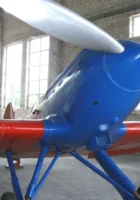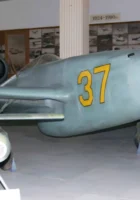
Jak-15 Peří

Jak-15

ZeměSovětský svaz
TypProudový stíhač
FotografDmitrij Sribnyi
Popis

Album 79 fotografie procházky «Jak-15»

Fotogalerie Jak-15, The Yakovlev Yak-15 (Russian: Яковлев Як-15; NATO reporting name: Feather, USAF/DOD designation Type 2) was a first-generation Soviet turbojet fighter developed by the Yakovlev design bureau (OKB) immediately after World War II. It used a reverse-engineered German Junkers Jumo 004 engine. Along with the Swedish Saab 21R, it was one of only two jets to be successfully converted from a piston-powered aircraft and enter production. 280 aircraft were built in 1947. Although nominally a fighter, it was mainly used to qualify piston-engine-experienced pilots to fly jets.

Zdroj: Jak-15 na Wiki

Pokračovat ve čtení

Počet zobrazení: 4990

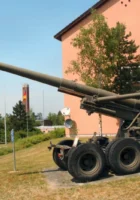
155 mm dlouhý Tom

US 155mm dlouhý Tom

ZeměSPOJENÉ STÁTY
TypPolní dělo

Fotogalerie 155 mm dlouhý Tom, The 155 mm Long Tom was a 155 millimeter caliber field gun developed and used by the United States mililtary. It was produced in M1 and M2 variants (later known as the M59). Developed to replace the Canon de 155mm GPF, the gun was deployed as a heavy field weapon during World War II and the Korean War, and also classed as secondary armament for seacoast defense. The gun could fire a 45.36 kg (100 lb) shell to a maximum range of 22 km (13.7 mi), with an estimated accuracy life of 1,500 rounds.

Zdroj: US 155mm dlouhý Tom na Wiki

Pokračovat ve čtení

Počet zobrazení: 3724

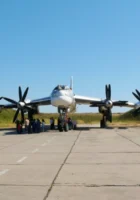
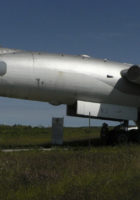
Tupolev Tu-95MS Medvěd

Tupolev Tu-95MS Medvěd

ZeměSovětský svaz
RoliStrategický bombardér
První let12. listopadu 1952
Postaven500+

Fotogalerie Tupolev Tu-95MS Medvěd, The Tupolev Tu-95 (Russian: Туполев Ту-95; NATO reporting name: “Bear”) is a large, four-engine turboprop-powered strategic bomber and missile platform. First flown in 1952, the Tu-95 entered service with the Soviet Union in 1956 and is expected to serve the Russian Air Force until at least 2040.[1] A development of the bomber for maritime patrol is designated Tu-142, while a passenger airliner derivative was called Tu-114.

Zdroj: Tupolev Tu-95MS Medvěd na Wiki

Pokračovat ve čtení

Počet zobrazení: 5661

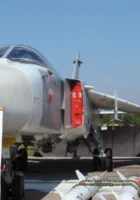
Suchoj Su-24М Šermíř

Suchoj Su-24М Šermíř

ZeměSovětský svaz
TypÚtočná letadla
FotografAndrej Visjagin
Popis

Album 80 fotografie procházka kolem «Suchoj Su-24М šermíř»

Fotogalerie Suchoj Su-24М Šermíř, The Sukhoi Su-24 (NATO reporting name: Fencer) is a supersonic, all-weather attack aircraft developed in the Soviet Union. The aircraft has a variable-sweep wing, twin-engines and a side-by-side seating arrangement for its two crew. It was the first of the USSR’s aircraft to carry an integrated digital navigation/attack system.[1] It remains in service with the Russian Air Force, Ukrainian Air Force, and various air forces to which it was exported.

Zdroj: Suchoj Su-24М šermíř na Wiki

Pokračovat ve čtení

Počet zobrazení: 6838

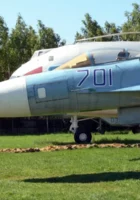
Suchoj Su-35 Flanker

Suchoj Su-35

ZeměSovětský svaz
TypVíceúčelový stíhač
FotografSergej Zhabin
Popis

Album 86 fotografie procházky «Suchoj Su-35»

Fotogalerie Suchoj Su-35, The Sukhoi Su-35 (Russian: Сухой Су-35; NATO reporting name: Flanker-E) is a designation for two separate, heavily upgraded derivatives of the Su-27 ‘Flanker’ jet plane. They are single-seat, twin-engine, supermaneuverable multirole fighters, designed by Sukhoi and built by Komsomolsk-on-Amur Aircraft Production Association (KnAAPO).

Zdroj: Suchoj Su-35 na Wiki

Pokračovat ve čtení

Zobrazení: 6618

Polikarpov I-17

Polikarpov I-17

ZeměSovětský svaz
TypJednomístný stíhací prototyp
První let1. září 1934
Postaven3

Polikarpov I-17 was a Soviet single-seat fighter prototype designed and built by a team headed by Polikarpov at the Central Design Bureau (TsKB). The I-17 was a lightweight single-seat low-wing cantilever monoplane. Developed under the design bureau designation TsKB-15 it first flew on 1 September 1934 powered by a 567 kW (760 hp) Hispano-Suiza 12 Ybrs engine. The second prototype designated the TsKB-19 had a revised inward retracting wide-track main landing gear and a Soviet M-100 engine. This second prototype was displayed at the 1936 Salon de l’Aeronautique in Paris. The third prototype designated the TsKB-33 had reduced armament to save weight and a revised engine cooling system, but the further development was abandoned in 1936.

Zdroj: Polikarpov I-17 na Wiki

Pokračovat ve čtení

Počet zobrazení: 2695

Myasischev M-4

Myasiščev M-4 Bizon

ZeměSovětský svaz
TypStrategický bombardér
První let20. ledna 1953
Postaven91+2

Fotogalerie M-4 Bizoni, The Myasishchev M-4 Molot (Russian: Молот (Hammer), USAF/DoD reporting name “Type 37”, NATO reporting name Bison) is a four-engined strategic bomber designed by Vladimir Myasishchev and manufactured by the Soviet Union in the 1950s to provide a Long Range Aviation bomber capable of attacking targets in North America. The Myasishchev design bureau was formed to build such a bomber.

Zdroj: M-4 Bizon na Wiki

Pokračovat ve čtení

Počet zobrazení: 2488

Mil Mi-4

ZeměSovětský svaz
TypTransportní vrtulník
FotografAndrej Zinčuk
Popis

Album 13 fotografie procházky «Mil Mi-4»

Fotogalerie Mil Mi-4, The Mil Mi-4 (USAF/DoD reporting name “Type 36”, NATO reporting name “Hound”) was a Soviet transport helicopter that served in both military and civilian roles.

Zdroj: Mil Mi-4 na Wiki

Pokračovat ve čtení

Počet zobrazení: 3231

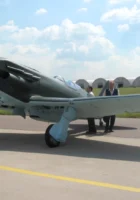
MiG-3

MiG-3

ZeměSovětský svaz
TypStíhací a stíhací letouny
FotografSergej Turchin
Popis

Album 15 fotografie procházky «MiG-3»

Fotogalerie MiG-3, The Mikoyan-Gurevich MiG-3 (Russian: Микоян и Гуревич МиГ-3) was a Soviet interceptor and fighter aircraft used during World War II. It was a development of the MiG-1 by the OKO (opytno-konstruktorskij otdel — Experimental Design Department) of Zavod (Factory) No. 1 to remedy problems that had been found during the MiG-1’s development and operations. It replaced the MiG-1 on the production line at Factory No. 1 on 20 December 1940 and was built in large numbers during 1941 before Factory No. 1 was converted to build the Ilyushin Il-2.

Zdroj: MiG-3 na Wiki

Pokračovat ve čtení

Počet zobrazení: 4178

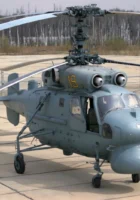
Hormon Ka-25PL

Hormon Ka-25PL

ZeměSovětský svaz / Rusko
TypProtiponorková / víceúčelová lodní helikoptéra
První let26. dubna 1963
Postaven460

Fotogalerie Hormon Ka-25PL, The Kamov Ka-25 (NATO reporting name ‘Hormone’) was a naval helicopter, developed for the Soviet Navy in the USSR from 1958.

Zdroj: Hormon Ka-25PL na Wiki

Pokračovat ve čtení

Zobrazení: 5460