BTR-60PB

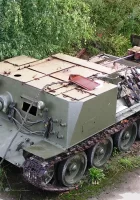
BTR-60

PaeseUnione Sovietica
digitareCorazzato anfibio su ruote
In servizioDal 1959 ad oggi
Costruito25000+

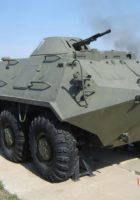
Galleria fotografica di un BTR-60, The BTR-60 is the first vehicle in a series of Soviet eight-wheeled armoured personnel carriers (APCs). It was developed in the late 1950s as a replacement for the BTR-152 and was seen in public for the first time in 1961. BTR stands for Bronetransporter (БТР, Бронетранспортер, literally “armoured transporter”)

fonte: BTR-60 su Wiki

Continua a leggere

Visualizzazioni : 4030

VT-34

VT-34

PaeseCecoslovacchia
digitareSerbatoio di recupero
FotografiaInconsapevole
IndividuareInconsapevole
DescrizioneAlbum di 42 foto walk-around di «VT-34»

Galleria fotografica di un VT-34, The T-34 medium tank is one of the most-produced and longest-lived tanks of all time. Identification of T-34 variants can be complicated. Turret castings, superficial details, and equipment differed between factories; new features were added in the middle of production runs, or retrofitted to older tanks; damaged tanks were rebuilt, sometimes with the addition of newer-model equipment and even new turrets. Some tanks had appliqué armor made of scrap steel of varying thickness welded onto the hull and turret; these tanks are called s ekranami (“with screens”), although this was never an official designation for any T-34 variant. T-34 model 1941 s ekranami, manufactured at STZ, with appliqué armour welded to the hull.

VT-34 (VT sta per vyprošťovací tank "serbatoio di recupero") - Questa variante era un veicolo di recupero cecoslovacco appositamente costruito.

fonte: VT-34 su Wiki

Continua a leggere

Numero visioni : 2769

AT-33A Stella cadente

Lockheed T-33

PaeseUsa
digitareAerei da addestramento jet
Prodotto1948–1959
Costruito6557

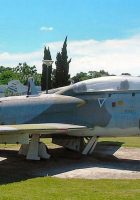
Galleria fotografica di un Lockheed T-33, The Lockheed T-33 Shooting Star (or T-Bird) is an American jet trainer aircraft. It was produced by Lockheed and made its first flight in 1948 piloted by Tony LeVier. The T-33 was developed from the Lockheed P-80/F-80 starting as TP-80C/TF-80C in development, then designated T-33A. It was used by the U.S. Navy initially as TO-2 then TV-2, and after 1962, T-33B. As of 2015, Canadian-built examples were still in-service with the Bolivian Air Force.

fonte: Lockheed T-33 su Wiki

Continua a leggere

Views : 7152

T-30

T-30

PaeseUnione Sovietica
digitareCarro armato anfibio da ricognizione
FotografiaJurij Pasholok
IndividuareInconsapevole
DescrizioneAlbum di 27 foto walk-around di «T-30»

Galleria fotografica di un T-30, T-30A, prototype for the T-40 amphibious light tank. The T-40 amphibious scout tank was an amphibious light tank used by the Soviet Union during World War II. It was armed with one 12.7 mm (0.5 in) DShK machine gun. It was one of the few tanks that could ford a river without a bridge.

fonte: T-30 su Wiki

Continua a leggere

Visualizzazioni : 2696

Junkers Ju-87 G2

Junkers Ju-87G-2 Stuka

PaeseGermania nazista
digitareBombardiere subacqueo e aereo da attacco al suolo
Primo voloIl 17 settembre 1935
Costruito6500+

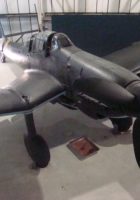
Le Junkers Ju 87 o Stuka (da Sturzkampfflugzeug, "bombardiere in picchiata") era un bombardiere in picchiata tedesco e un aereo da attacco al suolo. Progettato da Hermann Pohlmann, volò per la prima volta nel 1935. Lo Ju 87 fece il suo debutto in combattimento nel 1937 con la Legione Condor della Luftwaffe durante la guerra civile spagnola. Servì le forze dell'Asse durante la seconda guerra mondiale. Ju 87G: Con la variante G, l'invecchiamento della cellula dello Ju 87 trovò nuova vita come aereo anticarro. Questa era la versione operativa finale dello Stuka, e fu dispiegata sul fronte orientale.

fonte: Junkers Ju-87G-2 Stuka su Wiki

Continua a leggere

Visualizzazioni : 8436

2S9 Nona-S

2S9 Nona-S

PaeseUnione Sovietica
digitareMalta semovente e ad aria da 120 mm
FotografiaA.Martynenko
IndividuareInconsapevole
DescrizioneAlbum di 41 foto walk-around di «2S9 Nona-S»

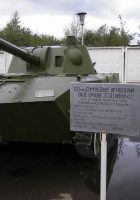
Galleria fotografica di un 2S9 Nona-S, The 2S9 NONA (Новейшее Орудие Наземной Артилерии – Newest Ordnance of Ground Artillery) is an extremely light-weight self-propelled and air-droppable 120 mm mortar designed in the Soviet Union that entered service in 1981. The 2S9 chassis is designated the S-120 and based on the aluminium hull of the BTR-D airborne multi-purpose tracked armoured personnel carrier. More generally, the 120 mm mortar is referred to as the Nona, with the 2S9 also known as the Nona-S; a BTR-80 based version is the 2S23 or Nona-SVK, and the towed 2B16 anti-tank gun version is named the Nona-K. Although no figures have been released, it is estimated that well over 1,000 2S9 were built.

fonte: 2S9 Nona-S su Wiki

Continua a leggere

Visualizzazioni : 3792

Handley Page Victor

Handley Page Victor

PaeseRegno unito
digitareBombardiere strategico a reazione
FotografiaOndrej Skarka
IndividuareInconsapevole
DescrizioneAlbum di 102 foto walk-around di "Handley Page Victor"

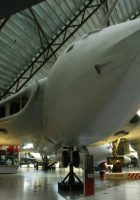
Galleria fotografica di un Handley Page Victor, The Handley Page Victor is a British jet-powered strategic bomber, developed and produced by the Handley Page Aircraft Company, which served during the Cold War. It was the third and final of the V-bombers operated by the Royal Air Force (RAF), the other two V-bombers being the Avro Vulcan and the Vickers Valiant. The Victor had been developed to perform as part of the United Kingdom’s airborne nuclear deterrent. In 1968, the type was retired from the nuclear mission following the discovery of fatigue cracks, which had been exacerbated by the RAF’s adoption of a low-altitude flight profile to avoid interception.

fonte: Handley Page Victor su Wiki

Continua a leggere

Views : 5342

Radar P-40

Radar P-40

PaeseUnione Sovietica
digitareRadar
FotografiaVladimir Jakubov
IndividuareMuseo delle macchine da guerra e dei trasporti
DescrizioneAlbum di 139 foto walk-around del «radar P-40»

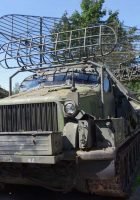
Galleria fotografica di un Radar P-40, The P-40 “Armour” or 1S12 (also referred to by the NATO reporting name “Long Track” in the west) is a 3-D UHF radar developed and operated by the former Soviet Union.

fonte: Radar P-40 su Wiki

Continua a leggere

Visualizzazioni : 4743

Marsh Aviation S-2F3AT Turbo Tracker

Grumman S-2 Tracker

PaeseUsa
RuoloGuerra antisommergibile della cellula
Primo volo4 dicembre 1952
Costruito1284

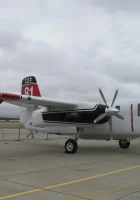
Galleria fotografica di un Grumman S2F-1 Tracker, The Grumman S-2 Tracker (previously S2F prior to 1962) was the first purpose-built, single airframe anti-submarine warfare (ASW) aircraft to enter service with the U.S. Navy. Designed and initially built by Grumman, the Tracker was of conventional design with twin reciprocating propeller engines, a high wing and tricycle undercarriage. The type was exported to a number of navies around the world. Introduced in 1952, the Tracker and its E-1 Tracer derivative saw service in the U.S. Navy until the mid-1970s, and its C-1 Trader derivative until the mid-1980s, with a few aircraft remaining in service with other air arms into the 21st century. Argentina and Brazil are the last countries to still use the Tracker.

fonte: Grumman S2F-1 Tracker su Wiki

Continua a leggere

Visualizzazioni : 5977

Gloster E28-39

Gloster E.28-39

PaeseRegno unito
digitareAerei a reazione
Primo voloIl 15 maggio 1941
Costruito2 prototipi

Galleria fotografica di un Gloster E.28-39, The Gloster E.28/39, (also referred to as the “Gloster Whittle”, “Gloster Pioneer”, or “Gloster G.40”) was the first British jet-engined aircraft to fly. It was designed to test the Whittle jet engine in flight, leading to the development of the Gloster Meteor.

fonte: Gloster E.28-39 su Wiki

Continua a leggere

Visualizzazioni : 2829