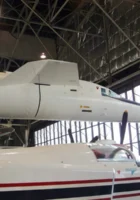
North American XB-70 Valkyrie

North American XB-70 Valkyrie

CountryUSA
RoleStrategic bomber – Supersonic research aircraft
First flight21 September 1964
Built2

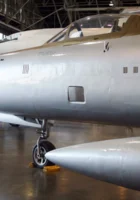
The North American Aviation XB-70 Valkyrie was the prototype version of the planned B-70 nuclear-armed, deep-penetration strategic bomber for the United States Air Force Strategic Air Command. Designed in the late 1950s by North American Aviation, the six-engined Valkyrie was capable of cruising for thousands of miles at Mach 3+ while flying at 70,000 feet (21,000 m).

Source: North American XB-70 Valkyrie on Wikipedia

Continue reading

Views : 4358

Republic XF-84H Thunderscreech

Republic XF-84H Thunderscreech

CountryUSA
RoleExperimental fighter
First flight22 July 1955
Built2

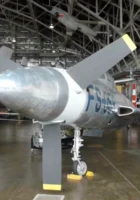
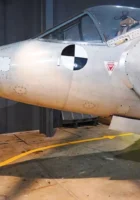
The Republic XF-84H “Thunderscreech” was an experimental turboprop aircraft derived from the F-84F Thunderstreak. Powered by a turbine engine that was mated to a supersonic propeller, the XF-84H had the potential of setting the unofficial air speed record for propeller-driven aircraft, but was unable to overcome teething aerodynamic deficiencies, resulting in the program’s cancellation

Source: Republic XF-84H Thunderscreechon Wikipedia

Continue reading

Views : 1850

Velie Monocoupe Model 70

Velie Monocoupe

CountryUSA
RoleSport aircraft
First flight1928
Built22+99

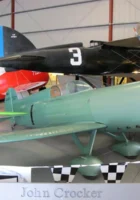
The Velie Monocoupe was an American general aviation aircraft manufactured from 1927-1929 by the Mono-Aircraft Corp, a division of Velie Motors Corporation, (founded by Willard L. Velie, maternal grandson of John Deere).

Source: Velie Monocoupe on Wikipedia

Continue reading

Views : 1536

McDonnell XF-85 Goblin

McDonnell XF-85 Goblin

CountryUSA
RolePrototype interceptor aircraft
First flight9 May 1949
Built2

The McDonnell XF-85 Goblin is an American prototype fighter aircraft conceived during World War II by McDonnell Aircraft. It was intended to deploy from the bomb bay of the giant Convair B-36 bomber as a parasite fighter. The XF-85’s intended role was to defend bombers from hostile interceptor aircraft, a need demonstrated during World War II. McDonnell built two prototypes before the Air Force (USAAF) terminated the program.

Source: McDonnell XF-85 Goblin on Wikipedia

Continue reading

Views : 2636

Republic XF-91 Thunderceptor

Republic XF-91

CountryUSA
RolePrototype interceptor aircraft
First flight9 May 1949
Built2

The Republic XF-91 Thunderceptor (originally designated XP-91) is a mixed-propulsion prototype interceptor aircraft, developed by Republic Aviation. The aircraft would use a jet engine for most flight, and a cluster of four small rocket engines for added thrust during climb and interception. The design was largely obsolete by the time it was completed due to the rapidly increasing performance of contemporary jet engines, and only two prototypes were built. One of these was the first American fighter to exceed Mach 1 in level flight.

Source: Republic XF-91 on Wikipedia

Continue reading

Views : 2288

Convair XF-92A Dart

Convair XF-92

CountryUSA
RoleInterceptor aircraft
First flight18 September 1948
Built1

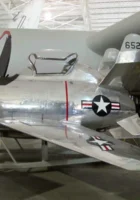
The Convair XF-92 (originally designated XP-92) was an early American delta wing aircraft. Originally conceived as a point-defence interceptor, the design was later used purely for experimental purposes. However, it led Convair to use the delta-wing on a number of designs, including the F-102 Delta Dagger, F-106 Delta Dart, B-58 Hustler, the US Navy’s F2Y Sea Dart as well as the VTOL FY Pogo.

Source: Convair XF-92 on Wikipedia

Continue reading

Views : 1761

Pitcairn PA-5 Mailwing

Pitcairn PA-5 Mailwing

CountryUSA
RoleMail Carrier and Sport
First flight1927
Built106

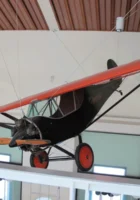
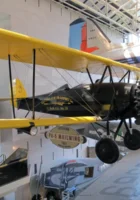
The Pitcairn Mailwings were developed by Pitcairn to carry air mail for the U.S. Postal Service. Of simple and robust construction, they also had relatively benign flying characteristics. They were constructed using chrome-moly steel tube and square-section spruce spars with spruce and plywood built-up ribs. The fuselage was faired using wooden formers and covered with fabric. The tail sections were built up from steel tube and fabric-covered. The Pitcairn Mailwing had a ground-adjustable fin and in-flight adjustable tailplane, features not often seen in other aircraft.

Source: Pitcairn PA-5 Mailwing on Wikipedia

Continue reading

Views : 1051

Hawker P.1127

Hawker Siddeley P.1127

CountryUK
TypeExperimental V/STOL aircraft
First flight19 November 1960 (P.1127) – 7 March 1964 (Kestrel)
Built6 P.1127s – 9 Kestrels

The Hawker P.1127 and the Hawker Siddeley Kestrel FGA.1 are the experimental and development aircraft that led to the Hawker Siddeley Harrier, the first vertical and/or short take-off and landing (V/STOL) jet fighter-bomber. P.1127 development began in 1957, taking advantage of the Bristol Engine Company’s choice to invest in the creation of the Pegasus vectored-thrust engine. Testing began in July 1960 and by the end of the year the aircraft had achieved both vertical take-off and horizontal flight.

Source: Hawker Siddeley P.1127 on Wiki

Continue reading

Views : 2279

de Haviland DH112 Venom

de Havilland DH112 Venom

CountryUK
TypeSingle-engined jet
PhotographRandy Ray
LocateRoyal Air Force Museum Cosford, UK
DescriptionAlbum of 20 photos walk-around of «de Havilland DH112 Venom»

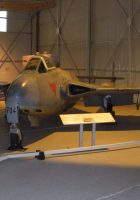
Photo gallery of a de Havilland DH112 Venom, The de Havilland DH 112 Venom was a British postwar single-engined jet aircraft developed from the de Havilland Vampire. It served with the Royal Air Force as a single-seat fighter-bomber and two-seat night fighter. The Venom was an interim between the first generation of British jet fighters – straight-wing aircraft powered by centrifugal flow engines such as the Gloster Meteor and the Vampire and later swept wing, axial flow-engined designs such as the Hawker Hunter and de Havilland Sea Vixen. The Venom was successfully exported, and saw service with Iraq, New Zealand, Sweden, Switzerland and Venezuela. The Sea Venom was a navalised version for carrier operation.

Source: de Havilland DH112 Venom on Wiki

Continue reading

Views : 1161