USS Albacore

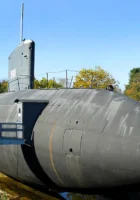
USS Albacore

CountryUSA
RoleResearch submarine
Launched1 August 1953
Decommissioned9 December 1972

USS Albacore (AGSS-569) was a unique research submarine that pioneered the American version of the teardrop hull form (sometimes referred to as an “Albacore hull”) of modern submarines. The revolutionary design was derived from extensive hydrodynamic and wind tunnel testing, with an emphasis on underwater speed and maneuverability. She was the third ship of the United States Navy to be named for the albacore. Her keel was laid down on 15 March 1952 by the Portsmouth Naval Shipyard of Kittery, Maine. She was launched on 1 August 1953, sponsored by Mrs. J. E. Jowers, the widow of Chief Motor Machinist’s Mate Arthur L. Stanton, lost with the second Albacore (SS-218), and commissioned on 6 December 1953 with Lieutenant Commander Kenneth C. Gummerson in command

Source: USS Albacore on Wikipedia

Continue reading

Views : 3188

Fairchild Argus Mk.III

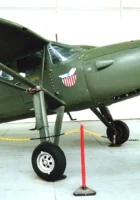
Fairchild 24

CountryUSA
RoleSTOL bush plane
First flight1932
Built2232

The Fairchild Model 24, also called the Fairchild Model 24 Argus/UC-61 Forwarder or Fairchild Model 24 Argus, is a four-seat, single-engine monoplane light transport aircraft designed by the Fairchild Aviation Corporation in the 1930s. It was adopted by the United States Army Air Corps as UC-61 and also by the Royal Air Force. The Model 24 was itself a development of previous Fairchild models and became a successful civil and military utility aircraft.

Source: Fairchild 24 on Wikipedia

Continue reading

Views : 1601

USS Pampanito

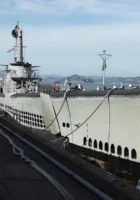
USS Pampanito (SS-383)

CountryUSA
ClassBalao-class diesel-electric submarine
Launched12 July 1943

USS Pampanito (SS-383/AGSS-383), a Balao-class submarine, was a United States Navy ship, the third one named for the pompano fish. She completed six war patrols from 1944 to 1945 and served as a Naval Reserve Training ship from 1960 to 1971. She is now a National Historic Landmark, preserved as a memorial and museum ship in the San Francisco Maritime National Park Association located at Fisherman’s Wharf.

Source: USS Pampanito on Wikipedia

Continue reading

Views : 2156

FFV J22

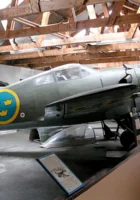
FFVS J 22

CountrySweden
ClassFighter
First flightSeptember 1942
Built198

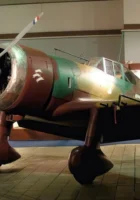
The FFVS J 22 is a Swedish single-engine fighter aircraft developed for the Swedish Air Force during World War II. At the onset of World War II, the Swedish Air Force (Flygvapnet) was equipped with largely obsolete Gloster Gladiator (J 8) biplane fighters. To augment this, Sweden ordered 120 Seversky P-35 (J 9) and 144 P-66 Vanguard (J 10) aircraft from the United States. However, on 18 June 1940 after the German occupation of Norway, the United States declared an embargo against exporting weapons to any nation other than Great Britain.

Source: FFVS J 22 on Wikipedia

Continue reading

Views : 2967

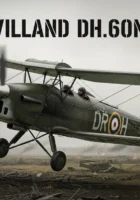
de Havilland DH.60M Moth

de Havilland DH.60 Moth

CountryUK
ClassTrainer
First flight22 February 1925
BuiltUnknow

The de Havilland DH.60 Moth is a 1920s British two-seat touring and training aircraft that was developed into a series of aircraft by the de Havilland Aircraft Company. The DH.60 was developed from the larger DH.51 biplane. The first flight of the Cirrus powered prototype DH.60 Moth (registration G-EBKT) was carried out by Geoffrey de Havilland at the works airfield at Stag Lane on 22 February 1925. The Moth was a two-seat biplane of wooden construction, it had a plywood covered fuselage and fabric covered surfaces, a standard tailplane with a single tailplane and fin. A useful feature of the design was its folding wings which allowed owners to hangar the aircraft in much smaller spaces. The then Secretary of State for Air Sir Samuel Hoare became interested in the aircraft and the Air Ministry subsidised five flying clubs and equipped them with Moths.

Source: de Havilland DH.60 Moth on Wikipedia

Continue reading

Views : 2869

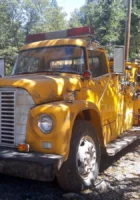
International Harvester Loadstar Firetruck

International Harvester Loadstar Firetruck

CountryUSA
Class4×2 dump truck
Production1962-1976
Built940000+

The Loadstar was a medium-duty short-hood conventional introduced in 1962. When introduced it had a grey grill and “butterfly” hood but in 1971 a one-piece tilting hood became standard. The cab, also used on the Fleetstar, had been introduced on the A series in 1957. Cab-over-engine models were also available until replaced by the Cargostar in 1971. The Loadstar was used for local delivery, construction, farming, and as a semi-tractor. With all wheel drive it was also used for fire engines, snow-plows, and utility work. Schoolmaster chassis were used for vendor school-bus bodies. The Loadstar conventionals were replaced by the S Series in 1977.

Source: International Harvester Loadstar Firetruck on Wikipedia

Continue reading

Views : 2075

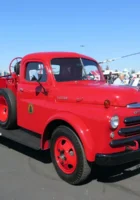
1950 Dodge Fire Truck

Dodge Power Wagon

CountryUSA
ClassFull-size pickup truck
Production1945–1980
BuiltUnknow

The Dodge Power Wagon is a four wheel drive medium duty truck that was produced in various model series from 1945 to 1981 by Dodge, then as a nameplate for the Dodge Ram from 2005 to 2013, and, most recently ‘13-present, as an individual model marketed by Ram Trucks. It was developed as the WDX truck, and until about 1960 it was internally known by its engineering code T137 – a name still used for the original series by enthusiasts.

Source: Dodge Power Wagon on Wikipedia

Continue reading

Views : 1437

Miles Magister Mk.I

Miles Magister

CountryUK
RoleTrainer
First flight20 March 1937
Built1303

The Miles M.14 Magister is a British two-seat monoplane basic trainer aircraft built by the Miles Aircraft for the Royal Air Force and Fleet Air Arm. Affectionately known as the Maggie, the Magister was based on Miles’ civilian Hawk Major and Hawk Trainer and was the first monoplane designed specifically as a trainer for the RAF. As a low-wing monoplane, it was an ideal introduction to the Spitfire and Hurricane for new pilots. Its sister design, the Miles Master was an advanced trainer also built by Phillips & Powis at Woodley.

Source: Miles Magister on Wikipedia

Continue reading

Views : 2297

SAAB 340 AEW

SAAB 340 AEW

CountrySweden
RoleAEW&C aircraft
First flight1994
Built12

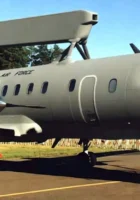
The Saab 340 AEWC is a Swedish airborne early warning and control (AEW&C) aircraft; a variant of the Saab 340 aircraft is designated S 100B Argus by the Swedish Air Force. Variants: Saab 340B AEW / S 100B Argus (FSR-890) Erieye, for the Thai Air Force. Saab 340B AEW-200 (IS-340) Erieye Saab 340B AEW-300 / S 100D Argus

Source: SAAB 340 AEW on Wikipedia

Continue reading

Views : 2043

SAAB AJ.37

Saab 37 Viggen

CountrySweden
RoleAttack, fighter, reconnaissance
First flight8 February 1967
Built329

The Saab 37 Viggen (“Thunderbolt”) is a retired Swedish single-seat, single-engine, short-medium range combat aircraft. Development work on the type was initiated at Saab in 1952 and, following the selection of a radical delta wing configuration, the resulting aircraft performed its first flight on 8 February 1967 and entered service in 21 June 1971. The Viggen holds the distinction of being the first canard design to be produced in quantity. The Viggen was also the most advanced fighter jet in Europe until the introduction of the Panavia Tornado into operational service in 1981

Source: Saab 37 Viggen on Wikipedia

Continue reading

Views : 4930