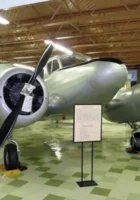
Cessna AT-17 Bobcat

Cessna AT-17 Bobcat

OrszágUsa
SzerepetÖtüléses könnyű szállítás
TervezettMarch 26, 1939
Beépített5422

A Cessna AT-17 Bobcat was a twin-engined advanced trainer aircraft designed and made in the United States, and used during World War II to bridge the gap between single-engined trainers and twin-engined combat aircraft. The AT-17 was powered by two Jacobs R-755-9 radial engines. The commercial version was the Model T-50, from which the AT-17 was developed.

Forrás: Cessna AT-17 Bobcat a Wikipédián

Olvasd tovább

Megtekintették : 1844

V-100 Kommandó

Cadillac Gage Commando

OrszágUsa
SzerepetPáncélozott autó
TervezettJune 1962
Beépített3200+

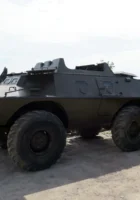
A Cadillac Gage kommandó, frequently denoted as the M706 in US military service, was an American armored car designed to be amphibious. It was engineered by Cadillac Gage specifically for the United States Military Police Corps during the Vietnam War as an armed convoy escort vehicle. The Commando was one of the first vehicles to combine the traditionally separate roles of an armored personnel carrier and a conventional armored car, much like the Soviet BTR-40. Its notable height, amphibious capability, and waterproofed engine allowed American crews to fight effectively in the jungles of Vietnam by observing their opponents over thick vegetation and fording the country’s deep rivers

Forrás: Cadillac Gage kommandó a Wikipédián

Olvasd tovább

Nézetek : 2383

SAAB B17

SAAB B17

OrszágSvédország
SzerepetBomber, reconnaissance
Első repülés18 May 1940
Beépített323

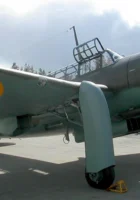
A Saab 17 was a Swedish bomber-reconnaissance aircraft. The project was initiated in response to a request in 1938 from the Swedish air force for a reconnaissance aircraft that could replace the Fokker S 6. Design work began at the end of the 1930s as the L 10 by ASJA, but after the merger with Saab in 1939 it was renamed Saab 17. The wings were reinforced to make it possible for use as a dive bomber. Since there was a shortage of engines the aircraft were flown to their destination, where the engines were removed and returned for use by the next delivery. The aircraft was also made in three versions with different engines.

Forrás: SAAB B17 a Wikipédián

Olvasd tovább

Megtekintették : 2727

USS Barry romboló

USS Barry (DD-933)

OrszágUsa
Class – TypeForrest Sherman – class destroyer
Indított1 October 1955
Leszerelt5 November 1982

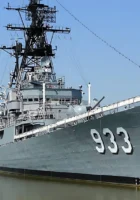
USS Barry (DD-933) was one of eighteen Forrest Sherman–class destroyers of the United States Navy, and was the third US destroyer to be named for Commodore John Barry. Commissioned in 1954, she spent most of her career in the Caribbean, Atlantic, and Mediterranean, but also served in the Vietnam War, for which she earned two battle stars. Another notable aspect of her service was the Cuban Missile Crisis in 1962. Decommissioned in 1982, she became the “Display Ship Barry” (DS Barry), a museum ship at the Washington Navy Yard in Washington, D.C., in 1984.

Forrás: USS Barry (DD-933) on Wikipedia

Olvasd tovább

Views : 1836

USS Salem

USS Salem (CA-139)

OrszágUsa
Class – TypeDes Moines-class – Heavy cruiser
Indított25 March 1947
Leszerelt30 January 1959

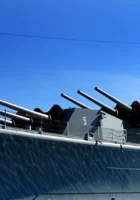
A harmadik USS Salem (CA-139) is one of three Des Moines-class heavy cruisers completed for the United States Navy shortly after World War II. Commissioned in 1949, she was the world’s last heavy cruiser to enter service and the only one still in existence. She was decommissioned in 1959, after serving in the Atlantic and Mediterranean. She is open to the public as a museum ship in Quincy, Massachusetts

Forrás: USS Salem (CA-139) on Wikipedia

Olvasd tovább

Views : 2613

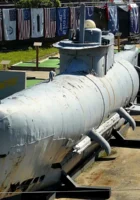
Seehund német törpe tengeralattjáró

Seehund

OrszágGermnay
SzerepetTörpe tengeralattjáró
Termelt1944–1945
Beépített285

A Seehund (German: “seal”), also known as Type XXVII, was a midget submarine manufactured by Nazi Germany during World War II. Designed in 1944 and operated by two-man crews, it was used by the Kriegsmarine (German Navy) during the closing months of the war, sinking nine merchant vessels and damaging an additional three, while losing 35 boats, mostly attributed to bad weather. The French Navy used three captured boats after the war until 1953.

Forrás: Seehund a Wikipédián

Olvasd tovább

Megtekintések : 2284

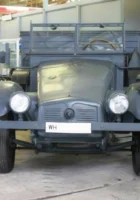
Krupp Protze Kfz

TKrupp Kfz.81 Protze

OrszágGermnay
SzerepetTüzérségi traktor / Haszongépjármű
Termelt1934–1941
Beépített7000

Az L 2 H 43 és L 2 H 143 "Krupp-Protze” (unofficial designation) was a six-wheeled 6×4 German truck and artillery tractor produced between 1934 and 1941 and heavily used in World War II. It was powered by a 4-cylinder, 55 hp or, from 1936, 60 hp Krupp M 304 petrol engine. Its main purpose was to tow artillery, especially the PaK 36, and transport motorized infantry. This vehicle was extensively used on the Eastern Front, during the North African campaign and in France and Sicily. The “Krupp-Protze” was of relatively advanced design. Its fuel consumption was relatively high (24 Litres / 100 km on road) in comparison to the comparable Opel Blitz 1.5 t truck (16.5 liters / 100 km, produced 1938 – 1942). Total production was about 7,000 units.

Forrás: Krupp Kfz.81 Protze leírása a Wikipédiában

Olvasd tovább

Megtekintették : 4607

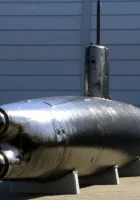
"A" típusú törpe tengeralattjáró

Type A Midget Submarine

OrszágJapán Birodalom
OsztályKō-hyōteki osztályú tengeralattjáró
IdőszakA második világháború
BeépítettIsmeretlen

A A típus Ko-hyoteki (甲標的甲型 Kō-hyōteki kō-gata, Target ‘A’, Type ‘A’) class was a class of Japanese midget submarines (Ko-hyoteki) used during World War II. They had hull numbers but no names. For simplicity, they are most often referred to by the hull number of the mother submarine. Thus, the midget carried by I-16-class submarine was known as I-16’s boat, or “I-16tou.” This class was followed by: Type B (甲標的乙型 Kō-hyōteki otsu-gata), Type C (甲標的丙型 Kō-hyōteki hei-gata), and Type D (甲標的丁型 Kō-hyōteki tei-gata), the last one better known as Kōryū

Forrás: A törpe tengeralattjáró a Wikipédián

Olvasd tovább

Megtekintették : 2076

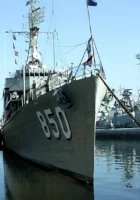
USS Joseph Kennedy

USS Joseph P. Kennedy

OrszágUsa
OsztályHajtómű-osztályú romboló
Indított1945. július 26.
FelhasználónévBalázs Zoltán

USS József P. Kennedy Jr. (DD-850) az Egyesült Államok haditengerészetének egykori hajtómű osztályú rombolója. A hajót Joseph P. Kennedy Jr. hadnagyról, egy tengerészeti pilótaról, idősebb Joseph P. Kennedy volt nagy-britanniai nagykövet fiáról és John F. Kennedy leendő elnök bátyjáról nevezték el. Joseph P. Kennedy Jr. 1973-ig szolgált a modernizáció megszakításával. Szolgálatának csúcspontjai közé tartozik Kuba blokádja a kubai rakétaválság idején, valamint a Gemini 6 és a Gemini 7 felszín alatti helyreállítási csapatai. Joseph P. Kennedy Jr. látható, mint egy múzeum hajó Battleship Cove, Fall River, Massachusetts. 1976-ban felkerült a Történelmi Helyek Országos Nyilvántartásába, és 1989-ben nemzeti történelmi mérföldkőnek jelölték ki, mint a kevés fennmaradt Gearing-osztályú romboló egyikét.

Forrás: USS Joseph P. Kennedy a Wikipédián

Olvasd tovább

Megtekintették : 1028

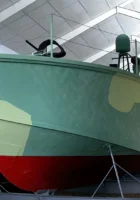
PT Hajó PT-617

PT boat

OrszágUsa
OsztályÁgyúosztályú romboló kíséret
Indított1944. február 20.
AzonosításDE-766

Egy PT hajó (a Patrol Torpedón Boat rövidítése) egy torpedófegyveres gyorstámadó hajó (MTB) volt, amelyet az Egyesült Államok haditengerészete használt a második világháborúban. Kicsi, gyors és olcsó volt megépíteni, manőverezhetősége és sebessége miatt értékelték, de a háború elején akadályozták a hatástalan torpedók, a korlátozott fegyverzet és a viszonylag törékeny konstrukció, amely néhány változatot a parti vizekre korlátozott.

Forrás: PT hajó a Wikipédián

Olvasd tovább

Views : 2434