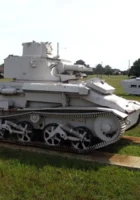
Light Tank Mk VI

Light Tank Mk VI

CountryUK
RoleLight tank
In service1936–1942
Built1682

The Tank, Light, Mk VI was a British light tank, produced by Vickers-Armstrongs in the late 1930s, which saw service during the Second World War. The Tank, Light, Mk VI was the sixth in the line of light tanks built by Vickers-Armstrongs for the British Army during the interwar period. The company had achieved a degree of standardization with their previous five models, and the Mark VI was identical in all but a few respects.

Source: Light Tank Mk VI on Wikipedia

Continue reading

Views : 2683

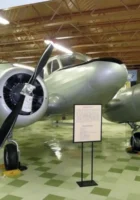
Cessna AT-17 Bobcat

Cessna AT-17 Bobcat

CountryUSA
RoleFive-seat light transport
DesignedMarch 26, 1939
Built5422

The Cessna AT-17 Bobcat was a twin-engined advanced trainer aircraft designed and made in the United States, and used during World War II to bridge the gap between single-engined trainers and twin-engined combat aircraft. The AT-17 was powered by two Jacobs R-755-9 radial engines. The commercial version was the Model T-50, from which the AT-17 was developed.

Source: Cessna AT-17 Bobcat on Wikipedia

Continue reading

Views : 2424

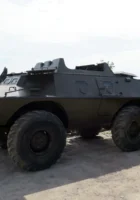
V-100 Commando

Cadillac Gage Commando

CountryUSA
RoleArmored car
DesignedJune 1962
Built3200+

The Cadillac Gage Commando, frequently denoted as the M706 in US military service, was an American armored car designed to be amphibious. It was engineered by Cadillac Gage specifically for the United States Military Police Corps during the Vietnam War as an armed convoy escort vehicle. The Commando was one of the first vehicles to combine the traditionally separate roles of an armored personnel carrier and a conventional armored car, much like the Soviet BTR-40. Its notable height, amphibious capability, and waterproofed engine allowed American crews to fight effectively in the jungles of Vietnam by observing their opponents over thick vegetation and fording the country’s deep rivers

Source: Cadillac Gage Commando on Wikipedia

Continue reading

Views : 3035

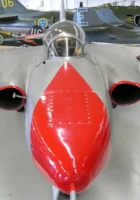
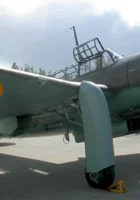
SAAB B17

SAAB B17

CountrySweden
RoleBomber, reconnaissance
First flight18 May 1940
Built323

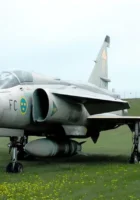
The Saab 17 was a Swedish bomber-reconnaissance aircraft. The project was initiated in response to a request in 1938 from the Swedish air force for a reconnaissance aircraft that could replace the Fokker S 6. Design work began at the end of the 1930s as the L 10 by ASJA, but after the merger with Saab in 1939 it was renamed Saab 17. The wings were reinforced to make it possible for use as a dive bomber. Since there was a shortage of engines the aircraft were flown to their destination, where the engines were removed and returned for use by the next delivery. The aircraft was also made in three versions with different engines.

Source: SAAB B17 on Wikipedia

Continue reading

Views : 3137

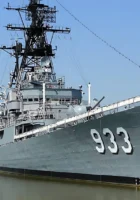
USS Barry Destroyer

USS Barry (DD-933)

CountryUSA
Class – TypeForrest Sherman – class destroyer
Launched1 October 1955
Decommissioned5 November 1982

USS Barry (DD-933) was one of eighteen Forrest Sherman–class destroyers of the United States Navy, and was the third US destroyer to be named for Commodore John Barry. Commissioned in 1954, she spent most of her career in the Caribbean, Atlantic, and Mediterranean, but also served in the Vietnam War, for which she earned two battle stars. Another notable aspect of her service was the Cuban Missile Crisis in 1962. Decommissioned in 1982, she became the “Display Ship Barry” (DS Barry), a museum ship at the Washington Navy Yard in Washington, D.C., in 1984.

Source: USS Barry (DD-933) on Wikipedia

Continue reading

Views : 2273

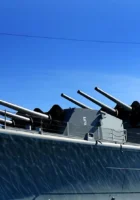
USS Salem

USS Salem (CA-139)

CountryUSA
Class – TypeDes Moines-class – Heavy cruiser
Launched25 March 1947
Decommissioned30 January 1959

The third USS Salem (CA-139) is one of three Des Moines-class heavy cruisers completed for the United States Navy shortly after World War II. Commissioned in 1949, she was the world’s last heavy cruiser to enter service and the only one still in existence. She was decommissioned in 1959, after serving in the Atlantic and Mediterranean. She is open to the public as a museum ship in Quincy, Massachusetts

Source: USS Salem (CA-139) on Wikipedia

Continue reading

Views : 3084

Seehund German Midget Submarine

Seehund

CountryGermnay
RoleMidget submarine
Produced1944–1945
Built285

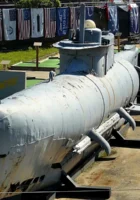
The Seehund (German: “seal”), also known as Type XXVII, was a midget submarine manufactured by Nazi Germany during World War II. Designed in 1944 and operated by two-man crews, it was used by the Kriegsmarine (German Navy) during the closing months of the war, sinking nine merchant vessels and damaging an additional three, while losing 35 boats, mostly attributed to bad weather. The French Navy used three captured boats after the war until 1953.

Source: Seehund on Wikipedia

Continue reading

Views : 2883

Krupp Protze Kfz

TKrupp Kfz.81 Protze

CountryGermnay
RoleArtillery tractor / Utility truck
Produced1934–1941
Built7000

The L 2 H 43 and L 2 H 143 “Krupp-Protze” (unofficial designation) was a six-wheeled 6×4 German truck and artillery tractor produced between 1934 and 1941 and heavily used in World War II. It was powered by a 4-cylinder, 55 hp or, from 1936, 60 hp Krupp M 304 petrol engine. Its main purpose was to tow artillery, especially the PaK 36, and transport motorized infantry. This vehicle was extensively used on the Eastern Front, during the North African campaign and in France and Sicily. The “Krupp-Protze” was of relatively advanced design. Its fuel consumption was relatively high (24 Litres / 100 km on road) in comparison to the comparable Opel Blitz 1.5 t truck (16.5 liters / 100 km, produced 1938 – 1942). Total production was about 7,000 units.

Source: Krupp Kfz.81 Protze on Wikipedia

Continue reading

Views : 5634

Type A Midget Submarine

Type A Midget Submarine

CountryEmpire of Japan
ClassKō-hyōteki-class submarine
PeriodWorld War II
BuiltUnknow

The Type A Ko-hyoteki (甲標的甲型 Kō-hyōteki kō-gata, Target ‘A’, Type ‘A’) class was a class of Japanese midget submarines (Ko-hyoteki) used during World War II. They had hull numbers but no names. For simplicity, they are most often referred to by the hull number of the mother submarine. Thus, the midget carried by I-16-class submarine was known as I-16’s boat, or “I-16tou.” This class was followed by: Type B (甲標的乙型 Kō-hyōteki otsu-gata), Type C (甲標的丙型 Kō-hyōteki hei-gata), and Type D (甲標的丁型 Kō-hyōteki tei-gata), the last one better known as Kōryū

Source: Type A Midget Submarine on Wikipedia

Continue reading

Views : 2455

USS Joseph Kennedy

USS Joseph P. Kennedy

CountryUSA
ClassGearing-class destroyer
Launched26 July 1945
NicknameJoey P

USS Joseph P. Kennedy Jr. (DD-850) is a former United States Navy Gearing-class destroyer. The ship was named after Lieutenant Joseph P. Kennedy Jr., a naval aviator, son of the former Ambassador to Britain, Joseph P. Kennedy Sr., and older brother of future President John F. Kennedy. Joseph P. Kennedy Jr. served, with interruptions for modernization, until 1973. Among the highlights of her service are the blockade of Cuba during the Cuban Missile Crisis and the afloat recovery teams for Gemini 6 and Gemini 7. Joseph P. Kennedy Jr. is on display as a museum ship in Battleship Cove, Fall River, Massachusetts. She was added to the National Register of Historic Places in 1976, and designated a National Historic Landmark in 1989 as one of a small number of surviving Gearing-class destroyers.

Source: USS Joseph P. Kennedy on Wikipedia

Continue reading

Views : 1388