Kleines Kettenkraftrad - Waffen Arsenal Sonderband 69

Waffen Arsenal

Sujet

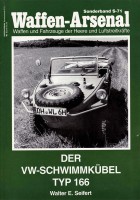
Kleines Kettenkraftrad - HK101 - Sdkfz.2

RéfS-69

Signed documentation Waffen Arsenal la revue "Small chain wheel - Weapons Arsenal Special Band 69" .

The SdKfz 2, better known as Kleines Kettenkraftrad HK 101 ou Kettenkrad est un “Sonderkraftfahrzeug” (SdKfz) ce qui signifie véhicule spécial à moteur. Il s’agit d’un modèle d’autochenille. Produit de 1940 à 1948, il ne transporte que 2 hommes, mais atteint 70 km/h et se comporte très bien sur tout type de terrain. C’était au départ un petit tracteur pour troupes aéroportées. Ce véhicule a été conçu pour être livré par des avions Junkers Ju 52, mais pas par parachute. Le véhicule avait l’avantage d’être le seul petit tracteur d’artillerie, assez petit pour tenir dans la soute du Ju 52. Il a été utilisé comme transport de troupe, mais aussi pour d’autres missions, notamment le déroulage de câbles téléphoniques ou le tractage de pièces d’artillerie légères. Il pesait à vide 1235 kg.

Source: Wikipedia

Continue reading

Views: 835

Das waffen arsenal SH030 - Die Stalinorgel

Waffen Arsenal

SeriesWaffen Arsenal
PeriodWorld War II
Sujet

Die Stalinorgel

Réf

S-30

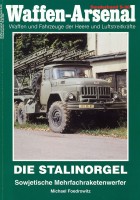
Signed documentation Waffen Arsenal the magazine "Die Stalinorgel - Waffen Arsenal Sonderband 30" .

The Katyusha (en russe Катюша), diminutif russe de Catherine, est le surnom donné par les Soviétiques à un lance-roquettes en rafales de la Seconde Guerre mondiale. Ce nom vient de la chanson traditionnelle Katioucha. Surnommé par les Allemands « orgue de Staline » (Stalinorgel) because of its characteristics, it consisted of a truck firing rockets in bursts. Several Katyusha batteries were usually lined up, with the aim of creating a very significant barrage and destruction. Their formidable firepower was nevertheless impaired by a strong inaccuracy of the shot.

Continue reading

Views: 1035

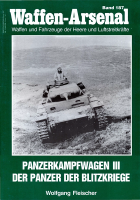
Panzerkampfwagen III - Der Panzer Der Blitzkrige - Waffen Arsenal 187

Waffen Arsenal

SeriesWaffen Arsenal
Sujet

Armored Combat Car III - PzKpfw III

Period

World War II

Réf

187

Signed documentation Waffen Arsenal la revue "Panzerkampfwagen III - The Panzer Der Blitzkrige - Weapons Arsenal 183" .

The Panzerkampfwagen III (PzKpfw III), often abbreviated as Panzer III is a German tank, designed in the late 1930s and used extensively during the first phase of World War II. It was developed to engage enemy armoured vehicles, while the contemporary Panzer IV had been intended to provide support fire to armoured formations. However, with the emergence of increasingly protected Allied tanks, only the Panzer IV was able to carry the weapons capable of destroying them, and it supplanted the SdKfz 141 as the main tank of the Wehrmacht.

Source: Panzerkampfwagen III on Wikipedia

Continue reading

Views : 3931

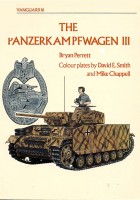
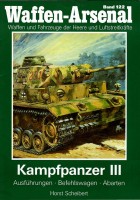
Das waffen arsenal 122 - Kampfpanzer III

Waffen Arsenal

Series Waffen Arsenal
Sujet

Panzerkampfwagen III

Réf122

Signed documentation Waffen Arsenal la revue «Panzerkampfwagen III – Waffen Arsenal 122» .

The Panzerkampfwagen III (PzKpfw III), often abbreviated as Panzer III, was a German tank designed in the late 1930s and used extensively during the first phase of World War II. It was developed to engage enemy armoured vehicles, while the contemporary Panzer IV had been intended to provide support fire to armoured formations. However, with the emergence of increasingly protected Allied tanks, only the Panzer IV was able to ship weapons capable of destroying them, and it supplanted the Panzer III as the main tank of the Wehrmacht.

Source: Wikipedia

Continue reading

Views : 915

Flak 8,8cm - Wydawnictwo Militaria 147

Waffen Arsenal

SeriesWaffen Arsenal
Sujet

Flak 8.8cm

Réf147
PeriodWorld War II

Signed documentation Waffen Arsenal magazine "Flak 8.8cm - Wydawnictwo Militaria 147" .

Flak is the abbreviation for the German word Fliegerabwehrkanone, meaning "anti-aircraft gun." The word can be taken in two ways: flak (n.f., itself abbreviation of Flakartillerie) being the generic name of static anti-aircraft battery units, or DCA units attached to combat units; the flak (n.m.) may designate an anti-aircraft gun (for example, Flak 43).

Source: Flak 8.8cm on Wikipedia

Continue reading

Views : 1306

Das waffen arsenal 092 - Deutscher 8-Rad-Panzerspahwagen

Waffen Arsenal

SeriesWaffen Arsenal
Sujet

8 Rad Panzersp-hwagen

Réf092

Signed documentation Waffen Arsenal magazine "8 Rad Panzersp-hwagen - Waffen Arsenal 092" .

The term Schwerer Panzersp-hwagen (heavy armoured reconnaissance vehicle) referred to all the 6- or 8-wheel vehicles used by the Wehrmacht during the Second World War. They played the important role of reconnaissance, ahead of panzer divisions, in order to estimate the enemy forces to be fought.

Source: Wikipedia

Continue reading

Views : 738

Das waffen arsenal 060 - Panzerjäger (2)

Waffen Arsenal

PublisherWaffen Arsenal
PeriodWorld War II
Sujet

Tank fighters

Réf060

Signed documentation Waffen Arsenal la revue "Panzerjäger - Weapons Arsenal 060" .

Un chasseur de char est un engin blindé, le plus souvent chenillé, destiné à combattre et à détruire les autres blindés. Ceci en fait une unité particulière, spécialisée, possédant les qualités universellement reconnues comme nécessaires pour un char d’assaut : mobilité, puissance de feu, protection. Plus qu’un autre char, il doit satisfaire à ces conditions : les autres chars sont aussi employés pour réduire l’infanterie ou parfois même les fortifications légères ennemies. Ils satisfont donc à d’autres nécessités, ce sont des unités plus polyvalentes. Ces engins sont apparus pendant la Seconde Guerre mondiale, et leur importance a diminué depuis 1945. Durant la Seconde Guerre mondiale, les unités blindées étaient plus diversifiées qu’aujourd’hui, où l’on ne retrouve sur la plupart des théâtres d’opération que des MBT (main battle tanks, par exemple le char Leclerc), des véhicules de l’avant blindés, plus légers et destinés au soutien des troupes d’infanterie mécanisées, et des transports de troupes blindés. Le rôle de chasseur de char est aujourd’hui plutôt dévolu à l’hélicoptère de combat. Les armées de terre se sont munies de ces véhicules spécialisés, plus particulièrement la Wehrmacht et l’US Army, ainsi que toutes les autres puissances alliées ayant massivement dépendu du matériel américain durant cette période. À l’origine, le besoin pour ces véhicules est venu d’une supériorité matérielle de l’arme blindée ennemie, et ce dans les deux cas.

Source: Wikipedia

Continue reading

Views : 627

Chars IS - Joseph Staline - Wydawnictwo 306

Wydawnictwo Militaria

SeriesTank Power
Sujet

TANKS IS - Joseph Stalin

Réf306

Signed documentation Wydawnictwo Militaria the book "Chars IS - Joseph Stalin - Wydawnictwo 306" .

The series of Soviet Josef Stalin tanks IS-1, IS2, IS-3 a son origine dans le développement du prototype KV-13, qui devait allier la protection d’un char lourd avec la mobilité d’un char moyen. Ce programme avait donné lieu à un char de 31,7 tonnes, armé d’un canon de 76,2 mm, caractérisé surtout par un emploi généralisé d’éléments coulés pour la caisse et la tourelle. Il combinait le moteur et la suspension des chars KV avec les chenilles du Char T-34, la caisse était blindée à 120 mm et la tourelle à 85 mm, mais les 600 ch du moteur lui permettait d’atteindre 55 km/h. Cependant il présentait de nombreuses imperfections et défauts de jeunesse, une accélération insuffisante, ce qui fut résolu dès juillet en adoptant la boîte dessinée pour le KV-1s, et de fréquents déraillements de chenilles qui furent réglés par l’emploi d’un nouveau modèle apparu sur les deux nouveaux exemplaires produits en décembre, qui apportaient de nombreuses autres améliorations, dont des tourelles redessinées.

Source: Wikipedia

Continue reading

Views : 1212

Panzerfahre Gepanzerte Landwasserschlepper Prototype Nr.I - DML 7489

Dragon Model

Ref7489
TopicModel kit
Scale1/72
Subject

Panzerfahre Gepanzerte Landwasserschlepper Prototype Nr.I

A new model from the brand Dragon Model the kit : Panzerfahre Gepanzerte Landwasserschlepper Prototype Nr.I – DML 7489

Features : -Panzerfahre Gepanzerte Landwasserschlepper is authentically produced -Chain links of front and rear hull -Rivets on upper hull are detailed and realistic -Spotlights exhibit extreme detail -Commander’s compartment intricately produced -Air intake accurately presented -Detailed assembly w/3D-designed engine exhaust mufflers -Well-detailed cable drum -Crane is intricately presented -Idler wheels w/correctly detailed parts -Sprocket wheels w/breathtaking detail and multiple delicate parts ; -Road wheels and suspension w/accurate details -One-piece DS tracks reproduced

The Land-Wasser-Schlepper was conceived by Germany as a tracked amphibious tractor in 1936. A small number of this unarmored boat-like vehicle was built and they served on the Eastern Front. However, less well known is the vehicle designed as its successor – the Panzerfahre (abbreviated to “PzF”). The main difference with this vehicle was that it was armored, plus it was conveniently based on the chassis of a Panzer IV Ausf.F tank. Development of the Panzerfahre began in early 1941, and by mid-1942 Magirus had delivered two prototypes. The lightly armored, fully tracked vehicle had a boat-like bow and a propeller at the stern. The vehicle’s main function was combat supply on land and in water. It could tow an amphibious trailer, or alternatively it could work in tandem with another Panzerfahre as a floating ferry platform capable of carrying a 24-ton load. However, as heavier tanks appeared on the scene, the Panzerfahre never went into production because of its inadequate payload.

Source: DML 7489 on Dragon Models

Views : 1205

Panther en action - Wydawnictwo 239

Wydawnictwo Militaria 239

PublisherWydawnictwo Militaria
Réf239
Sujet

Panther in action - Sdkfz.171

Signed documentation Wydawnictwo Militaria the book "Panther in Action - Wydawnictwo 239" .

The Panther tank was a medium tank widely used by the German army during World War II, beginning in mid-1943. Designed to counter the Soviet T-34 tank, from which it was largely inspired, and replace the Panzerkampfwagen III and Panzerkampfwagen IV, it ultimately served alongside them until the end of the war. Until an order from Adolf Hitler, dated February 27, 1944, it was designated as PzKpfw V Panther and, in the ordinance inventory, as Sd.Kfz. 171.

Source: Wikipedia

Continue reading

Views : 788