Wydawnictwo Militaria 191 - Barbarossa 1941 v1

Wydawnictwo Militaria 191

SérieWydawnictwo Militaria
Réf191
SujetBarbarossa

Une documentation signée Wydawnictwo Militaria le livre «Barbarossa 1941 – Wydawnictwo Militaria 191» .

L’opération Barbarossa (en allemand, Unternehmen Barbarossa), nommée en référence à l’empereur Frédéric Barberousse, est le nom de code désignant l’invasion par le IIIe Reich de l’Union des républiques socialistes soviétiques (URSS) pendant la Seconde Guerre mondiale. Déclenchée le 22 juin 1941, un an jour pour jour après la signature de l’armistice entre la France et le IIIe Reich, elle ouvre le front de l’Est qui devient le principal théâtre d’opérations de la guerre terrestre en Europe (de 1941 à 1945, 80 % des pertes de la Wehrmacht sont subies sur le front russe1) et le facteur crucial dans le succès ou la défaite du Troisième Reich nazi. Ce front va être le théâtre des plus grandes et des plus sanglantes batailles terrestres de la Seconde Guerre mondiale. Cette invasion marque aussi un tournant dans la guerre, jusqu’alors encore assez localisée et européenne. Elle va bientôt embraser le monde entier.

Source: Wikipedia

Continue reading

Views : 505

Wydawnictwo Militaria 137 - Tiger Color Vol 2

Militaria Publishing House 137

SeriesWydawnictwo Militaria
Réf136
Sujet

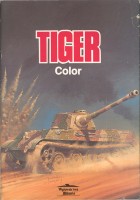
Panzerkampfwagen VI – TIGER – Sdkfz.181

Signed documentation Wydawnictwo Militaria le livre «Panzerkampfwagen VI – TIGER – Military Publishing House 137» .

The Tiger I (Tigre), char d’assaut lourd allemand, en service de 1942 à 1945, est l’un des chars les plus connus de la Seconde Guerre mondiale, bien qu’il n’ait été que peu produit par rapport au T-34 soviétique ou au Sherman américain. Ce sont ses dimensions, ses lignes très carrées, sa résistance au combat, sa puissance ainsi que les équipages expérimentés l’ayant mené au feu qui ont marqué les esprits, notamment du fait de la propagande allemande. Son développement a commencé en 1937 et, quand il apparaît pour la première fois sur le front, le 29 août 1942, près de Léningrad, le Tigre I est le char techniquement le plus avancé, le mieux protégé et le plus puissant aligné par l’Axe, affichant une mobilité limitée mais exceptionnelle pour un engin qui fait plus de deux fois le poids de ses prédécesseurs et de la majorité de ses adversaires chenillés. Mais le char lourd, outre de sa production faible, a pâti tout au long de sa carrière de sa mécanique très fragile réduisant considérablement sa disponibilité au feu, de sa mise en œuvre opérationnelle rendue difficile par sa faible autonomie, souffrant également de son poids excessif. Construit à seulement 1 350 exemplaires, il n’a été que rarement endivisionné mais plutôt engagé dans des unités indépendantes.

Source: Wikipedia

Continue reading

Views : 833

NEW VANGUARD 26

NEW VANGUARD 26

SérieNew Vanguard
Réf26
ISBN9781855328440
AuteurBryan Perrett
IllustrateurTerry Hadler

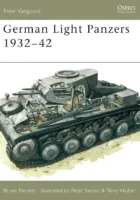
Un livre signé Osprey Publishing le livre «German Light Panzers 1932–42 – NEW VANGUARD 26» .

The light tanks of the Panzerwaffe make a fascinating subject for technical and historical study. Operation Barbarossa was the light tanks’ swan song: thoroughly experienced and at the peak of self-confidence, the Panzergruppen brought Moscow to almost within Hitler’s grasp. However, the effectiveness and popularity of the light panzers was only proven because Hitler’s Panzerwaffe (despite their technical excellence) was poorly equipped. The critically short supply of the Panzerkampfwagen III and IV placed an ever-increasing onus on the light tanks that filled out the Panzerwaffe’s ranks during the glory years. In this book, Bryan Perrett examines the evolution of the PzKpfw I and II.

Source: Osprey Publishing

Continue reading

Views : 475

M3 Infantry Half-Track 1940–73 - NEW VANGUARD 11

NEW VANGUARD 11

SérieNew Vanguard
Réf11
ISBN9781855324671
AuteurSteven J Zaloga

A book by Osprey Publishing le livre «M3 Infantry Half-Track 1940–73 – NEW VANGUARD 11» .

As armoured warfare tactics matured, mechanised infantry became a key ingredient in what is now called ‘combined arms’ doctrine. For the US Army of World War 2, the most important technical aspect of infantry mechanisation was the development of the M3 half-track personnel carrier. Steven Zaloga guides the reader through the early 1930s development of the half-track, its first deployment in action in the Philippines in 1941 and its varied and vital role in international deployments since World War 2. This authoritative text also examines the operators of half-tracks and the troops that they carried.

Source: Osprey Publishing

Continue reading

Views : 630

Curtiss Kittyhawk MK.IA - AZ-Model Legato 7225

AZ Model Legato

Ref 7225
TopicAircraft
Scale1/72
Sujet

Curtiss Kittyhawk MK.IA

A model of the brand AZ Model the kit: Curtiss Kittyhawk MK.IA – AZ-Model Legato 7225 .

The Curtiss P-40 Warhawk was an American single-engine, single-seat, all-metal fighter and ground attack aircraft that first flew in 1938. The British Commonwealth and Soviet air forces used the name Tomahawk for models equivalent to the P-40B and P-40C, and the name Kittyhawk for models equivalent to the P-40D and all later variants.

Continue reading

Views : 1264

Tracks Leichter Zugkraftwagen 1t - FRIULMODEL ATL-110

Friulmodel

RéfATL-110
TypeTracks
Echelle1/35
DescriptionCaterpillars for the "Leichter Zugkraftwagen 1t"

Caterpillars of the brand Friulmodel caterpillars: "Tracks Leichter Zugkraftwagen 1t - FRIULMODEL ATL-110".

The SdKfz 10 (Sonderkraftfahrzeug 10) was a German halftrack used during World War II. He could carry eight men and tow anti-tank guns. About 17,000 copies were produced between 1937 and 1944. The concept on which the vehicle was based was further developed with the SdKfz 250.

Source: Leichter Zugkraftwagen 1t on Wikipedia

Continue reading

Views: 1093

A39 Tortoise - Meng Model

Meng Model

RefA39 Tortoise
TypeHeavy Assault Tank
Scale1/35
Topic

BRITISH A39 TORTOISE HEAVY ASSAULT TANK

In late WWII, UK developed a huge monster as heavy as 79 tons—the British A39 Tortoise Heavy Assault Tank to strike German solid fortifications. It was designed with a fixed fighting compartment and extremely thick armor. The heavy hull was supported by a torsion bar suspension system. Its incredibly powerful 94mm Gun could fire at any ground target. The Tank had an additional fully rotatable turret to strengthen firepower, while a 7.92mm MG in the front was used to shoot infantrymen. As the tank was still in its trail stage when the project was terminated following the end of war, there were only 6 vehicles produced. The 1:35 scale plastic model of the British A39 Tortoise Heavy Assault Tank is 293mm in total length and 111mm in width. Its huge general shape is accurately reproduced, and the large area of casting texture and weld seam details of the fighting compartment greatly increase sense of reality. The 94mm long barrel gun can turn like in the real tank and the solid gun mantlet is accurately reproduced. The travel lock can lock the gun like a real one. The MG in the front ball mount can rotate freely. All hatches can be assembled open or closed. Complicated wheels and staggered torsion bar suspension system are perfectly modeled.

Source: Meng Model

Continue reading

Views : 1505

Mi-2URN Hoplite - HOBBY BOSS 87243

Hobby Boss

Subject

Mi-2URN Hoplite

Scale1/72
Ref87243

A model of the brand HobbyBoss the kit : PLA ZSD90 APC – HOBBY BOSS 82473

Features : The kit consists of over 90 parts , include 7 clear parts

The Mi-2 (NATO reporting name is “Hoplite”) is a small, lightly armored transport helicopter that could also provide close air support when armed with 57 mm rockets and a 23 mm cannon. It was first introduced into the Soviet Air Force in 1965. The Mi-2 is used by mainly former Soviet and Eastern Bloc countries. Most of armed Mi-2 variants were used by Poland. Some were also used by the East Germany.

Source: Mi-2URN Hoplite on Hobby Boss

Continue reading

Views : 875