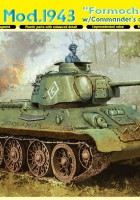
T34/76 Mod.1943 "Formochka" w/Commander's Cupola - DML 6603

Dragon Models

Ref6603
Topic1/35 Military
Scale1/35
SubjectT34/76 Mod.1943 “Formochka” w/Commander’s Cupola

A model of the brand Dragon Models the kit : T34/76 Mod.1943 “Formochka” w/Commander’s Cupola – DML 6603

Features: -Newly tooled T34/76 w/Commander’s cupola -“Stamped” turret in accurate detail -Turret hatches w/fine details can be positioned open/closed ; -Two types of periscopes provided as options -Turret bottom w/cutting marks -3-directional slide-molded cupola w/interior detail -Turret interior detail – gun w/breech assembly -Upper-hull glacis plate w/detail -One-piece lower hull offers easy assembly -Bolted connecting plate for mantlet -Trunnions w/weld detail -Mantlet has cutting-seam detail -Engine-deck rear plate and engine-cover plate have full detail -Slide-molded gun barrel included -Realistically represented road wheels – two outer road wheels w/rubber tires and three inner all-steel road wheels -Multi-combination running gear w/two road wheels patterns -Sprocket is finely reproduced -Detailed suspension system -Suspension arms realistically recreated -Two types of storage box provided -Optional photo-etched parts for engine-cover grills available -Engine deck louvers finely represented by photo-etched parts -500mm variant of T34 Magic Tracks w/refined detail

Source: T34/76 Mod.1943 on Dragon Models

Continue reading

Views : 1797

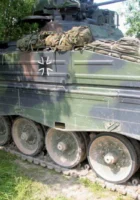
Marder 1A3

Marder 1A3

CountryGermany
Role

Infantry fighting vehicle

In service1971–present
Built2136

The Marder (German for “marten”) is a German infantry fighting vehicle operated by the German Army as the main weapon of the Panzergrenadiere (mechanized infantry) from the 1970s through the present day. Developed as part of the rebuilding of Germany’s armoured fighting vehicle industry, the Marder has proven to be a successful and solid infantry fighting vehicle design. While it does include a few unique features, such as the fully remote machine gun on the rear deck, it is overall a simple and conventional machine with rear exit hatch and side gun ports for mounted infantry to fire through. The Marder is currently being replaced by its successor, the Puma. The Marder 1A3 is the currently most common version of this system, and is in service with the German Bundeswehr, the Marder 1A4 differs from the 1A3 only by the use of a cryptography-capable radio-set. Newest version of the Marder is the Marder 1A5 with advanced mine protection. Only a small number of this variant is in service.

Source: Marder on Wiki

Continue reading

Views : 6572

Wydawnictwo Militaria 234 - Roosevelt's Tanks

Wydawnictwo Militaria

Ref

Wydawnictwo Militaria 234

Author
Subject

Roosevelt’s tanks

A book signed Wydawnictwo Militaria the magazine «Roosevelt’s tanks – Wydawnictwo 234» .

The present publication describes camouflage patterns and marking system for armoured vehicles of the U.S. motorized, cavalry and infantry units, as used from 1940 till 1945.

Continue reading

Views : 941

Pz.Kpfw.IV Ausf.B mit Gelandepflug - DML 6764

Dragon Model

Ref6764
Topic1/35 Military
Scale1/35
Subject

Pz.Kpfw.IV Ausf.B mit Gelandepflug

A model of the brand Dragon Model the kit : Pz.Kpfw.IV Ausf.B mit Gelandepflug – DML 6764

This 1/35 scale plastic kit builds straight from the box into an accurate Panzer IV Ausf.B, using accurate components from a previous release of this variant. Of course, the snow plow is a brand new element for this particular kit, and it stems from new toolings. The plow easily mounts onto the front of the standard tank. The box-top illustration from Ron Volstad will surely inspire modelers to create a stunning diorama of this ‘armored snow plow’ in action on the snowy Eastern Front. The track links make use of Magic Tracks that are very simple to assemble. Modelers will reap a lot of pleasure after investing in this exciting new plow-equipped German tank!

Source: Pz.Kpfw.IV Ausf.B mit Gelandepflug on Dragon Models

Continue reading

Views : 1314

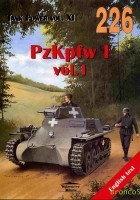
Wydawnictwo-Militaria-226-PzKpfw-I

Wydawnictwo Militaria

Ref

Wydawnictwo Militaria 226

Author
Subject

PzKpfw I

Une documentation signée Wydawnictwo Militaria le livre «PzKpfw I – Wydawnictwo 226» .

Le Panzer I est un char léger allemand, conçut dans les années 1930 et utilisé, lors de la Guerre d’Espagne et au début de la Seconde Guerre mondiale. Il fut le premier panzer réalisé alors que l’Allemagne, suite au traité de Versailles, avait interdiction d’étudier ou de construire des engins blindés, si bien que la première désignation qui lui fut appliquée pour brouiller les pistes, fut bien anodine, Landwirtschaftlicher Schlepper, ou tracteur agricole, mais par la suite il en reçut une plus officielle Panzerkampfwagen I (véhicule de combat blindé I). Il est également connu sous le nom de Sonderkraftfahrzeug 101 (abréviation SdKfz 101) littéralement véhicule spécial à moteur.

Il était principalement destiné à servir comme véhicule d’instruction, peu coûteux car légèrement armé et blindé, pour formaliser les nouvelles doctrines de la blitzkrieg, mais les retards sur les modèles suivants contraignirent les allemands à l’utiliser au combat. Il constitua ainsi les gros des panzerdivisions, lors des campagnes de Pologne et de France, mais fut rapidement retiré des premières lignes et converti à d’autres usages, principalement comme tracteur pour des canons sur roues. Son équipage se composait d’un conducteur et d’un commandant qui était également tireur. Il possédait deux mitrailleuses de calibres 7,92 mm. La faible épaisseur de son blindage n’était efficace que contre l’infanterie légère. Pour un poids de près de 5 tonnes, le moteur de 100 chevaux était nettement insuffisant et sa consommation de près de 120l les 100km trop importante. En dépit de ses faibles performances de combat, l’expérience du “Panzer I” s’avéra précieuse lorsqu’il fallut développer des chars plus puissants et la plupart des équipages de “Panzers” furent formés sur ce char.

Source: Wikipedia
Continue reading

Views : 910

Wydawnictwo Militaria 144 - Panzerjaeger I

Wydawnictwo Militaria

Ref

Wydawnictwo Militaria 144

Author
Subject

Panzerjäger I

Une documentation signée Wydawnictwo Militaria le livre «Panzerjäger I – Wydawnictwo Militaria 144» .

Le Panzerjäger I (chasseur de chars en allemand) fut le premier des chasseurs de chars conçus par l’Allemagne au cours de la Seconde Guerre mondiale. Il était conçu en 1940 sur un châssis converti de Panzerkampfwagen I Ausf. B et était armé du canon antichar Skoda 4.7cm PaK L/43. Le Panzerjäger s’avéra être une solution peu coûteuse et relativement efficace pour contrer les chars soviétiques et permit de prolonger l’utilisation des chars Panzer I devenus désuets. Comme pour la majorité des chasseurs de chars, l’équipage était très vulnérable, sa seule protection étant fournie par le bouclier frontal du canon ; le canon avait en outre un faible rotation latérale. En tout, 202 chars Panzer I furent convertis, 132 par Alkett et 70 par Skoda. Les conversions opérées par Skoda sont reconnaissables au bouclier du canon qui présente sept faces alors que les modèles d’Alkett n’en présentent que cinq. La dénomination formelle du Panzerjäger était 4.7cm PaK(t) (Sf) auf Panzerkampfwagen I. Le (t) indique l’origine tchécoslovaque (Tschechoslowakisch) du canon et les lettre (Sf) pour Selbstfahrlafette (terme allemand pour “châssis autopropulsé”).

Source: Wikipedia

Continue reading

Views : 1106

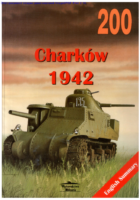
Wydawnictwo Militaria 200

Wydawnictwo Militaria

Ref

Wydawnictwo Militaria 200

Author
Subject

Kharkov (1942)

Signed documentation Wydawnictwo Militaria the book "Kharkov 1942 – Wydawnictwo Militaria 200".

History: The Second Battle of Kharkov, so named by Wilhelm Keitel, was a counterattack by Axis forces against the Red Army from 12 to 28 May 1942 on the Eastern Front during World War II. Its objective was to eliminate the bridgehead on the Donets which was one of the soviet maneuvering spaces. After a winter counterattack that had succeeded in pushing german troops away from Moscow, but also led to the depletion of red army reserves, kharkov's offensive was another Soviet attempt to regain the strategic initiative, even if it failed to guarantee the element of surprise.

On May 12, 1942, Soviet forces under the command of Field Marshal Semion Tymoshenko launched an offensive against the German 6th Army based on a breakthrough made during the winter counterattack. After promising initial signs, the offensive was stopped by the German counterattack. Major mistakes by several officers of the Soviet General Staff and Stalin himself, failing to accurately estimate German potential and overestimating their own forces, led to the success of the German counterattack melting "in pincer" around the advance of Soviet troops.

Source: Wikipedia

Continue reading

Views : 1272

Wydawnictwo Militaria 147 PzKpfw IV vol. II

Wydawnictwo Militaria

Ref

Wydawnictwo Militaria 147

Author
Subject

Panzer IV - Sdkfz.161

Signed documentation Wydawnictwo Militaria the book "Panzer IV - Wydawnictwo Militaria 147" .

The Panzerkampfwagen IV (PzKpfW IV), souvent appelé Panzer IV était un char d’assaut utilisé par l’Allemagne nazie durant la Seconde Guerre mondiale. Conçu initialement comme char d’appui-feu, avec un canon de 75 mm court, pour le Panzerkampfwagen III, il finit par remplacer ce dernier quand les chars alliés devinrent trop protégés pour celui-ci. Rééquipé avec un canon long antichar, le PzKpfW IV fut le principal char allemand pendant la seconde partie de la guerre avec plus de 9000 exemplaires produits et donna naissance à de nombreuses versions: Désignation d’usine : SdKfz 161, SdKfz 161/1 (canon KwK 40 L/43) et SdKfz 161/2 (canon KwK40 L/48).

Source: Wikipedia

Continue reading

Views : 1427

Wydawnictwo Militaria 165 Sycylia 1943

Wydawnictwo Militaria

Ref

Wydawnictwo Militaria 165

Author
Subject

Sicile 1943

Une documentation signée Wydawnictwo Militaria le livre «Sicile 1943 – Wydawnictwo Militaria 165» .

L’opération Husky est le nom de code donné au débarquement des troupes britanniques, américaines et canadiennes en Sicile, déclenché le 10 juillet 1943. L’ouverture d’un « Second front », si souvent réclamée par Staline à ses alliés occidentaux, devient alors réalité.

Source: Wikipedia

Continue reading

Views : 997

Wydawnictwo Militaria 124 Polish Shermans vol.1

Wydawnictwo Militaria

Ref

Wydawnictwo Militaria 124

Author
Subject

Polish Shermans

Une documentation signée Wydawnictwo Militaria le livre «Polish Shermans – Wydawnictwo Militaria 124» .

Le Medium Tank M4 est le char américain moyen produit en plus grande quantité pendant la Seconde Guerre mondiale. Près de cinquante mille exemplaires (toutes versions confondues) furent produits. Son surnom de « Sherman », lui est attribué par les Britanniques, quand ils reçoivent leurs premiers exemplaires dans le cadre de la loi de prêt-bail, continuant leur tradition de nommer les chars d’origine américaine d’après le nom d’un général nordiste de la guerre de Sécession célèbre de ce pays. L’US Army adopte par la suite ce surnom, et le Medium Tank M4 est dès lors appelé « M4 Sherman ». Les Soviétiques surnomment les leurs « Emcha ».

Source: Wikipedia

Continue reading

Views : 1545