Boeing AH-64 Apache - WalkAround

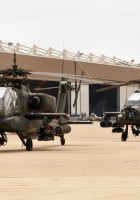
Boeing AH-64 Apache

ŠaliesJav
Tipas

Dviejų variklių atakos sraigtasparnis

Tema

Albumas 52 nuotraukos pasivaikščiojimo aplink «Boeing AH-64 Apache»

"Boeing AH-64 Apache" nuotraukų galerija, Boeing AH-64 Apache tai keturių ašmenų, dviejų variklių atakos sraigtasparnis su uodegos rato tipo nusileidimo pavaros išdėstymu ir dviejų žmonių įgulos tandeminė kabina.

Šaltinis: Vikipedija

Tęsti svarstymą

Views : 12891

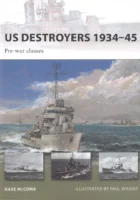
162 - US Destroyers 1934-45 - Pre-war classes

Osprey leidyba

Nuoroda

New Vanguard 182

ISBN9781846034435
Autorius
IllustratorPaulas Wrightas

Une dokumentacijos ženklas Osprey leidyba le livre «US Destroyers 1934–45: Pre-war classes – NEW VANGUARD 162» .

Since the beginning of the 20th century, destroyers have been all-purpose ships, indispensable in roles large and small – from delivering the mail at sea to screening other vessels and, where larger ships were not present, forming the front line in battle. This title details the 169 ships of ten classes introduced in the 1930s: early 1,500-tonners and 1,850-ton destroyer leaders designed to conform to the 1930 London Naval Treaty, plus the successor 1,570-ton Sims class and 1,620- and 1,630-ton Benson and Gleaves classes. In wartime, most 1,500-tonners and leaders initially saw front line duty in the Pacific but were relegated to secondary assignments as newer vessels arrived; while the later 1,620- and 1,630-tonners became the standard destroyers of the Atlantic War. This volume reveals the fascinating design story behind these pioneering classes – from the constraints of peacetime treaties to advances in propulsion engineering, and wartime modifications. With an operational overview of their service and tables listing all ships by class, builder, and initial squadron, this is the definitive guide to the pre-war US destroyer classes.

Šaltinis: Osprey Publishing
Tęsti svarstymą

Peržiūrų : 739

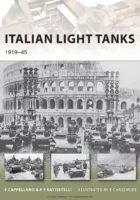
191 - Italian Light Tanks 1919-45

Osprey leidyba

Nuoroda

New Vanguard 191

ISBN9781849087773
Autorius
IllustratorRichard Chasemore

The Italian army, unlike those of the British and French, did not use tanks in combat during World War I and, by November 1918, only one training unit equipped with French Schneider and Renault tanks had been formed. Consequently, during the 1920s the Italian army had just one single tank type in its armoured inventory – the Fiat 3000. Only in 1927 was the first tank unit formed as a branch of the infantry and not as an independent organization, while the cavalry rejected the idea of both tanks and armoured cars and decided to stand by the use of horses for its mounted units. Between 1933 and March 1939, a further 2,724 CV 33 / L 3 tanks were built, 1,216 of which were exported all over the world. By the time Italy entered the war in June 1940, the army had 1,284 light tanks, 855 of which were in combat units, including three armoured divisions. Variants of the CV 33 / L 3 tanks included flame-throwers, bridge-layers, recovery vehicles, and a radio command tank. Some L 3 tanks were still in use in 1945, by both the Germans and the German-allied Italian units of the Repubblica Sociale.

Šaltinis: Osprey leidyba

Tęsti svarstymą

Peržiūrėta: 908

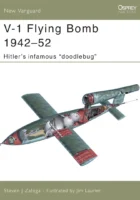
106 - V-1 Flying Bomb Hitler’s infamous doodlebug

Osprey leidyba

Nuoroda

New Vanguard 106

ISBN9781841767918
Autorius
IllustratorJimas Laurieras

Une dokumentacijos ženklas Osprey leidyba le livre «V-1 Flying Bomb 1942–52 – NEW VANGUARD 106» .

The first deployment of the V-1 was in June 1944 when, following two years of tests, Hitler gave the order to attack England. Known to the Allies as the Buzz Bomb or Doodlebug, the V-1 was the world’s first cruise missile. This book explores the V-1 in detail, from its initial concept, first use in 1944, the various Allied counter-measures, and the later use of the V-1 during the Battle of the Bulge. The major foreign derivatives, including the US copy JB-2 Loon and numerous post-war Soviet variants, are also covered.

Šaltinis: Osprey Publishing

Tęsti svarstymą

Views : 612

Grumman F-14 Tomcat - WalkAround

Grumman F-14 Tomcat

ŠaliesJav
Tipas

Kintamo šlavimo sparnų naikintuvai

Pirmasis skrydis1970 m. gruodžio 21 d.
Pastatytas712

2007 Grumman F-14 Tomcat yra viršgarsinis, dviejų variklių, dviejų vietų, kintamo sparno naikintuvas. "Tomcat" buvo sukurtas Jungtinių Valstijų karinio jūrų laivyno karinio jūrų laivyno naikintuvų eksperimentinei (VFX) programai po F-111B projekto žlugimo. F-14 buvo pirmasis iš amerikiečių paauglių serijos naikintuvų, kurie buvo sukurti atsižvelgiant į oro kovos su MiG naikintuvais patirtį Vietnamo karo metu.

Šaltinis: F-14 Tomcat Vikipedijoje

Tęsti svarstymą

Views : 18455

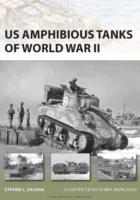
192 - Antrojo pasaulinio karo JAV amfibiniai tankai

Osprey leidyba

Nuoroda

New Vanguard 192

ISBN9781849086363
Autorius
IllustratorHenris Morsheadas

Antrojo pasaulinio karo metu atsiradus kombinuotų ginklų operacijoms, atsirado specializuotų šarvuotų transporto priemonių poreikis. Amfibinių išpuolių atveju kilo klausimas, kaip geriausiai iškrauti rezervuarus paplūdimyje. Nors buvo sukurti įvairūs specializuoti nusileidimo laivai, 1942 m. "Dieppe" reidas paskatino kurti tankus, kuriuos būtų galima dislokuoti iš tolimesnių krantų, kad būtų apribotas LCT laivo pažeidžiamumas. Jų sukurta giliavandenė įranga pirmą kartą buvo panaudota per operaciją "Husky" Sicilijoje 1943 m. Liepos mėn., O vėliau operacijoms "Avalanche" (Salerno, 1943 m. Rugsėjo mėn.), "Shingle" (Anzio, 1944 m. Sausio mėn.) ir "Overlord" (Normandija, 1944 m. Birželio mėn.). JAV pagamintus DD tankus "Overlord" metu naudojo tiek JAV, tiek Didžiosios Britanijos pajėgos, o 1945 m. - Reino perėjose. Iš pradžių Ramiojo vandenyno teatro įvykiai buvo atskirti nuo Europos. Jūrų pėstininkai iš Taravos iškrovimo 1943 m. sužinojo, kad neparuošti tankai negali būti saugiai iškrauti net sekliuose vandenyse. DD tankai niekada nebuvo rimtai svarstomi Ramiojo vandenyno regione, todėl buvo ieškoma kitų sprendimų. Išsamus specializuotų JAV amfibinių rezervuarų tyrimas, tai pavadinimas, kuris bus patrauklus tiems, kurie domisi tiek Ramiojo vandenyno, tiek Europos teatrais, modeliuotojais ir kolekcionieriais.

Šaltinis: Osprey Publishing
Tęsti svarstymą

Views : 1258

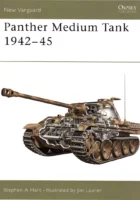
067 - Panther vidutinis bakas 1942-45

Osprey leidyba

Nuoroda

New Vanguard 67

ISBN9781841765433
Autorius
IllustratorJimas Laurieras

Une dokumentacijos ženklas Osprey leidyba le livre «Panther Medium Tank 1942–45 – NEW VANGUARD 67» .

2007 Panzerkampfwagen V Pantera is one of the best-known German tanks in existence and is considered one of the greatest tanks of World War II. When in June of 1941, Germany invaded Russia, Panzertruppe encountered KV series and T-34/76 tanks, far superior in firepower and armour protection to any Panzer in service at the time. It was therefore decided to design a new more powerful medium tank, which could be quickly put into production. This book details the result, the Medium Battle Tank, available for service in January 1943. Later models ensured that it became one of the most feared tanks of WWII.

Šaltinis: osprey

Tęsti svarstymą

Peržiūrų kiekis : 965

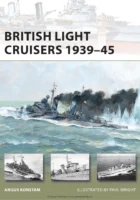
194 - Britų lengvieji kreiseriai 1939-45

Osprey Publishing

Ref

New Vanguard 194

ISBN9781849086844
Author
IllustratorPaul Wright

Pasirašyta knyga Osprey leidyba Knyga "British Light Cruisers 1939-45 – NEW VANGUARD 194"

The light cruiser was a natural development of the sailing frigate – a fast multi-purpose warship that could patrol the sea lanes, protect convoys and scout for enemy battle fleets. By the inter-war period the need for this type of ship was even more important, given the increasing need for protection from aircraft, and the need to screen the fleet from submarines or destroyers. Wartime experience had shown that the British light cruiser was one of the most versatile types of ship in the Royal Navy, able to protect other warships, bombard enemy shores, guard life-saving convoys and intercept and destroy enemy warships. These were truly the workhorses of the wartime Royal Navy. While the battleships and carriers grabbed the headlines, these sleek, elegant warships quietly got on with the job of securing control of the seas.

Šaltinis: Osprey

Tęsti svarstymą

Peržiūrėta: 668

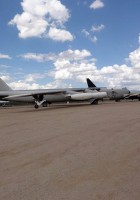
Boeing NB-52A Stratofortress - WalkAround

Boeing NB-52A Stratofortress

ŠaliesJav
Tipas

Tolimojo nuotolio, pogrindinis, reaktyvinis strateginis bombonešis

Pirmasis skrydis1952 m. balandžio 15 d.
Pastatytas744

Photo gallery of a Boeing NB-52A Stratofortress, The Boeing B-52 Stratofortress is a long-range, subsonic, jet-powered strategic bomber. The B-52 was designed and built by Boeing, who have continued to provide support and upgrades. It has been operated by the United States Air Force (USAF) since the 1950s. The bomber carries up to 70,000 pounds (32,000 kg) of weapons. Beginning with the successful contract bid in June 1946, the B-52 design evolved from a straight-wing aircraft powered by six turboprop engines to the final prototype YB-52 with eight turbojet engines and swept wings. The B-52 took its maiden flight in April 1952. Built to carry nuclear weapons for Cold War-era deterrence missions, the B-52 Stratofortress replaced the Convair B-36. Although a veteran of several wars, the Stratofortress has dropped only conventional munitions in combat. Its Stratofortress name is rarely used outside of official contexts; it has been referred to by Air Force personnel as the BUFF (Big Ugly Fat/Flying Fucker/Fellow).

Šaltinis: Boeing NB-52A Stratofortress on Wikipedia

Tęsti svarstymą

Peržiūrų kiekis : 2309

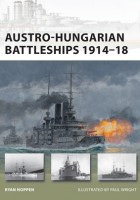
Austrijos-Vengrijos karo laivai 1914-18 - NAUJAS AVANGARDAS 193

Osprey leidyba

Nuoroda

New Vanguard 193

ISBN9781849086882
Autorius
IllustratorPaulas Wrightas

Pasirašyta knyga Osprey leidyba the book «Austro-Hungarian Battleships 1914-18 – NEW VANGUARD 193» .

Austria-Hungary did not have an overseas empire; its empire lay within its own boundaries and the primary purpose of its navy until the beginning of the twentieth century was the defense of its coastline. As its merchant marine dramatically grew, admirals believed that the navy should take a more proactive policy of defense. The 1890s saw the beginning of a series of naval building programs that would create a well-balanced modern fleet. Cruisers were constructed for the protection of overseas trade and for “showing the flag” but the decisive projection of Austria-Hungary’s commitment to control the Adriatic was the construction of a force of modern battleships. Despite the naval arms race throughout Europe at the time, the navy had difficulty obtaining funds for new ships. The difficulties experienced in battleship funding and construction mirrored the political difficulties and ethnic rivalries within the empire. Nevertheless by August of 1914, the Austro-Hungarian had a fleet of battleships. This book details the five classes of Austro-Hungarian battleships in service during World War I.

Šaltinis: Osprey leidyba

Tęsti svarstymą

Views : 1070