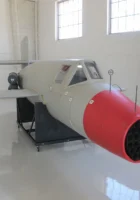
Bachem Ba 349 Natter

Bachem Ba 349 Natter

LandTyskland
TypRaketdrivet jaktplan
FotografVladimir Yakubov
Ämne

Album av 65 foton promenad runt en «Bachem Ba 349 Natter»

Fotogalleri av en Bachem Ba 349 Natter, The Bachem Ba 349 Natter (English: Colubrid, grass-snake) was a World War II German point-defence rocket-powered interceptor, which was to be used in a very similar way to a manned surface-to-air missile. After a vertical take-off, which eliminated the need for airfields, most of the flight to the Allied bombers was to be controlled by an autopilot. The primary role of the relatively untrained pilot was to aim the aircraft at its target bomber and fire its armament of rockets. The pilot and the fuselage containing the rocket-motor would then land using separate parachutes, while the nose section was disposable. The only manned vertical take-off flight on 1 March 1945 ended in the death of the test pilot, Lothar Sieber.

Källkod: Bachem Ba 349 Natter på Wikipedia

Fortsätt läsa

Views : 3955

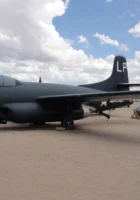
Douglas TF-10B Skyknight

Douglas TF-10B Skyknight

LandUsa
TypStridsflygplan
Första flygningen23 mars 1948
Byggd265

Fotogalleri av en Douglas TF-10B Skyknight, The Douglas F3D Skyknight (later designated F-10 Skyknight) was a United States twin-engined, mid-wing jet fighter aircraft manufactured by the Douglas Aircraft Company in El Segundo, California. The F3D was designed as a carrier-based all-weather night fighter and saw service with the United States Navy and United States Marine Corps. The mission of the F3D was to search out and destroy enemy aircraft at night.

Källkod: Douglas TF-10B Skyknight på Wikipedia

Fortsätt läsa

Visningar : 4569

Pansar 61

Pansar 61

LandSchweiz
TypMedelstor tank
FotografiGunther Neumahr
Ämne

Album av 46 bilder av en tank Pansar 61

The Panzer 61 was a Swiss Cold War era medium tank later reclassified as a second-generation main battle tank. The tank had a weight of 36.5 tons and was powered by a 630 hp diesel engine, which gave it a top road speed of 31 mph (50 km/h). The primary armament of the Panzer 61 was a 105 mm main gun.

Källkod: Panzer 61 on Wikipedia

Fortsätt läsa

Views : 1652

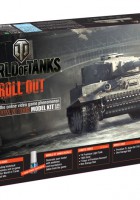
Världen av tankar - PZ.KPFW.VI TIGER - ITALERI 36502

Italeri

Referens 36502
SerieTankars värld
Skala1/35
Ämne

PZ.KPFW.VI TIGER

THE BOX CONTAIN: 1 MODEL KIT – 1 LIQUID CEMENT – 1 TANK GUIDE – WORLD oF TANKS DECALS – 3 INVITE CODES – 1 BONUS CODE

The final official German designation for the tank was Panzerkampfwagen VI Tiger Ausf.E, often shortened to just “Tiger I”. The Tiger’s development was started in 1937 by the company, Henschel. Mass production began in 1942 with a total of 1347 vehicles being manufactured over its production run. The initial model used suspension similar to that of the Panther. The hull extended over the tracks to accommodate the wide-ringed turret which could mount the infamous 8,8cm Kw.K 36 L/56. The Tiger first saw combat in the fighting for Leningrad and soon found itself featured in the majority of German armoured engagements. Even though production was discontinued in the summer of 1944, the Tiger I continued to see action until the end of the war. It was the first German heavy tank in WWII and soon proved itself to be extremely formidable against Allied and Soviet units which mostly consisted of Sherman tanks and T-34s at the time.

Källkod: Italeri

Fortsätt läsa

Visningar : 1527

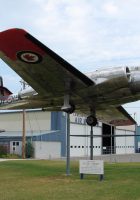
CF-100 Canuck

Avro Kanada CF-100 Canuck

LandKanada
TypJet interceptor
Första flygningen19 januari 1950
Byggd692

Fotogalleri av en Avro Kanada CF-100 Canuck, The Avro Canada CF-100 Canuck (affectionately known as the “Clunk”) was a Canadian jet interceptor/fighter serving during the Cold War both in NATO bases in Europe and as part of NORAD. The CF-100 was the only Canadian-designed fighter to enter mass production, serving primarily with the RCAF/CAF and in small numbers in Belgium. For its day, the CF-100 featured a short takeoff run and high climb rate, making it well suited to its role as an interceptor.

Källkod: Avro Canada CF-100 Canuck på Wikipedia

Fortsätt läsa

Views : 4754

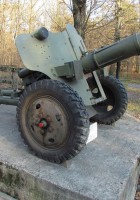
85 mm divisionspistol D-44
,

85 mm divisionspistol D-44

LandSovjetunionen
TypDivisionsvapen
Period1944-1953
Byggd10.800

Den 85 mm divisionskanon D-44 (ryska: 85-мм дивизионная пушка Д-44) var en sovjetisk divisionsartilleripjäs med 85 mm kaliber som användes i den sista striden under andra världskriget. Den var avsedd som ersättare för 76 mm divisionskanonen M1942 (ZiS-3). Kanonen är inte längre i fronttjänst hos de ryska markstyrkorna, även om cirka 200 av den kinesiska Type 56-varianten fortfarande är i tjänst hos den pakistanska armén. Tjänstgöring i krigstid innefattade användning av kommunistiska styrkor under Vietnamkriget och av arabiska styrkor under deras konflikter med Israel.

Källkod: 85 mm divisionskanon D-44 på Wikipedia

Fortsätt läsa

Visningar : 2657

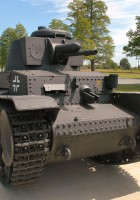
Pz38 (Pz38)

Pansar 35(t)

LandTyskland
TypMedelstor tank
Produceras1936–1940
Byggd434

Panzerkampfwagen 35(t), ofta förkortad till Panzer 35(t) eller förkortad som Pz.Kpfw. 35(t), var en tjeckoslovakisk designad ljustank som huvudsakligen användes av Nazityskland under andra världskriget. Märka (t) stod för tschechisch (Tysk: "Tjeckiskt"). I tjeckoslovakisk tjänst hade den den formella beteckningen Lehký tank vzor 35 (Light Tank Model 35), men kallades ofta LT vz. 35 eller LT-35. Fyra hundra trettiofyra byggdes; Av dessa grep tyskarna tvåhundrafyra när de ockuperade Böhmen-Mähren i mars 1939 och slovakerna fick femtiotvå när de förklarade sig självständiga från Tjeckoslovakien samtidigt. Andra exporterades till Bulgarien och Rumänien. I tysk tjänst sågar det strid under tidig sortåren av Världen kriger II, notably Invasionen av Polen, Strid av Frankrike och invasionen av Den sovjetiska unionen, för att vara pensionerad eller såld av i 1942. Det användes för resten av kriget av andra länder och som en träningstank i Bulgarien in på 1950-talet.

Källkod: Panzer 38(t) på Wikipedia

Fortsätt läsa

Views : 3583

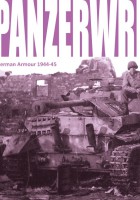
Panzerwrecks vol 5

Panzervrak

SpråkEngelska
ÄmneGerman armour 1944-45
Sidor96 sidor
ISBN-13978-0-9555940-1-4

-27 page feature revisiting the wrecks and units in Panzerwrecks 1 -More photos of the uparmoured Panthers of I./Pz.Rgt.26 in Italy -Unique coverage of the Pz.Beob.Wg.III, inside and out, includes never seen before images of its massive TBF 2 periscope -10 page feature about German wrecks in the Korsun pocket -Sturmgeschütz III Ausf.G with ‘swinging’ Schürzen -m.SPW and le.SPW being driven without armour bodies – naked! -Famous US wrestler Bozo Miller posing with a Pz.Kpfw 38(t) and making it look small -Loads more

Features: Panzerwrecks 1 Revisited Tiger II Joyride Wrecks in Russian Newsreels Three Maus at Meppen ISBN: 978-0-9555940-1-4 Date: 2007. Reprinted 2012 No of Photos: 153 No of Pages: 96 Size: 280x210mm (L)

Källkod: Panzervrak

Fortsätt läsa

Visningar : 1362

MGM-18 Lacrosse

MGM-18 Lacrosse

LandUsa
TypTaktiskt ballistiskt vapen
FotografDavid Lueck
Ämne

Album av 78 bilder walk-around av en «MGM-18 Lacrosse»

Fotogalleri av en MGM-18 Lacrosse, The MGM-18 Lacrosse was a short-ranged tactical ballistic weapon intended for close support of ground troops. Its first flight test was in 1954 and was deployed by the United States Army beginning in 1959, despite being still in the development stage. The program’s many technical hurdles proved too difficult to overcome and the missile was withdrawn from field service by 1964.

Källkod: MGM-18 Lacrosse på Wikipedia

Fortsätt läsa

Besökare: 2590

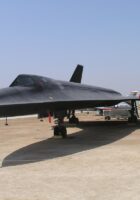
Lockheed SR-71A Koltrast

Lockheed SR-71 Koltrast

LandUsa
TypStrategiskt spaningsflygplan
Första flygningenden 22 december 1964
Byggd32

Fotogalleri av en Lockheed SR-71 Koltrast, The Lockheed SR-71 “Blackbird” is a long-range, Mach 3+ strategic reconnaissance aircraft that was operated by the United States Air Force. It was developed as a black project from the Lockheed A-12 reconnaissance aircraft in the 1960s by Lockheed and its Skunk Works division. Renowned American aerospace engineer Clarence “Kelly” Johnson was responsible for many of the design’s innovative concepts. During aerial reconnaissance missions, the SR-71 operated at high speeds and altitudes to allow it to outrace threats. If a surface-to-air missile launch was detected, the standard evasive action was simply to accelerate and outfly the missile. The SR-71 was designed to have basic stealth characteristics and served as a precursor to future stealth aircraft.

Källkod: Lockheed SR-71 Koltrast på Wikipedia

Fortsätt läsa

Views : 8290