Wydawnictwo Militaria 055 - Fiat CR 42

Wydawnictwo Militaria

Ref

Wydawnictwo Militaria 055

Autor
Temat

Fiat CR 42

Podpisana dokumentacja Wydawnictwo Militaria magazyn "Fiat CR 42 – Wydawnictwo Militaria 055".

Tthe Fiat CR.42 Falco est un avion de chasse de la Seconde Guerre mondiale. C’est le dernier biplan de ce type à être mis en service. Le Fiat CR.42 jest jednym z ostatnich i z pewnością najbardziej udanych dwupłatowych samolotów myśliwskich. Zaprojektowany przez inżyniera Celestino Rosatelli po sukcesie słynnego Fiata CR.32, który niekwestionowany na hiszpańskim niebie podczas wojny domowej. Jego pierwszy lot odbył się 23 maja 1938 roku, kiedy era dwupłatowców miała zanikać. Zbudowany z całkowicie metalową konstrukcją, kokpit był otwarty. Falco został uznany za najlepszy dzięki swoim cechom i zwrotności, a jego produkcja seryjna została podjęta, chociaż Fiat Avio rozpoczął już produkcję Fiata G.50 i Macchi jednopłatowych myśliwców Macchi M.C.200, które używały tego samego silnika.

Źródła: Fiat CR 42 sur Wikipedia

Czytaj dalej

Liczba wyświetleń : 920

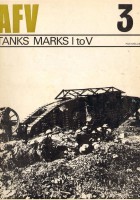
Znaki czołgów I do V. - Broń AFV 03

Broń AFV

Tytuł Czołgi oznaczają od I do V.
Ref03
Opis

Znaki I do V czołgów.

Mark I był brytyjskim czołgiem używanym podczas I wojny światowej. Można go uznać za pierwszy czołg operacyjny na świecie. Mark I istniał w dwóch oddzielnych wersjach, wersji męskiej, wyposażonej w armaty, oraz wersji żeńskiej wyposażonej wyłącznie w karabiny maszynowe.

Źródła: Wikipedia

Czytaj dalej

Wyświetlenia : 982

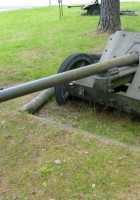
Pak 38 - SpacerAround

Pak 38

CountryGermany
Type

Anti-tank gun

Topic

Album of 43 photos walk-around of a Pak 38

The 5 cm PaK 38 (L/60) (5 cm Panzerabwehrkanone 38 (L/60)) was a German anti-tank gun of 50 mm calibre. It was developed in 1938 by Rheinmetall-Borsig AG as a successor to the 37 mm PaK 36, and was in turn followed by the 75 mm PaK 40. The PaK 38 was first used by the German forces during the Second World War in April 1941. When the Germans faced Soviet tanks in 1941 during Operation Barbarossa, the PaK 38 was one of the few early guns capable of effectively penetrating the 45 mm (1.8 in) armor of the T-34. Additionally, the gun was also equipped with Panzergranate 40 APCR shots which had a hard tungsten core, in an attempt to penetrate the armor of the heavier KV-1 tank. Although it was replaced by more powerful weapons, it remained a potent and useful weapon and remained in service with the Wehrmacht until the end of the war.

Źródła: Wikipedia

Czytaj dalej

Liczba wyświetleń : 3415

Panzerkampfwagen III i IV - Pancerz w czasie wojny 7065

Publikacje Concord

RefPancerz w stanie wojny 7065
Autor
Temat

Panzerkampfwagen III i IV

Tthe SdKfz 141 Panzerkampfwagen III (PzKpfw III) lub Panzer III to niemiecki czołg, zaprojektowany pod koniec 1930 roku i szeroko stosowany podczas pierwszej fazy II wojny światowej. Opracowano go do walki z czołgami wroga (najpierw z armatą przeciwpancerną 3,7 cm KwK 36 L/45, następnie od października 1940 roku z 5 cm KwK 38 L/42, a następnie 5 cm L/60 w czerwcu 1942 roku), podczas gdy Panzer IV, który był w tym czasie, miał zapewnić wsparcie ogniowe oddziałom piechoty z 7,5 cm KwK 37 L/24. Jednak wraz z pojawieniem się coraz lepiej chronionych czołgów alianckich, tylko Panzer IV był w stanie przenosić broń zdolną do ich zniszczenia (z działem 7,5 cm KwK 40 L/43 od marca 1942 r.) i zastąpił Panzer III jako główny czołg Wehrmachtu. Ale pomimo faktu, że Panzer III był całkowicie przestarzały od początku 1942 roku, nadal można go znaleźć masowo zaangażowanego podczas bitwy pod Kurskiem w lipcu 1943 roku.

Źródła: Wikipedia

Czytaj dalej

Liczba wyświetleń : 1784

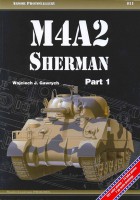
Sherman M4A2 Flight 1 - Fotogaleria Armor 011

Model Centrum Publishing

Ref

Armor PhotoGaleria 011

Autor
Temat

Sherman M4A2 vol. 1

Un livre signé Armor PhotoGallery la revue «Sherman M4A2 vol. 1 – Armor Photogallery 011».

Historia: Le Medium Tank M4 est le char américain moyen produit en plus grande quantité pendant la Seconde Guerre mondiale. Près de cinquante mille exemplaires (toutes versions confondues) furent produits. Son surnom de « Sherman », lui est attribué par les Britanniques, quand ils reçoivent leurs premiers exemplaires dans le cadre de la loi de prêt-bail, continuant leur tradition de nommer les chars d’origine américaine d’après le nom d’un général nordiste de la guerre de Sécession célèbre de ce pays. L’US Army adopte par la suite ce surnom, et le Medium Tank M4 est dès lors appelé « M4 Sherman ». Les Soviétiques surnomment les leurs « Emcha ».

Źródła: Wikipedia

Czytaj dalej

Liczba wyświetleń : 2211

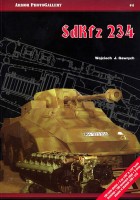
Armor Photogallery 04 - SdKfz234

Model Centrum Publishing

Ref

Zdjęcia ArmorGaleria 004

Autor
Temat

Sdkfz.234

Un livre signé Armor PhotoGallery magazyn "Sdkfz.234 – Armor Photogallery 004".

Le terme de Schwerer Panzerspähwagen (véhicule de reconnaissance blindé lourd) désignait l’ensemble des véhicules à 6 ou 8 roues utilisés par la Wehrmacht au cours de la Seconde Guerre mondiale. Ils jouèrent le rôle important de reconnaissance, en avant des divisions panzer, afin d’estimer les forces ennemies à combattre. Version améliorée des 232, la principale différence visible est ses gardes-boues en une seule pièce (2 pour les versions précédentes).

Źródła: SdKfz 234 na Wikipedii

Czytaj dalej

Wyświetlenia : 2084

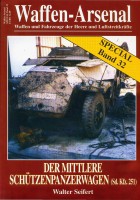
Der Mittlere Schützenpanzerwagen - Waffen Arsenal Special 32

Waffen Arsenal

Ref

Waffen Arsenal Special 32

Autor
Temat

Der Mittlere Schützenpanzerwagen

Podpisana dokumentacja Waffen Arsenal magazyn "Der Mittlere Schützenpanzerwagen – Waffen Arsenal Special 32".

Tthe Sonderkraftfahrzeug 251 (SdKfz 251) (littéralement : véhicule de combat spécial) était un véhicule blindé allemand semi-chenillé de combat construit durant la Seconde Guerre mondiale, qui fut produit tout au long du conflit. Sa classification dans la Heer correspond à Schützenpanzer (Véhicule de combat d’infanterie). Il était essentiellement destiné à équiper les Panzerdivisions et les unités de Panzergrenadieren et partageait de nombreux éléments mécaniques avec le SdKfz 7.

Źródła: Wikipedia

Czytaj dalej

Liczba wyświetleń : 1360

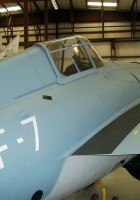
FM-1 Wildcat - WalkAround

FM-1 Wildcat

KrajuStany Zjednoczone Ameryki
Pierwsza mucha2 września 1947 r.
Zbudowany7885

Tthe Grumman F4F Wildcat was an American carrier-based fighter aircraft that began service with both the United States Navy and the British Royal Navy (as the Martlet) in 1940. First used in combat by the British in Europe, the Wildcat was the only effective fighter available to the United States Navy and Marine Corps in the Pacific Theater during the early part of World War II in 1941 and 1942; the disappointing Brewster Buffalo was withdrawn in favor of the Wildcat and replaced as units became available. With a top speed of 318 mph (512 km/h), the Wildcat was outperformed by the faster and more nimble 331 mph (533 km/h) Mitsubishi A6M Zero, but its ruggedness, coupled with tactics such as the Thach Weave, resulted in an air combat kill-to-loss ratio of 5.9:1 in 1942 and 6.9:1 for the entire war. GM produced the FM-1, identical to the F4F-4, but reduced the number of guns to four, and added wing racks for two 250 lb (110 kg) bombs or six rockets. Production later switched to the improved FM-2 (based on Grumman’s XF4F-8 prototype) optimized for small-carrier operations, with a more powerful engine (the 1,350 hp (1,010 kW) Wright R-1820-56), and a taller tail to cope with the torque.

Źródła: FM-1 Wildcat on Wiki

Czytaj dalej

Wyświetleń: 5014

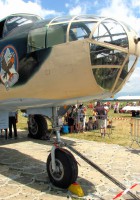
B-25J Mitchell - WalkAround

B-25J Mitchell

KrajuStany Zjednoczone Ameryki
Typu

Średni bombowiec

Temat

Album 27 zdjęcia spacer wokół «B-25J Mitchell»

Galeria zdjęć B-25J Mitchell, The Północnoamerykański B-25 Mitchell Był amerykańskim dwusilnikowym średnim bombowcem produkowanym przez North American Aviation. Był używany przez wiele alianckich sił powietrznych, w każdym teatrze II wojny światowej, a także wiele innych sił powietrznych po zakończeniu wojny, i widział służby przez cztery dekady.

Źródła: Wikipedia

Czytaj dalej

Liczba wyświetleń : 3399

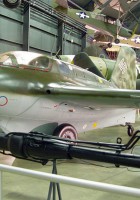
Messerschmitt Me 163B - WalkAround

Messerschmitt Me 163B

KrajuNiemcy
Roli

Samolot myśliwski z napędem rakietowym

Pierwszy lot1 września 1941 r.
Zbudowany370

Tthe Messerschmitt Me 163 Komet Był niemieckim samolotem myśliwskim z napędem rakietowym. Zaprojektowany przez Alexandra Lippischa, jest to jedyny samolot myśliwski z napędem rakietowym w historii, który był operacyjny i pierwszy pilotowany samolot dowolnego typu, który przekroczył 1000 km/h (621 mph) w locie poziomu. Jego konstrukcja była rewolucyjna, a jego wydajność bezprecedensowa. Niemiecki pilot testowy Heini Dittmar na początku lipca 1944 roku osiągnął prędkość 1130 km/h, nieoficjalny rekord prędkości lotu niedościgniony przez samoloty z napędem turboodrzutowym od prawie dekady. Zbudowano ponad 300 samolotów, ale Komet okazał się nieskuteczny w swojej dedykowanej roli jako samolot przechwytujący i był odpowiedzialny za zniszczenie tylko około dziewięciu do osiemnastu samolotów alianckich przed dziesięcioma stratami. Oprócz strat bojowych wielu pilotów zginęło podczas testów i szkoleń

Źródła: Messerschmitt Me 163 Komet na Wikipedii

Czytaj dalej

Liczba wyświetleń : 3406