Wydawnictwo Militaria 055 - Fiat CR 42

Wydawnictwo Militaria

Nuoroda

Wydawnictwo Militaria 055

Autorius
Tema

Fiat CR 42

Une dokumentacijos ženklas Wydawnictwo Militaria la revue «Fiat CR 42 – Wydawnictwo Militaria 055» .

2007 "Fiat CR.42 Falco" est un avion de chasse de la Seconde Guerre mondiale. C’est le dernier biplan de ce type à être mis en service. Le Fiat CR.42 est un des derniers et certainement le plus abouti avion de combat biplan. Conçu par l’ingénieur Celestino Rosatelli sur la lancée du succès du fameux Fiat CR.32 qui domina de façon incontestée les cieux espagnols durant la guerre civile. Son premier vol a lieu le 23 mai 1938, alors que l’ère des biplans allait disparaître. Construit avec une structure entièrement métallique, la poste de pilotage était ouvert. Le Falco fut reconnu le meilleur grâce à ses qualités et sa maniabilité, et sa production en série fut décidée bien que Fiat Avio avait déjà démarré la fabrication des avions de chasse monoplan Fiat G.50 et Macchi le Macchi M.C.200, qui utilisaient le même moteur.

Šaltinis: Fiat CR 42 sur Wikipedia

Tęsti svarstymą

Peržiūrėta: 919

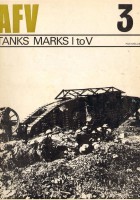
Tankai Žymi I į V. - AFV Ginklai 03

AFV ginklai

titulinis Tankai žymi I–V.
Réf03
Aprašymas / kontrolė

Pažymi I–V.

"Mark I" buvo britų tankas, naudotas Pirmojo pasaulinio karo metu. Jis gali būti laikomas pirmuoju pasaulyje veikiančiu baku. "Mark I" egzistavo dviem skirtingomis versijomis: "Male" versija, aprūpinta patrankomis, ir "Female" versija, aprūpinta tik kulkosvaidžiais.

Šaltinis: Vikipedija

Tęsti svarstymą

Peržiūrėta: 981

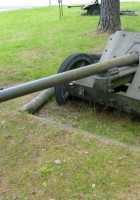
Pak 38 - „WalkAround“

Pak 38

CountryGermany
Type

Anti-tank gun

Topic

Album of 43 photos walk-around of a Pak 38

The 5 cm PaK 38 (L/60) (5 cm Panzerabwehrkanone 38 (L/60)) was a German anti-tank gun of 50 mm calibre. It was developed in 1938 by Rheinmetall-Borsig AG as a successor to the 37 mm PaK 36, and was in turn followed by the 75 mm PaK 40. The PaK 38 was first used by the German forces during the Second World War in April 1941. When the Germans faced Soviet tanks in 1941 during Operation Barbarossa, the PaK 38 was one of the few early guns capable of effectively penetrating the 45 mm (1.8 in) armor of the T-34. Additionally, the gun was also equipped with Panzergranate 40 APCR shots which had a hard tungsten core, in an attempt to penetrate the armor of the heavier KV-1 tank. Although it was replaced by more powerful weapons, it remained a potent and useful weapon and remained in service with the Wehrmacht until the end of the war.

Šaltinis: Vikipedija

Tęsti svarstymą

Peržiūros : 3405

Panzerkampfwagen III ir IV - Šarvai karo 7065

Concord leidiniai

NuorodaŠarvai kare 7065
Autorius
Tema

Panzerkampfwagen III ir IV

2007 SdKfz 141 "Panzerkampfwagen III" ("PzKpfw III") arba "Panzer III" yra vokiečių tankas, suprojektuotas 1930-ųjų pabaigoje ir plačiai naudojamas per pirmąjį Antrojo pasaulinio karo etapą. Jis buvo sukurtas naudoti priešo šarvuočius (iš pradžių su 3,7 cm KwK 36 L/45 prieštankiniu pabūklu, paskui nuo 1940 m. spalio su 5 cm KwK 38 L/42, paskui 5 cm L/60 1942 m. birželį), o šiuolaikinis Panzer IV buvo sukurtas taip, kad pėstininkų kariams teiktų pagalbinę ugnį su 7,5 cm KwK 37 L/24. Tačiau, atsiradus vis geriau apsaugotiems sąjungininkų tankams, tik "Panzer IV" galėjo nešiotis ginklus, galinčius juos sunaikinti (su 7, 5 cm KwK 40 L/43 pistoletu nuo 1942 m. Kovo mėn.), Ir jis pakeitė "Panzer III" kaip pagrindinį Wehrmachto baką. Tačiau, nepaisant to, kad "Panzer III" buvo visiškai pasenęs nuo 1942 m. Pradžios, jis vis dar buvo masiškai įtrauktas į Kursko mūšį 1943 m. Liepos mėn.

Šaltinis: Vikipedija

Tęsti svarstymą

Peržiūrėta: 1780

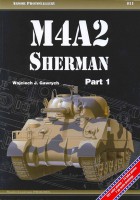
Sherman M4A2 vol 1 - Šarvai Photogallery 011

Modelis Centrum leidyba

Nuoroda

Armor PhotoGallery 011

Autorius
Tema

Sherman M4A2 vol 1

Pasirašyta knyga Šarvai PhotoGallery la revue «Sherman M4A2 vol 1 – Armor Photogallery 011».

Istorija: Le Medium Tank M4 est le char américain moyen produit en plus grande quantité pendant la Seconde Guerre mondiale. Près de cinquante mille exemplaires (toutes versions confondues) furent produits. Son surnom de « Sherman », lui est attribué par les Britanniques, quand ils reçoivent leurs premiers exemplaires dans le cadre de la loi de prêt-bail, continuant leur tradition de nommer les chars d’origine américaine d’après le nom d’un général nordiste de la guerre de Sécession célèbre de ce pays. L’US Army adopte par la suite ce surnom, et le Medium Tank M4 est dès lors appelé « M4 Sherman ». Les Soviétiques surnomment les leurs « Emcha ».

Šaltinis: Vikipedija

Tęsti svarstymą

Views : 2209

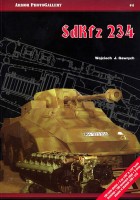
Šarvai Photogallery 04 - SdKfz234

Modelis Centrum leidyba

Nuoroda

Armor PhotoGallery 004

Autorius
Tema

Sdkfz.234

Pasirašyta knyga Šarvai PhotoGallery la revue «Sdkfz.234 – Armor Photogallery 004».

Le terme de Schwerer Panzerspähwagen (véhicule de reconnaissance blindé lourd) désignait l’ensemble des véhicules à 6 ou 8 roues utilisés par la Wehrmacht au cours de la Seconde Guerre mondiale. Ils jouèrent le rôle important de reconnaissance, en avant des divisions panzer, afin d’estimer les forces ennemies à combattre. Version améliorée des 232, la principale différence visible est ses gardes-boues en une seule pièce (2 pour les versions précédentes).

Šaltinis: SdKfz 234 sur Wikipedia

Tęsti svarstymą

Peržiūrėta: 2079

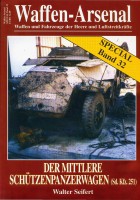
Der Mittlere Schützenpanzerwagen - Waffen Arsenal Specialusis 32

Vaffenas Arsenalas

Nuoroda

Waffen Arsenal Special 32

Autorius
Tema

Vidutinis pėstininkų kovos automobilis

Une dokumentacijos ženklas Vaffenas Arsenalas la revue «Der Mittlere Schützenpanzerwagen – Waffen Arsenal Special 32» .

2007 Sonderkraftfahrzeug 251 (SdKfz 251) (littéralement : véhicule de combat spécial) était un véhicule blindé allemand semi-chenillé de combat construit durant la Seconde Guerre mondiale, qui fut produit tout au long du conflit. Sa classification dans la Heer correspond à Schützenpanzer (Véhicule de combat d’infanterie). Il était essentiellement destiné à équiper les Panzerdivisions et les unités de Panzergrenadieren et partageait de nombreux éléments mécaniques avec le SdKfz 7.

Šaltinis: Vikipedija

Tęsti svarstymą

Views : 1358

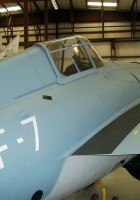
FM-1 Wildcat - WalkAround

FM-1 Wildcat

ŠaliesJav
Pirmasis skristi1947 m. rugsėjo 2 d.
Pastatytas7885

2007 Grumman F4F Wildcat was an American carrier-based fighter aircraft that began service with both the United States Navy and the British Royal Navy (as the Martlet) in 1940. First used in combat by the British in Europe, the Wildcat was the only effective fighter available to the United States Navy and Marine Corps in the Pacific Theater during the early part of World War II in 1941 and 1942; the disappointing Brewster Buffalo was withdrawn in favor of the Wildcat and replaced as units became available. With a top speed of 318 mph (512 km/h), the Wildcat was outperformed by the faster and more nimble 331 mph (533 km/h) Mitsubishi A6M Zero, but its ruggedness, coupled with tactics such as the Thach Weave, resulted in an air combat kill-to-loss ratio of 5.9:1 in 1942 and 6.9:1 for the entire war. GM produced the FM-1, identical to the F4F-4, but reduced the number of guns to four, and added wing racks for two 250 lb (110 kg) bombs or six rockets. Production later switched to the improved FM-2 (based on Grumman’s XF4F-8 prototype) optimized for small-carrier operations, with a more powerful engine (the 1,350 hp (1,010 kW) Wright R-1820-56), and a taller tail to cope with the torque.

Šaltinis: FM-1 Wildcat on Wiki

Tęsti svarstymą

Views : 5000

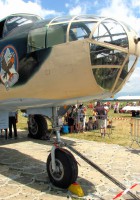
B-25J Mitchell - WalkAround

B-25J Mitchell

ŠaliesJav
Tipas

Vidutinis bombonešis

Tema

Albumas 27 photos walk-around of a «B-25J Mitchell»

Photo gallery of a B-25J Mitchell, The Šiaurės Amerikos B-25 Mitchell was an American twin-engined medium bomber manufactured by North American Aviation. It was used by many Allied air forces, in every theater of World War II, as well as many other air forces after the war ended, and saw service across four decades.

Šaltinis: Vikipedija

Tęsti svarstymą

Peržiūrėta: 3391

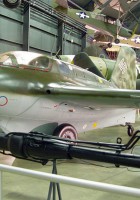
Messerschmitt Me 163B - WalkAround

Messerschmitt Me 163B

ŠaliesVokietija
Vaidmenį

Rocket-powered fighter aircraft

Pirmasis skrydis1 September 1941
Pastatytas370

2007 Messerschmitt Me 163 Komet was a German rocket-powered fighter aircraft. Designed by Alexander Lippisch, it is the only rocket-powered fighter aircraft ever to have been operational and the first piloted aircraft of any type to exceed 1000 km/h (621 mph) in level flight. Its design was revolutionary and its performance unprecedented. German test pilot Heini Dittmar in early July 1944 reached 1,130 km/h (700 mph), an unofficial flight airspeed record unmatched by turbojet-powered aircraft for almost a decade. Over 300 aircraft were built, but the Komet proved ineffective in its dedicated role as an interceptor aircraft and was responsible for the destruction of only about nine to eighteen Allied aircraft against ten losses. Aside from combat losses many pilots were killed during testing and training

Šaltinis: Messerschmitt Me 163 Komet on Wikipedia

Tęsti svarstymą

Peržiūrėta: 3403