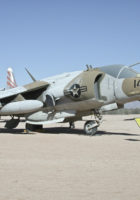
AV-8B Harrier II Plus | |
|---|---|
| País | Eua |
| Tipo | Decolagem e pouso verticais/curtas |
Galeria de fotos de um AV-8B Harrier II Plus, O McDonnell Douglas AV-8B Harrier II é uma aeronave de ataque terrestre (V/STOL) vertical/curta de segunda geração.
Views : 10617
AV-8B Harrier II Plus | |
|---|---|
| País | Eua |
| Tipo | Decolagem e pouso verticais/curtas |
Galeria de fotos de um AV-8B Harrier II Plus, O McDonnell Douglas AV-8B Harrier II é uma aeronave de ataque terrestre (V/STOL) vertical/curta de segunda geração.
Views : 10617

Wydawnictwo Militaria | |
|---|---|
| Ref | Wydawnictwo Militaria 055 |
| Autor | Wydawnictwo Militaria |
| Assunto | Fiat CR 42 |
Documentação assinada Wydawnictwo Militaria a revista "Fiat CR 42 – Wydawnictwo Militaria 055" .
O Fiat CR.42 Falco est un avion de chasse de la Seconde Guerre mondiale. C’est le dernier biplan de ce type à être mis en service. Le Fiat CR.42 é um dos últimos e certamente o mais bem sucedido avião de combate biplano. Projetado pelo engenheiro Celestino Rosatelli sobre o impulso do sucesso do famoso Fiat CR.32 que inquestionavelmente dominou os céus espanhóis durante a Guerra Civil. Seu primeiro voo ocorreu em 23 de maio de 1938, quando a era dos biplanos estava prestes a desaparecer. Construído com uma estrutura totalmente metálica, o cockpit era aberto. O Falco foi reconhecido como o melhor graças às suas qualidades e manobrabilidade, e sua produção em série foi decidida, embora a Fiat Avio já tivesse iniciado a fabricação de aviões de combate monoplano Fiat G.50 e Macchi o Macchi M.C.200, que usava o mesmo motor.
Fonte: Fiat CR 42 sur Wikipédia
Visualizações : 921
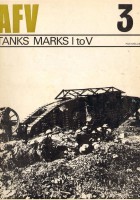
Armas AFV | |
|---|---|
| título | Tanks Marks I to V. |
| Ref | 03 |
| Descrição | Les chars Marks I à V. |
Le Mark I était un char britannique utilisé pendant la Première Guerre mondiale. Il peut être considéré comme le premier char d’assaut opérationnel au monde. Le Mark I existait en deux versions distinctes, une version Male, munie de canons, et une version Female munie exclusivement de mitrailleuses.
Fonte: Wikipédia
Views : 983
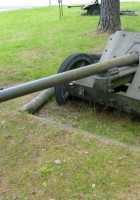
Pak 38 | |
|---|---|
| Country | Germany |
| Type | Anti-tank gun |
| Topic | Album of 43 photos walk-around of a Pak 38 |
The 5 cm PaK 38 (L/60) (5 cm Panzerabwehrkanone 38 (L/60)) was a German anti-tank gun of 50 mm calibre. It was developed in 1938 by Rheinmetall-Borsig AG as a successor to the 37 mm PaK 36, and was in turn followed by the 75 mm PaK 40. The PaK 38 was first used by the German forces during the Second World War in April 1941. When the Germans faced Soviet tanks in 1941 during Operation Barbarossa, the PaK 38 was one of the few early guns capable of effectively penetrating the 45 mm (1.8 in) armor of the T-34. Additionally, the gun was also equipped with Panzergranate 40 APCR shots which had a hard tungsten core, in an attempt to penetrate the armor of the heavier KV-1 tank. Although it was replaced by more powerful weapons, it remained a potent and useful weapon and remained in service with the Wehrmacht until the end of the war.
Fonte: Wikipédia
Views : 3435

Publicações concord | |
|---|---|
| Ref | Armor At War 7065 |
| Autor | FotoGallery da armadura |
| Assunto | Panzerkampfwagen III and IV |
O SdKfz 141 Panzerkampfwagen III (PzKpfw III), ou Panzer III est un char d’assaut allemand, conçu à la fin des années 1930 et utilisé intensivement pendant la première phase de la Seconde Guerre mondiale. Il fut mis au point pour engager les blindés ennemis (d’abord avec un canon antichar 3,7-cm KwK 36 L/45, puis à partir d’octobre 1940 avec un 5-cm KwK 38 L/42, puis un 5-cm L/60 en juin 1942), alors que le Panzer IV, qui lui était contemporain, avait été prévu pour fournir des tirs d’appui aux troupes d’infanterie avec un 7,5-cm KwK 37 L/24. Cependant, avec l’apparition de chars alliés de mieux en mieux protégés, seul le Panzer IV fut capable d’embarquer les armes capables de les détruire (avec un canon 7,5-cm KwK 40 L/43 à partir de mars 1942), et il supplanta le Panzer III comme char principal de la Wehrmacht. Mais malgré le fait que le Panzer III est totalement dépassé dès le début 1942, on le trouve encore engagé en masse lors de la bataille de Koursk en juillet 1943.
Fonte: Wikipédia
Views : 1788
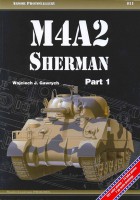
Modelo Centrum Publishing | |
|---|---|
| Ref | Armor PhotoGallery 011 |
| Autor | FotoGallery da armadura |
| Assunto | Sherman M4A2 vol 1 |
Um livro assinado FotoGallery da armadura la revue «Sherman M4A2 vol 1 – Armor Photogallery 011».
história: Le Medium Tank M4 est le char américain moyen produit en plus grande quantité pendant la Seconde Guerre mondiale. Près de cinquante mille exemplaires (toutes versions confondues) furent produits. Son surnom de « Sherman », lui est attribué par les Britanniques, quand ils reçoivent leurs premiers exemplaires dans le cadre de la loi de prêt-bail, continuant leur tradition de nommer les chars d’origine américaine d’après le nom d’un général nordiste de la guerre de Sécession célèbre de ce pays. L’US Army adopte par la suite ce surnom, et le Medium Tank M4 est dès lors appelé « M4 Sherman ». Les Soviétiques surnomment les leurs « Emcha ».
Fonte: Wikipédia
Views : 2213
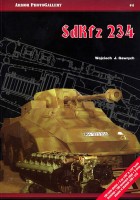
Modelo Centrum Publishing | |
|---|---|
| Ref | Armor PhotoGallery 004 |
| Autor | FotoGallery da armadura |
| Assunto | Sdkfz.234 |
Um livro assinado FotoGallery da armadura a revista «Sdkfz.234 – Armor Photogallery 004».
Le terme de Schwerer Panzerspähwagen (véhicule de reconnaissance blindé lourd) désignait l’ensemble des véhicules à 6 ou 8 roues utilisés par la Wehrmacht au cours de la Seconde Guerre mondiale. Ils jouèrent le rôle important de reconnaissance, en avant des divisions panzer, afin d’estimer les forces ennemies à combattre. Version améliorée des 232, la principale différence visible est ses gardes-boues en une seule pièce (2 pour les versions précédentes).
Fonte: SdKfz 234 na Wikipédia
Views : 2086
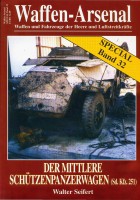
Waffen Arsenal | |
|---|---|
| Ref | Waffen Arsenal Especial 32 |
| Autor | Waffen Arsenal |
| Assunto | O carro de combate de infantaria médio |
Documentação assinada Waffen Arsenal a revista "Der Mittlere Schützenpanzerwagen – Waffen Arsenal Special 32".
O Sonderkraftfahrzeug 251 (SdKfz 251) (littéralement : véhicule de combat spécial) était un véhicule blindé allemand semi-chenillé de combat construit durant la Seconde Guerre mondiale, qui fut produit tout au long du conflit. Sa classification dans la Heer correspond à Schützenpanzer (Véhicule de combat d’infanterie). Il était essentiellement destiné à équiper les Panzerdivisions et les unités de Panzergrenadieren et partageait de nombreux éléments mécaniques avec le SdKfz 7.
Fonte: Wikipédia
Visualizações : 1361
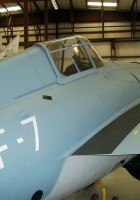
FM-1 Gato selvagem | |
|---|---|
| País | Eua |
| Primeira mosca | 2 de setembro de 1947 |
| Construído | 7885 |
O Grumman F4F Wildcat was an American carrier-based fighter aircraft that began service with both the United States Navy and the British Royal Navy (as the Martlet) in 1940. First used in combat by the British in Europe, the Wildcat was the only effective fighter available to the United States Navy and Marine Corps in the Pacific Theater during the early part of World War II in 1941 and 1942; the disappointing Brewster Buffalo was withdrawn in favor of the Wildcat and replaced as units became available. With a top speed of 318 mph (512 km/h), the Wildcat was outperformed by the faster and more nimble 331 mph (533 km/h) Mitsubishi A6M Zero, but its ruggedness, coupled with tactics such as the Thach Weave, resulted in an air combat kill-to-loss ratio of 5.9:1 in 1942 and 6.9:1 for the entire war. GM produced the FM-1, identical to the F4F-4, but reduced the number of guns to four, and added wing racks for two 250 lb (110 kg) bombs or six rockets. Production later switched to the improved FM-2 (based on Grumman’s XF4F-8 prototype) optimized for small-carrier operations, with a more powerful engine (the 1,350 hp (1,010 kW) Wright R-1820-56), and a taller tail to cope with the torque.
Fonte: FM-1 Wildcat na Wiki
Views : 5026
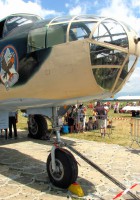
B-25J Mitchell | |
|---|---|
| País | Eua |
| Tipo | Bombardeiro médio |
| Tópico | Álbum de 27 fotos walk-around de um «B-25J Mitchell» |
Galeria de fotos de um B-25J Mitchell, O Norte-americano B-25 Mitchell foi um bombardeiro médio bimotor americano fabricado pela North American Aviation. Foi usado por muitas forças aéreas aliadas, em todos os teatros da Segunda Guerra Mundial, bem como muitas outras forças aéreas após o fim da guerra, e serviu ao longo de quatro décadas.
Fonte: Wikipédia
Views : 3405