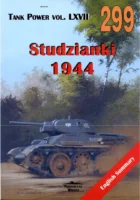
Wydawnictwo Militaria 299 Studzianki 1944

Wydawnictwo Militaria

De serieTankvermogen
Onderwerp

La bataille de Studzianki

Ref29

Een boek van Wydawnictwo Militaria «Studzianki slag 1944 – Wydawnictwo 299» .

The Battle of Studzianki, was a tactical engagement between the elements of the Red Army’s 2nd Tank Army employed as the Cavalry mechanized group of the 1st Belorussian Front and elements of the German 9th Army of Army Group North Ukraine defending south of Warsaw. The battle was part of the Soviet Lublin-Brest Offensive Operation. The 2nd Tank Army was launched through the breach in the German 4th Panzer Army’s front between Parczew and Chełm, and bypassing Lublin attempted to find a crossing over the Visla.

In this it was supported by the Polish First Army, including the Polish 1st Armoured Brigade. In a hasty encounter battle during which the Polish 1st Armoured Brigade was located in the first echelon of the 2nd Tank Army. At the point where the Army was able to occupy the Magnuszew brideghead, the Polish brigade engaged advance elements of the counter-attacking German Fallschirm-Panzer Division 1 Hermann Göring with the express orders to deny Vistula crossings to the Red Army. The German counter-attack tried to dislodge the Soviet engineers, and the Polish troops providing support for them, behind Vistula off the bridgehead. The Soviet and Polish forces held the bridgehead, and German forces suffered heavy casualties before withdrawing. To commemorate the battle, in 1969 the name of the village Studzianki was changed to include the word Pancerne, meaning Armoured in Polish language. The episodes 3-5 of Polish TV series Czterej pancerni i pies (Four Tankmen and the Dog) depict the crew of Polish tank during the battle of Studzianki.

Bron: Wikipedia

Lees verder

Bekeken : 953

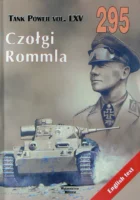
Wydawnictwo Militaria 295 Rommel's Tanks

Wydawnictwo Militaria

De serieTankvermogen
Sujet

The Tanks of Rommel

Ref295

The book “Wydawnictwo Militaria 295: The Tanks of Rommel” focuses on the tanks used by the Deutsches Afrikakorps (DAK) under General Erwin Rommel’s command during World War II. It provides detailed documentation on the various armored units and their operations in the deserts of Libya, western Egypt, and Tunisia. The author, Janusz Ledwoch, presents information on military tactics, equipment, and the engagements of these tank divisions in the context of the North African campaigns. The book is rich in illustrations and photographs, making it a valuable resource for military history enthusiasts and modelers.

Bron: Wikipedia

Lees verder

Bekeken : 629

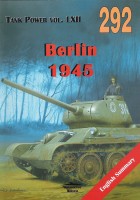
Wydawnictwo Militaria 292 - Berlin 1945

Wydawnictwo Militaria

SerieTankvermogen
Sujet

Bataille de Berlin 1945

Ref292

Une documentatie signée Wydawnictwo Militaria le livre «Bataille de Berlin 1945 – Wydawnictwo 292» .

De Slag bij Berlijn se déroula de fin avril 1945 au 2 mai 1945. Elle opposa ce qui restait des forces du Troisième Reich à l’Armée rouge. Staline donna une portée symbolique à ce dernier coup porté au régime nazi, après les lourdes pertes subies par les Soviétiques pour inverser le flux de l’invasion.

Bron: Wikipedia

Lees verder

Bekeken : 901

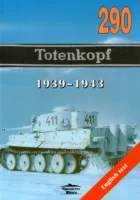
Wydawnictwo Militaria 290 Totenkopf 1939-1943

Wydawnictwo Militaria

SerieTankvermogen
Sujet

3e Pantserdivisie – SS-Totenkopf

Ref290

Une documentatie signée Wydawnictwo Militaria het boek "3rd SS Panzer Division Totenkopf – Wydawnictwo 290".

3e SS Panzer Division Totenkopf était l’une des 38 divisions de Waffen-SS durant la Seconde Guerre mondiale. La division Totenkopf avait pour origine les unités de garde des camps de concentrations, les SS-Totenkopfverbände (« unités SS à tête de mort »). Celles-ci étaient dirigées par Theodor Eicke à partir du 4 juillet 1934, lors de sa nomination comme inspecteur des camps de concentration. Rejoignant la Leibstandarte Adolf Hitler (« régiment de garde d’Adolf Hitler ») et la SS-Verfügunsgstruppe (littéralement « troupe SS à disposition »), les unités Totenkopf constituent l’un des trois piliers de la future Waffen SS. Après la réorganisation de la dénomination et de la numérotation des divisions SS en 1943, elle reçoit la dénomination officielle de 3e SS Pantserdivisie Totenkopf, aux côtés, entre autres, de la 1re division SS Leibstandarte Adolf Hitler et de la 2e panzerdivision SS Das Reich, issue de la Verfügunsgstruppe. Le 16 octobre 1939, Adolf Hitler autorise le regroupement des régiments Totenkopf pour former une division Waffen-SS. Cette division est intégrée à la 2e Armée pendant les opérations de la campagne de France en mai 1940.

Bron: 3e SS Panzer Division Totenkopf op Wikipedia

Lees verder

Bekeken: 1206

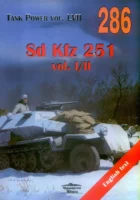
Wydawnictwo Militaria 286 Sd Kfz 251 vol. I-II

Wydawnictwo Militaria

SerieTankvermogen
Sujet

Sdkfz.251 - Sonderkraftfahrzeug 251

Ref286>

Une documentatie signée Wydawnictwo Militaria le livre «Sdkfz.251 – Wydawnictwo 286» .

De Sonderkraftfahrzeug (SdKfz) (letterlijk: speciaal gevechtsvoertuig) was een Duits semi-tracked gevechtspantservoertuig gebouwd tijdens de Tweede Wereldoorlog, dat tijdens het conflict werd geproduceerd. Het was vooral bedoeld om Panzer Divisions en Panzergrenadieren units uit te rusten en deelde veel mechanische elementen met de SdKfz 7.

Bron: Wikipedia

Lees verder

Bekeken : 669

M7 Priester

M7 Priester

BetaaltUsa
TypeZelfrijdend pistool
FabrikantAmerikaanse locomotief bedrijf
Geproduceerdapril 1942–juli 1945

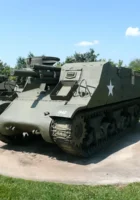
Fotogalerij op een M7 Priest, Officieel aangeduid als de 105mm Howitzer Motor Carriage M7, de M7 Priester is een zelfrijdend kanon geproduceerd tijdens de Tweede Wereldoorlog door de Verenigde Staten. Priester is de bijnaam die de Britten gaven, vanwege het feit dat het machinegeweer dat op een rail werd geplaatst de indruk wekte dat de tank was uitgerust met een preekstoel. Het volgde de Engelse bisschop en ze noemden het officieel 105mm SP Priest. (De Britten gaven graag namen met betrekking tot religie aan hun zelfrijdende kanonnen (Priester = priester, Bisschop = bisschop, Koster = koster), een traditie die duurde tot de jaren 1960 met de Abt (abt).)

Bron: M7 Priest op Wikipedia

Lees verder

Views : 6266

Wydawnictwo-Militaria-285-Flammpanzer

Wydawnictwo Militaria

PublisherWydawnictwo Militaria
SerieTankvermogen
Sujet

Flammpanzer tank

Ref285

Une documentatie signée Wydawnictwo Militaria het boek "Flammpanzer – Wydawnictwo 285".

Le Flammpanzer est un char allemand équipé d’un lance-flamme. Avec le souvenir des combats de rues de Stalingrad à l’esprit, une centaine de Panzer III modèle M furent reconvertis en char lance-flammes. Le canon était remplacé par la nouvelle arme et l’équipage fût réduit à trois. Le blindage frontal était renforcé. Ils furent engagés à Koursk, mais la conversion ne fut pas un succès. La plupart des véhicules furent reconvertis par la suite en chars standards ou en véhicules de dépannage. Production 100 unités de février 1943 à avril 1943.

Bron: Wikipedia

Lees verder

Views : 391

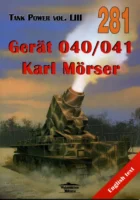
Wydawnictwo Militaria 281 Gerat 040-041 ''Karl Morser''

Wydawnictwo Militaria

SerieTankvermogen
Sujet

Gerät 040/041 – Karl Mörser

Ref281

Une documentatie signée Wydawnictwo Militaria le livre «Gerät 040/041 – Karl Mörser – Wydawnictwo 281» .

Mortier Karl est la plus grosse pièce d’artillerie automotrice jamais construite. En 1939, une commande fut passée par la Wehrmacht pour créer une arme capable de venir à bout des places fortes. Le résultat fut le mortier “Karlgerät" die het levenslicht zag in zes exemplaren. Dit monster van 132 ton, geladen en 107 mannen nodig om het in werking te stellen, waaronder 4 om het te verplaatsen, zou in staat zijn om 2,5 meter cementdikte en 45 cm stalen pantser te slopen. Omdat hij met een snelheid van slechts 5 km/u kan rijden, moet hij op twee treinwagons worden gemonteerd, één aan de voorkant en de andere aan de achterkant, net als het "Leopold"-kanon om lange afstanden af te leggen. Alleen op hun bestemming zullen ze zich op eigen kracht kunnen verplaatsen. Bij zijn schietmanoeuvres moet hij worden vergezeld door een munitiedrager die is uitgerust met een krik die de projectielen van 2,2 ton die hij gebruikt kan laden. Dit werk werd toevertrouwd aan een Panzer IV-chassis dat voor deze functie was aangepast.

Bron: Mortier Karl sur Wikipedia

Lees verder

Bekeken : 589

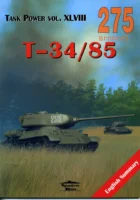
Wydawnictwo Militaria 275 T34-85

Wydawnictwo Militaria

SerieTankvermogen
Sujet

Char T-34/85

Ref265

Une documentatie signée Wydawnictwo Militaria le livre «Char T-34/85 – Wydawnictwo 275» .

De T-34 is een middelgrote tank die in 1940 in dienst kwam bij het Rode Leger. Destijds vormde het een opmerkelijk evenwicht tussen de drie belangrijkste factoren die de kwaliteit van een gepantserd voertuig bepalen, namelijk: vuurkracht, bescherming en mobiliteit. Dit succes maakte het tot een van de troeven van de Sovjet-Unie in het licht van de invasie van de Wehrmacht. Om dit tegen te gaan, zal deze laatste zijn ontwerpbeleid voor gepantserde voertuigen moeten herzien door bijvoorbeeld de Panzer-V 'Panther' te ontwikkelen, die enkele van zijn technische kenmerken van de T-34 heeft geleend. Hoewel de T-34 snel werd ingehaald door buitenlandse productie, zou hij van 1940 tot 1958 nog steeds in productie blijven, met een totaal aantal geproduceerde eenheden geschat op 84.070 eenheden, waarmee het de op één na meest geproduceerde tank aller tijden is, net achter zijn opvolgers, de T-54 en T-55.

Descendant des chars rapides BT conçus par l’équipe de I. Kochkine à Kharkov, le T-34 introduisait de nombreuses innovations technologiques, comme l’utilisation d’un moteur diesel en alliage d’aluminium, des chenilles larges, et des plaques de blindage inclinées sur tout le pourtour. Il n’était pas exempt de défauts, au demeurant, avec par exemple sa tourelle biplace et son manque de matériel de transmission, qui rendait son emploi tactique assez primaire, et provoquait de nombreuses pertes, mais aussi une fiabilité mécanique discutable. Mais comme son équivalent américain le Sherman M4, il montra une capacité d’évolution certaine, et surtout une facilité de construction qui le rendait disponible en très grand nombre, ce qui lui assura une longévité exceptionnelle, 27 pays l’utilisant encore en 1996. Son influence sur le développement des chars de combat fut aussi certaine, car il est souvent considéré comme un des chars ayant servi à définir le concept de char de bataille principal.

Bron: Wikipedia

Lees verder

Bekeken: 934

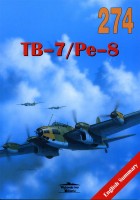
Wydawnictwo Militaria 274 - Petlyakov Pe-8 TB-7

Wydawnictwo Militaria

SerieVliegtuigen
Sujet

Bombardier TB-7 – Petliakov Pe-8

Ref274

Une documentatie signée Wydawnictwo Militaria le livre «TB-7 – Petliakov Pe-8 – Wydawnictwo 274» .

De Petliakov Pe-8 (ANT-42, également TB-7) est un bombardier lourd quadrimoteur soviétique conçu en 1934 par le bureau de conception de V. M. Petliakov dirigé par A. N. Tupolev. La première unité vit le jour en automne 1936, effectua son premier vol le 27 décembre de cette même année. Les essais réalisés révélèrent qu’à des altitudes élevées le Pe-8 surpassait tous les bombardiers lourds connus en vitesse, et que ses performances de vol correspondaient à celles des meilleurs chasseurs de l’époque.

Le premier prototype fut appelé « TB-7 » et ce n’est qu’en 1941 ou 1942 que, Vladimir Petliakov prenant la direction du projet, l’on décida d’appeler le bombardier « Petliakov Pe-8 ». « ANT-42 » était la désignation interne du bureau d’études, en référence à Andreï Nikolaïevitch Tupolev. Cependant, l’un des défauts du bombardier résidait dans l’installation d’origine des moteurs AM-34FRN qui ne parvenaient pas à fournir une puissance suffisante. C’est la raison pur laquelle l’appareil fut équipé dès 1940 de moteurs AM-35A avec lesquels il fut produit en série. Au cours de la production en série, les dimensions et la conception de l’appareil ne subirent pratiquement aucun changement, a l’exception de l’installation de différents types de moteurs et de modifications dans l’armement. La production dura jusqu’en 19445. Au total, 93 appareils furent produits6.

Bron: Petliakov Pe-8 op Wikipedia

Lees verder

Bekeken : 424