Lla McDonnell F2H Banshee était un avion de chasse à réaction monoplace déployé par la Marine des États-Unis et le Corps des Marines des États-Unis de 1948 à 1961. Il a été l’un des principaux chasseurs américains utilisés pendant la guerre de Corée et a été le seul chasseur à réaction jamais déployé par la Marine royale canadienne, au service de la MRC de 1955 à 1962. L’avion’s nom est dérivé de la banshee de la mythologie irlandaise.
Attendez, la recherche McDonnell F2H Banshee pour vous ...
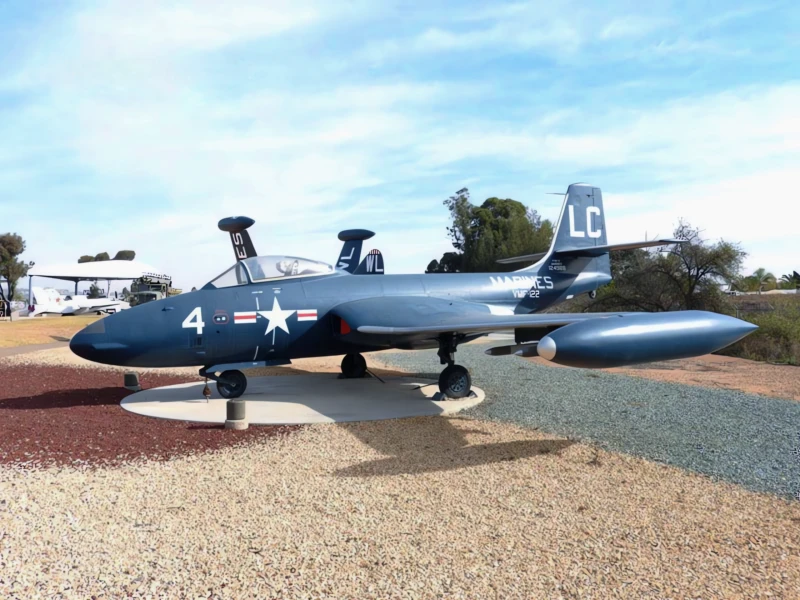
McDonnell F2H-2P Banshee Walk Around
Photographe
Bill Maloney
Localisation
Wings of Eagles Discovery Center
Photos
16
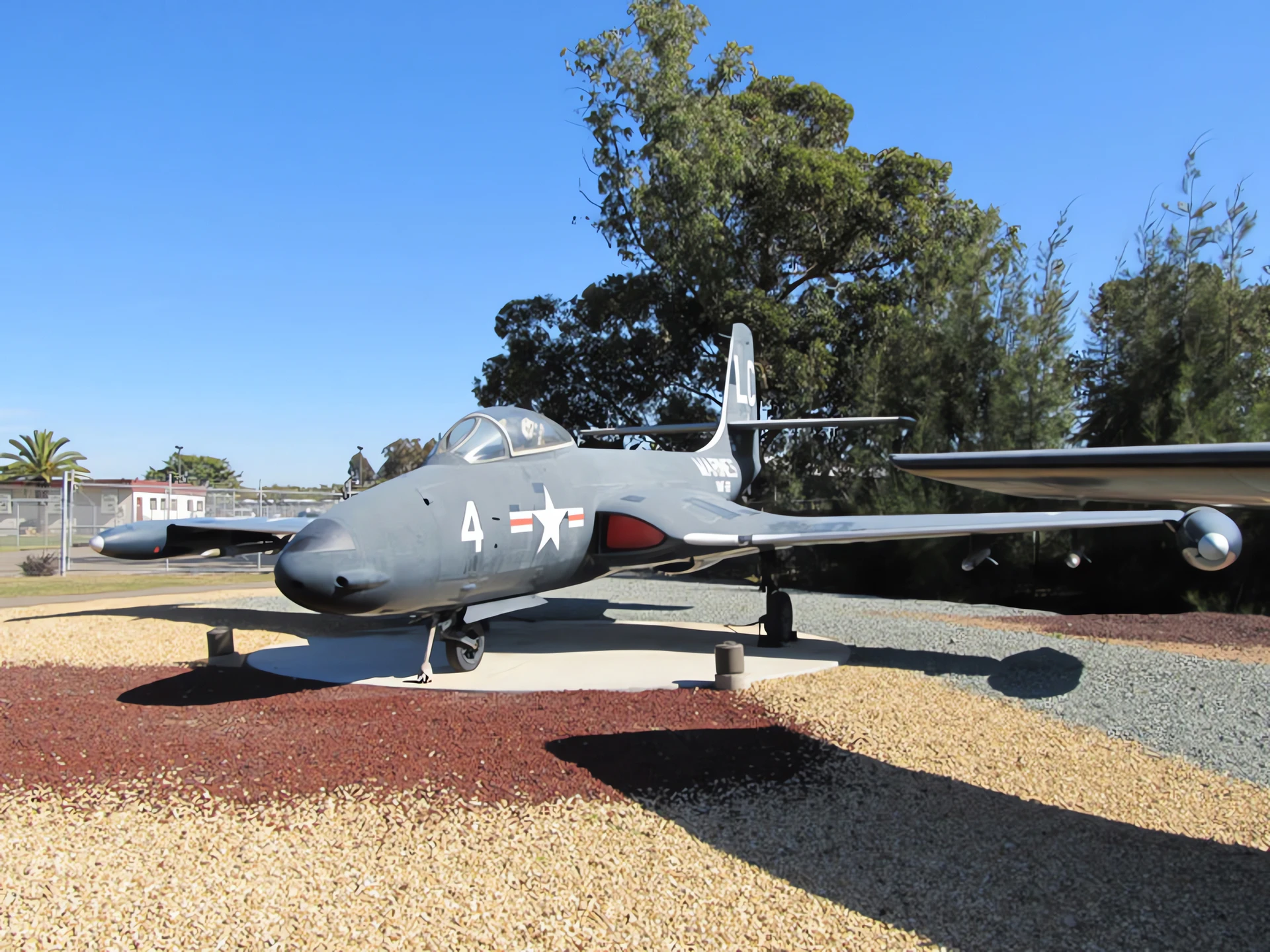
F2H-3 Banshee Walk Around
Photographe
Michael Fortin
Localisation
Musée national de l’aviation navale
Photos
64
Voir aussi :
The Navy’s Big-Wing Fighter
Lla McDonnell F2H-2 Bansheewas a twin-engine carrier-based jet fighter that evolved from the smaller FH-1 Phantom. Entering service just before the Korean War, the F2H-2 was larger, carried more fuel, and possessed significantly more firepower than its predecessor. Known for its exceptional high-altitude performance, it became the primary escort for B-29 bombers and a formidable ground-attack platform for the U.S. Navy and Marine Corps.
Attribute
Technical Specification (F2H-2)
Rôle
Carrier-based Fighter-Bomber
Crew
1 (Pilot)
First Flight
January 11, 1947 (XF2H-1)
Groupe motopropulseur
2 × Westinghouse J34-WE-34 turbojets
Thrust
3,250 lbf (14.5 kN) per engine
Vitesse maximale
580 mph (933 km/h)
Service Ceiling
46,000 feet (14,000 m)
Armement
4 × 20mm M3 cannons; up to 1,580 lbs of bombs/rockets
Engineering for Vertical Performance
Wing-Root Engine Mounting:Like the FH-1, the Banshee’s engines were buried in the thickened wing roots. This design reduced aerodynamic drag and kept the weight centered, though it made engine maintenance more labor-intensive.
High Aspect-Ratio Wing:The F2H-2 featured long, straight wings that provided massive lift. This allowed the Banshee to out-climb and out-maneuver contemporary jets like the F9F Panther at altitudes above 30,000 feet.
Increased Fuel Capacity:The F2H-2 variant added distinctive 200-gallon wingtip fuel tanks. Unlike the tanks on the FJ-1, these were designed to be aerodynamic « end-plates » that actually improved wing efficiency.
Kneeling Nose Gear:Carried over from early McDonnell designs, the nose gear could « kneel » down, allowing the tail to stick up so other aircraft could be parked partially underneath it on crowded carrier decks.
Combat Service and Specialized Roles
Korea: The High-Altitude Escort:During the Korean War, the Banshee was one of the few naval jets that could operate at the same altitudes as the B-29 Superfortress, making it a vital escort against MiG-15 threats.
F2H-2P Photo-Recon:One of the most successful variants was the unarmed « p » model, which featured an elongated nose packed with six vertical and oblique cameras. It was the premier naval recon aircraft of the early 1950s.
Night Fighting (F2H-2N):A night-fighter version was developed with a radar-equipped nose, though it was produced in smaller numbers than the standard day fighter.
Lla « Old Banjo » Legacy:The Banshee served until the early 1960s with the Royal Canadian Navy and the U.S. Naval Reserve. It remains a key link in the McDonnell lineage that led to the F3H Demon and the F-4 Phantom II.




 McDonnell XF-85 Goblin – Photos & Vidéos
 McDonnell Douglas F/A-18 Hornet – Photos & Vidéo
 McDonnell F3H Demon – Photos & Vidéo
 McDonnell Douglas KC-10 Extender – Photos et vidéo
 McDonnell FH Phantom – Photos et vidéos
 McDonnell Douglas T-45 Goshawk – Photos et vidéo
 McDonnell F-101B Voodoo – Photos & Vidéo
 Messerschmitt Bf 109G-2 – Walk Around
 General Motors FM-2 Wildcat – WalkAround
 Junkers Ju-52 Tante Ju - Walk Around