O McDonnell F2H Banshee foi um avião de caça a jato baseado em porta-aviões de assento único implantado pela Marinha dos Estados Unidos e pelo Corpo de Fuzileiros Navais dos Estados Unidos de 1948 a 1961. Foi um dos principais caças americanos usados durante a Guerra da Coreia e foi o único caça a jato já implantado pela Marinha Real Canadense, servindo o RCN de 1955 até 1962. O nome da aeronave é derivado do banshee da mitologia irlandesa.
Aguarde, Procurando McDonnell F2H Banshee para você...
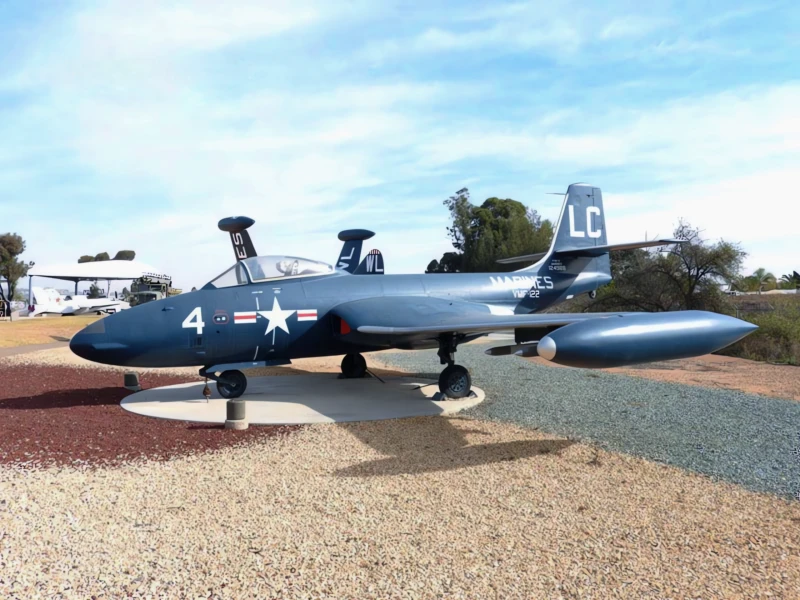
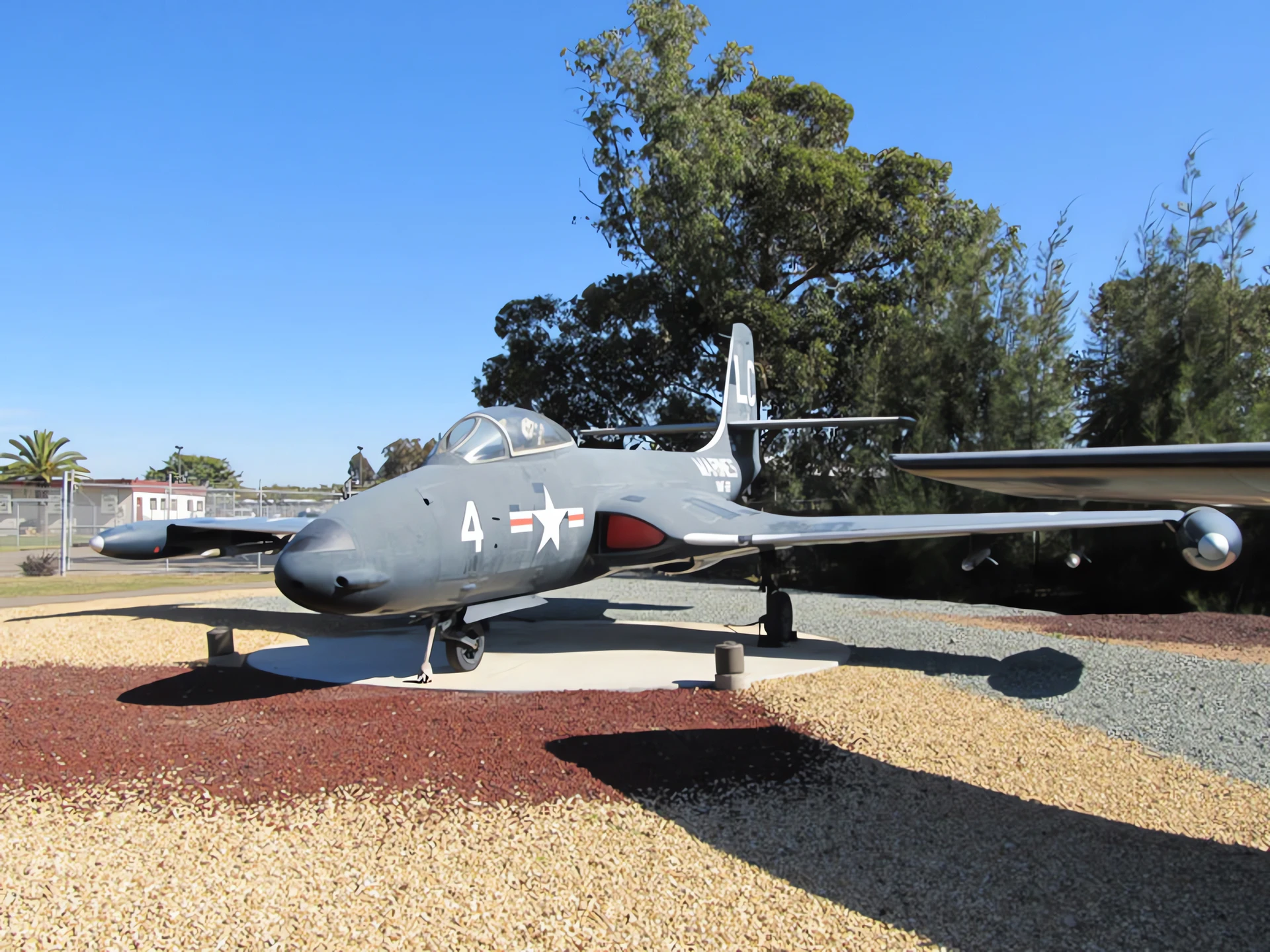
McDonnell F2H-2P Banshee Walk Around
Fotógrafo
Bill Maloney
Localização
Wings of Eagles Discovery Center
Fotos
16
F2H-3 Banshee Walk Around
Fotógrafo
Michael Fortin
Localização
Museu Nacional de Aviação Naval
Fotos
64
Veja também:
The Navy’s Big-Wing Fighter
O McDonnell F2H-2 Bansheewas a twin-engine carrier-based jet fighter that evolved from the smaller FH-1 Phantom. Entering service just before the Korean War, the F2H-2 was larger, carried more fuel, and possessed significantly more firepower than its predecessor. Known for its exceptional high-altitude performance, it became the primary escort for B-29 bombers and a formidable ground-attack platform for the U.S. Navy and Marine Corps.
Attribute
Technical Specification (F2H-2)
Papel
Carrier-based Fighter-Bomber
tripulação
1 (Pilot)
First Flight
January 11, 1947 (XF2H-1)
Usina
2 × Westinghouse J34-WE-34 turbojets
Thrust
3,250 lbf (14.5 kN) per engine
Maximum Speed
580 mph (933 km/h)
Service Ceiling
46,000 feet (14,000 m)
Armamento
4 × 20mm M3 cannons; up to 1,580 lbs of bombs/rockets
Engineering for Vertical Performance
Wing-Root Engine Mounting:Like the FH-1, the Banshee’s engines were buried in the thickened wing roots. This design reduced aerodynamic drag and kept the weight centered, though it made engine maintenance more labor-intensive.
High Aspect-Ratio Wing:The F2H-2 featured long, straight wings that provided massive lift. This allowed the Banshee to out-climb and out-maneuver contemporary jets like the F9F Panther at altitudes above 30,000 feet.
Increased Fuel Capacity:The F2H-2 variant added distinctive 200-gallon wingtip fuel tanks. Unlike the tanks on the FJ-1, these were designed to be aerodynamic “end-plates” that actually improved wing efficiency.
Kneeling Nose Gear:Carried over from early McDonnell designs, the nose gear could “kneel” down, allowing the tail to stick up so other aircraft could be parked partially underneath it on crowded carrier decks.
Combat Service and Specialized Roles
Korea: The High-Altitude Escort:During the Korean War, the Banshee was one of the few naval jets that could operate at the same altitudes as the B-29 Superfortress, making it a vital escort against MiG-15 threats.
F2H-2P Photo-Recon:One of the most successful variants was the unarmed “P” model, which featured an elongated nose packed with six vertical and oblique cameras. It was the premier naval recon aircraft of the early 1950s.
Night Fighting (F2H-2N):A night-fighter version was developed with a radar-equipped nose, though it was produced in smaller numbers than the standard day fighter.
The “Old Banjo” Legacy:The Banshee served until the early 1960s with the Royal Canadian Navy and the U.S. Naval Reserve. It remains a key link in the McDonnell lineage that led to the F3H Demon and the F-4 Phantom II.




 McDonnell XF-85 Goblin – Fotos e Vídeos
 McDonnell Douglas F/A-18 Hornet – Fotos & Vídeo
 McDonnell F3H Demon – Fotos e Vídeo
 McDonnell Douglas KC-10 Extender – Fotos e Vídeo
 McDonnell FH Phantom – Fotos & Vídeo
 McDonnell Douglas T-45 Goshawk – Fotos e Vídeo
 McDonnell F-101B Voodoo – Fotos e Vídeo
 Messerschmitt Bf 109G-2 - Ande por aí
 General Motors FM-2 Wildcat – WalkAround
 Junkers Ju-52 Tante Ju – Ande por aí