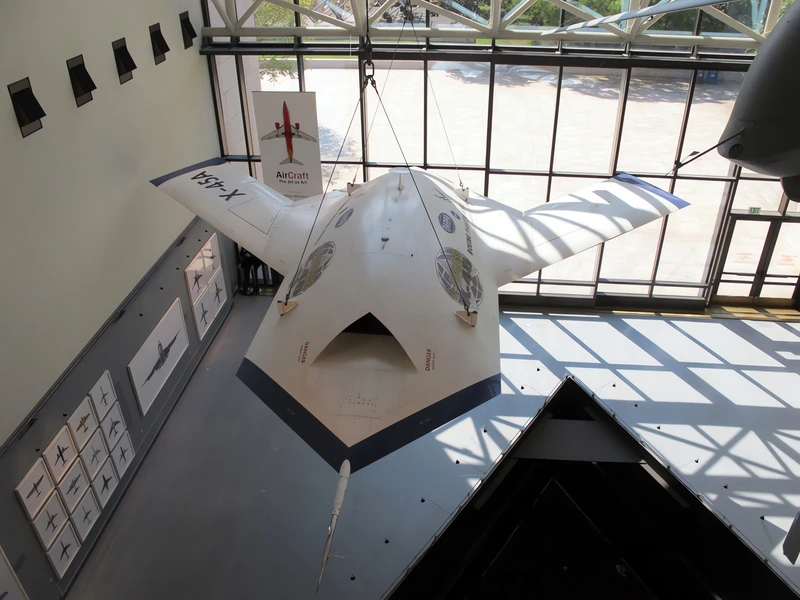
Boeing X-45 | |
|---|---|
| País | E.e.u.u |
| Papel | Vehículo aéreo de combate no tripulado |
| Primer vuelo | 22 de mayo de 2002 |
| Construido | 2 |
el Boeing X-45 El vehículo aéreo de combate no tripulado es un demostrador conceptual para una próxima generación de aviones militares completamente autónomos, desarrollado por Phantom Works de Boeing. Fabricado por Boeing Integrated Defense Systems, el X-45 fue parte del proyecto J-UCAS de DARPA.
Fuente: Boeing X-45 en Wikipedia
| Boeing X-45A Paseo alrededor | |
|---|---|
| Fotógrafo | Vladimir Yakubov |
| Localización | Museo Nacional del Aire y el Espacio, Washington DC |
| Fotos | 46 |
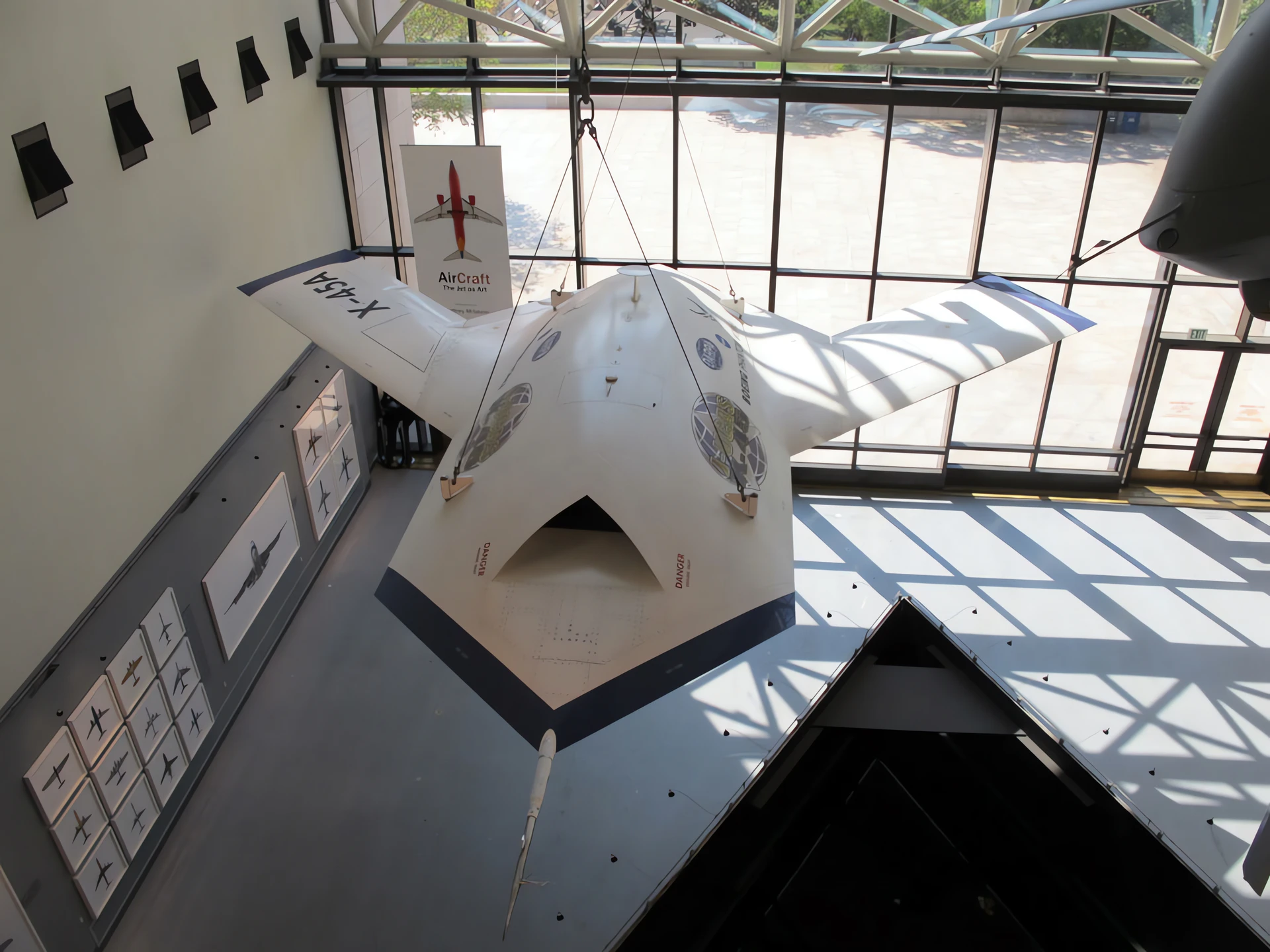
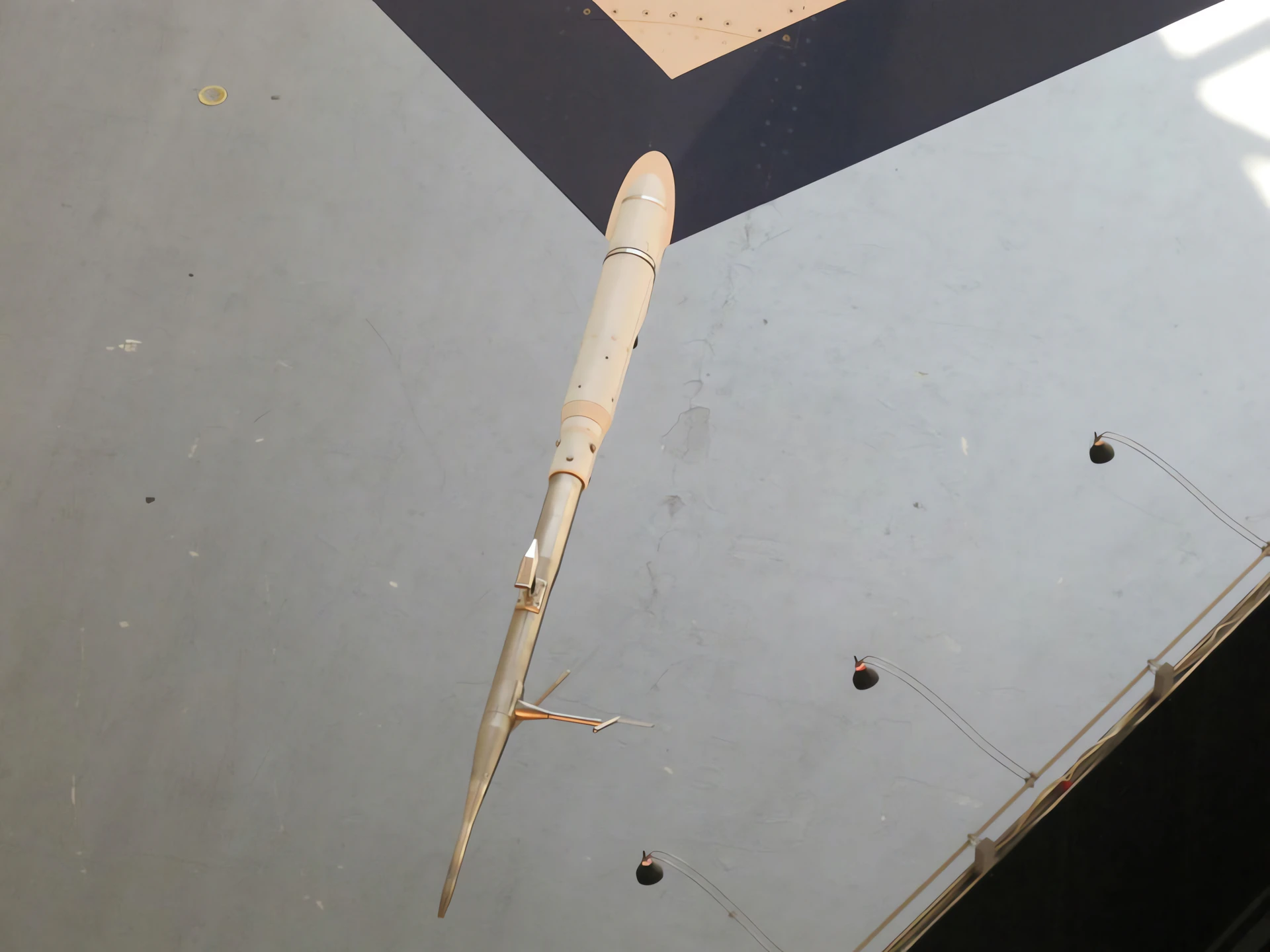
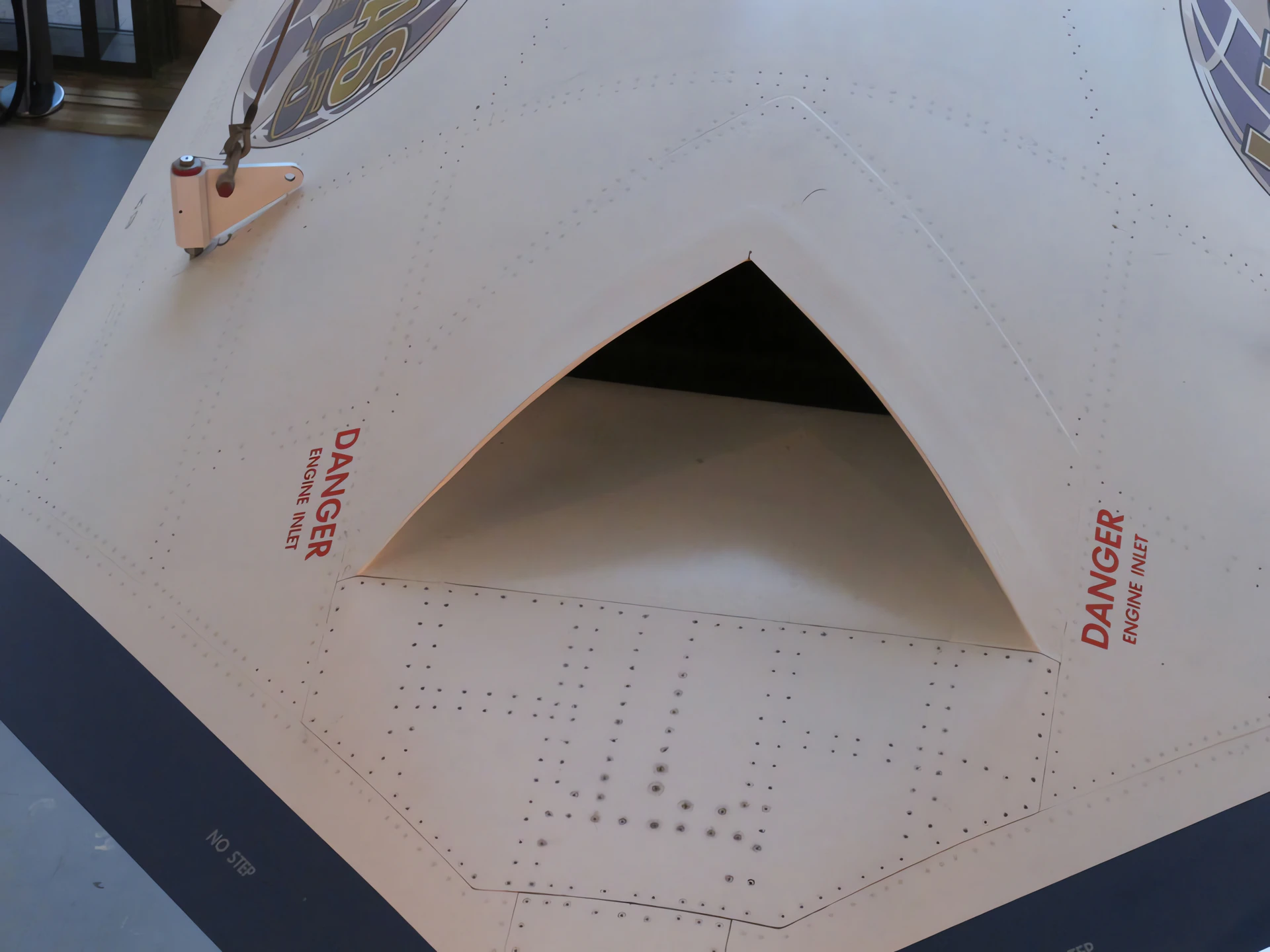
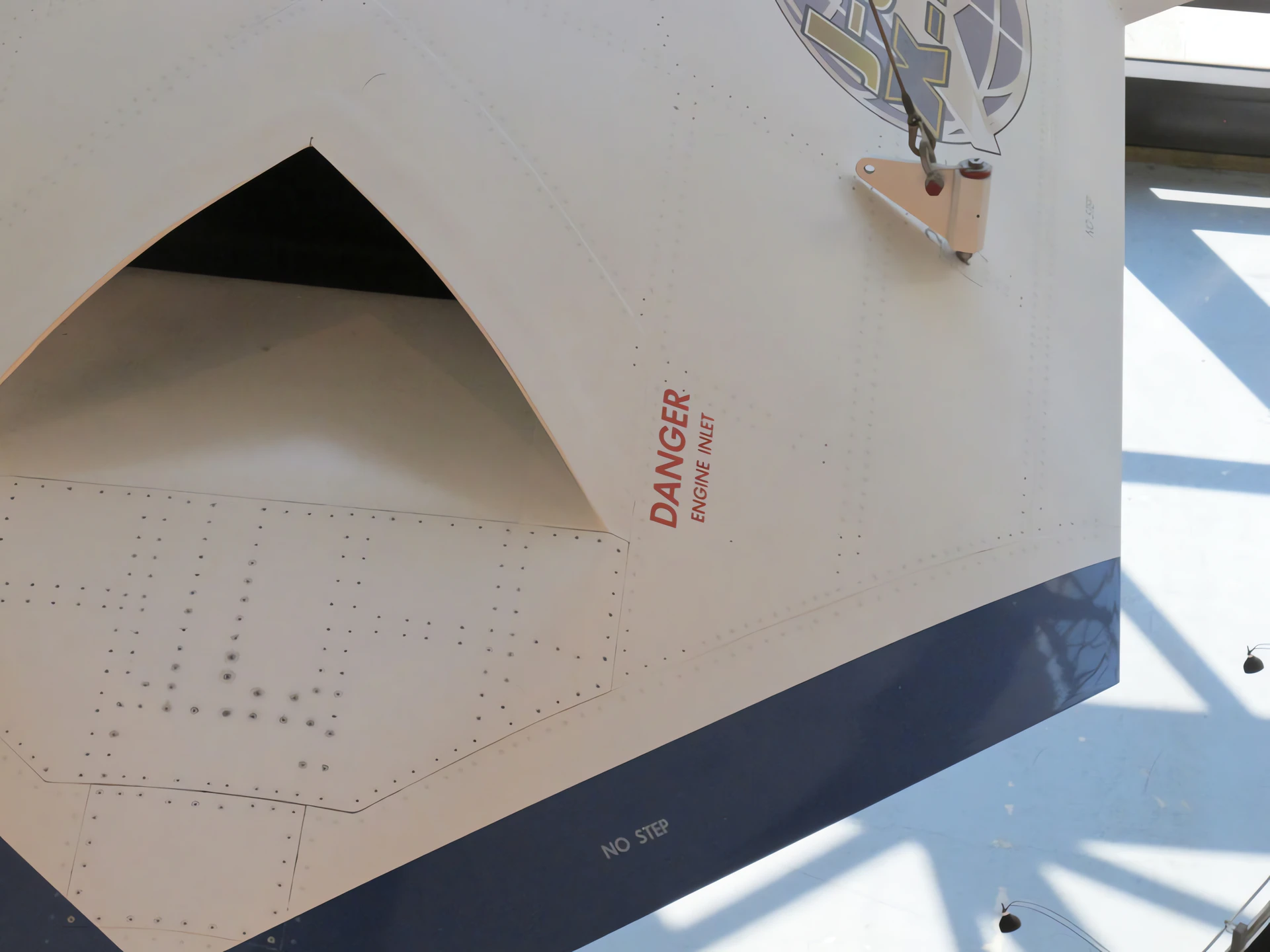


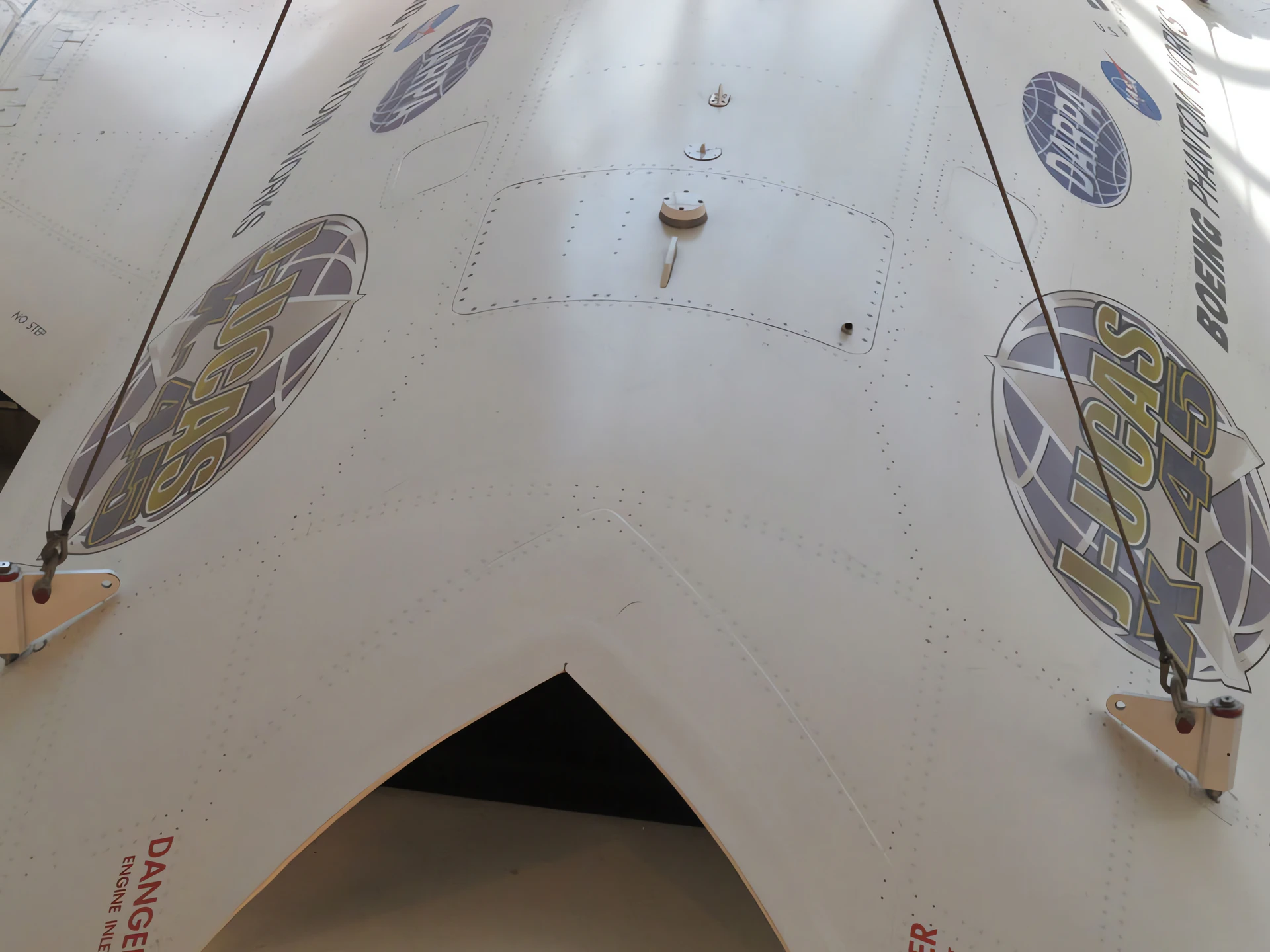
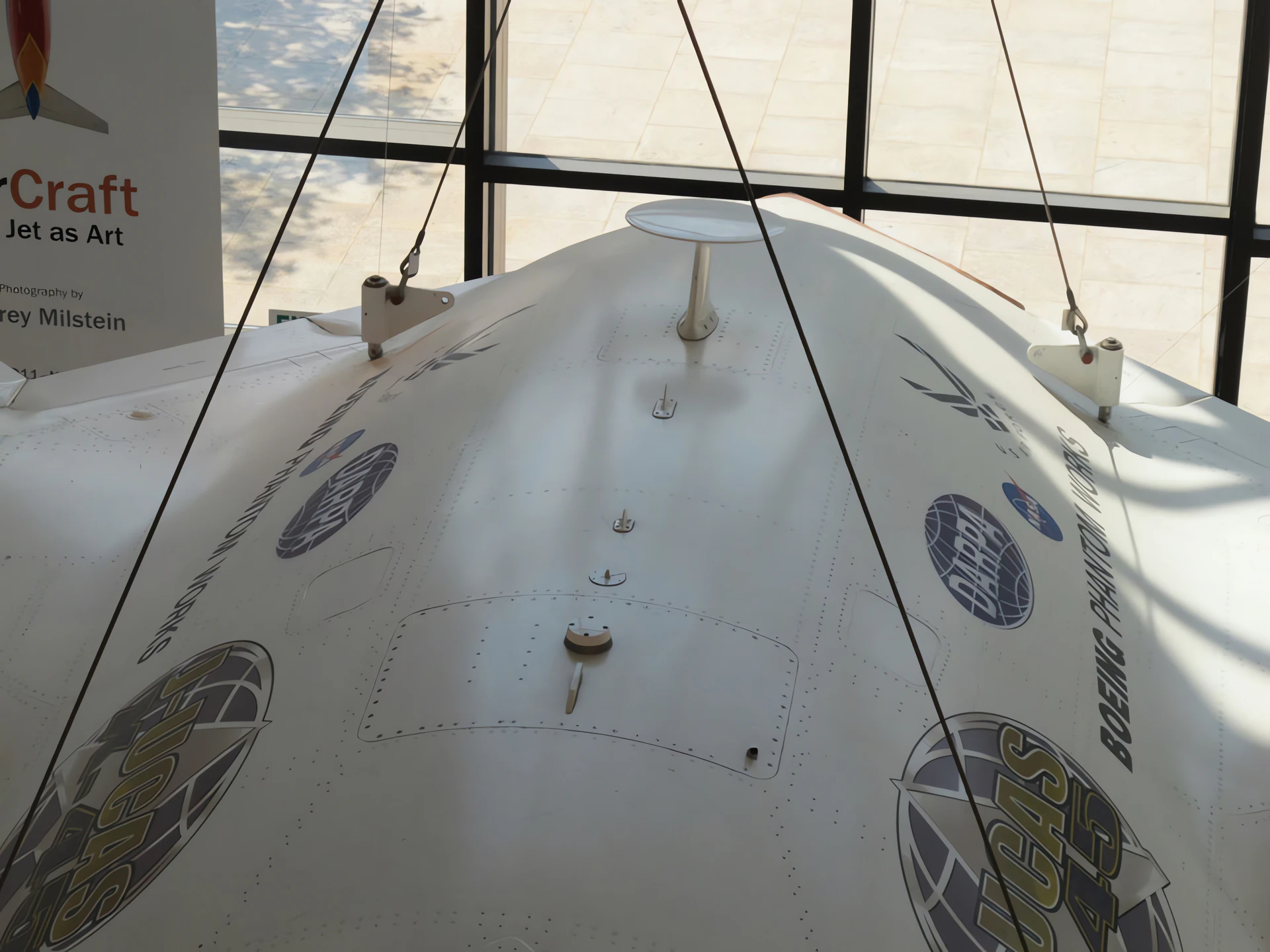
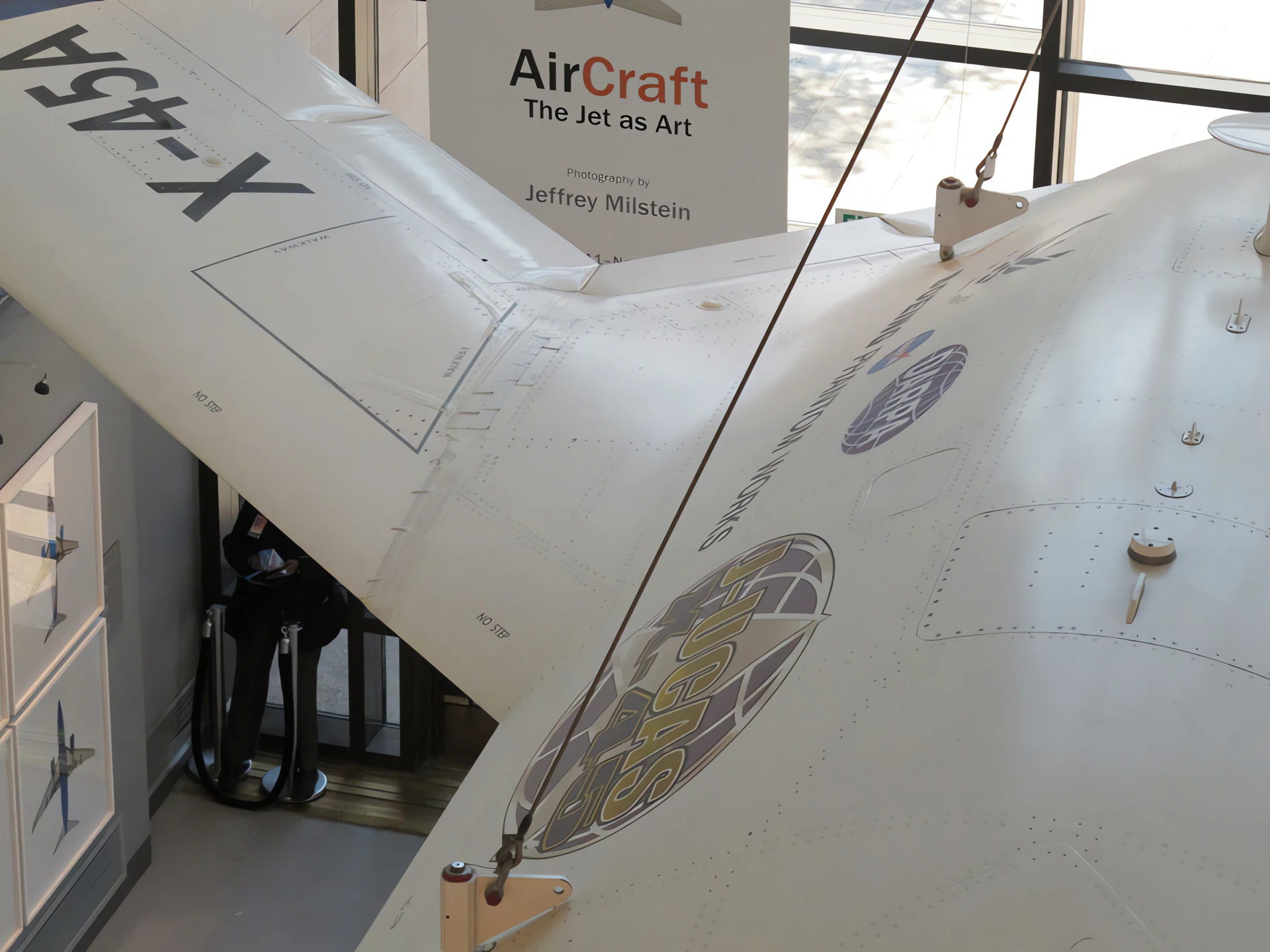

| Boeing X-45A J-UCAS Camina alrededor | |
|---|---|
| Fotógrafo | Vladimir Yakubov |
| Localización | El Museo Nacional de la USAF |
| Fotos | 43 |
Ver también:


General Characteristics and Role
The Boeing X-45 was a series of experimental unmanned combat air vehicles (UCAV) developed by Boeing Phantom Works for the Defense Advanced Research Projects Agency (DARPA) and the U.S. Air Force. The primary role of the X-45 program was to demonstrate the feasibility of an autonomous, highly survivable, and affordable aircraft capable of performing deep strike and suppression of enemy air defense (SEAD) missions. It pioneered technologies essential for future uncrewed, stealthy strike platforms, specifically focusing on autonomous flight and combat operation. The X-45A was the initial subscale technology demonstrator, paving the way for the larger X-45C variant.
| Property | Typical Value (X-45A Demonstrator) |
|---|---|
| Papel | Experimental Unmanned Combat Air Vehicle (UCAV) |
| National Origin | Estados Unidos |
| Fabricante | Boeing Phantom Works |
| First Flight (X-45A) | 22 de mayo de 2002 |
| Equipo | 0 (Autonomous or Ground-Controlled) |
| Longitud | 8.08 m (26 ft 6 in) |
| Envergadura | 10.31 m (33 ft 10 in) |
| Maximum Takeoff Weight | 5,528 kg (12,187 lb) |
| Configuración | Tailless, flying wing (stealth optimization) |
Powerplant and Key Technologies
- Engine: 1 x Honeywell F124-GA-100 turbofan engine.
- Thrust: Approx. 28.2 kN (6,340 lbf).
- Stealth Design: The tailless, swept-wing, and blended-body configuration was optimized to minimize radar cross-section, similar to later stealth designs.
- Control System: Full fly-by-wire system, capable of completely autonomous mission execution, including detection, attack (simulated), and return to base, with human oversight.
- Weapons Bay: The X-45A was equipped with an internal weapons bay capable of carrying 450 kg (1,000 lb) class precision-guided munitions (PGMs).
- Maximum Speed: High subsonic (approx. Mach 0.75).
Program Milestones and Legacy
- Key Achievement: The X-45A successfully demonstrated several “firsts” for an autonomous combat vehicle, including the successful simulated destruction of a target after receiving a command from a remote controller and the coordination of two X-45A vehicles to autonomously attack targets.
- X-45C Variant: The subsequent, larger X-45C was designed with a single large internal bay and a wingspan of 15 m (49 ft), intended to directly compete for the U.S. Navy’s future carrier-based UCAV.
- Cancellation: The Joint Unmanned Combat Air System (J-UCAS) program, which encompassed the X-45 (and Northrop Grumman’s X-47), was restructured and canceled in 2006, leading to the X-45 program’s termination.
- Influence: Despite its cancellation, the X-45 program’s technological achievements profoundly influenced subsequent U.S. Navy and Air Force unmanned programs, including the Boeing Loyal Wingman and the classified UCAV efforts.
Vistas : 827
También puede ver:
 Boeing X-32 – Fotos y videos
 Boeing KC-97 Stratofreighter – Fotos y videos
 Boeing X-40A – Fotos y Videos
 Boeing 307 Stratoliner – Fotos y videos
 Boeing EA-18G Growler – Fotos y Video
 Boeing E-3 Sentry – Fotos y Video
 Boeing NC-135 – Fotos y Video
 Boeing RC-135 – Fotos y Video
 Boeing P-26 – Fotos y Video
 B-29 Super Fortress – WalkAround