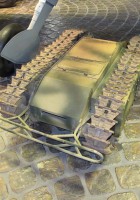
SdKfz 302 Leichter Ladungstrager Goliat

SdKfz 302 Leichter Ladungstrager Goliat

PaísAlemania
TipoVehículo de demolición a control remoto
En servicio1942-1945
Construido7564

Galería de fotos de un SdKfz 302 Leichter Ladungstrager Goliat, The Goliath tracked mine – complete German name: Leichter Ladungsträger Goliath (Sd.Kfz. 302/303a/303b) – was a remote controlled German-engineered demolition vehicle, also known as the beetle tank to the Allies. Employed by the Wehrmacht during World War II. It carried 60 or 100 kilograms (130 or 220 lb) of high explosives, depending on the model, and was intended to be used for multiple purposes, such as destroying tanks, disrupting dense infantry formations, and demolition of buildings and bridges.

Fuente: SdKfz 302 Leichter Ladungstrager Goliat en Wiki

Continuar leyendo

Vistas : 3444

Sdkfz 179 Bergepanther

Sdkfz 179 Bergepanther

PaísAlemania
TipoVehículo blindado de recuperación
FotografíaVladimir Yakubov
LocalizarMusee des Blindes, Saumur
DescripciónÁlbum de 112 fotos walk-around de un «Sdkfz 179 Bergepanther»

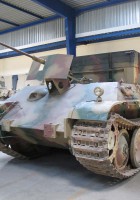
Galería de fotos de un Sdkfz 179 Bergepanther, An armoured recovery vehicle (ARV) is an armoured vehicle used during combat for recovery or repair of battle-damaged and inoperable armoured fighting vehicles. The term “Armoured Repair and Recovery Vehicle” (ARRV) is also used. Bergepanther (SdKfz 179) – PzKpfw V Panther chassis 347 produced (1943 to 1945).

Fuente: Sdkfz 179 Bergepanther en Wiki

Continuar leyendo

Vistas : 6562

MT-55 Bridgelayer

MT-55 Bridgelayer

PaísEslovaquia
TipoArmoured vehicle-launched bridge
FotografíaCarey
Localizar“Stalin Line” Museum, Zaslavl, Belarus
DescripciónÁlbum de 77 fotos de un «MT-55 Bridgelayer»

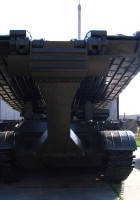
Galería de fotos de un MT-55 Bridgelayer, The MT-55A (Slovak: Mostný tank) is an armoured vehicle-launched bridge (AVLB) tank, manufactured by ZTS Martin in Slovakia. The AVLB is based on a T-55A medium tank chassis, with the turret detached and replaced by a special bridge launching equipment. The MT-55A was produced for the armies of the Warsaw Pact (including the Soviet Army), as well as for export clients.

Fuente: MT-55 Bridgelayer en Wiki

Continuar leyendo

Vistas : 1922

Schwimmwagen vol2 - WalkAround

Schwimmwagen

PaísAlemania
TipoCoche anfibio
Descripción

Álbum 51 fotos a pie de la Schwimmwagen

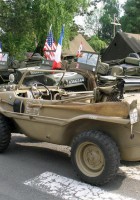
el VW 166 Schwimmwagen es un coche anfibio alemán en uso durante la Segunda Guerra Mundial. El modo 4X4 de este coche ligero todoterreno solo está activo en el primero y el reverso. Su distancia al suelo es bastante alta y se beneficia de diferenciales tipo de guijarros autobloqueantes esta máquina es un verdadero paso-todo. El Schwimmwagen se utiliza principalmente como vehículo de enlace o reconocimiento y como un medio rápido para evacuar a las personas heridas.

Un embout d’hélice relevable permet de facilement basculer en mode amphibie, la propulsion dans l’eau se faisant uniquement en marche avant. Avec plus de 15000 unités construites entre 1941 et 1944 la Schwimmwagen est surement un des véhicules amphibie les plus produits de tous les temps.

Fuente: Schwimmwagen en Wikipedia

Continuar leyendo

Vistas: 2804

Dinámica General FB-111A Aardvark

Dinámica General FB-111A Aardvark

PaísE.e.u.u
TipoAviones supersónicos
FotografíaVladimir Yakubov
LocalizarMuseo del Castillo AFB
DescripciónÁlbum de 64 fotos walk-around de un «General Dynamics FB-111A Aardvark»

Galería de fotos de un Dinámica General FB-111A Aardvark, The General Dynamics F-111 Aardvark was a supersonic, medium-range interdictor and tactical attack aircraft that also filled the roles of strategic nuclear bomber, aerial reconnaissance, and electronic-warfare aircraft in its various versions. Developed in the 1960s by General Dynamics, it first entered service in 1967 with the United States Air Force. The Royal Australian Air Force (RAAF) also ordered the type and began operating F-111Cs in 1973.

Fuente: General Dynamics FB-111A Aardvark en Wiki

Continuar leyendo

Vistas : 4081

Canberra B.2

English Electric Canberra Mk.20

PaísUk
TipoBombardero medio propulsado por chorro
Primer vuelo13 de mayo de 1949
ConstruidoMás de 1000

Galería de fotos de un English Electric Canberra Mk.20, The English Electric Canberra is a British first-generation jet-powered medium bomber that was manufactured during the 1950s. It was developed by English Electric during the mid-to-late 1940s in response to a 1944 Air Ministry requirement for a successor to the wartime de Havilland Mosquito fast-bomber; amongst the performance requirements for the type was the demand for an outstanding high altitude bombing capability in addition to flying at high speeds, these were partly accomplished by making use of newly-developed jet propulsion technology. When the Canberra was introduced to service with the Royal Air Force (RAF), the type’s first operator, in May 1951, it became the service’s first jet-powered bomber aircraft.

Fuente: English Electric Canberra Mk.20 en Wiki

Continuar leyendo

Views : 4325

B-58 Hustler

Convair B-58A Hustler

PaísE.e.u.u
TipoBombardero a reacción supersónico
Primer vuelo11 de noviembre de 1956
Construido116

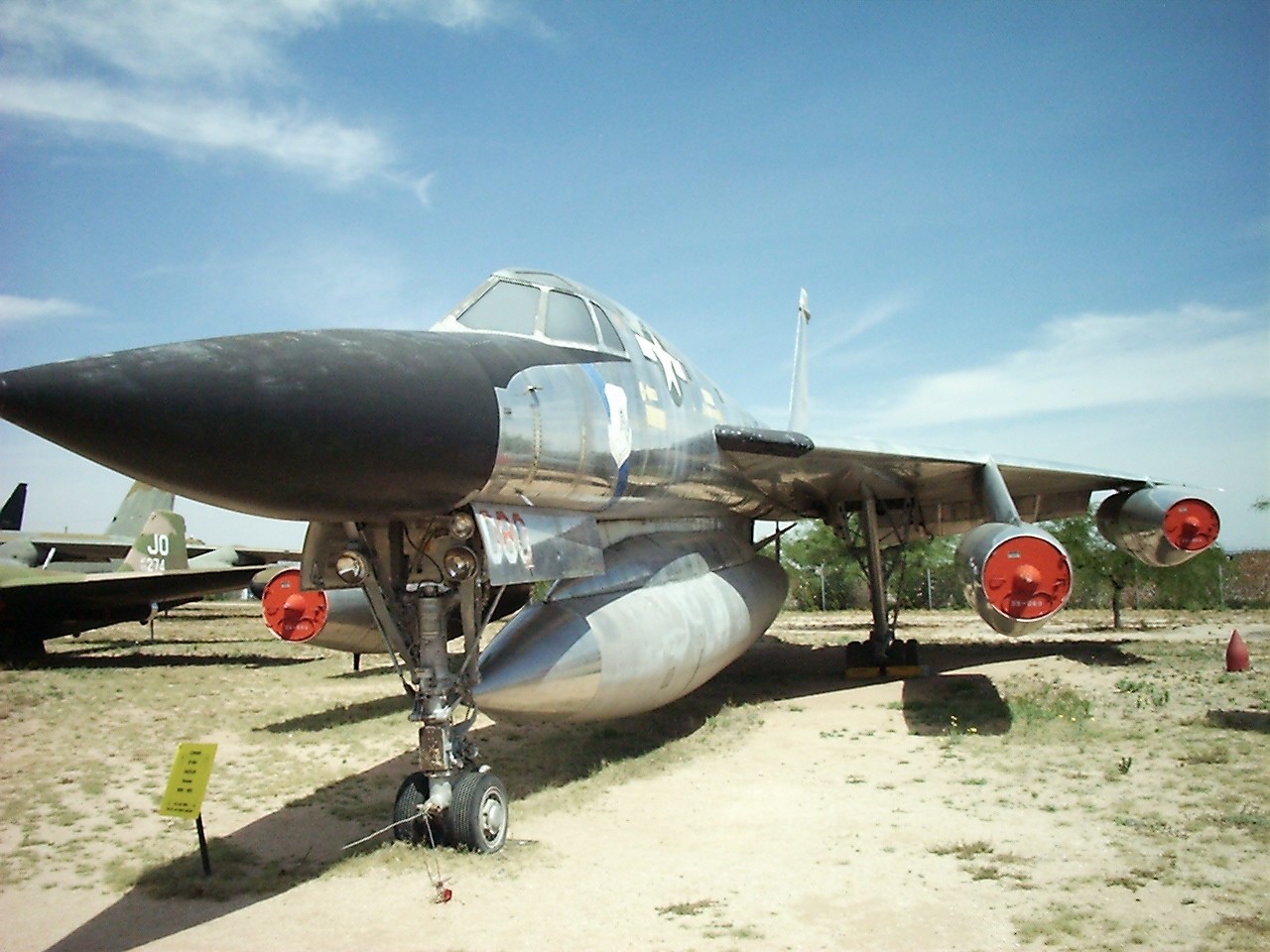
Galería de fotos de un Convair B-58A Hustler, The Convair B-58 Hustler was the first operational supersonic jet bomber capable of Mach 2 flight. The aircraft was designed by Convair engineer Robert H. Widmer and developed for the United States Air Force for service in the Strategic Air Command (SAC) during the 1960s. It used a delta wing, which was also employed by Convair fighters such as the F-102, with four General Electric J79 engines in pods under the wing. It carried five nuclear weapons; four on pylons under the wings, and one nuclear weapon and fuel in a combination bomb/fuel pod under the fuselage, rather than in an internal bomb bay.

Fuente: Convair B-58A Hustler en Wiki

Continuar leyendo

Vistas : 8885

M88A1G Bergepanzer

M88A2 Hércules

PaísE.e.u.u
TipoVehículo de recuperación de tanques

Galería de fotos de un Vehículo de recuperación del Hércules M88A2, The M88 Recovery Vehicle is one of the largest armored recovery vehicles (ARV) currently in use by United States Armed Forces. There are currently three variants, the M88, M88A1 and M88A2 HERCULES (Heavy Equipment Recovery Combat Utility Lifting Extraction System). The M88 series has seen action most noticeably in the Vietnam War, the Persian Gulf War, the Iraq War, and the War in Afghanistan, and to a lesser extent during the Kosovo War, where they were deployed to help recover heavy armored vehicles of the Allied ground units. The current M88A2 replacement cost is around US$2,050,000. The M88A2 es ligeramente mayor que sus predecesores (8,6 x 3,7 x 3,2 m en comparación con 8,3 x 3,4 x 3,2 m) conserva así una velocidad máxima más baja (40 km/h) y un rango de carretera significativamente inferior (322 km frente a 450 km). También ha habido mejoras en el frenado y la dirección. Además, el M88A2 ha mejorado la protección del blindaje, incluyendo faldas de chándal blindadas y paneles de blindaje apliques, de los que carecen ambos modelos anteriores. El M88 también carece de defensas nucleares, biológicas, químicas (NBC) y un generador de cortina de humo, que los modelos M88A1 y M88A2 posteriores están equipados con. Además, el número de tripulantes ha disminuido de 5, a 3-4, a 3 a través de la serie

Fuente: M88A2 Hércules en Wiki

Continuar leyendo

Vistas : 5023

Curtiss N-9H

Curtiss N-9H

PaísE.e.u.u
TipoHidroavión
FotografíaVladimir Yakubov
LocalizarNational Air & Space Museum – Udvar-Hazy Center
DescripciónÁlbum de 77 fotos de un «Curtiss N-9H»

Galería de fotos de un Curtiss N-9H, The Curtiss N-9 was a floatplane variant of the Curtiss JN-4 “Jenny” military trainer used during World War I by the United States Navy.

Fuente: Curtiss N-9H en Wiki

Continuar leyendo

Views : 2155

M31 B2 ARV

M31B1

PaísE.e.u.u
TipoVehículo de recuperación de tanques
ProducidoAgosto de 1941 – Diciembre de 1942

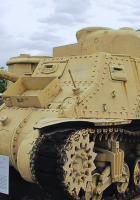
Galería de fotos de un Vehículo de recuperación de tanques M31B1, The Medium Tank M3 was an American tank used during World War II. In Britain, the tank was called by two names based on the turret configuration and crew size. Tanks employing US pattern turrets were called the “Lee”, named after Confederate General Robert E. Lee. Variants using British pattern turrets were known as “Grant”, named after U.S. General Ulysses S. Grant. Vehículo de recuperación de tanques M31B1: Based on M3A3.

Fuente: M31B1 en Wiki

Continuar leyendo

Vistas : 3474