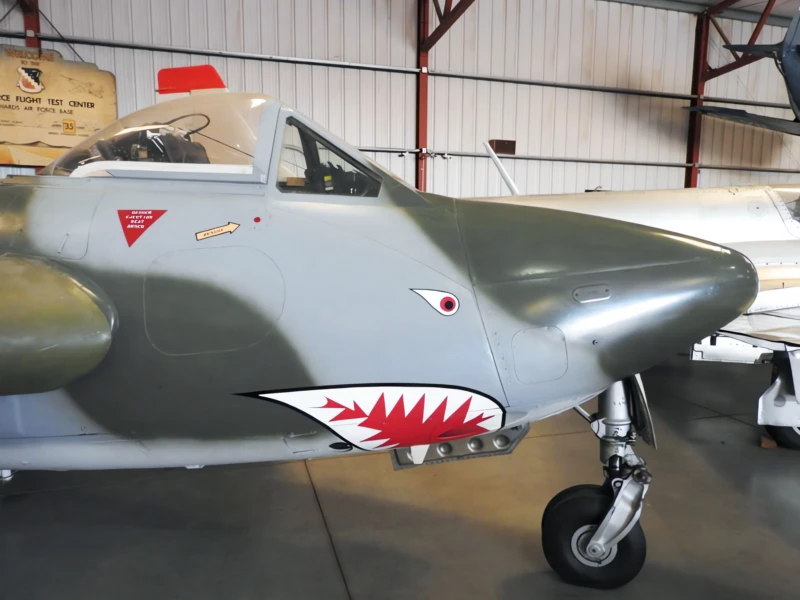
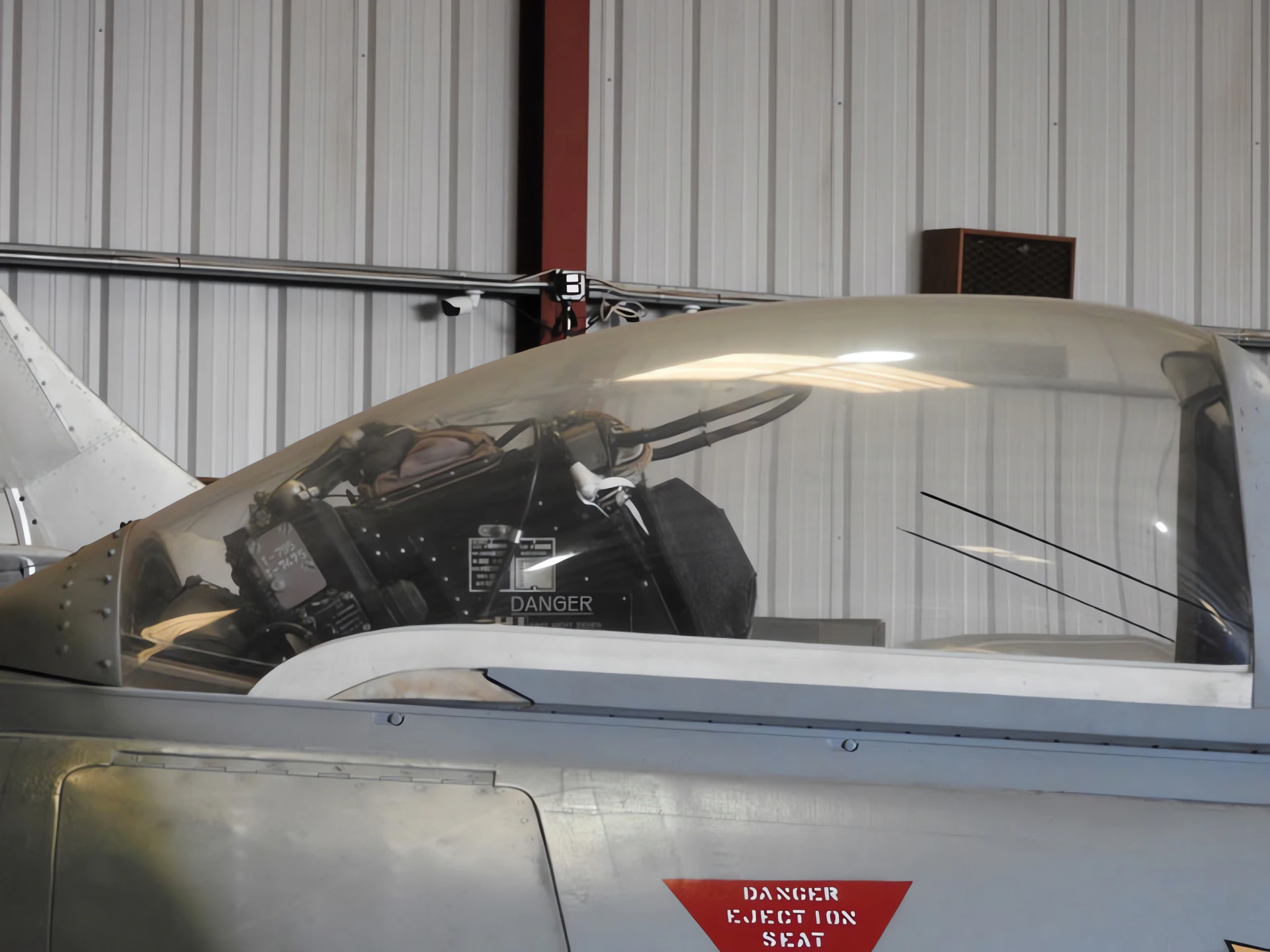
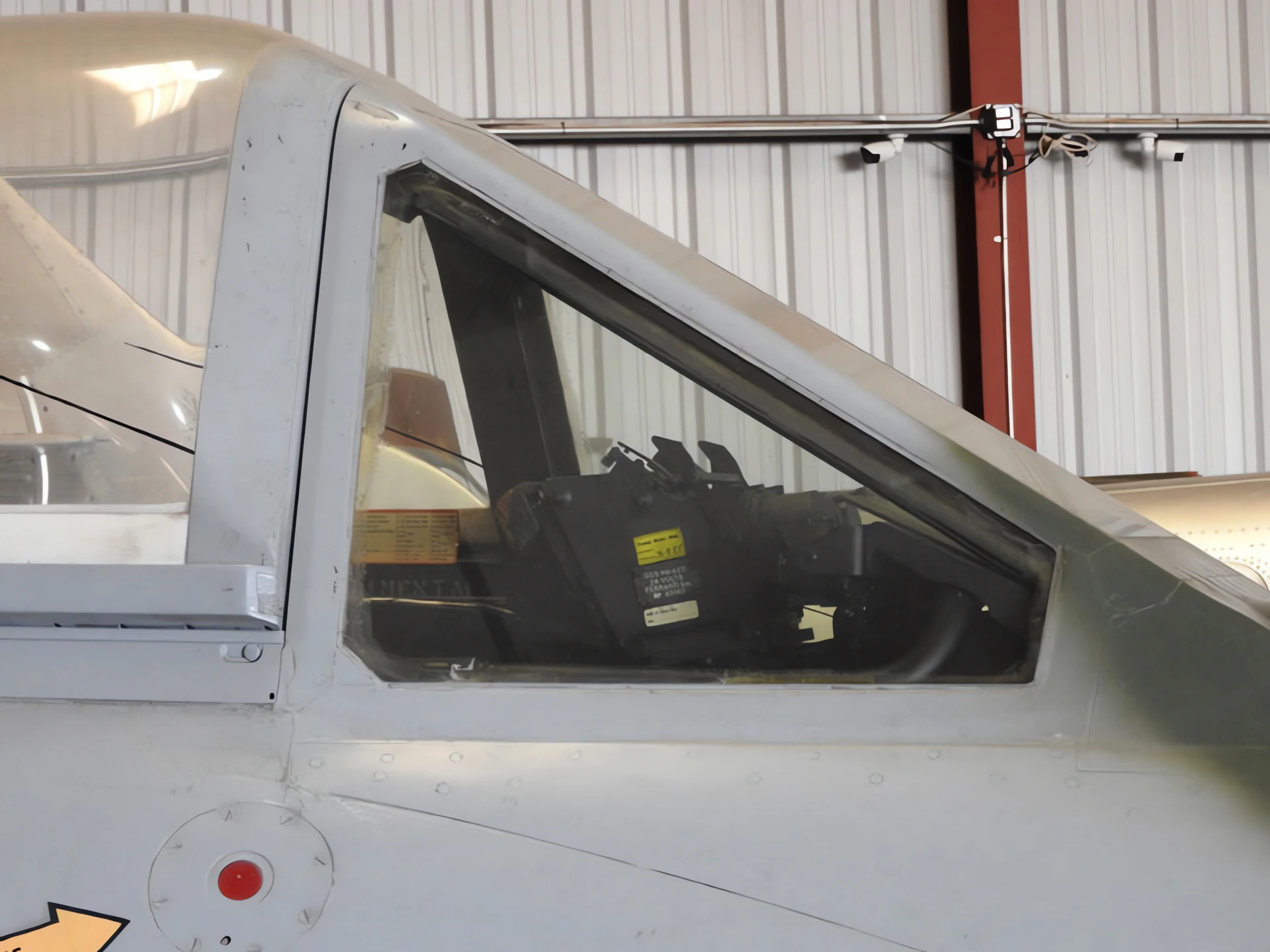
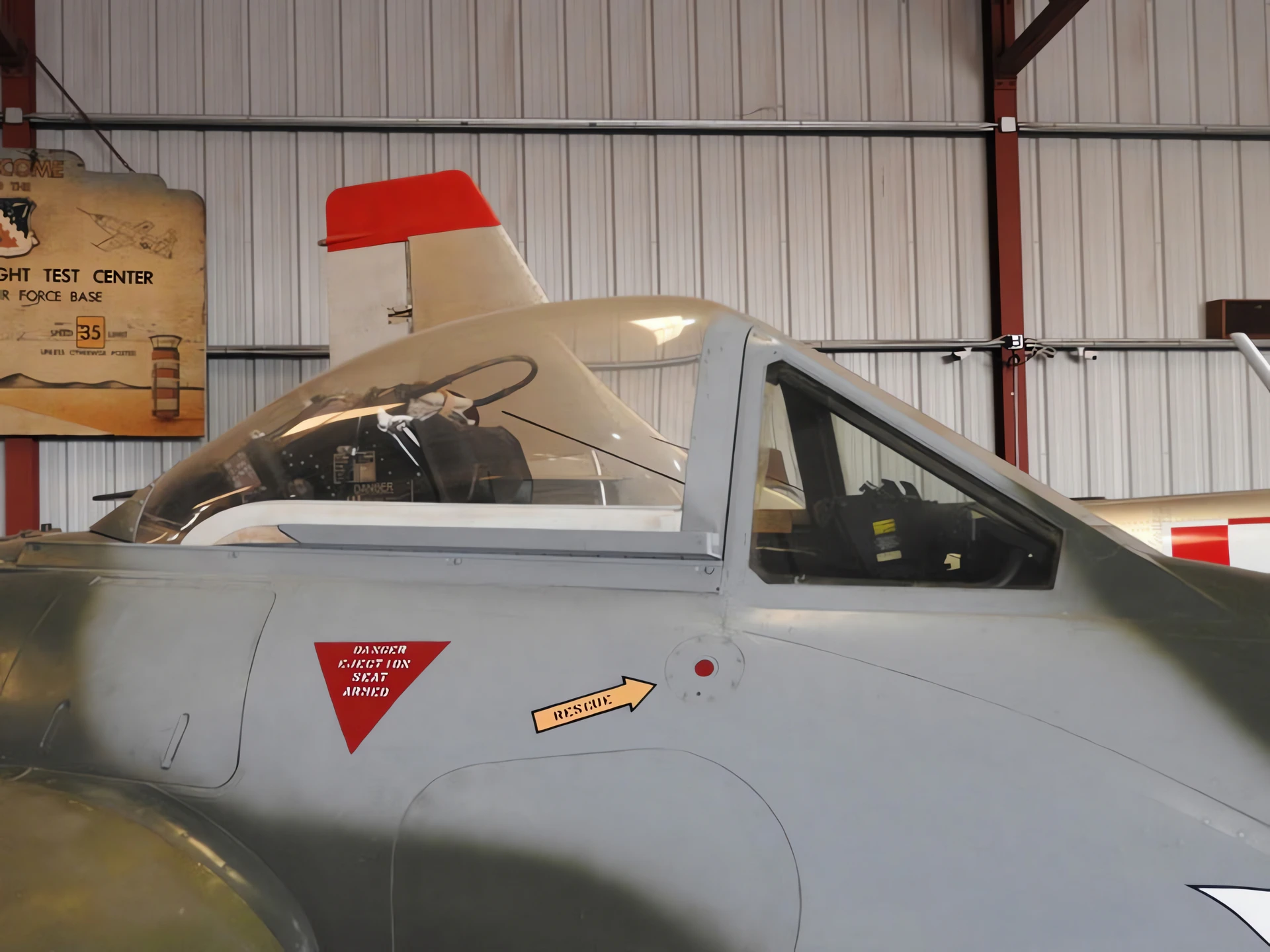
Den de Havilland Vampyr er en britisk jetjager udviklet og fremstillet af de Havilland Aircraft Company. Arbejdet med flyet begyndte under Anden Verdenskrig som et stort set eksperimentelt fly, der var egnet til kamp, og som udnyttede den banebrydende innovation inden for jetfremdrift; det blev hurtigt besluttet at vælge et enmotoret fly med to bomme udstyret med Halford H.1 turbojetmotoren (senere de Havilland Goblin). Oprindeligt blev det kun bestilt som et eksperimentelt fly, men beslutningen om at masseproducere flyet som en interceptor for Royal Air Force (RAF) blev færdiggjort i maj 1944.
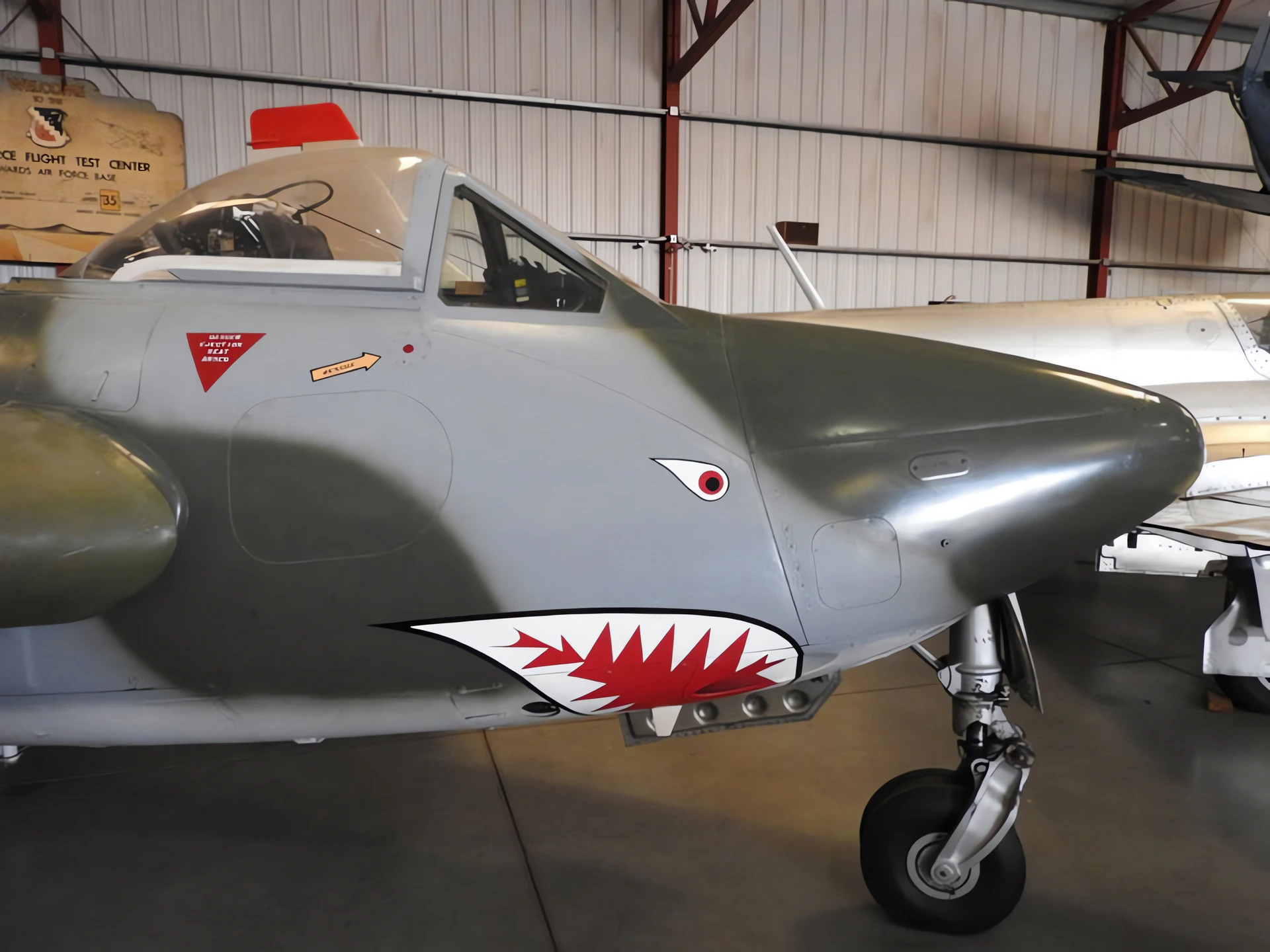
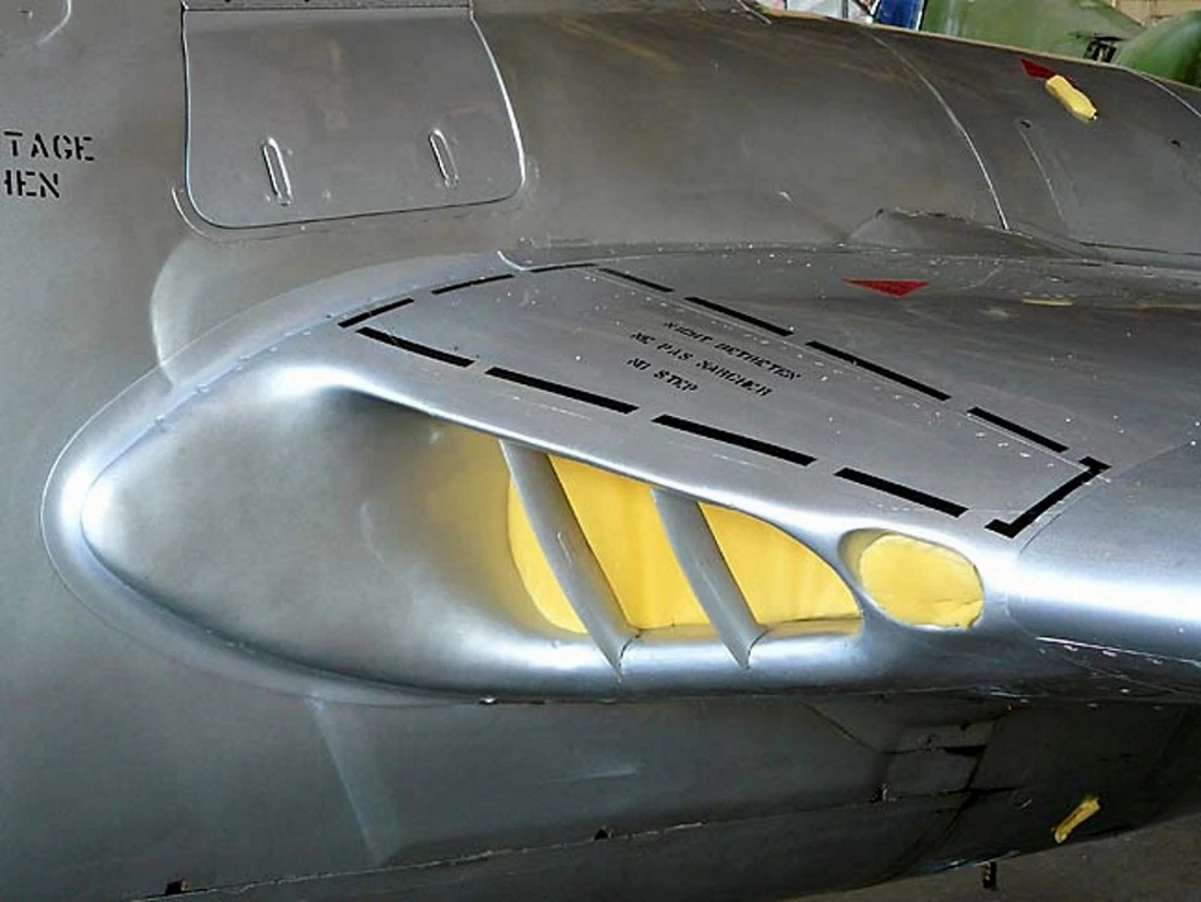
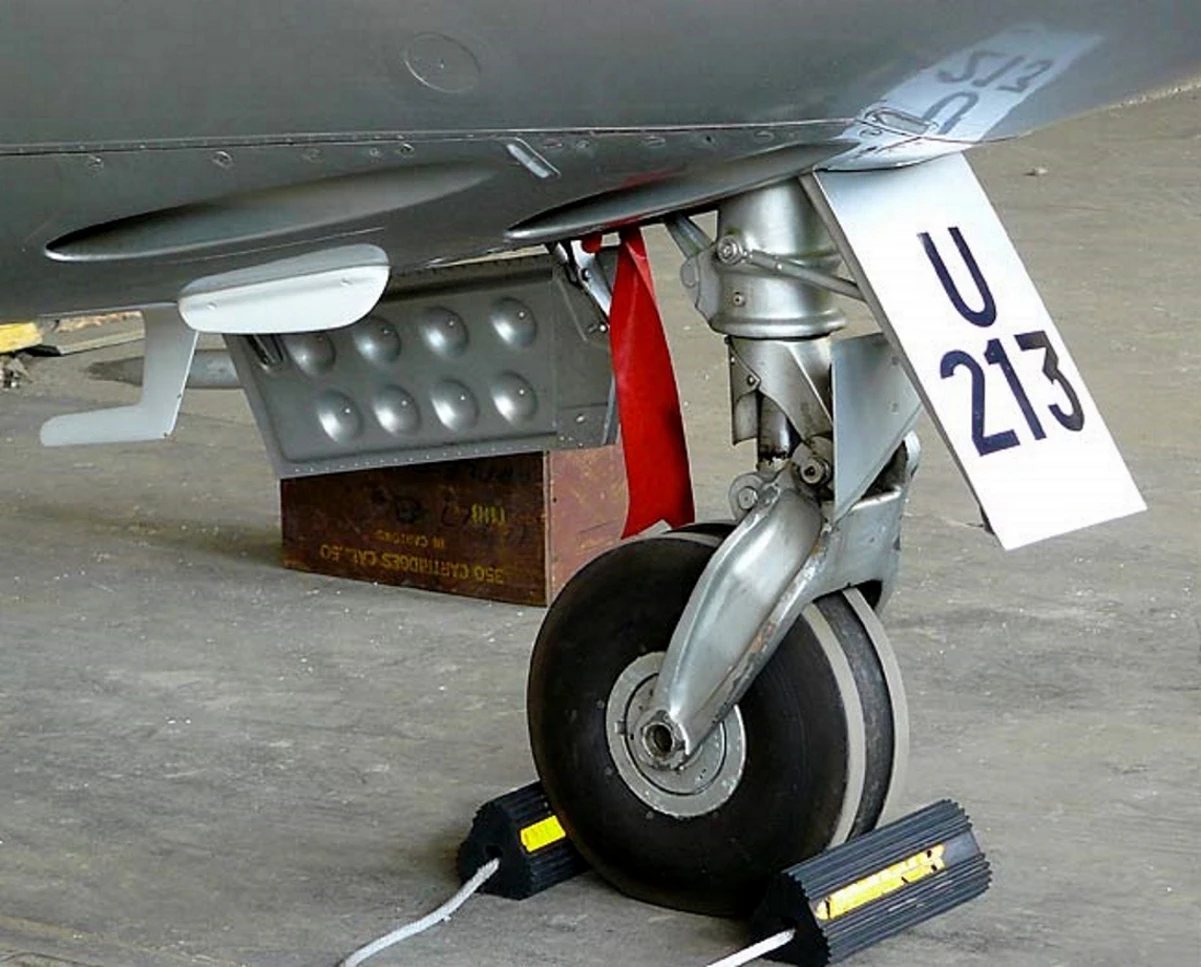
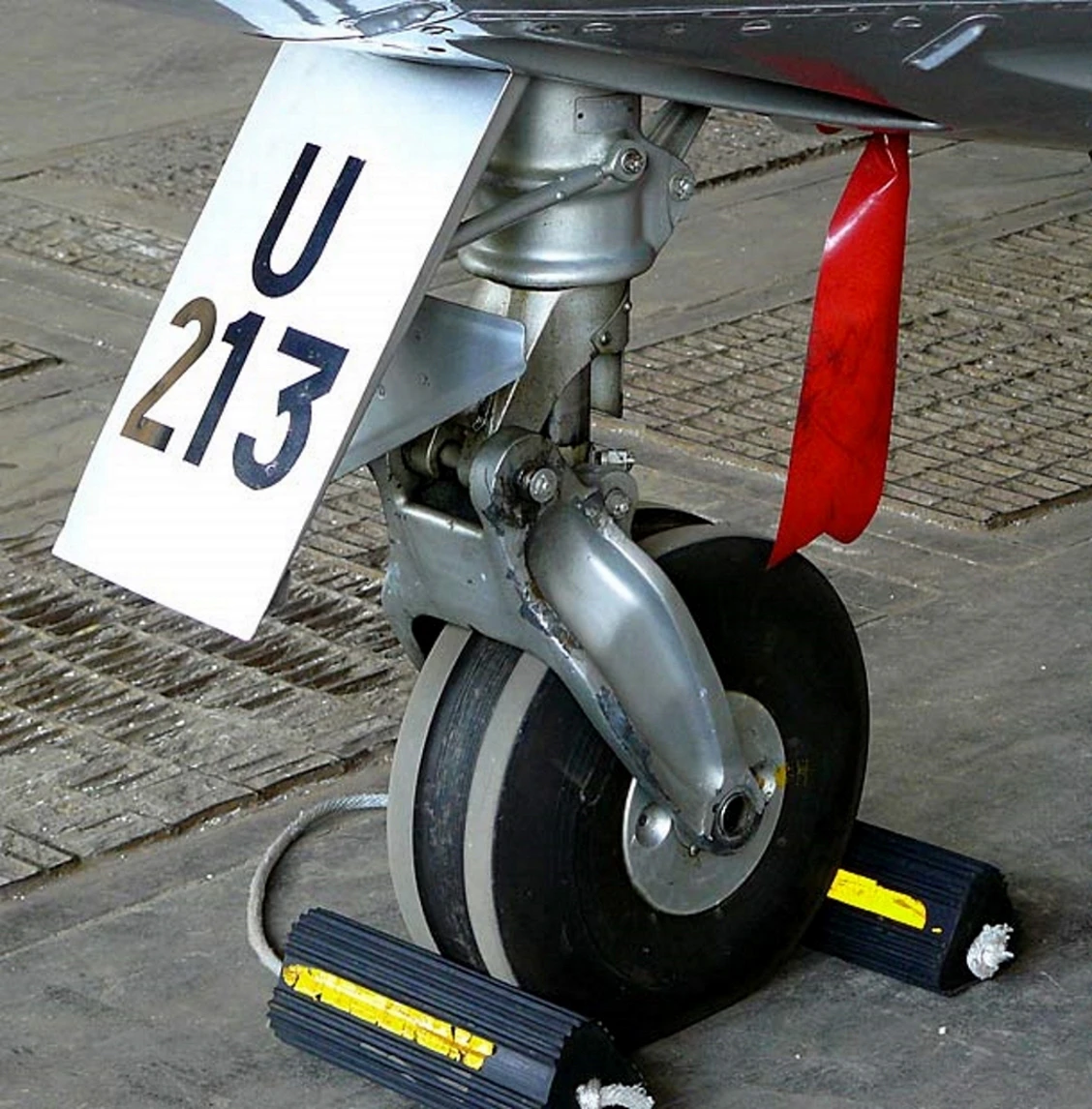
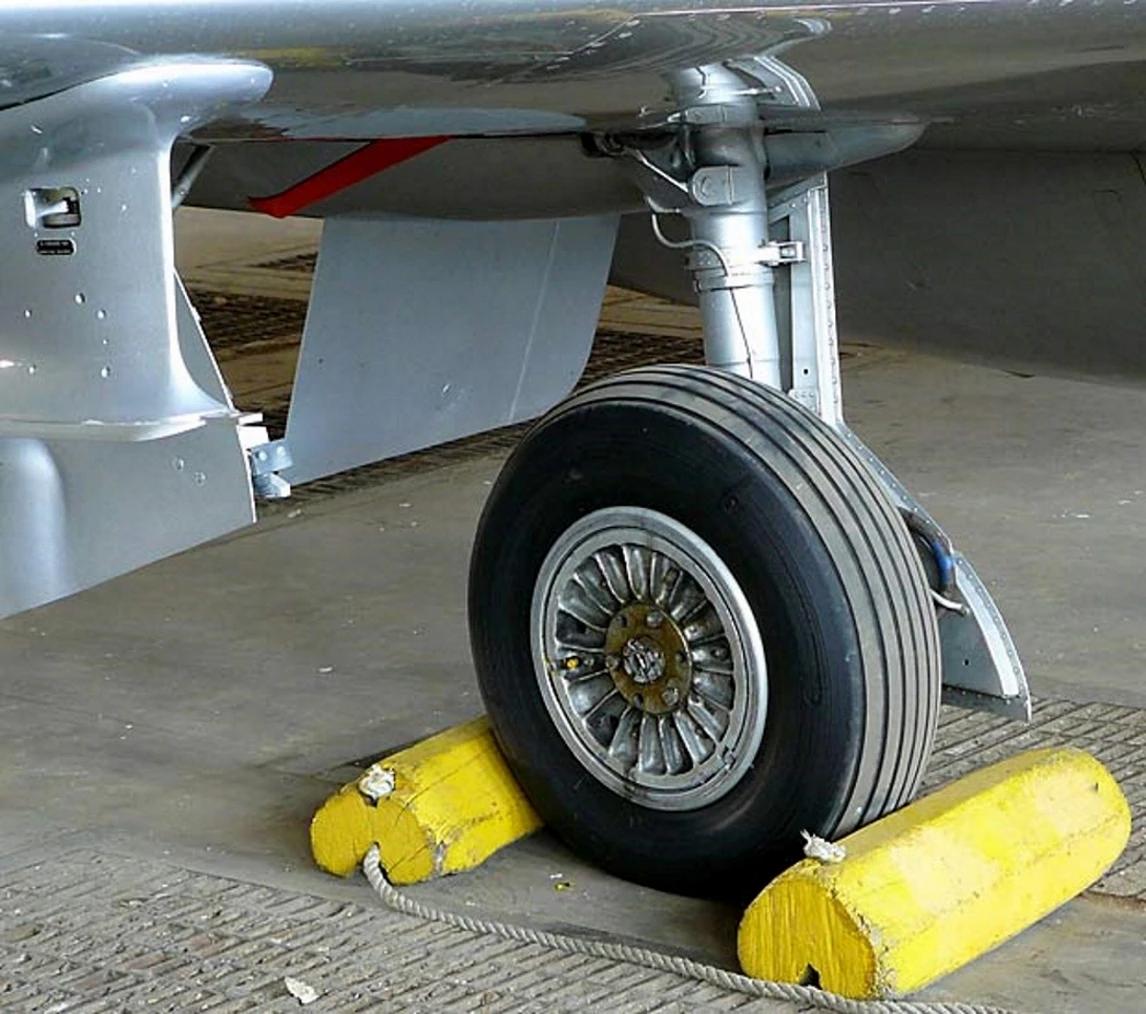
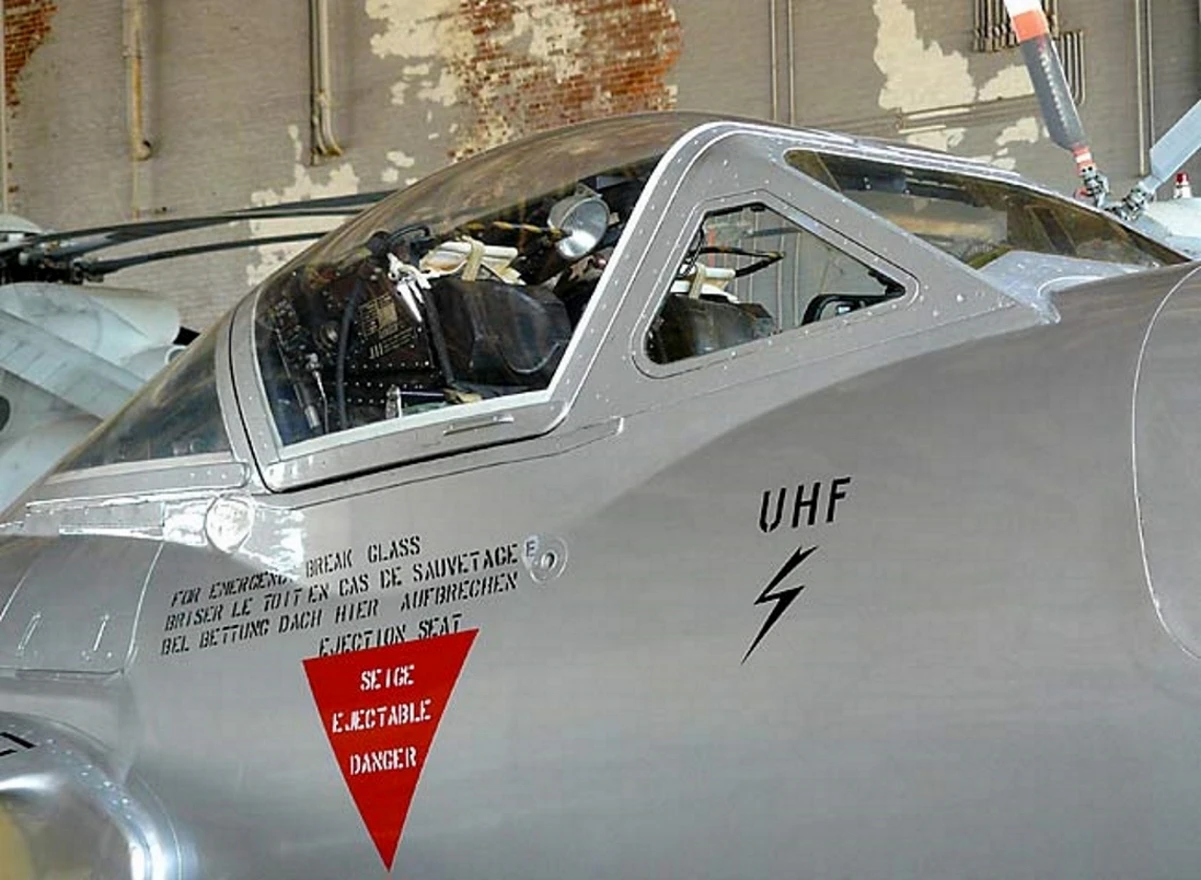
Den de Havilland Vampyrwas the second jet-powered aircraft to enter service with the RAF, following the Gloster Meteor. However, the Vampire was unique in its construction; while it was a cutting-edge jet, its fuselage was built using the samemolded plywoodtechnique perfected on the wooden Mosquito. TheFB.6was a specialized Fighter-Bomber export version produced for Switzerland, representing the pinnacle of the single-seat Vampire’s development with an uprated engine and increased weight capacity.
Attribute
Technical Specification (Vampire FB.6)
Rolle
Jagerbomber
Besætning
1 (Pilot)
First Flight (Vampire)
September 20, 1943
Kraftværk
1 × de Havilland Goblin 3 centrifugal-flow turbojet
Thrust
3,350 lbf (14.9 kN)
Maximum Speed
548 mph (882 km/h)
Service Ceiling
42,800 feet (13,045 m)
Bevæbning
4 × 20mm Hispano Mk V cannons; 8 × rockets or 2,000 lbs of bombs
Twin Booms and Goblin Fire
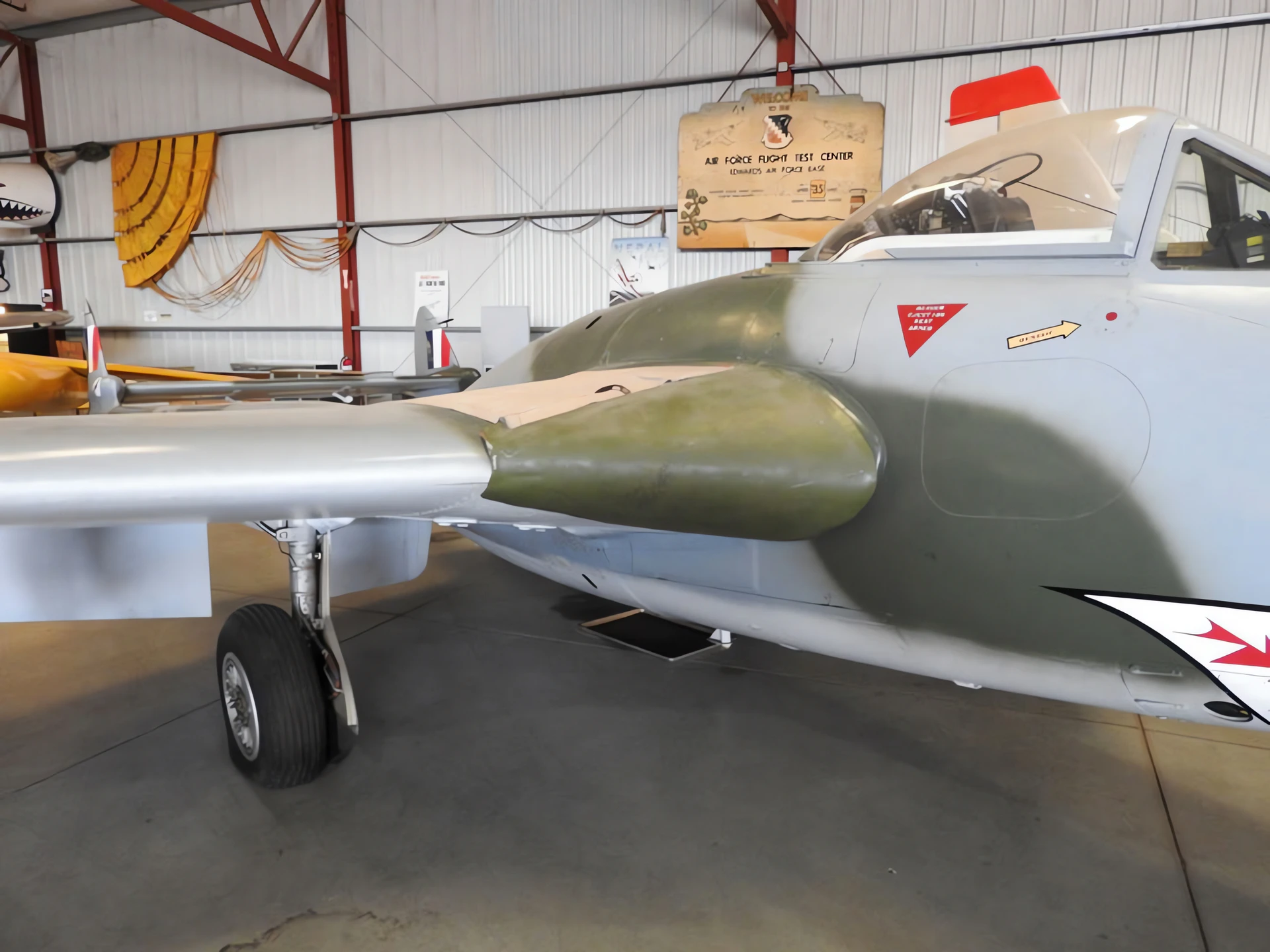
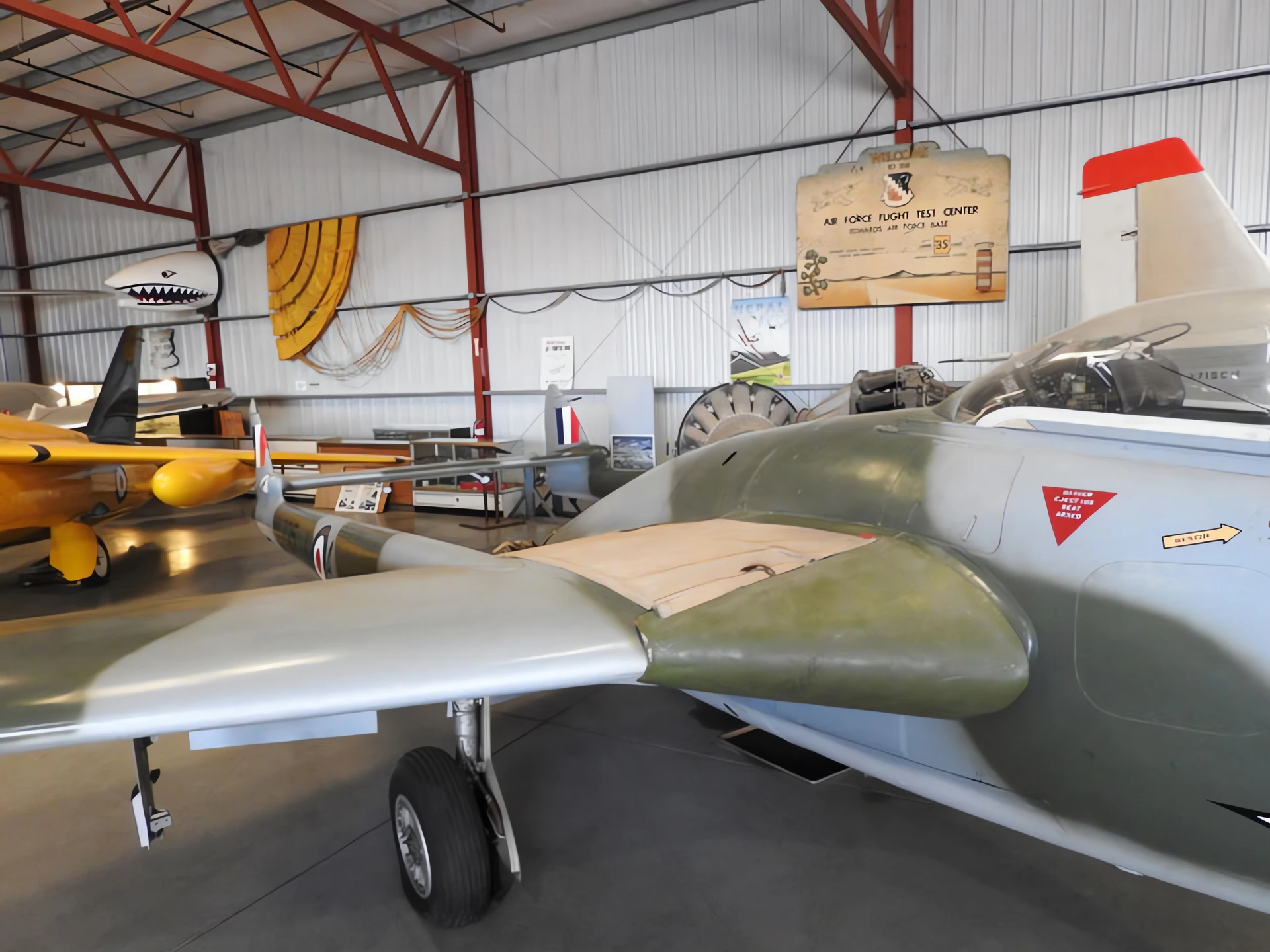
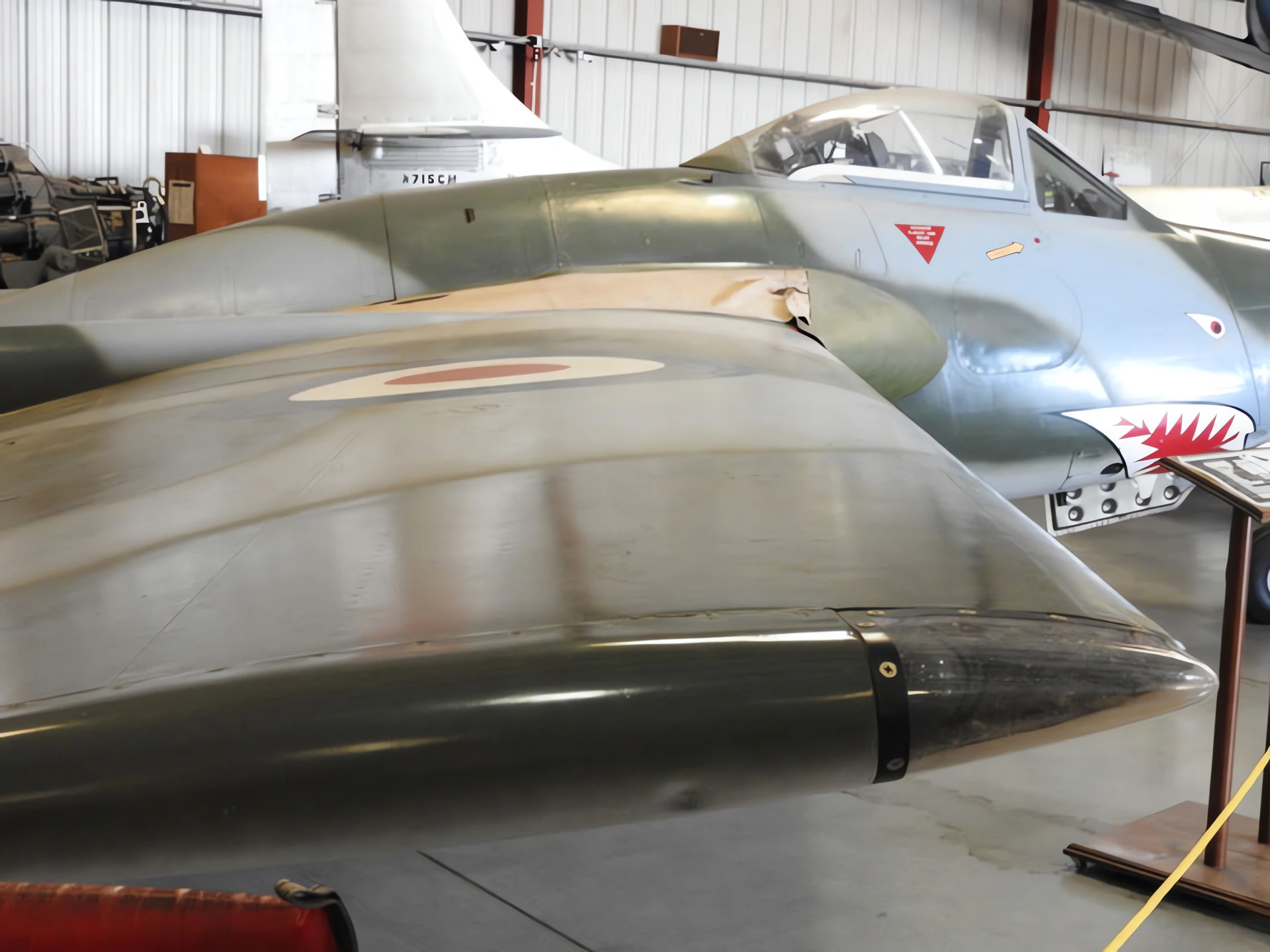
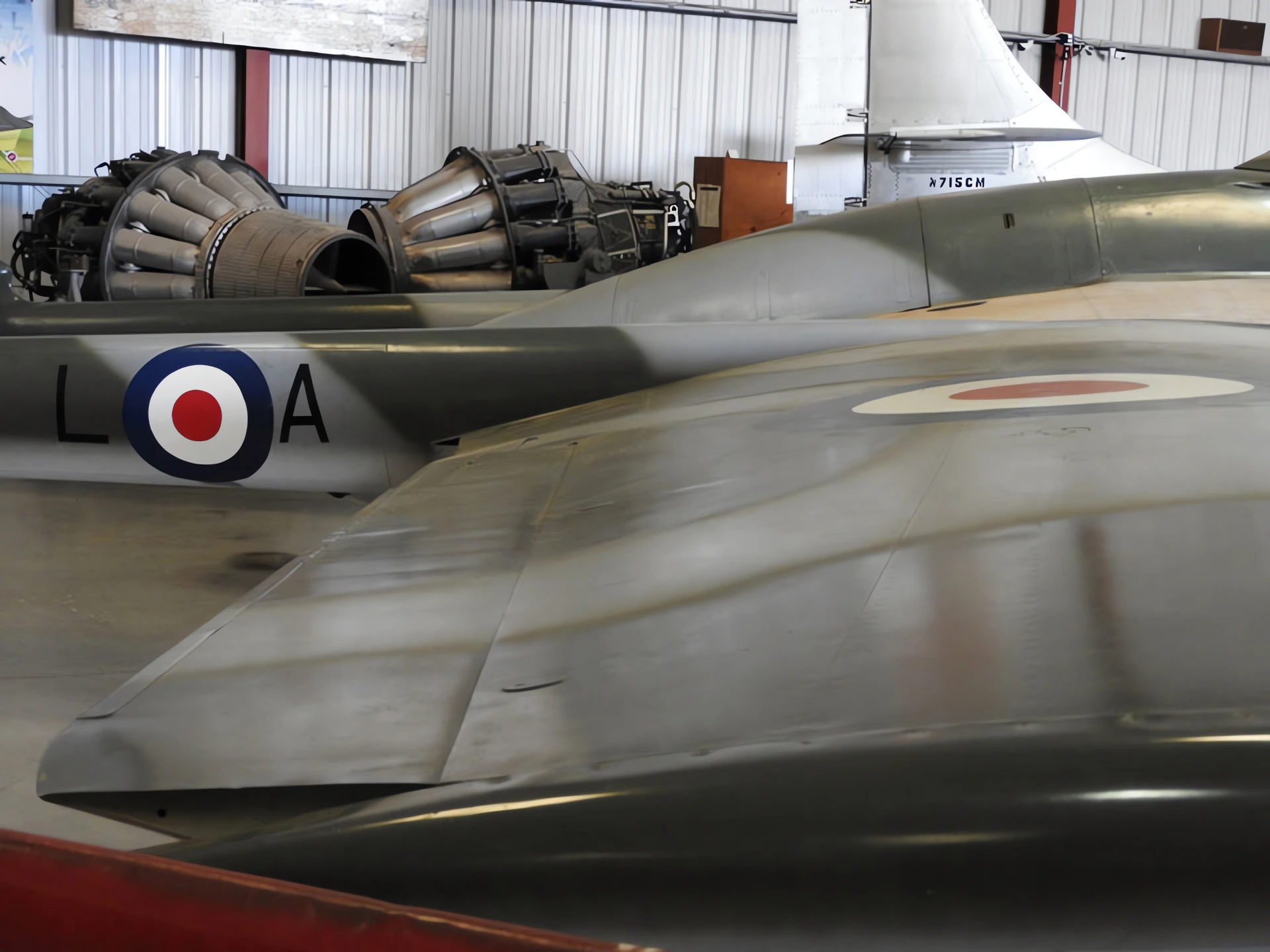
The Twin-Boom Design:de Havilland used a twin-boom tail to allow the jet exhaust to be as short as possible. This minimized the loss of thrust associated with long tailpipes, which was critical for the relatively weak early turbojets.
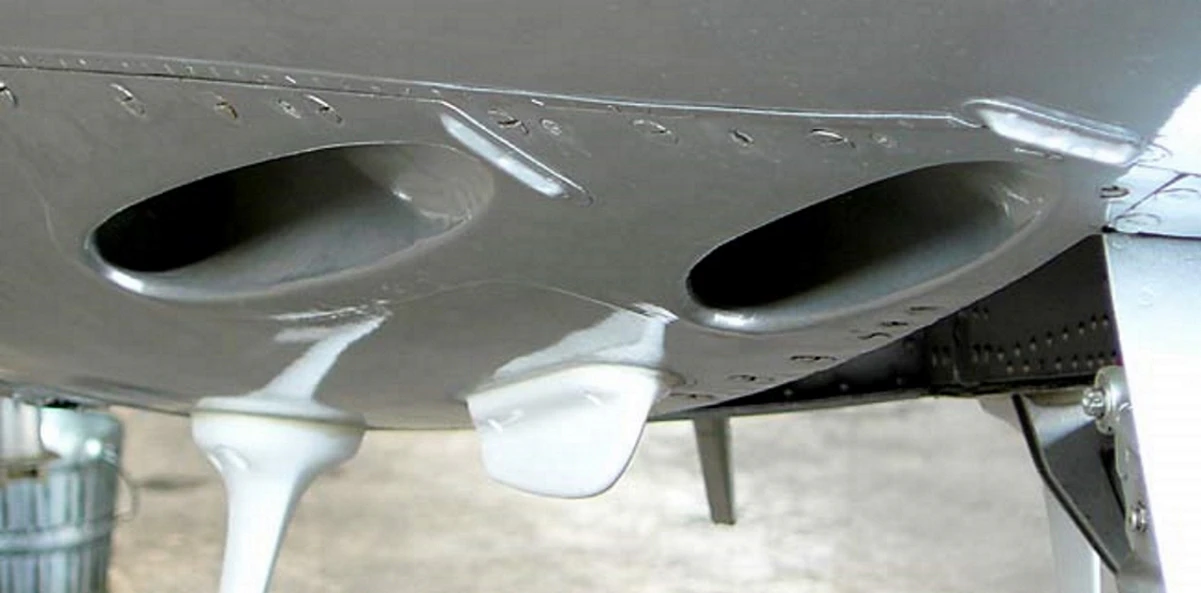
Centrifugal-Flow Engine:The Goblin engine used a large, spinning compressor. Because it was wider than later “axial-flow” jets, the Vampire has its distinctive “pancake” fuselage shape. It was incredibly reliable and simple to maintain.
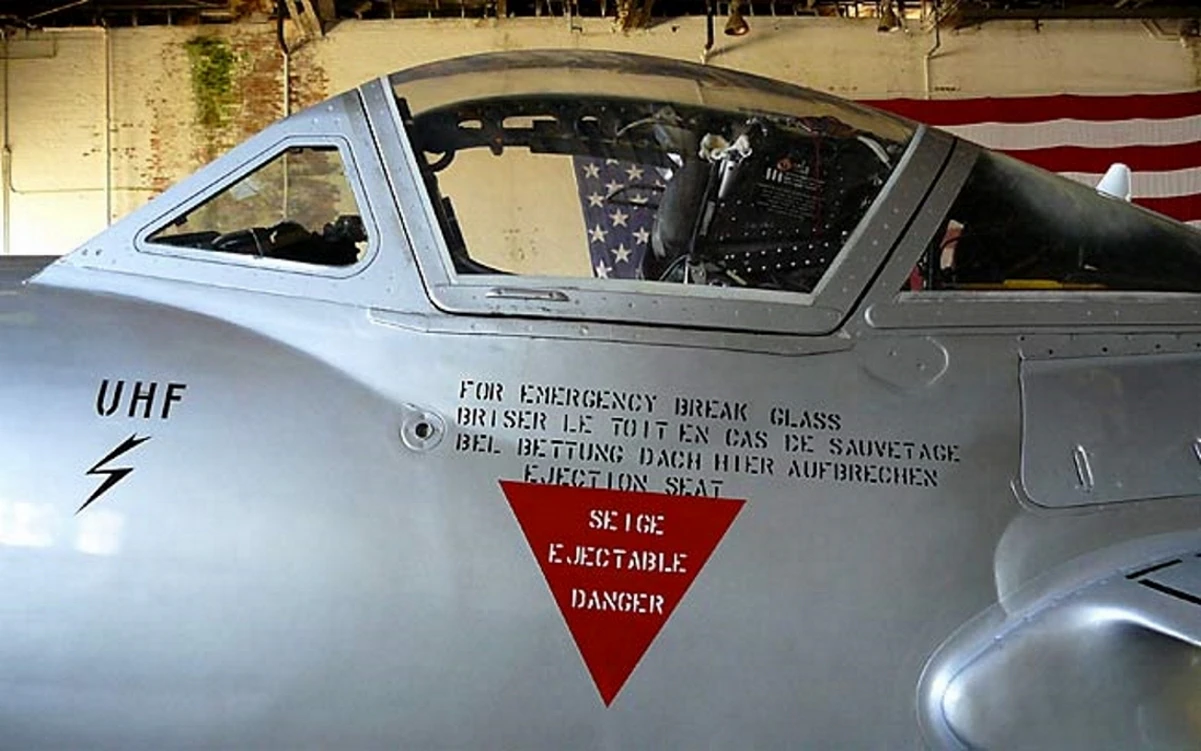
Mixed Construction:While the tail booms and wings were metal, the cockpit “pod” was made of balsa wood sandwiched between layers of birch. This made the Vampire lighter and faster than many all-metal contemporaries.
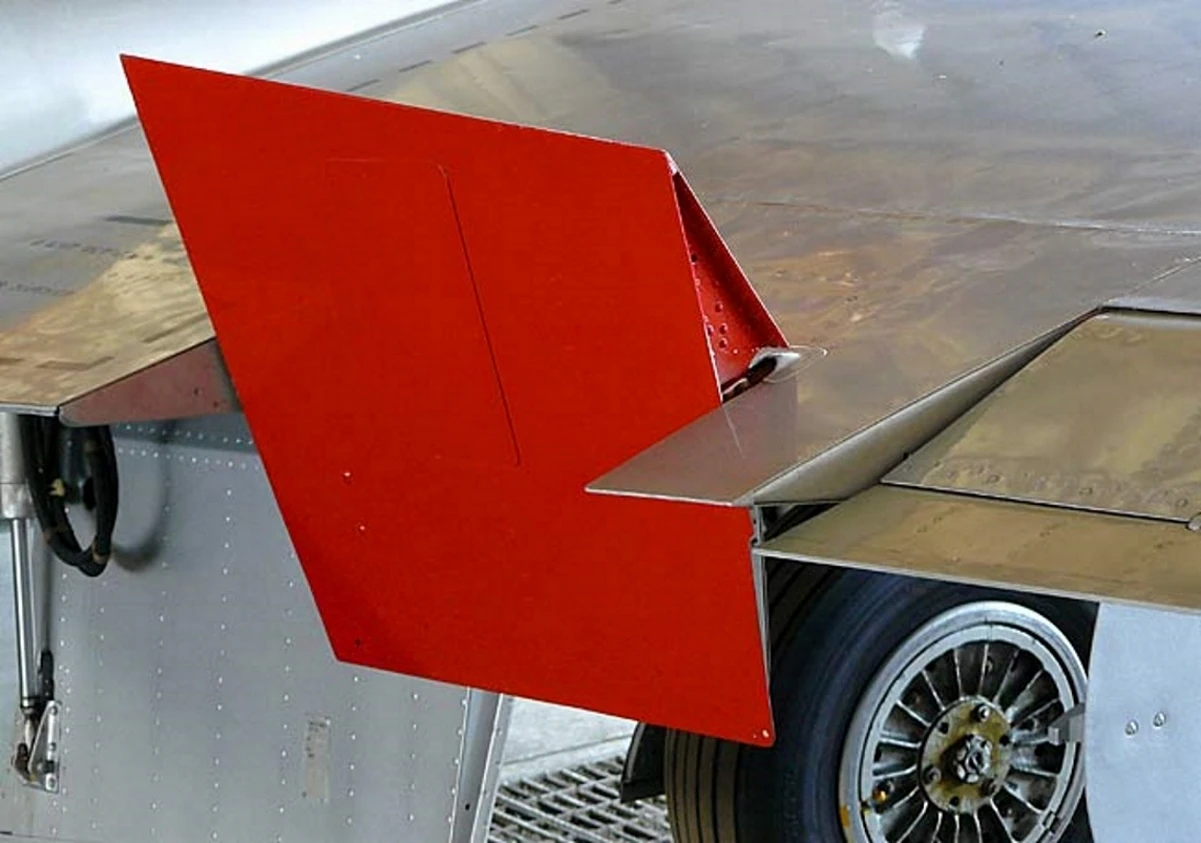
The “FB” Evolution:The FB (Fighter-Bomber) series featured clipped wings compared to the original interceptors. This improved low-level handling and allowed for a much higher roll rate during ground-attack maneuvers.
Global Service and Swiss Precision
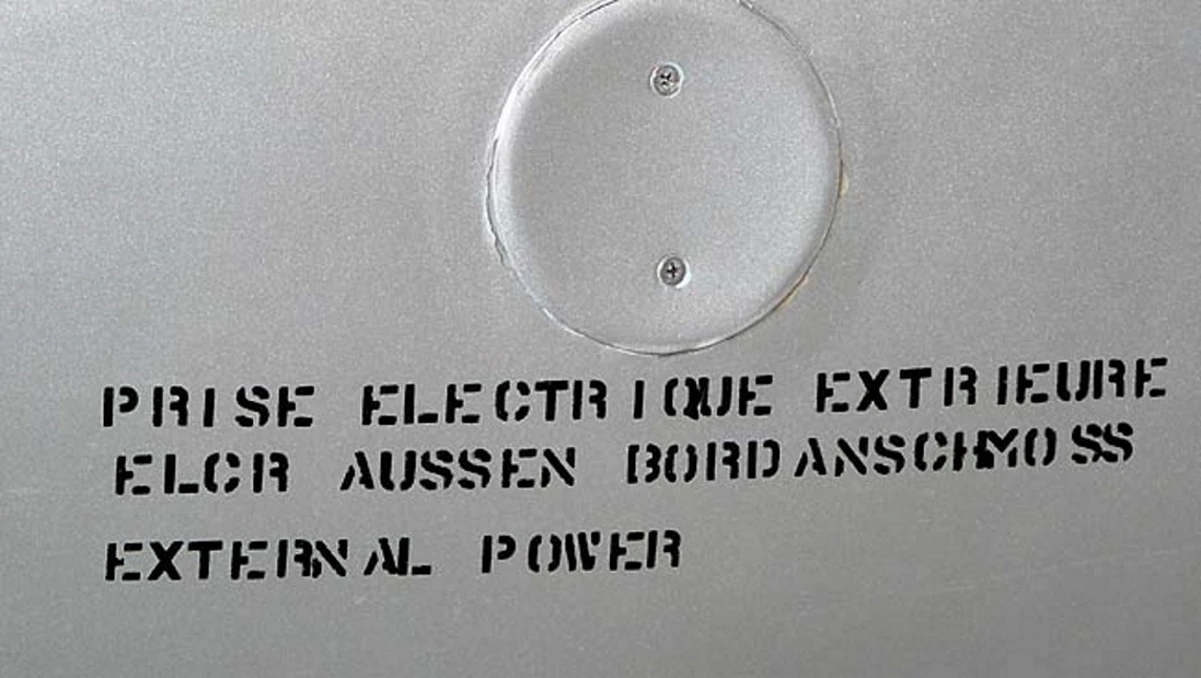
The Swiss FB.6:Switzerland was a major operator of the FB.6. They loved the aircraft for its ability to operate out of short runways in narrow alpine valleys. Many Swiss Vampires were later fitted with “Pinocchio” noses to house additional avionics.
Naval Firsts:A modified Vampire (the Sea Vampire) was the first pure jet aircraft in history to land on and take off from an aircraft carrier (HMSOcean) in 1945.
A Pilot’s Favorite:Pilots loved the Vampire for its excellent visibility—since there was no engine in front—and its forgiving flight characteristics. It was often described as flying like a “high-speed Tiger Moth.”
The T.11 Trainer:The Vampire’s success led to the T.11, a side-by-side two-seat trainer that taught an entire generation of pilots how to fly jets. Its distinctive “egg” shaped cockpit became a common sight across the British Commonwealth.



 de Havilland DH.104 Dove – Billeder og videoer
 de Havilland Dragon Rapide – Billeder & Videoer
 de Havilland Canada DHC-2 – Billeder og videoer
 de Havilland DH.60 Moth – Billeder og videoer
 de Havilland DH112 Venom – Billeder og videoer
 de Havilland Canada DHC-4 Caribou – Billeder & Video
 de Havilland Dragon – Billeder & Video
 de Havilland Mosquito – Billeder & Video
 de Havilland DH.82 Tiger Moth – Billeder & Video