JSU-122

ISU-122

LandSovjetunionen
TypeSelvkørende pistol
FotografUnknow
Beskrivelse

Album af 75 fotos walk-around af en «ISU-122»

Fotogalleri af en ISU-122, The ISU-122 (acronym of Istrebitelnaja – or Iosif Stalin-based – Samokhodnaya Ustanovka 122) was a Soviet self-propelled gun used during World War II, mostly in the anti-tank role.

Kilde: ISU-122 på Wiki

Fortsæt med at læse

Views : 6220

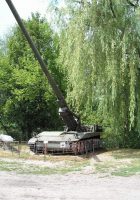
M107 175mm

M107 selvkørende pistol

LandUsa
TypeSelvkørende pistol
FotografUnknow
Beskrivelse

Album af 28 fotos walk-around af en «M107 selvkørende pistol»

Fotogalleri af en M107 selvkørende pistol, The M107 175 mm self-propelled gun was used by the U.S. Army from the early 1960s through to the late 1970s. It was part of a family of self-propelled artillery that also included the M110. It was intended to provide long-range fire support in an air-transportable system. It was exported to several other countries including Germany, South Korea, Spain, Greece, Iran, Israel, Italy, the Netherlands, the United Kingdom, and Turkey. The M107’s combat history in U.S. service was limited to the Vietnam War; it also saw extensive combat use in Israeli service. The M107 shared many components with, and in many cases was replaced by, later versions of the M110 8″ howitzer. Although withdrawn from U.S. service in the late 1970s, it continues in service with some armies as of 2010.

Kilde: M107 selvkørende pistol på Wiki

Fortsæt med at læse

Udsigt: 3681

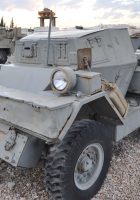
Scout Bil Ford Mk.1

LandUk
TypeFirehjulstrukket rekognosceringskøretøj
I brug1940–1974
VuiltUnknow

Fotogalleri af en Scout Bil Ford Mk.1, The Daimler Scout Car, known in service as the Daimler “Dingo” (after the Australian wild dog), was a British light fast four-wheel drive reconnaissance vehicle also used in the liaison role during the Second World War.

Kilde: Scout Car Ford Mk.1 på Wiki

Fortsæt med at læse

Udsigter : 2339

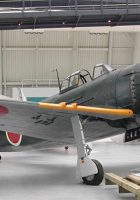
Kawanishi N1K2-J

Kawanishi N1K2

LandJapan
TypeNavy Landbaseret Interceptor
Indførelsen1943
Bygget1532

Fotogalleri af en Kawanishi N1K2-J, The Kawanishi N1K Kyōfū (強風 “strong wind”, Allied reporting name “Rex”) was an Imperial Japanese Navy floatplane fighter. The Kawanishi N1K-J Shiden (紫電 “Violet Lightning”) was an Imperial Japanese Navy Air Service land-based version of the N1K. Assigned the Allied codename “George”, the N1K-J was considered by both its pilots and opponents to be one of the finest land-based fighters flown by the Japanese during World War II. The Shiden Kai possessed heavy armament as well as surprisingly good manoeuvrability, due to a mercury switch that automatically extended the flaps during turns. These “combat” flaps created more lift, thereby allowing tighter turns. Unlike the A6M Zero, the Shiden Kai could compete against the best late-war fighters, such as the F6F Hellcat, the F4U Corsair and P-51 Mustang.

Varianter: N1K2-J Prototypes: N1K1-Jb redesigned. Low wings, engine cover and landing gear modified. New fuselage and tail, 8 built. N1K2-J Shiden KAI Model 21: Navy Land Based Interceptor, first model of series with a Nakajima Homare 21 engine. N1K2-Ja Shiden KAI Model 21A: Fighter-bomber version. Four 250 kg bombs. N1K2-K Shiden Kai Rensen 1, Model A: Fighter Trainer, modified from N1K-J Series with two seats, operative or factory conversions.

Kilde: Kawanishi N1K2-J på Wiki
Fortsæt med at læse

Views : 9803

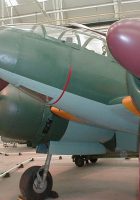
Mitsubishi Ki-46III

Mitsubishi Ki-46III

LandJapan
TypeRekognosceringsfly
Første flyvningnovember 1939
Bygget1742

Fotogalleri af en Mitsubishi Ki-46III, The Mitsubishi Ki-46 was a twin-engine reconnaissance aircraft used by the Imperial Japanese Army in World War II. Its Army Shiki designation was Type 100 Command Reconnaissance Aircraft (一〇〇式司令部偵察機); the Allied nickname was “Dinah”.

Kilde: Mitsubishi Ki-46 på Wiki

Fortsæt med at læse

Udsigter : 5337

Yokosuka MXY7 Ohka

Yokosuka MXY-7 Ohka

LandJapan
RolleKamikaze angreb fly
Første flyvningoktober 1944
Antal bygget852

Fotogalleri af en Yokosuka MXY-7 Ohka, The Yokosuka MXY-7 Ohka (櫻花 Ōka?, “cherry blossom”; 桜花 in modern orthography) was a purpose-built, rocket powered human-guided anti-shipping kamikaze attack aircraft employed by Japan towards the end of World War II. United States sailors gave the aircraft the nickname Baka

Kilde: Yokosuka MXY-7 Ohka på Wiki

Fortsæt med at læse

Set antal gange : 2961

Supermarine Hvalros

Supermarine Hvalros

LandUk
TypeAmfibisk biplan rekognosceringsfly
FotografLars Løkke Rasmussen
Beskrivelse

Album af 37 fotos walk-around af en «Supermarine Walrus»

Fotogalleri af en Supermarine Hvalros, The Supermarine Walrus (originally known as the Supermarine Seagull V) was a British single-engine amphibious biplane reconnaissance aircraft designed by R. J. Mitchell and first flown in 1933. It was operated by the Fleet Air Arm (FAA) and also served with the Royal Air Force (RAF), Royal Australian Air Force (RAAF), Royal New Zealand Navy (RNZN) and Royal New Zealand Air Force (RNZAF). It was the first British squadron-service aircraft to incorporate in one airframe a fully retractable main undercarriage, completely enclosed crew accommodation and all-metal fuselage

Kilde: Supermarine Walrus på Wiki

Fortsæt med at læse

Views : 5799

Westland Wessex 31B

Westland Wessex SAR

LandUk
TypeHelikopter

Fotogalleri af en Westland Wessex SAR, The Westland Wessex is a British-built turbine-powered development of the Sikorsky H-34, it was developed and produced under license by Westland Aircraft (later Westland Helicopters). One of the main changes from Sikorsky’s H-34 was the replacement of the piston-engine powerplant with a turboshaft engine; the Wessex was the first helicopter in the world to be produced in large numbers that made use of a gas turbine propulsion system. Early models were powered by a single Napier Gazelle engine, later builds used a pair of de Havilland Gnome engines.

Kilde: Westland Wessex SAR på Wiki

Fortsæt med at læse

Udsigter : 5132

Royal Aircraft Factory S.E.5a

Royal Aircraft Factory S.E.5

LandUk
RolleBiplan jagerfly
Første flyvning22. november 1916
Bygget5205

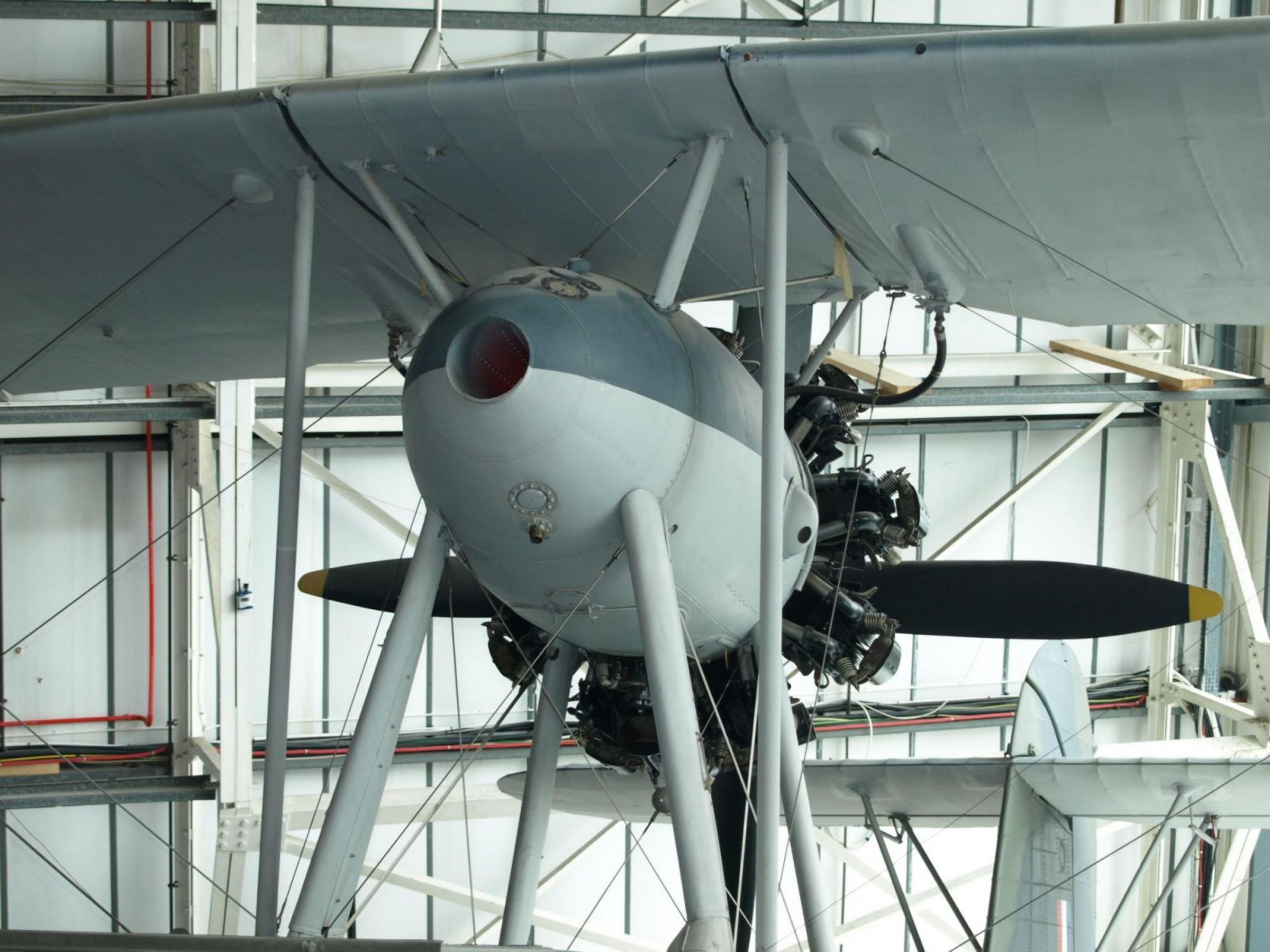
Fotogalleri af en Royal Aircraft Factory S.E.5, The Royal Aircraft Factory S.E.5 was a British biplane fighter aircraft of the First World War. It was developed by the Royal Aircraft Factory by a team consisting of Henry Folland, John Kenworthy and Major Frank Goodden. It was one of the fastest aircraft of the war, while being both stable and relatively manoeuvrable. According to aviation author Robert Jackson, the S.E.5 was: “the nimble fighter that has since been described as the ‘Spitfire of World War One'”.

Kilde: Royal Aircraft Factory S.E.5 på Wiki

Fortsæt med at læse

Set antal gange : 2631

SA 330J Super-Puma

Aerospatiale SA330B Puma

LandFrankrig
TypeMedium transport / nyttehelikopter
Første flyvning15. april 1965
Bygget697

Fotogalleri af en Aerospatiale SA330B Puma, The Aérospatiale SA 330 Puma is a four-bladed, twin-engined medium transport/utility helicopter. The Puma was originally built by Sud Aviation of France, and continued to be made by Aérospatiale. It was also license-built in Romania as the IAR 330; an advanced, unlicensed derivative, the Atlas Oryx, was made in South Africa. The Puma was a commercial success and was quickly developed into more advanced models such as the AS332 Super Puma and AS532 Cougar, manufactured by Eurocopter since the early 1990s. These descendants of the Puma remain in production in the 21st century.

Kilde: Aerospatiale SA330B Puma på Wiki

Fortsæt med at læse

Views : 4149