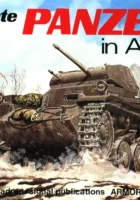
Squadron Signal 2010 Leichte Panzers

Squadron Signal

SeriesAmor In Action
Sujet

Light panzers

RéfSS2010

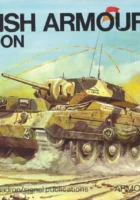
Signed documentation Squadron Signal the book "Leichte Panzers in Action - Squadron Signal SS2010" .

Panzer is a German word meaning "armored." While the word can be applied today to all German battleships, from its origins to the present day, it is used to refer mainly to the German tracked turret armoured vehicles of the Second World War (panzerkampfwagen, armoured fighting vehicle, abbreviated PzKfw), which had a particular design and tactical use. The generic term is less used for post-war German MBTs (Leopard 1 and 2), similar to other Western weapons systems. Note that while French historiography uses the plural "panzers", the current use admits the plural of panzer origin in italics. In addition, some military history books use this word as an abbreviation for large armoured units ("2nd Panzer" meaning 2nd Armoured Division or 2.Panzer Division).

The Panzer, surtout ceux de la deuxième moitié de la guerre, étaient très redoutés, moins nombreux mais souvent plus dangereux que ceux de leurs adversaires. Les chars lourds Tigre et Tigre II étaient ainsi les véhicules les plus lourdement blindés de leur époque. Le panzer IV fut le blindé allemand le plus utilisé durant la Seconde Guerre mondiale. Il a opéré sur tous les fronts : Pologne, France, Balkans, Grèce, front de l’Est, Afrique du Nord, Italie, etc.

Source: Leichte Panzers on Wikipedia

Continue reading

Views: 1110

Squadron Signal 2008 Tiger I

Squadron Signal

SérieAmor In Action
SujetTiger
Réf

SS2008

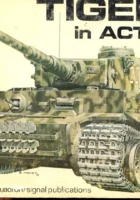
Une documentation signée Squadron Signal le livre «Tiger in Action – Squadron Signal SS2008» .

Le Tiger I (Tigre), char d’assaut lourd allemand, en service de 1942 à 1945, est l’un des chars les plus connus de la Seconde Guerre mondiale, bien qu’il n’ait été que peu produit par rapport au T-34 soviétique ou au Sherman américain. Ce sont ses dimensions, ses lignes très carrées, sa résistance au combat, sa puissance ainsi que les équipages expérimentés l’ayant mené au feu qui ont marqué les esprits, notamment du fait de la propagande allemande.

Son développement a commencé en 1937 et, quand il apparaît pour la première fois sur le front, le 29 août 1942, près de Léningrad, le Tigre I est le char techniquement le plus avancé, le mieux protégé et le plus puissant aligné par l’Axe, affichant une mobilité limitée mais exceptionnelle pour un engin qui fait plus de deux fois le poids de ses prédécesseurs et de la majorité de ses adversaires chenillés. Mais le char lourd, outre de sa production faible, a pâti tout au long de sa carrière de sa mécanique très fragile réduisant considérablement sa disponibilité au feu, de sa mise en œuvre opérationnelle rendue difficile par sa faible autonomie, souffrant également de son poids excessif. Construit à seulement 1 350 exemplaires, il n’a été que rarement endivisionné mais plutôt engagé dans des unités indépendantes.

Source: Wikipedia

Continue reading

Views : 1633

Squadron Signal 2007 Panzerjagers

Squadron Signal

SeriesAmor In Action
Sujet

Tank fighters

RéfSS2007

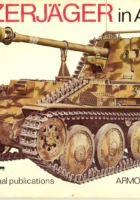
Signed documentation Squadron Signal le livre "Panzerjäger in Action - Squadron Signal SS2007" .

The Panzerjäger I (chasseur de chars en allemand) fut le premier des chasseurs de chars conçus par l’Allemagne au cours de la Seconde Guerre mondiale. Il était conçu en 1940 sur un châssis converti de Panzerkampfwagen I Ausf. B et était armé du canon antichar Skoda 4.7cm PaK L/43. Le Panzerjäger s’avéra être une solution peu coûteuse et relativement efficace pour contrer les chars soviétiques et permit de prolonger l’utilisation des chars Panzer I devenus désuets. Comme pour la majorité des chasseurs de chars, l’équipage était très vulnérable, sa seule protection étant fournie par le bouclier frontal du canon ; le canon avait en outre un faible rotation latérale.

En tout, 202 chars Panzer I furent convertis, 132 par Alkett et 70 par Skoda. Les conversions opérées par Skoda sont reconnaissables au bouclier du canon qui présente sept faces alors que les modèles d’Alkett n’en présentent que cinq. Ils furent utilisés pour la première fois en France et virent également le combat en Afrique du Nord et sur le Front de l’Est. Après avoir été remplacés par des chasseurs de chars disposant d’une meilleure motorisation en 1943, ils furent utilisés pour des opérations de police telles que les opérations menées contre les partisans dans les Balkans. A noter que certains Panzerjäger furent modifiés au niveau régimentaire afin d’emporter un canon antichar plus puissant, le 7.5cm L/48 StuK 40 qui équipait à l’origine les StuGe. La dénomination formelle du Panzerjäger était 4.7cm PaK(t) (Sf) auf Panzerkampfwagen I. Le (t) indique l’origine tchécoslovaque (Tschechoslowakisch) du canon et les lettre (Sf) pour Selbstfahrlafette (terme allemand pour “châssis autopropulsé”).

Source: Wikipedia

Continue reading

Views: 1035

Squadron Signal 2005 Nashorn, Hummel, Brumbar

Squadron Signal

SeriesAmor In Action
Sujet

Nashorn - Hummel - Brumber

RéfSS2005

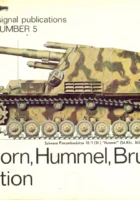
Signed documentation Squadron Signal the book "Nashorn - Hummel - Brumbur in Action - Squadron Signal SS2005" .

The Nashorn (literally Rhinoceros), originally referred to as Hornisse (Frelon in German) was a German tank destroyer of the Second World War. It was developed as an intermediate solution in 1942 and was armed with the powerful 88 mm anti-tank gun. Although slightly armored and with a high figure, he remained in service until the end of the war and demonstrated that he was a pretty good tank destroyer.

Source: Nashorn on Wikipedia

Continue reading

Views : 1472

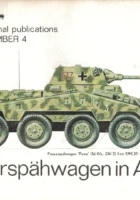
Squadron Signal 2004 Panzerspahwagen

Squadron Signal

SeriesAmor In Action
Sujet

Panzersp-hwagen in Action

RéfSS2004

Signed documentation Squadron Signal the book "Panzersp-hwagen in Action - Squadron Signal SS2004" .

Armed version of a 50 mm cannon, weighing 12 tons and up to 85 km/h. It was the most homogeneous version of the Schwerer Panzersp-hwagen. They could stand up to many light tanks and fight infantry in a proper way.

Source: Wikipedia

Continue reading

Views : 1306

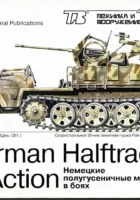
Squadron Signal 2003 German Halftracks

Squadron Signal

SeriesAmor In Action
Sujet

German Half-Tracks

PeriodWorld War II
Réf

SS2003

Signed documentation Squadron Signal the book "German Half-Tracks in Action - Squadron Signal SS2003" .

Designed to allow troops to track armoured vehicles while providing them with the protection of light armour, the schotzenpanzerwagen (front wheels, rear tracks) come almost exclusively in two models: SdKfz 250 and, as an enlarged version, the SdKfz 251. Their transport roles were diversified into a varied arms carrier, increasing the fire potential of the panzergrenadieren regiment.

Source: German Half-Tracks on Wikipedia

Continue reading

Views : 1045

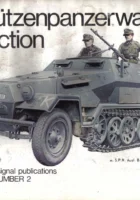
Squadron Signal 2002 Schutzenpanzerwagen

Squadron Signal

SeriesAmor In Action
Sujet

Sch-tzenpanzerwagen in Action

PeriodWorld War II
RéfSS2002

Signed documentation Squadron Signal the book "Schotzenpanzerwagen in Action - Squadron Signal SS2002" .

Designed to allow troops to follow the armoured vehicles while offering them the protection of light armour, the schotzenpanzerwagen (front wheels, rear tracks) come almost exclusively in two models: SdKfz 250 and, enlarged version, the SdKfz 251. Their transport roles were diversified into a varied arms carrier, increasing the fire potential of the panzergrenadieren regiment.

Source: Wikipedia

Continue reading

Views: 1372

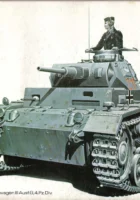
Squadron Signal 2001 Panzer III

Squadron Signal

SeriesAmor In Action
Sujet

Panzer III in Action

PeriodWorld War II
Réf

SS2001

Signed documentation Squadron Signal le livre «Panzer III in Action – Squadron Signal SS2001» .

The Panzerkampfwagen III (PzKpfw III), often abbreviated as Panzer III, was a German tank designed in the late 1930s and used extensively during the first phase of World War II. It was developed to engage enemy armoured vehicles, while the contemporary Panzer IV had been intended to provide support fire to armoured formations. However, with the emergence of increasingly protected Allied tanks, only the Panzer IV was able to ship weapons capable of destroying them, and it supplanted the Panzer III as the main tank of the Wehrmacht.

Source: Wikipedia

Continue reading

Views: 1184

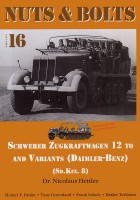
Schwerer Zugkraftwagen 12 t - Sdkfz.8 - Nuts & Bolts 16

Nuts - Bolts

SeriesNuts - Bolts
Sujet

Heavy-duty tractor 12 t - Sdkfz.8

PeriodWorld War II
Réf16

Signed documentation Nuts - Bolts la revue "Heavy tractor 12 t - Sdkfz.8 - Nuts & Bolts 16" .

The SdKfz 8 schwerer Zugkraftwagen 12 t. fut, malgré son numéro de série “8”, le premier semi-chenillé allemand entré en production. Conçu comme tracteur d’artillerie pour les canons et obusiers de 15-cm K 16 et 21-cm Lange Morser du premier conflit mondial, dont l’armée allemande conservait quelques pièces entre 1918 et 1940, il fut utilisé pour tracter les canons modernes de 17-cm K 18 apparus en 1941, ou encore les Flak 38 et 39 de 10,5-cm… Trois variantes connues du SdKfz 8 : Le HK 1601, qui différait du vehicule original en de nombreux points, et constituait une tentative de combiner le SdKfz 8 et le SdKfz 9 de 18 tonnes. Un véhicule porteur d’un canon de 8,8-cm Flak 18, utilisé en France en 1940. Le Schwerer Zugkraftwagen 12 to Daimler-Benz DB 10, gepenzert, un tracteur d’artillerie entièrement blindé, produit à peu d’exemplaires (peut-être quatre), dont il reste un exemplaire en Pologne (le lieu exact est à déterminer).

Source: Sdkfz 8 sur Wikipedia

Continue reading

Views : 1682