Hughes TH-55 Osage | |
|---|---|
| 国家 | 美国 |
| 作用 | 轻型公用和教练直升机 |
| 首次飞行 | 2 十月 1956 |
| 建立 | 2800 |
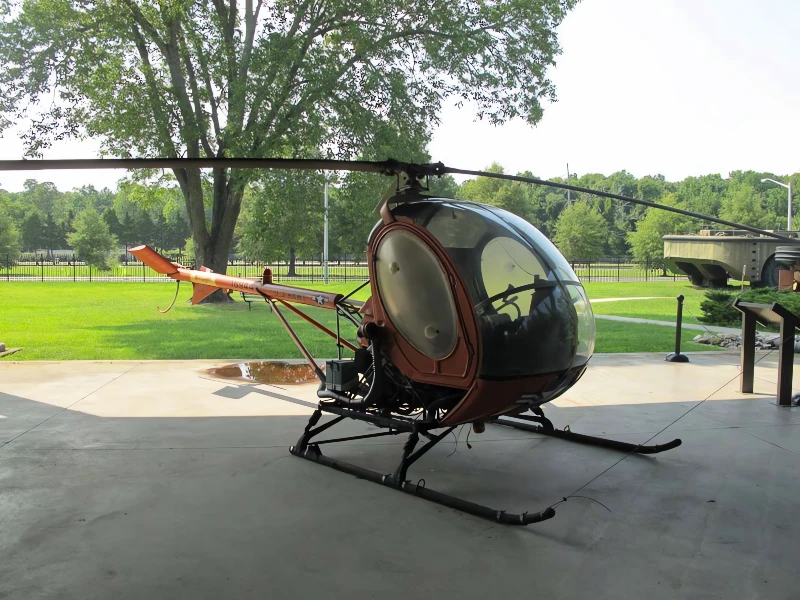
这 休斯 TH-55 奥萨奇 是为美国陆军生产的活塞动力轻型训练直升机。它也作为269型轻型通用直升机系列生产,其中一些作为300型销售。300C型由Schweizer在1983年后生产和进一步开发。
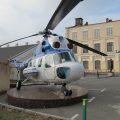
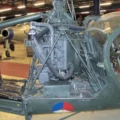
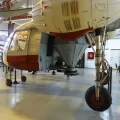
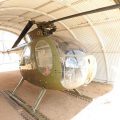
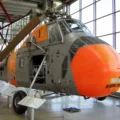
| 休斯TH-55A欧塞奇四处走动 | |
|---|---|
| 摄影师 | 弗拉基米尔·亚库博夫 |
| 本地化 | 美国陆军运输博物馆,尤斯蒂斯堡 |
| 照片 | 47 |

另请参阅:


The Primary Helicopter Trainer of the Vietnam Era
这 休斯 TH-55 奥萨奇 (designated by the factory as the Hughes Model 268 / Model 300) was a light, two-seat piston-powered training helicopter manufactured by Hughes Tool Company’s Aircraft Division. Selected by the United States Army in 1964 as its standard primary rotary-wing trainer, the TH-55 replaced older, costlier trainers like the H-23 Raven and H-13 Sioux. Named after the Native American Osage Nation in keeping with US Army tradition, the “Mattel Hoveraround”—a nickname given by aviators due to its skeletal appearance and small size—trained tens of thousands of military pilots at Fort Rucker (now Fort Novosel), Alabama, during the height of the Vietnam War. Renowned for its mechanical simplicity, exceptional autorotation safety margins, and responsive flight controls, the TH-55 established the fundamental design for light commercial training helicopters worldwide.
| Attribute | Technical Specification (US Army TH-55A Osage Standard) |
|---|---|
| 作用 | Light Primary Rotary-Wing Trainer / Commercial Light Utility Helicopter |
| 船员 | 2 (Student Pilot and Flight Instructor side-by-side) |
| 动力装置 | 1 × Lycoming HIO-360-B1A 4-cylinder horizontally opposed air-cooled piston engine (180 hp) |
| 最高速度 | 138 km/h (86 mph / 75 knots) at sea level |
| Gross / Takeoff Weight | 930 kg (2,050 lbs) maximum gross weight | ~456 kg (1,008 lbs) empty weight |
| Service Ceiling / Operational Range | 4,450 m (14,600 ft) ceiling | ~328 km (204 miles) maximum range |
| Rotor Systems | 3-blade articulated main rotor (fully articulated with dampening) + 2-blade tail rotor |
| 装备 | None (Dedicated primary flight training configuration) |
| Avionics & Cockpit Features | Basic VFR flight instrumentation, dual flight controls, intercom system, enclosed bubble canopy |
| Production Total | 2,800+ units across civilian (Model 269/300/Schweizer 300) and military variants (792 TH-55As delivered to the US Army) |
Design Engineering: Three-Blade Articulation, Belt Drives, and Tubular Simplicity
- Three-Bladed Articulated Main Rotor System: Unlike the two-bladed teetering rotor systems used on competing light helicopters of the era (such as the Bell 47), the TH-55 featured a fully articulated three-bladed main rotor head with drag hinges and flapping hinges. This provided smooth flight characteristics, eliminated mast-bumping hazards during low-G maneuvers, and gave student pilots immediate, forgiving control feedback.
- Belt-Driven Power Transmission: To keep production and maintenance costs low, Hughes incorporated a multiple V-belt drive system connecting the horizontally mounted Lycoming piston engine directly to the main rotor transmission. This simple mechanical setup served as an effective clutch and vibration absorber, simplifying pre-flight checks and field overhauls.
- Lightweight Open-Truss Tail Boom: The tail boom was constructed from a simplified aluminum tube structure containing the tail rotor drive shaft and control cables. By omitting heavy fuselage skins behind the main cabin, Hughes minimized overall weight and drag while keeping all critical mechanical linkages easily accessible for student mechanics during daily pre-flight inspections.
- Forgiving Oleo-Strut Landing Skids: Designed specifically to handle the harsh impacts of inexperienced student pilots practicing hard landings and autorotations, the TH-55 was equipped with wide skid landing gear cushioned by hydraulic oleo shock struts. This gear configuration absorbed heavy drop landings that would have damaged more rigid airframes.
Operational History: The Schoolhouse at Fort Rucker and Civilian Legacy
- The Vietnam Pilot Production Line: As the US Army rapidly expanded its airmobility doctrine in South Vietnam, the demand for helicopter pilots soared. Between 1965 and 1973, nearly every US Army aviator heading to fly UH-1 Iroquois “Hueys”, AH-1 Cobras, or CH-47 Chinooks began their flight careers sitting in the cockpit of a TH-55 at Fort Rucker, accumulating hundreds of thousands of training flight hours.
- Exceptional Safety Record in Autorotation Training: A core component of Army flight training was practicing engine-out landings (autorotations). The TH-55’s high-inertia main rotor system gave students a generous rotor-RPM cushion during the flare phase, resulting in one of the safest safety records of any military training aircraft in US history.
- Global Military Adoption: Impressed by its low operating costs and durability, military forces worldwide adopted military variants of the Model 269/300. Operators included the Japan Ground Self-Defense Force (JGSDF), the Colombian Air Force, the Royal Thai Army, and the Algerian Air Force for primary pilot training and light border patrol.
- The Schweizer 300 Continuity: In 1986, Schweizer Aircraft purchased the production rights and design from Hughes. Continuously upgraded with modern fuel-injected engines and digital avionics as the *Schweizer 300C*, the airframe remained in active civilian production for decades, serving as one of the world’s most ubiquitous civilian flight school and police patrol helicopters.
意见:3202