Morris obrnené auto

Morris CS9

KrajinyUk
ÚlohuĽahké obrnené auto
Obdobie1936+
PostavenýNeznáme

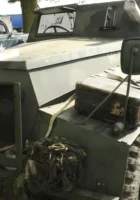
Vozidlo bolo založené na Morris Commercial C9 4×2 15 long cwt (760 kg) truck chassis. On this chassis, a riveted hull was mounted with an open-topped two-man turret. The armament consisted of either Boys anti-tank rifle and Bren light machine gun or Vickers machine gun. The vehicle carried a No. 19 radio set. The prototype was tested in 1936. A further 99 cars were ordered and were delivered in 1938. Thirty-eight of these cars were used by the 12th Royal Lancers in the Battle of France, where all of them were destroyed or abandoned. Another 30 served with the 11th Hussars in the North African Campaign. It was found that, when fitted with desert tyres, the vehicle had good performance on soft sand. However, its armour and armament were insufficient. The vehicle was retired halfway through the North African Campaign.

Zdrojový: Morris CS9 na Wikipédii

Pokračovať v čítaní

Prezretí: 933

ATF Dingo 2A2-A2.3

ATF Dingo

KrajinyNemecko
ÚlohuVozidlo na mobilitu pechoty
V prevádzke2000 – súčasnosť
PostavenýNeznáme

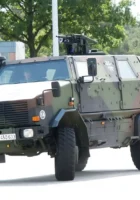
Komisia ATF Dingo is a German heavily armored military MRAP infantry mobility vehicle based on a Unimog chassis with a V-hull design, produced by the company Krauss-Maffei Wegmann (KMW). The first prototype of the Dingo 1 was completed in 1995 and the first production Dingo 1 entered service in 2000 with the German Army. It is designed to withstand land mines, rifle fire, artillery fragments and NBC-threats. ATF stands for Allschutz-Transport-Fahrzeug, meaning all-protected transport vehicle in German. It is named after the Australian native dog, the dingo. The Dingo 2 entered service in late 2004 after undergoing trials from November 2003-May 2004. Currently KMW is developing the Dingo 2 GFF for the German Army with increased internal volume. Textron signed an exclusive deal to produce and market KMW’s Dingo in the United States. However, Textron chose its own more expensive and heavier M1117 Armored Security Vehicle for the MRAP competition, which did not receive a contract.

Zdrojový: ATF Dingo na Wikipédii

Pokračovať v čítaní

Zobrazenia : 1286

Britské lietadlo Provost T.Mk.5A

BAC Jet Provost

KrajinyUk
ÚlohuVojenské školiteľné lietadlá
Prvý let26. júna 1954
Postavený734

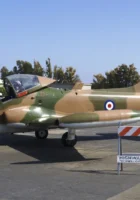
Komisia BAC Jet Provost Je to britské prúdové cvičné lietadlo, ktoré bolo používané s Royal Air Force (RAF) v rokoch 1955 až 1993. Pôvodne bol vyvinutý spoločnosťou Hunting Percival z predchádzajúceho základného trenažéra Percival Provost poháňaného piestovým motorom a neskôr vyrábaný spoločnosťou British Aircraft Corporation (BAC). Okrem viacerých objednávok RAF bol Jet Provost, niekedy s ľahkou výzbrojou, vyvážaný do mnohých vzdušných síl po celom svete. Dizajn bol tiež ďalej vyvinutý do silnejšie ozbrojeného variantu pozemného útoku pod názvom BAC Strikemaster.

Zdrojový: BAC Jet Provost na Wikipédii

Pokračovať v čítaní

Views : 960

Sd.Kfz. 250 war

Sd.Kfz. 250

KrajinyNemecko
TypPolokoľajný obrnený transportér
V prevádzke1941–1945
Postavený6600+

Komisia Sd.Kfz. 250 (German: Sonderkraftfahrzeug 250; ‘special motor vehicle’) was a light armoured half-track, very similar in appearance to the larger Hanomag-designed Sd.Kfz. 251, and built by the DEMAG firm, for use by Nazi Germany in World War II. Most variants were open-topped and had a single access door in the rear. The Sd. Kfz 250 was adopted in 1939 to supplement the standard half-track. Production delays meant that the first vehicle did not appear until mid-1941.

Zdrojový: Sd.Kfz. 250 na Wikipédii

Pokračovať v čítaní

Views : 3495

Schneider CA1

Schneider CA1

KrajinyFrancúzsko
TypŤažká nádrž
V prevádzke1916 – 1918 (Francúzsko) / 1921–1936 (Španielsko)
Postavený400

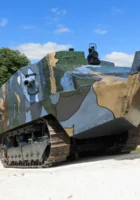
Komisia Schneider CA 1 (originally named the Schneider CA) was the first French tank, developed during the First World War. The Schneider was inspired by the need to overcome the stalemate of trench warfare which on the Western Front prevailed during most of the Great War. It was designed specifically to open passages for the infantry through barbed wire and then to suppress German machine gun nests. After a first concept by Jacques Quellennec devised in November 1914, the type was developed from May 1915 onwards by engineer Eugène Brillié, paralleling British development of tanks the same year. Colonel Jean Baptiste Eugène Estienne in December 1915 began to urge for the formation of French armoured units, leading to an order in February 1916 for four hundred Schneider CA tanks, which were manufactured by SOMUA, a subsidiary of Schneider located in a suburb of Paris, between September 1916 and August 1918.

Zdrojový: Schneider CA1 na Wkipedia

Pokračovať v čítaní

Prezretí: 1877

Opel Olympia

Opel Olympia

KrajinyNemecko
TypAuto
Výroby1935–1970
PostavenýNeznáme

Komisia Opel Olympia is a compact car produced by the German automaker Opel from 1935 to 1940, from 1947 to 1953 and again from 1967 to 1970. The 1935 Olympia was Germany’s first mass-produced car with an all-steel unitized body (monocoque). This revolutionary technology reduced the weight of the car by 180 kilograms (400 lb.) compared to its predecessor. Production of the unibody design required new production methods and materials. Spot welding, advanced types of steel, and a new production line layout were among the many advances introduced by the Olympia.

Zdrojový: Opel Olympia na Wikipédii

Pokračovať v čítaní

Zobrazenia : 1704

Bartini Beriev VVA-14

Bartini Beriev VVA-14

KrajinySovietsky zväz
TypObojživelné lietadlá ASW
Prvý let4. septembra 1972
Postavený2

Komisia Bartini Beriev VVA-14 Vertikaľno-Vzletayushchaya Amfibiya (vertikálne vzletové obojživelné lietadlo) bolo lietadlo s efektom krídla v zemi vyvinuté v Sovietskom zväze na začiatku 70. rokov. Navrhnutý tak, aby mohol vzlietnuť z vody a lietať vysokou rýchlosťou na dlhé vzdialenosti, mal uskutočniť skutočné lety vo vysokej nadmorskej výške, ale tiež mať schopnosť efektívne lietať tesne nad hladinou mora pomocou aerodynamického pozemného efektu. VVA-14 bol navrhnutý talianskym dizajnérom Robertom Bartinim ako odpoveď na vnímanú požiadavku na zničenie raketových ponoriek amerického námorníctva Polaris. Posledné lietadlo bolo vyradené v roku 1987.

Zdrojový: Bartini Beriev VVA-14 na Wiki

Pokračovať v čítaní

Views : 3495

Ekranoplan triedy Lun

Ekranoplan triedy Lun

KrajinySovietsky zväz
ÚlohuVozidlo s útočnou/dopravnou pozemnou efektom
V prevádzke 1987 – koniec 90. rokov
Postavený2

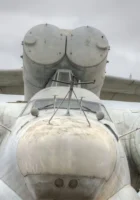
Komisia Ekranoplan triedy Lun (also called Project 903) is a ground effect vehicle (GEV) designed by Rostislav Alexeyev in 1975 and used by the Soviet and Russian navies from 1987 until sometime in the late 1990s. It flew using lift generated by the ground effect acting on its large wings when within about four metres (13 ft) above the surface of the water. Although they might look similar to traditional aircraft, ekranoplans like the Lun are not classified as aircraft, seaplanes, hovercraft, or hydrofoils. Rather, crafts like the Lun-class ekranoplan are classified as maritime ships by the International Maritime Organization due to their use of the ground effect, in which the craft glides just above the surface of the water.

Zdrojový: Ekranoplan triedy Lun na Wikipédii

Pokračovať v čítaní

Pohľady : 1802

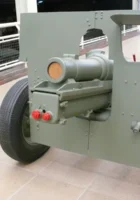
3,7-palcová húfnica

QF 3.7-inch howitzer

KrajinyUk
ÚlohuHorská pištoľ
V prevádzke1917 – súčasnosť
PostavenýNeznáme

Munícia, Húfnice QF 3,7 palca je horská zbraň, ktorú používajú britské armády a armády Commonwealthu v prvej a druhej svetovej vojne a medzi vojnami.

Zdrojový: QF 3,7-palcová húfnica na Wikipédii

Pokračovať v čítaní

Zobrazenia : 1463