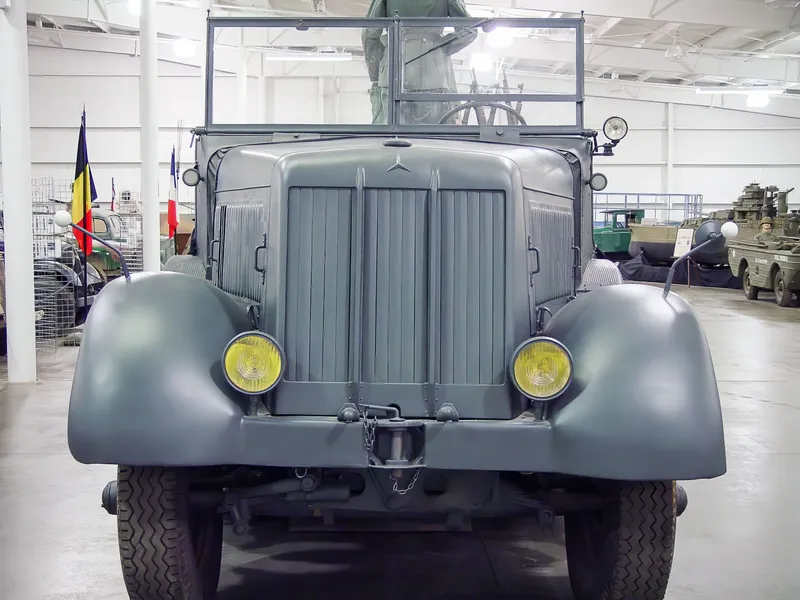
SdKfz 8 12 Ton | |
|---|---|
| País | Alemanha |
| Tipo | Meia-pista |
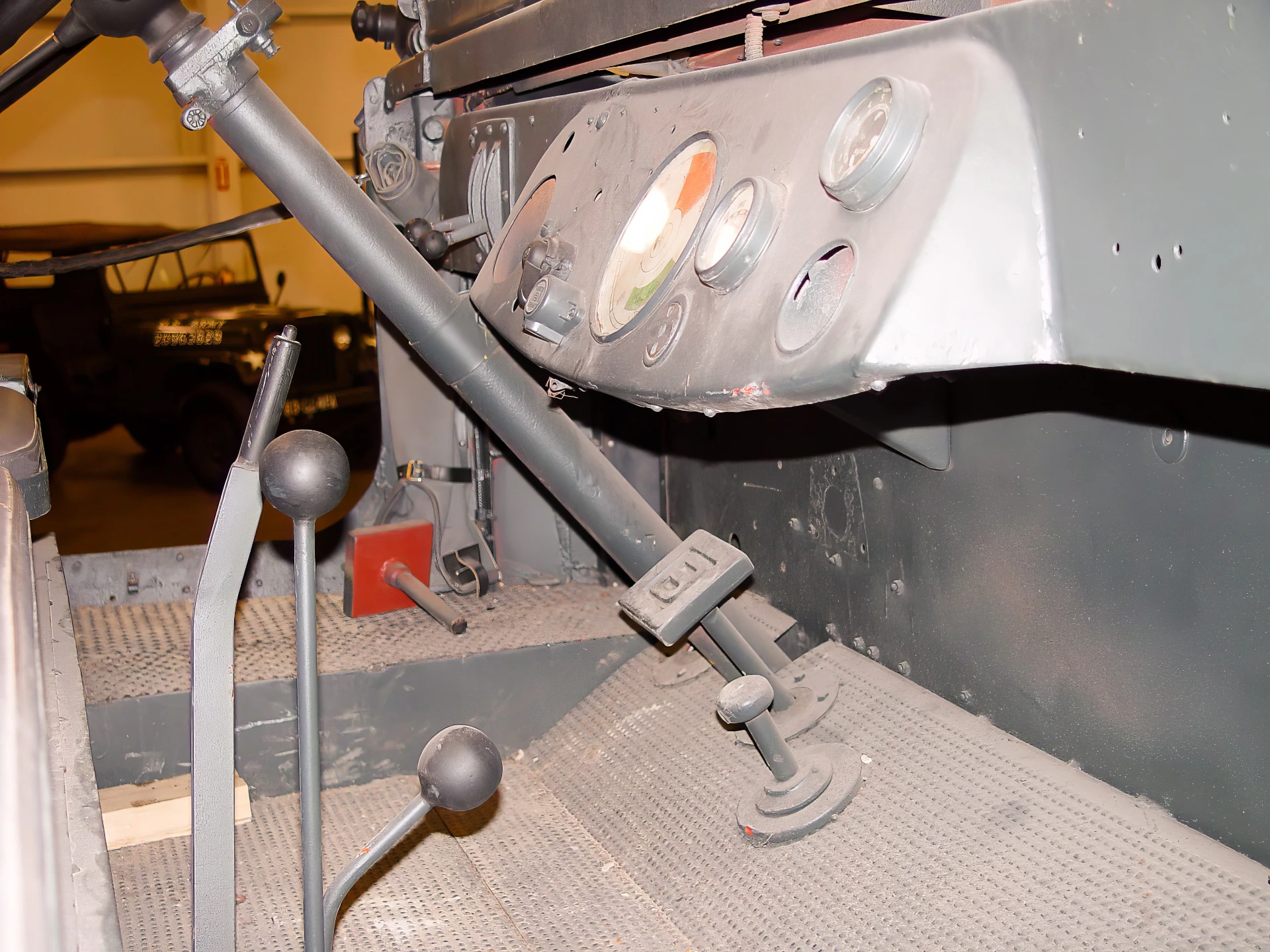
| Descrição | Álbum de fotos de 28 fotos passeio em torno de um «SdKfz 8 12 Ton' |
Galeria de fotos de um SdKfz 8 12 Ton, The Sonderkraftfahrzeug 8 ("veículo motorizado especial 8") foi uma meia pista alemã que viu uso generalizado na Segunda Guerra Mundial. Seus principais papéis foram como um motor principal para armas rebocadas pesadas como o Mörser 18 de 21 cm, o Kanone 18 de 15 cm e o FlaK 38 de 10,5 cm. Aproximadamente 4.000 foram produzidos entre 1938 e 1945. Foi usado em todas as campanhas travadas pelos alemães na Segunda Guerra Mundial, notadamente a Invasão da Polônia, a Batalha da França, a Campanha dos Balcãs, a Frente Oriental, a Campanha norte-africana, a Batalha da Normandia e a Campanha Italiana.
Fonte: SdKfz 8 12 Ton na Wikipédia

Veja também:


O Sd.Kfz. 8 (Sonderkraftfahrzeug 8 – “Special Motorized Vehicle 8”) was a German heavy half-track designed by Daimler-Benz. It was formally known as the Schwerer Zugkraftwagen 12t (Heavy Towing Vehicle 12-ton), a designation that referred to its intended towing capacity, though later versions could pull up to 14 tonnes. It was one of the largest half-tracks used by the Wehrmacht.
Primary Role and Design
- Main Function: The vehicle’s chief role was as a heavy artillery tractor, essential for moving the largest field guns and howitzers across various terrains.
- Towed Guns: It was commonly used to tow heavy weapons such as the 21 cm Mörser 18 e o 17 centímetros Kanone 18, as well as the 10.5 cm FlaK 38 anti-aircraft gun.
- Crew Capacity: The open-topped body provided seating for a driver, co-driver, and up to ten gun crew members or infantry soldiers.
- Other Duties: It frequently served as a powerful recovery vehicle for pulling disabled lighter tanks and trucks.
Half-track System
Like all German half-tracks, the Sd.Kfz. 8 utilized a combination of front wheels for steering and a rear track assembly for propulsion and traction.
- Engine: Powered by a liquid-cooled, 12-cylinder Maybach gasoline engine (later versions like the DB 10 used the HL85 TUKRM).
- Suspension: The rear tracks featured the complex, interlocking Schachtellaufwerk roadwheel system, which distributed weight efficiently and provided excellent off-road mobility, but was notoriously complicated and time-consuming to maintain.
- Steering: It employed a dual steering system where the front wheels handled gentle turns, and differential braking was applied to the tracks for sharper turns.
Technical Summary (DB 10 Model)
| Component | Especificação |
|---|---|
| Engine Output | 185 PS (approx. 182 hp) |
| Towing Capacity | 12 to 14 tonnes |
| Weight (Gross) | Approx. 14,700 kg |
| Max Road Speed | Approx. 51 km/h (32 mph) |
| Total Production | Approx. 4,000 units (1938–1945) |
Views : 7810
Você pode ver também:
 Sd.Kfz. 11 – Fotos e Vídeos
 SdKfz 251 Ausf D – Ande por aí
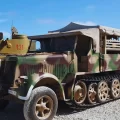 Sdkfz 7 vol2 – Ande por aí
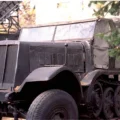 Sd.Kfz. 9 Famo vol3 – WalkAround
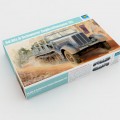 Sd.Kfz.8 Schwerer Zugkraftwagen 12t - Trompetista 01583
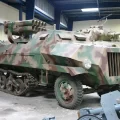 Sd.Kfz.4/1 Maultier – WalkAround
 M9A1 HalfTrack - WalkAround
 SdKfz 9 Famo – WalkAround
 Sdkfz 251 - WalkAround
 Sdkfz.10 – Ande por aí