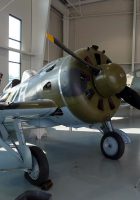
Polikarpovas I-16

Polikarpovas I-16

ŠaliesSovietų Sąjunga
TipasNaikintuvai
Pirmasis skrydis1933 m. gruodžio 30 d.
Pastatytas8644

2007 Polikarpovas I-16 buvo revoliucinio dizaino sovietinis naikintuvas, tai buvo pirmasis pasaulyje žemo sparno konsolinis monoplaninis naikintuvas su ištraukiama važiuokle, kad pasiektų eksploatacinį statusą ir todėl "pristatė naują naikintuvų dizaino madą". I-16 buvo pristatytas 1930-ųjų viduryje ir Antrojo pasaulinio karo pradžioje sudarė sovietų oro pajėgų stuburą. Mažybinis naikintuvas, sovietų lakūnų pramintas "Ishak" arba "Ishachok" ("Asilas" arba "Burro"), ryškiai figūravo Antrajame Kinijos ir Japonijos kare, Khalkhin Gol mūšyje ir Ispanijos pilietiniame kare – kur nacionalistai jį vadino Rata ("Žiurke") arba respublikonų "Mosca" ("Skristi"). Suomijos slapyvardis buvo Siipiorava ("Skraidanti voverė").

Šaltinis: Polikarpovas I-16 Vikipedijoje

Tęsti svarstymą

Views : 22392

BMP-1

BMP-1

ŠaliesSovietų Sąjunga
TipasAmfibinė vikšrinė pėstininkų kovos transporto priemonė
Tarnyboje1966–dabar
Pastatytas20000+

Nuotraukų galerija BMP-1, The BMP-1 is a Soviet amphibious tracked infantry fighting vehicle. BMP stands for Boyevaya Mashina Pekhoty 1 (Russian: Боевая Машина Пехоты 1; БМП-1), meaning “infantry fighting vehicle”. The BMP-1 was the first mass-produced infantry fighting vehicle (IFV) of USSR. It was called the M-1967, BMP and BMP-76PB by NATO before its correct designation was known.

Šaltinis: BMP-1 dėl Wiki

Tęsti svarstymą

Views : 4474

M1151 HMMWV

Hummer M1114

ŠaliesJav
TipasKarinis lengvasis sunkvežimis
Pagamintas1984–dabar
Pastatytas280000+

Nuotraukų galerija Hummer M1114, The High Mobility Multipurpose Wheeled Vehicle (HMMWV), commonly known as the Humvee, is a four-wheel drive military light truck produced by AM General. It has largely supplanted the roles previously performed by the original jeep, and others such as the Vietnam-era M151 jeep, the M561 “Gama Goat”, their M718A1 and M792 ambulance versions, the Commercial Utility Cargo Vehicle (CUCV), and other light trucks. Primarily used by the United States military, it is also used by numerous other countries and organizations and even in civilian adaptations. The Humvee’s widespread use in the Gulf War of 1991, where it negotiated the treacherous desert terrain, helped inspire civilian Hummer versions.

Šaltinis: Hummer M1114 dėl Wiki

Tęsti svarstymą

Views : 7823

Tu-2 šikšnosparnis

Tupolev TU-2

ŠaliesSovietų Sąjunga
VaidmenįBombonešių orlaiviai
Pirmasis skrydis29 January 1941
Pastatytas2257

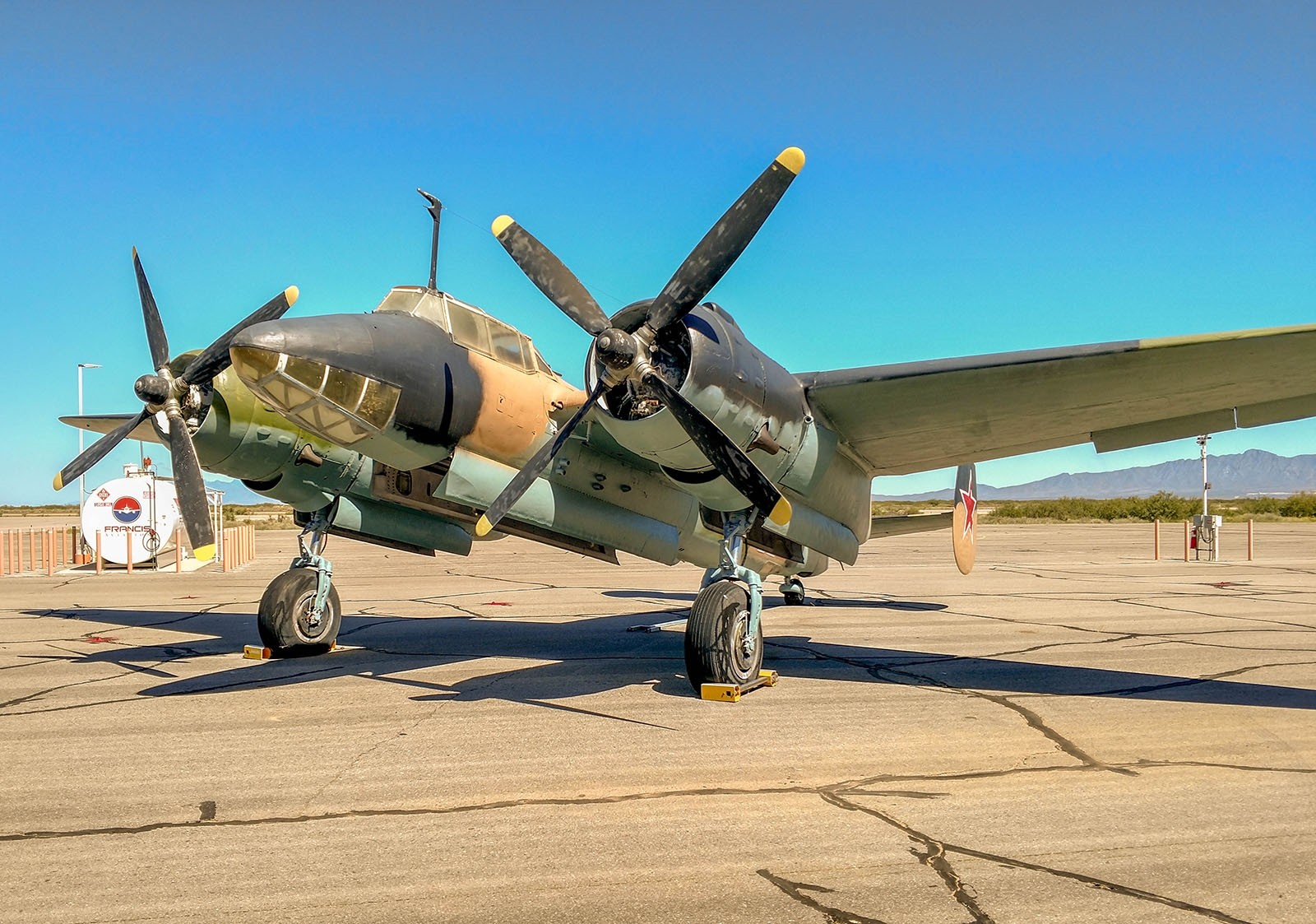
Nuotraukų galerija Tupolev TU-2S, The Tupolev Tu-2 (development names ANT-58 and 103; NATO reporting name Bat) was a twin-engine Soviet high-speed daylight and frontline (SDB and FB) bomber aircraft of World War II vintage. The Tu-2 was tailored to meet a requirement for a high-speed bomber or dive-bomber, with a large internal bombload, and speed similar to that of a single-seat fighter. Designed to challenge the German Junkers Ju 88, the Tu-2 proved comparable, and was produced in torpedo, interceptor and reconnaissance versions. The Tu-2 was one of the outstanding combat aircraft of World War II and it played a key role in the Red Army’s final offensives

Šaltinis: Tupolev TU-2 apie Vikipediją

Tęsti svarstymą

Views : 3911

Varpas UH-1Y

Varpas UH-1Y2

ŠaliesJav
TipasVidutinio dydžio naudingumo sraigtasparnis
Pirmasis skrydis20 December 2001

Nuotraukų galerija Varpas UH-1Y, The Bell UH-1Y Venom (also called Super Huey) is a twin-engine, medium-sized utility helicopter, built by Bell Helicopter under the H-1 upgrade program of the United States Marine Corps. One of the latest members of the numerous Huey family, the UH-1Y is called also Yankee, from its variant letter. The UH-1Y was to have been remanufactured from UH-1Ns, but in 2005, it was approved for the aircraft to be built as new. After entering service in 2008, the UH-1Y is currently in full-rate production to replace the USMC’s aging fleet of UH-1N Twin Huey light utility helicopters, first introduced in the early 1970s

Šaltinis: Varpas UH-1Y "Wiki"

Tęsti svarstymą

Views : 5636

JSU-122

ISU-122

ŠaliesSovietų Sąjunga
TipasSavaeigis ginklas
FotografasNežinoti
Aprašymas / kontrolė

Albumas 75 nuotraukos vaikšto po «ISU-122»

Nuotraukų galerija ISU-122, The ISU-122 (acronym of Istrebitelnaja – or Iosif Stalin-based – Samokhodnaya Ustanovka 122) was a Soviet self-propelled gun used during World War II, mostly in the anti-tank role.

Šaltinis: ISU-122 "Wiki"

Tęsti svarstymą

Views : 6290

M107 175mm

M107 savaeigis pistoletas

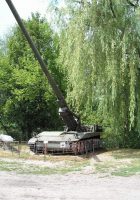
ŠaliesJav
TipasSavaeigis ginklas
FotografasNežinoti
Aprašymas / kontrolė

Albumas 28 nuotraukos su "M107" savaeigiu pistoletu»

Nuotraukų galerija M107 savaeigis pistoletas, The M107 175 mm self-propelled gun was used by the U.S. Army from the early 1960s through to the late 1970s. It was part of a family of self-propelled artillery that also included the M110. It was intended to provide long-range fire support in an air-transportable system. It was exported to several other countries including Germany, South Korea, Spain, Greece, Iran, Israel, Italy, the Netherlands, the United Kingdom, and Turkey. The M107’s combat history in U.S. service was limited to the Vietnam War; it also saw extensive combat use in Israeli service. The M107 shared many components with, and in many cases was replaced by, later versions of the M110 8″ howitzer. Although withdrawn from U.S. service in the late 1970s, it continues in service with some armies as of 2010.

Šaltinis: M107 savaeigis pistoletas "Wiki"

Tęsti svarstymą

Peržiūrėta: 3725

Scout Car Ford Mk.1

ŠaliesJk
TipasFour-wheel drive reconnaissance vehicle
Tarnyboje1940–1974
VuiltNežinoti

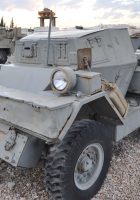
Nuotraukų galerija Scout Car Ford Mk.1, The Daimler Scout Car, known in service as the Daimler “Dingo” (after the Australian wild dog), was a British light fast four-wheel drive reconnaissance vehicle also used in the liaison role during the Second World War.

Šaltinis: Scout Car Ford Mk.1 on Wiki

Tęsti svarstymą

Views : 2374

Kawanishi N1K2-J

Kawanishi N1K2

ŠaliesJaponija
TipasKarinio jūrų laivyno sausumos perėmėjas
Įvadas1943
Pastatytas1532

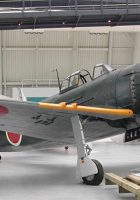
Nuotraukų galerija Kawanishi N1K2-J, The Kawanishi N1K Kyōfū (強風 “strong wind”, Allied reporting name “Rex”) was an Imperial Japanese Navy floatplane fighter. The Kawanishi N1K-J Shiden (紫電 “Violet Lightning”) was an Imperial Japanese Navy Air Service land-based version of the N1K. Assigned the Allied codename “George”, the N1K-J was considered by both its pilots and opponents to be one of the finest land-based fighters flown by the Japanese during World War II. The Shiden Kai possessed heavy armament as well as surprisingly good manoeuvrability, due to a mercury switch that automatically extended the flaps during turns. These “combat” flaps created more lift, thereby allowing tighter turns. Unlike the A6M Zero, the Shiden Kai could compete against the best late-war fighters, such as the F6F Hellcat, the F4U Corsair and P-51 Mustang.

Variantai: N1K2-J Prototypes: N1K1-Jb redesigned. Low wings, engine cover and landing gear modified. New fuselage and tail, 8 built. N1K2-J Shiden KAI Model 21: Navy Land Based Interceptor, first model of series with a Nakajima Homare 21 engine. N1K2-Ja Shiden KAI Model 21A: Fighter-bomber version. Four 250 kg bombs. N1K2-K Shiden Kai Rensen 1, Model A: Fighter Trainer, modified from N1K-J Series with two seats, operative or factory conversions.

Šaltinis: Kawanishi N1K2-J "Wiki"

Tęsti svarstymą

Views : 9921

Mitsubishi Ki-46III

Mitsubishi Ki-46III

ŠaliesJaponija
TipasŽvalgybiniai orlaiviai
Pirmasis skrydis1939 m. lapkričio mėn.
Pastatytas1742

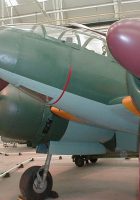
Nuotraukų galerija Mitsubishi Ki-46III, The Mitsubishi Ki-46 was a twin-engine reconnaissance aircraft used by the Imperial Japanese Army in World War II. Its Army Shiki designation was Type 100 Command Reconnaissance Aircraft (一〇〇式司令部偵察機); the Allied nickname was “Dinah”.

Šaltinis: "Mitsubishi Ki-46" svetainėje "Wiki"

Tęsti svarstymą

Views : 5478