Holland PRTL

Holland PRTL

Országholland
SzerepetLégvédelmi ágyútartály

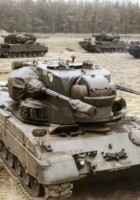
A Flugabwehrkanonenpanzer Gepard ("légvédelmi ágyútartály Gepárd", ismertebb nevén Flakpanzer Gepard) egy autonóm, minden időjárásra alkalmas német önjáró légvédelmi löveg (SPAAG). Az 1960-as években fejlesztették ki, és az 1970-es években terepen helyezték el, és többször frissítették a legújabb elektronikával. Ez volt a német hadsereg (Bundeswehr) és számos más NATO-ország légvédelmének sarokköve. Németországban a Gepardot 2010 végén fokozatosan megszüntették, hogy felváltsa a "SysFla", egy mobil és helyhez kötött légvédelmi rendszer, amely az LFK NG rakétát és az új MANTIS lövegrendszert használja. A SysFla mobil platformja valószínűleg a GTK Boxeren alapul.

Holland változat : Search radar: X band, 15 km range Tracking radar: X/Ka band, 13 km range The Dutch version was officially called the PRTL (PantserRupsTegenLuchtdoelen translating to “ArmourTrackAgainstAirtargets”), pronounced as “pruttel” (meaning ‘to sputter’) by the soldiers. The Dutch series version was made public through a photograph of a vehicle from a C-Company, the first to be equipped with the new weapon. Traditionally all Dutch vehicles in a company have names beginning with the company designation letter and this vehicle happened to have the individual name Cheetah painted in bold type on its turret. Inevitably the international press assumed “Cheetah” was the Dutch name for their Gepard version and this mistake found its way into most armour publications on the subject. In 2000 the Dutch military authorities, tired of constantly having to explain all this and considering “pruttle” was hardly a martial name anyway, conformed themselves to common error and made “Cheetah” the official designation, when the system was upgraded.

Forrás: Holland PRTL a Wikipédián

Olvasd tovább

Views : 6551

RM-70 MLRS

RM-70 MLRS

OrszágKelet-Németország
TípusTöbb rakétavető
FényképRobert De Craeck
Téma

Albuma 151 képek egy tartályról RM-70 MLRS

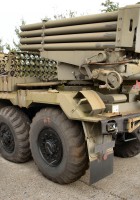
The RM-70 (raketomet vzor 1970) multiple rocket launcher is a Czechoslovakian army version and the heavier variant of the BM-21 Grad multiple rocket launcher, providing enhanced performance over its parent area-saturation artillery system that was introduced in 1971 (but the NATO designation is M1972). RM-70 was developed in Czechoslovakia as a successor for the RM-51, achieving initial operational capability with its Army in 1972. The launcher was being produced in Dubnica nad Váhom (Slovakia). Originally, it was sold to East Germany. After the Soviet Union collapse and the split of Czechoslovakia into the Czech Republic and Slovak Republic, it was sold to several states in Africa, America, Asia and Europe.

Forrás: RM-70 MLRS a Wikipédián

Olvasd tovább

Views : 4187

Grumman F-11A Tigris

Grumman F-11A Tigris

OrszágUsa
TípusSzuperszonikus vadászgép
Első repülés1954. július 30.
Beépített200

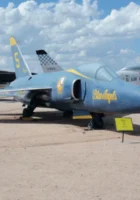
Képgaléria egy Grumman F-11A Tigris, The Grumman F11F/F-11 Tiger was the first supersonic, single-seat carrier-based United States Navy fighter aircraft in operation during the 1950s and 1960s. Originally designated the F11F Tiger in April 1955 under the pre-1962 Navy designation system, it was redesignated as F-11 Tiger under the 1962 United States Tri-Service aircraft designation system. The F11F/F-11 was used by the Blue Angels flight team from 1957–1969. Grumman Aircraft Corporation made 200 Tigers, with the last aircraft being delivered to the U.S. Navy on 23 January 1959.

Forrás: Grumman F-11A Tiger a Wikipédián

Olvasd tovább

Views : 6169

Piranha 10x10

Piranha 10×10

OrszágSvájc
SzerepetPáncélozott harci jármű
Termelt1972–napjaink
BeépítettIsmeretlen

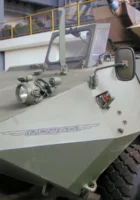
The MOWAG Piranha is a family of armoured fighting vehicles designed by the Swiss company MOWAG (since April 2010 the name has changed to General Dynamics European Land Systems – Mowag GmbH). Five generations of vehicles have been produced, manufactured by Mowag or under licence by other companies, and variants are in service with military forces throughout the world. Piranhas are available in 4×4, 6×6, 8×8, and 10×10 wheel versions. There are several variants within these versions, giving different degrees of armour protection and several kinds of turret, for use in a variety of roles. Piranha derivatives have been assigned roles as troop transports, command vehicles, fire support vehicles, tank trainers, and police vehicles.

Forrás: Piranha 10×10 a Wikipédián

Olvasd tovább

Megtekintve: 3423

Pansarbandvagn 401

Pansarbandvagn 401

OrszágSvédország
TípusTöbbcélú páncélozott jármű
FényképThord Wedman
Téma

Albuma 182 képek egy tartályról Pansarbandvagn 401

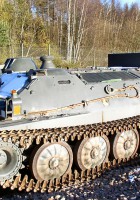
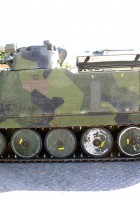
The MT-LB (Russian: Многоцелевой Тягач Легкий Бронированный, Mnogotselevoy Tyagach Logkiy Bronirovannyi / light multi-purpose armoured towing vehicle) is a Soviet multi-purpose fully amphibious auxiliary armoured tracked vehicle, which was first introduced in the late 1960s. Initially, the vehicle was known as the M 1970 in the west. Swedish MT-LB converted into Pbv 401 Pbv 401 (pansarbandvagn) – modified former East-German vehicle with 7.62 mm machine guns Ksp 95 and Ksp 58. Stripbv 4011 (stridsledningbandvagn) – battalion-level command post. Bgbv 4012 (bärgningsbandvagn) – Swedish designator for the MTP-LB. Rlpbv 4014/T (radiolänkbandvagn) – signals vehicle. Stripbv 4021 (stridsledningbandvagn) – company-level command post. Sjvpbv 4024 (sjukvårdspansarbandvagn) – Military ambulance. Lvrbpbv 4016 (luftvärnsrobotbandvagn) – unconfirmed designator for vehicles, equipped with RBS 70. Pvrbbv 452 (pansarvärnrobotbandvagn) – with RBS 56 BILL 1 Anti-tank guided weapon.

Forrás: Pansarbandvagn 401 a Wikipédiában

Olvasd tovább

Nézetek : 3962

ITALERI FERDINÁND 36501

Italeri között

Ref 36501
SerieA tankok világa
Skála1/35
Téma

FERDINAND

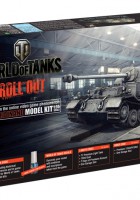
THE BOX CONTAIN: 1 MODEL KIT – 1 LIQUID CEMENT – 1 TANK GUIDE – WORLD oF TANKS DECALS – 3 INVITE CODES – 1 BONUS CODE

Official German designation: Sturmgeschutz (StuG) 8.8cm Pak43/2 (Ferdinand/Elefant) The StuG 8.8cm was based on the unsuccessful Porsche Tiger chassis fitted with a heavily armoured superstructure in the front and a mounted 8,8cm Pak 43/2 L/71 gun. A total of 90 vehicles were produced; they first saw combat in the Battle of Kursk (Operation Citadel). It was built in 1943 under the name Ferdinand, after its designer Ferdinand Porsche, but was soon renamed. After the Battle of Kursk, the remaining 48 vehicles were pulled out of service and given an overhaul. This included a ball-mount machine gun in the front along with a commander’s cupola. The name Elefant was soon decided upon. The vehicle was received with mixed feelings. It provided good protection with its thick armour but was severely unreliable in its mechanics due to the use of non-standard parts. Nevertheless, the Ferdinand/Elefant might well have been the most successful tank destroyer employed during the war, with a kills to losses ratio of approximately 10:1.

Forrás: Italeri között

Olvasd tovább

Nézetek : 1981

PBV 302

Pansarbandvagn 302

OrszágSvédország
TípusPáncélozott személyszállító
FényképThord Wedman
Téma

Albuma 155 képek egy tartályról Pansarbandvagn 302

A Pansarbandvagn 302 (Pbv 302) egy svéd nagy mozgékonyságú páncélozott szállító jármű, amelyet a svéd hadsereg műveleti követelményeinek kielégítésére fejlesztettek ki. A Hägglund és a Söner tervezte és gyártotta Örnsköldsvikben (ma Hägglunds Vehicle AB). A tervezést 1961-ben rendelték meg a Pbv 301 leváltására. A gyártás 1966-tól 1971-ig tartott. A járművet korszerűsítették, és továbbra is korlátozott szolgálatban van, annak ellenére, hogy a CV 90 sorozat ma már Svédország szabványos gyalogsági harcjárműve, amelyet otthon és külföldön is használnak a svéd erők.

Forrás: Pansarbandvagn 302 a Wikipédián

Olvasd tovább

Views : 5302

Pansarbandvagn 301

Pansarbandvagn 301

OrszágSvédország
TípusPáncélozott személyszállító
FényképThord Wedman
TémaAlbuma 38 képek egy tartályról Pansarbandvagn 301

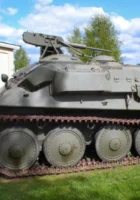
Pansarbandvagn 301 (pbv 301), was a Swedish armoured personnel carrier used by the Swedish Army. It was a typical “battle taxi”, armed with a 20 mm Bofors gun from the scrapped J21-fighters and with room for transporting 8 fully armed soldiers. The pbv 301 was an interim solution, built on the chassis from the obsolete Stridsvagn m/41, introduced in 1961 and removed from service in the late 1960s and early 1970s when the replacement pbv 302 came into use. The pbv 301 replaced the open-topped KP-bil armoured car as the armoured troop transport in the Swedish Army.

Forrás: Pansarbandvagn 301 a Wikipédián

Olvasd tovább

Megtekintések : 3294

Douglas F4D-1 (F-6A) Skyray

Douglas F4D Skyray

OrszágUsa
TípusSzuperszonikus vadász/elfogó
FotósVlagyimir Jakubov
Téma

Albuma 121 fotók séta körül a «Douglas F4D-1 (F-6A) Skyray»

Képgaléria egy Douglas F4D-1 (F-6A) Skyray, The Douglas F4D Skyray (later redesignated F-6 Skyray) was an American carrier-based supersonic fighter/interceptor built by the Douglas Aircraft Company. Although it was in service for a relatively short time and never entered combat, it was notable for being the first carrier-launched aircraft to hold the world’s absolute speed record, at 752.943 mph,[1] and was the first United States Navy and United States Marine Corps fighter that could exceed Mach 1 in level flight. It was the last fighter produced by the Douglas Aircraft Company before it merged with McDonnell Aircraft and became McDonnell Douglas. The F5D Skylancer was an advanced development of the F4D Skyray that did not go into service.

Forrás: Douglas F4D Skyray a Wikipédiában

Olvasd tovább

Megtekintés : 4641

Northrop F-5E Tigris II
Northrop F-5
OrszágUsa
SzerepetKönnyű harcos
Első repülés1959. július 30.<
Beépített2200+

A Northrop Az F-5A/B Freedom Fighter és az F-5E/F Tiger II egy szuperszonikus könnyű vadászcsalád része, amelyet eredetileg a Northrop Corporation tervezett az 1950-es évek végén. Mivel kisebb és egyszerűbb, mint a kortársak, mint például a McDonnell Douglas F-4 Phantom II, az F-5 kevesebbe kerül mind a beszerzés, mind a működés számára, így népszerű exportrepülőgép. Az F-5 az 1950-es években kezdte életét a Northrop által magánfinanszírozású könnyű vadászgép-programként. A tervezőcsapat egy kis, erősen aerodinamikai vadászgépet csomagolt két kompakt és nagy tolóerejű General Electric J85 motor köré, a teljesítményre és az alacsony karbantartási költségekre összpontosítva. Bár elsősorban a napi légi fölény szerepére tervezték, a repülőgép is képes földi támadási platform. Az F-5A az 1960-as évek elején állt szolgálatba. A hidegháború alatt 1972-ig több mint 800-at gyártottak az Egyesült Államok szövetségesei számára. Bár az USAF-nek nem volt elismert igénye egy könnyű vadászgépre, nagyjából 1200 Northrop T-38 Talon kiképző repülőgépet vett be, amelyek közvetlenül az F-5A-n alapultak.

Forrás: Northrop F-5E Tiger II a Wikipédián

Olvasd tovább

Views : 19040