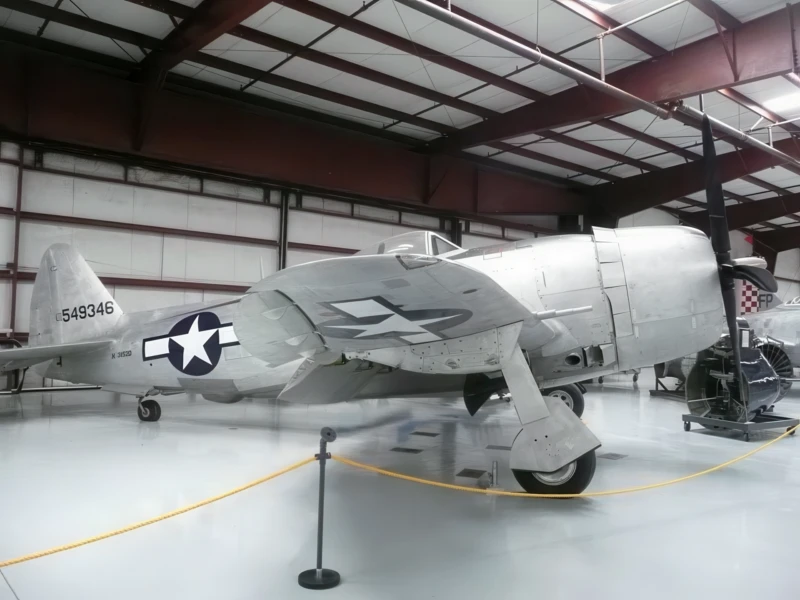
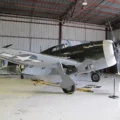
P-47D Thunderbolt | |
|---|---|
| Paie | Usa |
| Rôle | Chasseur-bombardier |
| Premier vol | Le 6 mai 1941 |
| Construit | 15636 |
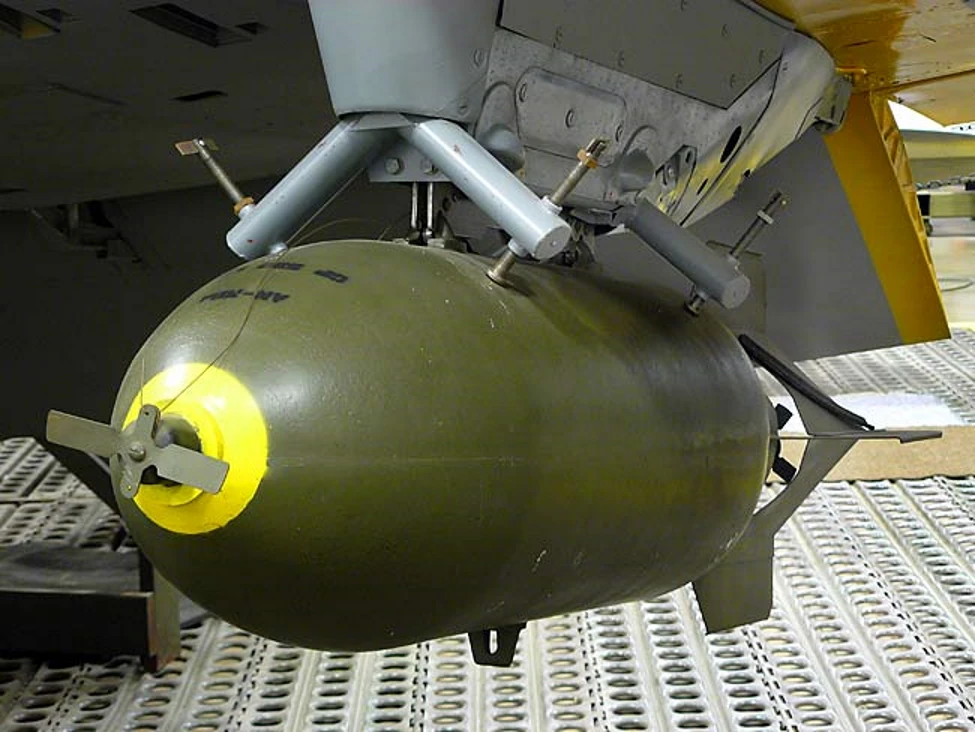
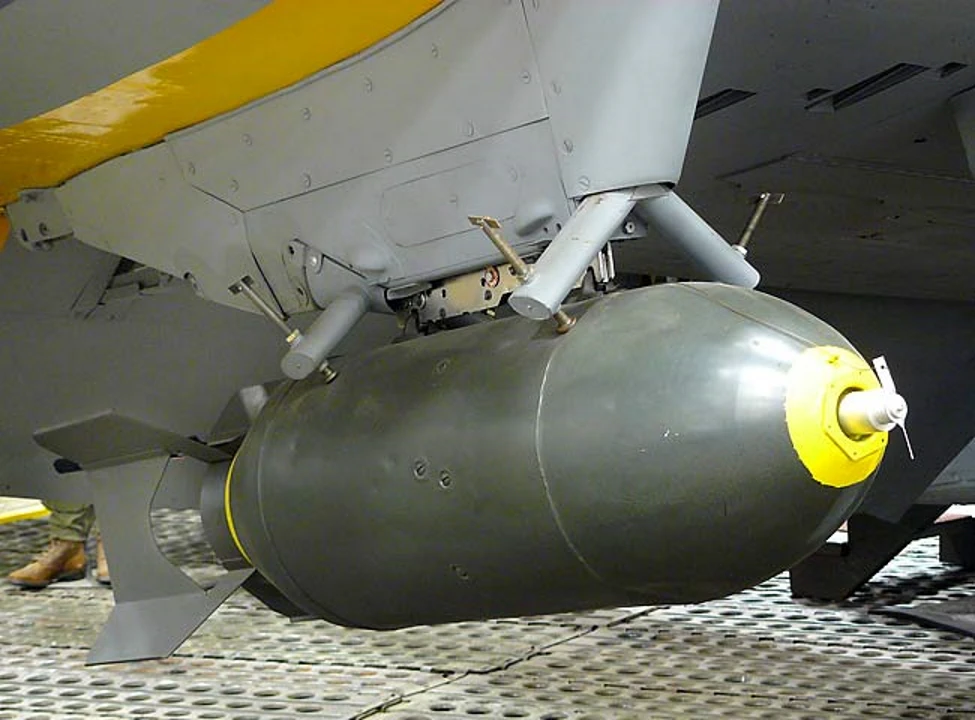
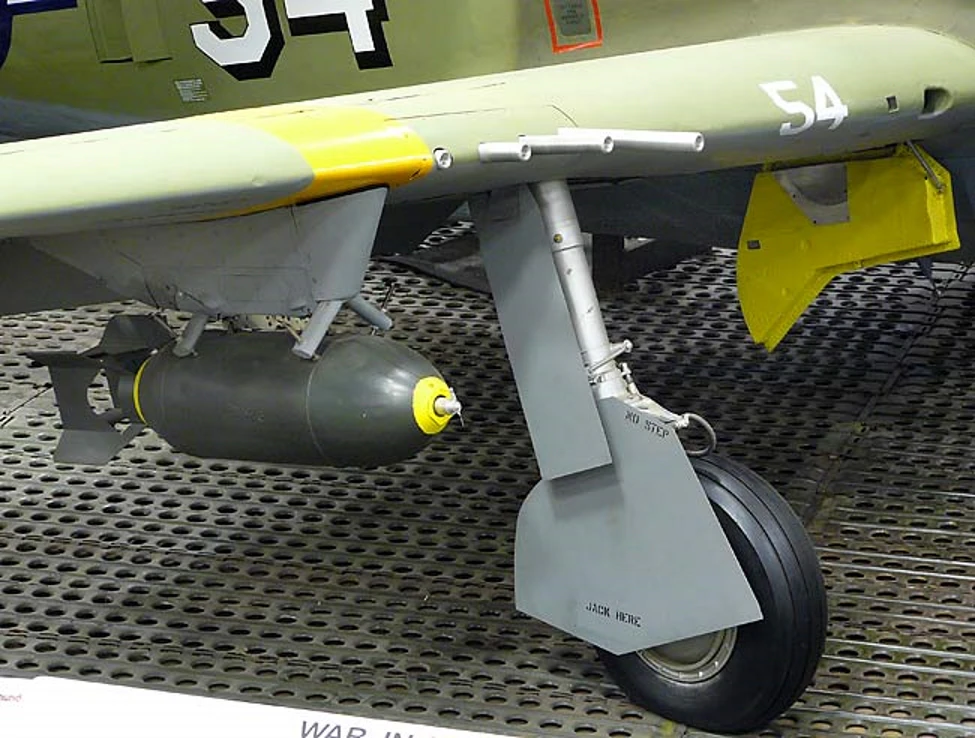
Lla République P-47 Thunderbolt était un avion de chasse de l’époque de la Seconde Guerre mondiale produit par les États-Unis de 1941 à 1945. Son armement principal était huit mitrailleuses de calibre .50 et dans le rôle d’attaque au sol de chasseur-bombardier il pouvait porter des fusées de cinq pouces ou une charge de bombe de 2.500 livres (1.103 kg). Une fois complètement chargé, le P-47 pesait jusqu’à huit tonnes, ce qui en fait l’un des combattants les plus lourds de la guerre. Le P-47 a été conçu autour du puissant moteur Pratt & Whitney R-2800 Double Wasp, qui a également été utilisé par deux chasseurs de l’US Navy/U.S. Marine Corps, le Grumman F6F Hellcat et le Vought F4U Corsair. Le Thunderbolt a été efficace en tant que chasseur d’escorte de courte à moyenne portée dans les combats air-air à haute altitude et les attaques au sol dans les théâtres européen et pacifique.
Source: P-47D Thunderbolt sur Wikipedia
| P-47D Thunderbolt | |
|---|---|
| Photographe | Inconnu |
| Localisation | Inconnu |
| Photos | 22 |
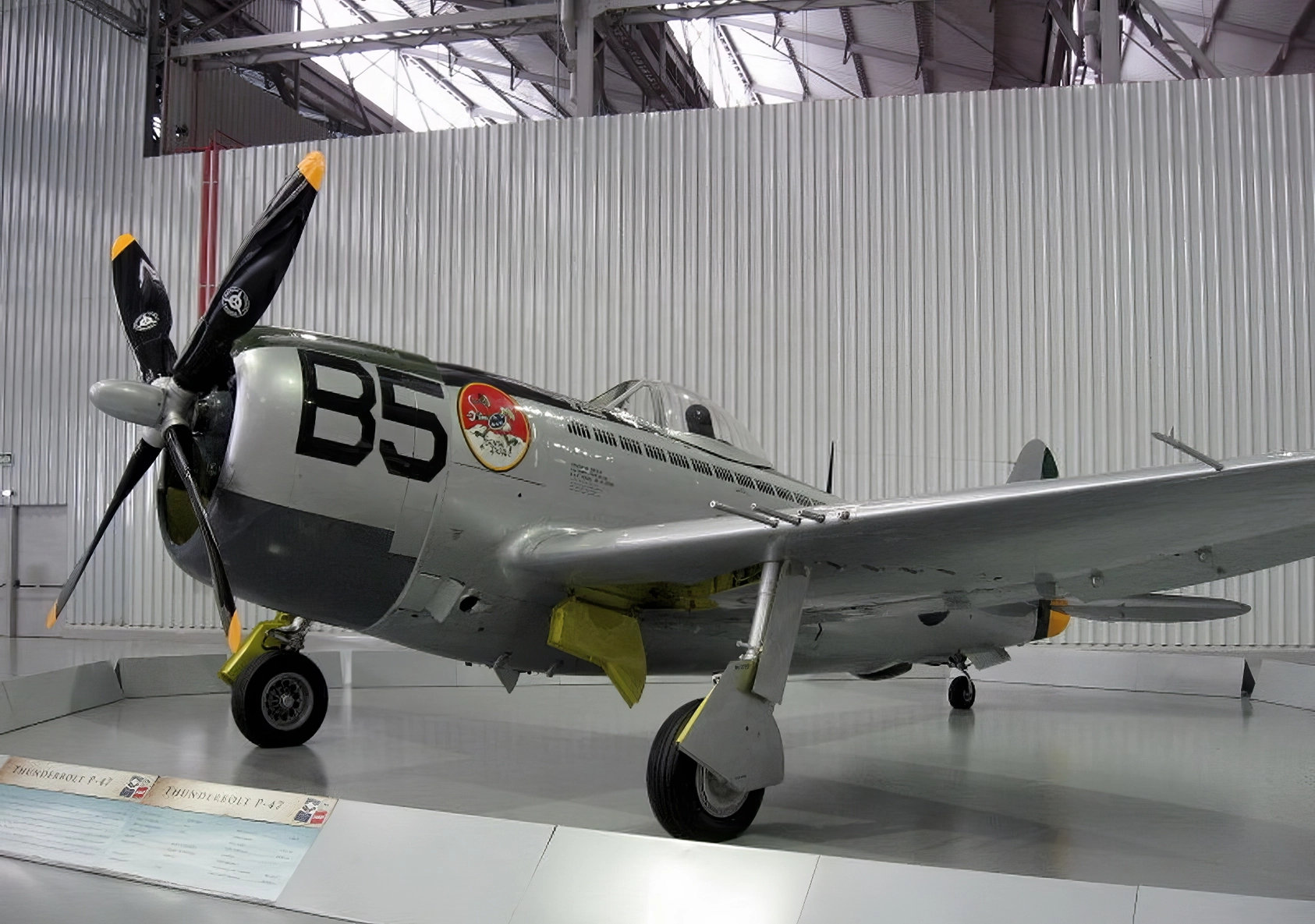

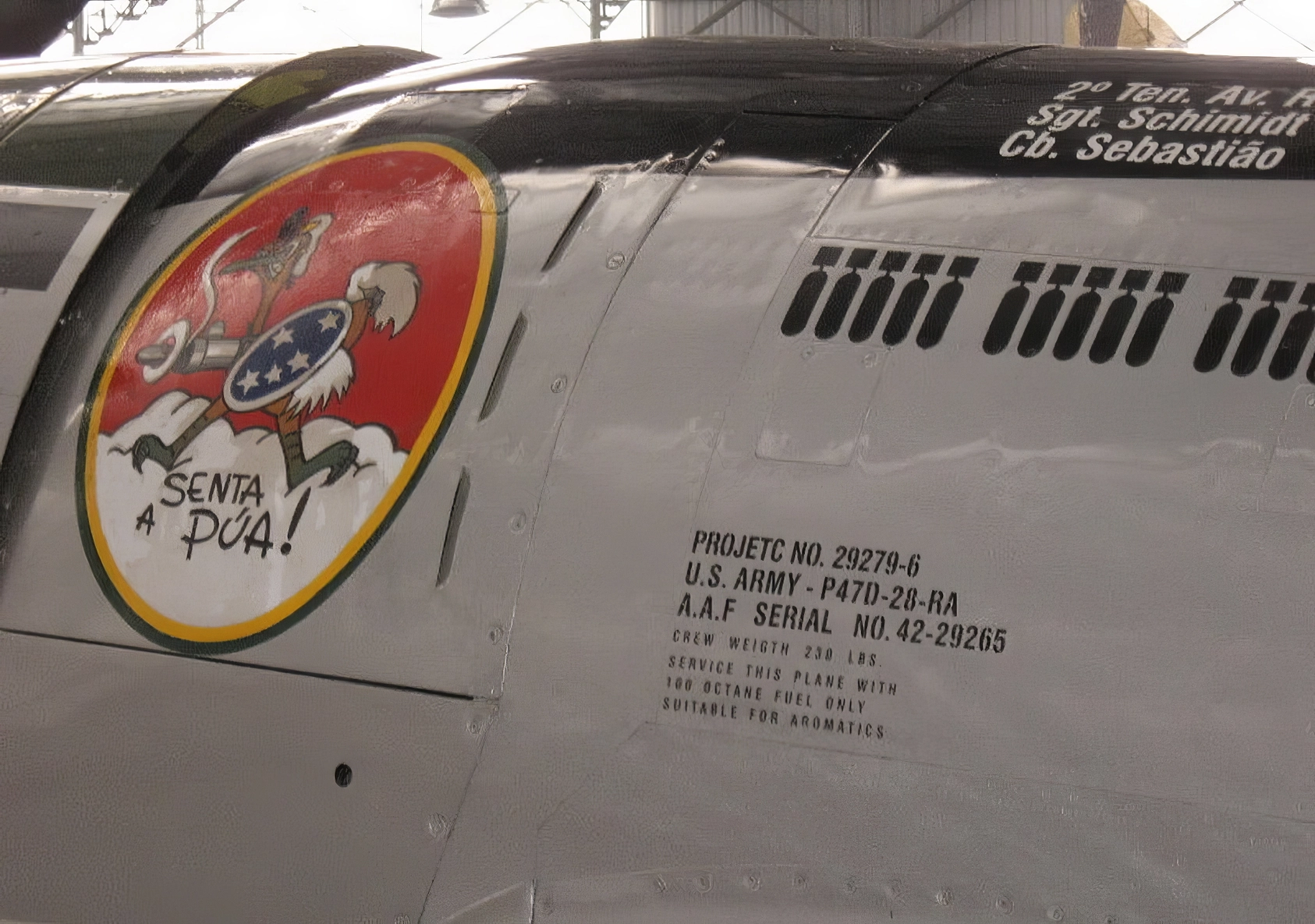
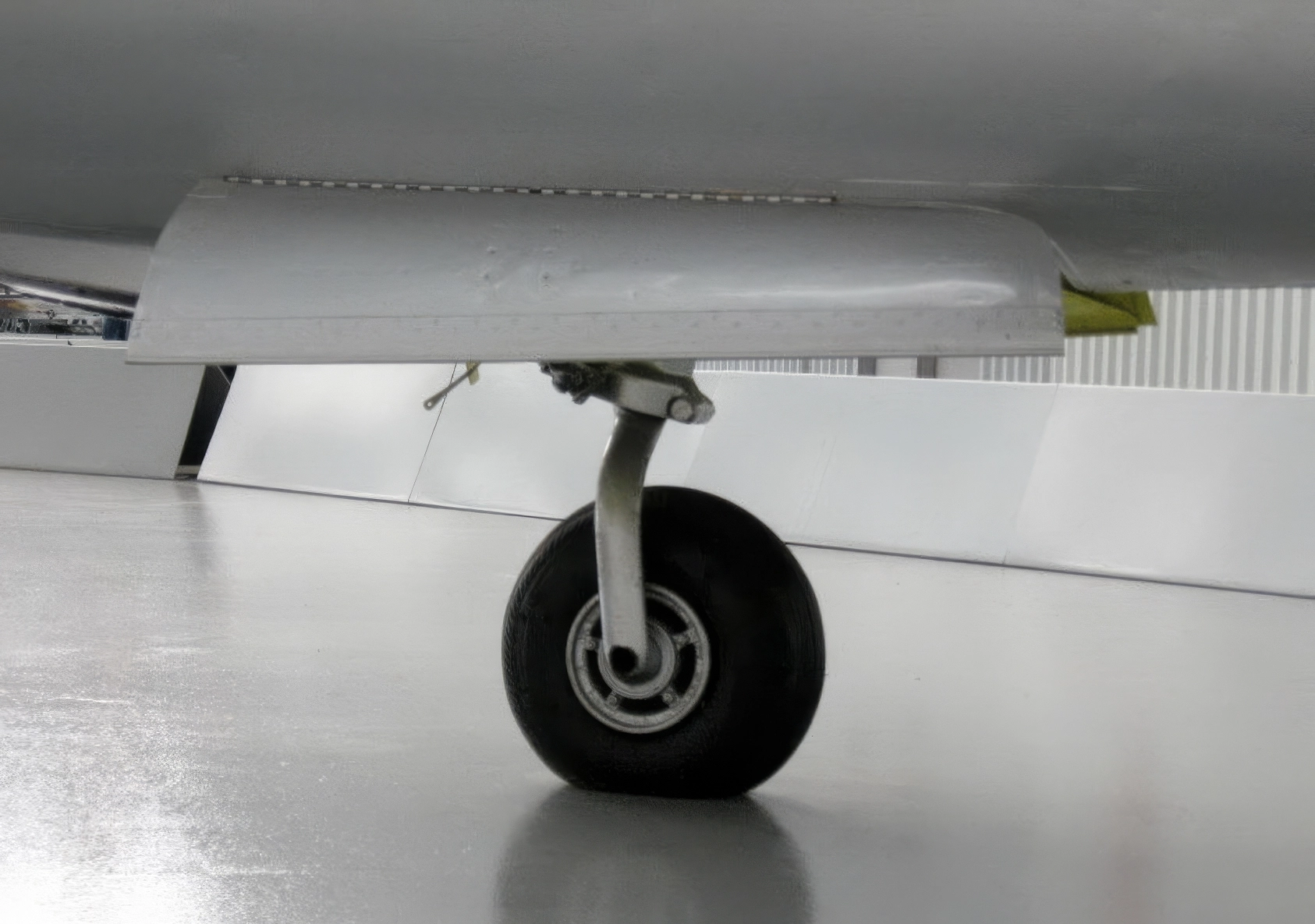
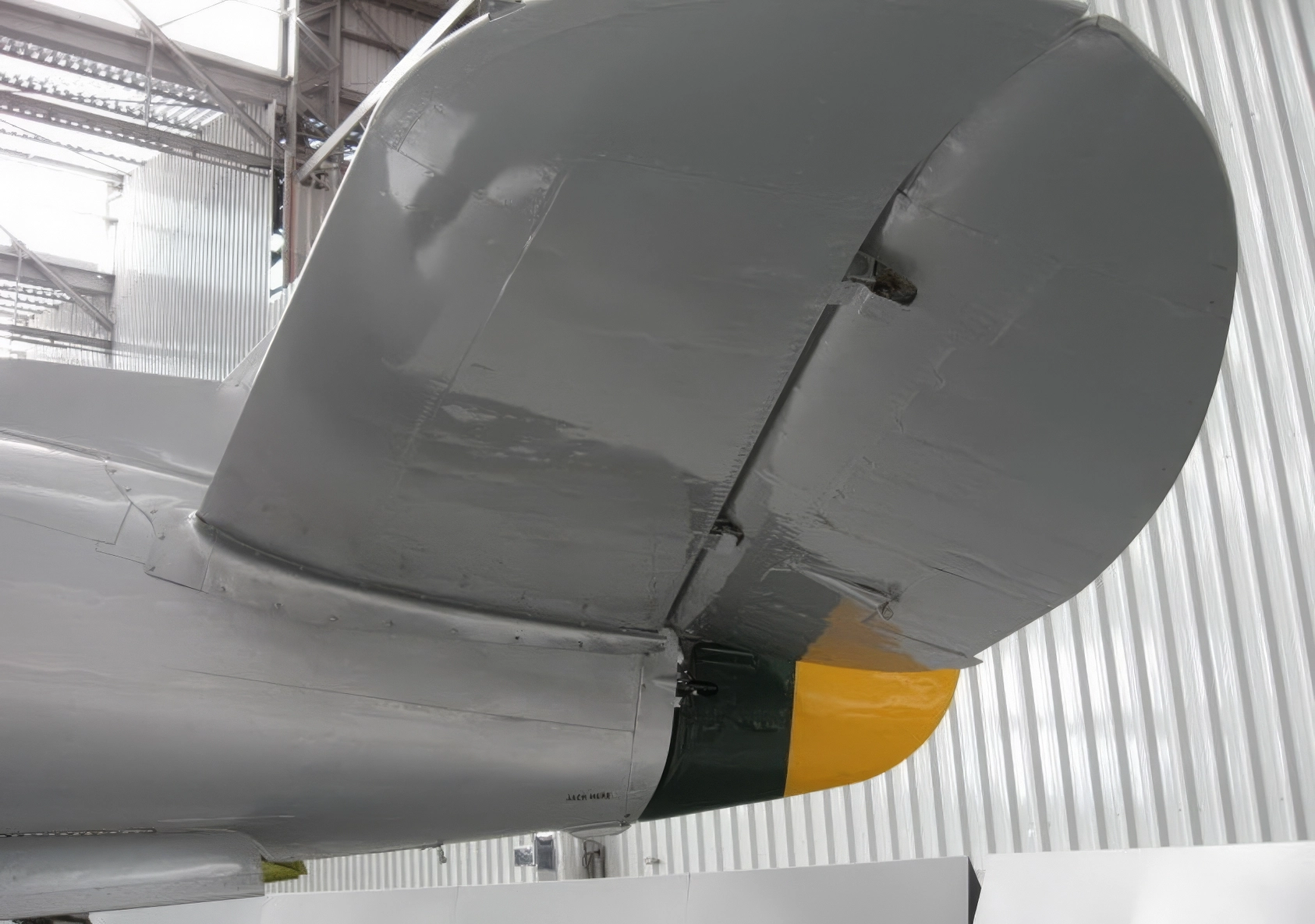
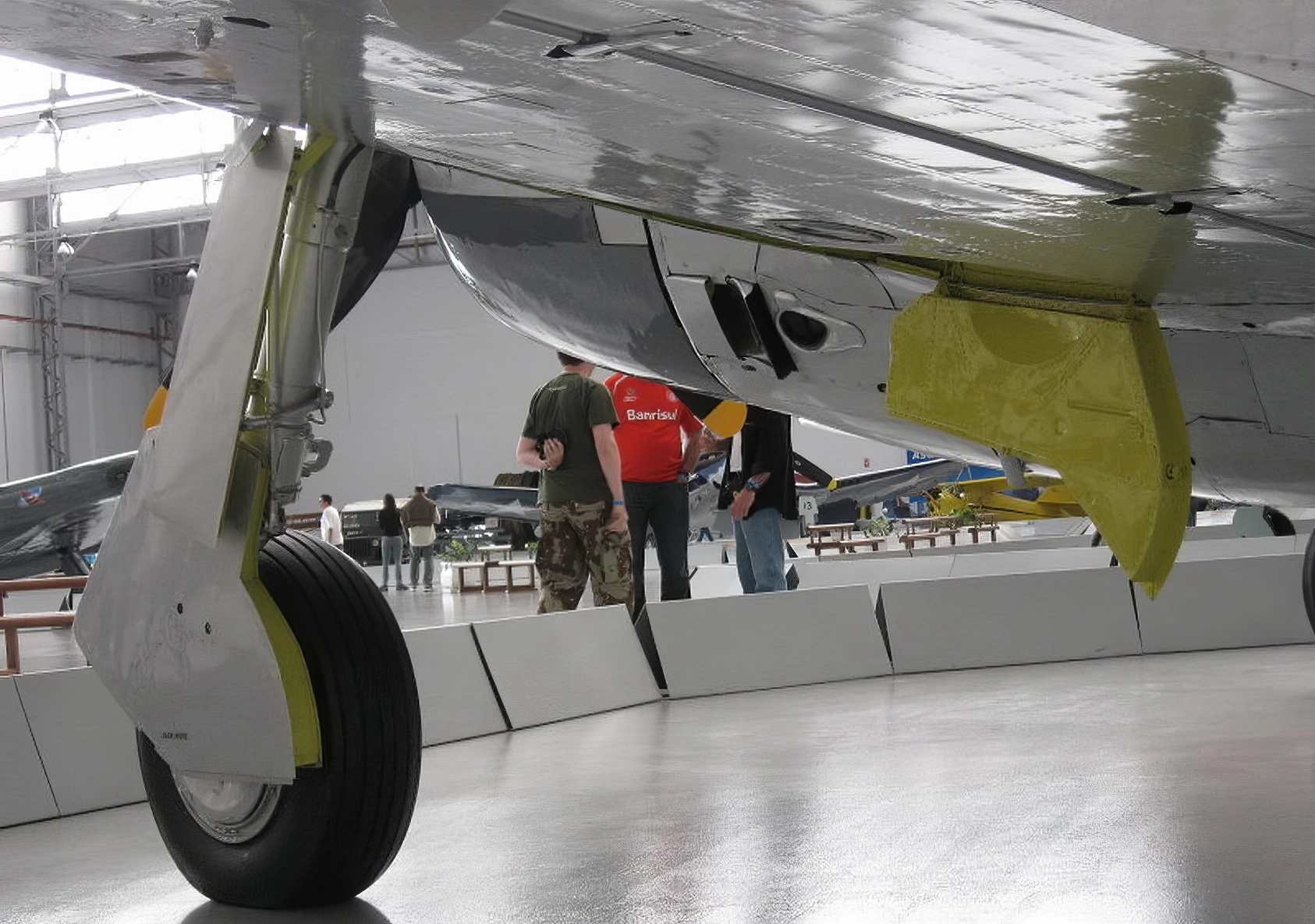
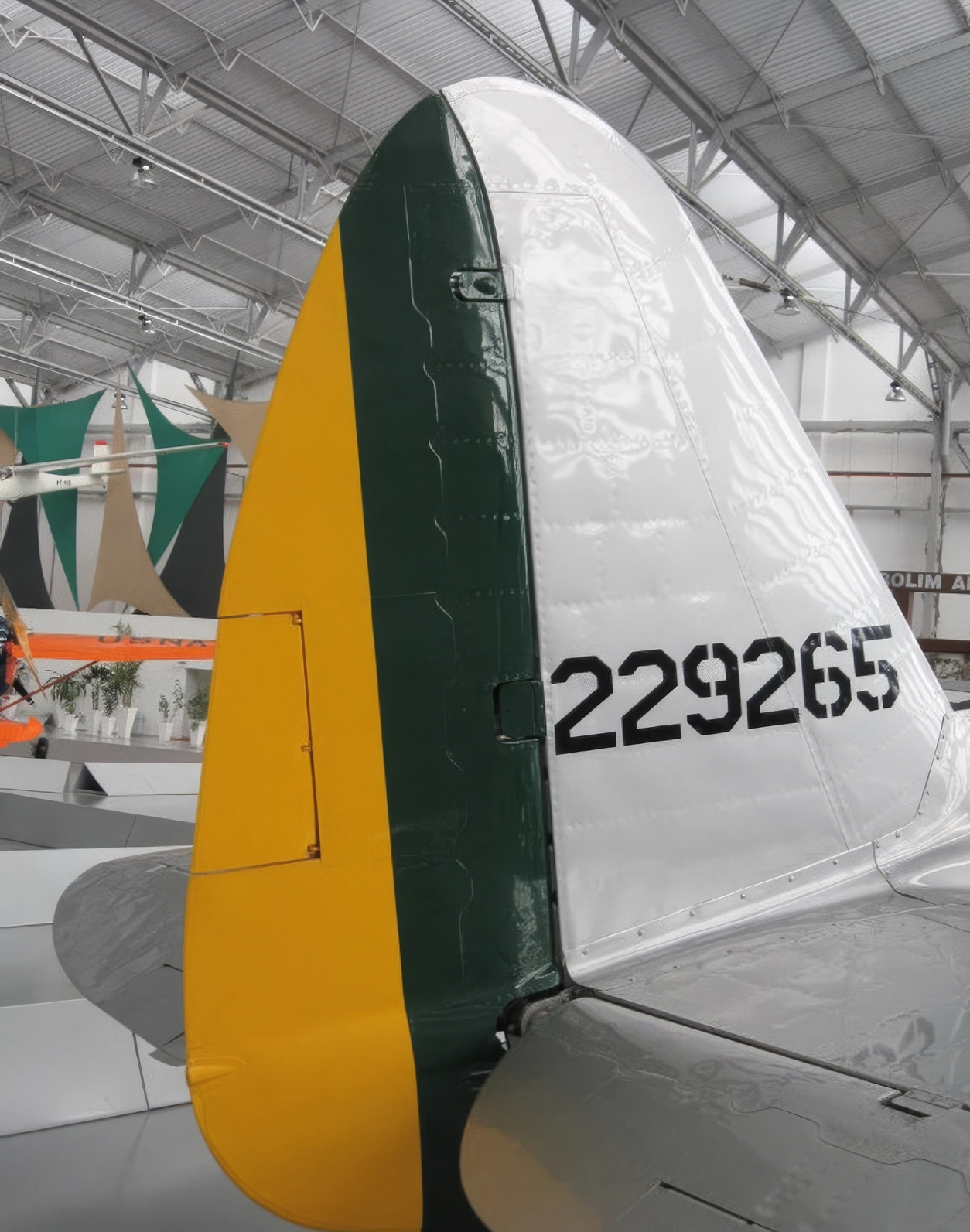
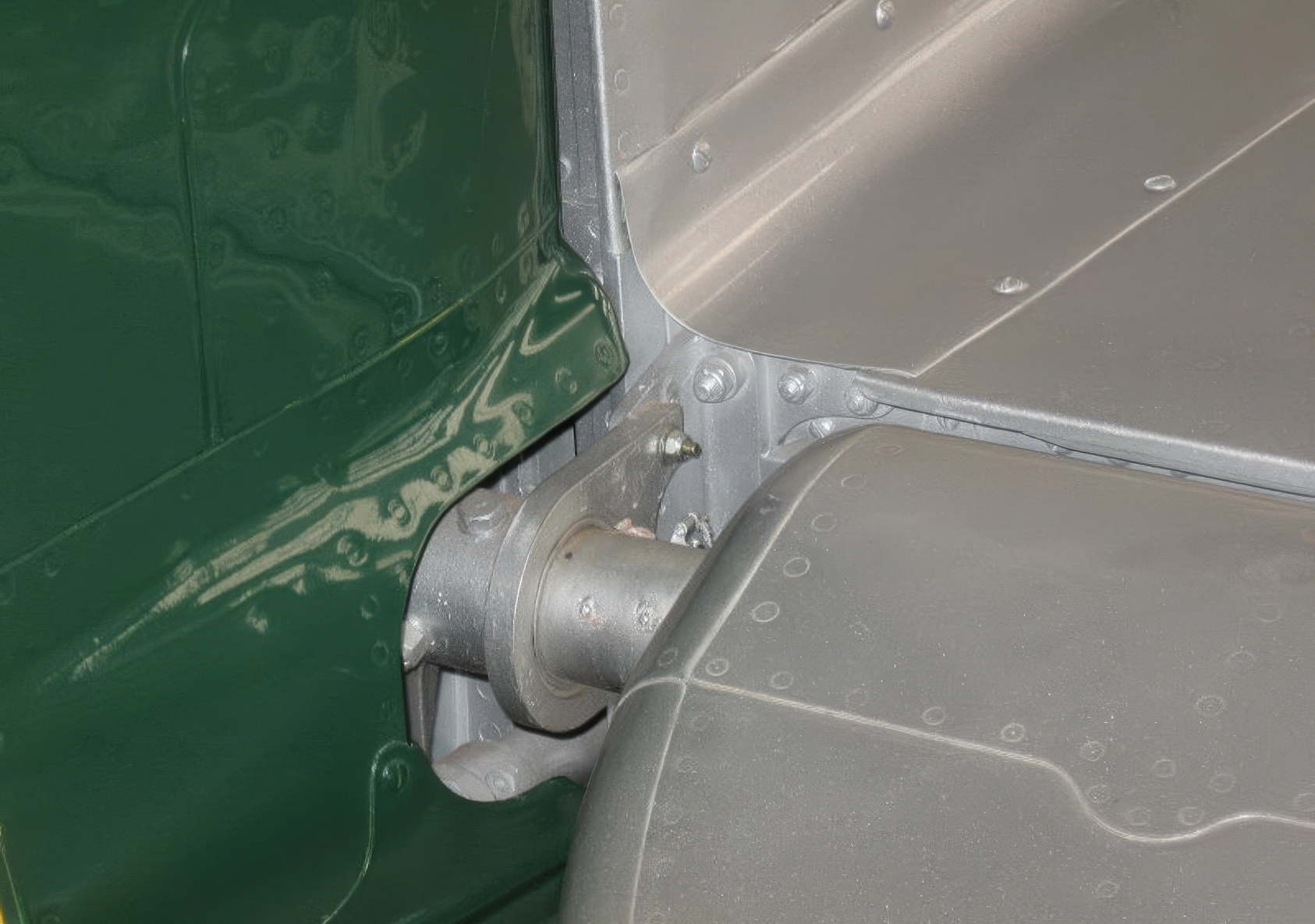

| P-47D Thunderbolt | |
|---|---|
| Photographe | Cees Hendriks |
| Localisation | Inconnu |
| Photos | 98 |
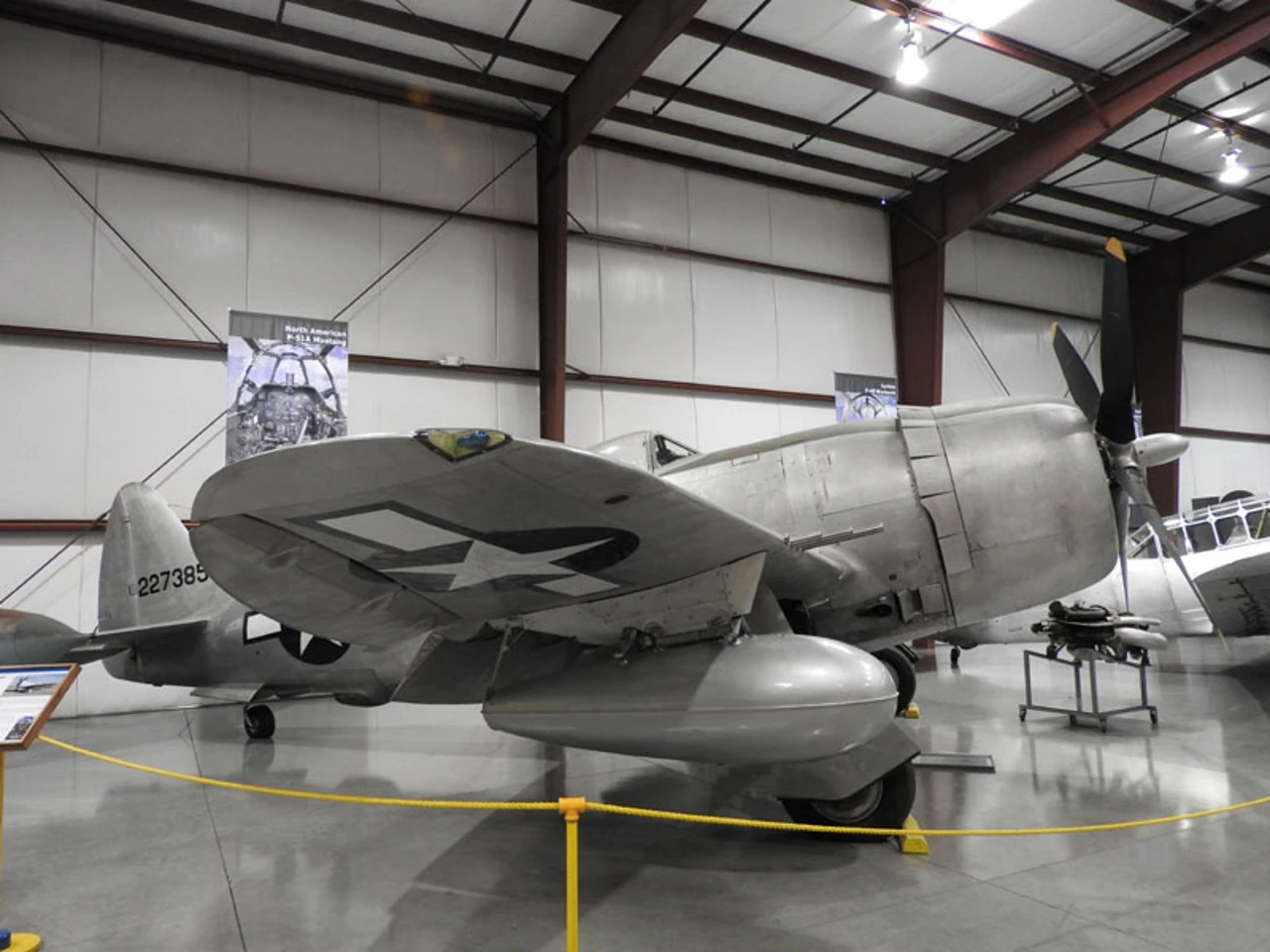
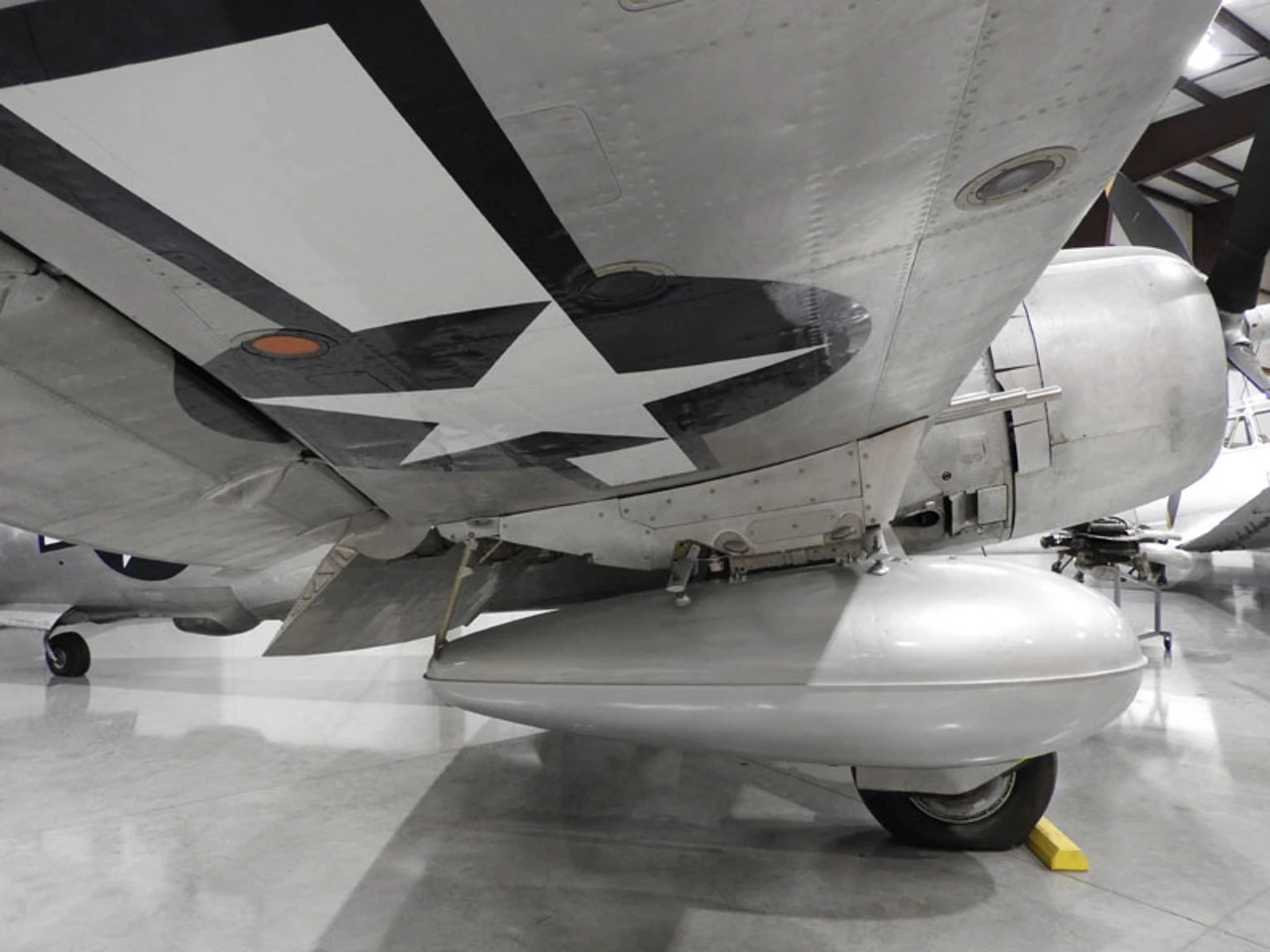
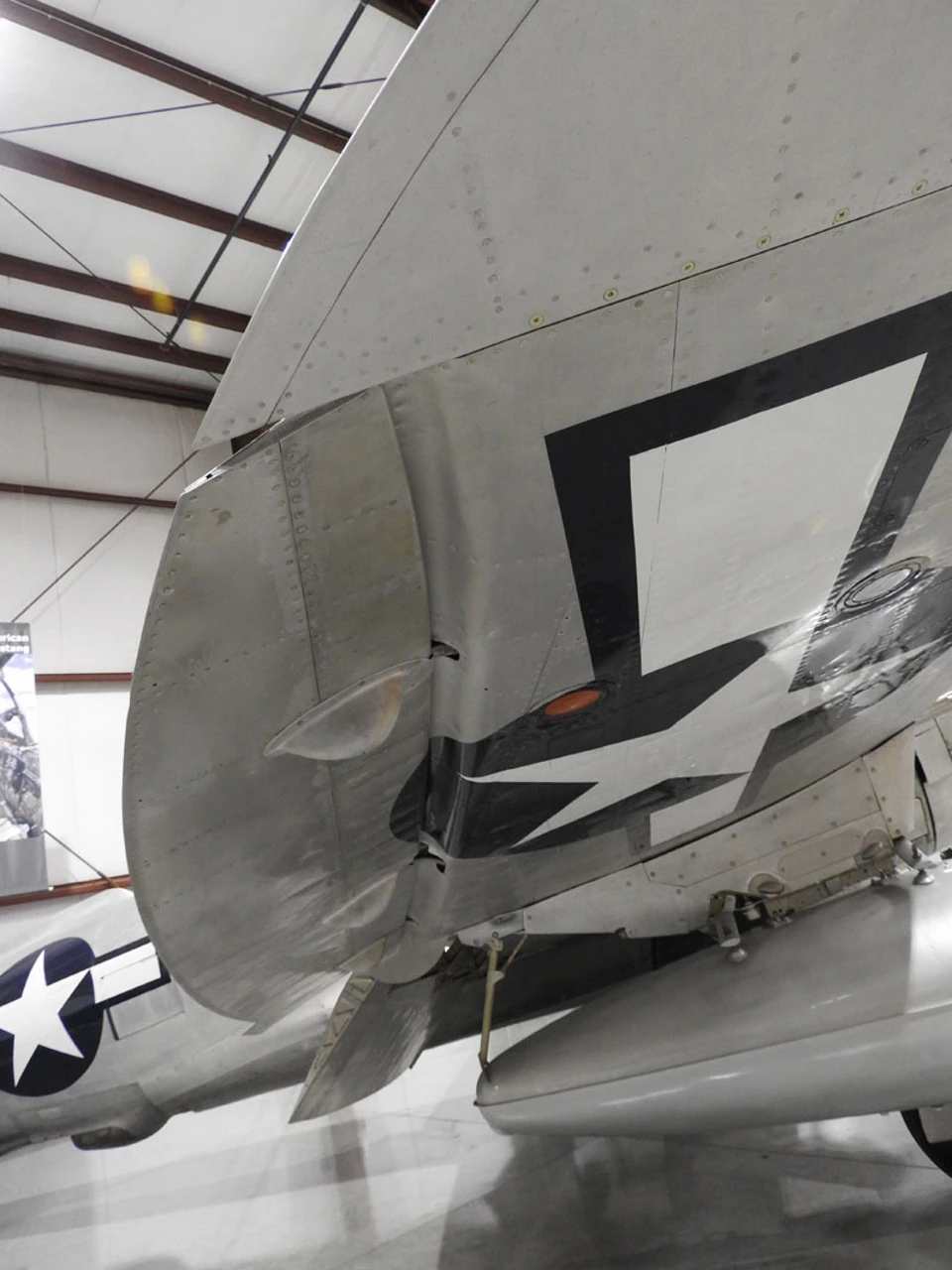
| Republic YP-47M Thunderbolt Walk Around | |
|---|---|
| Photographe | Cees Hendriks |
| Localisation | Inconnu |
| Photos | 31 |
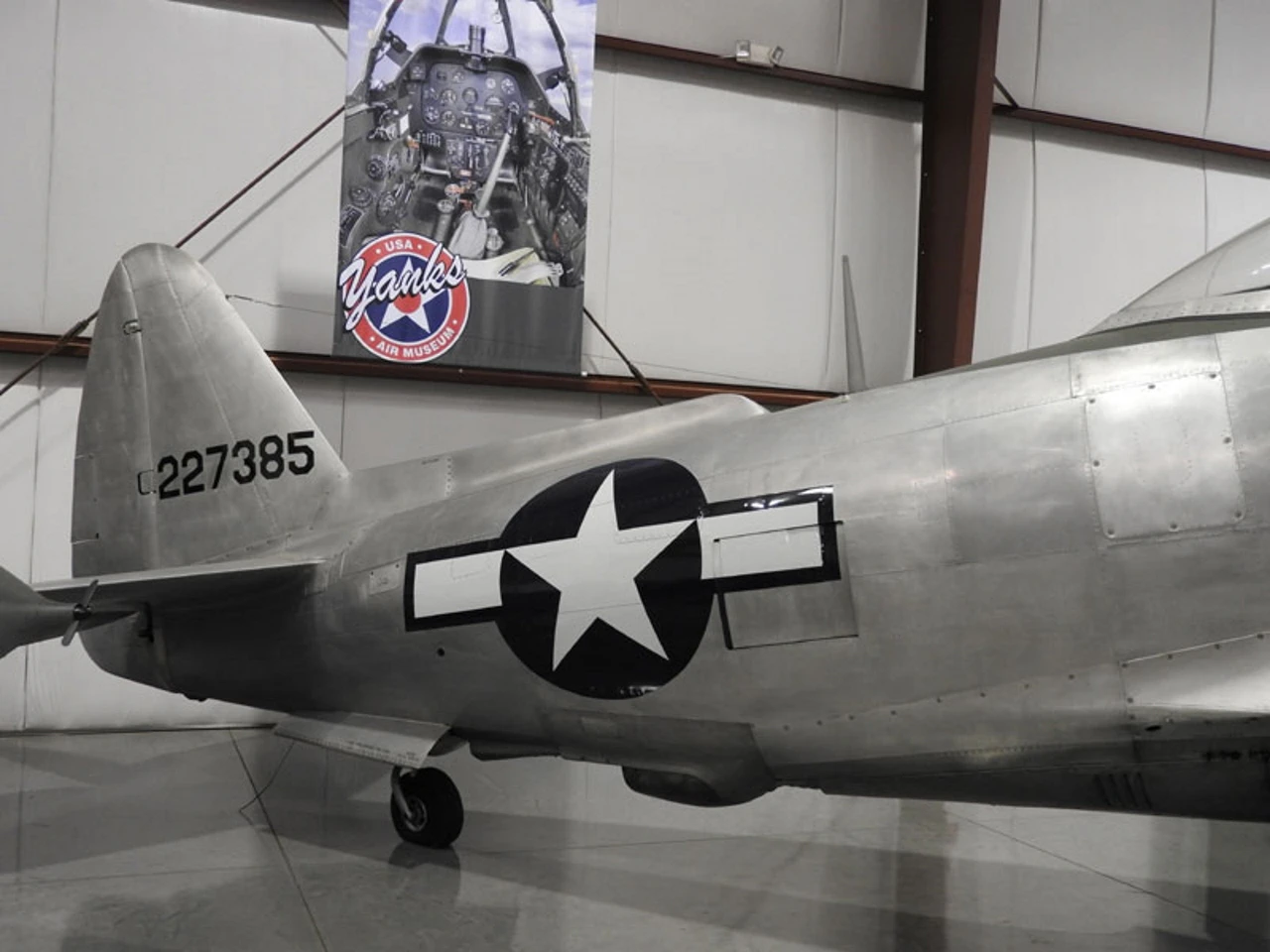
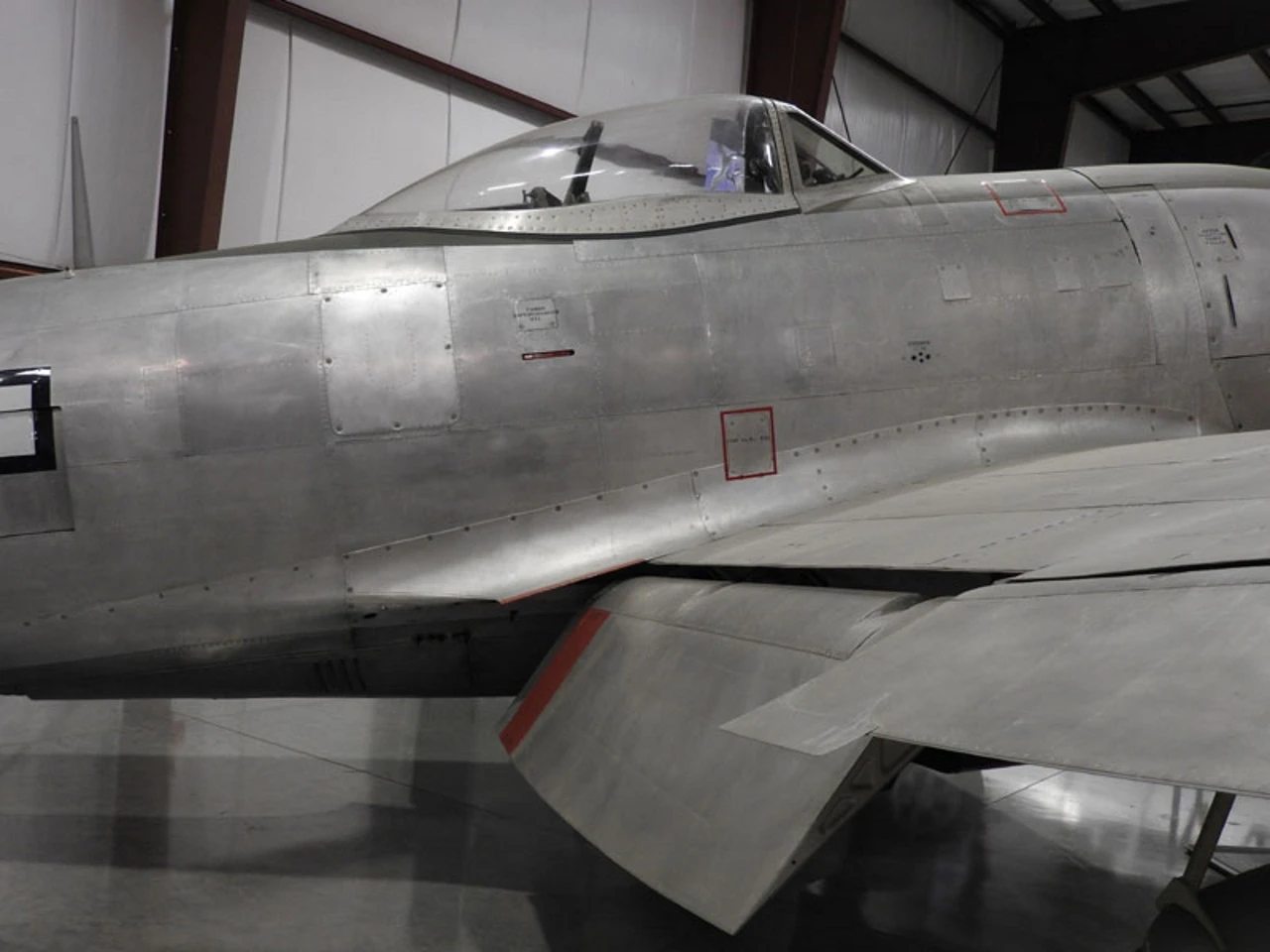
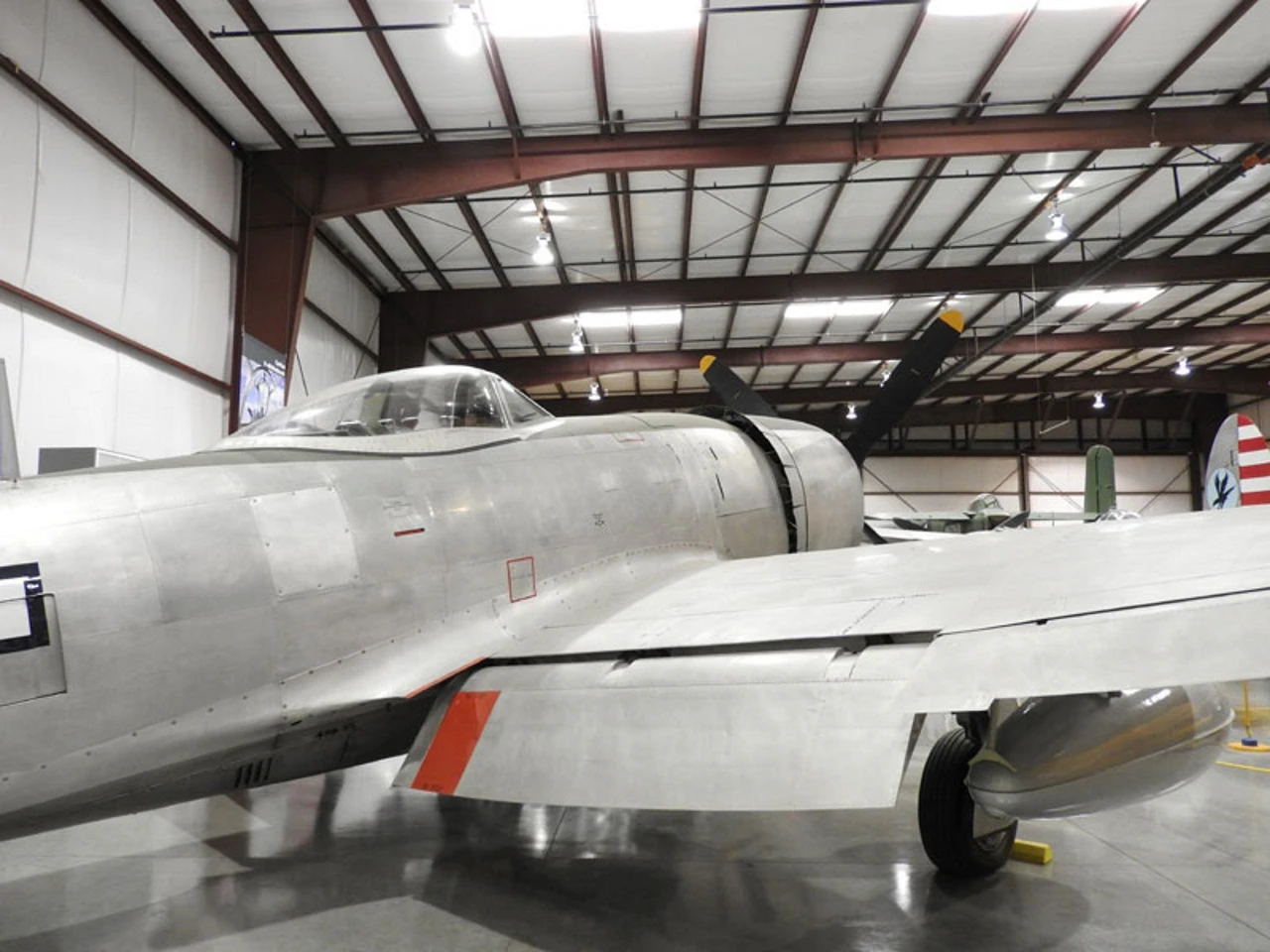
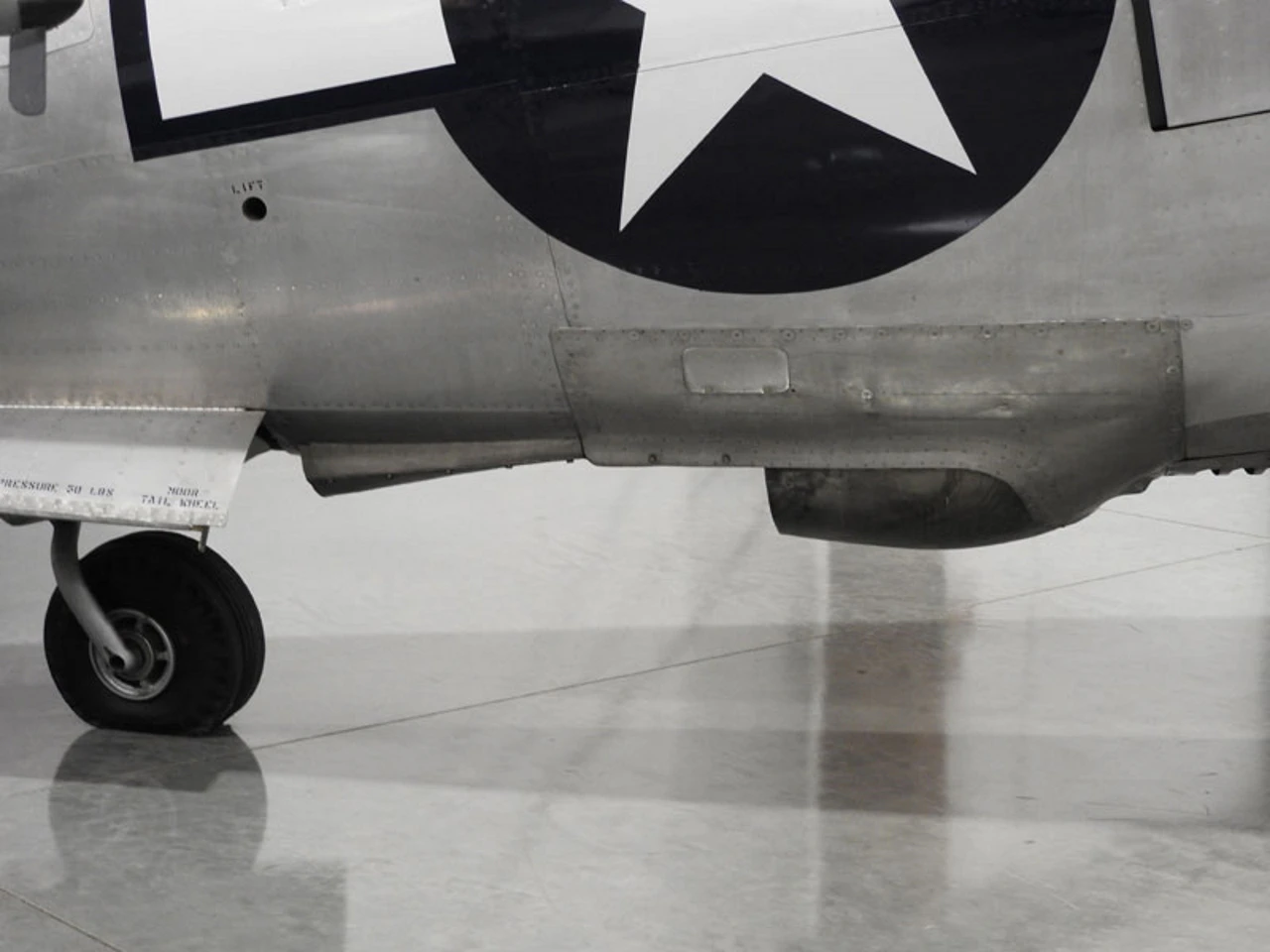
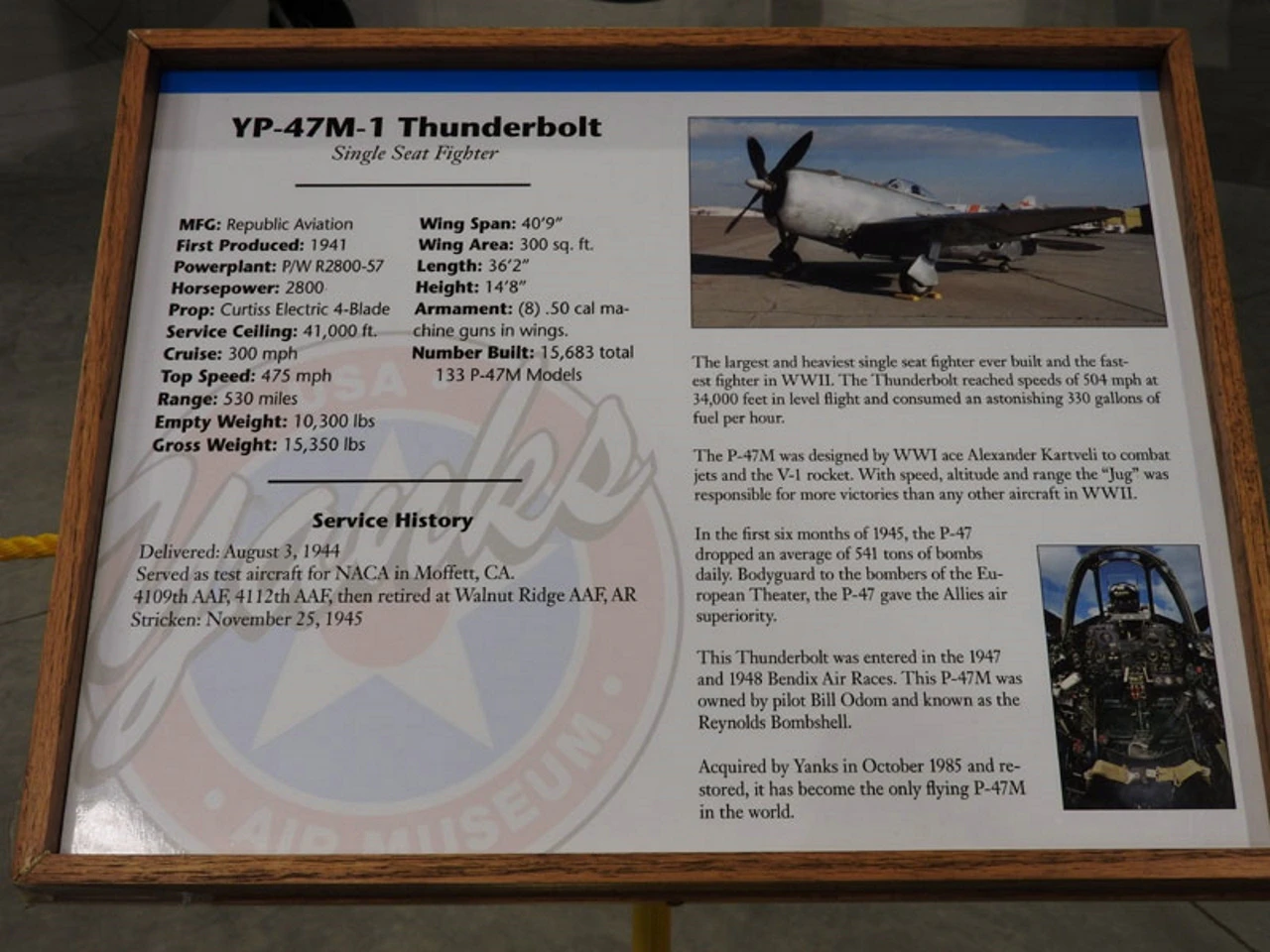
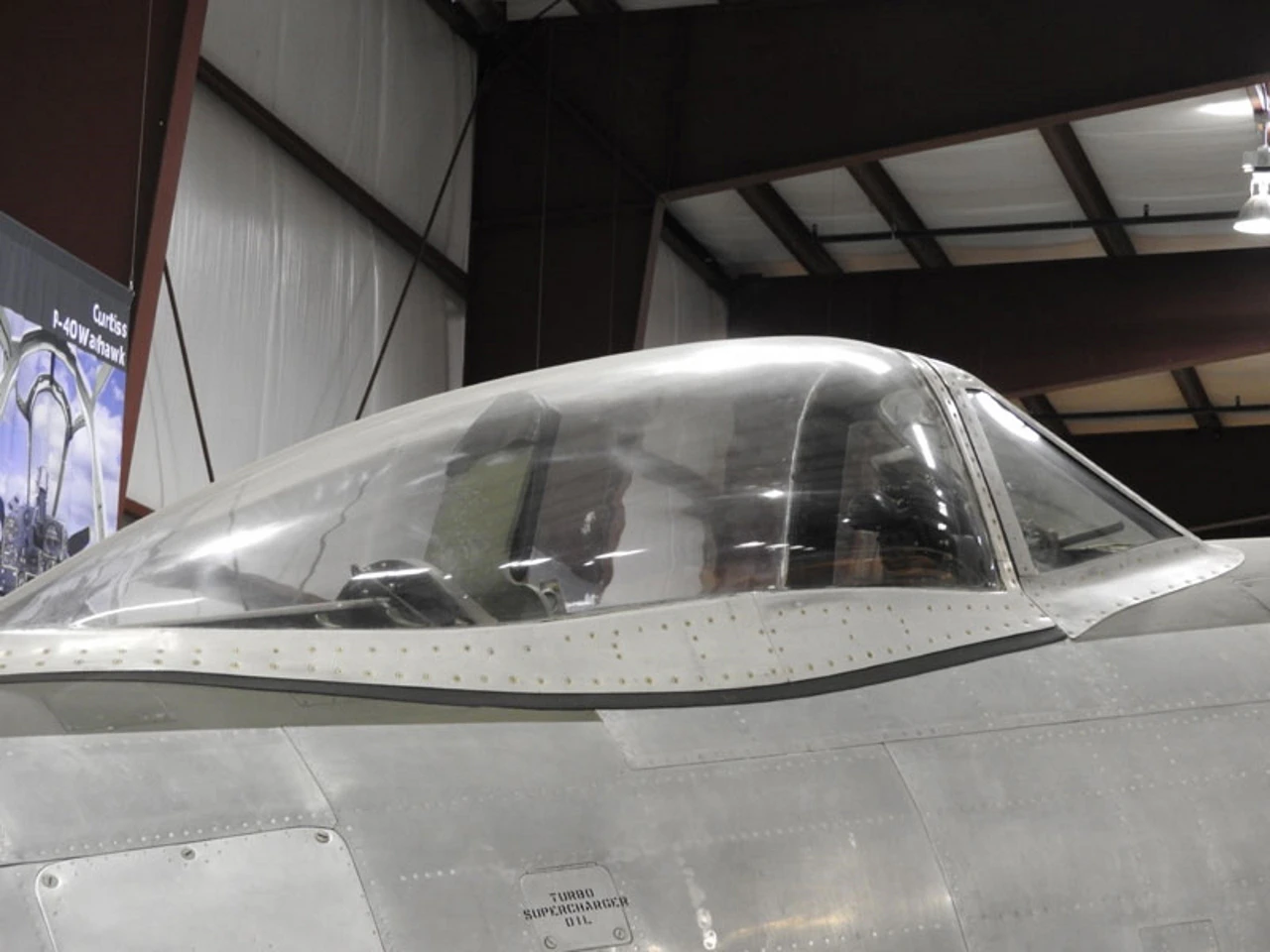
| Republic P-47D-30-RE Thunderbolt Walk Around | |
|---|---|
| Photographe | Vladimir Yakubov |
| Localisation | Inconnu |
| Photos | 98 |
Voir aussi :


| P-47D Block 35 Walk Around | |
|---|---|
| Photographe | David Aungst |
| Localisation | Inconnu |
| Photos | 49 |
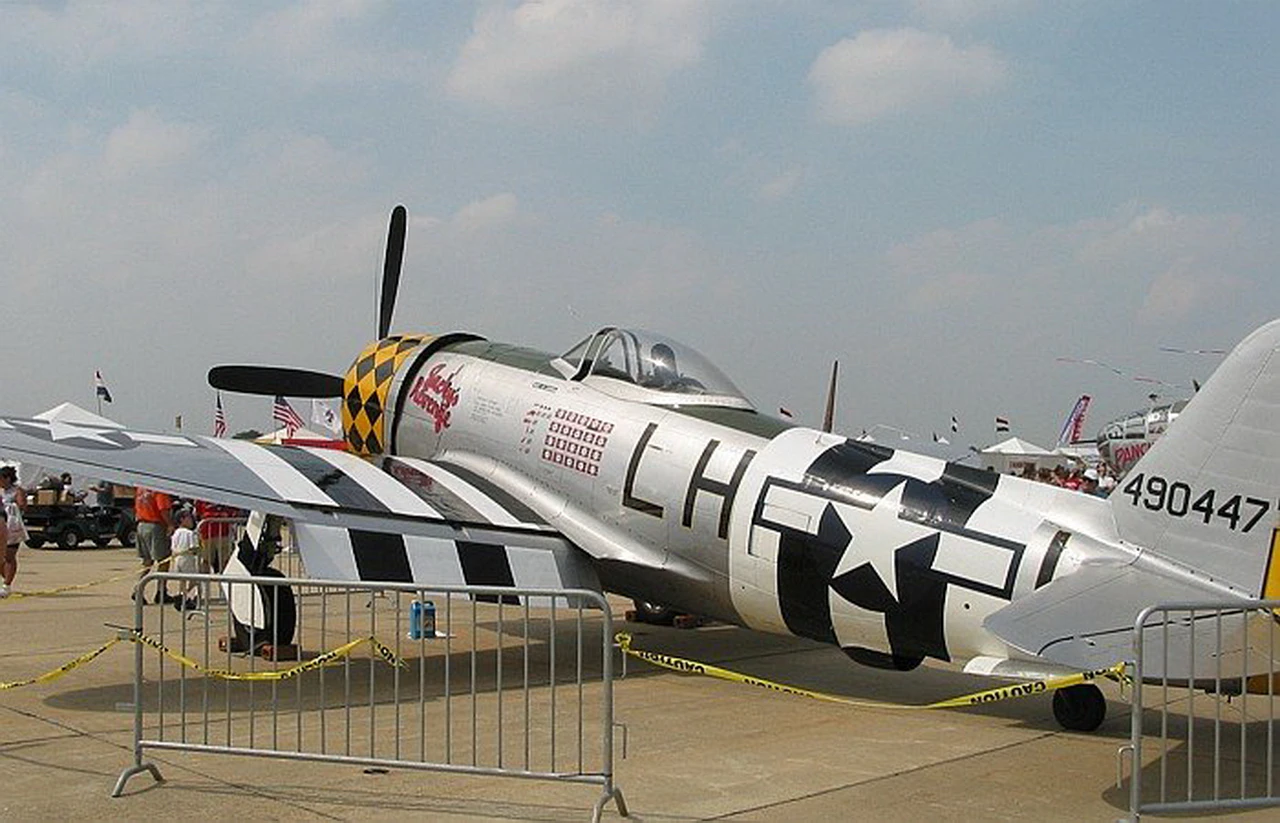
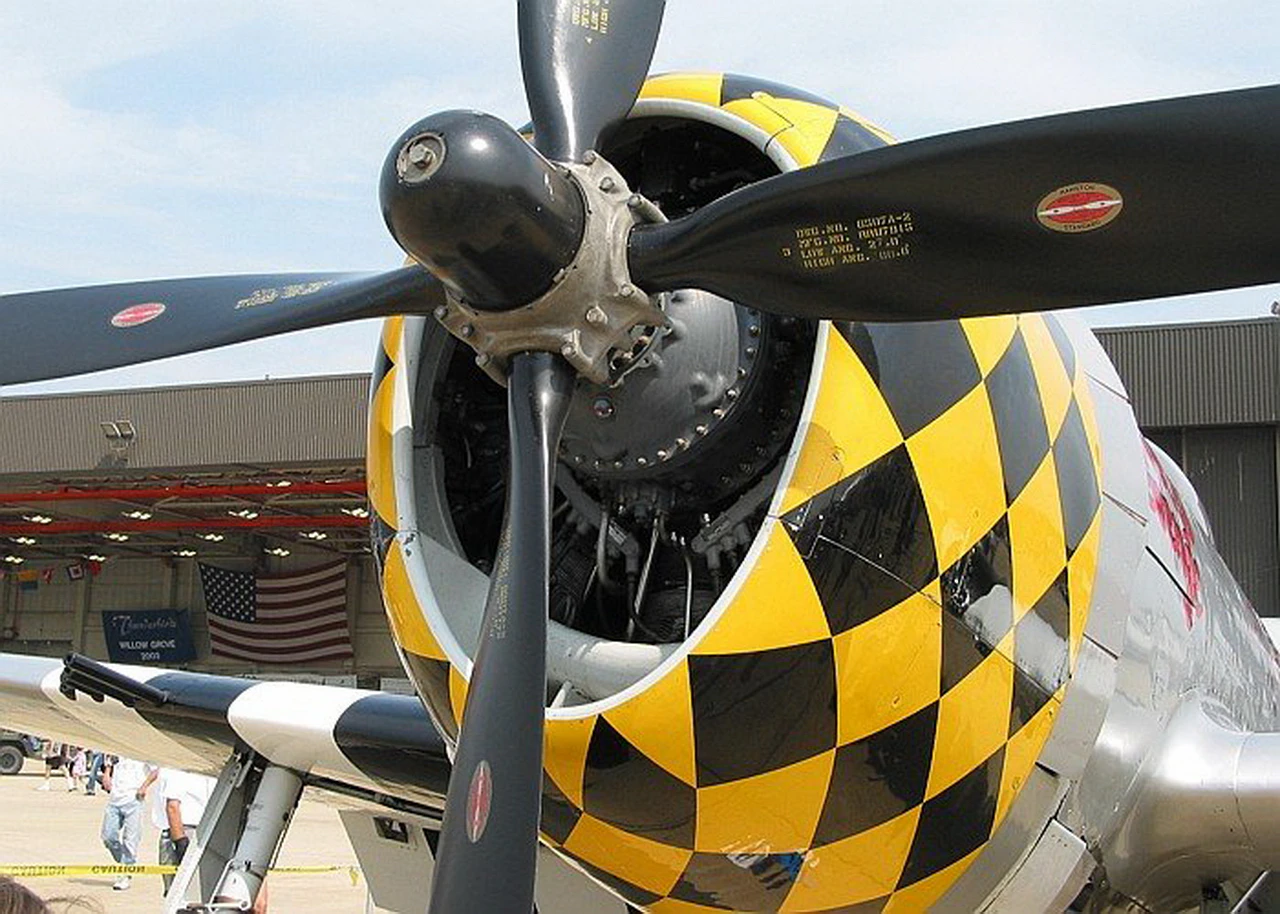
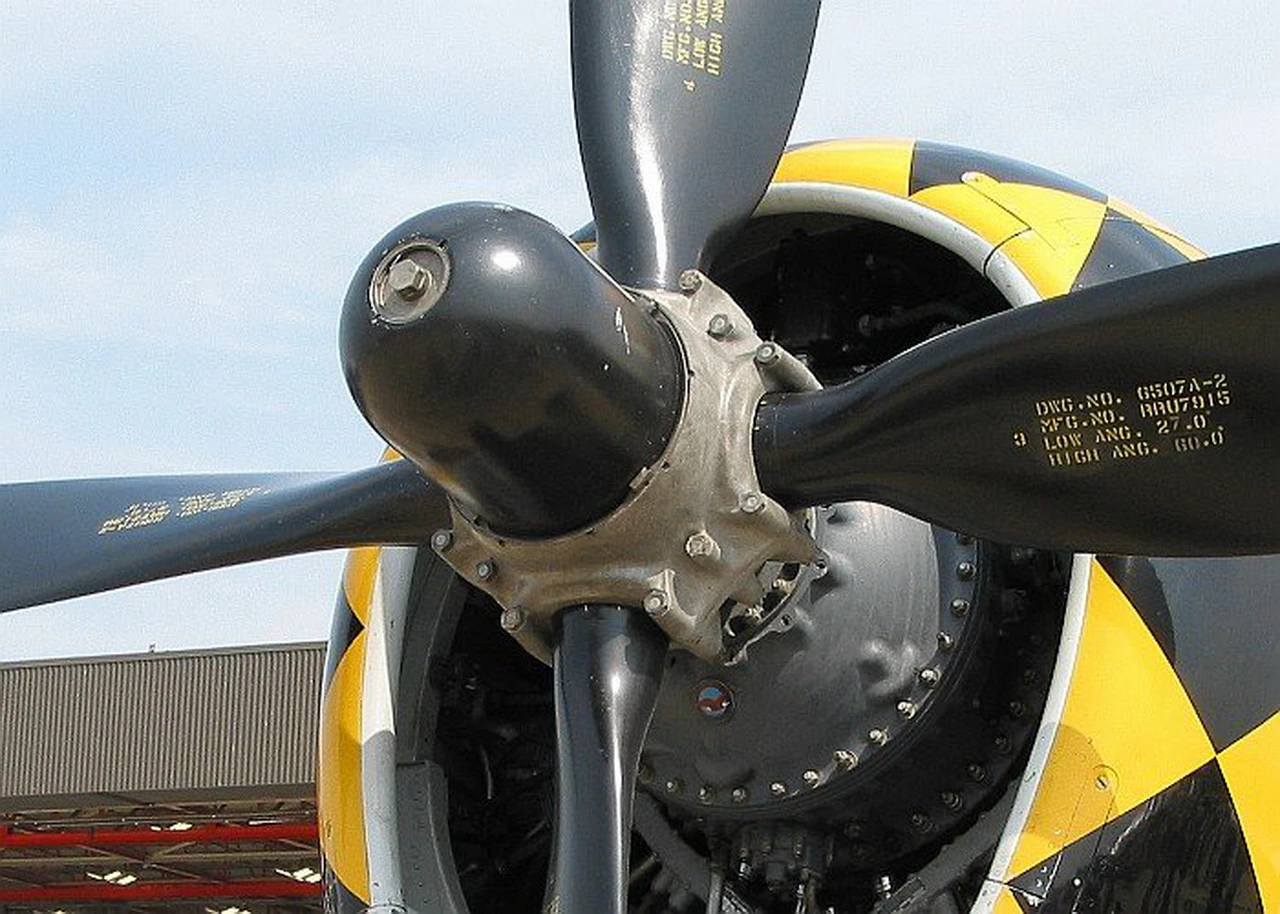
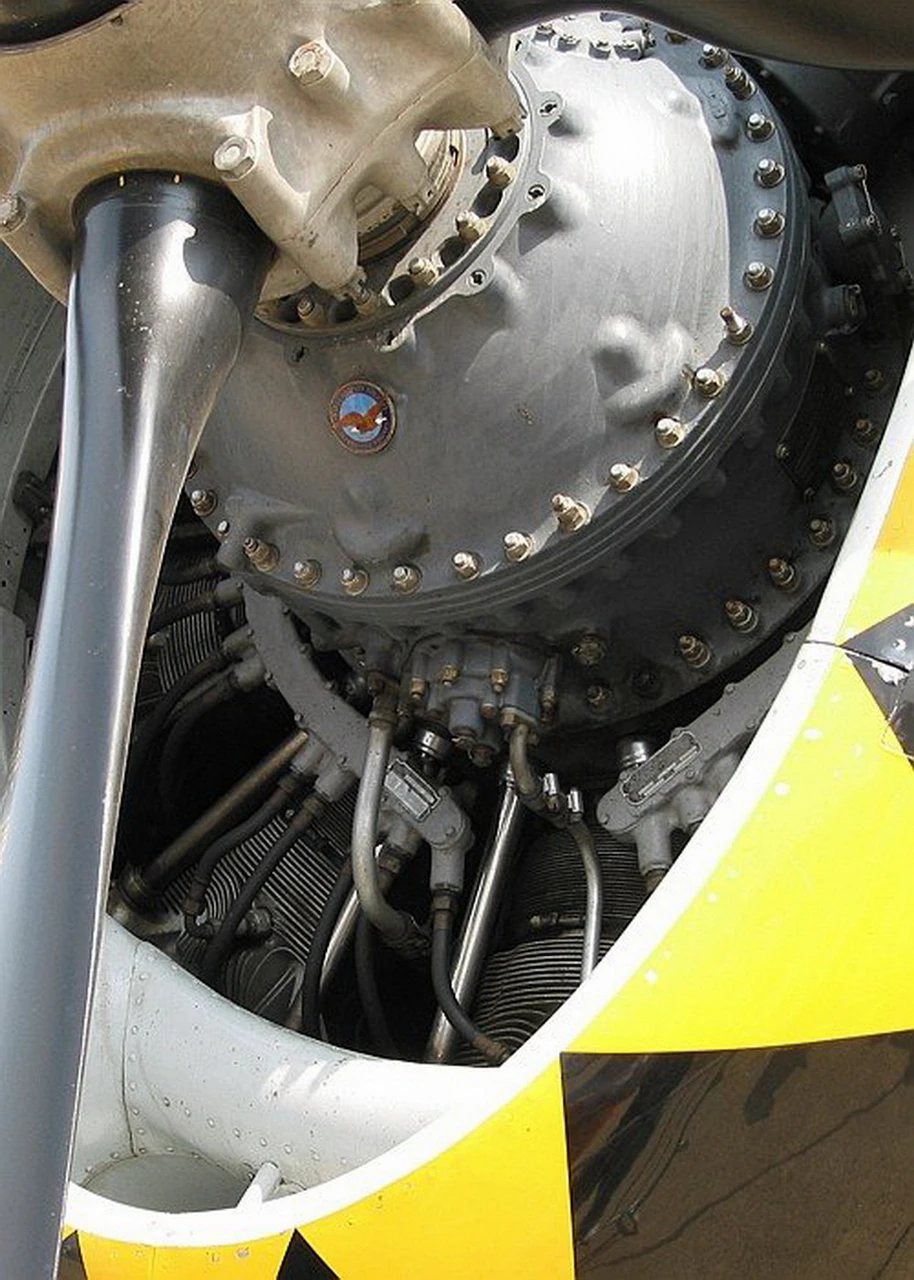
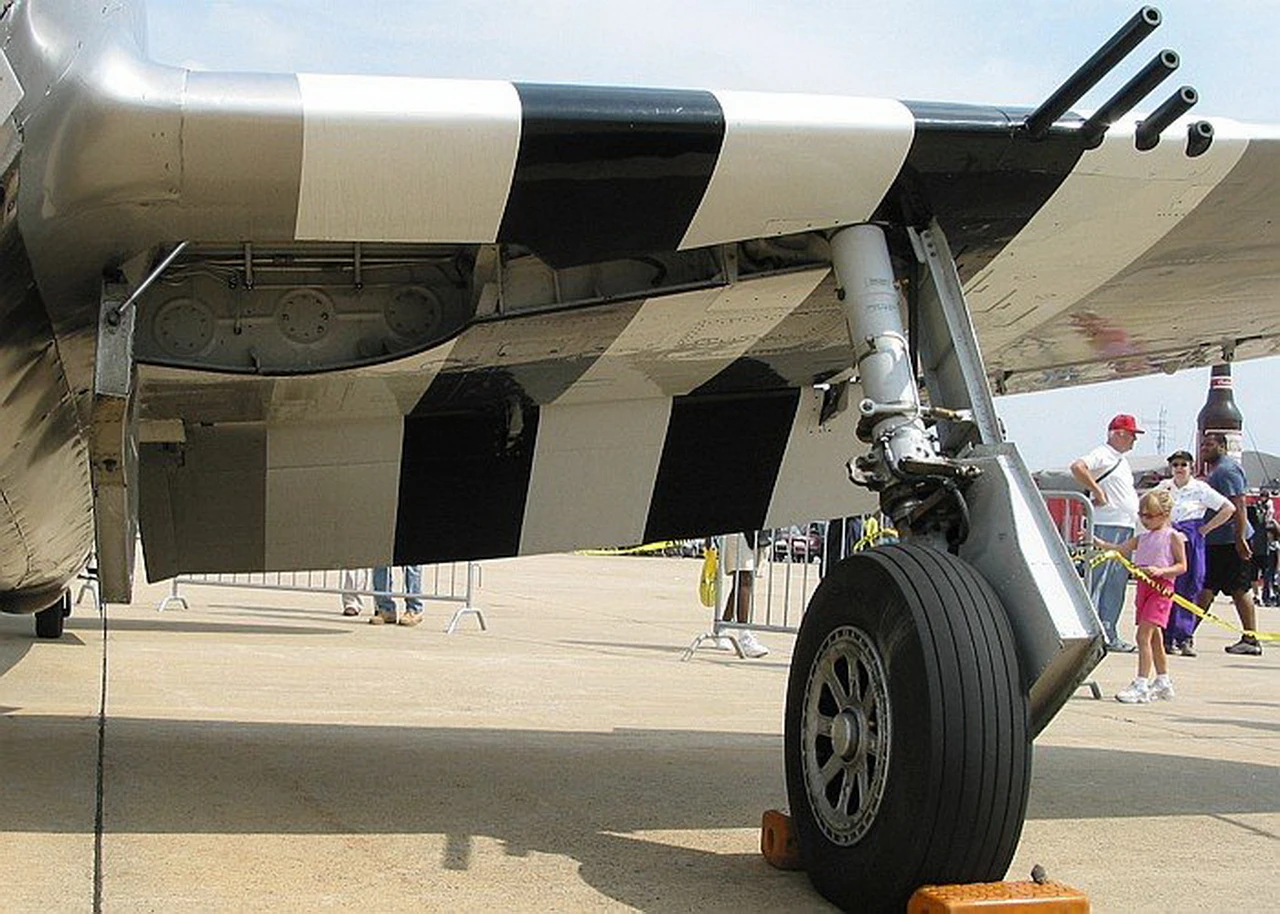
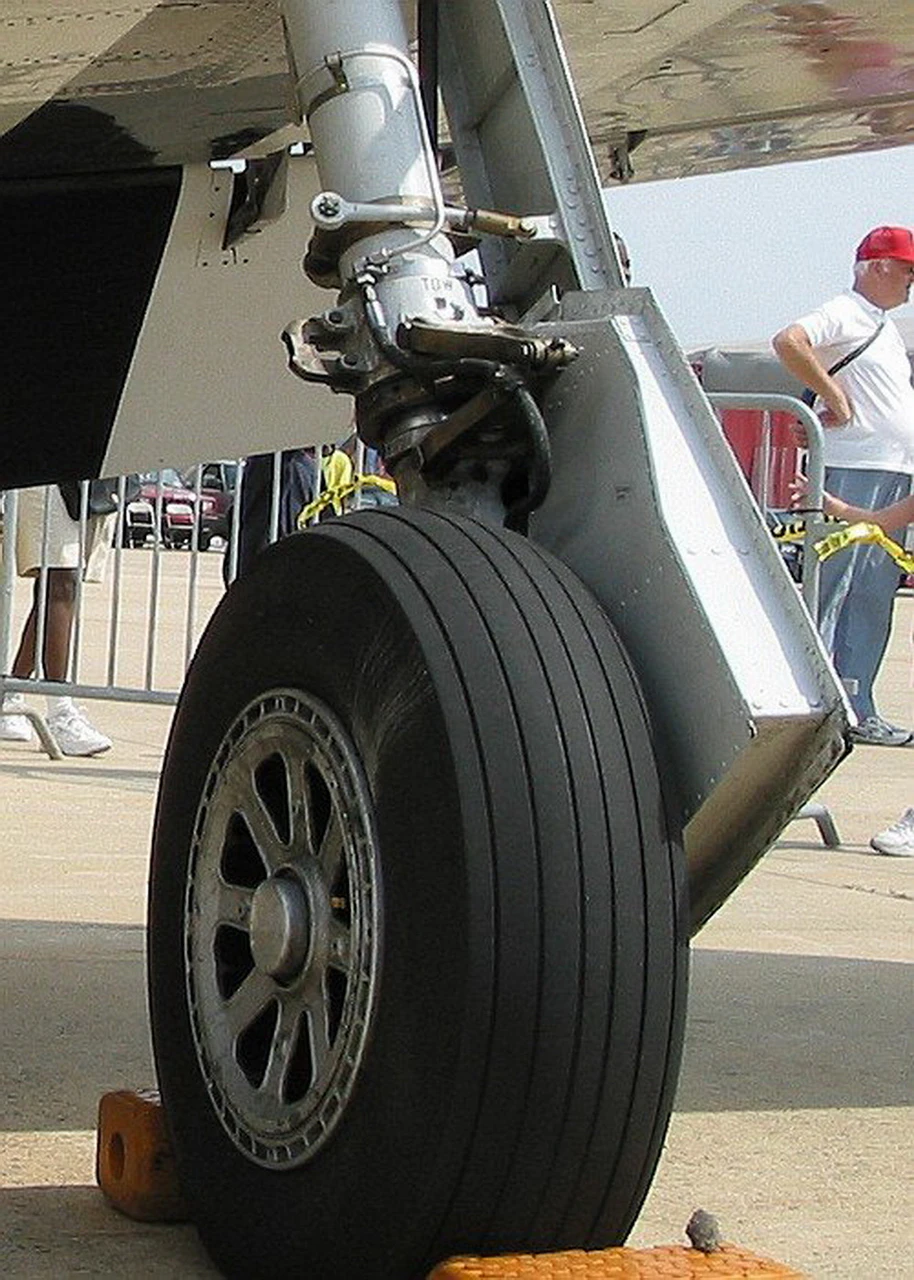
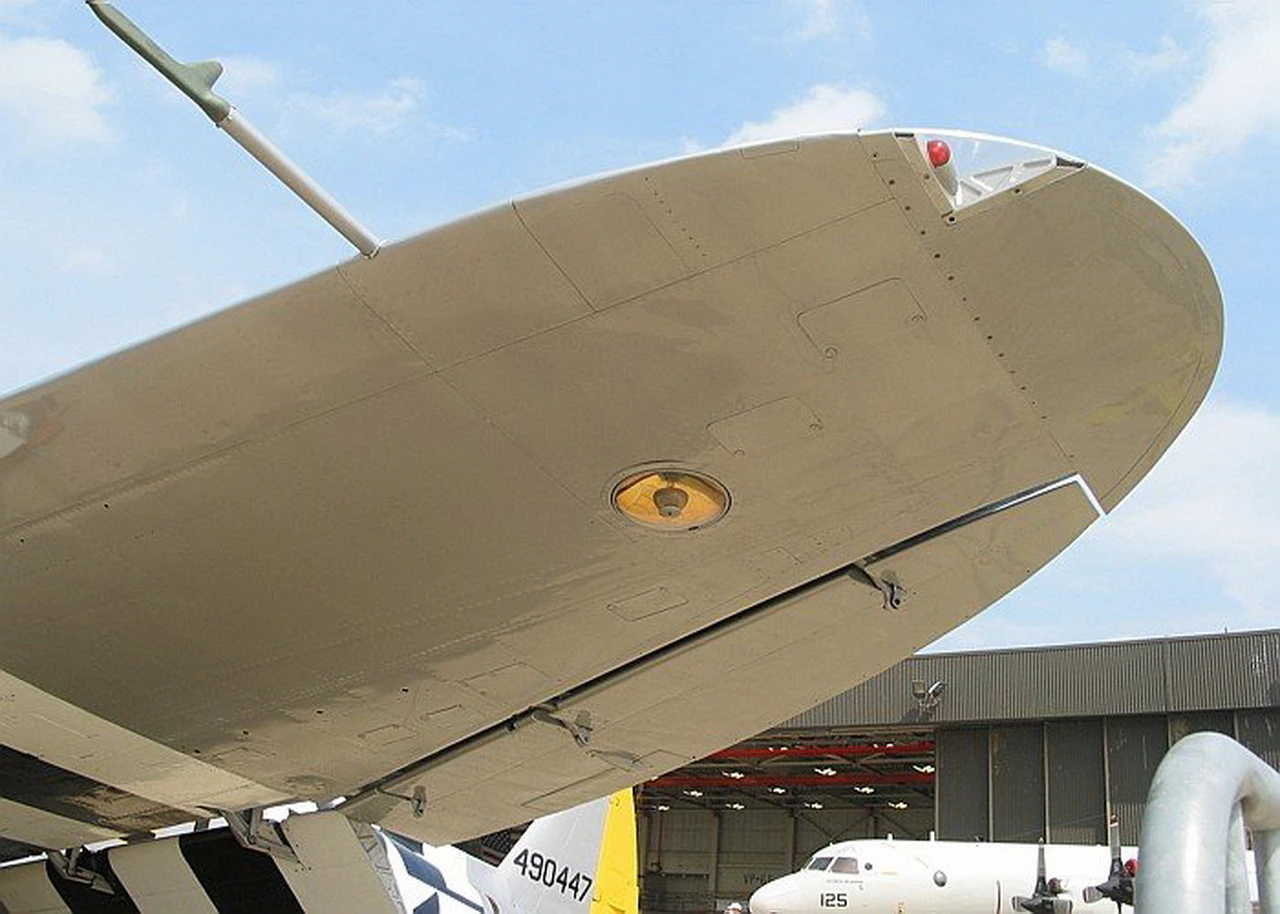
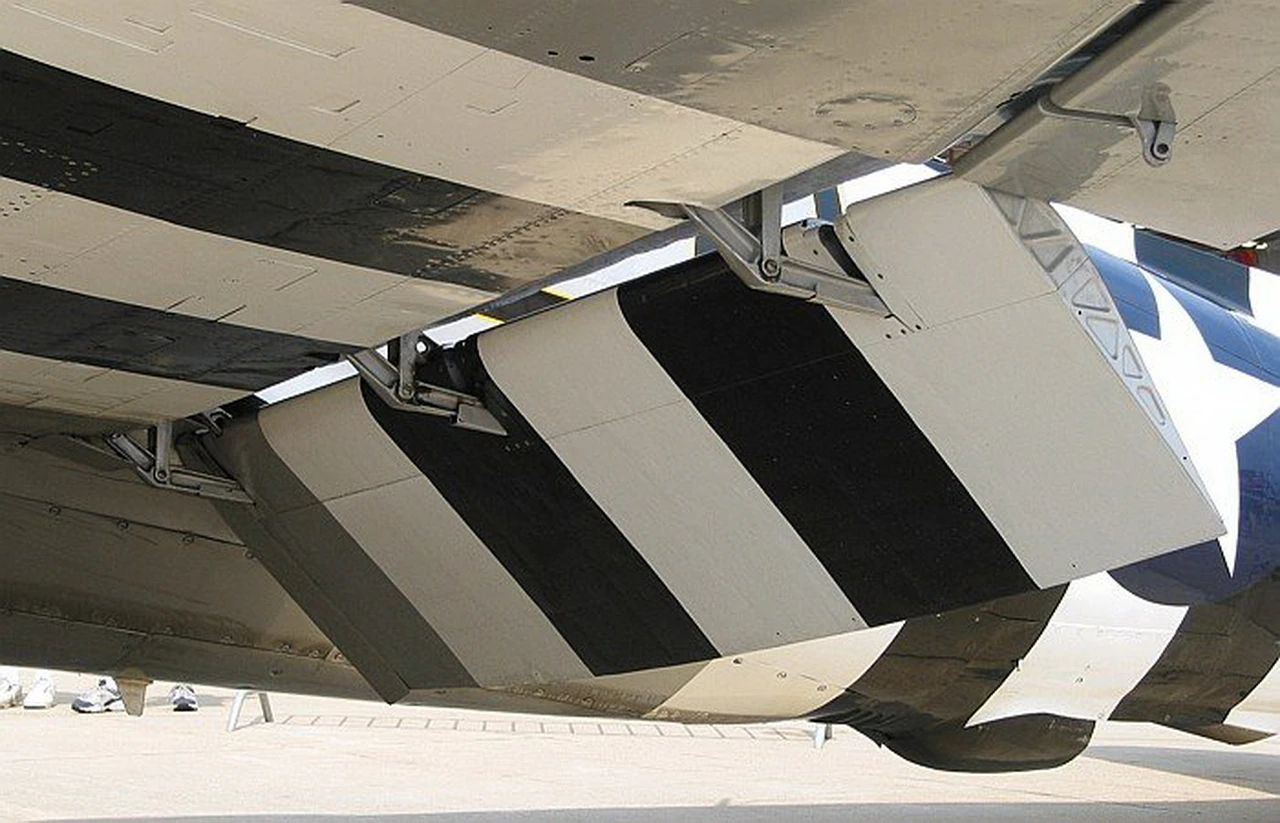
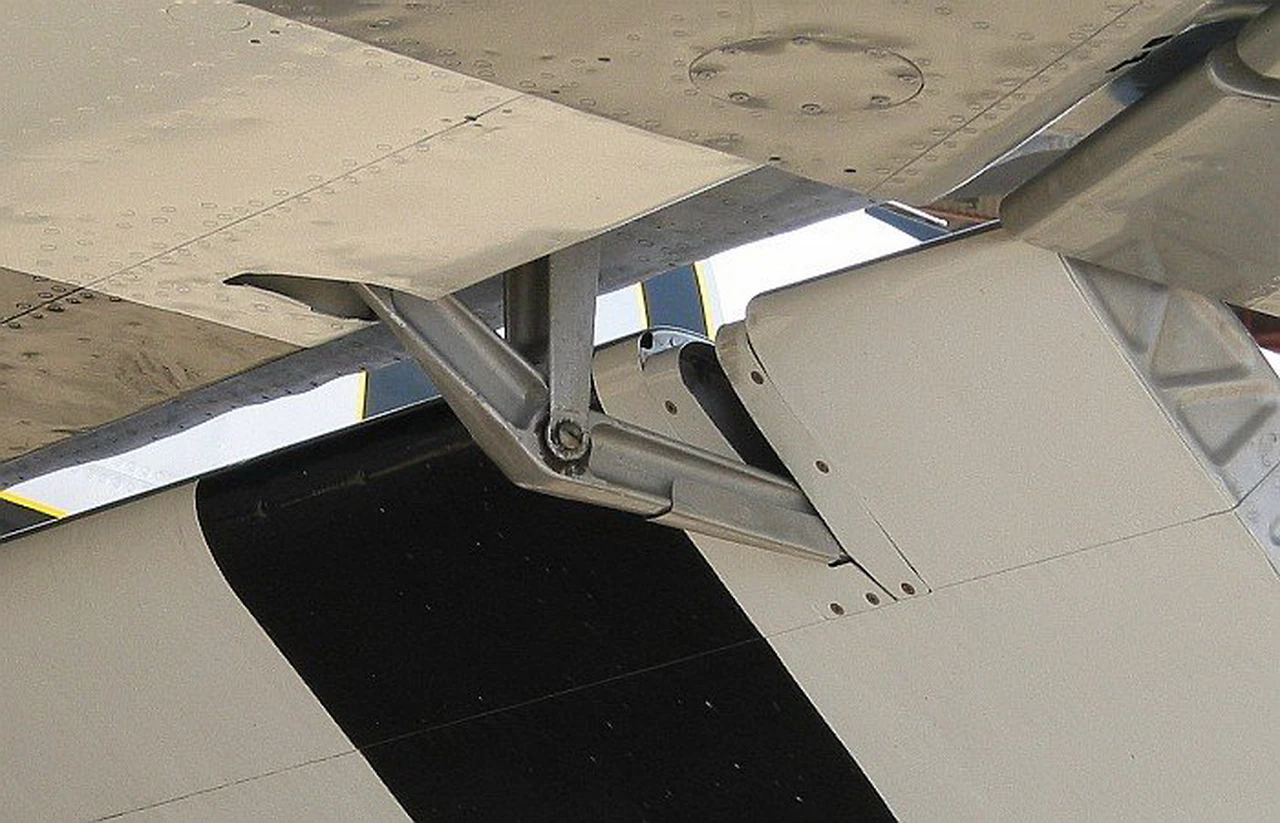
| Republic P-47D Thunderbolt Walk Around | |
|---|---|
| Photographe | Bill Maloney |
| Localisation | Musée de l’air de la Nouvelle-Angleterre |
| Photos | 27 |
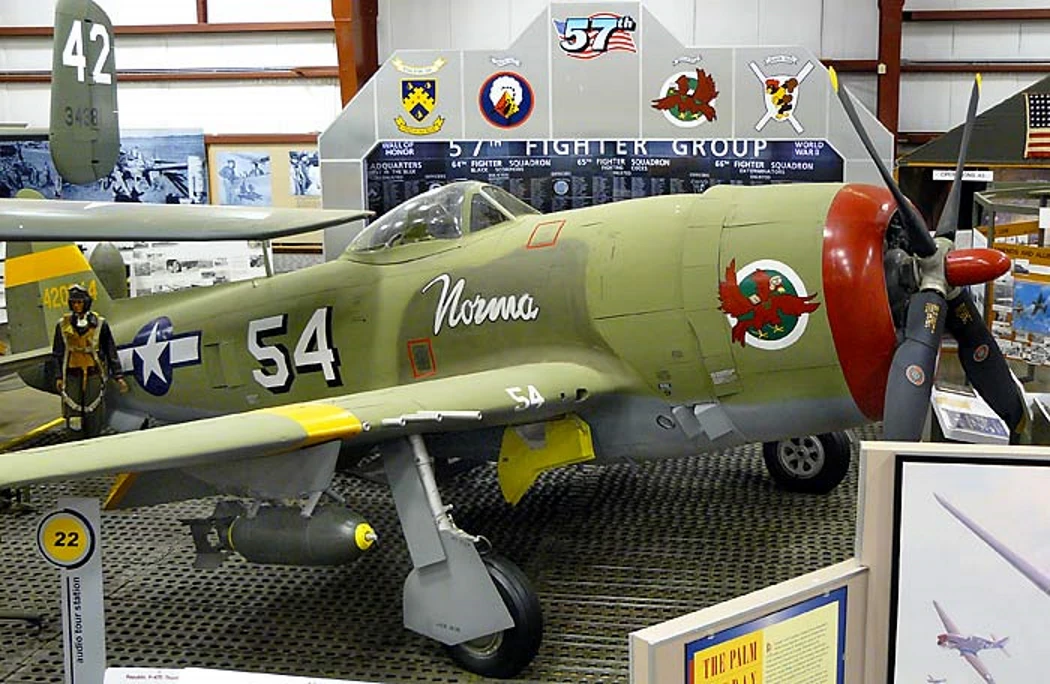
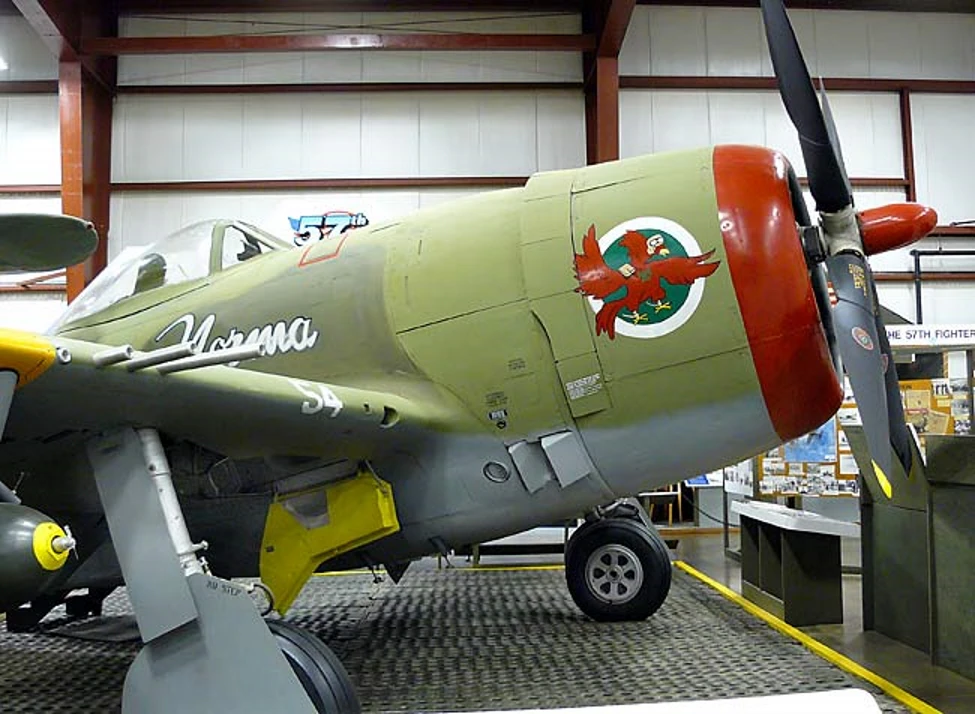
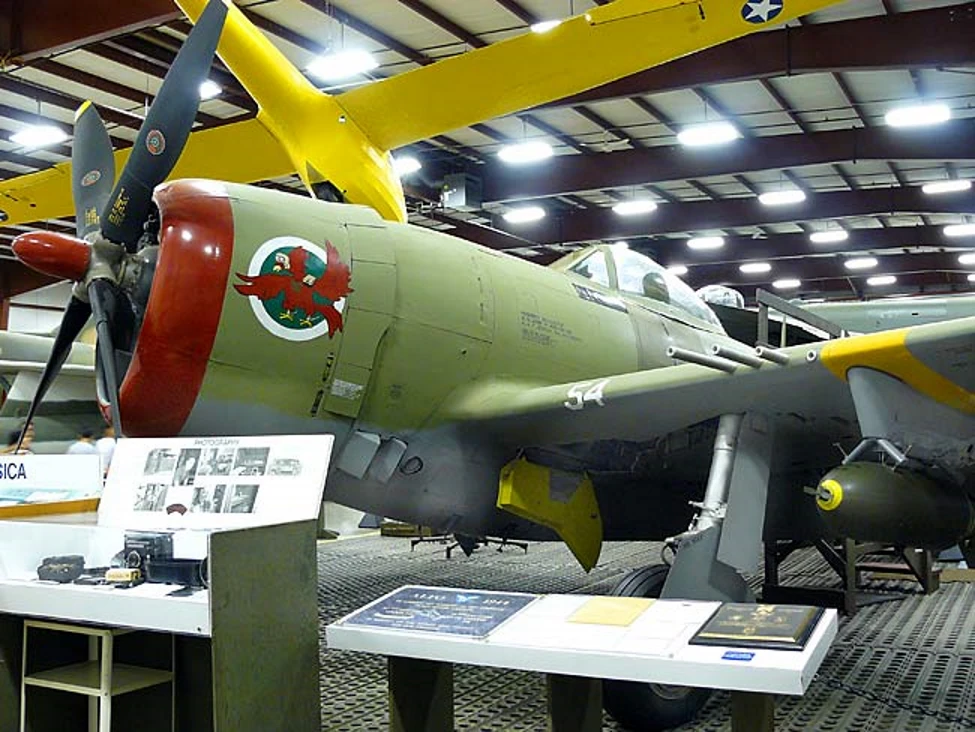
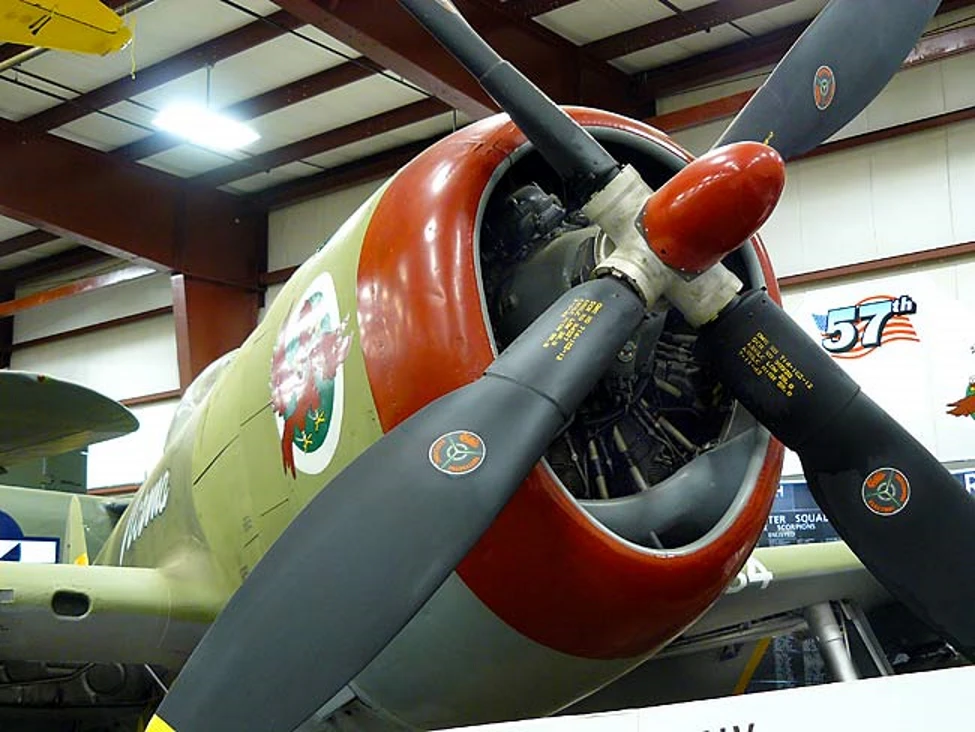
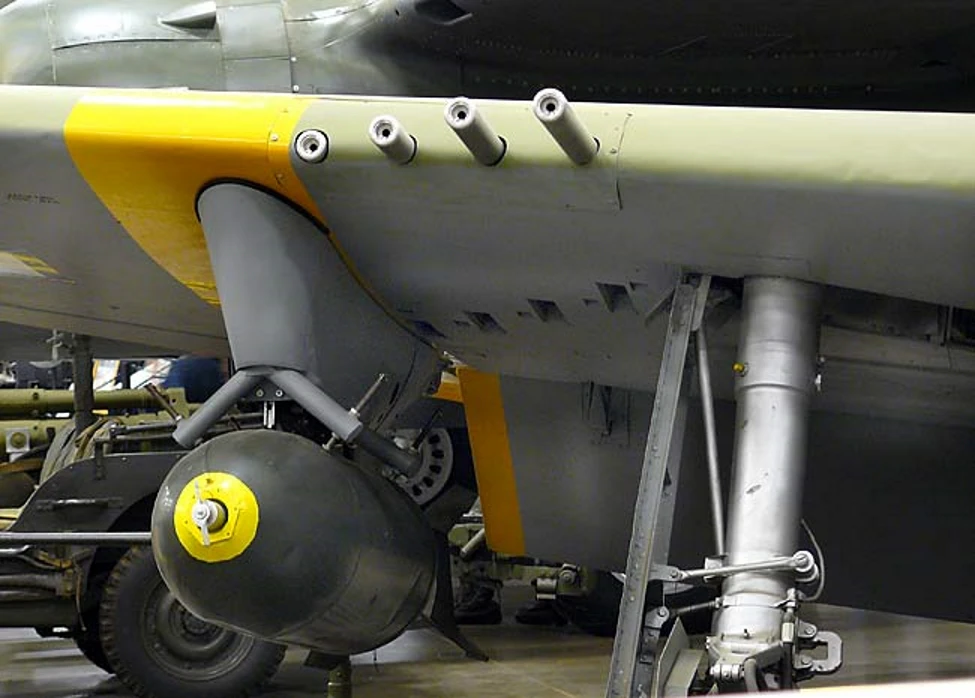
| Republic P-47D Thunderbolt Walk Around | |
|---|---|
| Photographe | Vladimir Yakubov |
| Localisation | Musée de l’air de Palm Springs |
| Photos | 143 |
A Heavyweight Legend
Lla P-47D Thunderbolt was the most-produced version of the largest and heaviest single-engine fighter of World War II. Affectionately nicknamed « The Jug » (short for Juggernaut), it was built around the massive Double Wasp engine and a complex turbo-supercharging system. While it lacked the graceful lines of the Mustang, the P-47D was a monster of durability and firepower. It could survive incredible battle damage that would disintegrate other aircraft, making it the premier ground-attack platform and high-altitude escort of the European Theater.
| Attribute | Technical Specification (P-47D-25) |
|---|---|
| Rôle | Fighter / Fighter-Bomber |
| Crew | 1 (Pilot) |
| First Flight (P-47) | May 6, 1941 |
| Groupe motopropulseur | 1 × Pratt & Whitney R-2800-59 Double Wasp radial |
| Horsepower | 2,535 hp (with water injection) |
| Vitesse maximale | 433 mph (697 km/h) at 30,000 ft |
| Armement | 8 × .50 cal (12.7 mm) M2 Browning machine guns |
| charge utile | Up to 2,500 lbs (1,134 kg) of bombs or 10 rockets |
Design Highlights: The Turbine and the Bubble
- Turbo-Supercharger System: The secret to the P-47’s high-altitude performance was the massive turbocharger located in the arrière of the fuselage. Exhaust gases were piped all the way back to the tail to spin a turbine, which then sent compressed air back to the engine.
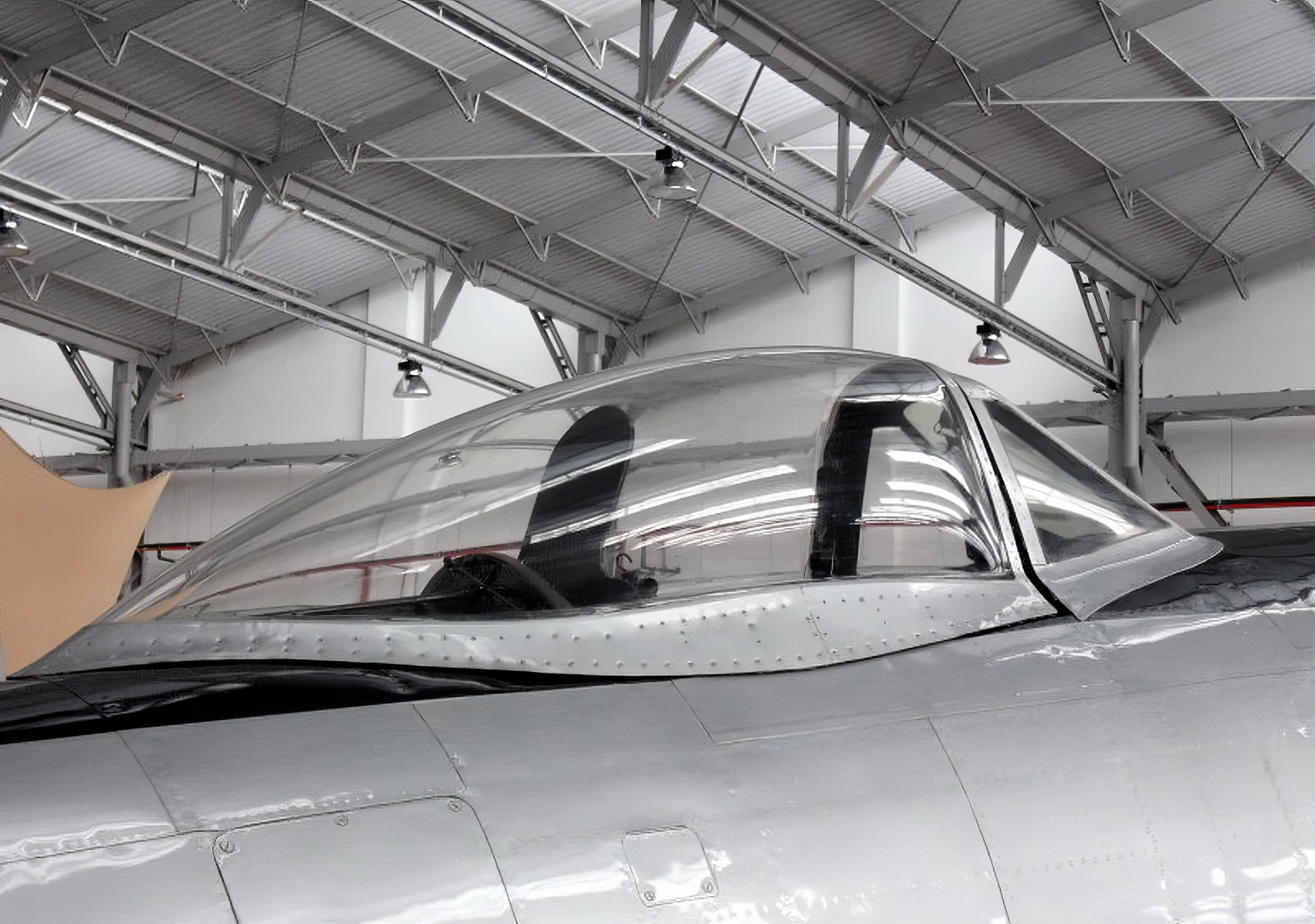
- Lla « Bubble » Canopy: Tôt « Razorback » P-47Ds had a high fairing behind the pilot. Starting with the D-25 variant, Republic introduced a teardrop-shaped bubble canopy, giving pilots 360-degree visibility—a vital advantage in dogfights.
- Eight Machine Guns: Unlike the Mustang or Spitfire, the P-47 carried a staggering eight .50 caliber machine guns. This massive volume of fire was capable of shredding locomotives, tiger tanks, and enemy aircraft alike.
- Paddle-Blade Propeller: To translate the engine’s massive torque into thrust, late D-models used wide « paddle-blade » propellers, which significantly improved the aircraft’s rate of climb.
« The Jug » in Action
- Unrivaled Ruggedness: The P-47 was legendary for its ability to take hits. Stories abound of pilots returning with entire cylinders blown off their engines or large sections of wings missing, yet the « Jug » kept flying.
- The Diving Specialist: Weighing nearly 15,000 lbs fully loaded, the P-47 could out-dive any aircraft in the world. Pilots used this weight to engage in « boom and zoom » tactics, diving through enemy formations and using their momentum to climb back to safety.
- Zemke’s Wolfpack: The 56th Fighter Group, led by Hubert « Hub » Zemke, became one of the highest-scoring units of the war exclusively flying the P-47. They proved that in the hands of a skilled pilot, the heavy Jug could outmaneuver the Bf 109 and Fw 190.
- Ground Attack Terror: In the months following D-Day, P-47s became the « flying artillery » of the Allied advance. They destroyed thousands of German tanks, trucks, and trains, effectively paralyzing the Wehrmacht’s movement during daylight hours.
Vues : 17963
Vous pouvez voir aussi :
 EmSuper Tucanobraer EMB 314 – Photos & Vidéos
 Boeing 80 – Photos & Vidéos
 Lockheed C-5 Galaxy – Photos et vidéos
 Canadair CF-104 Starfighter – Photos et vidéos
 SPAD S.XIII – Photos & Vidéos
 Lockheed P-38 Lightning – Photos et vidéo
 A-7B Corsair II - WalkAround
 Lockheed F-22A Raptor – Photos et vidéo
 Sukhoi Su-27 - WalkAround
 P-47G Thunderbolt – WalkAround