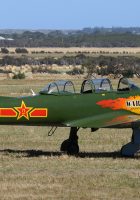
Nanchang CJ-6

Nanchang CJ-6B

PaysChine
TypeAvion d’entraînement
PhotoVladimir Yakubov
LocaliserWings Over Wine Country Spectacle aérien
DescriptionAlbum de 23 photos de promenade d’un « Nanchang CJ-6B »

Galerie de photos d’un Nanchang CJ-6B, The Nanchang CJ-6 is an aircraft designed and built in China for use by the People’s Liberation Army Air Force (PLAAF) en tant que formateur de base. CJ-6B: Two-seat armed border patrol aircraft, powered by a 300-hp Zhuzhou Huosai HS-6D radial piston engine. Small number built.

Source: Nanchang CJ-6B sur Wiki

Lire l’article

Vues : 1593

Avro 643 Mk.II Cadet

Avro 643 Mk.II Cadet

PaysAllemagne nazie
TypeAvion d’entraînement
PhotoVladimir Yakubov
LocaliserFantaisie du vol, Polk City
DescriptionAlbum de 137 photos walk-around d’un « Avro 643 Mk.II Cadet »

Galerie de photos d’un Avro 643 Mk.II Cadet, The Avro Cadet was a single-engined British biplane trainer designed and built by Avro in the 1930s as a smaller development of the Avro Tutor for civil use. One of major operator was the RAAF, which acquired 34 Mk II Cadets, delivered between November 1935 and February 1939. These remained in service until 1946, when the surviving 16 were sold for civil use. Two of these were re-engined in 1963 with 220 hp (160 kW) Jacobs R-755 engines for use as crop sprayers. In the U.K., only two Cadets survived the war.

Source: Avro 643 Mk.II Cadet sur Wiki

Lire l’article

Vues : 2390

Bucker Bu-131 Jungmann

Bucker Bu-131 Jungmann

PaysAllemagne nazie
RôleAvion d’entraînement
Premier volLe 27 avril 1934
ConstruitPlus de 5000

Galerie de photos d’un Bucker Bu-131 Jungmann, The German Bücker Bü 131 « Jungmann » (Jeune homme) était un avion d’entraînement de base des années 1930 qui a été utilisé par la Luftwaffe pendant la Seconde Guerre mondiale.

Source: Bucker Bu-131 Jungmann sur Wiki

Lire l’article

Views : 9127

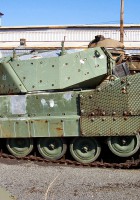
XM-8 Système de canon blindé

XM-8 Système de canon blindé

PaysUsa
TypeRéservoir léger
PhotoDavid Lueck
LocaliserInconnu
DescriptionAlbum de 103 photos walk-around d’un « XM-8 Armored Gun System »

Galerie de photos d’un XM-8 Système de canon blindé, The United Defense M8 Armored Gun System is an American light tank that was intended to replace the M551 Sheridan in the 82nd Airborne Division, as well as being expected to replace TOW-equipped Humvees in the 2nd Armored Cavalry Regiment (2nd ACR). The M8 project was eventually canceled. Its role in the 2nd ACR was eventually taken by the M1128 Mobile Gun System.

Source: XM-8 Armored Gun System sur Wiki

Lire l’article

Views : 6814

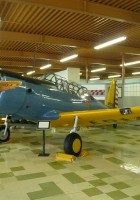
Vultee BT-13 Vaillant

Vultee BT-13 Valiant

PaysUsa
RôleAvion d’entraînement
Premier volMars 1939
Construit9525

Lla Vultee BT-13 Vaillant était un avion d’entraînement de base américain de la Seconde Guerre mondiale construit par Vultee Aircraft pour l’United States Army Air Corps, et plus tard l’US Army Air Forces. Une variante ultérieure du BT-13 en service USAAC / USAAF était connue sous le nom de BT-15 Valiant, tandis qu’une version identique pour l’US Navy était connue sous le nom de SNV et était utilisée pour former des aviateurs navals pour l’US Navy et ses services frères, l’US Marine Corps et l’US Coast Guard

Source: Vultee BT-13 Valiant sur Wiki

Lire l’article

Vues : 3594

WZT-1 ARV

WZT-1 ARV

PaysPologne
TypeAvion bimoteur
PhotoEgor Kalmykov
LocaliserInconnu
DescriptionAlbum de 46 photos de promenade d’un « WZT-1 ARV »

Galerie de photos d’un WZT-1 ARV, WZT (Wóz Zabezpieczenia Technicznego – armoured recovery vehicle) was a Polish post-World War II armoured recovery vehicle series. It consists of five versions. The first two, WZT-1 and WZT-2 were built on T-55/T-55A hull, the WZT-3 was built on T-72M hull, the WZT-3M was built on PT-91 hull and the WZT-4 was built on PT-91M hull for Malaysia.

Source: WZT-1 ARV sur Wiki

Lire l’article

Vues : 2689

Nakajima J1N1-S Gekko

Nakajima J1N1-S Gekko

PaysJapon
TypeAvion bimoteur
PhotoVladimir Yakubov
LocaliserMusée national de l’air et de l’espace
DescriptionAlbum de 64 photos walk-around d’un « Nakajima J1N1-S Gekko »

Galerie de photos d’un Nakajima J1N1-S Gekko, The Nakajima J1N1 Gekko (月光 « Clair de lune ») était un bimoteur utilisé par la marine impériale japonaise pendant la Seconde Guerre mondiale et a été utilisé pour des missions de reconnaissance, de chasseur de nuit et de kamikazes. Le premier vol a eu lieu en mai 1941. Il a reçu le nom de rapport allié « Irving », depuis la version de reconnaissance précédente du J1N1-C, a été confondu avec un chasseur.

Source: Nakajima J1N1-S Gekko sur Wiki

Lire l’article

Vues : 3842

Nord-Américain AT-6D Texan

Nord-Américain AT-6D Texan

PaysUsa
RôleAvion d’entraînement avancé monomoteur
Premier vol1er avril 1935
Construit15495

North American Aviation T-6 Texan is a single-engined advanced trainer aircraft used to train pilots of the United States Army Air Forces (USAAF), United States Navy, Royal Air Force and other air forces of the British Commonwealth during World War II and into the 1970s. Designed by North American Aviation, the T-6 is known by a variety of designations depending on the model and operating air force. The United States Army Air Corps (USAAC) and USAAF designated it as the AT-6, the United States Navy the SNJ, and British Commonwealth air forces, the Harvard, the name it is best known by outside of the US. After 1962, US forces designated it the T-6. It remains a popular warbird aircraft used for airshow demonstrations and static displays. It has also been used many times to simulate various Japanese aircraft including the Mitsubishi A6M Zero in movies depicting World War II in the Pacific.

Source: Nord-American AT-6D Texan sur Wiki

Lire l’article

Vues : 3564

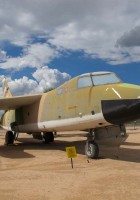
Douglas WB-66 Destroyer

PaysUsa
RôleBombardier léger
Premier vol28 juin 1954
Nombre construit294

Galerie de photos d’un Douglas WB-66 Destroyer, The Douglas B-66 Destroyer was a U.S. Air Force Tactical Air Command light bomber based on the United States Navy’a-3 Skywarrior avion d’attaque lourd basé sur un porte-avions. Il était destiné à remplacer le Douglas A-26 Invader. Une version de photo-reconnaissance RB-66 a été commandée simultanément. Le B-66 de l’USAF a conservé l’équipage de trois hommes de l’US Navy A-3, mais a incorporé des sièges éjectables qui manquaient à la variante de l’US Navy. WB-66D: Electronic weather reconnaissance variant with the crew compartment modified for two observers, 36 built with two later modified to X-21A.

Source: Douglas WB-66 Destroyer sur Wiki

Lire l’article

Vues : 3308

Wiesel 1 Fahrschule

Wiesel 1 Fahrschulek

PaysGermany
TypeVéhicule blindé léger de combat transportable par air
PhotoUlrich Wrede
LocaliserInconnu
DescriptionAlbum de 34 photos walk-around d’une « Wiesel 1 Fahrschule »

Galerie de photos d’un Wiesel 1 Fahrschule, The Wiesel Armoured Weapons Carrier (AWC) is a German light air-transportable armoured fighting vehicle, more specifically a lightly armoured weapons carrier. It is quite similar to historical scouting tankettes in size, form and function, and is the only true modern tankette in use in Western Europe. Variants in Service Wiesel 1 Aufklärung: reconnaissance Wiesel 1 ATM TOW: anti-tank vehicle fitted with TOW missiles Wiesel 1TOW: Uprated with BMS Wiesel 1 MK20: fire support version with a Rheinmetall MK 20 Rh202 20mm autocannon Wiesel 1 MK20 Variant 1: Uprated with new sight Wiesel 1 MK20 Variant 2: Uprated with BMS Remotely controlled Wiesel 1 equipped with ground-scanning radar as part of the Route Clearance System Prototypes and Studies Wiesel 1 ATM TOW Resupply: cargo carrier fitted with racks for TOW missiles Wiesel 1 BTM-208: fitted with a SAMM BTM-208 turret armed with .50-cal (12.7mm) M2HB and 7.62mm MG3 machine guns Wiesel 1 ATM HOT: anti-tank vehicle fitted with HOT missiles Wiesel 1 ATM HOT Variant 1: fitted with UTM-800 turret Wiesel 1 Radar: fitted with RATAC-S multi-purpose radar Wiesel 1 MK25: 25 mm armed version

Source: Wiesel 1 Fahrschule on Wiki

Lire l’article

Vues : 3030