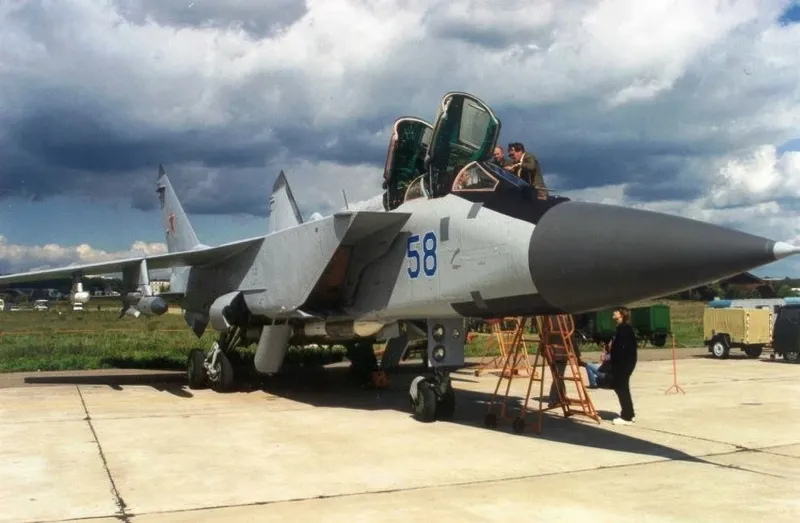
Mikoyan MiG-31 | |
|---|---|
| País | Unión Soviética |
| Papel | Aviones interceptores, aviones de ataque |
| Primer vuelo | 6 de mayo de 1981 |
| Construido | 519+ |
el Mikoyan MiG-31 (Ruso: Микоян МиГ-31; Nombre del informe de la OTAN: Foxhound) es un avión interceptor supersónico que fue desarrollado para su uso por las Fuerzas Aéreas Soviéticas. El avión fue diseñado por la oficina de diseño de Mikoyan como un reemplazo para el anterior MiG-25 "Foxbat"; el MiG-31 se basa y comparte elementos de diseño con el MiG-25. El MiG-31 tiene la distinción de estar entre los aviones de combate más rápidos del mundo. Sigue siendo operado por la Fuerza Aérea Rusa y la Fuerza Aérea de Kazajistán después del final de la Guerra Fría y el colapso de la Unión Soviética en 1991. El Ministerio de Defensa ruso espera que el MiG-31 permanezca en servicio hasta 2030 o más allá y fue confirmado en 2020 cuando se anunció que extendería la vida útil de 2.500 a 3.500 horas en los fuselajes existentes.
Fuente: MiG-31 en Wiki
| Mikoyan MiG-31 Walk Around | |
|---|---|
| Fotógrafo | Mijaíl Putnikov |
| Localización | Unknow |
| Fotos | 14 |
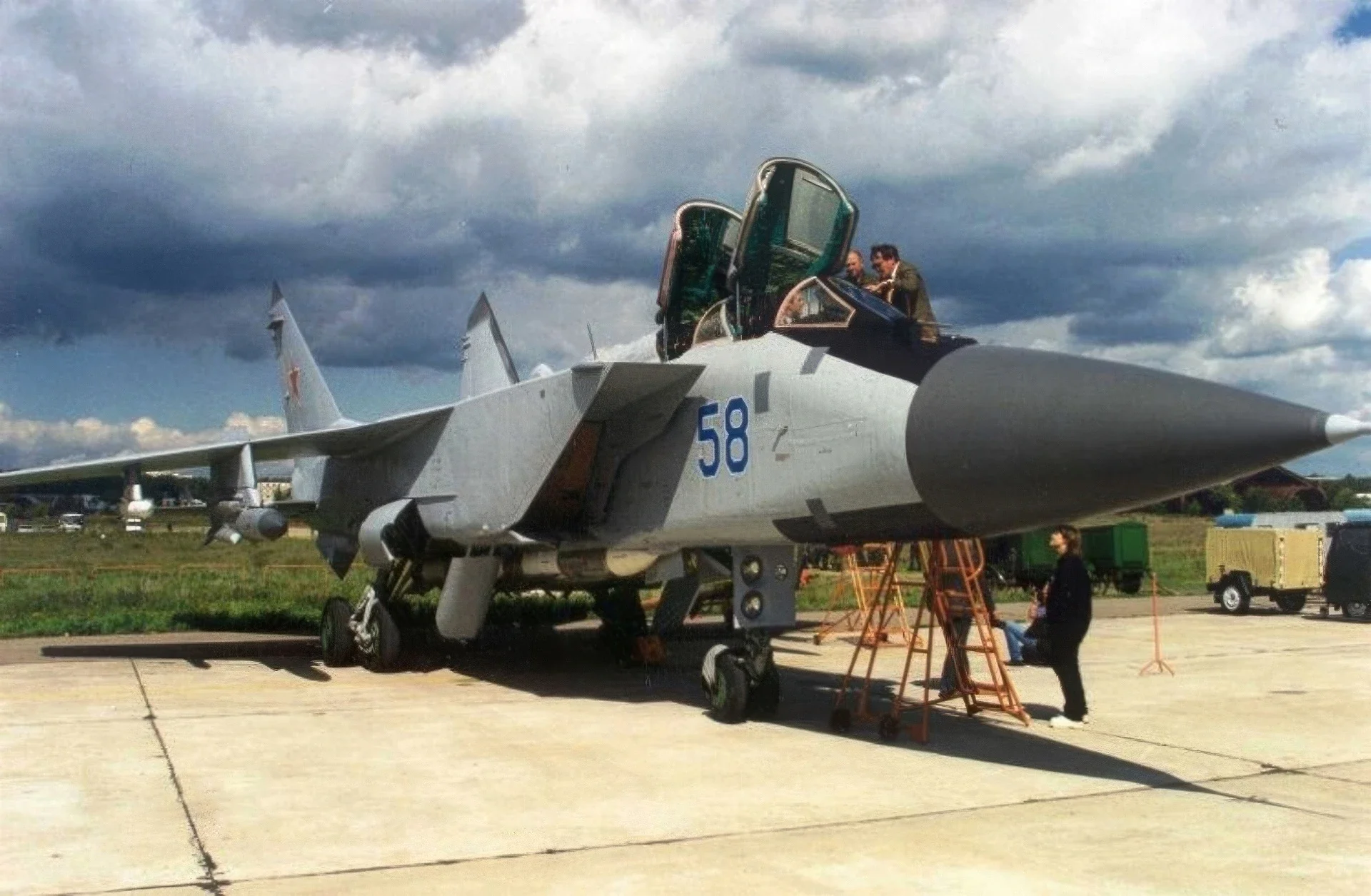
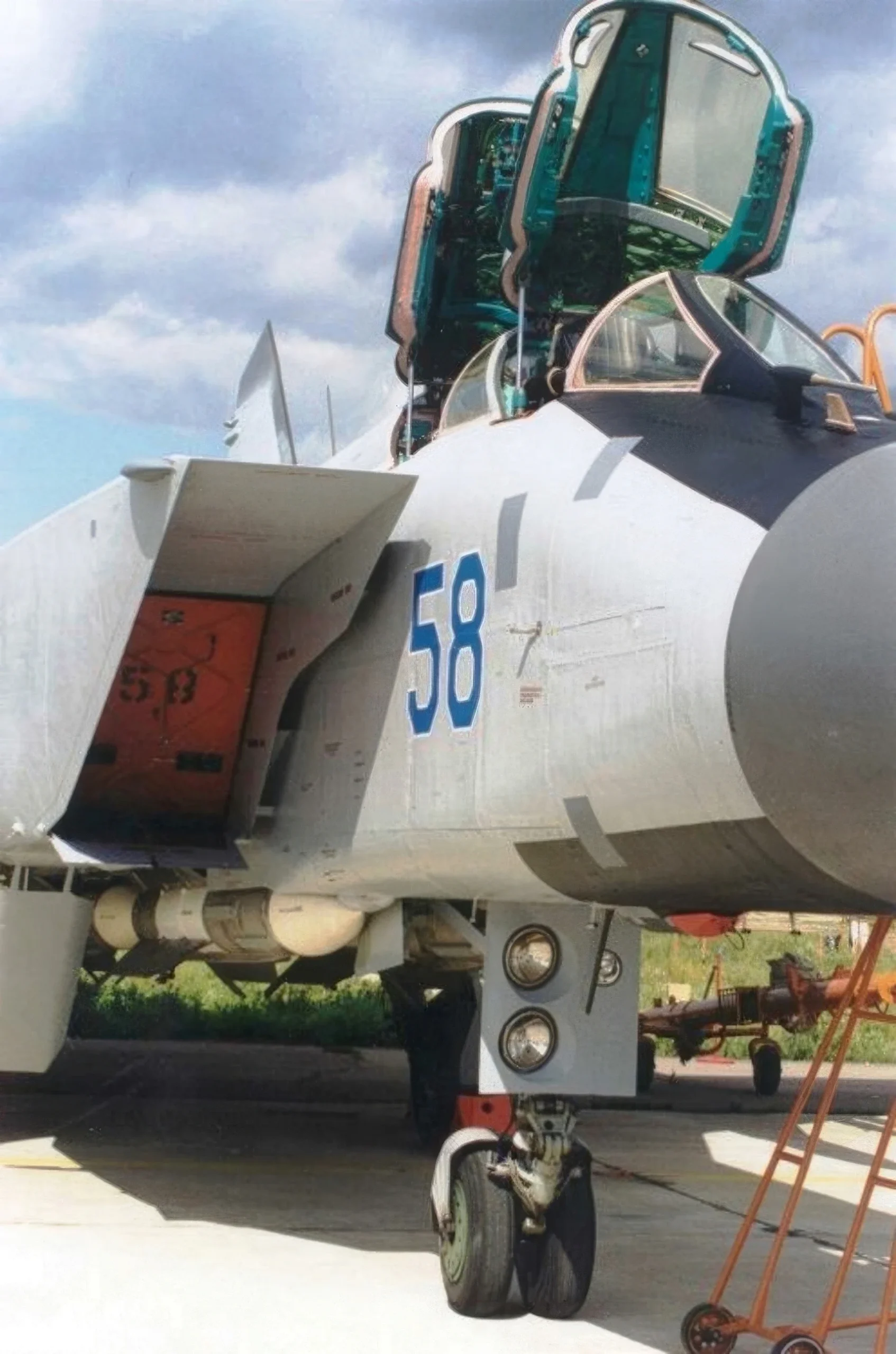
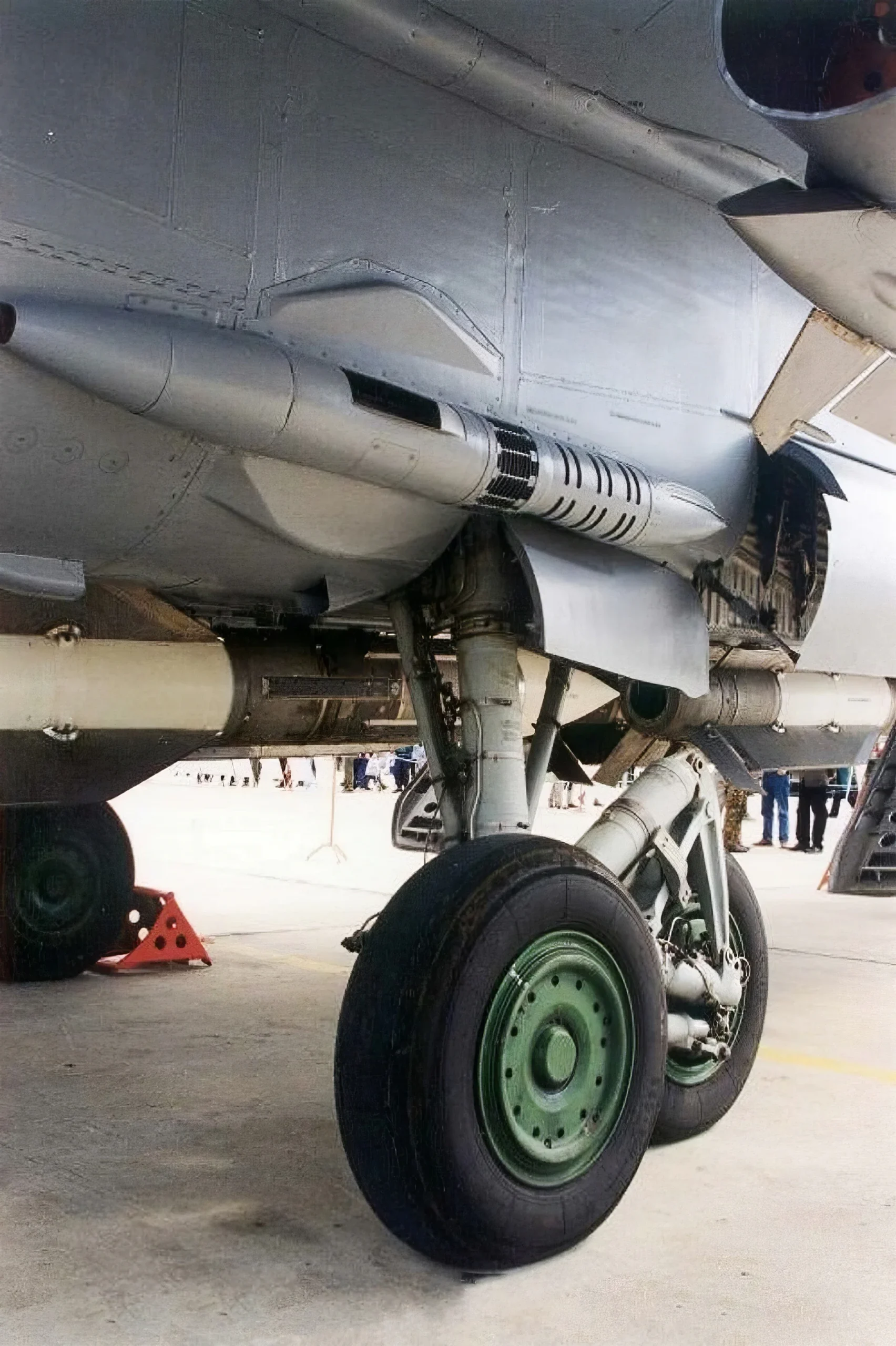
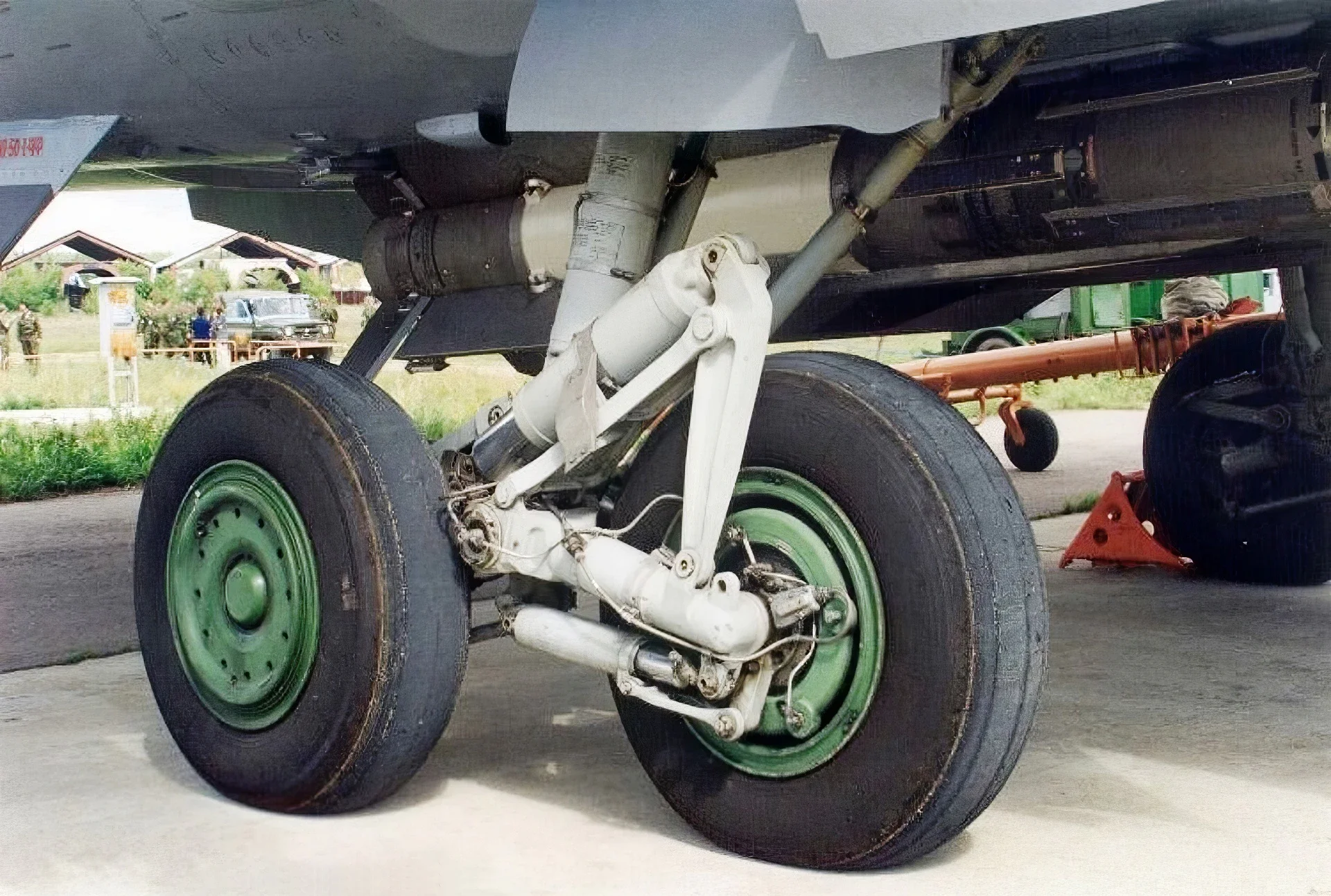

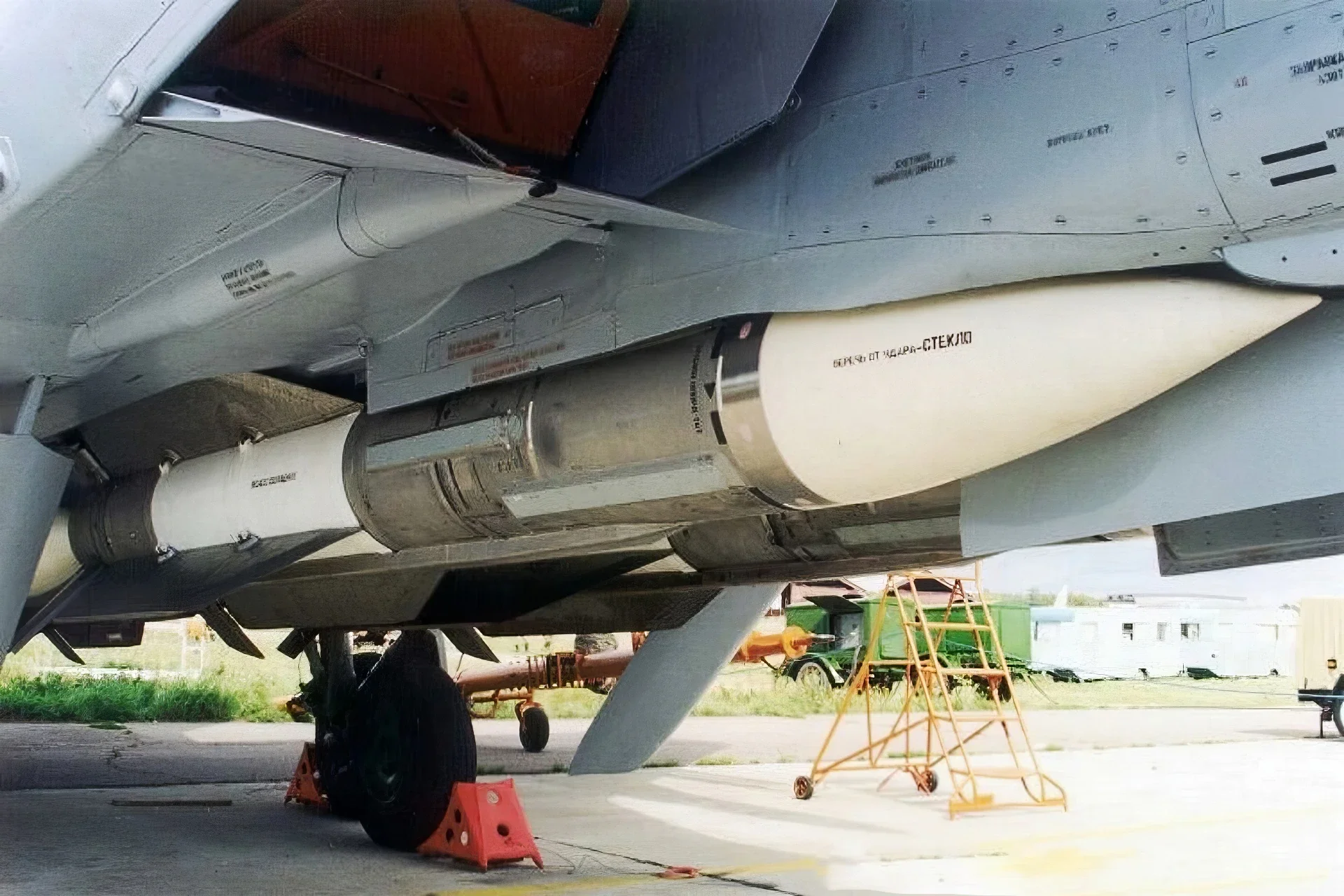

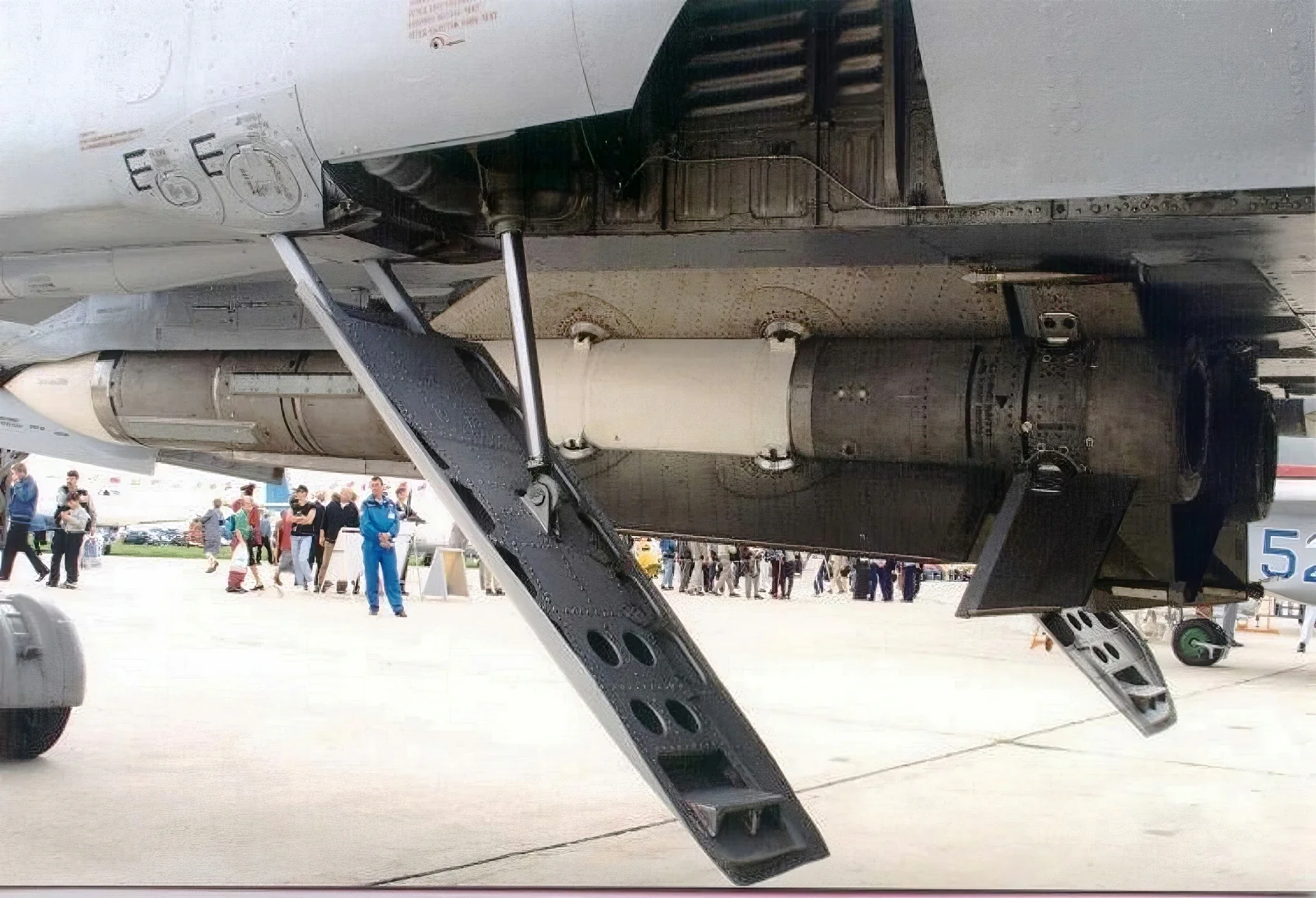
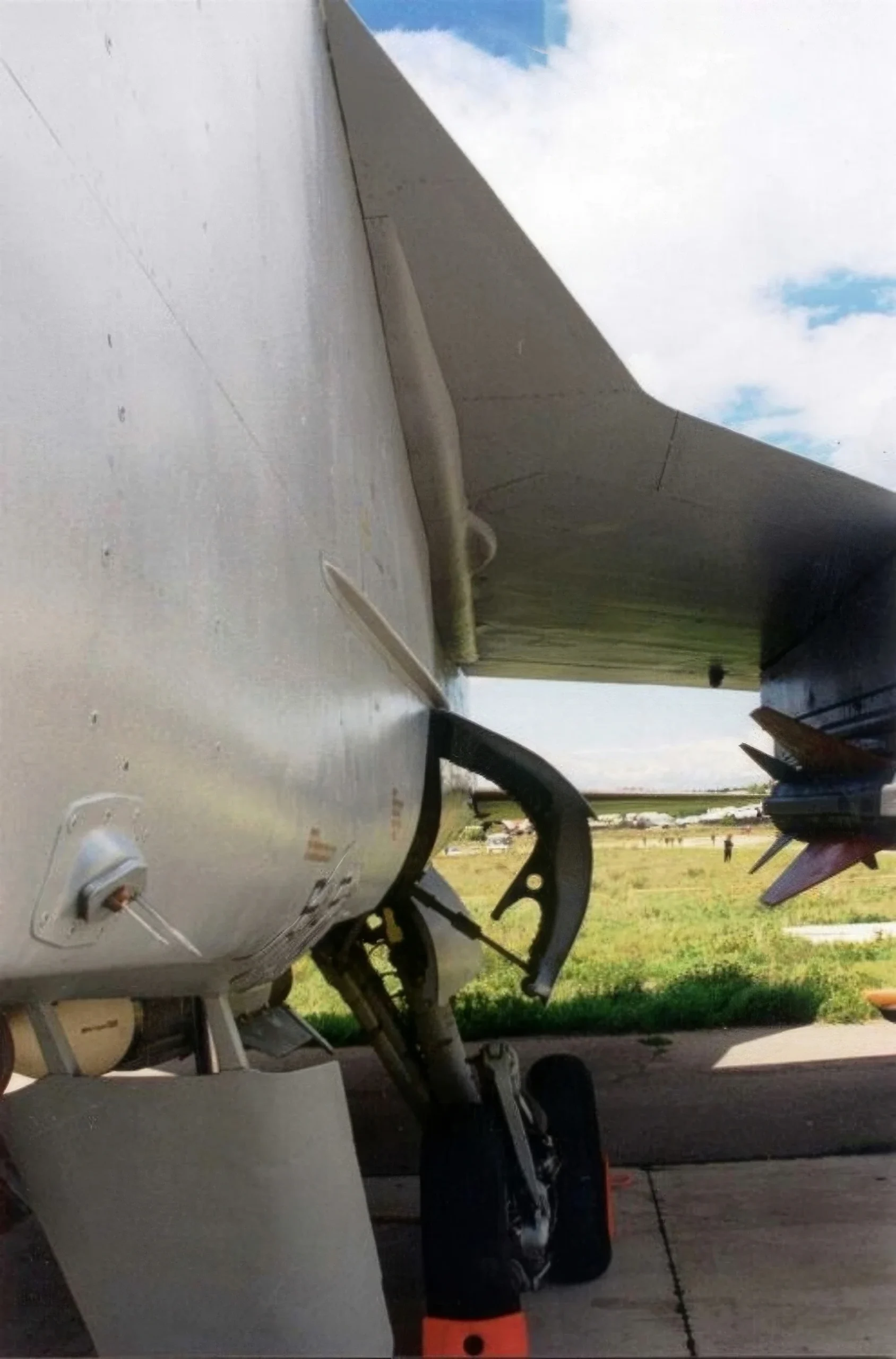


General Characteristics
The Mikoyan MiG-31 (NATO reporting name: Foxhound) is a Soviet/Russian supersonic interceptor aircraft designed to replace the earlier MiG-25 Foxbat. It was developed to defend vast Soviet airspace, particularly against cruise missiles and low-flying intruders. The MiG-31 is a highly unique aircraft, being one of the few jets in the world capable of achieving speeds near Mach 3 while carrying a heavy missile load. Its most significant feature is its advanced Zaslon S-800 phased array radar, making it the first fighter platform in the world to employ such a radar system. The aircraft operates in pairs or groups, with four MiG-31s capable of controlling an 800–900 km (500–560 mi) front line. It remains one of Russia’s primary long-range interceptors, with upgraded variants like the MiG-31BM still in service.
| Property | Typical Value (MiG-31B/BS/BM) |
|---|---|
| Papel | Long-Range Supersonic Interceptor |
| National Origin | Unión Soviética / Rusia |
| Fabricante | Mikoyan Design Bureau / Sokol Aircraft Plant |
| First Flight | September 16, 1975 |
| Service Entry | 1981 |
| No. Built | Approx. 500+ |
| Equipo | 2 (Pilot, Weapon Systems Officer/Navigator) |
| Longitud | 22.69 m (74 ft 5 in) |
| Envergadura | 13.46 m (44 ft 2 in) |
| Max Takeoff Weight | 46,200 kg (101,850 lb) |
Powerplant and Performance
- Engine: 2 x Soloviev D-30F6 afterburning turbofan engines.
- Max Thrust (per engine, w/ afterburner): 152.0 kN (34,170 lbf).
- Maximum Speed (High Altitude): Mach 2.83 (3,000 km/h or 1,860 mph). (Limited to Mach 2.35 by most modern operational parameters for engine longevity).
- Maximum Speed (Low Altitude): Mach 1.23.
- Service Ceiling: 20,600 m (67,600 ft).
- Combat Radius (Subsonic): 720 km (450 mi).
- Ferry Range: 3,300 km (2,050 mi) with two drop tanks.
- Design Note: The MiG-31 is built with a greater proportion of steel and titanium (approx. 50% steel, 33% aluminum, 16% titanium) than its predecessor to better sustain high speeds.
Armament and Sensors
- Internal Gun: 1 x 23 mm GSh-6-23 six-barrel rotary cannon (260 rounds) (removed in later modernization efforts like the MiG-31BM).
- Hardpoints: 8 total (4 semi-recessed under the fuselage for R-33/37 missiles, 4 under-wing).
- Key Armament:
- Primary Missile: R-33/AA-9 Amos (long-range radar-guided missile, range up to 160 km in earlier versions).
- Upgraded Missile (MiG-31BM): R-37/RVV-BD (extra long-range AAM, cited range up to 400 km).
- Short/Medium Range Missiles: R-40, R-60, R-73, and R-77.
- Kinzhal Missile: MiG-31K variants are modified to carry the Kh-47M2 Kinzhal air-launched hypersonic ballistic missile.
- Key Sensor: Zaslon S-800 Phased Array Radar (PANDA)
- Range: Can detect targets up to 200 km (124 mi) away (MiG-31B) and track up to 10 targets simultaneously, engaging 4 of them.
- MiG-31BM upgrades: Feature the Zaslon-M radar with an increased detection range of 320 km and the ability to track 24 targets, engaging 8 simultaneously.
Vistas: 2858
También puede ver:
 Stinson L-5 Sentinel – Fotos y Video
 Piper L-4 Grasshopper – Fotos y Video
 Lockheed U-2 – Fotos y Video
 MiG-29 – WalkAround
 Mikoyan-Gurevich MiG-17 – WalkAround
 Mikoyan MiG-29 – WalkAround
 Hawker Sea Fury FBII vol2 – Caminar alrededor
 P-51D Mustang vol2 – Caminar
 B-17G Flying Fortress – WalkAround
 Messerschmitt Bf 109G-2 - Caminar