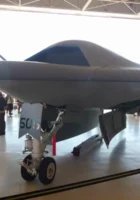
Martín Marietta X-24

Martin Marietta X-24

PaísE.e.u.u
PapelConcepto de avión demostrador
Primer vuelo24 de octubre de 2000
Construido2

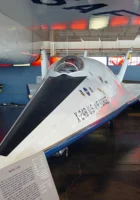
el Martín Marietta X-24 was an American experimental aircraft developed from a joint United States Air Force-NASA program named PILOT (1963–1975). It was designed and built to test lifting body concepts, experimenting with the concept of unpowered reentry and landing, later used by the Space Shuttle. Originally built as the X-24A, the aircraft was later rebuilt as the X-24B. The X-24 was drop launched from a modified B-52 Stratofortress at high altitudes before igniting its rocket engine; after expending its rocket fuel, the pilot would glide the X-24 to an unpowered landing.

Fuente: Martin Marietta X-24 en Wikipedia

Continuar leyendo

Vistas : 1570

Lockheed Martin X-35B

Lockheed Martin X-35

PaísE.e.u.u
PapelConcepto de avión demostrador
Primer vuelo24 de octubre de 2000
Construido2

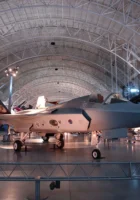
El Lockheed Martin X-35 fue un concepto de avión de demostración (CDA) desarrollado por Lockheed Martin para el programa Joint Strike Fighter. El X-35 fue declarado ganador sobre el competidor Boeing X-32 y una versión desarrollada y armada entró en producción a principios del siglo 21 como el F-35 Lightning II.

Fuente: Lockheed Martin X-35 en Wikipedia

Continuar leyendo

Vistas : 2004

NASA X-38

NASA X-38

PaísE.e.u.u
PapelVehículo de devolución
Programa1995–2002
ConstruidoUnknow

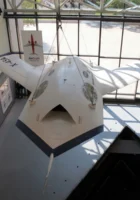
el X-38 was an experimental re-entry vehicle designed by NASA to research a possible emergency crew return vehicle (CRV) for the International Space Station (ISS). The 1995–2002 program also developed concepts for a crew return vehicle design that could be modified for other uses, such as a possible joint U.S. and international human spacecraft that could be launched on the French Ariane 5 booster. The program would eventually develop a total of three test prototype flight demonstrators for the proposed Crew Return Vehicle, each having incremental improvements on its predecessor. All three were wingless lifting body vehicles used in drop tests. The X-38 program was cancelled in 2002 due to budget cuts.

Fuente: NASA X-38 en Wikipedia

Continuar leyendo

Vistas : 1185

Hawker Hart II

Hawker Hart

PaísUk
PapelBombardero ligero
Primer vueloJunio de 1928
ConstruidoUnknow

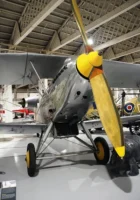
el Hawker Hart was a British two-seater biplane light bomber aircraft of the Royal Air Force (RAF). It was designed during the 1920s by Sydney Camm and manufactured by Hawker Aircraft. The Hart was a prominent British aircraft in the inter-war period, but was obsolete and already side-lined for newer monoplane aircraft designs by the start of the Second World War, playing only minor roles in the conflict before being retired. Several major variants of the Hart were developed, including a navalised version for the Royal Navy’s aircraft carriers. Beyond Britain, the Hart would be operated by a number of foreign nations, including Sweden, Yugoslavia, Estonia, South Africa, and Canada.

Fuente: Hawker Hart en Wikipedia

Continuar leyendo

Vistas : 2430

L-33 Roem

L-33 Roem

PaísIsrael
PapelArtillería autopropulsada
Construido200

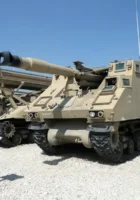
el L-33 Roem es una pieza de artillería autopropulsada que monta el obús Soltam M-68 155 mm L/33 en gran superestructura cerrada. Utiliza chasis Sherman con motor diésel Cummins VT-8-460Bi y HVSS. Probablemente se produjeron unas 200 unidades. El arma entró en combate en la guerra de Yom-Kippur y la guerra del Líbano de 1982.

Fuente: L-33 Roem en Wikipedia

Continuar leyendo

Vistas : 2241

Ilyushin IL-14

Ilyushin Il-14

PaísUnión Soviética
PapelAvión
Primer vuelo1 de octubre de 1950
Construido1348

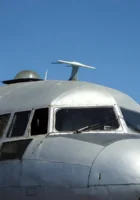
el Ilyushin Il-14 (nombre de informe de la OTAN: Crate) fue un avión bimotor soviético de transporte comercial y militar de personal y carga que voló por primera vez en 1950 y entró en servicio en 1954. Il-14 también fue fabricado en Alemania Oriental por VVB Flugzeugbau, en Checoslovaquia como aviar 14. El Ilyushin Il-14 fue típicamente reemplazado por el Antonov An-24 y el Yakovlev Yak-40.

Fuente: Ilyushin Il-14 en Wikipedia

Continuar leyendo

Vistas : 1469

Boeing X-40A

Boeing X-40A

PaísE.e.u.u
PapelVehículo de prueba de planeo
Primer vuelo11 de agosto de 1998
Construido1

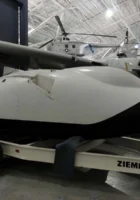
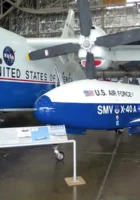
el Boeing X-40A Space Maneuver Vehicle was a test platform for the X-37 Future-X Reusable Launch Vehicle. The unpiloted X-40 was built to 85% scale to test aerodynamics and navigation of the X-37 Future-X Reusable Launch Vehicle project. After the first drop test in August 1998 the vehicle was transferred to NASA, which modified it. Between April 4 and May 19, 2001 the vehicle successfully conducted seven free flights.In 2001 it successfully demonstrated the glide capabilities of the X-37’s fat-bodied, short-winged design and validated the proposed guidance system.

Fuente: Boeing X-40A en Wikipedia

Continuar leyendo

Vistas : 1614

Boeing X-45A

Boeing X-45

PaísE.e.u.u
PapelVehículo aéreo de combate no tripulado
Primer vuelo22 de mayo de 2002
Construido2

el Boeing X-45 El vehículo aéreo de combate no tripulado es un demostrador conceptual para una próxima generación de aviones militares completamente autónomos, desarrollado por Phantom Works de Boeing. Fabricado por Boeing Integrated Defense Systems, el X-45 fue parte del proyecto J-UCAS de DARPA.

Fuente: Boeing X-45 en Wikipedia

Continuar leyendo

Vistas : 1055

Constelación Lockheed L-049

Lockheed L-049 Constellation

PaísE.e.u.u
PapelTransporte – Avión de pasajeros
Primer vuelo9 de enero de 1943
Construido88

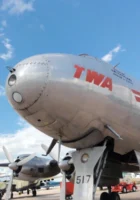
el Constelación Lockheed L-049 fue el primer modelo de la línea de aviones Lockheed Constellation. Entró en servicio como avión de transporte militar C-69 durante la Segunda Guerra Mundial para las Fuerzas Aéreas del Ejército de los Estados Unidos y fue la primera versión civil después de la guerra. Cuando la producción terminó en 1946 fue reemplazado por el mejorado L-649 y L-749 Constellation.

Fuente: Constelación Lockheed L-049 en Wikipedia

Continuar leyendo

Vistas : 2461

Northrop Grumman X-47B

Northrop Grumman X-47B

PaísE.e.u.u
PapelVehículo aéreo de combate no tripulado
Primer vuelo4 febrero 2011
Construido2

el Northrop Grumman X-47B es un vehículo aéreo de combate no tripulado de demostración (UCAV) diseñado para operaciones basadas en portaaviones. Desarrollado por la compañía estadounidense de tecnología de defensa Northrop Grumman, el proyecto X-47 comenzó como parte del programa J-UCAS de DARPA y posteriormente se convirtió en parte del programa de Demostración del Sistema Aéreo de Combate No Tripulado (UCAS-D) de la Marina de los Estados Unidos. El X-47B es un avión sin cola propulsado por un cuerpo de ala mixta capaz de operación semiautónoma y reabastecimiento aéreo.

Fuente: Northrop Grumman X-47B en Wikipedia

Continuar leyendo

Vistas: 1880